Key Takeaway
Building your first peptide stack as a beginner can feel overwhelming. This first peptide stack beginner resource covers the important information you need to make informed decisions. There are dozens of peptides, hundreds of possible combinations, and conflicting advice online.
Building your first peptide stack as a beginner can feel overwhelming. This first peptide stack beginner resource covers the important information you need to make informed decisions. There are dozens of peptides, hundreds of possible combinations, and conflicting advice online. This guide simplifies the process into clear, actionable steps so you start right and stay safe.
Key Takeaways: - Step 1[1]: Define Your Primary Goal - Step 2: Get Baseline Labs - Step 3: Start with One Peptide - Step 4: Add Your Second Peptide - Step 5: Monitor and Improve
The most important rule: work with a licensed provider. Peptide stacking isn't a DIY project.
Step 1: Define Your Primary Goal
Your goal determines your stack. Pick one primary objective:
- Healing an injury: Start with BPC-157. Consider adding TB-500 for the Wolverine Stack.
- Anti-aging and vitality: Start with CJC-1295 + Ipamorelin.
- Fat loss and body composition: Start with GLP-1 medication. Consider adding GH peptides.
- Athletic recovery: Start with BPC-157 + TB-500. Consider adding GH peptides.
Don't try to address five goals simultaneously with five different peptides. Start focused, then expand if needed.
Free Download: Wolverine Stack Card Beginner's quick-start guide with the top 3 starter stacks, dosing, and what to track. Get yours free) we'll email it to you instantly. [Download Your Free Stack Card]
Step 2: Get Baseline Labs
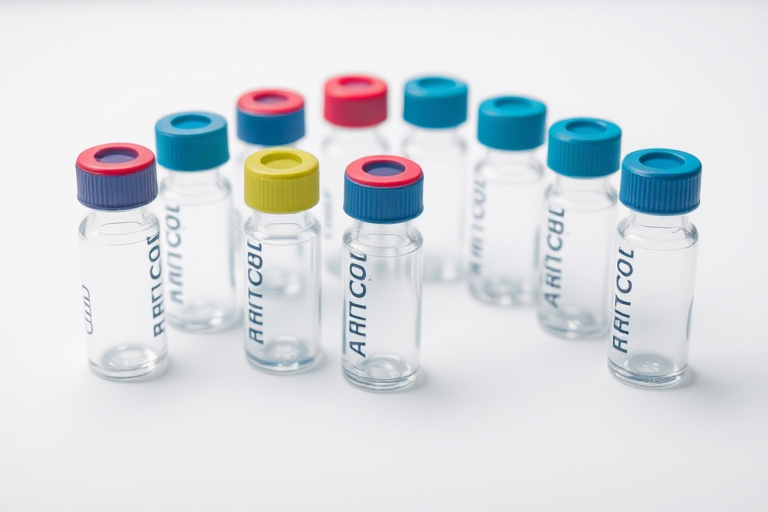
Before your first injection, your provider should order relevant labs. These establish your starting point and confirm safety. Common baseline labs include IGF-1, metabolic panel, fasting glucose, HbA1c, and lipid panel.
Step 3: Start with One Peptide
Run a single peptide for 2-4 weeks. This establishes your baseline response and identifies any side effects from that specific compound. If all goes well, proceed to step 4.
Check your GLP-1 eligibility
Use our free BMI Calculator to see if you may qualify for provider-reviewed GLP-1 therapy.
Try the BMI Calculator →Step 4: Add Your Second Peptide
Now add the complementary compound. Monitor for 2-4 more weeks. You can now attribute any new effects to the second peptide specifically.
Step 5: Monitor and Improve
Track your response consistently in the . Get follow-up labs at 6-8 weeks. Share all data with your for protocol adjustments.
Read about and for preparation.
Your First Injection Day: What to Expect
Your supplies have arrived. Your vials are reconstituted. Your provider has approved your protocol. Now what? Here is exactly what your first injection day looks like.
Preparation (10 minutes before injection): - Wash your hands thoroughly with soap and warm water for at least 20 seconds - Gather supplies: alcohol swabs, insulin syringe (29-31 gauge, 1/2 inch needle), reconstituted peptide vial, sharps container - Remove the peptide vial from the refrigerator. Let it sit at room temperature for 2-3 minutes. Cold injections are more uncomfortable - Clean the rubber stopper on the vial with an alcohol swab and let it dry completely
Drawing the peptide: - Pull back the plunger to draw air equal to your dose volume - Insert the needle through the rubber stopper and push the air into the vial (this equalizes pressure and makes drawing easier) - Invert the vial with the needle still inserted. Position the needle tip in the liquid - Pull the plunger back slowly to your prescribed dose volume. Check for air bubbles - If bubbles are present, tap the syringe firmly with your fingernail until they rise to the top, then push the plunger slightly to expel them
The injection: - Clean your injection site (abdomen is most common for beginners, 1-2 inches from the navel) with an alcohol swab - Pinch a fold of skin between your thumb and index finger - Insert the needle at a 45-90 degree angle in one smooth motion. Don't hesitate - Push the plunger slowly and steadily. Injecting too fast can cause more discomfort - Hold for 5 seconds after the plunger is fully depressed, then withdraw the needle - Don't rub the injection site. Light pressure with a clean cotton ball is fine
After your first injection: - Log the time, dose, injection site, and any sensations in your tracking app - You may feel a slight sting, mild warmth, or nothing at all. All are normal - Stay near your home for 30 minutes after your first injection in case of any unexpected reaction (rare, but sensible for your very first time) - Dispose of the syringe immediately in a sharps container. Never recap needles
Most beginners report that the anticipation is far worse than the injection itself. By your third or fourth injection, the process takes under 2 minutes and feels routine.
Common Beginner Mistakes to Avoid
Every new peptide user makes predictable errors. Knowing what they're in advance saves you time, money, and potentially your results.
Mistake 1: Starting multiple peptides at once. If you start BPC-157, TB-500, and CJC-1295/Ipamorelin all on day one and develop a headache on day three, you have no idea which compound caused it. You would need to stop everything and start over. Always add one compound at a time with 2-4 weeks between additions.
Mistake 2: Skipping baseline labs. Without baseline numbers, you can't measure progress. Was your IGF-1 at 120 or 220 before starting GH peptides? The answer determines whether a follow-up result of 280 is a good response or barely a response at all. Labs also screen for contraindications that could make certain peptides unsafe for you.
Mistake 3: Incorrect reconstitution calculator. Too much or too little bacteriostatic water changes the concentration of every dose you draw. Use the every time. Double-check your math. A common error is confusing milligrams with micrograms (1mg = 1,000mcg). Getting this wrong means doses that are 10x too high or 10x too low.
Mistake 4: Poor storage. Reconstituted peptides must be refrigerated at 36-46 degrees Fahrenheit. Leaving a vial on your bathroom counter for an afternoon can degrade the peptide. Never freeze reconstituted peptides. Keep vials upright. Most reconstituted peptides are stable for 28-30 days refrigerated.
Mistake 5: Inconsistent dosing schedule. Peptides work best with consistent daily timing. Taking BPC-157 at 7am one day, skipping the next day, and injecting at 11pm on day three produces unpredictable results. Set a daily alarm and keep your injection supplies in the same location so the habit builds quickly.
Mistake 6: Ignoring side effects because a forum said they're normal. Mild injection site redness, occasional headache during the first few days, and slight water retention can be normal. Persistent headaches, heart palpitations, significant swelling, or any unusual symptoms need immediate provider attention. Your provider's medical judgment matters more than anonymous forum posts.
Building a Tracking System That Works
You need a system simple enough that you'll actually use it every day. The best tracker is the one you consistently fill in.
Daily log (takes 60 seconds): - Time of injection - Dose administered - Injection site used (rotate sites to prevent lipodystrophy) - Any immediate sensations or side effects - One-line subjective note: "Slept great" or "Mild headache PM"
Weekly assessment (takes 5 minutes): - Rate overall energy on a 1-10 scale - Rate sleep quality on a 1-10 scale - Rate recovery from training on a 1-10 scale - Note any changes in body composition, injury healing, or specific goal metrics - Record weight (same day, same time, same conditions weekly)
Monthly review (takes 15 minutes): - Review weekly trends. Are scores improving, stable, or declining? - Compare objective measurements (weight, body measurements, pain scores, range of motion) to baseline - Prepare questions for your provider check-in - Note any supply issues (running low on peptide, need more syringes, bacteriostatic water)
The automates much of this tracking. If you prefer pen and paper, a simple notebook works. The format doesn't matter as long as you use it consistently.
Bring your tracking data to every provider appointment. Your provider can't improve what they can't see.
Frequently Asked Questions
What is the best first peptide stack for beginners?
For healing: BPC-157 alone, then add TB-500. For anti-aging: CJC-1295 + Ipamorelin (these are almost always used together). For GLP-1 users: GLP-1 medication plus BPC-157 for GI support.
How much does a starter peptide stack cost?
Costs vary by provider and pharmacy. A basic two-peptide stack runs significantly less than multi-peptide protocols. Discuss pricing transparently with your provider.
How quickly will I see results from my first stack?
Healing stacks: improvement within 2-4 weeks. GH stacks: sleep improves week 1-2, body composition changes over 4-12 weeks. Individual results vary.
Do I need to inject every day?
It depends on the peptide. BPC-157 and CJC-1295/Ipamorelin are typically daily. TB-500 is twice weekly during loading, then weekly. Your provider will specify the frequency for each compound in your stack.
Let's Make This Happen
The research is clear. The options are available. The only question is whether it's right for you. A FormBlends provider can help you decide (no pressure, no commitment.
Medical References
- Wilding JPH, Batterham RL, Calanna S, et al. Once-Weekly Semaglutide in Adults with Overweight or Obesity. N Engl J Med. 2021;384(11):989-1002. [PubMed | ClinicalTrials.gov | DOI]
- Davies M, Færch L, Jeppesen OK, et al. Semaglutide 2.4 mg once a week in adults with overweight or obesity, and type 2 diabetes (STEP 2). Lancet. 2021;397(10278):971-984. [PubMed | ClinicalTrials.gov | DOI]
- Wadden TA, Bailey TS, Billings LK, et al. Effect of Subcutaneous Semaglutide vs Placebo as an Adjunct to Intensive Behavioral Therapy on Body Weight in Adults With Overweight or Obesity (STEP 3). JAMA. 2021;325(14):1403-1413. [PubMed | ClinicalTrials.gov | DOI]
- Rubino D, Abrahamsson N, Davies M, et al. Effect of Continued Weekly Subcutaneous Semaglutide vs Placebo on Weight Loss Maintenance in Adults With Overweight or Obesity (STEP 4). JAMA. 2021;325(14):1414-1425. [PubMed | ClinicalTrials.gov | DOI]
- Garvey WT, Batterham RL, Bhatt DL, et al. Two-year effects of semaglutide in adults with overweight or obesity (STEP 5). Nat Med. 2022;28(10):2083-2091. [PubMed | ClinicalTrials.gov | DOI]
Sources &. References
- Sikiric P, Hahm KB, Blagaic AB, et al. Stable Gastric Pentadecapeptide BPC 157, Robert's Cytoprotection, Adaptive Cytoprotection, and Therapeutic Effects. Curr Pharm Des. 2018;24(18):1990-2001. Doi:10.2174/1381612824666180515125918
- Chang CH, Tsai WC, Lin MS, et al. The promoting effect of pentadecapeptide BPC 157 on tendon healing involves tendon outgrowth, cell survival, and cell migration. J Appl Physiol. 2011;110(3):774-780. Doi:10.1152/japplphysiol.00945.2010
- Seiwerth S, Brcic L, Vuletic LB, et al. BPC 157 and blood vessels. Curr Pharm Des. 2014;20(7):1121-1125. Doi:10.2174/13816128113199990421
- Bock-Marquette I, Saxena A, White MD, et al. Thymosin beta4 activates integrin-linked kinase and promotes cardiac cell migration, survival and cardiac repair. Nature. 2004;432(7016):466-472. Doi:10.1038/nature03000
- Malinda KM, Sidhu GS, Mani H, et al. Thymosin beta4 accelerates wound healing. J Invest Dermatol. 1999;113(3):364-368. Doi:10.1046/j.1523-1747.1999.00708.x
- Ionescu M, Frohman LA. Pulsatile secretion of growth hormone (GH) persists during continuous stimulation by CJC-1295, a long-acting GH-releasing hormone analog. J Clin Endocrinol Metab. 2006;91(12):4792-4797. Doi:10.1210/jc.2006-1702
Nothing in this article should be construed as medical advice. The information provided is educational only. Always consult with your healthcare provider before beginning, modifying, or discontinuing any medication or treatment. FormBlends connects patients with licensed providers for individualized care.
Last updated: 2026-03-24
See your options in about 2 minutes
Take the free quiz and see what fits you. Quick, private, and no commitment to continue.
See my options →