Key Takeaway
Learn how CJC-1295 may enhance muscle recovery through improved growth hormone and IGF-1. Covers protein synthesis, inflammation, sleep, and evidence-based recovery strategies.
Quick Answer: CJC-1295 may enhance muscle recovery by improving growth hormone (GH) and IGF-1, both of which stimulate protein synthesis, support connective tissue repair, and improve sleep quality. These are key factors in recovery from intense exercise. Clinical evidence supports the role of GH/IGF-1 in muscle repair, though direct trials on CJC-1295 for recovery outcomes are limited. Physician supervision is required.
What Is CJC-1295?
CJC-1295 is a synthetic analog of growth hormone-releasing hormone (GHRH) that signals the pituitary gland to increase its natural production of growth hormone. It's available with DAC (Drug Affinity Complex) for sustained GH elevation over several days, and without DAC (Modified GRF 1-29) for shorter, pulsatile GH release.
Both forms increase circulating GH and IGF-1, creating a hormonal environment that favors tissue repair, protein synthesis, and recovery. This makes CJC-1295 of particular interest to individuals seeking faster and more complete recovery from exercise, training, or physical activity.
The Science of Muscle Recovery
Exercise, particularly resistance training and high-intensity activity, creates controlled damage to muscle fibers. Recovery is the process by which the body repairs this damage and adapts, ultimately building stronger and more resilient tissue. Several biological processes drive recovery:
- Protein synthesis: The creation of new muscle proteins to repair and rebuild damaged fibers.
- Inflammation management: An initial inflammatory response clears damaged tissue, followed by an anti-inflammatory phase that supports rebuilding.
- Satellite cell activation: Muscle stem cells (satellite cells) are recruited to the site of damage, where they fuse with existing fibers to support repair and growth.
- Connective tissue repair: Tendons, fascia, and the extracellular matrix around muscle fibers must also be repaired.
- Sleep: The majority of tissue repair occurs during deep sleep, when GH secretion peaks.
Growth hormone and IGF-1 are involved in virtually every one of these processes, which is why GH status has a direct bearing on recovery capacity.
How GH and IGF-1 Support Muscle Recovery
Protein Synthesis
GH stimulates protein synthesis in skeletal muscle, which is the fundamental process by which damaged muscle fibers are repaired and new contractile proteins are added. IGF-1, produced in response to GH signaling, acts directly on muscle cells to promote anabolic (building) pathways, including the mTOR signaling cascade that drives muscle protein synthesis.
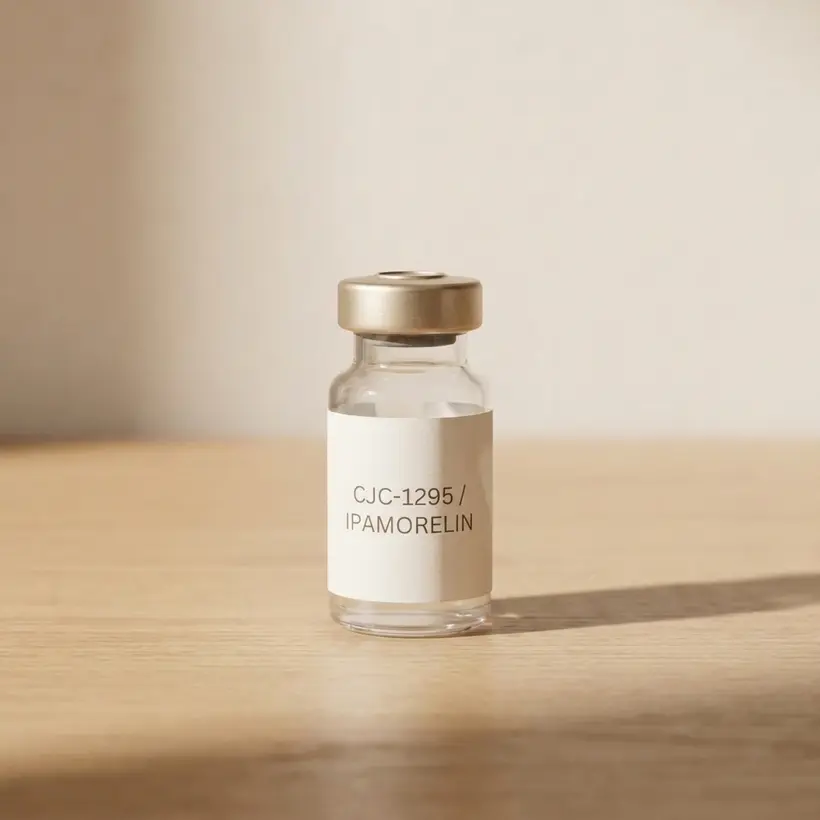
From the FormBlends catalog
CJC-1295 / Ipamorelin Blend
The gold standard growth hormone secretagogue stack · From $69/mo · compounded by a licensed 503A pharmacy, dispensed only after provider review.
Learn about CJC-1295 / Ipamorelin Blend →Research published in the American Journal of Physiology has demonstrated that GH administration increases whole-body protein synthesis and reduces protein breakdown, creating a net anabolic state that favors recovery.
Satellite Cell Activation
IGF-1 matters in activating and recruiting satellite cells, the muscle stem cells responsible for repairing damaged fibers and contributing to muscle hypertrophy. Studies have shown that IGF-1 signaling is important for satellite cell proliferation and differentiation, and that reduced IGF-1 availability is associated with impaired muscle regeneration, particularly with aging.
Collagen and Connective Tissue
Recovery isn't just about muscle fibers. The connective tissue surrounding and supporting muscle, including tendons and the extracellular matrix, must also heal after intense exercise. GH directly stimulates collagen synthesis, which is important for the repair and strengthening of these structural tissues.
A study in healthy adults showed that GH administration significantly increased collagen synthesis rates in tendon and muscle connective tissue, supporting the structural components that are often the weakest link in recovery.
Sleep Quality
The relationship between GH and sleep is bidirectional and profoundly important for recovery. The largest natural GH pulse of the day occurs during the first bout of slow-wave (deep) sleep. GHRH administration has been shown to increase slow-wave sleep duration in both young and older adults.
By improving sleep depth and quality, CJC-1295 may indirectly enhance the recovery process, since the bulk of muscle repair, immune function, and hormonal restoration occurs during deep sleep.
Anti-Inflammatory Effects
While the initial inflammatory response to exercise is necessary and beneficial, prolonged or excessive inflammation delays recovery. Some research suggests that GH and IGF-1 have modulatory effects on inflammation, supporting the transition from the pro-inflammatory phase to the repair and resolution phase.
What the Research Shows
GH and Exercise Recovery in Humans
Several human studies have examined the relationship between GH and exercise recovery:
- A randomized controlled trial published in the Annals of Internal Medicine found that GH administration in recreational athletes increased lean body mass and collagen synthesis, though the effect on muscle strength was less clear.
- Studies in GH-deficient adults consistently show that GH replacement improves exercise capacity, muscle strength, and recovery from physical exertion.
- Research on older adults has demonstrated that GH supplementation, combined with exercise, produces greater improvements in lean mass and physical function than exercise alone.
CJC-1295 Specific Data
Clinical studies on CJC-1295 have focused primarily on pharmacokinetics and safety, demonstrating that it reliably improves GH and IGF-1 in human subjects. Published trials haven't specifically measured exercise recovery endpoints. The rationale for CJC-1295's recovery benefits is based on its proven ability to activate the same GH/IGF-1 pathways that are directly involved in tissue repair.
Anecdotal and Clinical Observations
Clinicians who prescribe CJC-1295 frequently report that patients notice improved recovery as one of the earliest and most consistent benefits. Reduced muscle soreness, faster return to training readiness, and improved exercise tolerance are commonly described. While anecdotal evidence doesn't replace controlled trials, these consistent observations align with the known biology of GH and recovery.
Improving CJC-1295 for Recovery
Timing
For CJC-1295 without DAC, many protocols include a post-exercise injection to amplify the natural GH surge that follows intense training. An evening injection before bed can also enhance the nocturnal GH pulse, maximizing recovery during sleep.
For CJC-1295 with DAC, timing is less critical due to its sustained-release profile, but consistent weekly administration ensures steady GH and IGF-1 elevation throughout recovery periods.
Pairing with Ipamorelin
CJC-1295 without DAC is frequently combined with Ipamorelin, a GHRP that acts through the ghrelin receptor to provide an additional GH-releasing stimulus. The combination may produce a greater GH pulse than either peptide alone, potentially enhancing recovery benefits. This combination should be prescribed and monitored by a physician.
Supporting Factors
CJC-1295 is most effective for recovery when paired with:
- Adequate protein intake: GH stimulates protein synthesis, but the raw materials (amino acids) must come from your diet. Most active individuals benefit from 1.6 to 2.2 grams of protein per kilogram of body weight daily.
- Structured training: Periodization and progressive overload ensure that you're creating the stimulus for adaptation while allowing adequate recovery between sessions.
- Sleep hygiene: Prioritizing 7 to 9 hours of quality sleep maximizes the recovery window during which GH exerts its greatest effects.
- Hydration and nutrition: Micronutrient status, particularly zinc, magnesium, vitamin D, and vitamin C, supports the enzymatic processes involved in tissue repair.
Who May Benefit Most
CJC-1295 for recovery may be most valuable for:
- Adults over 30 whose natural GH production has begun to decline, noticing that recovery takes longer than it used to
- Active individuals training at high volumes or intensities who need to improve recovery between sessions
- People recovering from musculoskeletal injuries where tissue repair is a priority
- Individuals with documented low or declining IGF-1 levels
Safety Considerations
CJC-1295 has demonstrated a favorable safety profile in clinical studies. Common side effects include injection site reactions, flushing, headache, and mild water retention. Joint stiffness and numbness in the extremities can occur at higher doses due to improved GH levels and are typically reversible with dose adjustment.
CJC-1295 isn't a performance-enhancing drug for competitive athletes, and its use may be prohibited by anti-doping organizations including WADA. Athletes subject to drug testing should verify the legality of any peptide therapy before use.
All CJC-1295 therapy should be conducted under physician supervision with regular lab monitoring of GH, IGF-1, glucose, and other relevant markers.
How FormBlends Can Help
FormBlends offers physician-supervised peptide therapy designed to support your recovery goals. Your physician will assess your training demands, review your medical history and lab work, and prescribe a CJC-1295 protocol improved for your activity level and recovery needs.
If you're looking to recover faster between training sessions, support healing after an injury, or address the slower recovery that comes with age-related GH decline, your FormBlends physician can build a protocol that fits your lifestyle and goals.
Frequently Asked Questions
How soon will I notice improved recovery with CJC-1295?
Many patients report noticing reduced muscle soreness and improved recovery within the first 2 to 4 weeks. Deeper improvements in connective tissue repair and training capacity develop over 8 to 12 weeks of consistent use.
Is CJC-1295 a steroid?
No. CJC-1295 is a peptide that stimulates the pituitary gland to produce growth hormone. It isn't an anabolic steroid, doesn't directly affect testosterone levels, and works through an entirely different mechanism than androgenic compounds.
Can I use CJC-1295 while training for a competition?
From a physiological standpoint, CJC-1295 can support training and recovery. But peptides that stimulate GH release are prohibited by many anti-doping organizations. If you compete in a tested sport, verify the rules of your governing body before using CJC-1295.
Should I take CJC-1295 on rest days?
Yes. Recovery occurs on rest days, and maintaining improved GH and IGF-1 levels during recovery periods supports the repair processes that make you stronger. Most protocols call for consistent use regardless of training schedule.
Will CJC-1295 build muscle by itself?
CJC-1295 supports the hormonal environment for muscle recovery and growth, but it doesn't replace the training stimulus or nutritional foundation required to build muscle. It's a recovery-supporting tool, not a substitute for hard work in the gym and proper nutrition.
Recover Smarter with Physician-Guided Peptide Therapy
Your training is only as good as your recovery. FormBlends can connect you with a physician who understands the demands of an active lifestyle and can design a CJC-1295 protocol to support your goals. Start with a consultation today.
Disclaimer: This article is for informational purposes only and doesn't constitute medical advice. CJC-1295 isn't FDA-approved and should only be used under the supervision of a licensed healthcare provider. Individual results vary. Nothing in this article should be interpreted as a claim that CJC-1295 prevents, treats, or cures any disease or condition.
Ready when you are
CJC-1295 / Ipamorelin Blend
The gold standard growth hormone secretagogue stack · From $69/mo · compounded by a licensed 503A pharmacy, dispensed only after provider review.
Learn about CJC-1295 / Ipamorelin Blend →