Key Takeaway
Can CJC-1295 improve sleep quality? Learn how this GHRH peptide supports deeper, more restorative sleep through its effects on growth hormone and slow-wave sleep.
Quick Answer: CJC-1295 for sleep is one of the most consistent benefits reported by patients using this growth hormone-releasing peptide. GHRH is directly linked to slow-wave (deep) sleep, and by amplifying the GHRH signal, CJC-1295 may enhance deep sleep duration and quality. Improved sleep is often the first benefit patients notice, frequently within the first one to two weeks of therapy.
What Is CJC-1295?
CJC-1295 is a synthetic analog of growth hormone-releasing hormone (GHRH) that signals the pituitary gland to release growth hormone. It comes in two forms: CJC-1295 with DAC (which has an extended half-life of roughly 6 to 8 days) and CJC-1295 without DAC, also known as Mod GRF 1-29 (which has a shorter duration of action and is usually administered multiple times daily).
Both forms work by enhancing the body's natural growth hormone production rather than introducing synthetic GH. This upstream mechanism preserves the body's feedback systems and produces a physiologic, pulsatile pattern of GH release, a pattern that's particularly relevant to sleep.
The Connection Between Growth Hormone and Sleep
The relationship between growth hormone and sleep isn't incidental. It's deeply biological and runs in both directions.

GH Secretion During Sleep
Approximately 70% of daily growth hormone secretion occurs during sleep, with the largest pulse happening during the first cycle of slow-wave sleep (stages 3 and 4 of non-REM sleep). This pulse typically occurs within the first 90 minutes of falling asleep.
Sleep quality directly affects how much growth hormone your body produces. Poor sleep, disrupted deep sleep, or shortened sleep duration all reduce GH output, which can contribute to the symptoms of growth hormone decline: fatigue, slow recovery, weight gain, and cognitive cloudiness.
GHRH as a Sleep Regulator
Here is where CJC-1295's mechanism becomes especially relevant. Research has demonstrated that GHRH itself has sleep-promoting properties that are independent of its effects on growth hormone release. In other words, GHRH helps you sleep better even apart from the GH it triggers.
Studies have shown that administering GHRH to healthy adults increases slow-wave sleep duration and reduces the number of nighttime awakenings. This effect has been replicated in multiple studies across different age groups, including older adults who typically experience significant reductions in deep sleep.
The Feedback Loop
This creates a positive cycle: GHRH improves sleep quality, which increases natural GH secretion, which supports tissue repair and metabolic processes that occur during rest, which in turn supports the conditions for another night of quality sleep. CJC-1295 can help initiate this virtuous cycle by amplifying the GHRH signal.
How CJC-1295 May Improve Your Sleep
Based on the GHRH-sleep research and extensive clinical observations, CJC-1295 may improve sleep through several mechanisms:
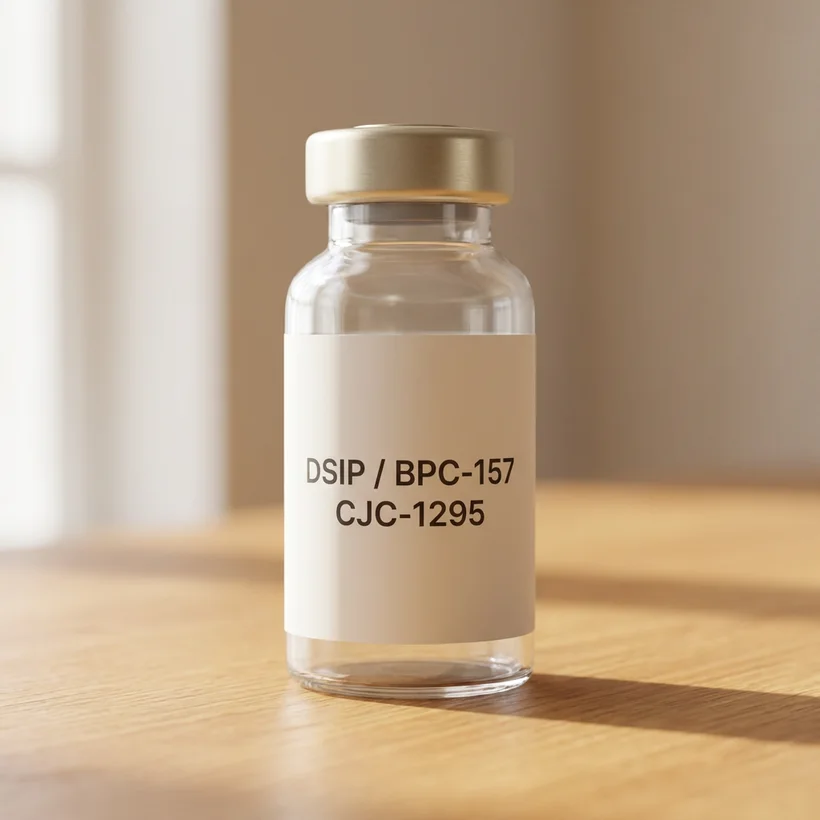
From the FormBlends catalog
Sleep + Recovery Stack
Sleep and repair support with DSIP, BPC-157, and CJC · From $299/mo · compounded by a licensed 503A pharmacy, dispensed only after provider review.
View Sleep + Recovery Stack →- Increased slow-wave sleep: The most direct effect. By amplifying the GHRH signal, CJC-1295 may increase the duration and depth of restorative deep sleep stages.
- Fewer nighttime awakenings: Patients commonly report waking up less during the night, resulting in more consolidated sleep.
- Faster sleep onset: Some patients report falling asleep more quickly, though this is less consistently reported than improvements in sleep depth.
- More restorative rest: Even when total sleep hours remain the same, patients often describe feeling significantly more rested upon waking. This is consistent with increased time in deep sleep.
- Improved sleep architecture: Rather than simply sedating you (as many sleep medications do), CJC-1295 may support healthier overall sleep structure, preserving the normal cycling between sleep stages.
Dosing and Administration for Sleep Benefits
Timing matters significantly when using CJC-1295 for sleep improvement. Standard protocols include:
- CJC-1295 without DAC (Mod GRF 1-29): 100 to 300 mcg subcutaneously 30 to 60 minutes before bedtime. This timing places the GHRH signal close to when natural GH secretion should occur during early sleep.
- CJC-1295 with DAC: 1 to 2 mg subcutaneously once or twice per week. Due to its extended half-life, timing relative to bedtime matters less, as the peptide provides sustained GHRH stimulation.
- Combined with ipamorelin: Evening administration of both peptides together is a widely used clinical approach for sleep and GH improvement.
Important practical notes for sleep improvement:
- Avoid eating for 2 to 3 hours before your injection, as improved blood sugar and insulin can blunt the GH response.
- Maintain consistent injection timing to support circadian rhythm alignment.
- Combine with good sleep hygiene practices (dark room, cool temperature, consistent bedtime) for maximum benefit.
For complete dosing information, see our CJC-1295 dosage guide.
Benefits and Expected Results
Sleep improvement is often the fastest-appearing benefit of CJC-1295 therapy. Here is what patients commonly experience:
- Days 3 to 7: Some patients notice deeper sleep or more vivid dreams within the first week. Dreams may become more vivid as a result of changes in sleep architecture.
- Week 1 to 2: Most patients report noticeably improved sleep quality. Waking up feeling genuinely rested is a hallmark early response.
- Week 2 to 4: Sleep improvements become more consistent. Daytime energy, focus, and mood often improve as a downstream result of better rest.
- Month 1 to 3: Full sleep improvement effects are typically achieved. Sleep quality stabilizes, and the downstream benefits of improved rest (better recovery, clearer thinking, more consistent energy) are well established.
Patients who have the most disrupted baseline sleep often experience the most dramatic improvements. Those who already sleep reasonably well may notice subtler but still meaningful enhancements.
Side Effects and Safety
CJC-1295 is generally well-tolerated. Common side effects include:
- Injection site irritation
- Mild facial flushing
- Headache (usually transient)
- Temporary water retention
- Vivid dreams (which many patients view as a positive sign of deeper sleep)
An important safety note for sleep: unlike prescription sleep medications such as benzodiazepines or Z-drugs, CJC-1295 isn't a sedative. It doesn't carry risks of dependency, tolerance, or next-day grogginess. It works by supporting the physiologic mechanisms of sleep rather than artificially inducing unconsciousness.
Contraindications include active malignancy, pregnancy, breastfeeding, and hypersensitivity to the peptide. See our CJC-1295 side effects guide for complete safety information.
Who Is a Good Candidate?
CJC-1295 for sleep may be particularly beneficial for:
- Adults who struggle with light or unrefreshing sleep despite good sleep hygiene
- Those over 35 who have noticed a gradual decline in sleep quality (consistent with age-related GH decline)
- Patients who want to avoid the dependency risks of pharmaceutical sleep aids
- Individuals whose poor sleep is accompanied by other symptoms of GH decline (fatigue, slow recovery, increased body fat)
- People who have tried melatonin, magnesium, and behavioral interventions without satisfactory improvement
CJC-1295 isn't appropriate for sleep disorders that have structural causes, such as obstructive sleep apnea. Anyone with suspected sleep apnea should have a sleep study before pursuing peptide therapy.
Frequently Asked Questions
Will CJC-1295 make me drowsy?
No. CJC-1295 isn't a sedative and doesn't cause drowsiness. It supports sleep quality by enhancing the physiologic processes that produce deep sleep. You shouldn't feel impaired or overly sleepy during the day.
Can I take CJC-1295 with melatonin?
Many physicians allow the combination of CJC-1295 with low-dose melatonin. Melatonin supports circadian rhythm timing while CJC-1295 supports sleep depth through GH pathways. But always discuss supplement combinations with your prescribing physician.
How is CJC-1295 different from sleeping pills?
Sleeping pills (benzodiazepines, Z-drugs) work by sedating the brain, often suppressing deep sleep despite inducing unconsciousness. CJC-1295 works by supporting the natural hormonal signals that produce genuine deep sleep. It doesn't carry risks of dependency, tolerance, or cognitive impairment.
What if CJC-1295 doesn't improve my sleep?
If CJC-1295 doesn't improve your sleep within 4 to 6 weeks, the underlying cause of your sleep difficulty may not be primarily related to GH decline. Your physician can help investigate other factors such as cortisol dysregulation, sleep apnea, thyroid issues, or other hormonal imbalances.
Do I need to take CJC-1295 forever for better sleep?
Not necessarily. Some patients use CJC-1295 for a defined period (3 to 6 months) to reset their sleep patterns while simultaneously addressing other lifestyle factors. Others continue long-term as part of ongoing health improvement. Your physician can help determine the right approach for your situation.
Start Sleeping Better with Physician-Guided Peptide Therapy
If poor sleep is undermining your health and performance, CJC-1295 may be the missing piece. FormBlends connects you with licensed physicians who can evaluate your sleep concerns and create a personalized peptide protocol.
Disclaimer: This article is for informational purposes only and doesn't constitute medical advice. CJC-1295 isn't FDA-approved for sleep disorders or any medical condition. The information presented is based on GHRH and growth hormone research and clinical observations. Always consult with a licensed healthcare provider before beginning any peptide therapy. Individual results may vary. FormBlends doesn't claim that CJC-1295 cures, treats, or prevents any disease.
Ready when you are
Sleep + Recovery Stack
Sleep and repair support with DSIP, BPC-157, and CJC · From $299/mo · compounded by a licensed 503A pharmacy, dispensed only after provider review.
View Sleep + Recovery Stack →