
Trust Signals
Policy: No fabricated statistics. Every specific number is sourced or flagged as approximate. Speculation is labeled.
No financial relationship with any compounding pharmacy or clinic named or implied on this page.
Key Takeaways
- Sermorelin is a 29-amino-acid GHRH fragment that requires a physician prescription; no legal over-the-counter version exists in the US.
- The original brand Geref was withdrawn around 2008 for commercial reasons; all current US supply comes from 503A/503B compounding pharmacies.
- Sermorelin's plasma half-life is approximately 10 to 20 minutes, making bedtime subcutaneous dosing the standard clinical approach to match the natural GH pulse.
- Human RCT evidence for body-composition and anti-aging outcomes in non-deficient adults is sparse; most supporting data comes from small trials with surrogate endpoints like IGF-1.
- Before purchasing, request a third-party HPLC Certificate of Analysis confirming identity and greater than 98% purity from the dispensing compounding pharmacy.
What Is Sermorelin Peptide Near Me, and What Should You Expect to Find?
Searching for sermorelin peptide near me puts you in a market that is split between licensed medical clinics, telehealth prescribers, and illegal grey-market vendors. Legitimate sermorelin is a prescription-only, compounded injectable available through a physician. Any website selling it without a prescription or labeling it "for research use only" while clearly marketing it for human use occupies a legal grey zone. Expect 3 to 6 months of treatment under IGF-1 lab monitoring if you pursue a legitimate protocol.
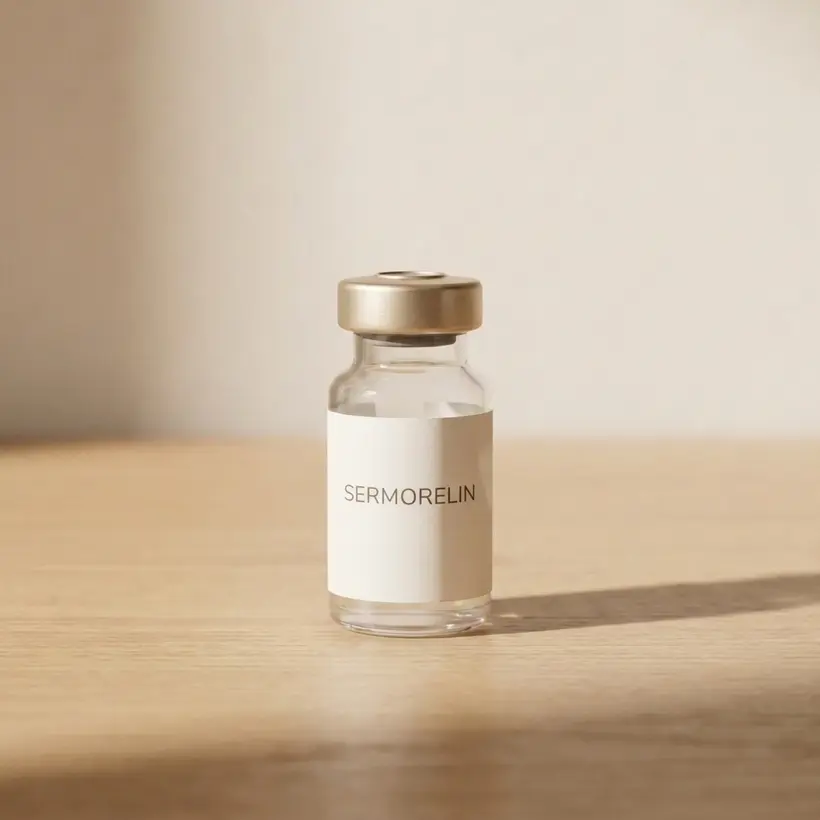
From the FormBlends catalog
Sermorelin
Bioidentical GHRH analog for natural growth hormone pulsatility · From $175/mo · compounded by a licensed 503A pharmacy, dispensed only after provider review.
View Sermorelin →Table of Contents
- What is sermorelin and how does it work (with real numbers)?
- Evidence ledger: what the data actually supports
- Finding a legitimate local or telehealth provider
- What most pages get wrong about sermorelin
- Formulation, stability, and reconstitution (the chemistry)
- Dosing and monitoring table
- Honest head-to-head: sermorelin vs. alternatives
- Label literacy and COA verification
- Side effects and contraindications
- FAQ
- Sources
What Is Sermorelin and How Does It Work (With Real Numbers)?
Sermorelin acetate is the acetate salt of the 29 N-terminal amino acids of endogenous human growth hormone-releasing hormone (GHRH 1-29). The full GHRH peptide is 44 amino acids; the first 29 are sufficient for receptor binding and biological activity. Sermorelin binds the GHRH receptor (GHRHR) on somatotroph cells in the anterior pituitary, activating adenylyl cyclase via Gs protein coupling and increasing intracellular cAMP, which drives GH synthesis and pulsatile release.
Key pharmacokinetic facts from the original Geref prescribing data and published pharmacology:
- Half-life: Approximately 10 to 20 minutes after IV administration in studies of the original branded product. Subcutaneous absorption adds time to peak but does not meaningfully extend active duration.
- Clearance: Primarily proteolytic degradation by plasma and tissue peptidases; no hepatic or renal metabolism is the primary route.
- Receptor: GHRHR, a class B G-protein-coupled receptor. Sermorelin does not bind the ghrelin receptor (GHSR), which is the target of ipamorelin and MK-677.
What the mechanism does NOT prove: Stimulating pituitary GH release in a lab assay does not by itself prove clinically meaningful changes in body composition, recovery, or aging in healthy adults. The pituitary's response also declines with age and obesity, limiting the ceiling of effect in older or metabolically unhealthy patients.
Evidence Ledger: What the Data Actually Supports
| Claim | Best Evidence Type | Direction | Confidence |
|---|---|---|---|
| Sermorelin raises GH and IGF-1 in GH-deficient patients | Human RCTs (original Geref trials, pediatric and adult GHD) | Positive, consistent | Moderate |
| Sermorelin raises IGF-1 in healthy, non-deficient adults | Small human trials, mostly uncontrolled or short duration | Positive, modest | Low |
| Improvement in body composition (lean mass, fat mass) | Small human trials with surrogate endpoints; no large RCT in healthy adults | Trend positive, effect size unclear | Low |
| Improved sleep quality | Mechanistic rationale (GH secretion is sleep-coupled); 1 small older trial (Walker et al., 1996 reviewed data) | Suggested, not confirmed | Very Low |
| Anti-aging / longevity outcomes | Mechanism only; no human trials with hard endpoints | Speculative | Very Low |
| Safety over 6-12 months at therapeutic doses | Original branded clinical data, post-market surveillance in pediatric use | Acceptable short-term profile | Moderate (for short-term only) |
| Long-term cancer risk from elevated IGF-1 | Observational epidemiology linking high IGF-1 to cancer risk; no sermorelin-specific trial | Theoretical concern, unquantified | Low (concern, not established harm) |
Finding a Legitimate Local or Telehealth Provider for Sermorelin
Sermorelin is a prescription drug under 21 USC 353. These are your legitimate access pathways:
- Local clinics: Anti-aging medicine practices, men's health or women's health hormone clinics, and some endocrinology or internal medicine practices. Search for clinics credentialed by the American Academy of Anti-Aging Medicine (A4M) or that list board-certified physicians with hormone prescribing experience.
- Telehealth prescribers: Platforms that employ licensed physicians, conduct an intake consultation, and review IGF-1 and a basic metabolic panel before prescribing. The prescription is sent to a registered 503A compounding pharmacy that ships to you. This is legal in most states.
- Red flags: Any vendor selling sermorelin without a prior prescription, vendors who offer to "bundle" a consultation for $20 with immediate purchase, and any product labeled "not for human use" but sold in human-dose vials with injection supplies.
What Most Pages Get Wrong About Sermorelin
This is the section almost no competitor page includes.
1. The pituitary age ceiling. Sermorelin works by stimulating a pituitary that must still be functional. GH secretory capacity declines with age, obesity, and chronic high-calorie intake. A 60-year-old with significant visceral adiposity may have a blunted IGF-1 response not because sermorelin failed, but because their somatotroph reserve is reduced. Patients are rarely counseled on this before starting.
2. Bioavailability of subcutaneous vs. intranasal. Some clinics and online vendors promote intranasal or sublingual sermorelin. Peptides in the 3-4 kDa molecular weight range, like sermorelin (approximately 3.3 kDa), face substantial enzymatic degradation at mucosal surfaces. There is no peer-reviewed pharmacokinetic data establishing meaningful systemic bioavailability for intranasal sermorelin in humans. Subcutaneous injection is the only route with clinical precedent.
3. IGF-1 is a surrogate, not an outcome. Many providers use rising IGF-1 as proof the treatment is "working." IGF-1 is a biomarker of GH axis activity, not a validated surrogate for clinical outcomes like lean mass or cardiovascular health. Optimizing IGF-1 toward mid-range normal is a reasonable monitoring goal, but it does not prove the clinical benefits patients are seeking.
4. Antibody formation. The original Geref prescribing information documented that a minority of pediatric patients developed antibodies to sermorelin that could attenuate the growth response. This is rarely mentioned in adult wellness contexts. It does not appear to cause clinical harm but can explain treatment non-response over time.
Formulation, Stability, and Reconstitution: The Chemistry Behind the Rules
Sermorelin is dispensed as a lyophilized (freeze-dried) powder because peptide bonds are vulnerable to hydrolysis in aqueous solution. The lyophilization removes water, halting hydrolysis. Once reconstituted, the clock starts.
Why bacteriostatic water, not sterile water? Bacteriostatic water contains 0.9% benzyl alcohol as a preservative. This inhibits microbial growth in a multi-dose vial used over days to weeks. Sterile water lacks this preservative and is appropriate only for single-dose use. Using sterile water in a multi-dose vial creates infection risk.
Why refrigerate, not freeze? Ice crystal formation during freezing physically disrupts peptide secondary structure and can cause irreversible aggregation. Refrigeration (2-8 degrees Celsius) slows hydrolysis and oxidation without ice damage.
Why protect from light? Aromatic amino acids (phenylalanine, tyrosine, tryptophan) in the peptide sequence undergo photo-oxidation when exposed to UV. Sermorelin contains phenylalanine and tyrosine residues that are susceptible. Store in the original opaque vial.
Signs of degradation: Cloudiness, visible particulate matter, or yellow-brown discoloration in a reconstituted solution that should be clear and colorless. Discard if any of these appear.
Reconstitution math example: To make a 200 mcg/0.1 mL concentration from a 5 mg (5,000 mcg) vial, add 2.5 mL of bacteriostatic water. Each 0.1 mL drawn = 200 mcg dose. Verify your vial size and target dose with your prescribing physician; concentrations vary by pharmacy.
Dosing and Monitoring Table
| Parameter | Typical Clinical Range | Notes |
|---|---|---|
| Starting dose | 200-300 mcg subcutaneous, at bedtime | Align with nocturnal GH pulse |
| Maximum common dose | 500 mcg per injection | Higher doses not shown to be more effective in most protocols |
| Frequency | 5-7 nights per week | Some protocols use 5 on / 2 off to reduce tachyphylaxis risk |
| Baseline labs before starting | IGF-1, fasting glucose, HbA1c, CMP, CBC, thyroid panel | Screen for contraindications; establish baseline |
| Follow-up IGF-1 check | 3 months after starting | Dose adjust toward mid-range normal for age |
| Treatment duration before reassessment | 3-6 months | Discontinue or rotate if no IGF-1 response |
| Contraindications | Active malignancy, intracranial lesion, pregnancy, uncontrolled DM | Per original Geref prescribing information |
Honest Head-to-Head: Sermorelin vs. Alternatives
| Comparison | Sermorelin | Alternative | Where Sermorelin Loses |
|---|---|---|---|
| vs. Recombinant HGH | Pulsatile, physiologic GH stimulation; preserves feedback axis; lower cost per month | rHGH: more potent, predictable, FDA-approved (Norditropin, etc.) | Smaller net IGF-1 elevation; dependent on pituitary reserve; less clinical data in adults |
| vs. CJC-1295 + Ipamorelin | Longer human safety record; more historical clinical data | Combo: synergistic dual-receptor stimulation; larger IGF-1 rise reported in small trials | Lower IGF-1 ceiling; less receptor diversity (no GHSR action) |
| vs. MK-677 (ibutamoren, oral) | Injection required; shorter half-life; no oral option | MK-677: oral, 24-hour half-life, no injection | Convenience; MK-677 produces sustained GH elevation without injection; note MK-677 is not FDA-approved and has water-retention and insulin-resistance signals |
| vs. Sleep optimization / exercise | Pharmacologic GH stimulus at bedtime | High-intensity exercise and sleep hygiene raise endogenous GH by comparable magnitude in some studies | No injection, no cost, no regulatory risk; for healthy adults with good lifestyle, pharmacologic addition may add little |
Label Literacy and COA Verification
When your compounded sermorelin arrives, these are the specific things to verify before injecting:
- Vial label: Must state "sermorelin acetate," the concentration in mg/mL (after reconstitution) or mg per vial (lyophilized), lot number, expiration date, and the dispensing pharmacy's name and license number.
- Certificate of Analysis (COA): Request from your pharmacy before or at dispensing. Should show identity confirmation (mass spectrometry or HPLC retention time matching sermorelin standard), purity by HPLC (greater than 98% is the standard expectation for pharmaceutical-grade peptide), and endotoxin/sterility testing results. A COA from the peptide API supplier alone is not sufficient; request the COA from the finished compounded product.
- 503A vs. 503B: 503A pharmacies compound for individual patient prescriptions. 503B outsourcing facilities compound in larger batches under cGMP conditions. 503B facilities are subject to FDA inspection and are generally considered higher quality assurance. Look up the pharmacy on FDA's "Drug Compounding" database.
- What a degraded or counterfeit product can look like: Reconstituted solution that is cloudy, foamy when agitated, or off-white rather than clear; a lyophilized cake that has become a loose powder or discolored yellowing; a vial shipped without cold-chain packaging (no ice pack or cold indicator).
Side Effects and Contraindications
From the original Geref clinical program and post-market data (pediatric use):
- Common (>5% reported in original trials): Injection-site reactions (pain, swelling, redness), transient facial flushing, headache.
- Less common: Nausea, dizziness, somnolence, dysphasia. These are generally dose-dependent and transient.
- Antibody formation: Documented in a subset of pediatric patients during extended use in original branded trials. Clinical significance in adults under shorter protocols is unknown but possible.
- Theoretical IGF-1 concern: Epidemiological data show associations between high circulating IGF-1 and risks of certain cancers (prostate, colorectal in some studies). No sermorelin-specific causal data exists, but this is the basis for the contraindication in anyone with active or recent malignancy.
- Glucose metabolism: GH has counter-insulin effects. Monitor HbA1c and fasting glucose at baseline and follow-up, particularly in patients with prediabetes.
Absolute contraindications (per original prescribing information): Active intracranial neoplasm; active malignancy of any type; known hypersensitivity to sermorelin or any component of the formulation.
FAQ
Where can I get sermorelin peptide near me?
Sermorelin requires a prescription in the United States. You can get it from a local anti-aging clinic, hormone replacement therapy (HRT) clinic, or endocrinologist who offers compounded peptide protocols. Telehealth platforms with prescribing physicians can also mail compounded sermorelin to most states, effectively bringing it "near you" without a local provider.
Is sermorelin FDA-approved?
The original brand Geref (sermorelin acetate) was FDA-approved for pediatric GH deficiency diagnosis and short stature but was withdrawn from the market by the manufacturer around 2008 for commercial reasons, not safety. Today, sermorelin dispensed in the US comes from FDA-registered 503A or 503B compounding pharmacies and is prescribed off-label for adults.
How does sermorelin differ from HGH injections?
Sermorelin is a 29-amino-acid fragment of endogenous GHRH that stimulates your pituitary to release its own GH. Exogenous HGH bypasses the pituitary entirely and suppresses the feedback axis. Sermorelin produces a more physiologic, pulsatile GH profile and carries lower risk of feedback suppression, but its net GH elevation is generally smaller and less predictable than direct HGH injection.
What is a typical sermorelin dose and protocol?
Most clinical protocols use 0.2 to 0.3 mg (200-300 mcg) subcutaneously at bedtime, 5-7 nights per week, aligning with the natural nocturnal GH pulse. Some providers use doses up to 0.5 mg. Treatment courses typically run 3 to 6 months before reassessment with IGF-1 labs. Dose should be individualized based on IGF-1 response, not body weight alone.
What does the evidence actually show for sermorelin in adults?
Human trial evidence for sermorelin in healthy adults is limited and mostly older, small-sample studies. Controlled work in GH-deficient adults shows it raises IGF-1 levels. Evidence for body composition, sleep quality, and anti-aging outcomes in non-deficient adults is largely low-grade: small trials, surrogate endpoints, no long-term placebo-controlled data.
What are the real side effects of sermorelin?
The most common side effects are injection-site reactions (redness, swelling, pain) and transient facial flushing. Less common effects include headache, dizziness, nausea, and somnolence. Hypothetical long-term concerns include IGF-1-mediated promotion of occult neoplasms, though this has not been demonstrated in clinical trials of the durations studied. Antibody formation was documented in pediatric use of the original branded product.
How do I verify that a compounded sermorelin product is legitimate?
Ask the dispensing pharmacy for a Certificate of Analysis (COA) from an independent third-party lab confirming identity, purity (greater than 98% by HPLC), and sterility. Verify the pharmacy holds 503A or 503B status on the FDA's registered outsourcing facility list. Legitimate product arrives lyophilized, not pre-mixed, and should be reconstituted with bacteriostatic water.
How should sermorelin be stored and reconstituted?
Lyophilized sermorelin vials should be stored at 2 to 8 degrees Celsius (refrigerated), protected from light. After reconstitution with bacteriostatic water, store refrigerated and use within 21 to 30 days per most compounding pharmacy guidelines, though stability data specific to compounded formulations is limited. Never freeze reconstituted peptide and discard if the solution appears cloudy or discolored.
Can I get sermorelin through a telehealth provider instead of a local clinic?
Yes. Several telehealth platforms employ licensed physicians who can prescribe compounded sermorelin after a medical consultation and, in most cases, a review of recent IGF-1 and other labs. The pharmacy ships directly to your address. This bypasses the need for a local provider but does not eliminate the prescription requirement or the need for ongoing lab monitoring.
How does sermorelin compare to ipamorelin or CJC-1295?
CJC-1295 (a long-acting GHRH analogue) and ipamorelin (a GH secretagogue acting on the ghrelin receptor) are often combined for synergistic GH stimulation. Sermorelin has a much shorter half-life (roughly 10-20 minutes) than CJC-1295 with DAC (days). The CJC-1295/ipamorelin combination produces a larger and more sustained IGF-1 rise in most studies, but also has less historical human safety data than sermorelin.
Does sermorelin show up on drug tests?
WADA and most sports anti-doping organizations prohibit GH-releasing peptides including sermorelin under the category of peptide hormones and related substances. Specific sermorelin detection windows in urine or blood are not publicly established in the sporting literature. If you compete under anti-doping rules, assume sermorelin use is prohibited and detectable.
What questions should I ask a local sermorelin provider before starting?
Ask: (1) Will you test baseline and follow-up IGF-1 and GH levels? (2) Which compounding pharmacy do you use, and can I see their COA? (3) What is the monitoring schedule? (4) What are your contraindication criteria, including history of malignancy? (5) Is this prescribed under a formal treatment plan, and will I receive written dosing instructions?
Sources
- Geref (sermorelin acetate) Prescribing Information. Serono Laboratories, Inc. FDA-archived labeling.
- Prakash A, Goa KL. Sermorelin: a review of its use in the diagnosis and treatment of children with idiopathic growth hormone deficiency. BioDrugs. 1999;12(2):139-157.
- Walker RF. Sermorelin: a better approach to management of adult-onset growth hormone insufficiency? Clinical Interventions in Aging. 2006;1(4):307-308.
- Sigalos JT, Pastuszak AW. The safety and efficacy of growth hormone secretagogues. Sexual Medicine Reviews. 2018;6(1):45-53. PMC5632578.
- FDA. Human Drug Compounding: 503A and 503B Regulatory Framework. FDA.gov. Accessed 2026.
- FDA. BioResearch Monitoring: Registered Outsourcing Facilities Database. FDA.gov. Accessed 2026.
- WADA. Prohibited List 2024: Section 2 Peptide Hormones, Growth Factors, Related Substances and Mimetics. WADA-ama.org.
- Freda PU. Serum insulin-like growth factor-I and its binding proteins: clinical significance. Growth Hormone & IGF Research. 2002;12(2):80-84.
- Renehan AG, Zwahlen M, Minder C, et al. Insulin-like growth factor (IGF)-I, IGF binding protein-3, and cancer risk: systematic review and meta-regression analysis. Lancet. 2004;363(9418):1346-1353.
- USP General Chapter <797> Pharmaceutical Compounding - Sterile Preparations. United States Pharmacopeia.
Footer Disclaimers
Platform: FormBlends is an informational resource. We do not prescribe, dispense, or supply any pharmaceutical compound. Nothing on this page constitutes medical advice. Consult a licensed physician before starting any peptide therapy.
Research Compound / Compounded Medication: Sermorelin as described on this page refers to the compounded prescription drug dispensed by licensed 503A/503B pharmacies under physician supervision. It is not an FDA-approved drug in its current compounded form and is not available without a prescription.
Results: Individual outcomes vary. The evidence base for many claimed benefits in healthy, non-deficient adults is limited. Statements on this page reflect the available evidence and are graded accordingly; they are not promises of outcome.
Trademarks: Geref is a trademark of Serono. Norditropin is a trademark of Novo Nordisk. All third-party trademarks are the property of their respective owners and are used here for reference only. FormBlends has no affiliation with these companies.
Related peptide guides
Ready when you are
Sermorelin
Bioidentical GHRH analog for natural growth hormone pulsatility · From $175/mo · compounded by a licensed 503A pharmacy, dispensed only after provider review.
View Sermorelin →