
Trust Signals
This page distinguishes animal data from human data throughout. No financial relationship with any peptide vendor. Research compound information only, not a prescription or clinical recommendation.
Key Takeaways
- The "wolverine peptide" is a street name for BPC-157, usually stacked with TB-500 (Thymosin Beta-4 fragment). It is not a single branded pharmaceutical.
- The FDA added BPC-157 to its list of bulk drug substances that cannot be compounded under 503A and 503B, tightening legal access in the US as of 2023.
- All musculoskeletal healing claims for BPC-157 rest on rodent studies; no published human RCT for soft-tissue repair exists as of mid-2025.
- Both BPC-157 and TB-500 appear on the WADA Prohibited List (S2), making their use a sanctionable offense for competitive athletes.
- Purity is the single largest practical risk: third-party COA testing of peptide research products has found significant misdosing and contamination in the market.
What Is the Wolverine Peptide and Where Can You Find It Near You? (Direct Answer)
The wolverine peptide near you is almost certainly BPC-157, often combined with TB-500, sold through peptide research vendors or offered at some regenerative medicine clinics and telehealth platforms. It has no FDA approval, its US compounding is now legally restricted, and its healing evidence in humans is genuinely thin. Proceed with realistic expectations.
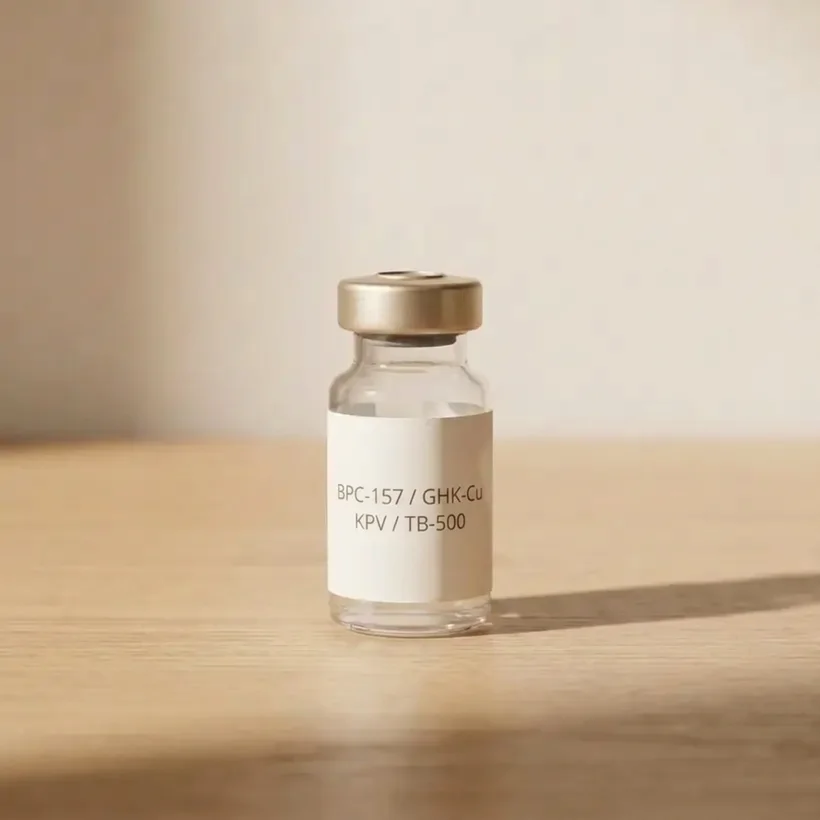
From the FormBlends catalog
Premium Recovery Quad Stack
Premium recovery blend with BPC-157, GHK-Cu, KPV, and TB-500 · From $349/mo · compounded by a licensed 503A pharmacy, dispensed only after provider review.
View Premium Recovery Quad Stack →Table of Contents
- What exactly is the wolverine peptide?
- What does the evidence actually show?
- How does BPC-157 work at the molecular level?
- What most pages get wrong about the wolverine peptide
- Is it legal to buy or use near you?
- How to find and evaluate a local provider
- Honest head-to-head: wolverine peptide stack vs. real alternatives
- Dosing and operational label literacy
- Risks the clinic brochure omits
- FAQ
- Sources
What Exactly Is the Wolverine Peptide?
"Wolverine peptide" is a marketing and social-media nickname, not a scientific or regulatory term. It refers to BPC-157 (Body Protection Compound-157), a synthetic pentadecapeptide of 15 amino acids derived from a sequence found in human gastric juice. The nickname comes from the peptide's reputation, generated almost entirely in online sports and biohacking communities, for dramatically accelerating injury recovery, echoing the Marvel character's near-instant healing ability.
In practice, most sellers and clinics marketing the "wolverine peptide" sell BPC-157 alone or a combination of BPC-157 and TB-500. TB-500 is a synthetic peptide corresponding to the active fragment (approximately amino acids 17 to 23) of Thymosin Beta-4, a 43-amino-acid protein abundant in platelets and wound fluid in the human body. These two compounds are proposed to complement each other by acting on partially distinct repair and angiogenic pathways, though no combination human trial has been published.
What Does the Evidence Actually Show?
| Claim | Best Evidence Type | Effect Direction | Confidence |
|---|---|---|---|
| BPC-157 accelerates tendon and ligament healing | Rodent models (multiple labs, Sikiric group and others) | Positive in animals | Very Low (no human RCT) |
| BPC-157 reduces GI ulceration | Animal models; one phase II human trial (oral formulation, IBD) with incomplete published results | Positive in animals; human signal inconclusive | Low |
| TB-500 promotes wound healing and cell migration | In vitro, animal models; equine veterinary use | Positive in animals/in vitro | Very Low (no human RCT) |
| BPC-157 modulates dopaminergic and serotonergic systems | Rodent pharmacology studies | Modulatory (direction complex) | Very Low |
| BPC-157 is safe for long-term human use | No controlled human safety study published | Unknown | Very Low |
| Both compounds are WADA-prohibited | WADA 2025 Prohibited List (S2 category) | Confirmed prohibited | High |
The Sikiric research group at the University of Zagreb has published the majority of BPC-157 animal studies over several decades. Their rodent data are internally consistent and show accelerated tendon-to-bone healing, reduced inflammation, and gastroprotective effects. The honest caveat: rodent tendon healing models translate poorly to human outcomes, and no independent group has replicated these findings in a published human RCT for any musculoskeletal indication.
How Does BPC-157 Work at the Molecular Level?
BPC-157's proposed mechanisms, drawn from animal and in-vitro research, include the following. These are mechanism signals, not proven human treatment effects.
- Growth hormone receptor upregulation: Rodent studies from the Sikiric group show BPC-157 increases GH receptor expression in tendon fibroblasts, which may amplify downstream IGF-1 signaling and collagen synthesis. The precise receptor binding site for BPC-157 itself has not been definitively characterized.
- Nitric oxide (NO) pathway modulation: BPC-157 appears to counteract NO overproduction in inflammatory conditions in rodent models while also promoting vasodilatory NO signaling that supports angiogenesis. This dual action is context-dependent and the direction in human tissue is not confirmed.
- VEGF-driven angiogenesis: Multiple animal studies report increased vascular endothelial growth factor (VEGF) expression at wound sites following BPC-157 administration, promoting new blood vessel formation, which is needed for tendon and muscle repair. This same mechanism is why theoretical oncological risk (feeding tumor vasculature) cannot be dismissed without long-term human carcinogenicity data.
- Actin dynamics (TB-500 specific): TB-500's active fragment binds G-actin, sequestering it in a way that promotes cell migration and reduces apoptosis. Thymosin Beta-4 is measurably elevated in wound fluid, giving this mechanism genuine biological plausibility. In vitro potency is real; human dose-response in injury settings is not established.
What these mechanisms do NOT prove: a positive result in a rodent tendon transection model does not predict efficacy or safety in a human rotator cuff tear, ACL injury, or muscle strain. Species differences in healing physiology, vascularity, and drug metabolism are substantial.
What Most Pages Get Wrong About the Wolverine Peptide
This is the section commodity pages skip entirely.
Bioavailability after oral dosing is genuinely uncertain. Many vendors sell oral BPC-157 capsules. Peptides of 15 amino acids face proteolytic degradation in the stomach and intestinal lumen. The gastric origin of the parent protein is sometimes cited as evidence for oral stability, but BPC-157's stability in simulated gastric fluid at physiologic pH and enzyme concentrations has not been rigorously characterized in a published pharmacokinetic study in humans. Oral formats may deliver meaningful systemic levels for GI-tract conditions (where luminal concentration matters more than systemic absorption) but claims of oral delivery producing systemic musculoskeletal effects are speculative.
Purity is a genuine crisis in this market. Independent analyses of research peptide products (including work by organizations that test sports supplements and research chemicals) have found that a meaningful proportion of products are misdosed or contain peptide degradation products. BPC-157 is a fragile molecule: exposure to heat above roughly 37 degrees Celsius, repeated freeze-thaw cycles, and light can accelerate degradation. A product that began as pure BPC-157 but was stored improperly before reaching you may contain truncated or oxidized peptide fragments with unknown activity.
The FDA 503A and 503B restriction matters practically. Many local clinics that market "wolverine peptide" or BPC-157 injections do so by sourcing from compounding pharmacies. The FDA's 2023 action placing BPC-157 on the list of bulk drug substances that cannot be compounded limits the legal supply chain for clinics operating within the letter of federal law. Some clinics source from offshore or non-compliant vendors. This is a compliance and quality risk that clinic marketing materials will not mention.
Is It Legal to Buy or Use the Wolverine Peptide Near You?
In the United States, BPC-157 and TB-500 are not FDA-approved drugs. Their sale "for human use" is not legal without approval. They are sold as "research chemicals" or "for research use only," a legal framing that creates a grey zone for personal purchase but does not constitute an FDA approval pathway.
The FDA's 2023 inclusion of BPC-157 on its Section 503A and 503B "do not compound" list is a significant tightening. Compounding pharmacies operating under those sections cannot legally compound BPC-157 for human patients. Some 503A pharmacies had previously filled prescriptions for it. That pathway is now effectively closed for compliant pharmacies.
For athletes: WADA's 2025 Prohibited List includes Thymosin Beta-4 and its fragments explicitly under S2 (Peptide Hormones, Growth Factors, Related Substances and Mimetics). BPC-157 is also categorized under S2 as a growth factor with healing-promoting properties. A positive test carries standard anti-doping consequences regardless of where or how you obtained the substance.
How to Find and Evaluate a Local Provider
If you are searching "wolverine peptide near me," you will encounter three main provider types: regenerative medicine or sports medicine clinics, telehealth platforms that ship to you, and direct-to-consumer research chemical vendors. Here is how to evaluate each.
Questions to ask any clinic or telehealth provider before purchasing:
- Can you provide the certificate of analysis (COA) from an independent, accredited third-party laboratory (not the manufacturer's own internal COA) for the specific batch?
- Which pharmacy compounds this? Is that pharmacy 503A or 503B registered with the FDA?
- Which physician is supervising my care and will they document this in a medical record?
- What is the clinic's protocol if I have an adverse reaction?
A clinic that cannot produce a third-party COA for a specific lot number should be disqualifying. The COA should show HPLC purity (look for greater than 98 percent purity as a baseline standard), correct molecular weight confirmation by mass spectrometry, and endotoxin testing results (bacterial endotoxins in injectable peptides cause febrile reactions).
Honest Head-to-Head: Wolverine Peptide Stack vs. Real Alternatives
| Intervention | Human RCT Evidence for Musculoskeletal Healing | Regulatory Status (US) | Practical Availability | Where Peptide Stack Loses |
|---|---|---|---|---|
| BPC-157 + TB-500 (wolverine stack) | None published for musculoskeletal use | Not approved; compounding restricted | Research vendors; some clinics | Evidence, legality, purity assurance |
| Platelet-Rich Plasma (PRP) | Multiple RCTs; modest positive effect for tendinopathy (lateral epicondylitis, patellar tendon) | Procedure, not a drug; legal | Widely available at sports medicine clinics | Cost, requires procedural visit; evidence still mixed for some indications |
| Structured Physical Therapy | Strong RCT evidence for tendinopathy, rotator cuff, ACL recovery | Standard of care | Universally available | Requires effort and time investment; no "fast fix" |
| Corticosteroid Injection | Strong short-term pain relief evidence; potential long-term tendon weakening shown in RCTs | FDA-approved drugs | Universally available | Long-term collagen integrity concerns documented |
| NSAIDs (oral) | Good evidence for pain and swelling; mixed on whether they impair healing | FDA-approved | OTC/Rx | GI and cardiovascular risks with extended use |
The peptide stack's honest position: it is the most speculative option on this table for any musculoskeletal condition. That does not mean it cannot work; it means we do not yet have the human evidence to know, and that distinction matters for informed consent.
Dosing and Operational Label Literacy
The following reflects what is discussed in the research community and at compounding clinics. These are not FDA-approved dosing guidelines.
| Compound | Common Discussed Dose | Route | Frequency | Typical Cycle Length Discussed |
|---|---|---|---|---|
| BPC-157 | 200 to 500 mcg per day | Subcutaneous or intramuscular, near injury site; some oral use | Once daily | 4 to 12 weeks |
| TB-500 | 2 to 2.5 mg per injection | Subcutaneous | Twice weekly (loading), then weekly (maintenance) | 4 to 6 weeks loading, then as needed |
Reconstitution basics (for injectable lyophilized peptide): BPC-157 typically arrives as a white lyophilized powder in a sealed vial, often labeled 5 mg. Reconstitute with bacteriostatic water (not sterile water, which lacks the 0.9% benzyl alcohol preservative needed for multi-use vials). To make a 500 mcg per 0.1 mL solution from a 5 mg vial, add 1 mL of bacteriostatic water. Keep reconstituted peptide refrigerated at 2 to 8 degrees Celsius and use within approximately 4 weeks. Do not freeze reconstituted solution.
What a degraded product looks like: Fresh reconstituted BPC-157 solution is clear and colorless. Cloudiness, visible particulates, or a yellow or brown color indicate degradation or contamination. Do not inject any solution that is not clear.
Reading the COA: The COA should state the peptide sequence or molecular formula, HPLC purity as a percentage (greater than 98 percent is the standard for pharmaceutical-grade work), mass spec confirmation of molecular weight (BPC-157 molecular weight is approximately 1419.5 g/mol), and endotoxin level in EU/mg. Endotoxin for injectable compounds should be below 5 EU/kg body weight per dose by USP standards; verify the lab used a recognized endotoxin assay such as LAL (Limulus Amebocyte Lysate).
Risks the Clinic Brochure Omits
- Theoretical pro-tumorigenic risk: VEGF upregulation and promotion of angiogenesis, which are BPC-157's proposed repair mechanisms, are the same pathways exploited by malignant tumors for vascularization. No carcinogenicity study in humans exists. This risk is theoretical and unquantified, but it is not zero, and it warrants disclosure to any patient with a history of or current malignancy.
- Infection risk from unregulated injectables: Any subcutaneous or intramuscular injection carries infection risk. When the product comes from a non-sterile research vendor rather than a licensed sterile compounding pharmacy with USP 797 certification, that risk is substantially elevated.
- Drug interaction unknown territory: BPC-157's interaction with anticoagulants, immunosuppressants, or chemotherapy agents has not been studied in humans.
- No established stopping criteria: Unlike a licensed drug with a prescribing information sheet, there are no validated signs that indicate you should stop the peptide, no studied washout period, and no pharmacovigilance reporting system tracking adverse events in this population.
FAQ
What is the wolverine peptide?
The wolverine peptide is a colloquial nickname for BPC-157, sometimes stacked with TB-500 (or its fragment TB-4 Frag). It refers to the combination's reputation for accelerating soft-tissue and tendon recovery, drawing a pop-culture comparison to Marvel's Wolverine healing factor.
Where can I find the wolverine peptide near me?
In the United States, BPC-157 and TB-500 are research compounds without FDA approval for human use. They are available through compounding pharmacies with a physician's order in some states (though FDA compounding rules now restrict BPC-157), through peptide research chemical vendors, or via telehealth clinics that prescribe adjacent therapies. Always verify the provider's licensing.
Is the wolverine peptide legal?
BPC-157 is not FDA-approved as a drug. The FDA placed BPC-157 on its list of bulk drug substances that may not be compounded under Section 503A or 503B as of 2023, which significantly restricts its legal availability from compounding pharmacies in the US. TB-500 (Thymosin Beta-4) occupies a similar regulatory grey zone.
What does BPC-157 actually do mechanistically?
BPC-157 is a pentadecapeptide (15 amino acids) derived from a gastric protein. Animal studies show it upregulates growth hormone receptor expression in tendon fibroblasts, modulates nitric oxide synthesis, and promotes angiogenesis via VEGF pathways. These are animal and in-vitro findings; controlled human data are very limited.
Has BPC-157 been tested in human clinical trials?
As of 2025, published human RCT data on BPC-157 for musculoskeletal healing are absent. One completed phase II trial investigated an oral BPC-157 formulation for inflammatory bowel disease, but results were not definitively published in a peer-reviewed journal. Musculoskeletal claims rest almost entirely on rodent models.
What is TB-500 and how does it differ from BPC-157?
TB-500 is a synthetic version of the active fragment of Thymosin Beta-4, a naturally occurring 43-amino-acid protein abundant in platelets and wound fluid. It promotes actin polymerization, cell migration, and anti-inflammatory signaling. BPC-157 and TB-500 are often combined because they are proposed to act on overlapping but distinct repair pathways.
What are the realistic risks of using the wolverine peptide stack?
Known risks include injection-site reactions, nausea (especially oral BPC-157), unknown long-term safety in humans, and the significant risk of receiving an impure or misdosed product from unregulated vendors. Theoretical oncological risk from angiogenic promotion has not been ruled out in humans.
How is the wolverine peptide typically dosed?
In the research and sports performance community, BPC-157 is commonly discussed at 200 to 500 mcg per day subcutaneously or intramuscularly, often near the injury site. TB-500 protocols vary widely, with 2 to 2.5 mg twice weekly for a loading phase being frequently cited. These are not FDA-approved dosing guidelines.
How do I evaluate a local clinic offering the wolverine peptide?
Ask the clinic for a certificate of analysis (COA) from an independent third-party lab, confirm the prescribing physician's license, ask whether the peptide is compounded at a 503A or 503B pharmacy, and verify the FDA's current stance on BPC-157 compounding. Clinics that cannot produce a COA should be avoided.
Does the wolverine peptide stack beat PRP or standard physical therapy?
There is no published head-to-head human trial comparing BPC-157 or TB-500 to PRP or structured physical therapy for any musculoskeletal condition. PRP has at minimum modest human RCT data for tendinopathy. Physical therapy has strong evidence. The peptide stack has neither for musculoskeletal indications.
Will I test positive on a drug test using the wolverine peptide?
Yes. Both BPC-157 and Thymosin Beta-4 (TB-500) are on the WADA Prohibited List under S2 (Peptide Hormones, Growth Factors, Related Substances). WADA-accredited labs can detect TB-4 and its fragments in urine. Competitive athletes subject to anti-doping rules must not use these compounds.
Sources
- Sikiric P, et al. Stable Gastric Pentadecapeptide BPC 157: Novel Therapy in Gastrointestinal Tract. Current Pharmaceutical Design, 2011. (Representative publication from the primary BPC-157 research group at the University of Zagreb.)
- Sikiric P, et al. Brain-gut Axis and Pentadecapeptide BPC 157: Theoretical and Practical Implications. Current Neuropharmacology, 2016.
- Goldstein AL, Hannappel E, Kleinman HK. Thymosin beta4: actin-sequestering protein moonlights to repair injured tissues. Trends in Molecular Medicine, 2005.
- Philp D, Goldstein AL, Kleinman HK. Thymosin beta4 promotes angiogenesis, wound healing, and hair follicle development. Mechanisms of Ageing and Development, 2004.
- U.S. Food and Drug Administration. Bulk Drug Substances Nominated for Use in Compounding Under Section 503A of the Federal Food, Drug, and Cosmetic Act. Docket FDA-2015-N-3505. (BPC-157 category II listing.)
- World Anti-Doping Agency. 2025 Prohibited List. S2: Peptide Hormones, Growth Factors, Related Substances and Mimetics. WADA, 2024.
- Mishra A, et al. Efficacy of platelet-rich plasma for chronic tennis elbow: a double-blind, prospective, multicenter, randomized controlled trial of 230 patients. American Journal of Sports Medicine, 2014.
- United States Pharmacopeia. USP General Chapter 797: Pharmaceutical Compounding, Sterile Preparations. Current edition.
- Sikiric P, et al. Cytoprotection and injury of the vascular endothelium. BPC-157 as a rescue remedy. Journal of Physiology and Pharmacology, 2020.
Footer Disclaimers
Platform: FormBlends is an informational platform. Content on this page is produced for educational purposes and does not constitute medical advice, a clinical consultation, or a treatment recommendation.
Research Compound Notice: BPC-157 and TB-500 are research compounds. They are not approved by the FDA for human therapeutic use. This page does not endorse or facilitate the purchase or use of unapproved substances.
Results Disclaimer: Individual responses to any compound vary substantially. Anecdotal reports and animal study findings are not reliable predictors of your personal outcome. Consult a licensed healthcare provider before considering any peptide protocol.
Trademark Notice: "Wolverine" is a trademark of Marvel Entertainment. Its use here is descriptive of a widely used colloquial search term and does not imply any affiliation with or endorsement by Marvel Entertainment or its parent companies. FormBlends has no affiliation with any peptide vendor or compounding pharmacy mentioned or implied in this content.
Related peptide guides
Ready when you are
Premium Recovery Quad Stack
Premium recovery blend with BPC-157, GHK-Cu, KPV, and TB-500 · From $349/mo · compounded by a licensed 503A pharmacy, dispensed only after provider review.
View Premium Recovery Quad Stack →