Key Takeaway
Learn about Epithalon side effects in men, including common reactions, testosterone considerations, sleep changes, and what to expect during a cycle.
· Peptide Q&A
Epithalon side effects in men are uncommon and typically mild. The most reported reactions include injection-site irritation, drowsiness from increased melatonin production, occasional headaches, and brief lightheadedness. Serious adverse events haven't been documented in the available clinical literature.
Epithalon (Epitalon) is a synthetic tetrapeptide (Ala-Glu-Asp-Gly) developed from the research of Professor Vladimir Khavinson. It's primarily studied for its ability to stimulate telomerase activity and regulate pineal gland function. Its short cycle duration (typically 10 to 20 days, once or twice per year) limits cumulative exposure and contributes to its favorable safety reputation.
Common Side Effects in Men
- Injection-site reactions: Redness, mild swelling, or a stinging sensation where the needle enters. This is the most frequently reported issue and resolves within a few hours. Rotating sites helps prevent persistent irritation.
- Drowsiness and increased sleepiness: Epithalon may boost melatonin output from the pineal gland. Men who dose in the evening often welcome this effect as it improves sleep onset. Those who dose in the morning may find it inconvenient.
- Headaches: Mild headaches during the first two to three days of a cycle are occasionally reported. Adequate water intake is the simplest countermeasure.
- Lightheadedness: Brief dizziness after injection has been noted by some users. It's typically transient and may relate to melatonin's mild blood-pressure-lowering effect.
- Vivid dreams: Changes in dream intensity and recall are commonly described, consistent with melatonin's role in sleep architecture and REM regulation.
Testosterone and Hormonal Considerations
A frequent concern among men is whether Epithalon affects testosterone levels. Based on available data:

- No direct testosterone suppression: Epithalon doesn't act on the hypothalamic-pituitary-gonadal (HPG) axis and has no documented mechanism for suppressing testosterone production.
- Melatonin-testosterone interaction: Very high melatonin levels can theoretically modulate reproductive hormone signaling, but the melatonin increase from Epithalon is within physiological ranges and unlikely to cause meaningful testosterone changes.
- Compatible with TRT: Men on testosterone replacement therapy can generally use Epithalon without conflict. Inform your provider about all current therapies so they can monitor appropriately.
Epithalon and Athletic Performance
Some men use Epithalon as part of a broader longevity and performance protocol. A few things to note:.
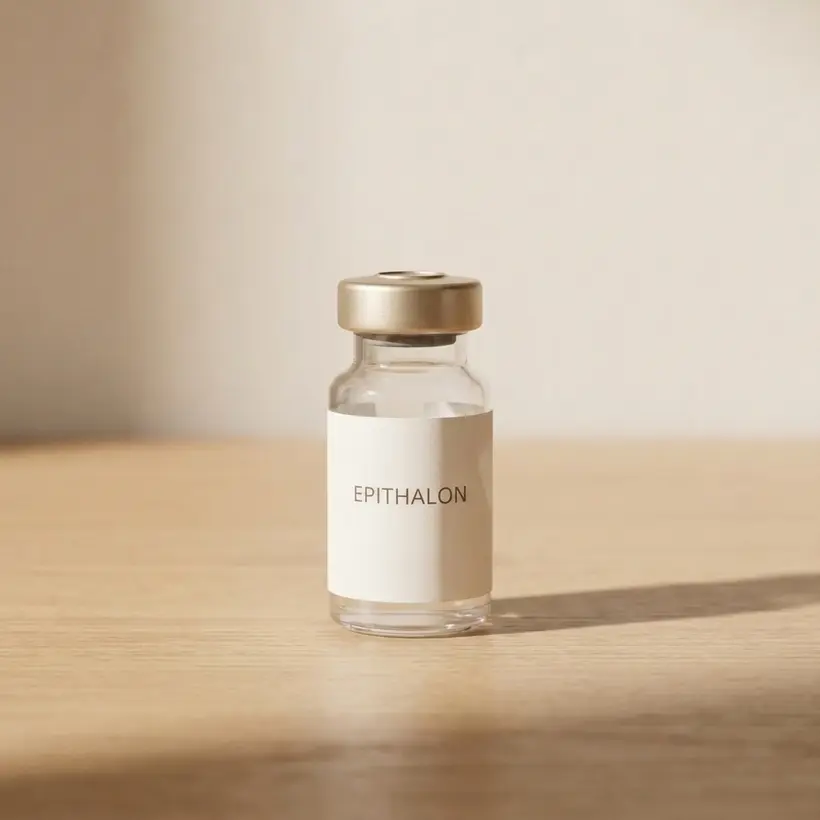
From the FormBlends catalog
Epithalon (Epitalon)
The telomerase activator for cellular youth · From $199/mo · compounded by a licensed 503A pharmacy, dispensed only after provider review.
View Epithalon (Epitalon) →- Epithalon doesn't directly enhance strength, endurance, or muscle growth.
- Improved sleep from melatonin upregulation may indirectly support recovery and performance.
- The peptide isn't currently on the WADA prohibited list, but anti-doping regulations change regularly. Competitive athletes should verify its status before use.
Who Should Be Cautious
- Men with active cancer or a history of cancer should consult their oncologist before using Epithalon. Telomerase activation is a double-edged concept, as both healthy cells and cancer cells can benefit from telomere maintenance.
- Men with autoimmune conditions should discuss potential immune-modulating effects with their provider.
- Anyone taking blood pressure medication should be aware of melatonin's mild hypotensive properties.
Peptide therapy safety considerations
Minimizing Side Effects
- Dose in the evening to work with the drowsiness effect rather than against it.
- Rotate injection sites across the abdomen and thighs.
- Hydrate well throughout each cycle day.
- Keep a brief symptom log so your provider can track patterns.
Frequently Asked Questions
Does Epithalon lower testosterone?
No. Epithalon doesn't target the hormonal pathways that regulate testosterone production. Its mechanism centers on telomerase activation and pineal gland melatonin regulation, neither of which has a documented suppressive effect on testosterone.
Can Epithalon cause insomnia?
Insomnia isn't a commonly reported side effect. In fact, most users report improved sleep due to increased melatonin production. If you experience sleep disruption, it may be related to other factors. Discuss timing and dosing with your provider.
How long do Epithalon side effects last?
Most side effects resolve within the first few days of a cycle. Injection-site reactions clear within hours. Drowsiness typically stabilizes as your body adjusts to enhanced melatonin levels. Because cycles are short (10 to 20 days), any lingering effects resolve quickly after the cycle ends.
Is Epithalon safe to use with other peptides?
Generally, yes. Epithalon is commonly used alongside peptides like BPC-157, CJC-1295, or MOTS-c. Because it works through a unique mechanism (telomerase and pineal gland), it doesn't typically compete with other peptide pathways. Space injections by at least 15 to 30 minutes and discuss your full protocol with your provider. peptide stacking guide
Are there long-term risks of Epithalon for men?
Long-term data is limited. Khavinson's research included patients followed over years without significant adverse events. The short-cycle, infrequent-use protocol keeps cumulative exposure low. The main theoretical concern is telomerase activation in pre-cancerous or cancerous cells, which is why cancer screening and provider oversight are important.
Ready when you are
Epithalon (Epitalon)
The telomerase activator for cellular youth · From $199/mo · compounded by a licensed 503A pharmacy, dispensed only after provider review.
View Epithalon (Epitalon) →