Key Takeaway
You already know sleep matters. This growth hormone peptides sleep resource covers the important information you need to make informed decisions. But here's what you might not know: growth hormone and sleep are deeply connected.
You already know sleep matters. This growth hormone peptides sleep resource covers the important information you need to make informed decisions. But here's what you might not know: growth hormone and sleep are deeply connected. About 70% of your daily growth hormone output happens during deep sleep. And growth hormone peptides may help improve the very sleep stages that produce more GH.
Key Takeaways: - The Growth Hormone and Sleep Connection - Which Peptides May Help Sleep - Improving Your Protocol for Sleep - Understand what the research shows
It's a positive feedback loop. Better sleep leads to more GH. More GH may lead to better sleep. Knowing how growth hormone peptides affect sleep can help you decide whether they're worth exploring.
The Growth Hormone and Sleep Connection
Your body releases growth hormone in pulses throughout the day. The largest and most important pulse happens during Stage 3 deep sleep, also called slow-wave sleep. This isn't coincidental) it's by design.
During deep sleep, your pituitary gland receives strong signals from growth hormone-releasing hormone (GHRH). These signals trigger the biggest GH release of the day. Available evidence indicates that sleep deprivation reduces GH secretion by up to 70%. Poor sleep quality (even if you sleep enough hours) can blunt GH release significantly.
As you age, both deep sleep duration and GH production decline. By age 40, many people have lost 50% or more of their deep sleep capacity compared to their 20s. GH levels decline in parallel, at roughly 14% per decade after age 30.
"The key to successful GLP-1 therapy is setting realistic expectations and supporting patients through the titration phase. The side effects are manageable for most people, but they need to know what to expect.", Dr. Caroline Apovian, MD, Harvard Medical School
This creates a downward spiral. Less deep sleep means less GH. Lower GH may impair the biological processes that support sleep quality. Growth hormone peptides may help break this cycle by boosting GH release, which in turn may support deeper, more restorative sleep.
Research published in the Journal of Clinical Investigation showed that GHRH administration increased slow-wave sleep in older adults. This suggests that stimulating the GH axis can directly improve sleep architecture (not just GH levels.
Which Peptides May Help Sleep?
Not all GH peptides affect sleep equally. Here's how the most commonly prescribed options compare for sleep.
is often considered the best choice for sleep improvement. Its clean side effect profile means no cortisol elevation (which could disrupt sleep) and no significant hunger (which could wake you up). When dosed before bed, Ipamorelin amplifies the natural nighttime GH pulse. Many patients report improved sleep within the first 3 to 7 days.
without DAC is frequently paired with Ipamorelin for bedtime dosing. Its short half-life means the GH stimulation aligns with your body's natural nighttime release window. The combination may produce a stronger sleep benefit than either alone.
CJC-1295 with DAC has a longer half-life (6-8 days), so its effects on GH are more sustained and less tied to a specific time of day. Some users still report sleep improvements, but the connection to nighttime dosing is less direct.
MK-677 (Ibutamoren) has interesting sleep data. A study showed it increased Stage IV deep sleep by 50% and REM sleep by 20%. But MK-677 can cause hunger, water retention, and blood sugar changes. These side effects may offset the sleep benefits for some people.
GHRP-6 produces strong GH release but can cause hunger and cortisol elevation) both of which may interfere with sleep quality. It's generally not the first choice when sleep is the primary goal.
Free Download: Peptide Protocol Planner (12-Week) Improve your sleep-focused peptide protocol with our 12-week planner. Includes sleep quality tracking, dosing schedules, and recovery benchmarks. Get yours free (we'll email it to you instantly.
[Download CTA Button]
Improving Your Protocol for Sleep
If better sleep is your primary goal, here's how to structure your approach for the best results.
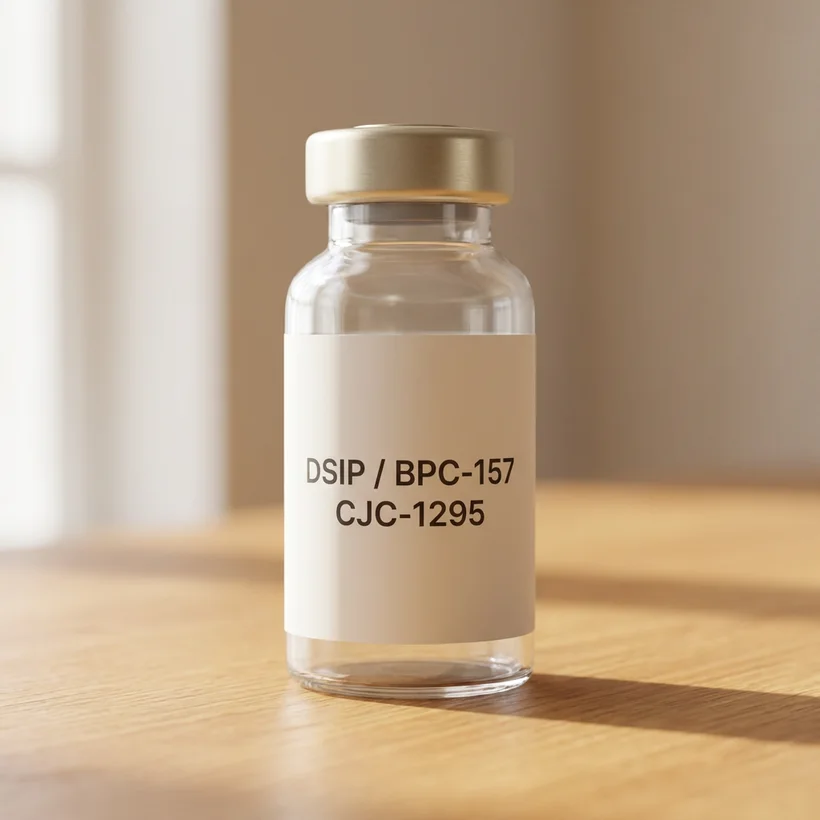
From the FormBlends catalog
Sleep + Recovery Stack
Sleep and repair support with DSIP, BPC-157, and CJC · From $299/mo · compounded by a licensed 503A pharmacy, dispensed only after provider review.
View Sleep + Recovery Stack →Timing is critical. Take your peptide 20 to 30 minutes before bed. This aligns the GH stimulus with your body's natural sleep-related GH release. Taking peptides earlier in the day won't provide the same sleep benefit.
Empty stomach matters. Eat your last meal at least 2 to 3 hours before your bedtime dose. Insulin from food can blunt GH release. A 2 to 3 hour fasting window before injection gives you the cleanest GH response.
Stack your sleep hygiene. Peptides can support better sleep, but they work best when combined with good sleep habits. Keep your room cool (65-68 degrees). Avoid screens for 30 minutes before bed. Maintain a consistent sleep and wake time. Limit caffeine after noon.
Track your sleep. Subjective improvements are valuable, but objective data is even better. Use a sleep tracker or the to monitor changes in sleep duration and quality. Share this data with your provider at follow-up visits.
Be patient with body composition goals. If you're also hoping for body composition improvements, remember that better sleep may be the foundation. Improved sleep quality can enhance fat metabolism, muscle recovery, and hormone balance) all of which support body composition over time.
Consider a that supports sleep. Foods rich in tryptophan, magnesium, and glycine may complement your peptide protocol's sleep benefits.
What the Research Shows
Let's look at what studies have actually measured, so you know what's realistic.
GHRH administration studies in older adults showed increased slow-wave sleep by approximately 30 to 50%. Participants reported feeling more rested and showed improved daytime alertness. These studies used GHRH analogs similar to CJC-1295 and Sermorelin.
MK-677 sleep studies demonstrated a 50% increase in Stage IV sleep and a 20% increase in REM sleep in healthy younger men. Participants also showed fewer nighttime awakenings. But these results need to be balanced against MK-677's side effect profile.
Patient-reported outcomes from clinical practice consistently show sleep as the first benefit people notice when starting GH peptide therapy. In surveys of patients using CJC-1295/Ipamorelin combinations, sleep improvement was reported by over 80% of respondents within the first 2 weeks.
What we don't know. Most sleep studies with GH peptides are small. Long-term data on sustained sleep improvements during extended peptide use is limited. There's also individual variation (some people experience dramatic sleep improvements while others notice more subtle changes.
The evidence supports GH peptides' role in improving sleep quality, particularly deep sleep. But peptides are one tool among many. The best results come from combining peptide therapy with solid .
Frequently Asked Questions
How quickly do GH peptides improve sleep?
Most people notice improved sleep within 3 to 7 days of starting a peptide like Ipamorelin or CJC-1295. The improvements typically include falling asleep faster, fewer nighttime awakenings, and waking up feeling more refreshed.
Can GH peptides replace sleep medication?
GH peptides aren't sleep medications and shouldn't be used as replacements for prescribed sleep aids. They may support natural sleep quality through a different mechanism) boosting growth hormone release during sleep stages. Always discuss any changes to sleep medication with your provider.
Will GH peptides help with insomnia?
GH peptides may support deeper sleep, but they don't address the root causes of insomnia such as anxiety, pain, or circadian rhythm disruption. If you have chronic insomnia, work with your healthcare provider to address the underlying cause alongside any peptide protocol.
Is it safe to take GH peptides every night?
Typical protocols involve nightly dosing for 8 to 12 weeks, followed by a break period. Your provider will determine the appropriate duration based on your response and blood work. Learn more about .
Should I take melatonin with GH peptides?
Low-dose melatonin (0.5 to 1 mg) is generally considered compatible with GH peptide therapy. Some research suggests melatonin itself may support GH release. But discuss any supplements with your to ensure there are no interactions with your specific protocol.
Ready to Take the Next Step?
Your health outcomes is personal, and you deserve a plan that fits. FormBlends connects you with licensed providers who can evaluate your needs and create a personalized protocol.
Sources &. References
- Ionescu M, Frohman LA. Pulsatile secretion of growth hormone (GH) persists during continuous stimulation by CJC-1295, a long-acting GH-releasing hormone analog. J Clin Endocrinol Metab. 2006;91(12):4792-4797. Doi:10.1210/jc.2006-1702
The information in this article is intended for educational use only and shouldn't be considered medical advice. Consult a qualified healthcare provider before making any changes to your medication or supplement regimen. FormBlends helps with connections with licensed providers for personalized medical guidance.
Last updated: 2026-03-24
Ready when you are
Sleep + Recovery Stack
Sleep and repair support with DSIP, BPC-157, and CJC · From $299/mo · compounded by a licensed 503A pharmacy, dispensed only after provider review.
View Sleep + Recovery Stack →