Key Takeaway
The best protocol for combining Ipamorelin with GLP-1 medications. Dosing, timing, titration schedules, and improvement strategies for weight loss.
The best protocol for combining Ipamorelin with a GLP-1 medication follows a phased structure: establish your GLP-1 medication first, add Ipamorelin once stable, then improve both under physician guidance. GLP-1 medications are taken on their standard schedule (weekly or daily depending on the agent), while Ipamorelin is administered daily at bedtime on an empty stomach, using separate injection sites.
Choosing Your GLP-1 Medication
The Ipamorelin protocol remains largely the same regardless of which GLP-1 agent you use. But the GLP-1 component of the protocol will differ depending on your medication:
- Semaglutide (Wegovy/Ozempic): Once-weekly injection. Standard titration starts at 0.25 mg and increases monthly up to 2.4 mg From $299
- Tirzepatide (Zepbound/Mounjaro): Once-weekly injection. Starts at 2.5 mg and titrates up to 15 mg From $349
- Liraglutide (Saxenda): Daily injection. Starts at 0.6 mg and titrates to 3.0 mg Contact provider for current pricing
Your physician will select the most appropriate GLP-1 medication based on your health history, insurance coverage, weight loss goals, and tolerance preferences choosing your GLP-1.
Phase 1: GLP-1 Foundation (Weeks 1 through 4)
Start your GLP-1 medication at its lowest dose. This is the adjustment period where your body adapts to the new signaling. The most common early challenge is nausea, which typically improves within two to three weeks.
View data table
| Category | Clinical Interest Score | Detail |
|---|---|---|
| BPC-157 | 88 | Tissue repair and gut healing |
| TB-500 | 82 | Injury recovery |
| Sermorelin | 78 | Growth hormone support |
| Ipamorelin | 75 | Anti-aging and recovery |
| GHK-Cu | 70 | Skin and tissue repair |
During this phase:
- Inject your GLP-1 on a consistent schedule
- Eat smaller, lighter meals to reduce nausea
- Stay hydrated (dehydration worsens GI side effects)
- Track your appetite, energy levels, and any side effects
- Don't add Ipamorelin yet
The reason for starting with only the GLP-1 is straightforward. If you experience side effects, you need to know which compound is responsible. Adding two new medications simultaneously makes troubleshooting much harder.
Phase 2: Introducing Ipamorelin (Weeks 3 through 5)
Once your body has adapted to the GLP-1 medication and side effects have stabilized, introduce Ipamorelin. This typically happens around week three to five, depending on your tolerance.
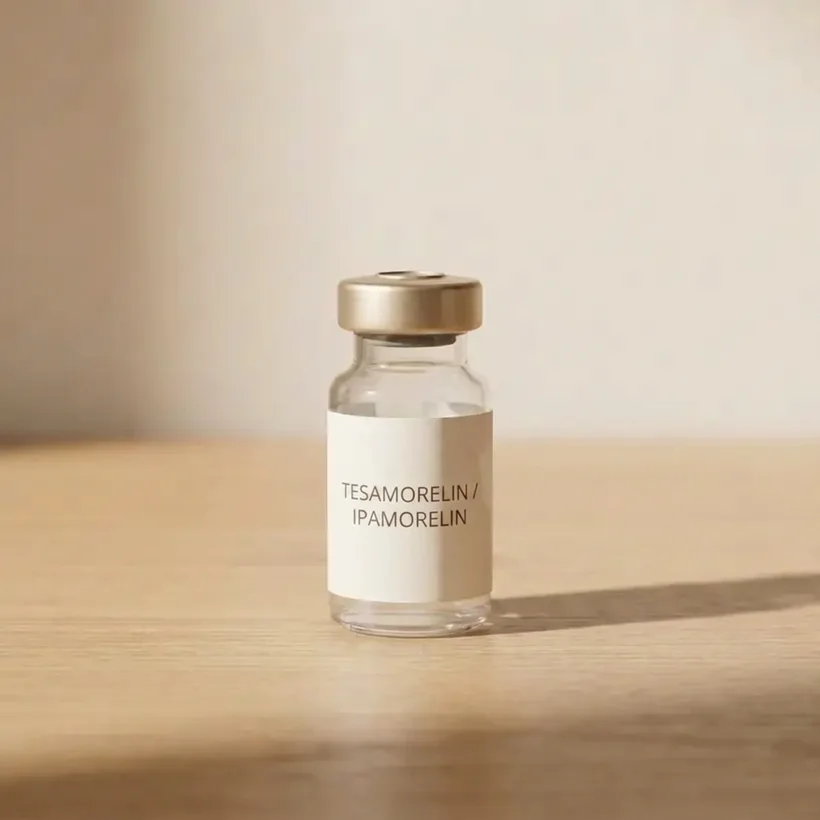
From the FormBlends catalog
Tesamorelin / Ipamorelin Blend
Growth-hormone pathway support in one blend · From $299/mo · compounded by a licensed 503A pharmacy, dispensed only after provider review.
View Tesamorelin / Ipamorelin Blend →Ipamorelin starting protocol:
- Initial dose: 100 to 200 mcg subcutaneous injection
- Frequency: Once daily
- Timing: 30 minutes before bedtime
- Stomach status: Fasted for at least 90 minutes
- Post-injection: No food for at least 30 minutes
The fasting requirement matters because insulin and blood sugar spikes blunt the growth hormone response. Carbohydrates and fats are the biggest culprits. If you had a small, protein-focused snack more than 90 minutes ago, that's generally acceptable.
Phase 3: Dual Titration and Improvement (Weeks 5 through 12)
With both peptides on board, your physician will begin improving doses based on your response.
GLP-1 titration follows the standard schedule for your specific medication. Increases typically happen every four weeks. The goal is to find the dose that produces meaningful appetite control with acceptable side effects.
Ipamorelin adjustments are based on symptoms and lab markers:
- If sleep and recovery improve at 200 mcg, you may stay at that dose
- If you want more pronounced GH effects, your physician may increase to 250 to 300 mcg
- A second daily dose (morning, fasted) can be added for enhanced GH support
- If water retention or joint stiffness develops, the dose may be reduced
Key lab work at the 6 to 8 week mark:
- IGF-1 (confirms Ipamorelin is producing a GH response)
- thorough metabolic panel
- HbA1c and fasting glucose
- Lipid panel
Lab work and monitoring
Phase 4: Sustained Progress (Weeks 12 through 24)
By this stage, both peptides are dialed in and working together effectively. This is the phase of maximum results, where patients see the most dramatic improvements in body composition, energy, sleep, and physical appearance.
During this phase:
- Continue both peptides at improved doses
- Repeat labs every 3 to 4 months
- Track body composition, not just scale weight
- Consider Ipamorelin cycling if on a continuous protocol (five days on, two off, or similar)
- Reassess goals with your physician at regular intervals
Practical Tips for Protocol Success
FormBlends
FormBlends is a U.S. telehealth platform that prescribes compounded semaglutide and tirzepatide. Patients complete an online intake, a licensed provider reviews eligibility, and medication ships from a 503A compounding pharmacy. Monthly pricing starts at $199. Start your intake.
Injection Technique
Both medications are subcutaneous injections. Use an insulin syringe with a fine-gauge needle (29 to 31 gauge). Pinch a fold of skin at your injection site, insert the needle at a 45 to 90 degree angle, inject slowly, and hold for 5 to 10 seconds before withdrawing.
Rotate injection sites consistently. A good system: GLP-1 medication always in the abdomen (rotating left and right of the navel), Ipamorelin always in the thigh (rotating between legs). This prevents lipodystrophy and ensures reliable absorption.
Storage
Both peptides should be refrigerated at 36 to 46 degrees Fahrenheit. Never freeze them. Once reconstituted, Ipamorelin is typically stable for 28 days refrigerated. GLP-1 medication storage varies by product, so follow the specific instructions on your packaging.
Nutrition Priorities
Protein is the single most important macronutrient during this protocol. Aim for 0.7 to 1.0 grams per pound of body weight daily. Since your GLP-1 medication reduces appetite, you may need to be intentional about hitting this target. Consider protein shakes if whole food intake is difficult nutrition during peptide therapy.
Exercise Recommendations
Resistance training 2 to 4 times per week is strongly recommended. This provides the mechanical stimulus that, combined with Ipamorelin's GH support, drives muscle preservation. Moderate cardio (walking, cycling) 3 to 5 times per week supports cardiovascular health and additional calorie expenditure.
When to Pause or Adjust the Protocol
Communicate with your physician if:
- GI side effects from your GLP-1 medication aren't improving after three to four weeks
- You experience persistent water retention or joint discomfort from Ipamorelin
- Your lab results show IGF-1 above the reference range
- You're losing weight too rapidly (more than 3 to 4 pounds per week consistently)
- You develop any new or concerning symptoms
Frequently Asked Questions
Can I start both peptides at the same time to save time?
We strongly recommend against it. A staggered start (GLP-1 first, then Ipamorelin) is the safest approach because it allows clear identification of any side effects. The two to four week delay is well worth the safety it provides.
What time of day should I take my GLP-1 injection?
For weekly GLP-1 medications (semaglutide, tirzepatide), you can inject at any time of day. Many patients choose morning. For daily liraglutide, consistency matters more than the specific time. Ipamorelin should always be at bedtime.
How long can I stay on this protocol?
Many patients use this combination for 16 to 24 weeks during active weight loss, then transition to a maintenance phase. Some continue longer based on individual goals and physician assessment. Ipamorelin may be cycled, while GLP-1 medication duration depends on your weight management needs.
Let Us Build Your Protocol
At FormBlends, we create personalized protocols based on your health profile, goals, and preferences. Our physicians will select the right GLP-1 medication, determine your Ipamorelin dosing, manage your titration schedule, and monitor your progress through regular labs and consultations. schedule consultation
Ready when you are
Tesamorelin / Ipamorelin Blend
Growth-hormone pathway support in one blend · From $299/mo · compounded by a licensed 503A pharmacy, dispensed only after provider review.
View Tesamorelin / Ipamorelin Blend →