All GLP-1 medications from licensed 503A compounding pharmacies Browse Products

MOTS-c for Gut Healing: Evidence

What does the research say about MOTS-c and gut health? We review the evidence on this mitochondrial peptide's effects on intestinal inflammation, the...

By FormBlends Editorial Research|Source reviewed by FormBlends Medical Team||

Source Reviewed

Written by FormBlends Editorial Research · Checked against primary sources by FormBlends Medical Team

MOTS-c for Gut Healing: Evidence custom 2026 header image for Peptide Therapy
Custom header image for MOTS-c for Gut Healing: Evidence, Peptide Therapy, and better treatment decision-making.
In This Article

This article is part of our Peptide Therapy collection. See also: GLP-1 Guides | Provider Comparisons

Search and AI answer brief

Practical answer: MOTS-c for Gut Healing: Evidence

What does the research say about MOTS-c and gut health? We review the evidence on this mitochondrial peptide's effects on intestinal inflammation, the...

Short answer

What does the research say about MOTS-c and gut health? We review the evidence on this mitochondrial peptide's effects on intestinal inflammation, the...

Search intent

This page answers a specific Peptide Therapy question rather than a generic overview.

What to verify

peptide evidence quality

How to use it

Use this information to prepare sharper questions for a licensed provider.

Key Takeaway

What does the research say about MOTS-c and gut health? We review the evidence on this mitochondrial peptide's effects on intestinal inflammation, the gut microbiome, and GI function.

MOTS-c for gut healing is an emerging area of interest, though the evidence is still in its early stages. Unlike BPC-157, which has extensive preclinical data specifically on gastrointestinal repair, MOTS-c's potential gut benefits stem from its broader effects on inflammation, mitochondrial function, and metabolic health. Preliminary research suggests these systemic benefits may translate to improved gut function, but we need more targeted studies to draw firm conclusions .

How MOTS-c May Support Gut Health

Anti-Inflammatory Effects

Chronic gut inflammation drives conditions like irritable bowel syndrome (IBS), inflammatory bowel disease (IBD), and leaky gut. MOTS-c has demonstrated anti-inflammatory properties in preclinical models, reducing pro-inflammatory cytokines like TNF-alpha and IL-6 . If these effects extend to the intestinal environment, MOTS-c could help reduce gut inflammation and support mucosal healing.

Mitochondrial Function in Gut Cells

The cells lining your intestine (enterocytes) have high energy demands. They turn over rapidly (every 3 to 5 days), require constant energy for nutrient absorption, and depend on healthy mitochondria to maintain the intestinal barrier. MOTS-c enhances mitochondrial function and promotes the creation of new mitochondria through AMPK activation . Healthier mitochondria in gut cells could translate to a stronger intestinal barrier and more efficient nutrient processing.

Insulin Sensitivity and the Gut-Metabolic Axis

Insulin resistance is linked to alterations in gut permeability and microbiome composition. By improving insulin sensitivity, MOTS-c may indirectly support a healthier gut environment. Research has shown that metabolic improvements can positively influence the diversity and composition of gut bacteria .

Stress Resistance

MOTS-c improves cellular resistance to various forms of metabolic stress. Gut cells are constantly exposed to stressors including dietary irritants, oxidative stress, and pathogenic organisms. Enhanced cellular stress resistance could help the gut lining withstand these challenges more effectively.

What the Research Shows

Honest assessment of where the evidence stands:

Popular Therapeutic Peptides by Use Case Clinical Interest Score 0 22 44 66 88 88 82 78 75 70 BPC-157 TB-500 Sermorelin Ipamorelin GHK-Cu Based on published peptide research literature
Popular Therapeutic Peptides by Use Case. Based on published peptide research literature.
View data table
Bar chart showing popular therapeutic peptides by use case: BPC-157 (88), TB-500 (82), Sermorelin (78), Ipamorelin (75), GHK-Cu (70)
CategoryClinical Interest ScoreDetail
BPC-15788Tissue repair and gut healing
TB-50082Injury recovery
Sermorelin78Growth hormone support
Ipamorelin75Anti-aging and recovery
GHK-Cu70Skin and tissue repair
Illustration for MOTS-c for Gut Healing: Evidence
  • Direct gut-healing studies: Very limited. No published studies have specifically tested MOTS-c as a treatment for gut disorders like IBD, IBS, or leaky gut
  • Anti-inflammatory data: Moderate. Several preclinical studies show MOTS-c reduces systemic inflammation, which likely benefits gut tissue, but gut-specific inflammation studies are needed
  • Microbiome data: Minimal. Some research connects MOTS-c's metabolic effects to potential microbiome changes, but this hasn't been directly studied
  • Clinical experience: Some practitioners report that patients using MOTS-c for metabolic purposes notice improvements in digestive comfort, bloating, and regularity as secondary benefits

MOTS-c vs. BPC-157 for Gut Health

If gut healing is your primary goal, it helps to compare these two peptides:
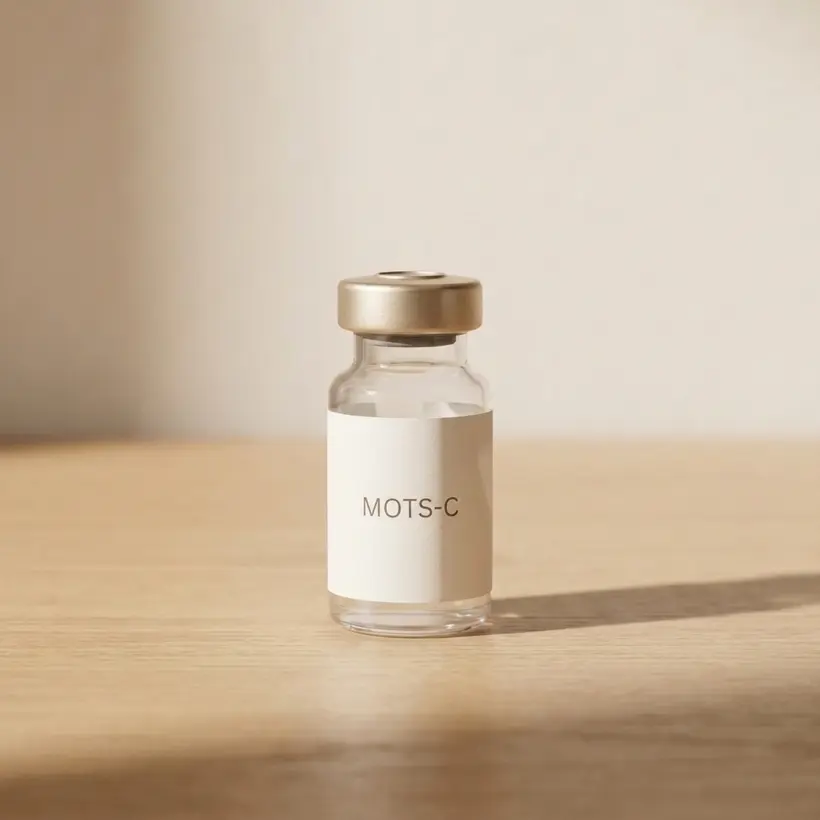
MOTS-c

From the FormBlends catalog

MOTS-c

Mitochondrial-derived exercise mimetic that regulates metabolic homeostasis · From $249/mo · compounded by a licensed 503A pharmacy, dispensed only after provider review.

View MOTS-c →
  • BPC-157: Derived from human gastric juice. Over 100 preclinical studies on GI protection and repair. Shown to heal gastric ulcers, reduce intestinal inflammation, protect against NSAID-induced gut damage, and repair leaky gut BPC-157 for gut health
  • MOTS-c: Mitochondrial peptide with metabolic focus. May support gut health indirectly through anti-inflammatory and mitochondrial effects. Far less gut-specific evidence

For dedicated gut healing, BPC-157 has a much stronger evidence base. MOTS-c could serve as a complementary peptide that supports the metabolic environment for gut repair, but it isn't a direct substitute for BPC-157 in gut-focused protocols.

Frequently Asked Questions

Can MOTS-c help heal the gut?

MOTS-c may support gut health through its anti-inflammatory effects, mitochondrial enhancement, and metabolic improvements, but direct evidence for gut healing is limited. For targeted GI repair, BPC-157 has substantially more research. MOTS-c is better viewed as a complementary metabolic support that may create a more favorable environment for gut healing.

Should I use MOTS-c or BPC-157 for gut issues?

If your primary goal is gut healing, BPC-157 has the stronger evidence base. If you're dealing with both metabolic issues and gut concerns, using both peptides together may provide complementary benefits. Discuss the best approach with your physician.

Can MOTS-c improve the microbiome?

There's theoretical support for MOTS-c improving gut microbiome diversity through its metabolic effects, but this hasn't been directly studied. Improved insulin sensitivity and reduced inflammation are associated with healthier microbiome profiles in other research contexts.

Does MOTS-c help with bloating?

Some clinical users report reduced bloating while on MOTS-c, but this is anecdotal rather than evidence-based. Bloating improvements may relate to the peptide's effects on metabolism and inflammation rather than a direct anti-bloating mechanism.

FormBlends physicians can design gut-focused peptide protocols based on your specific needs. Start your consultation to explore your options.

MOTS-c

Ready when you are

MOTS-c

Mitochondrial-derived exercise mimetic that regulates metabolic homeostasis · From $249/mo · compounded by a licensed 503A pharmacy, dispensed only after provider review.

View MOTS-c →
Browse the full catalog →

Evidence standard

How this page was source-checked

Editorial policy

FormBlends does not claim an individual clinician byline unless a named reviewer is available. For this page, the editorial team checks medical and regulatory claims against primary sources, clinical trials, public datasets, and regulator guidance.

PubMed evidence trail

Research sources used to frame this page

For MOTS-c for Gut Healing: Evidence, FormBlends checks the page topic against primary trials, systematic reviews, guidelines, and current PubMed-indexed literature where available. These citations are context, not medical advice, proof of eligibility, or a claim that every study applies to every patient.

ReviewMOTS-c and mitochondrial peptide evidence2015

The mitochondrial-derived peptide MOTS-c promotes metabolic homeostasis and reduces obesity and insulin resistance

Foundational preclinical study (Cell Metabolism) where MOTS-c prevented diet-induced obesity and insulin resistance in mice; no human data.

PubMed

ReviewMOTS-c and mitochondrial peptide evidence2016

MOTS-c: A novel mitochondrial-derived peptide regulating muscle and fat metabolism

Review summarizing MOTS-c metabolic effects drawn from rodent and cell studies, not human trials.

PubMed

ReviewMOTS-c and mitochondrial peptide evidence2024

Correlation between mitochondrial-derived peptide (MDP) levels and metabolic states: a systematic review and meta-analysis

Pooled observational human studies of circulating MDP levels across metabolic states; the evidence is correlational, not interventional.

PubMed

ReviewNAD+ and precursor evidence2021

NAD+ metabolism and its roles in cellular processes during ageing

Core review for NAD+ decline, mitochondrial function, DNA repair, and aging biology.

PubMed

Randomized trialNAD+ and precursor evidence2021

Nicotinamide mononucleotide increases muscle insulin sensitivity in prediabetic women

Human NMN source for metabolic claims while keeping population limits clear.

PubMed

Randomized trialNAD+ and precursor evidence2018

Chronic nicotinamide riboside supplementation is well-tolerated and elevates NAD+ in healthy middle-aged and older adults

Human NR source for NAD+ level and tolerability discussions.

PubMed

Peptide decision path

Move from research interest to supervised review

Direct answer

MOTS-c for Gut Healing: Evidence should be evaluated through research status, legal access, source quality, safety context, and clinician oversight rather than a shortcut purchase decision.

Evidence check

Useful peptide pages should separate human data, animal research, mechanistic evidence, and marketing claims.

Safety check

Peptides can vary by legal status, compounding pathway, purity testing, patient history, and interaction risk.

Next step

If the topic still fits your goal after reading, the get-started flow should collect the clinical context needed for provider review.

FormBlends Editorial Context

Reviewed May 14, 2026

What does the research say about MOTS-c and gut health? We review the evidence on this mitochondrial peptide's effects on intestinal inflammation, the gut microbiome, and GI function. "MOTS-c for Gut Healing: Evidence" is most useful when you treat it as decision prep, not a shortcut. The page is built around patient education and clinical context, with the highest-value checks sitting around the main claim, safety boundary, and next practical step. Read the opening answer first, then check the evidence and safety sections before acting on the recommendation. If the answer affects treatment, cost, pharmacy choice, or dosing, bring the specifics to a licensed clinician before acting.

  • Confirm whether the page is discussing an FDA-approved use, a compounded option, or research-only context.
  • Ask a licensed clinician how the evidence applies to your health history, medications, labs, and side-effect risk.
  • Check the latest label, trial update, pharmacy policy, or state rule when the article touches medication access.

Original tools and data

Use the FormBlends research stack

These assets are built to be useful beyond a single article: shareable data pages, calculators, provider comparisons, and safety checks that give Google and readers something original to crawl.

Editorial refresh

Practical 2026 note for MOTS

MOTS now carries extra 2026 context around BPC-157, mots, gut, healing, evidence, because those are the subtopics readers tend to compare before they trust a medical or wellness recommendation.

Instead of adding filler, this page keeps the named treatment terms, practical verification points, and next-step questions close to mots c for gut healing evidence.

Readers should use the section to check current eligibility, pharmacy or provider policies, and safety questions with a licensed professional before acting.

MOTS custom 2026 image for peptide therapy on FormBlends

Custom 2026 image for MOTS, peptide therapy, and better treatment decision-making.

Image description: Unique image for this page covering MOTS, peptide therapy, safety, cost, provider selection, and patient decision-making.

Download the Peptide Quick Reference Card

A printable 2-page reference covering popular peptides, dosing ranges, stacking protocols, and storage.

Free download. We'll also send helpful GLP-1 guides to your inbox. Unsubscribe anytime.

Medical Disclaimer: This content is for informational purposes only and does not constitute medical advice. Always consult a qualified healthcare provider before starting, stopping, or changing any medication or treatment. FormBlends articles are source-checked against medical and regulatory references, but they are not a substitute for a personal medical consultation.

Written by FormBlends Editorial Research

Prepared by FormBlends Editorial Research. Claims are checked against primary regulatory, trial, label, and public-health sources where available. Reviewed by FormBlends Medical Team for medical accuracy, sourcing, and patient-safety framing.

Ready to get started?

Provider-reviewed GLP-1 and peptide therapy, delivered to your door.

Start Your Consultation

Ready to Start Your Weight Loss Journey?

Get a free medical consultation with a licensed provider. Compounded GLP-1 medications starting at $99/month with free shipping.

Next Best Reads

Free Tools

Provider-informed calculators to support your weight loss journey.