Key Takeaway
Can MOTS-c help with joint pain and arthritis? We examine the research on this mitochondrial peptide's anti-inflammatory effects and potential joint health benefits.
MOTS-c for joint pain and arthritis is a question we hear with increasing frequency. While this mitochondrial peptide hasn't been directly studied for joint conditions, its anti-inflammatory properties and metabolic effects touch on several pathways involved in joint health and arthritis progression. We want to give you an honest assessment of what the science supports and where the gaps remain .
Why Joint Health Connects to Mitochondrial Function
Cartilage cells (chondrocytes) depend on mitochondria for energy production and cellular maintenance. In osteoarthritis, mitochondrial dysfunction in chondrocytes is a well-documented finding:
- Chondrocytes from osteoarthritic joints show reduced mitochondrial membrane potential and increased oxidative stress
- Mitochondrial DNA damage accumulates in aging cartilage
- Dysfunctional mitochondria in joint cells contribute to the inflammatory cascade that drives cartilage breakdown
- Energy-depleted chondrocytes lose the ability to maintain the extracellular matrix that gives cartilage its structure
MOTS-c improves mitochondrial function through AMPK activation and may help address this underlying cellular energy deficit. Whether this translates to meaningful joint relief in humans is the question.
How MOTS-c Could Affect Joint Pain
Inflammation Reduction
Joint pain, particularly in arthritis, is driven largely by inflammation. MOTS-c has shown the ability to reduce pro-inflammatory cytokines (TNF-alpha, IL-6, IL-1beta) in preclinical models. These are the same cytokines improved in arthritic joints . By dampening systemic inflammation, MOTS-c could reduce the inflammatory burden on joints.
View data table
| Category | Clinical Interest Score | Detail |
|---|---|---|
| BPC-157 | 88 | Tissue repair and gut healing |
| TB-500 | 82 | Injury recovery |
| Sermorelin | 78 | Growth hormone support |
| Ipamorelin | 75 | Anti-aging and recovery |
| GHK-Cu | 70 | Skin and tissue repair |

Metabolic Improvement and Weight Management
Excess body weight is one of the strongest modifiable risk factors for osteoarthritis, particularly in weight-bearing joints like knees and hips. Every pound of body weight translates to approximately 4 pounds of force on the knee joint during walking . By improving metabolism and supporting body composition changes, MOTS-c may indirectly reduce mechanical stress on joints.
Insulin Sensitivity
Metabolic syndrome and insulin resistance are associated with increased arthritis risk and severity. Research suggests that insulin resistance promotes cartilage degradation independently of body weight. MOTS-c's ability to improve insulin sensitivity could address this metabolic component of joint disease.
MOTS-c vs. Joint-Specific Peptides
For direct joint healing and pain relief, other peptides have stronger evidence:
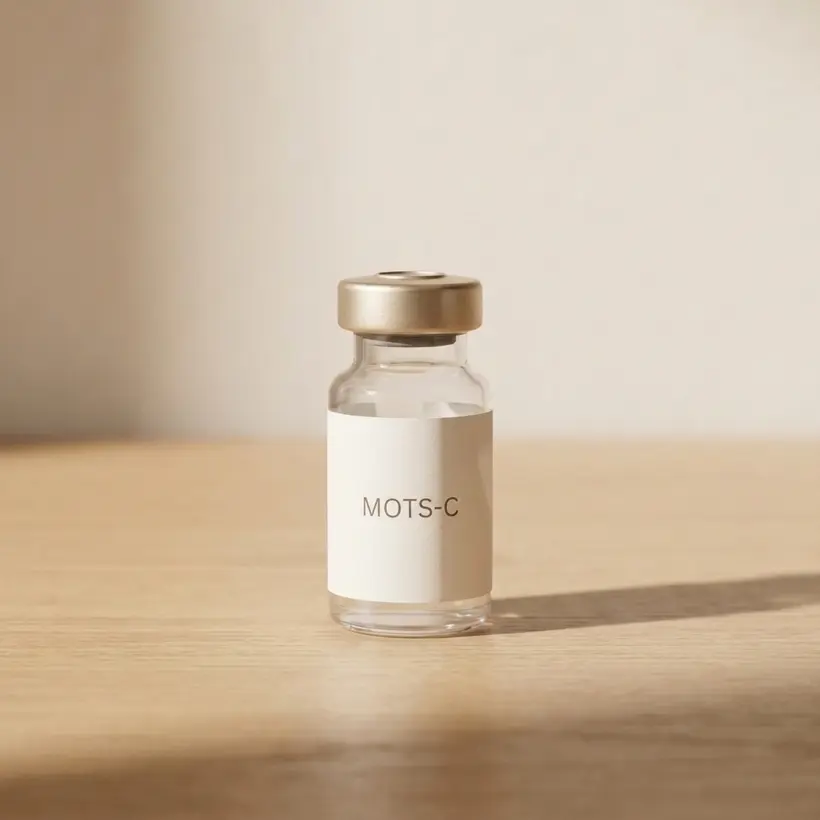
From the FormBlends catalog
MOTS-c
Mitochondrial-derived exercise mimetic that regulates metabolic homeostasis · From $249/mo · compounded by a licensed 503A pharmacy, dispensed only after provider review.
View MOTS-c →- BPC-157: Extensively studied for tendon, ligament, and joint repair. Shown to accelerate healing and reduce joint inflammation in animal models BPC-157 for joint pain
- TB-500: Promotes cell migration and tissue repair, with specific studies on joint and connective tissue healing
- MOTS-c: Provides metabolic and anti-inflammatory support that may benefit joints indirectly. Best used as part of a broader protocol rather than as a standalone joint treatment
Practical Considerations
- MOTS-c is administered systemically (subcutaneous injection), not locally to joints
- If joint pain is your primary concern, discuss a targeted approach with your physician that may include BPC-157 or other joint-specific interventions alongside MOTS-c
- Improvements in joint comfort, if they occur with MOTS-c, are likely gradual and related to reduced systemic inflammation and improved body composition over weeks to months
- MOTS-c isn't a replacement for evidence-based arthritis treatments including physical therapy, weight management, and prescribed medications
Frequently Asked Questions
Can MOTS-c help with arthritis?
MOTS-c may provide indirect joint support through anti-inflammatory and metabolic effects, particularly by reducing systemic inflammation and supporting weight management. But it hasn't been specifically studied for arthritis. Peptides like BPC-157 have stronger direct evidence for joint conditions.
Should I use MOTS-c or BPC-157 for joint pain?
For targeted joint healing and pain relief, BPC-157 has a stronger evidence base. MOTS-c is better suited as a metabolic support peptide. Many practitioners combine both: BPC-157 for direct joint repair and MOTS-c for systemic metabolic and anti-inflammatory benefits.
How long before MOTS-c helps with joint discomfort?
Any joint benefits from MOTS-c would likely develop gradually over 4 to 8 weeks as systemic inflammation decreases and metabolic improvements take hold. Expect subtle improvements rather than dramatic pain relief.
Can I inject MOTS-c directly into a joint?
MOTS-c is designed for subcutaneous injection, not intra-articular (joint) injection. Direct joint injections should only be performed by qualified medical professionals using compounds specifically formulated for that route.
FormBlends physicians can design peptide protocols addressing joint health, metabolic improvement, or both. Start your consultation to find the right approach for you.
Ready when you are
MOTS-c
Mitochondrial-derived exercise mimetic that regulates metabolic homeostasis · From $249/mo · compounded by a licensed 503A pharmacy, dispensed only after provider review.
View MOTS-c →