All GLP-1 medications from licensed 503A compounding pharmacies Browse Products

MOTS-c for Skin Healing and Anti-Aging

Can MOTS-c improve skin health and slow aging? We review the science on this mitochondrial peptide's effects on skin repair, collagen, and cellular aging.

By FormBlends Editorial Research|Source reviewed by FormBlends Medical Team||

Source Reviewed

Written by FormBlends Editorial Research · Checked against primary sources by FormBlends Medical Team

MOTS-c for Skin Healing and Anti-Aging custom 2026 header image for Peptide Therapy
Custom header image for MOTS-c for Skin Healing and Anti-Aging, Peptide Therapy, and better treatment decision-making.
In This Article

This article is part of our Peptide Therapy collection. See also: GLP-1 Guides | Provider Comparisons

Search and AI answer brief

Practical answer: MOTS-c for Skin Healing and Anti-Aging

Can MOTS-c improve skin health and slow aging? We review the science on this mitochondrial peptide's effects on skin repair, collagen, and cellular aging.

Short answer

Can MOTS-c improve skin health and slow aging? We review the science on this mitochondrial peptide's effects on skin repair, collagen, and cellular aging.

Search intent

This page answers a specific Peptide Therapy question rather than a generic overview.

What to verify

peptide evidence quality

How to use it

Use this information to prepare sharper questions for a licensed provider.

Key Takeaway

Can MOTS-c improve skin health and slow aging? We review the science on this mitochondrial peptide's effects on skin repair, collagen, and cellular aging.

MOTS-c for skin healing and anti-aging is a topic drawing increasing attention as researchers explore how mitochondrial health influences skin vitality. Your skin is one of the most metabolically active organs in your body, constantly regenerating, repairing UV damage, and producing collagen. All of these processes depend on well-functioning mitochondria and adequate cellular energy. MOTS-c supports both, making it a theoretically relevant peptide for skin health even though direct dermatological studies remain limited .

How Mitochondrial Health Affects Your Skin

Skin aging is driven in large part by mitochondrial decline:

  • Collagen production slows: Fibroblasts (the cells that produce collagen) require significant energy. As mitochondrial function declines with age, fibroblast activity decreases, leading to wrinkles and sagging
  • Oxidative damage accumulates: Dysfunctional mitochondria produce more reactive oxygen species (ROS), which damage skin cell DNA, proteins, and lipids
  • Repair capacity diminishes: The skin's ability to repair UV damage, wounds, and micro-injuries slows as cellular energy production declines
  • Inflammation increases: Senescent cells in aging skin release inflammatory cytokines that further degrade skin quality and accelerate aging

MOTS-c addresses several of these mechanisms by enhancing mitochondrial function, activating AMPK (which promotes cellular maintenance and repair), and reducing inflammation.

MOTS-c's Potential Skin Benefits

Enhanced Cellular Energy for Skin Repair

By improving mitochondrial efficiency, MOTS-c could provide skin cells with more energy for repair and regeneration. This may support faster wound healing, better recovery from sun exposure, and more efficient cell turnover.
Popular Therapeutic Peptides by Use Case Clinical Interest Score 0 22 44 66 88 88 82 78 75 70 BPC-157 TB-500 Sermorelin Ipamorelin GHK-Cu Based on published peptide research literature
Popular Therapeutic Peptides by Use Case. Based on published peptide research literature.
View data table
Bar chart showing popular therapeutic peptides by use case: BPC-157 (88), TB-500 (82), Sermorelin (78), Ipamorelin (75), GHK-Cu (70)
CategoryClinical Interest ScoreDetail
BPC-15788Tissue repair and gut healing
TB-50082Injury recovery
Sermorelin78Growth hormone support
Ipamorelin75Anti-aging and recovery
GHK-Cu70Skin and tissue repair
Illustration for MOTS-c for Skin Healing and Anti-Aging

Reduced Oxidative Stress

MOTS-c activates pathways that improve cellular stress resistance. In the context of skin, this could mean better protection against UV-induced oxidative damage, environmental pollutants, and the natural oxidative stress that comes with aging.

Anti-Inflammatory Effects

Chronic low-grade inflammation in skin tissue (sometimes called "inflammaging") accelerates wrinkle formation, pigmentation changes, and loss of elasticity. MOTS-c's demonstrated ability to reduce inflammatory cytokines could help calm this chronic inflammation .

AMPK Activation and Autophagy

AMPK activation promotes autophagy, the cellular cleanup process that removes damaged proteins and organelles. In skin cells, autophagy is important for maintaining quality control. Research shows that autophagy declines in aging skin, contributing to the accumulation of cellular damage. By activating AMPK, MOTS-c may help restore this cleanup process .

What Users Report

Anecdotal reports from MOTS-c users sometimes include skin-related observations:
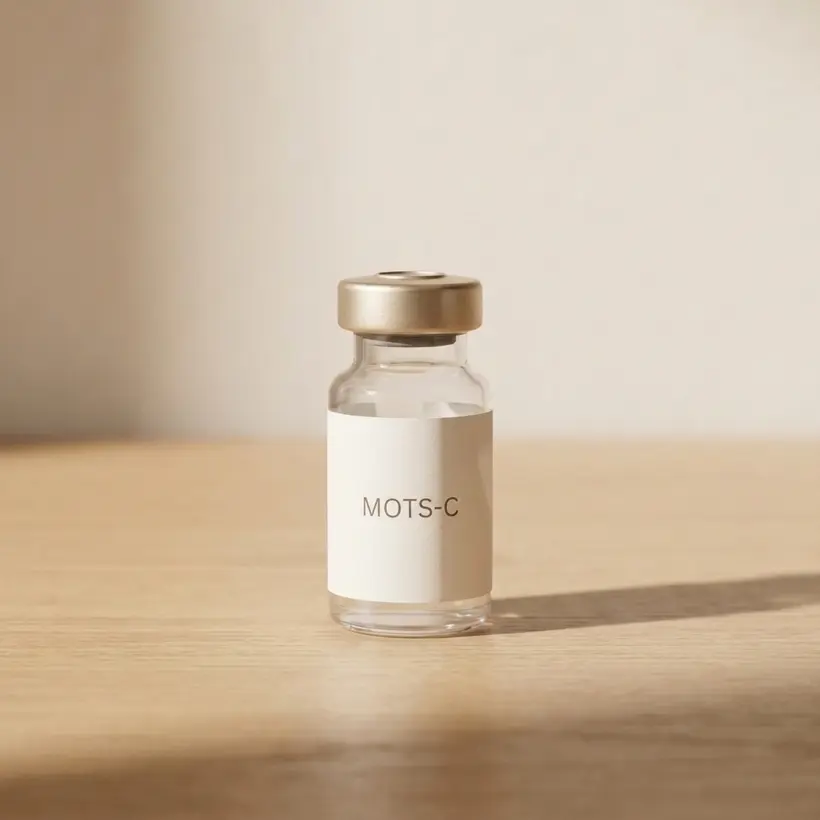
MOTS-c

From the FormBlends catalog

MOTS-c

Mitochondrial-derived exercise mimetic that regulates metabolic homeostasis · From $249/mo · compounded by a licensed 503A pharmacy, dispensed only after provider review.

View MOTS-c →
  • Improved skin tone and brightness
  • Faster healing of minor cuts and abrasions
  • Reduced under-eye puffiness
  • Improved overall complexion

These reports are subjective and may be influenced by other factors (improved diet and exercise habits that often accompany peptide use, better hydration, etc.). They shouldn't be taken as proof of MOTS-c's skin benefits, but they align with the mechanistic rationale.

Limitations

  • No published clinical trials have evaluated MOTS-c specifically for skin outcomes
  • It's unclear how much of an injected MOTS-c dose reaches skin tissue specifically
  • Skin improvements may be secondary to systemic metabolic improvements rather than direct skin effects
  • Peptides with stronger direct evidence for skin health include GHK-Cu (copper peptide), which has been extensively studied for collagen stimulation and wound healing

Frequently Asked Questions

Does MOTS-c help with skin aging?

MOTS-c may support skin health through improved mitochondrial function, reduced oxidative stress, and anti-inflammatory effects. These mechanisms are directly relevant to skin aging, but specific clinical skin studies haven't been conducted. Think of MOTS-c as systemic anti-aging support that may benefit skin as part of its broader effects.

Is MOTS-c better than GHK-Cu for skin?

For targeted skin improvement, GHK-Cu (copper peptide) has substantially more direct evidence, including studies on collagen production, wound healing, and skin remodeling. MOTS-c works at a metabolic level that may broadly support skin health but isn't as specifically targeted as GHK-Cu for dermatological outcomes.

Can MOTS-c help with wound healing?

Improved mitochondrial function and reduced inflammation could support wound healing indirectly. But for direct wound healing support, BPC-157 and TB-500 have much stronger evidence bases BPC-157 for skin health.

How long before I see skin changes from MOTS-c?

If skin improvements occur, they're typically noticed gradually over 6 to 12 weeks. Skin cell turnover takes approximately 28 days, so meaningful changes require multiple turnover cycles. Any improvements may be subtle and gradual rather than dramatic.

FormBlends provides physician-supervised peptide therapy addressing whole-body wellness including skin health. Start your consultation to discuss the best peptide approach for your goals.

MOTS-c

Ready when you are

MOTS-c

Mitochondrial-derived exercise mimetic that regulates metabolic homeostasis · From $249/mo · compounded by a licensed 503A pharmacy, dispensed only after provider review.

View MOTS-c →
Browse the full catalog →

Evidence standard

How this page was source-checked

Editorial policy

FormBlends does not claim an individual clinician byline unless a named reviewer is available. For this page, the editorial team checks medical and regulatory claims against primary sources, clinical trials, public datasets, and regulator guidance.

PubMed evidence trail

Research sources used to frame this page

For MOTS-c for Skin Healing and Anti-Aging, FormBlends checks the page topic against primary trials, systematic reviews, guidelines, and current PubMed-indexed literature where available. These citations are context, not medical advice, proof of eligibility, or a claim that every study applies to every patient.

ReviewMOTS-c and mitochondrial peptide evidence2015

The mitochondrial-derived peptide MOTS-c promotes metabolic homeostasis and reduces obesity and insulin resistance

Foundational preclinical study (Cell Metabolism) where MOTS-c prevented diet-induced obesity and insulin resistance in mice; no human data.

PubMed

ReviewMOTS-c and mitochondrial peptide evidence2016

MOTS-c: A novel mitochondrial-derived peptide regulating muscle and fat metabolism

Review summarizing MOTS-c metabolic effects drawn from rodent and cell studies, not human trials.

PubMed

ReviewMOTS-c and mitochondrial peptide evidence2024

Correlation between mitochondrial-derived peptide (MDP) levels and metabolic states: a systematic review and meta-analysis

Pooled observational human studies of circulating MDP levels across metabolic states; the evidence is correlational, not interventional.

PubMed

ReviewEpitalon evidence2003

Peptides of pineal gland and thymus prolong human life

Older Russian study reporting reduced mortality with Epithalamin; central to longevity claims but conducted by the originating group, not modern blinded design, and never independently replicated.

PubMed

ReviewEpitalon evidence2013

Peptide bioregulators: the new class of geroprotectors. Clinical studies results

Review of clinical claims for peptide bioregulators including Epithalamin, authored by the originating group, summarizing mostly low-quality, unreplicated data.

PubMed

ReviewEpitalon evidence2025

Epitalon increases telomere length in human cell lines through telomerase upregulation

In vitro cell-culture study, not a human trial; it suggests a telomerase mechanism but shows no clinical anti-aging benefit in people.

PubMed

ReviewGHK-Cu and copper peptide evidence2015

The human peptide GHK-Cu in prevention of oxidative stress and degenerative conditions of aging

Anchor review for copper peptide gene-expression and tissue-repair claims.

PubMed

ReviewGHK-Cu and copper peptide evidenceSearch

Effects of glycyl-histidyl-lysine-Cu on wound healing

Search-backed PubMed trail for wound-healing claims where specific topical versus injectable context matters.

PubMed

ReviewGHK-Cu and copper peptide evidenceSearch

Copper peptide and skin remodeling literature

Used to keep skin and collagen claims connected to PubMed rather than cosmetic marketing alone.

PubMed

Peptide decision path

Move from research interest to supervised review

Direct answer

MOTS-c for Skin Healing and Anti-Aging should be evaluated through research status, legal access, source quality, safety context, and clinician oversight rather than a shortcut purchase decision.

Evidence check

Useful peptide pages should separate human data, animal research, mechanistic evidence, and marketing claims.

Safety check

Peptides can vary by legal status, compounding pathway, purity testing, patient history, and interaction risk.

Next step

If the topic still fits your goal after reading, the get-started flow should collect the clinical context needed for provider review.

FormBlends Editorial Context

Reviewed May 14, 2026

Can MOTS-c improve skin health and slow aging? We review the science on this mitochondrial peptide's effects on skin repair, collagen, and cellular aging. "MOTS-c for Skin Healing and Anti-Aging" works best as a practical checklist for the next conversation. It focuses on patient education and clinical context, then narrows the issue through the main claim, safety boundary, and next practical step. With 5 sections, the FAQ can reveal what readers usually miss. Use the page to prepare, then verify the personal medical pieces with a licensed clinician.

  • Confirm whether the page is discussing an FDA-approved use, a compounded option, or research-only context.
  • Ask a licensed clinician how the evidence applies to your health history, medications, labs, and side-effect risk.
  • Check the latest label, trial update, pharmacy policy, or state rule when the article touches medication access.

Original tools and data

Use the FormBlends research stack

These assets are built to be useful beyond a single article: shareable data pages, calculators, provider comparisons, and safety checks that give Google and readers something original to crawl.

Editorial refresh

Practical 2026 note for MOTS

MOTS now carries extra 2026 context around BPC-157, mots, skin, healing, anti, aging, because those are the subtopics readers tend to compare before they trust a medical or wellness recommendation.

Instead of adding filler, this page keeps the named treatment terms, practical verification points, and next-step questions close to mots c for skin healing and anti aging.

Readers should use the section to check current eligibility, pharmacy or provider policies, and safety questions with a licensed professional before acting.

MOTS custom 2026 image for peptide therapy on FormBlends

Custom 2026 image for MOTS, peptide therapy, and better treatment decision-making.

Image description: Unique image for this page covering MOTS, peptide therapy, safety, cost, provider selection, and patient decision-making.

Download the Peptide Quick Reference Card

A printable 2-page reference covering popular peptides, dosing ranges, stacking protocols, and storage.

Free download. We'll also send helpful GLP-1 guides to your inbox. Unsubscribe anytime.

Medical Disclaimer: This content is for informational purposes only and does not constitute medical advice. Always consult a qualified healthcare provider before starting, stopping, or changing any medication or treatment. FormBlends articles are source-checked against medical and regulatory references, but they are not a substitute for a personal medical consultation.

Written by FormBlends Editorial Research

Prepared by FormBlends Editorial Research. Claims are checked against primary regulatory, trial, label, and public-health sources where available. Reviewed by FormBlends Medical Team for medical accuracy, sourcing, and patient-safety framing.

Ready to get started?

Provider-reviewed GLP-1 and peptide therapy, delivered to your door.

Start Your Consultation

Ready to Start Your Weight Loss Journey?

Get a free medical consultation with a licensed provider. Compounded GLP-1 medications starting at $99/month with free shipping.

Next Best Reads

Free Tools

Provider-informed calculators to support your weight loss journey.