Key Takeaway
Explore the research on NAD+ for joint pain, including its effects on cartilage health, joint inflammation, and tissue repair. Evidence-based guidance from FormBlends.
Quick Answer: NAD+ may support joint health by reducing inflammation, protecting cartilage from age-related degradation, and improving mitochondrial function in joint tissues. Preclinical research shows promising results in animal models of osteoarthritis and joint degeneration. Human clinical data specific to joint outcomes is still limited. NAD+ therapy isn't FDA-approved for any medical condition .
What Is NAD+?
NAD+ (nicotinamide adenine dinucleotide) is a coenzyme present in every cell of your body. It drives mitochondrial energy production, supports DNA repair, and activates sirtuins, a family of enzymes that regulate inflammation, stress responses, and aging .
NAD+ levels decline with age, and this decline has been associated with many degenerative processes, including those that affect joint tissue . Knowing how NAD+ influences joint health requires looking at the biology of cartilage, synovial tissue, and the inflammatory pathways that drive joint pain.
How NAD+ Relates to Joint Health
Cartilage Metabolism and NAD+
Cartilage is the smooth, protective tissue that cushions the ends of bones within joints. Unlike most tissues, cartilage has limited blood supply and regenerative capacity, making it vulnerable to cumulative damage over time.
View data table
| Category | Clinical Interest Score | Detail |
|---|---|---|
| BPC-157 | 88 | Tissue repair and gut healing |
| TB-500 | 82 | Injury recovery |
| Sermorelin | 78 | Growth hormone support |
| Ipamorelin | 75 | Anti-aging and recovery |
| GHK-Cu | 70 | Skin and tissue repair |

Chondrocytes, the cells responsible for maintaining cartilage, depend on NAD+ for their metabolic function. Research has shown that NAD+ depletion in chondrocytes leads to mitochondrial dysfunction, reduced matrix production, and increased susceptibility to cell death .
In animal models of osteoarthritis (OA), the most common form of joint disease, NAD+ levels in cartilage tissue were found to be significantly lower than in healthy controls . This finding suggests that NAD+ depletion may be both a consequence and a contributing factor in cartilage degeneration.
Sirtuin Activation and Joint Protection
Sirtuins, particularly SIRT1 and SIRT6, have emerged as important players in joint health. These NAD+-dependent enzymes regulate inflammatory signaling, oxidative stress, and the expression of cartilage-protective genes .
SIRT1 has been shown to suppress the activity of matrix metalloproteinases (MMPs), enzymes that break down cartilage matrix. In OA, MMP overactivity is a major driver of cartilage destruction . By supplying the NAD+ needed to fuel sirtuin activity, NAD+ therapy may help maintain the balance between cartilage breakdown and repair.
SIRT6 also plays a role in controlling inflammatory cytokines such as IL-1beta and TNF-alpha, both of which are improved in painful, degenerating joints .
Inflammation and Pain Signaling
Joint pain is driven largely by inflammation. Inflammatory cytokines irritate nerve endings in joint tissue, cause swelling, and accelerate tissue damage. NAD+ influences inflammatory pathways at multiple levels.
Through sirtuin activation, NAD+ helps suppress NF-kB, a master regulator of inflammatory gene expression . In animal models of arthritis, NAD+ precursor supplementation reduced joint inflammation and decreased pain-related behaviors .
PARP enzymes, which consume NAD+ during DNA repair, become overactivated in chronically inflamed tissues. This creates a problematic cycle: inflammation drives DNA damage, PARP activation consumes NAD+, NAD+ depletion worsens inflammation. Breaking this cycle by restoring NAD+ levels is a key rationale for therapy.
Mitochondrial Function in Joint Tissue
Chondrocytes rely on mitochondria for energy and metabolic regulation. Mitochondrial dysfunction in joint tissue has been identified as a contributing factor in OA progression .
NAD+ is important for mitochondrial electron transport and ATP production. Restoring NAD+ in chondrocytes has been shown to improve mitochondrial function and reduce oxidative stress in preclinical studies . This may help slow the degenerative processes that lead to joint pain.
Senescence and Joint Aging
Cellular senescence, the accumulation of dysfunctional cells that resist normal clearance, is increasingly recognized as a driver of joint degeneration. Senescent cells in joint tissue secrete inflammatory molecules collectively known as the senescence-associated secretory phenotype (SASP), which damages surrounding healthy tissue .
NAD+ and sirtuins help regulate cellular senescence pathways. In animal models, boosting NAD+ levels reduced the accumulation of senescent cells in joint tissue and decreased SASP-related inflammation .
What the Research Shows
The connection between NAD+ and joint health is supported by several lines of evidence, though important limitations remain:
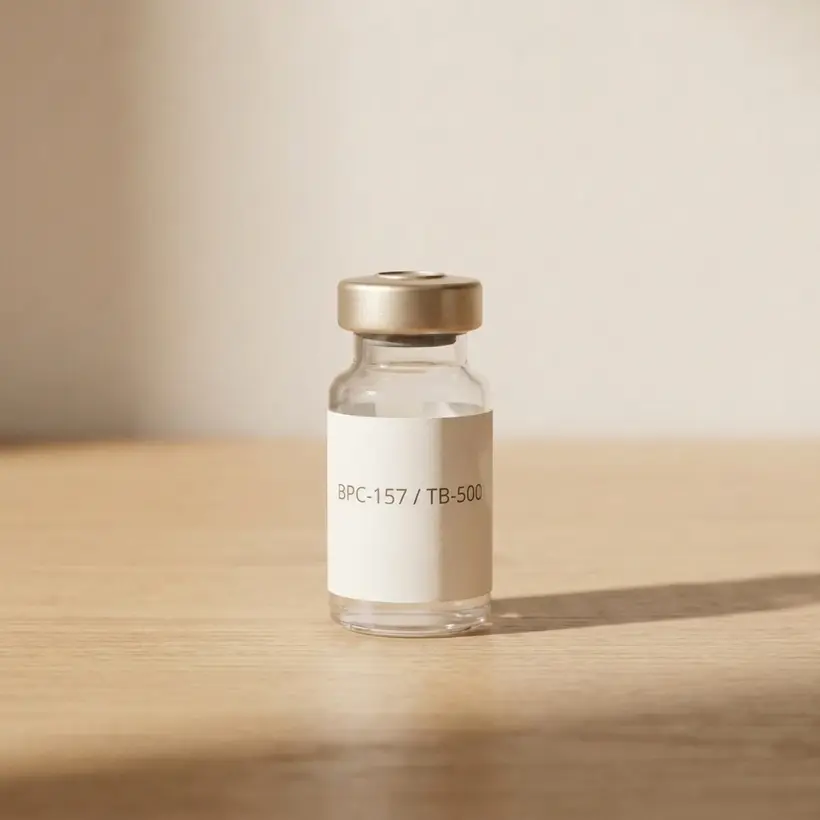
From the FormBlends catalog
BPC-157 / TB-500 Blend
The ultimate recovery stack in one vial · From $249/mo · compounded by a licensed 503A pharmacy, dispensed only after provider review.
View BPC-157 / TB-500 Blend →- Consistent preclinical findings: Multiple animal studies demonstrate that NAD+ depletion worsens joint degeneration and that restoring NAD+ levels reduces inflammation, protects cartilage, and improves pain outcomes.
- Mechanistic clarity: The roles of NAD+-dependent sirtuins and PARPs in cartilage biology are well characterized at the molecular level.
- Limited human joint data: Clinical trials specifically measuring joint pain or osteoarthritis outcomes with NAD+ therapy haven't yet been published. Human evidence is limited to trials measuring general health and metabolic endpoints.
- Not a replacement for standard care: NAD+ therapy isn't a substitute for physical therapy, weight management, or medical treatments for joint conditions.
NAD+ Compared to Other Approaches for Joint Pain
NAD+ therapy isn't the only peptide or supplement studied for joint health. Knowing how it compares to other options can help you and your physician make informed decisions:
- BPC-157: A peptide with strong preclinical data for tendon and ligament healing. It works through different mechanisms (angiogenesis, growth factor modulation) and may complement NAD+'s cellular energy and anti-inflammatory effects.
- TB-500: Another peptide studied for tissue repair and inflammation. It promotes cell migration and tissue remodeling.
- Glucosamine and chondroitin: Well-known supplements with mixed clinical results. They provide structural building blocks for cartilage but don't address the underlying cellular energy and inflammation issues that NAD+ targets.
Some physicians may recommend combining NAD+ with other therapies as part of a thorough approach to joint health. Discuss your options with your provider.
Safety and Side Effects
NAD+ therapy has a favorable safety profile in available clinical data. Side effects are generally mild and include flushing, nausea, chest tightness (with IV infusion), and injection site discomfort .
There are no known joint-specific side effects of NAD+ therapy. For a complete safety overview, see our NAD+ side effects guide. For dosing information, visit our NAD+ dosage guide.
How FormBlends Can Help
At FormBlends, we understand that joint pain affects quality of life in profound ways. Our licensed physicians can evaluate whether NAD+ therapy may support your joint health goals as part of a broader treatment strategy.
When you work with us, you receive:
- A personalized consultation with a licensed physician
- Pharmaceutical-grade NAD+ from licensed compounding pharmacies
- A protocol tailored to your specific joint health concerns
- Ongoing medical supervision and support
We take a thorough approach that considers all aspects of your joint health, not just one molecule. Our physicians can help you explore whether NAD+ therapy makes sense alongside your current care plan.
Frequently Asked Questions
Can NAD+ help with arthritis?
Preclinical research suggests that NAD+ restoration may reduce joint inflammation, protect cartilage, and slow degenerative processes associated with osteoarthritis. But human clinical trials specific to arthritis outcomes haven't been published. NAD+ isn't an approved treatment for arthritis.
How long does it take for NAD+ to help with joint pain?
Individual responses vary. Because cartilage turnover is slow compared to other tissues, improvements in joint comfort may take several weeks to months of consistent therapy. Some individuals report reduced inflammation and discomfort sooner, particularly if systemic inflammation is a significant contributor to their pain.
Should I stop my other joint treatments if I start NAD+?
No. NAD+ therapy should complement, not replace, your existing joint care plan. Continue physical therapy, prescribed medications, and other treatments unless your physician advises otherwise.
Is NAD+ better than BPC-157 for joint pain?
They work through different mechanisms. BPC-157 focuses on tissue repair and angiogenesis, while NAD+ addresses cellular energy, inflammation, and sirtuin-mediated protection. Some clinicians recommend combining both as part of a thorough approach. Discuss your options with your physician.
Can NAD+ prevent joint problems?
There's no clinical evidence that NAD+ prevents joint disease in humans. But the preclinical data on NAD+ and cartilage protection, combined with its role in reducing age-related inflammation, suggests a potential preventive rationale that warrants further research.
Ready to Learn More?
If joint pain is affecting your quality of life and you want to explore whether NAD+ therapy could be part of your solution, FormBlends can connect you with a licensed physician. Our team is here to help you find the right approach for your needs.
Disclaimer: This article is for informational purposes only and doesn't constitute medical advice. NAD+ therapy isn't FDA-approved for any medical condition, including arthritis or joint pain. The information presented here is based primarily on preclinical research and shouldn't be used as a substitute for professional medical guidance. Always consult with a licensed healthcare provider before beginning any therapy. Individual results may vary. FormBlends doesn't claim that NAD+ cures, treats, or prevents any disease.
Ready when you are
BPC-157 / TB-500 Blend
The ultimate recovery stack in one vial · From $249/mo · compounded by a licensed 503A pharmacy, dispensed only after provider review.
View BPC-157 / TB-500 Blend →