All GLP-1 medications from licensed 503A compounding pharmacies Browse Products

PT-141 Research Studies: What the Science Says

Explore the latest PT-141 research studies covering clinical trials, efficacy data, and emerging findings on this melanocortin receptor agonist peptide.

By Emily Rodriguez, RDN, CSSD|Source reviewed by FormBlends Medical Team||

Source Reviewed

Written by Emily Rodriguez, RDN, CSSD · Checked against primary sources by FormBlends Medical Team

PT-141 Research Studies: What the Science Says custom 2026 header image for Peptide Therapy
Custom header image for PT-141 Research Studies: What the Science Says, Peptide Therapy, and better treatment decision-making.
In This Article

This article is part of our Peptide Therapy collection. See also: GLP-1 Guides | Provider Comparisons

Search and AI answer brief

Practical answer: PT-141 Research Studies: What the Science Says

Explore the latest PT-141 research studies covering clinical trials, efficacy data, and emerging findings on this melanocortin receptor agonist peptide.

Short answer

Explore the latest PT-141 research studies covering clinical trials, efficacy data, and emerging findings on this melanocortin receptor agonist peptide.

Search intent

This page answers a specific Peptide Therapy question rather than a generic overview.

What to verify

peptide evidence quality, safety and contraindications

How to use it

Use this information to prepare sharper questions for a licensed provider.

Key Takeaway

Explore the latest PT-141 research studies covering clinical trials, efficacy data, and emerging findings on this melanocortin receptor agonist peptide.

| Peptide Q&A

PT-141 (bremelanotide) research studies span over two decades of clinical investigation, primarily focused on sexual dysfunction in both men and women. The peptide works through melanocortin receptors in the central nervous system rather than the vascular system, distinguishing it from PDE5 inhibitors. Multiple Phase III clinical trials led to FDA approval of the commercial version (Vyleesi) in 2019 for hypoactive sexual desire disorder in premenopausal women.

Early Research and Discovery

PT-141 originated from research on Melanotan II, a synthetic peptide initially developed for sunless tanning. During early trials, researchers observed unexpected pro-sexual effects in participants. This led to the isolation of the specific pharmacophore responsible for sexual arousal responses, which became PT-141.

The University of Arizona played a central role in early PT-141 research during the late 1990s. Preclinical studies in animal models demonstrated that the peptide activated melanocortin-4 receptors (MC4R) in the brain, triggering arousal pathways independent of blood flow changes.

Clinical Trials in Women

The RECONNECT studies were two important Phase III trials involving over 1,200 premenopausal women with hypoactive sexual desire disorder (HSDD). Participants self-administered 1.75 mg subcutaneous injections before anticipated sexual activity. Results showed statistically significant improvements in desire and reductions in distress compared to placebo.

Popular Therapeutic Peptides by Use Case Clinical Interest Score 0 22 44 66 88 88 82 78 75 70 BPC-157 TB-500 Sermorelin Ipamorelin GHK-Cu Based on published peptide research literature
Popular Therapeutic Peptides by Use Case. Based on published peptide research literature.
View data table
Bar chart showing popular therapeutic peptides by use case: BPC-157 (88), TB-500 (82), Sermorelin (78), Ipamorelin (75), GHK-Cu (70)
CategoryClinical Interest ScoreDetail
BPC-15788Tissue repair and gut healing
TB-50082Injury recovery
Sermorelin78Growth hormone support
Ipamorelin75Anti-aging and recovery
GHK-Cu70Skin and tissue repair
Illustration for PT-141 Research Studies: What the Science Says

Key findings from the female-focused trials include:

  • Meaningful increases in satisfying sexual events per month
  • Improved scores on the Female Sexual Function Index
  • Reduced distress as measured by the Female Sexual Distress Scale
  • Effects observed within the first month of use

Research in Male Sexual Dysfunction

Earlier Phase II studies examined PT-141 in men with erectile dysfunction, including those who did not respond to PDE5 inhibitors like sildenafil. Intranasal formulations showed promising results in producing erections, though the FDA ultimately did not approve PT-141 for male use due to blood pressure concerns with the nasal delivery method.
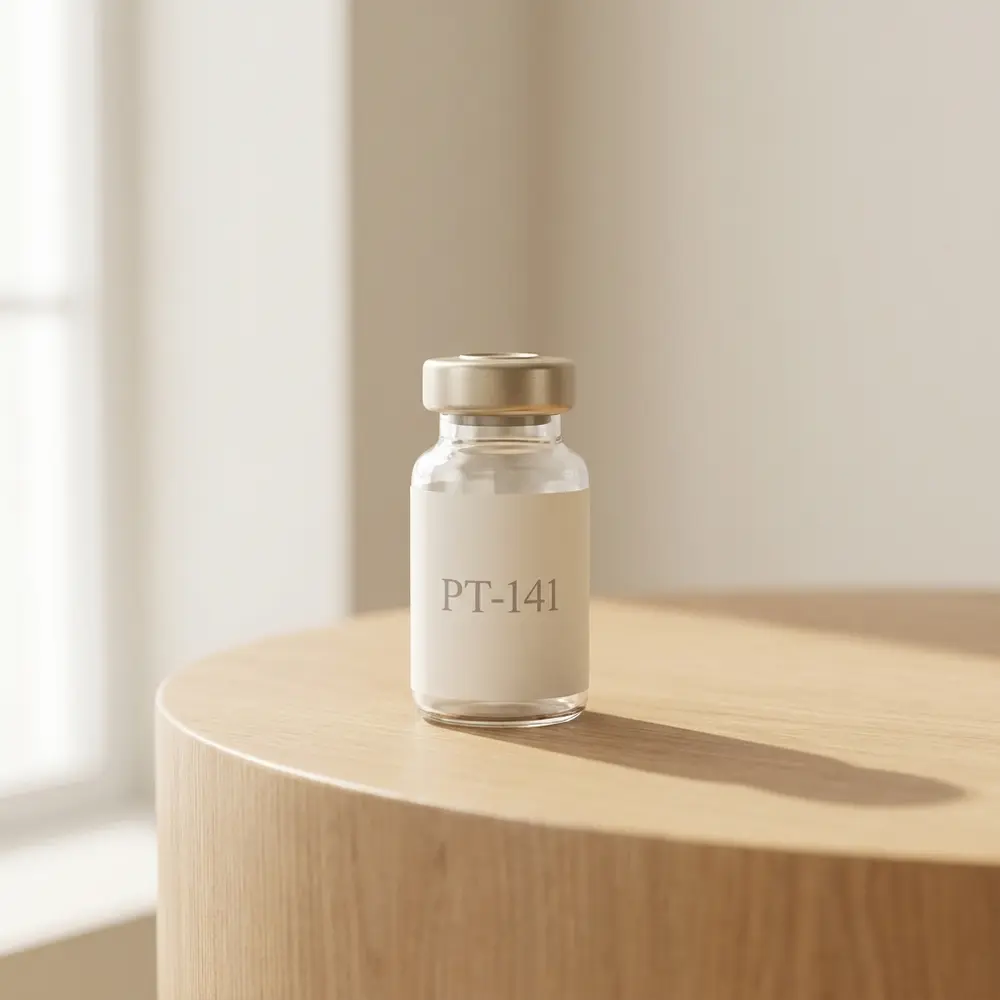
PT-141 (Bremelanotide)

From the FormBlends catalog

PT-141 (Bremelanotide)

Melanocortin receptor agonist studied for sexual health · From $189/mo · compounded by a licensed 503A pharmacy, dispensed only after provider review.

Learn about PT-141 (Bremelanotide) →

Subcutaneous administration in male studies showed fewer cardiovascular side effects, and ongoing research continues to explore this route for potential male applications. PT-141 side effects men

Emerging Research Areas

Beyond sexual health, researchers are investigating PT-141 in several newer areas:

  • Hemorrhagic shock: Animal studies suggest melanocortin agonists may help restore blood pressure and organ perfusion during severe blood loss.
  • Inflammation: MC4R activation has shown anti-inflammatory properties in preclinical models.
  • Metabolic effects: Some research explores connections between melanocortin pathways and appetite regulation.

Safety Data From Studies

Across clinical trials, the most commonly reported side effects included nausea (affecting roughly 40% of participants), flushing, headache, and injection site reactions. Nausea was the primary reason for discontinuation in the RECONNECT trials. The FDA labeling limits use to no more than one dose per 24 hours and no more than eight doses per month.

Long-term safety studies spanning 12 months showed no new safety signals beyond those identified in shorter trials. Researchers noted that nausea tended to decrease with repeated use in many participants. PT-141 side effects

Current Research space

Ongoing studies are exploring alternative delivery methods, combination therapies, and expanded indications. Researchers continue to investigate whether lower doses or modified administration schedules might reduce side effects while maintaining efficacy. The peptide research community also examines structural analogs of PT-141 that may offer improved selectivity for specific melanocortin receptor subtypes. PT-141 dosage guide

Frequently Asked Questions

How many clinical trials have been conducted on PT-141?

PT-141 has been studied in numerous clinical trials over more than 20 years, including multiple Phase II and two important Phase III trials (the RECONNECT studies) that enrolled over 1,200 women. Additional Phase II studies were conducted in men with erectile dysfunction.

What did research show about PT-141 for men?

Phase II trials in men with erectile dysfunction showed that PT-141 could produce erections even in patients who did not respond to Viagra. But the intranasal delivery method raised blood pressure concerns, and the peptide was not approved for male use. Subcutaneous delivery showed a better safety profile.

Is PT-141 still being researched?

Yes. While PT-141 has an approved commercial form (Vyleesi) for HSDD in premenopausal women, researchers continue to study alternative delivery methods, expanded patient populations, and novel applications including hemorrhagic shock and inflammation.

How does PT-141 differ from Viagra in research findings?

Research shows PT-141 works through a completely different mechanism. While Viagra increases blood flow by inhibiting PDE5, PT-141 activates melanocortin receptors in the brain to stimulate arousal centrally. This means PT-141 addresses desire rather than just the physical mechanics of sexual response.

What were the main side effects found in PT-141 studies?

Nausea was the most common side effect, reported by approximately 40% of trial participants. Other frequently reported effects included flushing, headache, and injection site reactions. Most side effects were transient and mild to moderate in severity.

PT-141 (Bremelanotide)

Ready when you are

PT-141 (Bremelanotide)

Melanocortin receptor agonist studied for sexual health · From $189/mo · compounded by a licensed 503A pharmacy, dispensed only after provider review.

Learn about PT-141 (Bremelanotide) →
Browse the full catalog →

Evidence standard

How this page was source-checked

Editorial policy

FormBlends does not claim an individual clinician byline unless a named reviewer is available. For this page, the editorial team checks medical and regulatory claims against primary sources, clinical trials, public datasets, and regulator guidance.

PubMed evidence trail

Research sources used to frame this page

For PT-141 Research Studies: What the Science Says, FormBlends checks the page topic against primary trials, systematic reviews, guidelines, and current PubMed-indexed literature where available. These citations are context, not medical advice, proof of eligibility, or a claim that every study applies to every patient.

Regulatory sourceMelanocortin and melanotan evidence2019

SCENESSE (afamelanotide implant) FDA Prescribing Information

Afamelanotide (an alpha-MSH analog) is the only FDA-approved melanocortin peptide of this class, and only to increase pain-free light exposure in erythropoietic protoporphyria, not for cosmetic tanning.

FDA

Randomized trialMelanocortin and melanotan evidence2015

Afamelanotide for Erythropoietic Protoporphyria

Randomized placebo-controlled trials (NEJM) behind the afamelanotide approval; this is the legitimate human melanocortin evidence, distinct from unapproved tanning peptides.

PubMed

ReviewMelanocortin and melanotan evidence2012

Melanotan II injection resulting in systemic toxicity and rhabdomyolysis

Case report: self-injected unregulated melanotan II caused severe rhabdomyolysis and renal dysfunction, underscoring that melanotan II itself is not approved.

PubMed

Regulatory sourcePT-141 / bremelanotide evidence2019

VYLEESI (bremelanotide injection) FDA Prescribing Information

Bremelanotide (PT-141) is FDA-approved as Vyleesi for acquired, generalized hypoactive sexual desire disorder in premenopausal women; approval is limited to that indication.

FDA

Randomized trialPT-141 / bremelanotide evidence2019

Bremelanotide for Hypoactive Sexual Desire Disorder: Two Randomized Phase 3 Trials

Pivotal RECONNECT studies: two double-blind placebo-controlled Phase 3 trials (1,267 women) showing improved sexual desire and reduced distress versus placebo.

PubMed

Randomized trialPT-141 / bremelanotide evidence2022

Subgroup Analyses from the RECONNECT Phase 3 Studies of Bremelanotide

Prespecified subgroup analysis finding bremelanotide's benefit on desire and distress was consistent across most demographic and clinical subgroups.

PubMed

Provider decision path

Use local research to choose a safer review path

Direct answer

PT-141 Research Studies: What the Science Says is best used to compare access, oversight, pricing, pharmacy quality, and patient support before starting care.

Evidence check

Directory pages should connect local intent with provider standards, pharmacy transparency, and practical next steps.

Safety check

Provider quality, pharmacy source, prescribing model, and follow-up support can matter as much as the medication name.

Next step

When you are ready, the get-started flow can collect the details needed for a prescription review instead of leaving you to guess.

FormBlends Editorial Context

Reviewed May 14, 2026

Explore the latest PT-141 research studies covering clinical trials, efficacy data, and emerging findings on this melanocortin receptor agonist peptide. Before you use "PT-141 Research Studies: What the Science Says" to make a real decision, separate the headline answer from the details that could change it. The page connects patient education and clinical context with provider access, inside a peptide therapy guide where research status, sourcing, compounding quality, dosing, and clinician oversight all need extra scrutiny. Because this article has 7 major sections, scan the headings first and then use the FAQ or summary sections to pressure-test the answer. Bring anything that changes dosing, pharmacy choice, cost, or safety to a licensed clinician.

  • Confirm whether the page is discussing an FDA-approved use, a compounded option, or research-only context.
  • Ask a licensed clinician how the evidence applies to your health history, medications, labs, and side-effect risk.
  • Check the latest label, trial update, pharmacy policy, or state rule when the article touches medication access.

Original tools and data

Use the FormBlends research stack

These assets are built to be useful beyond a single article: shareable data pages, calculators, provider comparisons, and safety checks that give Google and readers something original to crawl.

Editorial refresh

Practical 2026 note for PT

For this peptide therapy page, the 2026 refresh focuses on BPC-157, safety signals, 141, research, studies so the article stays close to the question behind "PT".

The useful details are the practical ones: what to verify, what changes risk or cost, and which details separate PT from nearby GLP-1, peptide, hormone, or provider-comparison searches.

Readers can use the added context to bring sharper questions to a licensed provider before making a treatment, cost, or care decision.

PT custom 2026 image for peptide therapy on FormBlends

Custom 2026 image for PT, peptide therapy, and better treatment decision-making.

Image description: Unique image for this page covering PT, peptide therapy, safety, cost, provider selection, and patient decision-making.

Download the Peptide Quick Reference Card

A printable 2-page reference covering popular peptides, dosing ranges, stacking protocols, and storage.

Free download. We'll also send helpful GLP-1 guides to your inbox. Unsubscribe anytime.

Medical Disclaimer: This content is for informational purposes only and does not constitute medical advice. Always consult a qualified healthcare provider before starting, stopping, or changing any medication or treatment. FormBlends articles are source-checked against medical and regulatory references, but they are not a substitute for a personal medical consultation.

Written by Emily Rodriguez, RDN, CSSD

Registered Dietitian. This article was researched against primary regulatory, trial, prescribing, and manufacturer sources where available. Reviewed by FormBlends Medical Team for medical accuracy, sourcing, and patient-safety framing.

Ready to get started?

Provider-reviewed GLP-1 and peptide therapy, delivered to your door.

Start Your Consultation

Ready to Start Your Weight Loss Journey?

Get a free medical consultation with a licensed provider. Compounded GLP-1 medications starting at $99/month with free shipping.

Next Best Reads

Peptide Therapy

AOD-9604 for Gut Health: What the Research Says About Peptide Therapy and Digestive Support

Explore the emerging evidence on AOD-9604 for gut health. Learn how this growth hormone fragment peptide may support gut tissue repair, inflammation modulation, and digestive wellness.

Peptide Therapy

AOD-9604 Side Effects: What the Research Says About Safety and Tolerability

A thorough, evidence-based review of AOD-9604 side effects. Learn what clinical studies reveal about the safety profile of this growth hormone fragment peptide.

Peptide Therapy

CJC-1295 for Gut Health: What the Research Says About GH Peptides and Digestive Function

Explore the connection between CJC-1295, growth hormone, and gut health. Learn how GH and IGF-1 may support intestinal repair, barrier function, and digestive wellness.

Peptide Therapy

Sermorelin Pills vs Injections Reddit: What the Science Actually Says | FormBlends

Sermorelin pills vs injections reddit debate settled with real pharmacokinetics, bioavailability data, and an honest evidence ledger. No hype, no fabrication.

Peptide Therapy

Thymosin Beta 4 Research What Science Says

Thymosin beta-4 (TB-500) is a 43-amino acid protein naturally produced by the thymus gland that plays a critical role in tissue repair, cell migration, and anti-inflammatory signaling. Others dismiss it entirely.

Peptide Therapy

Best Collagen Peptides Reddit: What the Evidence Actually Says | FormBlends

Reddit's top collagen peptide picks ranked by real evidence. COA reading, sourcing red flags, head-to-head vs. alternatives, and honest confidence grades.

Free Tools

Provider-informed calculators to support your weight loss journey.