Key Takeaways
- Sermorelin is a 29-amino-acid peptide that mimics growth-hormone-releasing hormone (GHRH).
- It tells the pituitary gland to release the body's own growth hormone in natural pulses.
- Doctors prescribe it for pediatric growth-hormone deficiency, and compounding pharmacies prepare it for off-label adult use targeting sleep, recovery, and body composition.
- Sermorelin is the synthetic version of the first 29 amino acids of human growth-hormone-releasing hormone (GHRH).
- The native GHRH molecule is 44 amino acids long, but the first 29 contain all the activity needed to bind the GHRH receptor on the pituitary.
The short answer
Sermorelin is a 29-amino-acid peptide that mimics growth-hormone-releasing hormone (GHRH). It tells the pituitary gland to release the body's own growth hormone in natural pulses. Doctors prescribe it for pediatric growth-hormone deficiency, and compounding pharmacies prepare it for off-label adult use targeting sleep, recovery, and body composition.
Table of contents
- The 30-second answer
- What sermorelin actually is
- How sermorelin compares to synthetic HGH
- The mechanism: how a peptide raises growth hormone
- What the published research shows
- Who uses sermorelin and why
- Typical dosing and administration
- Side effects and risk profile
- Who should not take sermorelin
- Sermorelin vs ipamorelin vs CJC-1295
- Compounded sermorelin: the regulatory reality
- FAQ
- Footer disclaimers
What sermorelin actually is
Sermorelin is the synthetic version of the first 29 amino acids of human growth-hormone-releasing hormone (GHRH). The native GHRH molecule is 44 amino acids long, but the first 29 contain all the activity needed to bind the GHRH receptor on the pituitary. Trimming the molecule made it easier to manufacture without changing what it does.
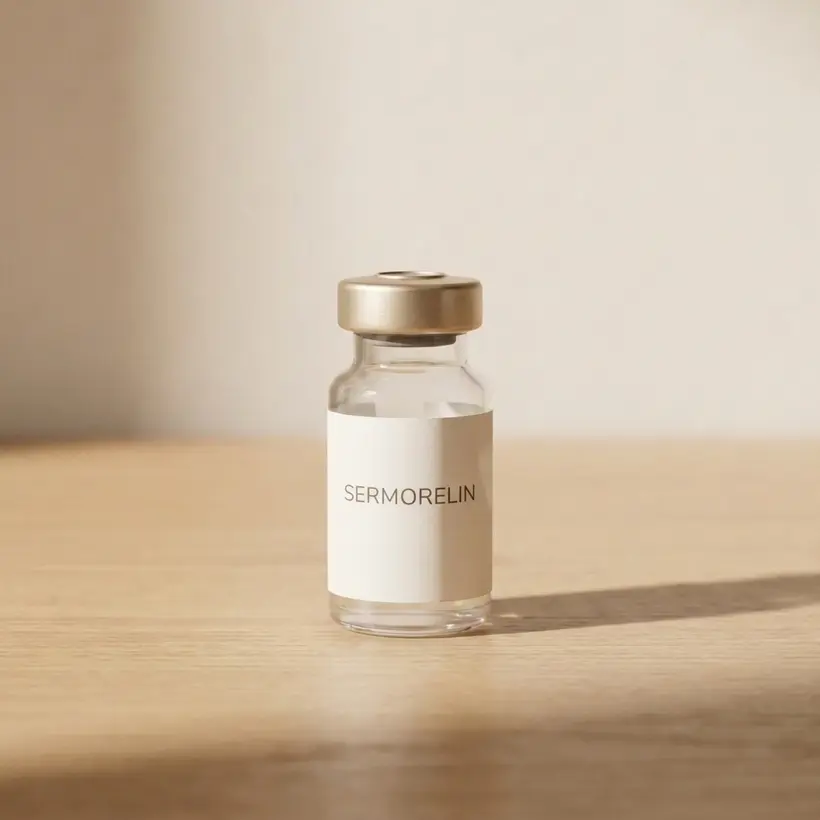
From the FormBlends catalog
Sermorelin
Bioidentical GHRH analog for natural growth hormone pulsatility · From $175/mo · compounded by a licensed 503A pharmacy, dispensed only after provider review.
View Sermorelin →The drug was developed in the 1970s by Roger Guillemin's lab at the Salk Institute. Guillemin won the 1977 Nobel Prize in Physiology or Medicine partly for the GHRH discovery. Sermorelin acetate received FDA approval in 1997 under the brand name Geref for diagnosis and treatment of childhood growth-hormone deficiency. Geref was discontinued in 2008 for commercial reasons, not safety. The peptide is still legally available through 503A and 503B compounding pharmacies for off-label use.
How sermorelin compares to synthetic HGH
The two are often confused. They aren't the same thing.
| Feature | Sermorelin | Recombinant HGH (somatropin) |
|---|---|---|
| What it is | GHRH analog (29 amino acids) | Synthetic human growth hormone (191 amino acids) |
| What it does | Tells the pituitary to make and release more GH | Replaces GH directly |
| Pulse pattern | Preserves natural pulsatile release | Constant supraphysiologic levels |
| Negative feedback | Yes, body can downregulate | No, body cannot self-regulate |
| FDA status | Approved 1997, discontinued commercially 2008; available compounded | Approved; many brand names |
| Cost | $150 to $350 per month compounded | $1,500 to $4,000 per month |
| Risk of GH excess | Low (regulated by feedback) | Higher (no feedback) |
| DEA scheduling | Not controlled | Distribution restricted; black-market diversion is a felony |
The functional difference matters. Synthetic HGH bypasses the body's regulatory system and creates blood GH levels that don't exist in normal physiology. Sermorelin works upstream, letting the pituitary control how much GH is released. If GH is already adequate, sermorelin's effect is small. If pituitary capacity is impaired, sermorelin's effect is small for a different reason.
The mechanism: how a peptide raises growth hormone
Growth hormone is released in pulses, not continuously. A young adult releases the largest pulses during deep sleep (stage N3) and shorter pulses across the day. Each pulse is triggered by GHRH from the hypothalamus binding to GHRH receptors on the pituitary. Inhibition comes from another hormone, somatostatin.
Sermorelin binds the same GHRH receptor and triggers the same pulse machinery. Three things matter clinically:
- The pituitary has to be functional. Sermorelin only works if the pituitary can produce GH. Patients with pituitary tumors or surgical pituitary damage often don't respond.
- Somatostatin still inhibits. Sermorelin works best when somatostatin tone is low (during sleep, fasting, or after exercise). It works less well when somatostatin is high (after a heavy meal or in chronic stress).
- Native pulse architecture is preserved. Unlike synthetic HGH, sermorelin doesn't flatline GH at high levels. The body can still feel "full" and stop releasing more. This is the safety advantage.
GH then circulates to the liver, where it triggers production of IGF-1 (insulin-like growth factor 1). IGF-1 mediates most of the visible effects: protein synthesis, lipolysis, deeper sleep, faster recovery from soft-tissue injury.
What the published research shows
The published evidence base for sermorelin is small compared to GLP-1 medications. Most studies are 1990s-era pediatric work. A few adult studies exist.
Pediatric growth hormone deficiency (Pescovitz et al., Journal of Pediatrics, 1996): A 12-month trial in 110 children with GHD showed sermorelin produced an average growth velocity of 7.9 cm/year vs 3.8 cm/year at baseline, similar to recombinant GH treatment.
Adult GH-deficient patients (Vittone et al., Metabolism, 1997): Sermorelin 1 mg subcutaneous daily for 16 weeks in older adults with low IGF-1 raised IGF-1 by approximately 35% and improved measures of body composition modestly.
Sleep and exercise (Walker, Endocrine, 2006): A small study showed sermorelin administration before sleep restored a more youthful pattern of slow-wave sleep and GH release in older adults.
The data is more "biological proof of concept" than "rigorous outcome trials." There are no large randomized trials in healthy adults using sermorelin for anti-aging, body composition, or athletic performance. Anyone telling you the science is settled is misrepresenting what's published.
Who uses sermorelin and why
In current clinical practice, sermorelin is used by three main groups:
- Pediatric endocrinologists treating diagnosed GH deficiency. This is the original FDA-approved indication. It's now largely replaced by recombinant HGH because brand-name sermorelin (Geref) was discontinued.
- Functional and longevity medicine clinicians. Off-label, sermorelin is used in adults with low-normal IGF-1, sleep complaints, or recovery problems. It's prescribed in this context as part of "hormone optimization" or "anti-aging" protocols.
- Compounded telehealth platforms. Several digital platforms now offer sermorelin or sermorelin combinations for off-label adult use. The marketing language varies but the clinical use case is similar to category 2.
The honest framing: sermorelin produces real but modest changes in IGF-1 and body composition in deficient adults. In healthy adults with normal baseline GH and IGF-1, the effect is small. Marketing claims about dramatic muscle growth or fat loss with sermorelin alone are not supported by published data.
Typical dosing and administration
Compounded sermorelin is supplied as a lyophilized powder (typically 5 mg or 15 mg per vial) that's reconstituted with bacteriostatic water. Once reconstituted, it's stored refrigerated and used within 30 days.
Adult off-label dosing (provider-directed):
- Typical dose: 200 to 500 mcg subcutaneous nightly
- Timing: 30 to 60 minutes before bed, on an empty stomach
- Duration: 3 to 6 month cycles followed by a break, or continuous if monitored
- Injection sites: abdomen or thigh, rotated
Why bedtime, empty stomach: GHRH receptor activation works best when somatostatin is low. Somatostatin is suppressed during deep sleep onset and after a 3+ hour fast. A high-carb meal raises somatostatin and blunts the GH pulse. The clinical recommendation is rooted in normal physiology rather than patient convenience.
Why cycles: Continuous use for many months can downregulate GHRH receptors. Most protocols involve 3 to 6 months on, 1 to 2 months off, then re-evaluate. Lab work (IGF-1, fasting glucose, A1C) is typically drawn before starting and at each cycle transition.
Side effects and risk profile
Sermorelin is generally well tolerated. The mechanism (working with natural feedback) limits the upside but also limits the risks.
Common (5 to 20% during titration):
- Injection site redness or itching
- Mild headache
- Flushing for a few minutes after injection
- Vivid dreams (probably from increased deep sleep)
Uncommon:
- Dizziness
- Mild swelling of hands or feet
- Joint stiffness
- Mild nausea
Rare but worth knowing:
- Insulin resistance with prolonged use (GH antagonizes insulin)
- Carpal tunnel symptoms with prolonged high-dose use
- Theoretical risk of accelerating undiagnosed cancer growth (GH is a growth signal)
The pancreatitis and thyroid signals seen with GLP-1 drugs do not apply to sermorelin. The cardiovascular profile is generally neutral.
Who should not take sermorelin
Sermorelin is contraindicated or relatively contraindicated in:
- Active cancer or recent cancer history. GH and IGF-1 are growth signals; raising them in a patient with malignancy is theoretically dangerous.
- Pituitary tumors. Stimulating an adenoma is not safe.
- Severe diabetes or uncontrolled hyperglycemia. GH worsens insulin resistance.
- Pregnancy and breastfeeding. Insufficient safety data.
- Severe respiratory failure or critical illness. GH analogs raised mortality in ICU populations in older studies.
- Allergies to sermorelin or any component of the diluent.
A clinician should review medical history, draw baseline labs (IGF-1, fasting glucose, A1C, thyroid panel), and screen for the contraindications above before starting.
Sermorelin vs ipamorelin vs CJC-1295
These three peptides are often grouped together because they all raise GH. They work by different mechanisms.
| Peptide | Receptor | Half-life | What it does |
|---|---|---|---|
| Sermorelin | GHRH receptor | 11 to 12 minutes | Mimics natural GHRH; preserves pulse pattern |
| CJC-1295 (with DAC) | GHRH receptor | 6 to 8 days | Long-acting GHRH analog; sustained elevation rather than pulses |
| CJC-1295 (no DAC) | GHRH receptor | 30 minutes | Shorter version; more pulse-preserving |
| Ipamorelin | Ghrelin receptor | About 2 hours | Selective GH secretagogue; doesn't raise cortisol |
| Tesamorelin | GHRH receptor | About 26 minutes | FDA-approved for HIV-related lipodystrophy; longer-acting GHRH analog |
Many compounded protocols combine a GHRH analog (sermorelin or CJC-1295) with a ghrelin-receptor agonist (ipamorelin) because the two pathways work synergistically: sermorelin opens the door, ipamorelin pushes more GH through it. The combination produces larger pulses than either peptide alone.
The pure-sermorelin protocol is the most "natural" of the options because it preserves both the pulse pattern and the negative feedback loop. The combination protocols produce bigger results and slightly higher risk.
Compounded sermorelin: the regulatory reality
This is the part most marketing pages don't address.
Sermorelin acetate has no current FDA-approved finished product on the U.S. market. The brand-name Geref product was discontinued in 2008. Sermorelin remains legal as a compounded preparation under section 503A of the Federal Food, Drug, and Cosmetic Act. A licensed prescriber writes a prescription for a specific patient; a state-licensed compounding pharmacy prepares the dose; the patient receives the medication.
Three things matter for safety:
- Pharmacy quality varies. A 503A pharmacy operating in good standing with USP <797> compliance is meaningfully different from a back-room operation buying API from unverified sources. Ask which pharmacy will be filling and look up its inspection history.
- API source matters. The active pharmaceutical ingredient (the sermorelin acetate powder) should come from an FDA-registered API supplier. Products labeled "research only" or "not for human use" are not the same product as a pharmacy-grade compound.
- Sterility and potency testing matters. Reputable pharmacies test each batch for potency, sterility, and endotoxins. Lower-quality operations skip this.
The compounded peptide market grew rapidly during 2020 to 2024. Some of that growth came from quality operations; some came from operations selling under-dosed or contaminated product. Buying through a licensed digital health platform that requires a prescription and uses 503A pharmacies is a meaningfully different proposition than buying a vial labeled "research peptide" from an overseas website.
FAQ
What is sermorelin used for?
Sermorelin is FDA-approved (when commercially available) for diagnosing and treating childhood growth-hormone deficiency. Off-label adult uses include addressing low IGF-1, supporting sleep architecture, and improving body composition in patients with subclinical GH decline. All adult use is off-label.
Is sermorelin the same as HGH?
No. Sermorelin is a 29-amino-acid peptide that triggers the body to release its own growth hormone. HGH (somatropin) is a synthetic 191-amino-acid version of growth hormone that's injected directly. Sermorelin works upstream and preserves natural feedback. HGH bypasses feedback entirely.
Is sermorelin legal?
Yes, with a prescription. The FDA approved sermorelin acetate in 1997 (brand name Geref). The brand-name product was discontinued in 2008 for commercial reasons. Sermorelin remains legal as a compounded medication prescribed by a licensed clinician and prepared by a licensed compounding pharmacy.
How long does it take sermorelin to work?
IGF-1 levels typically rise within 2 to 4 weeks of daily injections. Subjective effects on sleep often appear within the first week. Body composition changes (fat loss, increased lean mass) are more gradual and usually noticeable around month 3 to 6 in patients who respond.
Will sermorelin make me grow taller?
Sermorelin can increase growth velocity in children with diagnosed GH deficiency whose growth plates are still open. Adults whose growth plates have closed cannot grow taller. The misconception comes from confusing pediatric and adult use cases.
Can sermorelin help me build muscle?
Modestly, in adults with low or low-normal IGF-1. The effect is smaller than with synthetic HGH or with anabolic steroids. Sermorelin works best when paired with consistent resistance training and adequate protein intake. Don't expect meaningful changes from sermorelin alone.
Does sermorelin cause weight loss?
Sermorelin can promote modest fat loss, particularly visceral fat, by raising IGF-1 and supporting lipolysis. The effect is much smaller than with GLP-1 medications. Sermorelin is not a primary weight-loss drug. Patients seeking significant weight loss are usually better served by a GLP-1 option.
What are the side effects of sermorelin?
Common side effects include injection-site redness, mild headache, flushing, and vivid dreams. Less common effects include water retention, joint stiffness, and mild glucose intolerance with prolonged use. Most patients tolerate the medication well.
Can sermorelin cause cancer?
There's no evidence sermorelin causes cancer. The theoretical concern is that GH and IGF-1 are growth signals that could accelerate the growth of an existing undiagnosed cancer. For this reason, sermorelin is contraindicated in patients with active or recent cancer.
How do I inject sermorelin?
Sermorelin is given as a small subcutaneous injection (typically 0.1 to 0.5 mL) using a U-100 insulin syringe. Common sites are the abdomen and thigh. Most patients inject 30 to 60 minutes before bed on an empty stomach. A clinician should walk you through technique on your first prescription.
How much does sermorelin cost?
Compounded sermorelin typically costs $150 to $350 per month, depending on dose, pharmacy, and whether it's combined with another peptide. Brand-name HGH costs $1,500 to $4,000 per month. Insurance coverage for adult off-label use is rare.
Can I take sermorelin and a GLP-1 together?
Some clinicians do combine them, especially in patients who need significant weight loss plus body recomposition. There are no known direct interactions, but the combined side-effect profile (nausea, fatigue, glucose changes) requires monitoring. This combination should only be done under clinician supervision.
How long can I take sermorelin?
Most protocols cycle on for 3 to 6 months and off for 1 to 2 months. Continuous use beyond 6 months is possible with monitoring but may downregulate the GHRH receptor. Annual labs and a clinician check-in are the minimum standard for ongoing therapy.
Author / review note
Reviewed by the FormBlends Medical Team. References include Pescovitz et al. (Journal of Pediatrics, 1996) on pediatric efficacy, Vittone et al. (Metabolism, 1997) on adult IGF-1 response, Walker (Endocrine, 2006) on sleep architecture, Guillemin (Annual Review of Neuroscience, 2005) on the discovery of GHRH, and the historical FDA prescribing information for Geref (sermorelin acetate, 1997).
Related guides
- What Does Sermorelin Do for Women? The Complete Clinical Guide to Growth Hormone Peptide Therapy
- Sermorelin or Tesamorelin: Which Growth Hormone Peptide Is Right for You? | FormBlends
- Male MD Sermorelin Reviews: What 2,400+ Patient Experiences Reveal About This Growth Hormone Protocol
- Sermorelin Benefits for Females: The Complete Evidence-Based Guide to Growth Hormone Optimization
- Sermorelin + CJC-1295/Ipamorelin Growth Hormone Stack for Beginners
- Sermorelin + CJC-1295/Ipamorelin Growth Hormone Stack Results Timeline
Sources
- Pescovitz et al. (Journal of Pediatrics, 1996) on pediatric efficacy.
- Vittone et al. (Metabolism, 1997) on adult IGF-1 response.
- Walker (Endocrine, 2006) on sleep architecture.
- Guillemin (Annual Review of Neuroscience, 2005) on the discovery of GHRH.
- The historical FDA prescribing information for Geref (sermorelin acetate, 1997).
Footer disclaimers (all 4 verbatim)
Platform Disclaimer. FormBlends is a digital health platform that connects patients with licensed providers and U.S.-based pharmacies. We do not manufacture, prescribe, or dispense medication directly. All clinical decisions are made by independent licensed providers.
Compounded Medication Notice. Compounded semaglutide and tirzepatide are not FDA-approved. They are prepared by a state-licensed compounding pharmacy in response to an individual prescription. Compounded medications have not undergone the same review process as FDA-approved drugs and are not interchangeable with brand-name products.
Results Disclaimer. Individual results vary. Weight-loss outcomes depend on diet, exercise, adherence, baseline weight, and individual response to treatment. Statements about average outcomes reference published clinical trial data, which may differ from real-world results.
Trademark Notice. Geref is a registered trademark of EMD Serono. Other product names referenced are trademarks of their respective owners. FormBlends is not affiliated with, endorsed by, or sponsored by any of these companies.
Ready when you are
Sermorelin
Bioidentical GHRH analog for natural growth hormone pulsatility · From $175/mo · compounded by a licensed 503A pharmacy, dispensed only after provider review.
View Sermorelin →