Key Takeaway
Can you take sermorelin with GLP-1 medications like semaglutide or tirzepatide? Learn about combining peptide therapy with GLP-1 agonists for weight loss safely.
Yes, sermorelin can be taken with GLP-1 medications such as semaglutide and tirzepatide under proper medical supervision. Sermorelin is a growth hormone-releasing peptide that acts on pituitary GHRH receptors. GLP-1 agonists target incretin receptors in the gut, pancreas, and brain. Because they work through entirely different biological pathways, there's no known pharmacological interaction between sermorelin and any GLP-1 receptor agonist.
What Are GLP-1 Medications?
GLP-1 medications are a class of drugs that mimic or enhance the activity of glucagon-like peptide-1, a hormone your gut naturally produces after eating. This class includes several medications used for weight management and diabetes treatment:
| Medication | Brand Names | Receptor Target | Administration |
|---|---|---|---|
| Semaglutide | Ozempic, Wegovy, Rybelsus | GLP-1 | Weekly injection or daily oral |
| Tirzepatide | Mounjaro, Zepbound | GIP + GLP-1 | Weekly injection |
| Liraglutide | Saxenda, Victoza | GLP-1 | Daily injection |
| Dulaglutide | Trulicity | GLP-1 | Weekly injection |
| Exenatide | Byetta, Bydureon | GLP-1 | Twice daily or weekly injection |
All GLP-1 medications share core mechanisms: appetite suppression, slowed gastric emptying, and improved insulin regulation. The newer agents (semaglutide and tirzepatide) tend to produce the most significant weight loss. $900-$1,000/mo (brand) $1,300-$1,400/mo (brand) $1,000-$1,200/mo (brand)
What Is Sermorelin?
Sermorelin is a synthetic peptide that replicates the first 29 amino acids of naturally occurring growth hormone-releasing hormone (GHRH). When injected subcutaneously, it binds to GHRH receptors on somatotroph cells in the anterior pituitary gland, prompting the release of growth hormone into the bloodstream.

Unlike synthetic human growth hormone (HGH), sermorelin works through the body's own regulatory mechanisms. Your pituitary gland has built-in negative feedback loops that prevent excessive GH production, making sermorelin a safer approach to growth hormone improvement than direct HGH injection.
Why These Medications Do Not Conflict
The fundamental reason sermorelin is compatible with all GLP-1 medications comes down to receptor specificity. Each medication has its own receptor target, and these receptor systems operate independently:
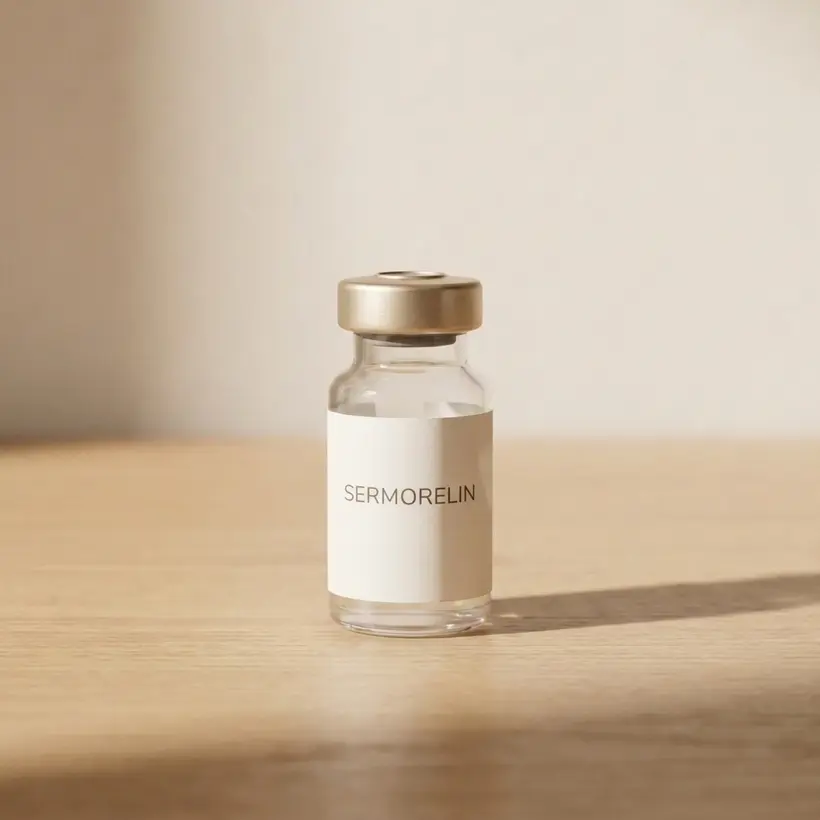
From the FormBlends catalog
Sermorelin
Bioidentical GHRH analog for natural growth hormone pulsatility · From $175/mo · compounded by a licensed 503A pharmacy, dispensed only after provider review.
View Sermorelin →- Sermorelin: GHRH receptors (pituitary gland only)
- GLP-1 agonists: GLP-1 receptors (pancreas, gut, brain, and other tissues)
- Tirzepatide also: GIP receptors (gut, adipose tissue, bone)
There's no overlap. No competition. No shared metabolic enzymes (neither class uses CYP450 pathways). Both are peptides degraded by general proteolysis. From a pharmacological standpoint, these medications are about as independent as two therapies can be.
The Rationale for Combining Them
If GLP-1 medications are already effective for weight loss, why add sermorelin? The answer lies in what GLP-1 drugs do well and what they don't address:
What GLP-1 Medications Do Well
- Suppress appetite powerfully and consistently
- Promote significant fat loss (12 to 22+ percent of body weight in clinical trials)
- Improve blood sugar control and insulin sensitivity
- Reduce cardiovascular risk markers
What GLP-1 Medications Do Not Address
- Lean muscle preservation during weight loss
- Growth hormone improvement
- Sleep quality improvement
- Accelerated recovery from exercise
- Collagen and connective tissue support
Sermorelin fills in each of those gaps. The combination creates a more thorough weight loss and wellness strategy than GLP-1 therapy alone. thorough weight loss
Which GLP-1 Medication Pairs Best with Sermorelin?
Sermorelin is compatible with all GLP-1 medications. But the two most commonly used in combination protocols are semaglutide and tirzepatide due to their superior efficacy data:
| Factor | Semaglutide + Sermorelin | Tirzepatide + Sermorelin |
|---|---|---|
| Weight loss potency | Strong (avg 12 to 17%) | Strongest (avg 18 to 22%) |
| GI side effects | Common, manageable | Common, manageable |
| Dosing frequency | Weekly + nightly | Weekly + nightly |
| Availability | Widely available (brand and compounded) | Available but supply can vary |
| Cost | Varies. compounded options available | Generally higher. compounded options emerging |
| Interaction with sermorelin | None | None |
From $299 From $349
Your physician will recommend the best GLP-1 option based on your health profile, insurance coverage, budget, and treatment goals. medication options
Safety Considerations for the Combination
While the combination is safe from an interaction standpoint, there are standard safety considerations for each medication individually:
GLP-1 Medication Precautions
- Contraindicated in patients with personal or family history of medullary thyroid carcinoma (MTC) or MEN 2
- Use with caution in patients with a history of pancreatitis
- May require dose adjustment of insulin or sulfonylureas to prevent hypoglycemia
- Not recommended during pregnancy or breastfeeding
Sermorelin Precautions
- Contraindicated in active malignancy (growth hormone promotes cell proliferation)
- Not recommended for patients with active pituitary tumors
- Growth hormone can mildly affect glucose metabolism. monitor in diabetic patients
- Not recommended during pregnancy or breastfeeding
Monitoring Requirements
- Baseline labs: CMP, HbA1c, IGF-1, lipids, thyroid panel
- Follow-up at 4 to 6 weeks after establishing the combination
- Ongoing labs every 3 to 6 months
- IGF-1 tracking to confirm appropriate GH response to sermorelin
How the Combination Is Typically Structured
Most physician-supervised protocols follow this general approach:
- Weeks 1 to 4: Start GLP-1 medication at the lowest dose. Monitor tolerance and side effects.
- Weeks 4 to 8: Titrate GLP-1 upward. Once stable, introduce sermorelin at a low dose (100 to 200 mcg nightly).
- Weeks 8 to 12: Improve both doses. Recheck labs. Assess body composition.
- Month 3+: Continue with improved doses. Regular monitoring and adjustments as needed.
This staggered approach lets you and your physician identify which medication is responsible for any side effects and adjust accordingly. treatment protocol
Practical Tips for Taking Both
- Inject your GLP-1 medication and sermorelin at different times of day (GLP-1 at your chosen weekly time. sermorelin at bedtime)
- Use different injection sites for each medication
- Never combine medications in the same syringe
- Store sermorelin in the refrigerator. follow your GLP-1 medication's specific storage requirements
- Maintain a fasting window of at least 2 hours before sermorelin injection
- Prioritize protein intake to support muscle preservation
- Stay well hydrated to manage GLP-1 GI side effects
Frequently Asked Questions
Does it matter which GLP-1 medication I use with sermorelin?
All GLP-1 medications are compatible with sermorelin. The choice of GLP-1 agent depends on your individual needs, tolerance, cost considerations, and physician recommendation. Semaglutide and tirzepatide are the most commonly paired with sermorelin due to their strong efficacy profiles.
Can I take sermorelin with oral semaglutide (Rybelsus)?
Yes. Oral semaglutide works through the same GLP-1 receptor pathway as injectable semaglutide. There's no interaction with sermorelin regardless of semaglutide's formulation. Contact provider for current pricing
Will my doctor know how to prescribe this combination?
Physicians experienced in weight management and peptide therapy are familiar with this combination. If your current doctor isn't comfortable with peptide therapy, our FormBlends physicians specialize in these protocols. our physicians
Are there GLP-1 medications that should NOT be combined with sermorelin?
No. There are no GLP-1 medications with known contraindications to sermorelin use. But you should only use one GLP-1 medication at a time (don't combine semaglutide with tirzepatide, for example).
How long can I safely take both medications?
Treatment duration is individualized. Many patients use the combination for 6 to 12 months or longer. Both medications have established safety profiles for extended use when properly monitored. Your physician will discuss duration based on your progress and goals.
What if I switch from one GLP-1 medication to another?
You can continue sermorelin throughout a GLP-1 medication switch. Your physician will manage the transition between GLP-1 agents, which typically involves stopping one before starting the other to avoid overlapping effects. Sermorelin dosing usually remains unchanged during the switch.
A Flexible, Physician-Guided Approach
The ability to combine sermorelin with any GLP-1 medication gives patients and physicians flexibility in building a treatment plan that fits individual needs. If you're on semaglutide, tirzepatide, or another GLP-1 agent, adding sermorelin can enhance your results by supporting muscle preservation, sleep, recovery, and metabolic health. At FormBlends, we help you find the right combination and manage it safely from start to finish. get started with FormBlends
Ready when you are
Sermorelin
Bioidentical GHRH analog for natural growth hormone pulsatility · From $175/mo · compounded by a licensed 503A pharmacy, dispensed only after provider review.
View Sermorelin →