Key Takeaway
Detailed interaction safety review for sermorelin and tirzepatide. Pharmacology, side effects, contraindications, and monitoring for this peptide-GLP-1 combination.
Sermorelin and tirzepatide have no known direct drug-drug interaction. They work through entirely separate receptor systems, are metabolized through different pathways, and don't compete for the same enzymes or binding sites. Sermorelin activates GHRH receptors on the pituitary gland to stimulate growth hormone. Tirzepatide activates GIP and GLP-1 receptors in the gut, pancreas, and brain. No published research or clinical guideline identifies a safety concern with their concurrent use.
How Drug Interactions Are Assessed
When evaluating whether two medications can be safely combined, pharmacologists examine several domains: receptor competition, metabolic pathway overlap, absorption interference, additive toxicity, and physiological cross-talk. Examining sermorelin and tirzepatide across each of these categories reveals a clean interaction profile.
This section walks through each assessment domain so you can understand exactly why this combination is considered safe. medication safety
Receptor Competition: None
Drug interactions frequently occur when two medications target the same receptor, either amplifying or blocking each other's effects. This isn't a concern with sermorelin and tirzepatide. For a complete cost breakdown, see our compare tirzepatide pharmacies.
View data table
| Category | Clinical Interest Score | Detail |
|---|---|---|
| BPC-157 | 88 | Tissue repair and gut healing |
| TB-500 | 82 | Injury recovery |
| Sermorelin | 78 | Growth hormone support |
| Ipamorelin | 75 | Anti-aging and recovery |
| GHK-Cu | 70 | Skin and tissue repair |

- Sermorelin receptors: GHRH receptors located on somatotroph cells in the anterior pituitary gland. These receptors are highly specific and aren't activated by incretin hormones.
- Tirzepatide receptors: GIP receptors and GLP-1 receptors located in the pancreas, gastrointestinal tract, and hypothalamus. These receptors aren't activated by growth hormone-releasing hormone.
The receptor systems don't overlap. There's no competition, potentiation, or antagonism at the receptor level.
Metabolic Pathway Overlap: None
Many drug interactions occur because two medications are processed by the same liver enzymes, particularly the cytochrome P450 (CYP450) family. When medications compete for the same enzyme, one may accumulate to dangerous levels while the other is eliminated too quickly.
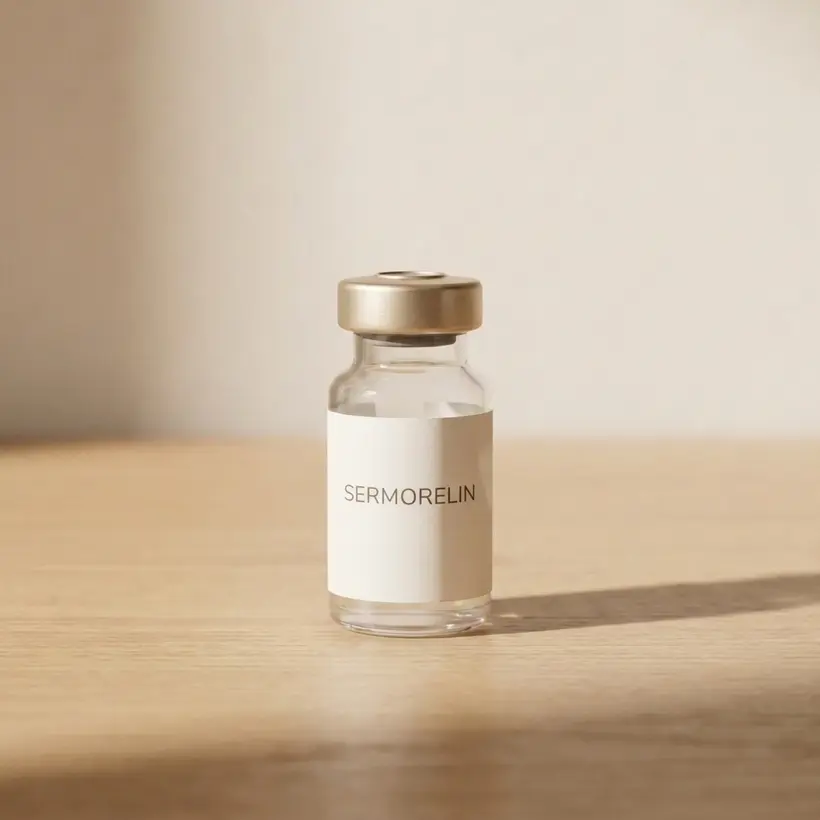
From the FormBlends catalog
Sermorelin
Bioidentical GHRH analog for natural growth hormone pulsatility · From $175/mo · compounded by a licensed 503A pharmacy, dispensed only after provider review.
View Sermorelin →Neither sermorelin nor tirzepatide is metabolized by CYP450 enzymes:
- Sermorelin: Degraded rapidly by nonspecific peptidases in the bloodstream. It has a half-life of approximately 10 to 20 minutes and doesn't require hepatic processing.
- Tirzepatide: Eliminated primarily through proteolytic degradation. Its long half-life (approximately 5 days) is due to albumin binding and structural modifications, not enzyme-dependent metabolism.
Because neither medication relies on CYP450 enzymes, there's no metabolic competition and no risk of altered drug levels from enzyme inhibition or induction.
Absorption Interference: Not Applicable
Some drug interactions occur in the gastrointestinal tract, where one medication affects the absorption of another. This is particularly relevant for oral medications. But both sermorelin and tirzepatide are administered via subcutaneous injection, bypassing the GI tract entirely.
One note: tirzepatide slows gastric emptying as part of its mechanism. This can theoretically affect the absorption of oral medications taken at the same time. Since sermorelin is injected, not ingested, this gastroparesis effect doesn't affect sermorelin absorption. If you take other oral medications alongside tirzepatide, discuss timing with your physician.
Additive Toxicity: Minimal Risk
When two medications produce similar side effects, using them together can increase the severity or frequency of those effects. The side effect profiles of sermorelin and tirzepatide have very little overlap:
| Side Effect | Sermorelin | Tirzepatide |
|---|---|---|
| Nausea | Rare | Common (dose-dependent) |
| Vomiting | Very rare | Possible (early treatment) |
| Diarrhea/constipation | Not typical | Common |
| Injection site reaction | Possible | Possible |
| Headache | Possible | Possible |
| Flushing | Possible | Rare |
| Fatigue | Not typical | Possible |
| Decreased appetite | Not typical | Very common (therapeutic) |
The only overlapping side effects are injection site reactions and headache, both of which are generally mild and self-limiting. The GI symptoms that are most prominent with tirzepatide aren't caused or worsened by sermorelin.
Physiological Cross-Talk: Manageable
While there's no direct drug interaction, there's a minor physiological consideration worth understanding. Growth hormone, stimulated by sermorelin, can have anti-insulin effects at high levels. Tirzepatide works in part by improving insulin sensitivity and glucose regulation.
In theory, these could work at cross purposes. In practice, this is rarely a clinical issue for two reasons:
- Sermorelin stimulates physiological GH levels through the body's natural feedback loop, not supraphysiological levels like exogenous HGH. The insulin impact at these levels is minimal.
- Tirzepatide is a strong insulin sensitizer. Its glucose-lowering effects typically far exceed any minor glucose-raising effect from sermorelin-stimulated GH.
Standard glucose monitoring (fasting glucose, HbA1c) is all that's needed to ensure this physiological interaction remains clinically insignificant.
Contraindications to Be Aware Of
While the combination itself presents no interaction concerns, each medication has its own contraindications that must be respected:
Sermorelin Contraindications
- Active malignancy (GH can promote cell proliferation)
- Active pituitary disorders
- Pregnancy or breastfeeding
- Known hypersensitivity to sermorelin or its components
Tirzepatide Contraindications
- Personal or family history of medullary thyroid carcinoma (MTC)
- Multiple endocrine neoplasia syndrome type 2 (MEN 2)
- History of severe pancreatitis
- Pregnancy or breastfeeding
- Known hypersensitivity to tirzepatide
If any of these contraindications apply to you, discuss them with your physician before starting either medication. medical evaluation
Monitoring Protocol for Safety
Even when medications have no known interaction, proper monitoring during combination therapy is standard practice. Our recommended monitoring schedule includes:
| Timing | Tests | Purpose |
|---|---|---|
| Baseline | CMP, HbA1c, IGF-1, lipids, thyroid panel | Establish pre-treatment values |
| 6 weeks after full stack | CMP, IGF-1, fasting glucose | Confirm appropriate GH response. check glucose |
| 3 months | Full panel including body composition | thorough progress check |
| Every 3 to 6 months ongoing | CMP, IGF-1, HbA1c, lipids | Ongoing safety and improvement |
IGF-1 monitoring is particularly important. This blood marker reflects growth hormone activity and helps your physician confirm that sermorelin is producing appropriate, not excessive, GH stimulation.
What About Interactions with Other Medications?
Patients on the sermorelin-tirzepatide combination may also be taking other medications. Here are common considerations:
- Insulin or sulfonylureas: Tirzepatide can lower blood sugar. Combining with insulin or sulfonylureas increases hypoglycemia risk. Dose adjustments may be needed. This is a tirzepatide-specific consideration, unrelated to sermorelin.
- Oral contraceptives: Tirzepatide's effect on gastric emptying could theoretically reduce absorption of oral contraceptives. Patients should discuss alternative or backup contraception with their physician.
- Levothyroxine: Delayed gastric emptying from tirzepatide may affect thyroid medication absorption. Take levothyroxine on an empty stomach, well separated from tirzepatide's effects.
- Blood pressure medications: No direct interaction with either sermorelin or tirzepatide. Weight loss may reduce blood pressure, potentially requiring dose reduction of antihypertensives.
Always provide your physician with a complete list of all medications, supplements, and over-the-counter products you use. medication review
Frequently Asked Questions
Has anyone had a bad reaction to taking sermorelin and tirzepatide together?
No documented adverse reactions specific to the combination have been published. Side effects that patients experience are attributable to one medication or the other individually, not to an interaction between them.
Can I switch from semaglutide to tirzepatide while on sermorelin?
Yes. If your physician recommends switching from semaglutide to tirzepatide, you can continue sermorelin throughout the transition. Your physician will manage the GLP-1 medication switch and adjust dosing accordingly.
Is it safer to take sermorelin with tirzepatide or with semaglutide?
The safety profile is comparable for both combinations. Neither tirzepatide nor semaglutide interacts with sermorelin. The choice between tirzepatide and semaglutide should be based on efficacy, tolerance, cost, and your physician's recommendation, not on safety differences with sermorelin.
What should I do if I feel unwell after starting both?
Contact your physician. Because the medications have different side effect profiles, it's usually possible to determine which one is causing the issue. Your physician may adjust the dose, change the timing, or temporarily pause one medication to identify the cause.
Do I need to see a specialist for this combination?
Any licensed physician familiar with peptide therapy and GLP-1 medications can manage this combination. At FormBlends, our telehealth physicians specialize in these protocols and provide the expertise and monitoring needed for safe, effective treatment. FormBlends physicians
Safety You Can Trust
The interaction safety profile between sermorelin and tirzepatide is strong. No receptor competition. No metabolic interference. No absorption conflicts. Minimal side effect overlap. The only requirement is the same one that applies to any medical treatment: proper physician supervision, appropriate lab monitoring, and individualized care. At FormBlends, that's exactly what we provide. start your consultation
Ready when you are
Sermorelin
Bioidentical GHRH analog for natural growth hormone pulsatility · From $175/mo · compounded by a licensed 503A pharmacy, dispensed only after provider review.
View Sermorelin →