Key Takeaway
Your skin is your largest organ. This TB-500 wound healing skin repair resource covers the important information you need to make informed decisions. When it's damaged) whether from a cut, surgery, burn, or chronic condition (your body launches a sophisticated repair process.
Your skin is your largest organ. This TB-500 wound healing skin repair resource covers the important information you need to make informed decisions. When it's damaged) whether from a cut, surgery, burn, or chronic condition (your body launches a sophisticated repair process. TB-500 for wound healing and skin repair is one of the most researched applications of Thymosin Beta-4, with animal studies showing accelerated wound closure and improved tissue quality.
Key Takeaways: - The Science of Wound Healing - TB-500 Research in Wound Healing - Clinical Contexts for TB-500 in Skin Repair - Supporting Wound Healing Beyond Peptide Therapy
If you're dealing with slow-healing wounds, post-surgical incision sites, or skin repair concerns, here is what the research tells us about TB-500's potential role.
The Science of Wound Healing
Before looking at TB-500 specifically, understanding how your skin heals helps explain why this peptide has attracted research interest.
Wound healing happens in four overlapping phases:
Hemostasis (minutes to hours). Blood clotting stops the bleeding. Platelets form a plug. A fibrin mesh creates a temporary scaffold.
Inflammation (days 1-5). Immune cells arrive to fight potential infection and clear debris. You see redness, swelling, and warmth. This phase is important) without it, wounds get infected.
"The key to successful GLP-1 therapy is setting realistic expectations and supporting patients through the titration phase. The side effects are manageable for most people, but they need to know what to expect.", Dr. Caroline Apovian, MD, Harvard Medical School
Proliferation (days 3-21). This is where the real rebuilding happens. Fibroblasts produce collagen. New blood vessels form (angiogenesis). Skin cells migrate across the wound surface (re-epithelialization). Granulation tissue fills the wound bed.
Remodeling (weeks 3 to 2 years). Collagen fibers reorganize and strengthen. The wound contracts. Scar tissue matures. This phase can last months to years for significant wounds.
TB-500's studied mechanisms align directly with phases 2 and 3 (the most critical periods for wound healing quality and speed.
TB-500 Research in Wound Healing
Wound healing is one of the most extensively studied applications of Thymosin Beta-4 in animal models.
Accelerated wound closure. Multiple studies using rodent models have shown faster wound closure rates with TB-500 treatment. Research demonstrated that wounds treated with Thymosin Beta-4 closed significantly faster than untreated control wounds.
Enhanced cell migration. TB-500 promotes the migration of keratinocytes (skin cells) and endothelial cells (blood vessel lining cells) to the wound site. Getting repair cells to the damage faster is a key bottleneck in wound healing. TB-500 appears to address this by upregulating cell motility.
Free Download: Peptide Protocol Planner (12-Week) Track your TB-500 wound healing protocol with this organized planner. Includes photo log reminders for documenting wound progress. Get yours free) we'll email it to you instantly. [Email Input] [Download Button]
Improved angiogenesis. New blood vessel formation is critical for wound healing. Without adequate blood supply, wounds become ischemic and healing stalls. TB-500 has demonstrated pro-angiogenic effects in animal wound models, potentially improving nutrient and oxygen delivery to healing tissue.
Collagen deposition. Laboratory and animal Preliminary data suggest that thymosin beta-4 may influence collagen production in wound tissue. Better collagen deposition means stronger, more organized repair tissue. This could translate to better wound quality and reduced scarring.
Anti-inflammatory modulation. Excessive inflammation delays wound healing. TB-500's anti-inflammatory properties may help regulate the inflammatory phase, allowing the wound to transition more efficiently into the proliferative (rebuilding) phase.
Corneal wound healing. some of the most advanced Thymosin Beta-4 wound healing research involves corneal (eye) wounds. Studies have shown accelerated healing of corneal surface wounds with TB-500 treatment. This specialized application illustrates the peptide's versatility in different tissue types.
While these results are promising, most wound healing studies have been conducted in animal models. Your provider can discuss how the current evidence base applies to your specific wound healing concerns.
Clinical Contexts for TB-500 in Skin Repair
Providers may consider TB-500 for several wound healing and skin repair scenarios.
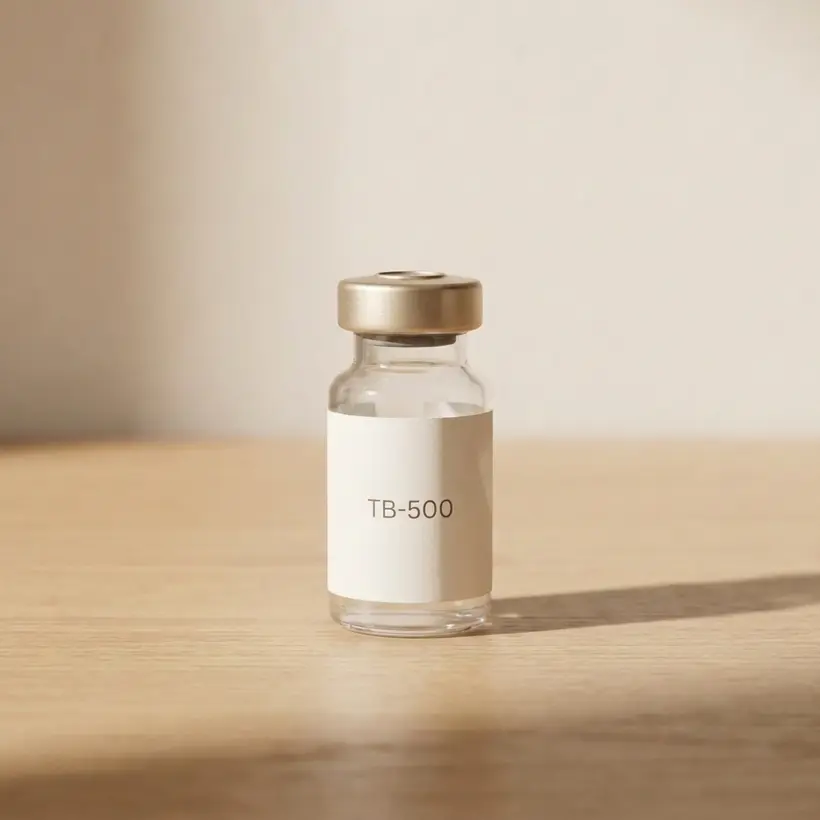
From the FormBlends catalog
TB-500 (Thymosin Beta-4)
Universal repair peptide for tissue regeneration · From $49/mo · compounded by a licensed 503A pharmacy, dispensed only after provider review.
Learn about TB-500 (Thymosin Beta-4) →Post-surgical wound healing. Surgical incisions need to heal cleanly and efficiently. TB-500 may support the healing process, particularly for patients with factors that impair wound healing (advanced age, diabetes, nutritional deficiencies). See our for more on this topic.
Chronic wounds. Wounds that fail to progress through the normal healing phases may benefit from additional support. Conditions like venous stasis ulcers, pressure sores, and diabetic foot ulcers are characterized by stalled healing. TB-500's ability to promote cell migration and angiogenesis may be relevant for these challenging wound types.
Slow-healing injuries. Some people simply heal more slowly than average. Factors like age, nutrition, medications (especially corticosteroids and immunosuppressants), and underlying health conditions can all impair wound healing. TB-500 may help address some of these barriers.
Cosmetic concerns. Scar quality and wound appearance matter to many patients. While TB-500 isn't a cosmetic treatment, its potential to improve collagen organization in healing wounds could lead to better aesthetic outcomes.
Combined approaches. Some providers use TB-500 alongside for enhanced wound healing support. The combines both peptides' repair mechanisms. BPC-157 has its own wound healing research, and the combination may offer complementary benefits.
Your can evaluate your specific wound healing situation and determine if TB-500 is an appropriate option.
Supporting Wound Healing Beyond Peptide Therapy
If you're focused on wound healing, these evidence-based strategies complement any peptide protocol.
Nutrition for healing. Your body needs specific nutrients to build new tissue. Protein is critical (aim for at least 0.7 grams per pound of body weight. Vitamin C is important for collagen synthesis) 500-1000mg daily from food or supplements. Zinc supports immune function and cell division, 15-30mg daily. Vitamin A supports epithelial cell growth.
Hydration. Dehydrated tissue heals more slowly. Drink adequate water throughout the day. If you're on GLP-1 medication, which can contribute to dehydration, pay extra attention to fluid intake. Check our for hydration tips.
Wound care basics. Keep wounds clean and moist. Modern wound care emphasizes moist healing environments over the old "let it air out" approach. Follow your provider's specific wound care instructions.
Avoid smoking. Smoking dramatically impairs wound healing by reducing blood flow, decreasing oxygen delivery, and impairing immune function. If you smoke, healing is one of the most compelling reasons to stop.
Track your progress. Document your wound healing with weekly photos taken in the same lighting and position. Log any treatments, including TB-500 doses, in the . Share these records with your provider for informed clinical decisions.
Sleep. Growth hormone, which supports tissue repair, is released primarily during deep sleep. Aim for 7-9 hours of quality sleep during active healing.
Frequently Asked Questions
How quickly does TB-500 improve wound healing?
Animal studies show accelerated wound closure within 1-2 weeks of TB-500 treatment. Human response times vary based on wound type, size, location, and individual health factors. Most providers recommend assessing progress at 4-week intervals. Chronic wounds may take longer to show improvement.
Can I apply TB-500 directly to a wound?
TB-500 is typically administered via subcutaneous injection, not applied topically to wounds. Some research has explored topical formulations, but standard clinical use involves injection. Your provider will determine the appropriate administration route for your situation.
Is TB-500 safe for diabetic wound healing?
Diabetes impairs wound healing through multiple pathways including reduced blood flow and nerve damage. TB-500's angiogenesis and cell migration properties are theoretically relevant for diabetic wounds. But diabetic patients should only use TB-500 under close provider supervision, as diabetes adds complexity to any treatment protocol.
Will TB-500 prevent scarring?
TB-500 can't guarantee scar-free healing. But its potential to improve collagen organization in healing tissue may contribute to better scar quality (thinner, flatter, more organized). Scar outcomes depend on many factors including wound size, location, tension on the wound, genetics, and post-healing care.
Can TB-500 help with burns?
Animal research on Thymosin Beta-4 and burn healing exists and shows some promising results. But burn treatment is complex and requires specialized medical care. If you have a significant burn, prioritize treatment at a burn center. TB-500 as an adjunct to burn care would need to be discussed with your burn treatment team.
Your Personalized Plan Is Waiting
No two patients are the same, and your protocol shouldn't be either. FormBlends providers create customized treatment plans based on your health profile, goals, and preferences.
Medical References
- Goldstein AL, Hannappel E, Sosne G, Kleinman HK. Thymosin beta4: a multi-functional regenerative peptide. Basic properties and clinical applications. Expert Opin Biol Ther. 2012;12(1):37-51. [PubMed | DOI]
Sources &. References
- Bock-Marquette I, Saxena A, White MD, et al. Thymosin beta4 activates integrin-linked kinase and promotes cardiac cell migration, survival and cardiac repair. Nature. 2004;432(7016):466-472. Doi:10.1038/nature03000
- Malinda KM, Sidhu GS, Mani H, et al. Thymosin beta4 accelerates wound healing. J Invest Dermatol. 1999;113(3):364-368. Doi:10.1046/j.1523-1747.1999.00708.x
This article is for educational purposes only and doesn't constitute medical advice. Always consult with a licensed healthcare provider before starting, changing, or stopping any medication or supplement. FormBlends connects you with licensed providers who can evaluate your individual health needs.
Last updated: 2026-03-24
Ready when you are
TB-500 (Thymosin Beta-4)
Universal repair peptide for tissue regeneration · From $49/mo · compounded by a licensed 503A pharmacy, dispensed only after provider review.
Learn about TB-500 (Thymosin Beta-4) →