Key Takeaway
Is TB-500 safe to take with tirzepatide? Review the interaction safety profile, pharmacological analysis, and clinical considerations for this peptide-GLP-1 combination.
TB-500 and tirzepatide have no known pharmacological interaction and are considered safe to combine under physician supervision. The interaction safety profile is favorable because these compounds operate through entirely different biological systems. TB-500 works through actin-mediated cell migration and tissue repair. Tirzepatide works through dual GIP/GLP-1 receptor activation for metabolic regulation and weight loss. They share no receptors, no metabolic enzymes, and no pharmacokinetic pathways.
How TB-500 and Tirzepatide Mechanisms
Interaction safety assessment starts with understanding how each compound behaves at a molecular level. When two compounds use completely different biological infrastructure, the probability of harmful interaction is minimal.
TB-500: Actin-Based Tissue Repair
TB-500 is a synthetic fragment of thymosin beta-4, a protein that regulates actin polymerization in cells. By sequestering actin monomers, thymosin beta-4 helps with the cell motility required for tissue repair. When cells need to migrate to an injury site, thymosin beta-4 provides the cytoskeletal flexibility to make that movement possible.
TB-500's biological effects extend beyond simple cell migration. It promotes angiogenesis (new blood vessel growth), reduces inflammation by modulating pro-inflammatory cytokines, and supports structural remodeling in connective tissues. It's metabolized through standard peptide hydrolysis and isn't a substrate of CYP450 liver enzymes.
Tirzepatide: Dual Incretin Receptor Activation
Tirzepatide activates both the GLP-1 receptor and the GIP receptor, making it a dual incretin agonist. Through GLP-1 receptor activation, it suppresses appetite, slows gastric emptying, and improves insulin secretion. Through GIP receptor activation, it provides additional metabolic benefits including enhanced fat metabolism and insulin sensitization.
Tirzepatide is metabolized through proteolytic degradation. It isn't a CYP450 substrate. It doesn't interact with actin regulation, cell migration pathways, or angiogenesis signaling.
Can You Combine Them? Detailed Safety Analysis
Receptor-Level Analysis
The most fundamental layer of interaction safety is receptor compatibility. TB-500 doesn't bind to GLP-1 receptors. TB-500 doesn't bind to GIP receptors. TB-500 doesn't bind to insulin receptors or glucagon receptors. Tirzepatide doesn't bind to actin, doesn't interfere with cell migration signaling, and doesn't affect growth factor receptors involved in tissue repair. There's zero receptor-level competition or interference between these compounds. For a complete cost breakdown, see our cheapest tirzepatide options.

Metabolic Pathway Analysis
The CYP450 enzyme system in the liver is responsible for the majority of drug-drug interactions. When two compounds compete for the same CYP450 enzyme, one can accumulate to toxic levels. This mechanism is entirely irrelevant here. Neither TB-500 nor tirzepatide is processed through CYP450 enzymes. Both undergo proteolytic degradation through separate peptidase activity. There's no shared metabolic bottleneck.
Pharmacokinetic Analysis
Tirzepatide slows gastric emptying as part of its mechanism of action. This can theoretically affect oral medications by altering their absorption timing. But TB-500 is administered subcutaneously, bypassing the GI tract entirely. Gastric motility changes from tirzepatide have no effect on TB-500 absorption or bioavailability.
Both compounds have distinct half-lives and distribution profiles. Tirzepatide has a half-life of approximately 5 days, supporting weekly dosing. TB-500 has a shorter half-life, typically requiring two to three injections per week during loading phases. These dosing schedules don't interact.
The Dual-Receptor Question
A specific concern patients raise about tirzepatide is whether its activation of two receptors (GLP-1 and GIP) creates interaction risks that wouldn't exist with a single-receptor GLP-1 medication. The answer is clear: no. TB-500 has no interaction with either receptor system. Whether tirzepatide activates one incretin receptor or two, TB-500 remains pharmacologically distant from both. The dual-receptor mechanism of tirzepatide is relevant to its metabolic potency, not to its interaction profile with tissue repair peptides.
What the Evidence Shows
No randomized controlled trial has studied this specific combination in human subjects. The safety assessment relies on the independent safety data for each compound (tirzepatide through extensive FDA clinical trials, TB-500 through preclinical research and clinical observation), their mechanistic independence, and the growing body of physician experience with this combination. This represents a sound clinical basis for supervised use, while acknowledging a different evidence tier than formal combination trial data.
Potential Benefits of Combining
Tissue Recovery During Weight Loss
Tirzepatide's aggressive weight loss profile means patients' bodies undergo rapid structural changes. TB-500 provides tissue repair support during this remodeling process, particularly for connective tissues, joints, and musculoskeletal structures adapting to new mechanical loads.
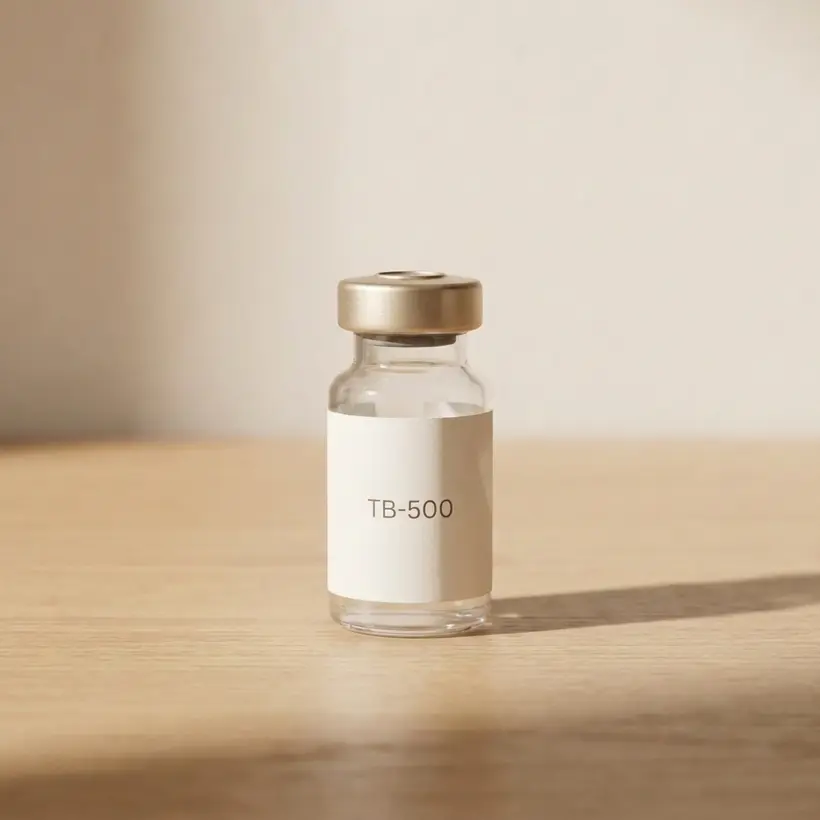
From the FormBlends catalog
TB-500 (Thymosin Beta-4)
Universal repair peptide for tissue regeneration · From $49/mo · compounded by a licensed 503A pharmacy, dispensed only after provider review.
Learn about TB-500 (Thymosin Beta-4) →Exercise Recovery
Patients on tirzepatide who exercise regularly benefit from TB-500's recovery properties. Faster repair of exercise-induced micro-damage translates to better training consistency and reduced injury risk.
Complementary Anti-Inflammatory Effects
Tirzepatide reduces metabolic inflammation through weight loss and glycemic improvement. TB-500 reduces tissue-level inflammation through direct cytokine modulation. The combination addresses inflammation from both systemic and local perspectives.
Protocol Considerations
Tirzepatide follows its standard titration schedule without modification: 2.5 mg weekly for 4 weeks, increasing in 2.5 mg increments every 4 weeks as tolerated. TB-500 is introduced after 2 to 4 weeks of tirzepatide alone, following a loading phase (5 to 10 mg weekly for 4 to 6 weeks) and maintenance phase (2.5 to 5 mg weekly). Both use subcutaneous injection at separate sites. From $349
Regular monitoring with your physician includes check-ins every 2 to 4 weeks during initiation and periodic blood work to track metabolic markers, inflammatory markers, and organ function.
Who Should Consider This Combination
- Tirzepatide patients with active lifestyles who want musculoskeletal recovery support.
- Patients undergoing significant weight loss who want tissue health support during rapid body changes.
- Patients with joint or connective tissue concerns starting tirzepatide therapy.
- Patients seeking anti-inflammatory support from both metabolic and tissue-repair perspectives.
Contraindications include pregnancy, nursing, age under 18, active malignancies, and all standard tirzepatide contraindications (medullary thyroid carcinoma history, MEN2 syndrome, pancreatitis history).
Frequently Asked Questions
Could TB-500 make tirzepatide side effects worse?
There's no known mechanism by which TB-500 would worsen tirzepatide's side effects. The most common tirzepatide side effects are GI-related (nausea, vomiting, diarrhea). TB-500 doesn't affect gastric motility, appetite signaling, or the GI pathways that tirzepatide influences. If anything, TB-500's anti-inflammatory properties may provide indirect support, though it isn't specifically a GI-protective peptide (BPC-157 is more commonly used for that purpose).
Is there a risk of over-stimulating tissue growth by combining TB-500 with tirzepatide?
TB-500 promotes normal tissue repair processes. it doesn't cause uncontrolled growth. Its mechanism helps with the migration of cells to areas that need repair, not the proliferation of cells beyond normal healing. Tirzepatide doesn't interact with tissue growth pathways. But patients with active cancer should avoid TB-500 due to its angiogenic properties, regardless of whether they're using tirzepatide.
Do I need to adjust my tirzepatide dose when adding TB-500?
No. TB-500 doesn't affect tirzepatide's metabolism, efficacy, or side effect profile. Your tirzepatide titration continues on its standard schedule without modification. The two compounds are dosed independently.
Should I tell my doctor about both compounds?
Always. Full transparency with your prescribing physician is important for safe medical care. Your doctor needs to know every compound you're using. At FormBlends, both tirzepatide and peptide therapies are supervised by the same medical team, ensuring coordinated care.
Medical References
- Goldstein AL, Hannappel E, Sosne G, Kleinman HK. Thymosin beta4: a multi-functional regenerative peptide. Basic properties and clinical applications. Expert Opin Biol Ther. 2012;12(1):37-51. [PubMed | DOI]
Safe, Supervised Combination Therapy at FormBlends
The interaction safety between TB-500 and tirzepatide is well-supported by pharmacological analysis and clinical experience. At FormBlends, our physicians provide thorough evaluation, personalized protocols, pharmaceutical-grade compounds, and ongoing monitoring to ensure your combination therapy is safe and effective.
Start your consultation at FormBlends.com
Ready when you are
TB-500 (Thymosin Beta-4)
Universal repair peptide for tissue regeneration · From $49/mo · compounded by a licensed 503A pharmacy, dispensed only after provider review.
Learn about TB-500 (Thymosin Beta-4) →