Key Takeaway
Best protocol for combining TB-500 with tirzepatide. Dosing, timing, cycle structure, and physician-supervised strategies for tissue repair alongside weight management.
The best protocol for combining TB-500 with tirzepatide uses a phased approach: establish tirzepatide first, then introduce TB-500 with a loading phase followed by maintenance cycling. This structure allows clear attribution of effects and side effects while maximizing the complementary benefits of tissue repair and metabolic weight management. Your physician tailors every element of this protocol to your health history, activity level, and therapeutic goals.
How the Two Compounds
TB-500: Recovery and Repair
TB-500 is a synthetic peptide derived from thymosin beta-4, a protein that regulates actin dynamics and cell migration. Its primary biological role is helping with tissue repair. When tissue is damaged, thymosin beta-4 promotes the movement of repair cells to the injury site, stimulates new blood vessel formation to supply the healing area, and modulates inflammatory responses to support recovery.
TB-500 is valued for its broad tissue repair profile, covering tendons, ligaments, muscles, joints, and connective tissue. It's administered subcutaneously and follows a loading-plus-maintenance dosing pattern.
Tirzepatide: Aggressive Metabolic Management
Tirzepatide is the most potent pharmaceutical weight loss agent currently available, activating both GLP-1 and GIP receptors. This dual mechanism drives appetite suppression, insulin sensitization, improved fat metabolism, and reduced glucagon output. In the SURMOUNT trial program, patients achieved weight reductions up to 22.5 percent of body weight.
Tirzepatide is injected once weekly and follows a titration schedule starting at 2.5 mg, with 2.5 mg increases every four weeks as tolerated.
Can You Combine Them?
Yes. TB-500 and tirzepatide have no known pharmacological interaction. They operate through entirely separate receptor systems (actin regulation versus incretin receptor activation), are metabolized through independent proteolytic pathways (neither uses CYP450 enzymes), and don't interfere with each other's absorption, distribution, or clearance. Check out our see real Zepbound results for detailed data.

Potential Benefits of This Protocol
Structural Support During Rapid Weight Loss
Tirzepatide patients often lose weight faster than patients on other GLP-1 medications. This rapid change places significant demand on connective tissues, joints, and skin. TB-500's tissue repair and angiogenic properties help the body adapt structurally to these changes.
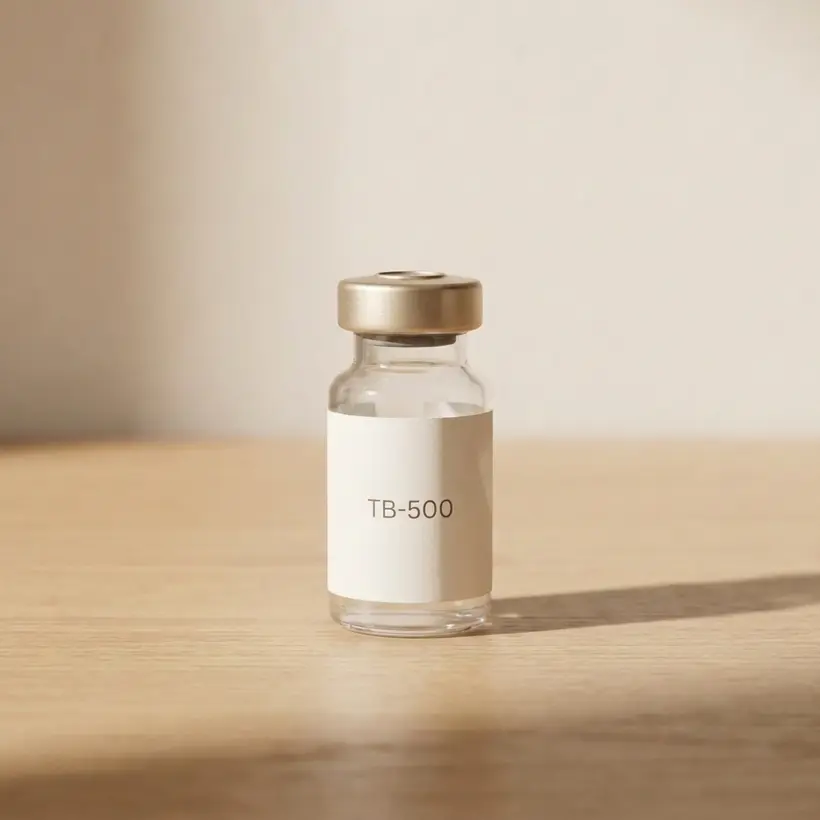
From the FormBlends catalog
TB-500 (Thymosin Beta-4)
Universal repair peptide for tissue regeneration · From $49/mo · compounded by a licensed 503A pharmacy, dispensed only after provider review.
Learn about TB-500 (Thymosin Beta-4) →Exercise Recovery for Active Patients
Weight management programs include progressive exercise. TB-500 supports recovery from training by promoting repair of exercise-induced micro-damage in muscles, tendons, and ligaments. Faster recovery means more consistent training, which enhances weight loss outcomes from tirzepatide.
Anti-Inflammatory combined effect
Tirzepatide reduces metabolic inflammation through weight loss and improved glycemic control. TB-500 reduces tissue-level inflammation through direct cytokine modulation. The protocol addresses inflammation from both systemic and localized perspectives.
Joint Health Protection
Patients transitioning from excess weight to an active lifestyle often have compromised joint health. TB-500 supports connective tissue repair in joints while tirzepatide reduces the mechanical load through weight loss. This dual approach addresses joint health from both the repair and the load-reduction side.
Protocol Considerations: The Phased Approach
The following framework is used in clinical practice. Your physician adjusts all parameters based on your individual situation.
Phase 1: Tirzepatide Foundation (Weeks 1 to 4)
Begin tirzepatide at 2.5 mg weekly, the standard starting dose. This phase establishes your baseline response: how your GI system handles the medication, how quickly appetite suppression develops, and whether any side effects require management. No TB-500 during this phase. From $349
Key monitoring during Phase 1: GI tolerance (nausea, bowel changes), appetite response, energy levels, and any injection site reactions. Baseline blood work should be completed before or during this phase.
Phase 2: TB-500 Loading (Weeks 4 to 10)
After establishing your tirzepatide baseline, introduce TB-500 at loading doses. The loading phase builds tissue concentration of the peptide to initiate its repair effects.
- Loading dose: 5 to 10 mg TB-500 per week, divided into 2 to 3 subcutaneous injections.
- Duration: 4 to 6 weeks.
- Injection sites: Rotate between abdomen, thigh, and upper arm. Use different sites from tirzepatide injections.
During this phase, tirzepatide continues its standard titration. Most patients move from 2.5 mg to 5 mg at week 5, then to 7.5 mg at week 9. The two titrations run in parallel but are managed independently.
Phase 3: TB-500 Maintenance (Weeks 10 to 20)
After loading, reduce TB-500 to maintenance dosing:
- Maintenance dose: 2.5 to 5 mg per week in 1 to 2 injections.
- Duration: 4 to 10 weeks, depending on recovery goals and physician assessment.
Tirzepatide continues its titration toward the target dose during this phase. Many patients reach their tirzepatide maintenance dose (7.5 mg, 10 mg, 12.5 mg, or 15 mg) during TB-500's maintenance window.
Phase 4: TB-500 Off-Cycle and Reassessment
After completing a TB-500 cycle (typically 8 to 16 weeks total), take a break of at least 4 weeks. During this period, tirzepatide continues at its established dose. Your physician evaluates whether another TB-500 cycle is warranted based on your recovery needs, activity level, and progress.
Some patients run 2 to 3 TB-500 cycles over the first year of tirzepatide therapy. Others need only a single cycle during the most active weight loss phase. Your protocol evolves based on your response.
Injection Logistics
A typical weekly schedule during the loading phase:
- Monday: TB-500 injection (abdomen)
- Thursday: TB-500 injection (thigh)
- Saturday: Tirzepatide injection (upper arm or opposite side of abdomen)
During maintenance, TB-500 drops to one or two injections per week. Tirzepatide remains once weekly on a consistent day.
Who Should Consider This Protocol
- Physically active tirzepatide patients with high musculoskeletal recovery demands.
- Patients losing 15 percent or more of body weight who want tissue adaptation support.
- Patients with existing joint or tendon issues starting tirzepatide therapy.
- Patients with chronic inflammation who want both metabolic and tissue-level anti-inflammatory support.
- Athletes using tirzepatide for weight management who need structured recovery support.
Not appropriate for patients who are pregnant or nursing, under 18, have active cancer, or have contraindications to tirzepatide (MTC history, MEN2, pancreatitis history).
Frequently Asked Questions
Can I start TB-500 and tirzepatide at the same time?
It's possible but not recommended. Starting both simultaneously prevents you and your physician from identifying the source of any side effects. The phased approach provides cleaner information and better clinical decision-making. Most physicians require 2 to 4 weeks on tirzepatide alone before introducing TB-500.
Is this protocol different for tirzepatide than for semaglutide?
The core structure is the same: establish the GLP-1 medication first, then layer in TB-500. The main difference is that tirzepatide's titration schedule uses different doses and intervals than semaglutide. Tirzepatide also tends to produce more aggressive weight loss, which may make TB-500's tissue support benefits even more relevant. The TB-500 dosing itself doesn't change based on which GLP-1 medication you're using.
How do I know if TB-500 is working?
Patients typically notice improved recovery from exercise, reduced joint stiffness or discomfort, and better overall physical resilience within 2 to 4 weeks of starting the loading phase. These improvements are often gradual and cumulative rather than dramatic. Your physician will track objective markers alongside your subjective experience.
What if I experience side effects from both compounds?
This is why the phased approach matters. Because you established your tirzepatide baseline first, you'll know which side effects existed before TB-500 was added. Any new symptoms that appear after TB-500 introduction can be attributed more confidently. Your physician can adjust or discontinue TB-500 while maintaining your tirzepatide protocol if needed.
Medical References
- Goldstein AL, Hannappel E, Sosne G, Kleinman HK. Thymosin beta4: a multi-functional regenerative peptide. Basic properties and clinical applications. Expert Opin Biol Ther. 2012;12(1):37-51. [PubMed | DOI]
Build Your Protocol at FormBlends
The best protocol is the one designed for your specific body, goals, and medical history. At FormBlends, our physicians build personalized TB-500 and tirzepatide protocols using pharmaceutical-grade compounds, with ongoing monitoring and adjustment to keep your treatment improved.
Start your consultation at FormBlends.com
Ready when you are
TB-500 (Thymosin Beta-4)
Universal repair peptide for tissue regeneration · From $49/mo · compounded by a licensed 503A pharmacy, dispensed only after provider review.
Learn about TB-500 (Thymosin Beta-4) →