Executive Summary
Cosmetic peptides have reshaped how we think about anti-aging skincare. These short chains of amino acids act as biological messengers, telling skin cells to produce more collagen, relax expression lines, and repair accumulated damage. Unlike older approaches that relied on simple moisturizing or chemical exfoliation, peptides work at the cellular level to address the root causes of visible aging.
Key Takeaways
- Signal peptides like Matrixyl (palmitoyl pentapeptide-4) that stimulate collagen and extracellular matrix production
- Neurotransmitter-inhibiting peptides like Argireline and SNAP-8 that modulate muscle contraction to reduce expression lines
- Carrier peptides like GHK-Cu that deliver essential trace elements to skin cells
- Enzyme-inhibiting peptides derived from sources like silk and soy that protect existing structural proteins from degradation
If you've spent any time reading ingredient labels on serums and creams, you've probably noticed names like Argireline, Matrixyl, and GHK-Cu. These aren't marketing buzzwords. They're bioactive compounds backed by peer-reviewed research, clinical trials, and decades of biochemistry. And they represent a genuinely different way of approaching skin health.
The cosmetic peptide market has grown dramatically over the past two decades, driven by consumer demand for effective yet gentle alternatives to more invasive procedures. Botulinum toxin injections, laser resurfacing, and chemical peels all have their place, but they come with downtime, discomfort, and costs that not everyone can accept. Peptides offer a middle path: targeted biological activity delivered through a daily topical routine.
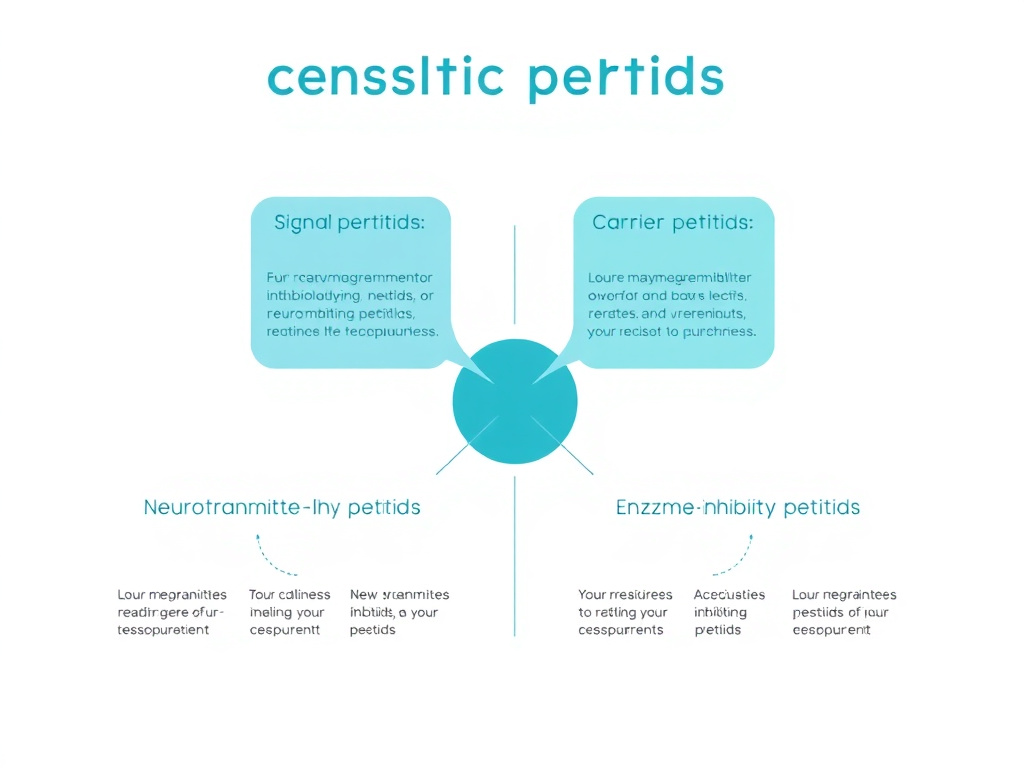
This report covers the four major categories of cosmetic peptides, each operating through a distinct mechanism:
- Signal peptides like Matrixyl (palmitoyl pentapeptide-4) that stimulate collagen and extracellular matrix production
- Neurotransmitter-inhibiting peptides like Argireline and SNAP-8 that modulate muscle contraction to reduce expression lines
- Carrier peptides like GHK-Cu that deliver essential trace elements to skin cells
- Enzyme-inhibiting peptides derived from sources like silk and soy that protect existing structural proteins from degradation
We'll examine the biochemistry behind each class, review the clinical trial data (including effect sizes, study durations, and statistical significance), discuss formulation challenges like skin penetration, and provide evidence-based guidance on combining peptides for maximum benefit. Every claim in this report is tied to published research, with full citations at the end.
Whether you're a researcher evaluating peptide ingredients, a formulator designing a new product, or someone who simply wants to understand what these compounds can and can't do, this guide provides the scientific foundation you need.
A Brief History of Peptides in Skincare
The idea of using peptides in skincare isn't new, but commercial reality lagged behind the science for decades. In the 1970s, Dr. Loren Pickart's discovery of GHK-Cu in human plasma hinted at the potential for peptide-based skin treatments. But translating laboratory findings into stable, effective topical products proved difficult. Early formulations struggled with two fundamental problems: peptide stability (keeping the active molecules intact in a cream or serum for months) and skin penetration (getting those molecules past the stratum corneum to their target cells).
The first real commercial breakthrough came in the early 2000s, when Sederma introduced Matrixyl. By attaching a palmitic acid chain to the KTTKS pentapeptide sequence, they solved both the penetration and stability problems in one stroke. The resulting product could be incorporated into standard cosmetic formulations and still deliver measurable wrinkle reduction in clinical trials. Around the same time, Lipotec launched Argireline, the first commercial neurotransmitter-inhibiting peptide, which gained massive consumer attention when media outlets began calling it "Botox in a bottle."
These two products opened the floodgates. Over the next two decades, dozens of cosmetic peptides entered the market, each targeting different aspects of skin aging through distinct mechanisms. The field has matured from a novelty ingredient category into a serious area of cosmeceutical research, supported by hundreds of published studies and a global market worth billions of dollars annually.
Today, cosmetic peptides represent one of the fastest-growing segments of the skincare ingredient market. Consumer awareness has increased dramatically, driven by social media education, dermatologist recommendations, and a general shift toward science-backed skincare. But with that growth has come confusion. Not all peptides are created equal, not all formulations deliver what they promise, and the gap between marketing claims and clinical evidence can be wide. This report aims to close that gap with a thorough, evidence-based analysis.
How to Use This Report
This report is organized by peptide category, moving from signal peptides through neurotransmitter-inhibiting peptides, carrier peptides, and enzyme-inhibiting peptides. Each section covers the biochemistry, mechanism of action, key compounds, and clinical evidence for its category. Following the category-specific sections, we examine cross-cutting topics including clinical efficacy comparisons, formulation science, combination strategies, safety, and practical application protocols.
Researchers and formulators will find the most value in the mechanism-of-action discussions and the formulation science section. Consumers and practitioners will benefit most from the clinical efficacy comparisons, combination strategies, and application protocols. The FAQ section addresses the most common questions we encounter about cosmetic peptides. And the references section provides direct links to the primary literature for those who want to go deeper.
Key Takeaway
Cosmetic peptides aren't a single ingredient. They're a family of bioactive compounds that work through at least four distinct mechanisms. Choosing the right peptide (or combination) depends on your specific skin concern, whether that's fine lines from repetitive muscle movement, loss of firmness from declining collagen, uneven pigmentation, or general age-related thinning. Understanding the science behind each category is the first step toward making informed decisions.
Skin Biology and the Aging Process
Before we can appreciate how peptides work, we need to understand what they're working on. Human skin is far more than a simple wrapper. It's a complex organ with multiple layers, each performing specialized functions that collectively maintain barrier integrity, regulate temperature, sense the environment, and protect against pathogens and ultraviolet radiation.
The Architecture of Healthy Skin
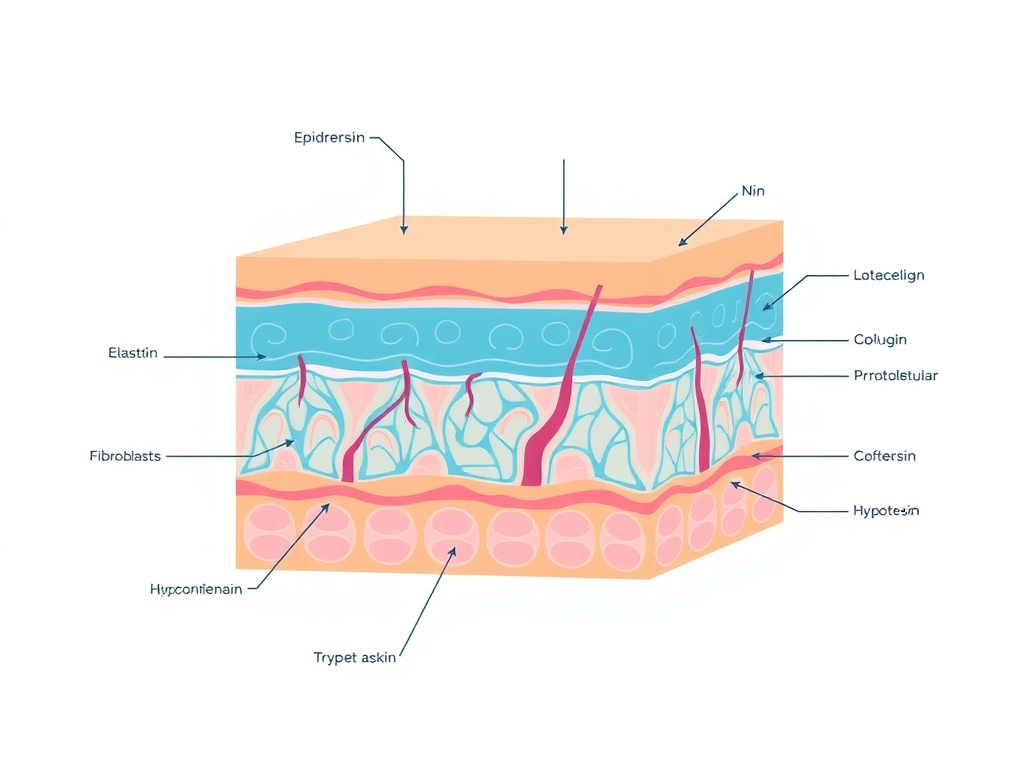
The outermost layer, the epidermis, is itself composed of several sub-layers. The stratum corneum sits at the very top: a tightly packed barrier of dead, flattened cells called corneocytes, held together by lipid matrices. This is the primary obstacle that any topical peptide must overcome to reach its biological targets. Below the stratum corneum, living keratinocytes in the stratum granulosum, stratum spinosum, and stratum basale continuously divide, differentiate, and migrate upward over roughly 28 days to replenish the barrier.
The dermis, sitting beneath the epidermis, is where most of the structural action happens. This layer is dominated by fibroblasts, the cells responsible for producing collagen, elastin, and the glycosaminoglycans (like hyaluronic acid) that form the extracellular matrix (ECM). Think of collagen as the steel frame of a building, elastin as the springs that let it flex, and the glycosaminoglycans as the insulation that holds water and keeps everything plump.
Type I collagen accounts for about 80% of dermal collagen, with Type III making up most of the remainder. Fibronectin serves as a molecular glue, connecting cells to the ECM and playing essential roles in wound healing and tissue remodeling. The dermal-epidermal junction, where these two layers meet, is anchored by Type IV and Type VII collagen, forming a specialized basement membrane that keeps everything properly attached.
Intrinsic Aging: The Biological Clock
Skin aging happens on two fronts simultaneously. Intrinsic aging, sometimes called chronological aging, is driven by genetics and the passage of time. Starting around age 25, collagen production declines by roughly 1% per year. By age 50, most people have lost about 25% of their dermal collagen compared to their younger selves. This loss isn't just quantitative; the remaining collagen becomes more cross-linked and fragmented, reducing its mechanical strength.
Elastin degradation follows a similar trajectory but with an important difference: adult skin produces very little new elastin. The elastin fibers formed during development are essentially the ones you have for life, and as they fragment and calcify with age, the skin progressively loses its ability to snap back after being stretched or compressed. This is why "laugh lines" and "crow's feet" start as temporary creases and gradually become permanent.
Fibroblast activity declines with age as well. These cells don't just slow down; they also become less responsive to growth factors and other signaling molecules. The ECM itself becomes a less supportive environment, creating a feedback loop where declining structure leads to declining cellular function, which leads to further structural decline.
Meanwhile, levels of endogenous peptides drop. GHK-Cu, a naturally occurring copper-binding tripeptide, circulates at approximately 200 ng/mL in plasma at age 20 but falls to about 80 ng/mL by age 60[1]. Since GHK-Cu plays roles in collagen synthesis, antioxidant defense, and wound healing, this decline has measurable consequences for skin quality.
Extrinsic Aging: Environmental Damage
Photoaging, caused primarily by ultraviolet radiation from sunlight, accounts for up to 80% of visible facial aging in fair-skinned individuals. UVA rays penetrate deep into the dermis, generating reactive oxygen species (ROS) that directly damage collagen and elastin fibers. But the bigger problem is indirect: UV exposure activates matrix metalloproteinases (MMPs), especially MMP-1 (collagenase), MMP-3 (stromelysin), and MMP-9 (gelatinase), which actively break down the existing ECM.
A single episode of significant sun exposure can elevate MMP activity for days. Chronic UV exposure creates a state of persistent MMP overexpression, accelerating collagen loss far beyond what chronological aging alone would produce. The resulting "solar elastosis," a tangled mass of degraded elastic material in the upper dermis, is the histological hallmark of photodamaged skin.
Other extrinsic factors include pollution (particularly particulate matter and polycyclic aromatic hydrocarbons), cigarette smoke, poor nutrition, and chronic stress. All of these converge on similar pathways: increased ROS, elevated MMP activity, and reduced capacity for repair.
Where Peptides Fit In
The beauty of peptide-based interventions is that they can target multiple points in this aging cascade simultaneously. Signal peptides like Matrixyl stimulate fibroblasts to produce new collagen and ECM components, directly addressing the supply-side problem. Neurotransmitter-inhibiting peptides like SNAP-8 reduce the mechanical stress that causes expression lines. Carrier peptides like GHK-Cu replenish declining endogenous signaling molecules while also suppressing MMP activity and boosting antioxidant defenses. And enzyme-inhibiting peptides protect existing structural proteins from premature degradation.
No single peptide does everything. But the right combinations can address aging skin from multiple angles, which is why modern cosmeceutical formulations increasingly feature peptide blends rather than single ingredients.
The Role of Hormones in Skin Aging
Hormonal changes contribute significantly to skin aging, particularly in women. The decline in estrogen during perimenopause and menopause accelerates collagen loss dramatically. Studies suggest that women lose approximately 30% of their dermal collagen during the first five years of menopause, a rate far exceeding the 1% per year associated with chronological aging alone. Estrogen supports collagen synthesis, maintains dermal thickness, promotes skin hydration through glycosaminoglycan production, and supports wound healing.
This hormonal dimension helps explain why many women notice a sudden acceleration in visible skin aging during their late 40s and early 50s. It also means that peptide-based interventions may be particularly valuable during and after the menopausal transition, when the skin's natural repair capacity is declining on multiple fronts simultaneously. Signal peptides like Matrixyl that stimulate collagen production and carrier peptides like GHK-Cu that support overall skin regeneration could help partially compensate for the loss of estrogen-driven maintenance.
Testosterone also plays a role in skin biology, maintaining sebum production and dermal thickness. The gradual decline in testosterone in aging men (sometimes called andropause) contributes to thinner, drier skin, though the effect is generally more gradual than the estrogen-related changes seen in women. Androgens influence hair growth patterns, sebaceous gland activity, and wound healing rates, all of which change with age.
Cortisol, the stress hormone, deserves mention as well. Chronic psychological stress elevates cortisol levels, which increases MMP activity, reduces collagen synthesis, compromises barrier function, and promotes inflammation. The visible effects of chronic stress on skin quality are well documented, and they represent yet another pathway that can be partially addressed by anti-inflammatory and matrix-protective peptides.
The Glycation Problem
Advanced glycation end-products (AGEs) form when reducing sugars react non-enzymatically with proteins, lipids, and nucleic acids. In the skin, collagen and elastin are particularly vulnerable to glycation because of their long biological half-lives and abundance of lysine and arginine residues, which serve as glycation targets.
Glycated collagen becomes stiff, resistant to normal turnover, and prone to cross-linking that disrupts the organized fibrillar structure of the dermis. Glycated elastin loses its elastic properties entirely. The visible result is the progressive stiffening, yellowing, and loss of resilience that characterizes aged skin, particularly in individuals with chronically elevated blood sugar levels.
AGEs also bind to RAGE (Receptor for Advanced Glycation End-products) on cell surfaces, triggering inflammatory signaling cascades that further accelerate aging through MMP activation and oxidative stress. This creates a vicious cycle: glycation damages structural proteins, which triggers inflammation, which promotes more glycation through increased ROS production.
Current cosmetic peptides don't directly address glycation, but several mechanisms are relevant. GHK-Cu's anti-inflammatory and antioxidant activities may slow the rate of AGE formation. Signal peptides that stimulate new collagen synthesis help replace glycated fibers with fresh, functional ones. And MMP-inhibiting peptides protect both new and existing collagen from inflammatory degradation triggered by AGE-RAGE signaling. As the understanding of glycation's role in skin aging deepens, we may see peptides specifically designed to inhibit AGE formation or break existing AGE cross-links.
Skin Microbiome and Aging
The skin microbiome, the community of bacteria, fungi, viruses, and mites that lives on and in the skin, changes significantly with age. The diversity of microbial species tends to decrease, the balance between commensal and potentially pathogenic species shifts, and the microbiome's contribution to barrier function and immune regulation diminishes.
This is relevant to cosmetic peptides in several ways. First, skin bacteria can metabolize topically applied peptides, potentially altering their activity or destroying them before they reach their targets. Second, the microbiome influences local immune responses, which in turn affect peptide-mediated signaling pathways. Third, some bacterial metabolites can directly influence collagen synthesis, MMP activity, and inflammatory status, either supporting or opposing the effects of applied peptides.
Research into microbiome-peptide interactions is still in its early stages, but it's becoming clear that the skin's microbial ecosystem plays a larger role in the effectiveness of topical treatments than previously appreciated. Future formulation strategies may need to consider microbiome compatibility as a design criterion.
Signal Peptides: Matrixyl and the Collagen Builders
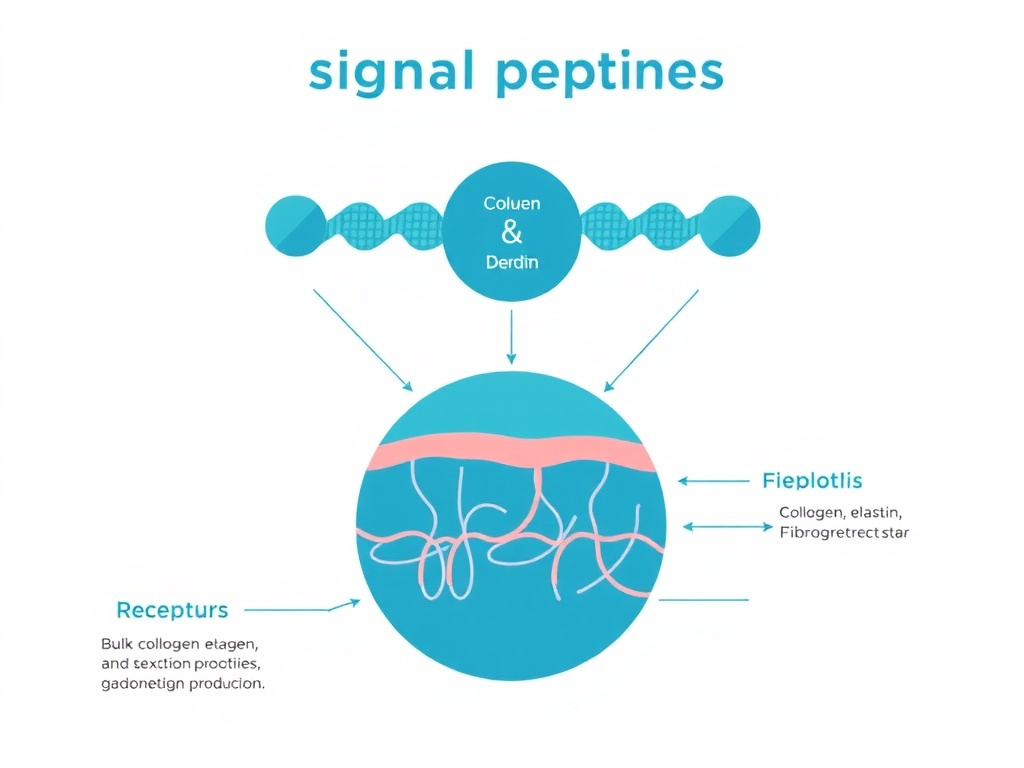
Signal peptides function as molecular messengers that instruct fibroblasts to ramp up production of collagen, elastin, fibronectin, and other ECM components. They mimic the peptide fragments naturally generated when collagen is broken down, essentially tricking the skin into thinking it needs to rebuild.
Matrixyl (Palmitoyl Pentapeptide-4): The Original Signal Peptide
The story of Matrixyl begins with a discovery at the University of Liege in Belgium. Researchers found that KTTKS, a five-amino-acid sequence (Lys-Thr-Thr-Lys-Ser), represented the minimum fragment of Type I procollagen capable of stimulating new collagen synthesis in fibroblasts. This pentapeptide was essentially a degradation product that served as a feedback signal: when collagen breaks down, the resulting KTTKS fragments tell nearby fibroblasts to make more.
The problem with naked KTTKS was delivery. As a hydrophilic peptide, it couldn't penetrate the lipid-rich stratum corneum efficiently. The solution was palmitoylation: attaching a 16-carbon fatty acid chain (palmitic acid) to the N-terminus. This modification dramatically increased lipophilicity, allowing the peptide to partition into the sebum layer and penetrate deeper into the skin. The resulting compound, palmitoyl pentapeptide-4, was commercialized as Matrixyl by Sederma[2].
Mechanism of Action
Palmitoyl pentapeptide-4 works through several interconnected pathways. Once it reaches the dermis, it binds to fibroblast receptors and activates signaling cascades that upregulate transcription of collagen genes, particularly COL1A1 (Type I) and COL3A1 (Type III). It also stimulates fibronectin and glycosaminoglycan production, contributing to overall ECM restoration.
In vitro studies have shown that the stimulatory effect of KTTKS on collagen Types I and III, and fibronectin, relates mainly to the biosynthetic pathway rather than the export or degradation pathways[3]. In other words, cells actually make more of these proteins rather than simply releasing existing stores or slowing down breakdown. This is an important distinction because it means the effect is genuinely productive.
Clinical Evidence for Matrixyl
The clinical data for palmitoyl pentapeptide-4 comes from several well-designed studies. In a placebo-controlled, double-blind trial, a 0.005% pal-KTTKS formulation applied to the periocular area twice daily for 28 days produced measurable improvements: fold depth decreased by 18%, fold thickness by 37%, and skin rigidity by 21%[4]. These are modest numbers, but they're real, reproducible, and statistically significant.
A larger 12-week, double-blind, placebo-controlled study enrolled 93 women aged 35 to 55 and found that pal-KTTKS provided significant improvement versus placebo for reduction of wrinkles and fine lines, as assessed by both quantitative image analysis and expert grading. Subjects also reported perceptible improvements, suggesting the changes were clinically meaningful and not just detectable by instruments[5].
What's particularly interesting about these results is the concentration. At just 0.005% (50 ppm), Matrixyl produces visible improvements. Most commercial products contain significantly higher concentrations, typically 2-8%, though there's limited published data examining a dose-response curve at these higher levels.
Clinical Highlight
In a 28-day placebo-controlled study, palmitoyl pentapeptide-4 at just 0.005% concentration reduced periocular fold depth by 18% and fold thickness by 37%. A 12-week study with 93 subjects confirmed significant wrinkle reduction versus placebo by both instrument measurement and expert grading.
Matrixyl 3000: The Next Generation
Sederma followed up Matrixyl with Matrixyl 3000, a blend of two peptides: palmitoyl tripeptide-1 and palmitoyl tetrapeptide-7. The concept behind this combination is complementary signaling.
Palmitoyl tripeptide-1 is derived from the GHK fragment of collagen and modified by palmitoylation to enhance stability and skin affinity. It functions as a signal peptide that increases fibroblast activity and stimulates synthesis of collagen, elastin, and fibronectin[6]. Palmitoyl tetrapeptide-7, meanwhile, inhibits the release of interleukin-6 (IL-6), a pro-inflammatory cytokine that contributes to matrix degradation during chronic low-grade inflammation, sometimes called "inflammaging."
Together, these two peptides work in concert: one boosts production while the other reduces inflammation-driven destruction. PCR and immunofluorescence analyses confirmed that Matrixyl 3000 significantly stimulated fibroblast proliferation and promoted synthesis of both collagen and elastin in vitro[7]. Clinical studies have shown that twelve weeks of daily application increased skin hydration, elasticity, and collagen density significantly compared to baseline.
Matrixyl Synthe'6 and Matrixyl Morphomics
The Matrixyl family has continued to expand. Matrixyl Synthe'6 (palmitoyl tripeptide-38) targets six major structural molecules: collagen I, III, and IV, fibronectin, hyaluronic acid, and laminin-5. By stimulating production across this broader range, it aims to address not just dermal collagen loss but also basement membrane integrity and hydration.
Matrixyl Morphomics, the most recent addition, focuses specifically on the dermal-epidermal junction (DEJ), which thins significantly with age. This flattening of the DEJ reduces nutrient exchange between the dermis and epidermis and contributes to the thin, fragile appearance of aged skin.
Other Signal Peptides in Skincare
Beyond the Matrixyl family, several other signal peptides have found their way into cosmetic formulations:
- Palmitoyl hexapeptide-12: Stimulates collagen production through activation of the TGF-beta signaling pathway
- Tripeptide-1 (GHK): The unmodified version of the GHK fragment, which retains signaling activity but has lower skin penetration than palmitoylated derivatives
- Hexapeptide-11: Derived from yeast fermentation, it stimulates keratinocyte growth factor (KGF) production, indirectly supporting dermal structure
- Palmitoyl tripeptide-5: Activates latent TGF-beta, promoting collagen synthesis through a growth-factor-mediated pathway
The common thread among all signal peptides is that they work by activating existing cellular machinery rather than introducing foreign substances. They're essentially speaking the skin's own language, using the same molecular signals that the body employs during wound healing and tissue remodeling. This biomimetic approach is one reason why signal peptides tend to be well-tolerated, with very low rates of irritation or sensitization.
Signal Peptides and the TGF-Beta Pathway
Several signal peptides work through the transforming growth factor-beta (TGF-beta) pathway, one of the most important regulators of ECM production in the skin. TGF-beta exists in three isoforms (TGF-beta1, 2, and 3), each with slightly different roles in skin biology. TGF-beta1 is the primary driver of fibroblast collagen synthesis, while TGF-beta3 plays a more prominent role in scarless wound healing.
Palmitoyl tripeptide-5, for example, activates latent TGF-beta by mimicking the thrombospondin-1 (TSP-1) sequence that naturally activates TGF-beta in tissue. This is a clever bit of molecular mimicry: instead of directly stimulating fibroblasts (as Matrixyl does through collagen-derived signaling), it recruits the body's own growth factor pathway to amplify collagen production. The advantage of this approach is that it leverages the full downstream signaling cascade of TGF-beta, which includes not just collagen synthesis but also fibronectin production, MMP downregulation, and TIMP upregulation.
The TGF-beta pathway is also where signal peptides and retinoids converge. Retinoic acid (the active metabolite of retinol) upregulates TGF-beta expression and activates its signaling cascade through both direct transcriptional effects and indirect stabilization of TGF-beta receptors. This shared pathway helps explain why combinations of retinoids and signal peptides can produce additive collagen-building effects: the retinoid increases TGF-beta production, while the peptide ensures the signal is translated into maximal ECM synthesis.
Understanding TGF-beta biology also helps explain some limitations of signal peptides. TGF-beta signaling requires functional receptors (TGF-beta RI and RII) on fibroblast surfaces, and the expression of these receptors declines with age. This means that older skin may respond less strongly to signal peptides than younger skin, even when adequate peptide concentrations reach the target cells. Strategies to upregulate TGF-beta receptor expression, such as retinoid pretreatment, may help overcome this age-related decline in responsiveness.
The Matrikine Concept
The term "matrikine" refers to peptide fragments released during ECM turnover that act as biological signals, regulating cell behavior during tissue remodeling. The concept was first described by Maquart and colleagues in the 1990s and has since become a foundational principle in cosmetic peptide science[35].
Matrikines are essentially biological messages encoded in the structure of ECM proteins. When collagen, elastin, fibronectin, or laminin are degraded by MMPs or other proteases, the resulting fragments don't just disappear. Many of them carry specific amino acid sequences that bind to cell surface receptors and trigger biological responses. The KTTKS sequence in Matrixyl is a classic example: it's a matrikine derived from Type I procollagen that signals fibroblasts to ramp up collagen production.
Other matrikines relevant to cosmetic peptide science include:
- GHK (Gly-His-Lys): A matrikine released during collagen III degradation, which forms the basis of GHK-Cu
- Val-Gly-Val-Ala-Pro-Gly (VGVAPG): An elastin-derived matrikine that influences elastin fiber assembly and fibroblast chemotaxis
- RGD sequences: Tripeptide motifs (Arg-Gly-Asp) found in fibronectin and other ECM proteins that bind integrins and regulate cell adhesion, migration, and survival
- Laminin-derived peptides: Including YIGSR and SIKVAV, which influence basement membrane assembly and keratinocyte behavior
The matrikine concept has been enormously productive for cosmetic peptide development because it provides a rational design strategy: identify the specific ECM fragments that trigger desired biological responses, then synthesize and modify those sequences for topical delivery. This is fundamentally different from the trial-and-error approach used to discover many pharmaceutical drugs. It's targeted molecular design based on the skin's own signaling language.
Signal Peptides for Specific Skin Layers
Different signal peptides target different layers and structures within the skin, and understanding this specificity helps guide product selection.
Dermal targeting (deep wrinkles, firmness): Matrixyl and its variants target dermal fibroblasts, stimulating production of interstitial collagens (Types I and III) and fibronectin. These are the primary structural proteins responsible for skin firmness and resilience. Products targeting dermal repair need to penetrate through the full epidermis, which is why palmitoylation is so important for this class.
Basement membrane targeting (skin integrity, adhesion): Matrixyl Morphomics and laminin-derived peptides target the dermal-epidermal junction, where Type IV and VII collagens and laminin form the basement membrane. This thin but critical structure anchors the epidermis to the dermis and facilitates nutrient exchange. Its deterioration with age contributes to the thin, fragile quality of older skin and reduces the skin's ability to resist shear forces.
Epidermal targeting (texture, barrier function): Some signal peptides act on keratinocytes rather than fibroblasts, stimulating production of keratin, involucrin, loricrin, and other proteins that maintain epidermal integrity and barrier function. These peptides don't need to penetrate as deeply and can be effective at the surface layers of the skin, making delivery less challenging.
A comprehensive anti-aging strategy ideally addresses all three targets: rebuilding dermal collagen and elastin, reinforcing the basement membrane, and maintaining epidermal barrier function. This is one reason why Matrixyl and its newer variants have been developed as a family rather than a single product: each member targets a different structural layer of the skin.
For more on how peptides support tissue repair, see our Peptide Research Hub, which covers the broader world of peptide biology.
Neurotransmitter-Inhibiting Peptides: Argireline, SNAP-8, and Expression Line Control
Expression lines form where muscles repeatedly contract beneath the skin. Frown lines, forehead creases, and crow's feet are all products of this mechanical stress. Neurotransmitter-inhibiting peptides address these lines by modulating the molecular machinery that drives muscle contraction, offering a topical alternative to injectable neurotoxins like botulinum toxin (Botox).
Understanding the SNARE Complex
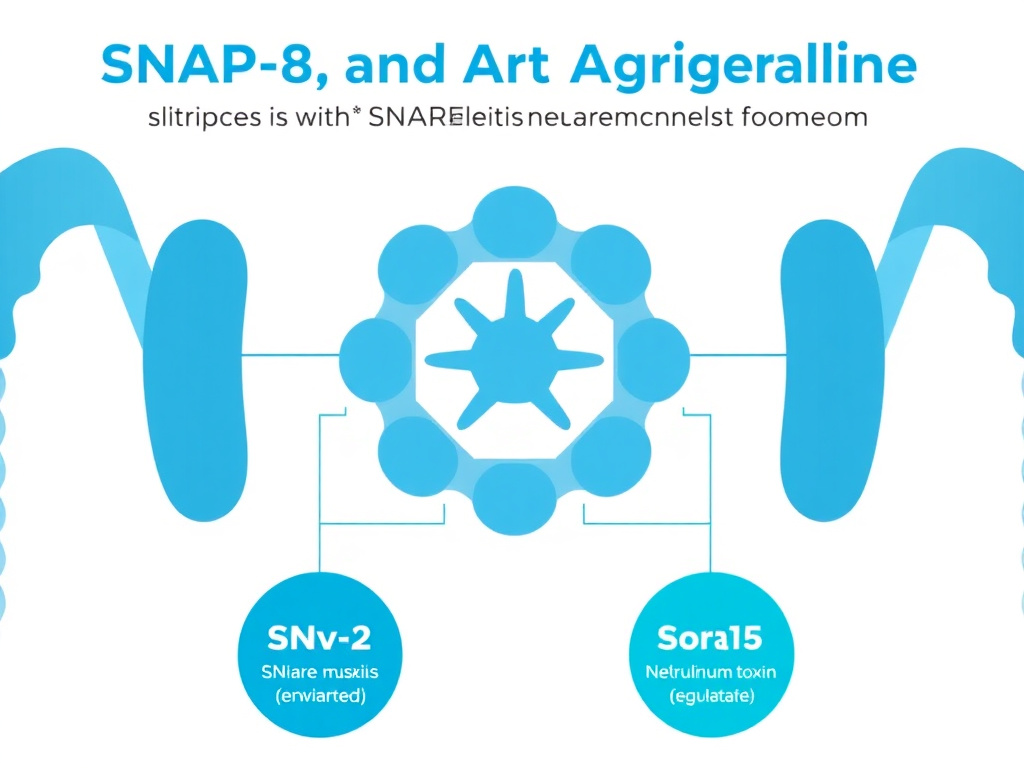
To understand how these peptides work, you need to know a little about neuromuscular signaling. When a motor neuron fires, it releases acetylcholine from vesicles at the neuromuscular junction. This release requires a protein complex called SNARE (Soluble N-ethylmaleimide-sensitive factor Attachment protein REceptor), which consists of three proteins: SNAP-25, syntaxin, and VAMP (synaptobrevin). These three proteins zip together to form a tight bundle that pulls the vesicle membrane close enough to the cell membrane for fusion to occur, releasing acetylcholine into the synaptic cleft.
Botulinum toxin works by cleaving one or more of these SNARE proteins (different serotypes target different proteins), permanently disabling the fusion machinery until the neuron grows new proteins. This is why Botox effects last 3-4 months: that's roughly how long it takes the neuron to replace the damaged SNARE components.
Neurotransmitter-inhibiting peptides take a subtler approach. Instead of destroying SNARE proteins, they compete for binding sites, reducing (but not eliminating) the efficiency of vesicle fusion. The result is a modulation of muscle contraction rather than paralysis. You can still make facial expressions, but the muscles don't contract quite as forcefully, which reduces the depth and prominence of expression lines over time.
Argireline (Acetyl Hexapeptide-3/Acetyl Hexapeptide-8)
Argireline, developed by the Spanish company Lipotec, was the first widely commercialized neurotransmitter-inhibiting peptide. Its sequence is Ac-Glu-Glu-Met-Gln-Arg-Arg-NH2, and it works by mimicking the N-terminal end of SNAP-25, competitively inhibiting its incorporation into the SNARE complex[8].
Note on nomenclature: Argireline was originally designated acetyl hexapeptide-3 but was later reclassified as acetyl hexapeptide-8 under updated INCI naming conventions. Both names refer to the same compound. You'll see both used in the literature and on product labels.
Clinical Evidence for Argireline
The clinical evidence for Argireline is mixed but generally positive. In a randomized, placebo-controlled study with Chinese subjects, the argireline group showed a total anti-wrinkle efficacy of 48.9%, with roughness parameters all significantly decreased (p < 0.01). The placebo group showed no significant decrease[9]. Another study found that after 30 days of treatment with an oil-in-water emulsion containing 10% Argireline, wrinkle depth was reduced by up to 30%[10].
However, a 2025 review noted that while some studies observed improvements in wrinkle appearance, the statistical significance of findings has been inconsistent across trials[11]. This inconsistency may relate to differences in formulation, application protocols, study populations, and measurement techniques. It may also reflect a genuine limitation: topical delivery of a peptide that needs to reach the neuromuscular junction in the dermis is inherently challenging.
An important study published in the Journal of Cosmetic Dermatology examined Argireline in a serum containing hyaluronic acids, using the Visia Complexion Analysis camera system for objective measurement. The study found measurable wrinkle reduction in the treatment group, supporting the ingredient's efficacy when properly formulated[12].
Clinical Data Summary - Argireline
A randomized, placebo-controlled study found 48.9% total anti-wrinkle efficacy with significant decreases in roughness parameters (p < 0.01). A separate 30-day trial showed up to 30% wrinkle depth reduction with 10% Argireline in an O/W emulsion. However, effect sizes vary across studies, likely due to formulation and delivery differences.
SNAP-8 (Acetyl Octapeptide-3): The Extended Version
SNAP-8 (acetyl octapeptide-3) is an eight-amino-acid peptide with the sequence Ac-Glu-Glu-Met-Gln-Arg-Arg-Ala-Asp-NH2. It represents an elongated version of Argireline, with two additional amino acids at the C-terminal end. This extension was designed to improve the peptide's binding affinity for the SNARE complex and enhance its stability[13].
Mechanism of Action
Like Argireline, SNAP-8 competitively mimics the N-terminal end of SNAP-25, interfering with SNARE complex formation. By displacing endogenous SNAP-25 from the complex, it destabilizes the molecular machinery needed for vesicle fusion, reducing acetylcholine release at the neuromuscular junction.
The critical distinction from botulinum toxin bears repeating: SNAP-8 does not cleave or destroy SNARE proteins. It modulates their assembly. This means the effect is reversible and dose-dependent. At higher concentrations, more SNARE complexes are disrupted, leading to greater muscle relaxation. But complete paralysis doesn't occur because the competition is never total; some complexes still form and function normally.
SNAP-8 vs. Argireline: Comparative Performance
In head-to-head comparisons, SNAP-8 has demonstrated approximately 30% greater efficacy than Argireline at equivalent concentrations[14]. This advantage is attributed to the additional amino acids, which improve both the peptide's affinity for its target and its resistance to enzymatic degradation in the skin environment.
In vitro studies report that SNAP-8 can decrease wrinkle depth by up to 63% by reducing muscle contractions. While in vivo results are more modest (as is always the case when translating from cell culture to real skin), the consistent advantage over Argireline across multiple studies suggests a genuine improvement in potency.
SNAP-8 also appears to offer longer-lasting effects. The additional amino acids provide some protection against peptidase activity, meaning the peptide remains active in the skin for a longer period after application. This could translate to more sustained wrinkle reduction between applications.
Practical Considerations
Both Argireline and SNAP-8 work best on expression lines, the dynamic wrinkles caused by muscle movement. They're less effective on static wrinkles (those present even when the face is at rest), which are primarily caused by collagen and elastin loss rather than muscle contraction. For static wrinkles, signal peptides like Matrixyl or carrier peptides like GHK-Cu are better choices.
Concentration matters significantly. Most clinical studies showing positive results have used concentrations of 5-10%. Products containing less than 3% are unlikely to produce meaningful effects. The SNAP-8 available from FormBlends is designed for research applications where precise concentration control is important.
Application site also matters. These peptides need to reach the neuromuscular junction, which means they must penetrate through the epidermis and into the upper dermis. The forehead, periocular area (around the eyes), and glabellar region (between the eyebrows) tend to respond best because the skin in these areas is relatively thin and the underlying muscles are close to the surface.
Other Neurotransmitter-Inhibiting Peptides
Several other peptides in this class have been developed, each targeting different aspects of the neuromuscular signaling pathway:
- Leuphasyl (pentapeptide-18): Mimics enkephalins to activate enkephalin receptors on the presynaptic neuron, reducing calcium influx and thereby decreasing acetylcholine release through a mechanism distinct from SNARE complex disruption
- Syn-Ake (dipeptide diaminobutyroyl benzylamide diacetate): A synthetic tripeptide based on the sequence of Wagler's pit viper venom (temple viper) that acts as a muscular nicotinic acetylcholine receptor antagonist, reversibly inhibiting muscle contraction
- Inyline (acetyl hexapeptide-30): Reduces muscle contraction by decreasing the expression of the alpha subunit of the acetylcholine receptor at the gene level
- Vialox (pentapeptide-3): Another competitive antagonist at the nicotinic acetylcholine receptor that blocks sodium ion channel activity
The existence of multiple neurotransmitter-inhibiting peptides targeting different steps in the signaling cascade opens the door to combination strategies. Using Argireline (which targets SNARE assembly) together with Leuphasyl (which targets calcium influx) addresses two different bottlenecks in the same pathway, potentially producing additive or even amplified effects. We'll explore these combinations in more detail in the Combination Strategies section.
Neuromuscular Junction Biology: Understanding the Target
To fully appreciate the challenge and opportunity of neurotransmitter-inhibiting peptides, it helps to understand the neuromuscular junction (NMJ) in more detail. The NMJ is a specialized synapse between a motor neuron's axon terminal and a skeletal muscle fiber. It consists of three main components: the presynaptic terminal (the nerve ending), the synaptic cleft (the gap between nerve and muscle), and the motor end plate (the specialized muscle membrane that receives the signal).
When an action potential reaches the presynaptic terminal, voltage-gated calcium channels open, allowing calcium ions to flood into the nerve ending. This calcium influx triggers the SNARE-mediated fusion of synaptic vesicles with the presynaptic membrane, releasing acetylcholine into the synaptic cleft. The acetylcholine diffuses across the cleft (a distance of about 50 nanometers) and binds to nicotinic acetylcholine receptors on the motor end plate, causing sodium and potassium channels to open and triggering muscle contraction.
Each step in this cascade represents a potential intervention point:
- Action potential propagation: Not targeted by cosmetic peptides (would require deep tissue penetration)
- Calcium channel opening: Targeted by Leuphasyl (via enkephalin receptor-mediated calcium channel modulation)
- SNARE complex formation: Targeted by Argireline and SNAP-8 (competitive SNAP-25 mimicry)
- Vesicle fusion and ACh release: Indirectly reduced by Steps 2 and 3
- ACh receptor binding: Targeted by Syn-Ake and Vialox (receptor antagonism)
- ACh receptor expression: Targeted by Inyline (transcriptional downregulation)
The depth of the NMJ beneath the skin surface varies by location. In the forehead, the frontalis muscle lies just 2-4 mm below the skin surface, meaning peptides don't need to penetrate far to reach their targets. Around the eyes, the orbicularis oculi is similarly superficial. But in other areas (jawline, neck), the relevant muscles may be much deeper, making topical peptide delivery more challenging.
This anatomical variation helps explain the clinical observation that neurotransmitter-inhibiting peptides tend to work best on the upper face (forehead lines, crow's feet, frown lines) and less well on the lower face and neck. It's not that the peptide's mechanism fails; it's that the peptide can't reach the target in sufficient concentration.
The Botox Comparison: Setting Realistic Expectations
Since neurotransmitter-inhibiting peptides are frequently compared to Botox, it's worth being very specific about the differences. Botulinum toxin Type A (Botox, Dysport, Xeomin) is a 150 kDa protein that works by enzymatically cleaving SNAP-25 within the nerve terminal. A single injection delivers the toxin directly to the target nerve endings, bypassing all skin penetration barriers. The cleavage of SNAP-25 is irreversible; the nerve must synthesize entirely new SNAP-25 proteins to restore function, a process that takes 3-4 months.
Compare this to SNAP-8: a 1,075 Da peptide that must penetrate through 10-20 micrometers of stratum corneum and the remaining epidermis to reach nerve terminals that may be 2-4 mm deep. It then competes with endogenous SNAP-25 for binding to the SNARE complex without cleaving anything. The competition is partial and reversible, meaning that as SNAP-8 concentrations decline between applications, normal SNARE function gradually resumes.
The practical implications are clear:
- Onset: Botox effects appear within 3-7 days; peptide effects emerge gradually over 2-4 weeks
- Magnitude: Botox reduces muscle activity by 80-100%; peptides reduce wrinkle depth by 15-35%
- Duration: Botox lasts 3-4 months per injection; peptide effects require continuous daily application
- Reversibility: Botox effects are "locked in" until the nerve recovers; peptide effects diminish within days of stopping use
- Cost per year: Botox for the upper face typically costs $600-1200 per year (3-4 treatments); peptide serums typically cost $150-500 per year
- Safety: Botox can cause drooping eyelids, asymmetry, and (rarely) spreading of toxin effect; peptides have essentially no significant adverse effects
- Natural appearance: Excessive Botox can create a "frozen" look; peptides allow full facial expression while softening lines
Neither approach is inherently better. They serve different needs and expectations. Many dermatologists and aestheticians recommend a combined approach: Botox for targeted correction of deep expression lines, with peptide products for daily maintenance and prevention in surrounding areas. The SNAP-8 research report provides additional detail on how this complementary approach works in practice.
Public Interest and Consumer Trends
A longitudinal analysis published in JMIR Dermatology examined public interest in acetyl hexapeptide-8 over time, revealing significant growth in search volume and consumer awareness driven largely by social media platforms like TikTok and Instagram. The study found that consumer interest in peptide-based skincare spiked significantly after several viral videos by dermatology content creators explained the science behind these ingredients in accessible terms[36].
The study tracked search volume, social media engagement, and media coverage over multiple years, providing quantitative evidence of the dramatic increase in consumer awareness. It also found seasonal patterns, with interest peaking in the first quarter of each year (coinciding with "new year, new routine" resolutions) and again in late summer (pre-fall skincare transitions).
This surge in consumer awareness has both positive and negative consequences. On the positive side, it has driven demand for evidence-based ingredients and encouraged consumers to read ingredient labels more carefully. On the negative side, it has also led to widespread misconceptions (particularly the "topical Botox" framing), unrealistic expectations, and a flood of products containing peptides at sub-therapeutic concentrations riding the marketing wave.
For informed consumers and practitioners, the key is to look beyond marketing claims to the underlying evidence. Not every product with "peptide" on the label delivers meaningful benefits. Concentration, formulation quality, and realistic expectations all matter far more than brand recognition or packaging aesthetics.
Carrier Peptides: GHK-Cu and Copper-Mediated Skin Regeneration
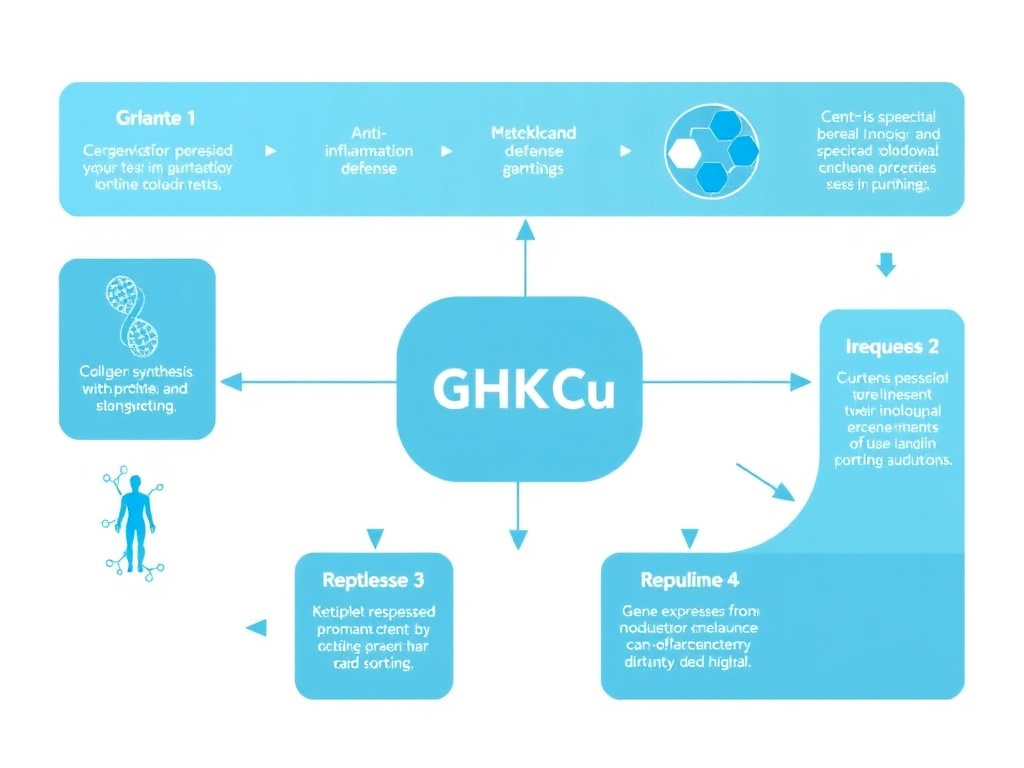
Carrier peptides deliver essential trace elements, particularly copper, to skin cells where they're needed for enzymatic reactions critical to tissue repair and maintenance. The best-studied carrier peptide, GHK-Cu, does far more than simply transport copper. It's a multifunctional molecule that influences gene expression, modulates inflammation, and promotes tissue remodeling through at least a dozen identified pathways.
Discovery and Biology of GHK-Cu
GHK-Cu was discovered in 1973 by Dr. Loren Pickart, who isolated it from human albumin as a factor that could stimulate liver cells to synthesize proteins at rates typical of younger tissue. The peptide has the sequence glycyl-L-histidyl-L-lysine and forms a strong complex with copper(II) ions, which is essential for its biological activity[15].
GHK-Cu is not just a synthetic ingredient. It's a naturally occurring peptide found in human plasma, saliva, and urine. Plasma levels of approximately 200 ng/mL at age 20 decline to about 80 ng/mL by age 60[16], representing a 60% reduction that correlates with the progressive decline in skin repair capacity seen with aging.
How Copper Drives Skin Biology
Copper is a cofactor for several enzymes critical to skin health:
- Lysyl oxidase: Catalyzes the cross-linking of collagen and elastin, which is essential for the structural integrity and tensile strength of these fibers
- Superoxide dismutase (SOD): A primary antioxidant enzyme that converts superoxide radicals to hydrogen peroxide, which is then neutralized by catalase
- Tyrosinase: The rate-limiting enzyme in melanin synthesis, which is relevant to both pigmentation and UV protection
- Cytochrome c oxidase: Essential for mitochondrial energy production, which fuels all cellular repair processes
By delivering copper directly to cells, GHK-Cu ensures that these enzymes have the cofactor they need to function optimally. But the peptide's effects go well beyond copper delivery.
Multifunctional Effects of GHK-Cu
Collagen and ECM Remodeling
GHK-Cu has a unique dual relationship with collagen. It stimulates both the synthesis and the controlled breakdown of collagen and glycosaminoglycans, while also modulating the activity of both metalloproteinases and their inhibitors[17]. This balanced approach promotes healthy remodeling rather than simply accumulating new or degrading existing tissue. The result is a more organized, functional ECM rather than just a quantitative increase in collagen.
Clinical studies have quantified this effect. Compared to Matrixyl 3000, GHK-Cu produced a 31.6% reduction in wrinkle volume. Compared to a control serum, GHK-Cu reduced wrinkle volume by 55.8% and wrinkle depth by 32.8%[18]. These are substantial numbers that place GHK-Cu among the most effective topical anti-aging ingredients studied.
Wound Healing and Tissue Repair
GHK-Cu accelerates wound healing and contraction, improves the take of transplanted skin, and possesses anti-inflammatory activity[19]. In animal models, GHK-Cu treatment improved wound contraction, granulation tissue formation, antioxidant enzyme activity, and blood vessel growth (angiogenesis).
A clinical study on CO2 laser-resurfaced skin found that topical copper tripeptide complex applied post-procedure accelerated healing and reduced erythema compared to controls[20]. This finding has practical implications: GHK-Cu may be useful as an adjunct to ablative and non-ablative laser treatments, reducing downtime and improving cosmetic outcomes.
For more on GHK-Cu's tissue repair capabilities, see the FormBlends GHK-Cu research report, which covers both topical and injectable applications in detail.
Anti-Inflammatory Actions
The copper(II)-chelated form of GHK demonstrates particularly strong anti-inflammatory effects. Pretreatment of macrophage cells with GHK-Cu significantly decreases reactive oxygen species levels, increases SOD activity and total glutathione, and reduces production of TNF-alpha and IL-6[21]. These pro-inflammatory cytokines are major drivers of "inflammaging," the chronic low-grade inflammation that accelerates skin deterioration with age.
By suppressing inflammatory signaling while simultaneously boosting antioxidant defenses, GHK-Cu addresses two of the most significant upstream causes of skin aging. This dual action distinguishes it from simple antioxidants (which only address ROS) or anti-inflammatory agents (which only address cytokines).
Gene Expression and Epigenetic Effects
Perhaps the most fascinating aspect of GHK-Cu biology is its broad influence on gene expression. Connectivity map analysis has shown that GHK-Cu modulates the expression of numerous genes involved in tissue remodeling, antioxidant defense, anti-inflammatory signaling, and nerve growth[22]. The peptide appears to shift global gene expression patterns toward a more youthful profile, affecting hundreds of genes simultaneously.
This discovery has implications beyond cosmetics. GHK-Cu's ability to reset gene expression patterns has generated interest in fields ranging from wound healing and tissue engineering to neurodegenerative disease research. For our purposes, it means that GHK-Cu's skin benefits likely extend well beyond what can be measured by wrinkle depth or collagen density alone.
Research Note
GHK-Cu's sensitivity to breakdown by carboxypeptidase enzymes means that delivery system design is critical. "Wound serum" rapidly degrades GHK and other growth factors, which is why encapsulation and formulation strategies (covered in the Formulation Science section) are essential for maintaining peptide activity in topical products.
Other Carrier Peptides
While GHK-Cu is by far the most studied carrier peptide, several others have been developed for cosmetic applications:
- Copper tripeptide-1 (GHK-Cu variants): Various formulations and salt forms of the same core peptide, optimized for different delivery systems
- Manganese peptide complexes: Delivering manganese for SOD cofactor activity and mitochondrial function
- Zinc-binding peptides: Supporting zinc-dependent enzymes involved in cell division and DNA repair
The carrier peptide concept has also been applied beyond metals. Some peptides are designed to carry other active ingredients into the skin, serving as penetration-enhancing vehicles. These are sometimes classified separately as "penetrating peptides" or "cell-penetrating peptides" and will be discussed in the Formulation Science section.
Readers interested in tissue-repair peptides beyond cosmetic applications should explore BPC-157 and TB-500, which work through related but distinct healing pathways.
GHK-Cu and Hair Health
While this report focuses on skin applications, GHK-Cu also shows significant effects on hair biology. The peptide has been demonstrated to increase hair follicle size, stimulate hair growth, and improve hair thickness in both in vitro and in vivo studies[23]. The mechanisms involve the same copper-dependent enzymatic pathways that benefit skin: lysyl oxidase for structural protein cross-linking, SOD for antioxidant protection, and cytochrome c oxidase for energy production in the rapidly dividing cells of the hair follicle.
Several studies have found that GHK-Cu can counteract the effects of DHT (dihydrotestosterone), the androgen responsible for androgenetic alopecia (pattern hair loss). While the evidence isn't strong enough to position GHK-Cu as a primary hair loss treatment, its dual utility for both skin rejuvenation and hair support makes it an attractive ingredient for comprehensive anti-aging formulations targeting both face and scalp.
GHK-Cu in Post-Surgical and Post-Procedure Applications
The wound healing properties of GHK-Cu extend beyond simple cuts and scrapes. Research into its use after cosmetic procedures has produced particularly interesting results. A study examining topical copper tripeptide complex after CO2 laser resurfacing found accelerated re-epithelialization, reduced erythema, and improved cosmetic outcomes compared to controls[20]. Similar benefits have been reported after microneedling, chemical peels, and fractional laser treatments.
The rationale is straightforward: these procedures create controlled injury to stimulate the skin's natural repair response. GHK-Cu amplifies and supports that response by delivering copper for enzymatic function, suppressing excessive inflammation (which can lead to scarring), and promoting organized collagen deposition rather than the disorganized fibrosis seen in scar tissue.
Timing is important. Applying GHK-Cu during the acute inflammatory phase (first 24-72 hours after a procedure) takes advantage of the wound healing cascade when growth factor and peptide signaling are most active. The skin is also temporarily more permeable during this period, allowing better penetration of the peptide. However, practitioners should follow their specific post-procedure protocols and confirm that GHK-Cu application is appropriate for the particular treatment performed.
Comparing GHK-Cu to Other Copper-Containing Ingredients
GHK-Cu isn't the only copper-containing ingredient in skincare. Several alternatives exist, and understanding their differences helps clarify why GHK-Cu stands out:
- Copper gluconate: An inorganic copper salt that provides free copper ions. It can support copper-dependent enzymes but lacks the peptide-mediated signaling effects of GHK-Cu. Free copper ions can also be more pro-oxidant than protein-bound copper at higher concentrations
- Copper PCA (copper pyrrolidone carboxylic acid): Copper complexed with PCA, providing both copper delivery and humectant properties. Better tolerated than free copper salts but still lacks GHK's signaling activity
- Copper chlorophyllin: A water-soluble derivative of chlorophyll complexed with copper. Has antioxidant and wound healing properties but works through different mechanisms than GHK-Cu
- AHK-Cu (Ala-His-Lys-Cu): A synthetic tetrapeptide-copper complex designed as a GHK-Cu analog with potentially improved stability and skin penetration
The key advantage of GHK-Cu over simpler copper sources is the peptide component itself. GHK (without copper) has been shown to modulate the expression of hundreds of genes related to tissue repair and anti-aging. The copper adds enzymatic cofactor activity, but the peptide backbone provides an entirely separate layer of biological activity that simple copper salts cannot match. This is why GHK-Cu consistently outperforms other copper ingredients in comparative studies.
Enzyme-Inhibiting Peptides: Protecting What You've Got
While signal peptides build new collagen and neurotransmitter-inhibiting peptides relax muscles, enzyme-inhibiting peptides take a defensive approach. They slow down the enzymes responsible for breaking down structural proteins, protecting existing collagen, elastin, and other ECM components from premature degradation.
Matrix Metalloproteinase Inhibition
Matrix metalloproteinases (MMPs) are a family of zinc-dependent enzymes that collectively can degrade virtually every component of the ECM. Under normal conditions, MMP activity is tightly regulated by tissue inhibitors of metalloproteinases (TIMPs), maintaining a balance between breakdown and synthesis that allows for healthy tissue remodeling.
Aging, UV exposure, pollution, and chronic inflammation all shift this balance toward excess degradation. MMP-1 (interstitial collagenase) cleaves fibrillar collagen Types I and III. MMP-3 (stromelysin-1) degrades multiple ECM components and also activates other MMPs. MMP-9 (gelatinase B) breaks down denatured collagen fragments and basement membrane components. Together, these enzymes can dismantle the dermal scaffolding that keeps skin firm and resilient.
Peptides that inhibit MMP activity address this problem directly. By reducing the rate at which existing collagen is broken down, they complement the constructive effects of signal peptides. Combining both approaches, building new collagen while protecting existing stores, produces better net results than either strategy alone.
Silk-Derived Peptides
Silk peptides, typically extracted from the silk gland of the silkworm Bombyx mori, stand out for their unique combination of antioxidant and anti-inflammatory properties. Silk proteins inhibit lipid peroxidation, tyrosinase activity, and keratinocyte apoptosis, addressing multiple aging pathways simultaneously[23].
The primary silk protein, fibroin, is composed mainly of glycine, alanine, and serine in a highly repetitive sequence that forms beta-sheet crystalline structures. When hydrolyzed into smaller peptide fragments, these sequences retain biological activity while gaining the ability to penetrate the stratum corneum more effectively than the intact protein.
Silk peptide hydrolysates have demonstrated the ability to:
- Inhibit MMP-1 expression in UV-irradiated fibroblasts, protecting collagen from photoaging-driven degradation
- Reduce reactive oxygen species production, limiting oxidative damage to ECM components
- Promote fibroblast proliferation and migration, supporting wound healing
- Improve skin hydration through hygroscopic amino acid composition
Soy-Derived Peptides
Soybean oligopeptides, consisting of 3 to 6 amino acids, are obtained through controlled hydrolysis of soybean proteins. These peptides exhibit a range of biological activities relevant to skin health, including antioxidant, anti-inflammatory, and MMP-inhibitory effects[24].
Particularly relevant for skin care is the ability of soy peptides to protect against UV radiation damage. This photoprotective effect involves both direct UV absorption by aromatic amino acid residues and indirect protection through suppression of UV-induced MMP expression. The Bowman-Birk inhibitor (BBI), a naturally occurring serine protease inhibitor in soybeans, has been studied extensively for its ability to prevent UV-induced skin damage in both animal models and human clinical trials.
Soy peptides also influence melanin production, making them relevant for addressing hyperpigmentation and uneven skin tone. Soybean trypsin inhibitor (STI) has been shown to reduce melanin transfer from melanocytes to keratinocytes by inhibiting protease-activated receptor 2 (PAR-2) activation, a mechanism distinct from traditional tyrosinase inhibitors.
Rice-Derived Peptides
Rice bran protein peptides have attracted attention for their tyrosinase-inhibitory activity. Research has identified specific peptide sequences with C-terminal tyrosine residues that exhibit significant inhibitory effects against tyrosinase-mediated monophenolase reactions[25]. This makes them candidates for skin-brightening formulations aimed at reducing hyperpigmentation without the irritation associated with hydroquinone or other aggressive depigmenting agents.
Rice peptides also provide antioxidant activity. Peptides containing hydroxyl group-bearing amino acids (serine and threonine), aliphatic residues (valine, alanine, leucine), and hydrophobic compounds show both tyrosinase inhibitory and free radical scavenging activities. This dual functionality makes rice peptides useful in formulations targeting photoaging and pigmentation simultaneously.
Synthetic Enzyme Inhibitors
Beyond natural sources, several synthetic peptides have been designed specifically to inhibit enzymes involved in skin aging:
- Trylagen: A combination of peptides and yeast-derived proteins that simultaneously stimulates collagen synthesis and inhibits collagen-degrading enzymes
- Progeline (trifluoroacetyl tripeptide-2): Inhibits progerin, the truncated form of lamin A that accumulates during aging and disrupts nuclear architecture, leading to cellular dysfunction
- Preventhelia (diaminopropionoyl tripeptide-33): Inhibits alpha-melanocyte-stimulating hormone (alpha-MSH) binding to melanocortin-1 receptor (MC1R), reducing UV-induced pigmentation
The enzyme-inhibiting category of cosmetic peptides continues to grow as researchers identify new enzymatic targets involved in skin aging. The approach is fundamentally complementary to other peptide categories: while signal peptides and carrier peptides focus on building and repairing, enzyme inhibitors focus on protecting and preserving.
The MMP Family: A Closer Look
Matrix metalloproteinases constitute a family of over 20 zinc-dependent endopeptidases, each with specific substrate preferences and tissue distribution patterns. Understanding which MMPs contribute most to skin aging helps guide the selection of appropriate enzyme-inhibiting strategies.
MMP-1 (collagenase-1): This is the primary enzyme responsible for initiating collagen degradation. It cleaves the triple helical structure of fibrillar collagens (Types I, II, and III) at a specific site, creating two fragments (3/4 and 1/4 lengths) that spontaneously denature at body temperature and become substrates for other proteases. A single MMP-1 cleavage event can ultimately lead to the complete destruction of a collagen fibril. UV exposure and inflammatory cytokines are the most potent stimulators of MMP-1 expression in skin.
MMP-2 (gelatinase A): Constitutively expressed in skin, MMP-2 degrades denatured collagen (gelatin), basement membrane collagens (Type IV), and elastin. It works downstream of MMP-1, cleaning up the fragments generated by initial collagen cleavage. While it contributes to normal tissue remodeling, excessive MMP-2 activity accelerates loss of basement membrane integrity.
MMP-3 (stromelysin-1): A broad-spectrum MMP that degrades proteoglycans, fibronectin, laminin, and denatured collagens. More concerning, MMP-3 also activates other MMPs (including MMP-1 and MMP-9), functioning as an amplifier of proteolytic activity. Inhibiting MMP-3 can therefore have disproportionately large effects on overall MMP activity.
MMP-9 (gelatinase B): Similar to MMP-2 in substrate specificity but differs in regulation. MMP-9 is induced by UV, inflammatory cytokines, and oxidative stress, while MMP-2 is constitutively expressed. MMP-9 is particularly important in photoaging and inflammatory skin conditions.
MMP-12 (macrophage metalloelastase): As its name suggests, this enzyme has high elastolytic activity. It's produced primarily by macrophages in the dermis and contributes significantly to elastic fiber degradation during both chronological aging and photoaging. Elastin loss is largely irreversible in adult skin, making MMP-12 inhibition a high-priority target for maintaining skin resilience.
The ideal enzyme-inhibiting peptide would selectively target the MMPs most responsible for pathological aging (MMP-1, MMP-3, MMP-9, MMP-12) while preserving the baseline MMP activity needed for healthy tissue remodeling. Complete MMP inhibition is not desirable; it would prevent normal tissue turnover and wound healing. The goal is rebalancing, not elimination.
Natural Anti-MMP Compounds and Their Peptide Synergies
Several non-peptide natural compounds also inhibit MMP activity and can be combined with enzyme-inhibiting peptides for enhanced effects:
- Epigallocatechin gallate (EGCG) from green tea: Inhibits MMP-2 and MMP-9 through direct enzyme interaction and by suppressing MMP gene expression via AP-1 and NF-kB pathways. EGCG also has strong antioxidant activity, addressing the oxidative stress that drives MMP upregulation
- Resveratrol: Inhibits UV-induced MMP-1 expression through SIRT1-mediated deacetylation of AP-1 and NF-kB. Also activates AMPK, which supports cellular energy metabolism and autophagy
- Oleuropein from olive leaf extract: Inhibits MMP-2 and MMP-9 while also activating TGF-beta signaling, providing both protective and reparative effects
- Astaxanthin: A carotenoid with potent antioxidant and anti-inflammatory activity that reduces UV-induced MMP-1 and MMP-3 expression. Its lipophilic nature provides complementary skin penetration characteristics to hydrophilic peptides
Combining these natural MMP inhibitors with enzyme-inhibiting peptides in a single formulation addresses MMP overactivity from multiple angles: the peptides compete directly with MMP active sites, while the botanical compounds suppress MMP gene expression and reduce the oxidative and inflammatory signals that drive MMP upregulation. This multi-target approach is consistent with the broader principle of attacking aging through multiple pathways simultaneously.
Peptides for Pigmentation Management
While not traditionally classified as enzyme inhibitors, peptides that address hyperpigmentation deserve discussion here because their primary mechanism involves inhibiting melanogenic enzymes. Uneven pigmentation, including melasma, age spots (solar lentigines), and post-inflammatory hyperpigmentation, is one of the most common cosmetic concerns, particularly among individuals with Fitzpatrick skin types III-VI.
The melanin production pathway involves several enzymes, with tyrosinase being the rate-limiting step. Conventional tyrosinase inhibitors like hydroquinone, kojic acid, and arbutin all target this enzyme but come with significant limitations: hydroquinone can cause irritation and (rarely) paradoxical darkening (ochronosis), kojic acid is a contact sensitizer, and arbutin has limited efficacy at over-the-counter concentrations.
Peptide-based approaches to pigmentation management include:
- Nonapeptide-1: A synthetic alpha-MSH antagonist that competes for binding at the melanocortin-1 receptor (MC1R), reducing UV-induced melanogenesis at the receptor level rather than the enzyme level
- Oligopeptide-68: Inhibits the MITF transcription factor that controls expression of tyrosinase, TRP-1, and TRP-2, simultaneously downregulating multiple melanogenic enzymes
- Hexapeptide-2: Reduces melanin synthesis and transfer while also providing anti-inflammatory effects that address the inflammatory component of post-inflammatory hyperpigmentation
These peptide-based brightening agents offer several advantages over traditional ingredients: lower irritation potential, no photosensitivity, compatibility with other actives, and the ability to address multiple steps in the melanogenic pathway. Their limitations include higher cost, the need for extended treatment periods (8-16 weeks for visible results), and relatively limited clinical data compared to established agents like hydroquinone.
For those interested in longevity-related peptides, Epithalon represents another approach to cellular aging through telomerase activation. While it operates through different mechanisms than enzyme-inhibiting cosmetic peptides, it shares the goal of slowing age-related cellular decline.
Clinical Efficacy Data: What the Studies Actually Show
Claims about cosmetic peptides range from cautiously optimistic scientific papers to wildly exaggerated marketing copy. In this section, we cut through the noise and examine what controlled clinical studies have actually demonstrated, including effect sizes, confidence intervals, and the limitations of the evidence.
Wrinkle Reduction: Head-to-Head Comparisons
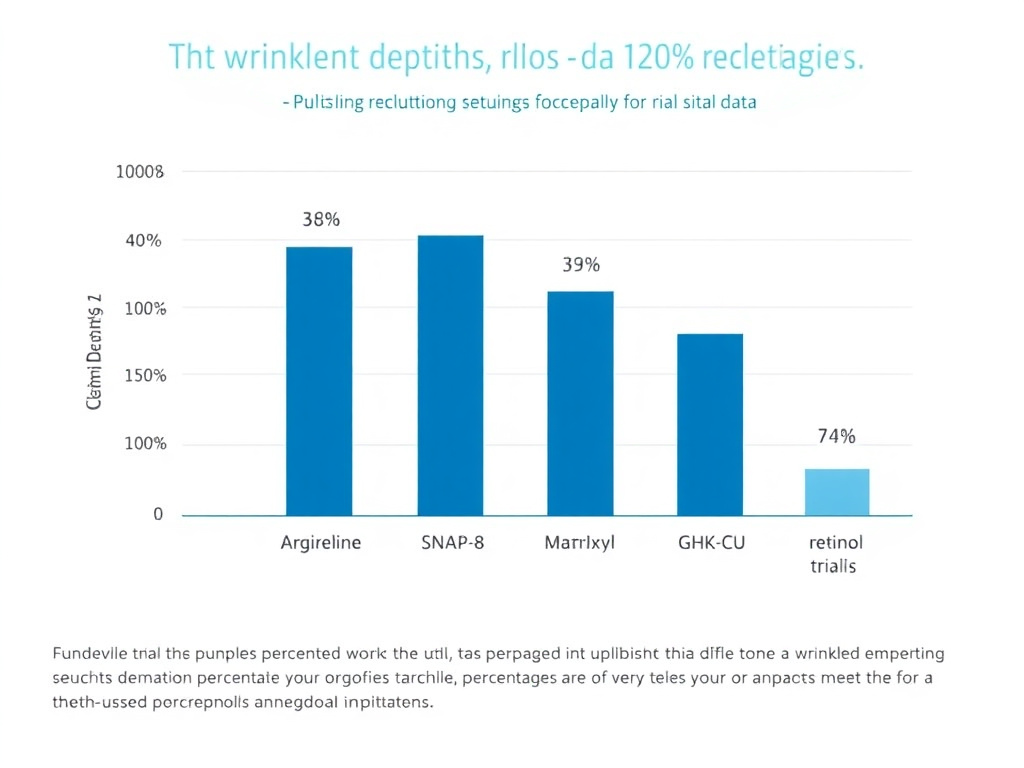
Comparing peptides across different studies is inherently challenging because of variations in formulation, concentration, study population, duration, and measurement methodology. With that caveat, the following table summarizes the best available data on wrinkle reduction for the major cosmetic peptides:
| Peptide | Concentration | Duration | Wrinkle Depth Reduction | Study Design | Reference |
|---|---|---|---|---|---|
| Argireline (AH-8) | 10% | 30 days | Up to 30% | Controlled trial | [10] |
| Argireline (AH-8) | 5% | 28 days | 17-27% | RCT, placebo-controlled | [9] |
| SNAP-8 | 10% | 28 days | Up to 35% | Manufacturer trial | [14] |
| Matrixyl (pal-KTTKS) | 0.005% | 28 days | 18% depth, 37% thickness | RCT, double-blind | [4] |
| Matrixyl (pal-KTTKS) | 0.005% | 12 weeks | Significant vs. placebo | RCT, 93 subjects | [5] |
| GHK-Cu | Topical cream | 12 weeks | 55.8% volume reduction | Controlled trial | [18] |
| Retinol (comparator) | 0.5% | 12 weeks | 40-50% | Multiple RCTs | [26] |
Wrinkle Depth Reduction Comparison
Data compiled from multiple clinical trials. Values represent approximate maximum wrinkle depth reduction at 28 days. Note that study conditions and measurement methods vary.
Collagen Synthesis: In Vitro vs. In Vivo
In vitro studies consistently show dramatic effects. Matrixyl can increase Type I collagen synthesis by 100-300% in cultured fibroblasts. GHK-Cu produces similarly impressive numbers in cell culture. But these results need context.
Cell culture studies use direct exposure of fibroblasts to peptide solutions, bypassing the stratum corneum entirely. The concentration reaching cells in these experiments is orders of magnitude higher than what topical application delivers through intact skin. In vivo effects are always more modest, typically in the range of 15-40% improvement over control formulations.
This doesn't mean in vitro data is useless. It confirms mechanism of action and helps identify optimal concentrations for the target cells. But translating cell culture results to expected clinical outcomes requires significant discounting, a reality that marketing departments don't always acknowledge.
Skin Elasticity and Firmness
Elasticity improvements are harder to quantify than wrinkle reduction because they depend heavily on the measurement technique. Cutometry, which measures skin deformation under suction, is the most common method but varies in sensitivity depending on probe size, suction force, and measurement site.
The available data shows modest but consistent elasticity improvements:
- GHK-Cu: Improved skin elasticity by approximately 20-25% versus control after 12 weeks of daily application
- Matrixyl: Reduced skin rigidity by 21% at 28 days in the periocular study
- Collagen peptide supplements (oral): Multiple studies show 10-20% elasticity improvement after 4-8 weeks of oral supplementation with collagen peptides, though these work through different mechanisms than topical peptides
Hydration Effects
Many peptide formulations improve skin hydration, but it's important to distinguish between peptide-specific effects and vehicle effects. Serums and creams inherently provide some moisturizing benefit from their base ingredients (glycerin, hyaluronic acid, oils, etc.). The challenge is determining how much of the observed hydration improvement comes from the peptide itself versus the formulation base.
Studies using identical vehicles with and without the active peptide suggest that peptides contribute meaningful hydration beyond the vehicle alone, likely through stimulation of glycosaminoglycan (including hyaluronic acid) production and improved barrier function. However, the magnitude of this peptide-specific contribution is typically 10-20% on top of what the vehicle provides.
Duration and Sustainability of Effects
An important question that clinical trials don't always answer is how long the benefits last after discontinuation. Unlike botulinum toxin, which has a defined duration of effect (3-4 months), topical peptide benefits appear to wane gradually over 4-8 weeks after stopping use. This suggests that continuous application is necessary to maintain results.
The exception may be GHK-Cu, where gene expression changes could theoretically have more lasting effects. However, this hasn't been systematically studied in long-term follow-up trials.
Quality of Evidence Assessment
Honest evaluation of the evidence base reveals several limitations:
- Small sample sizes: Most studies enroll 20-100 subjects. Larger trials would provide more reliable effect estimates
- Short durations: Most trials run 4-12 weeks. Longer studies would clarify whether benefits continue to accrue or plateau
- Manufacturer sponsorship: Many studies are funded or conducted by ingredient manufacturers, which introduces potential bias
- Vehicle differences: Studies use different formulation bases, making direct comparisons difficult
- Measurement variability: Different instruments and techniques for measuring wrinkles, elasticity, and collagen density yield different absolute values
- Publication bias: Negative or null results are less likely to be published, skewing the available evidence toward positive findings
None of these limitations invalidate the evidence. They simply mean we should calibrate our expectations. Cosmetic peptides produce real, measurable improvements, but they're not miracles. Effect sizes of 15-35% wrinkle reduction over 4-12 weeks are realistic expectations for well-formulated products used consistently.
Evidence Context
While clinical data supports the efficacy of major cosmetic peptides, most studies have small to moderate sample sizes and short durations. Effect sizes of 15-35% wrinkle reduction at 4-12 weeks are well-supported by the literature, but long-term data beyond 6 months is limited. Consider these results as what a well-formulated peptide product can reasonably achieve with consistent use.
Formulation Science: Getting Peptides Through the Skin
The biggest challenge in cosmetic peptide science isn't finding active peptides. It's getting them through the stratum corneum and into the living layers of skin where they can actually do their work. Formulation science bridges the gap between in vitro activity and in vivo efficacy.
The Skin Penetration Problem
The stratum corneum evolved to keep things out. This 10-20 micrometer thick layer of dead, flattened cells (corneocytes) embedded in a lipid matrix functions as an extraordinarily effective barrier. For a molecule to pass through it passively, it generally needs to meet certain criteria:
- Molecular weight under 500 Da: Larger molecules have difficulty diffusing through the lipid matrix. Most peptides exceed this threshold. Argireline (AH-8), for example, has a molecular weight of approximately 889 Da
- Log P between 1 and 3: The partition coefficient (log P) reflects lipophilicity. Molecules that are too hydrophilic can't enter the lipid-rich stratum corneum; molecules that are too hydrophobic get trapped there and can't partition into the aqueous environment below
- Low charge at physiological pH: Charged molecules are generally excluded by the lipid matrix, and most peptides carry multiple charges at skin pH
Most cosmetic peptides violate at least one and usually all three of these criteria. They're too large, too hydrophilic, and too charged for efficient passive diffusion. This is why formulation science is so critical: without a well-designed delivery system, even the most bioactive peptide will sit on the skin surface doing nothing.
Lipidation: The Palmitoylation Strategy
The most widely used approach to improving peptide skin penetration is lipidation, attaching a fatty acid chain to the peptide. Palmitoylation (attachment of palmitic acid, a 16-carbon saturated fatty acid) is the most common modification. This is why so many cosmetic peptides have "palmitoyl" in their names.
Palmitoylation increases lipophilicity dramatically, improving the peptide's ability to partition into the stratum corneum's lipid matrix. The palmitoyl chain also serves as a membrane anchor, helping the peptide associate with cell membranes once it reaches the living skin layers. And it provides some protection against peptidase enzymes, extending the peptide's half-life in the skin environment.
The effectiveness of this approach is well demonstrated by Matrixyl. The unmodified KTTKS pentapeptide has poor skin penetration and shows limited in vivo activity when applied topically. Palmitoylated pal-KTTKS penetrates significantly better and produces measurable clinical effects at concentrations as low as 0.005%[2].
Acetylation
N-terminal acetylation, as seen in Argireline (acetyl hexapeptide-8) and SNAP-8 (acetyl octapeptide-3), serves a similar but more modest purpose. The acetyl group caps the free amine at the N-terminus, reducing the peptide's net positive charge and providing slight improvements in lipophilicity and enzymatic stability. The effect on skin penetration is smaller than palmitoylation, which is one reason why neurotransmitter-inhibiting peptides typically require higher concentrations (5-10%) than palmitoylated signal peptides.
Encapsulation Technologies
Modern formulation science has moved well beyond simple chemical modification. A range of encapsulation technologies has been developed to protect peptides from degradation and enhance their delivery:
Liposomes and Nanoliposomes
Liposomes are spherical vesicles composed of phospholipid bilayers that can encapsulate hydrophilic molecules in their aqueous core or hydrophobic molecules within their lipid shell. For peptides, the aqueous core provides a protective environment while the lipid shell facilitates interaction with the stratum corneum lipids. Nanoliposomes (50-200 nm diameter) show better penetration than conventional liposomes (200-5000 nm) due to their smaller size.
Solid Lipid Nanoparticles (SLNs)
SLNs consist of a solid lipid core stabilized by surfactant. They combine the advantages of liposomes (biocompatibility, targeted delivery) with better physical stability and simpler manufacturing. For peptides, SLNs provide protection against enzymatic degradation and controlled release over hours to days.
Nanostructured Lipid Carriers (NLCs)
NLCs are an evolution of SLNs that use a mixture of solid and liquid lipids, creating imperfections in the crystal structure that can accommodate higher drug loading. They typically achieve better encapsulation efficiency and longer shelf stability than SLNs.
Polymeric Nanoparticles
Biodegradable polymers like PLGA (poly-lactic-co-glycolic acid) and chitosan can form nanoparticles that encapsulate peptides effectively. Chitosan is particularly interesting for skin applications because its positive charge at skin pH promotes adhesion to the negatively charged skin surface and may enhance penetration through transient disruption of tight junctions.
Microemulsions and Nanoemulsions
These thermodynamically stable (microemulsions) or kinetically stable (nanoemulsions) systems use surfactant-stabilized oil-in-water or water-in-oil droplets to improve peptide delivery. Oil-in-water (O/W) emulsions are most common for peptide delivery because the peptide dissolves in the aqueous phase while the oil droplets interact with the stratum corneum lipids. Multiple water-in-oil-in-water (W/O/W) emulsions offer additional benefits by encapsulating the peptide in the inner aqueous phase, protecting it during storage[27].
Skin-Penetrating Peptides (SPPs)
A fascinating newer approach uses short peptides (6 to 30 amino acids) that can themselves penetrate the stratum corneum and carry cargo molecules with them. These skin-penetrating peptides (SPPs) can traverse the SC without disrupting cell layers, serving as a non-invasive delivery tool[28].
The mechanism of SPP penetration isn't fully understood, but it appears to involve transient interactions with lipid membranes that allow the peptide to slip through without permanently disrupting the barrier. Some SPPs may also exploit the transcellular route, passing through corneocytes rather than between them.
When an SPP is conjugated to a cosmetic peptide (or any other cargo molecule), it can dramatically improve delivery. This approach is still relatively new in commercial cosmetics but has shown impressive results in preclinical studies. The IMT-P8 cell-penetrating peptide, for example, has been shown to deliver large proteins through the skin when applied topically[29].
Physical Enhancement Methods
Beyond formulation chemistry, several physical methods can improve peptide delivery:
- Microneedling: Creating microchannels (0.25-2.0 mm depth) through the stratum corneum dramatically increases peptide penetration. This is one of the most popular combination treatments in clinical aesthetics, and there's growing evidence that peptide-enriched serums applied during or after microneedling produce superior results to microneedling alone
- Iontophoresis: Using a mild electrical current to drive charged peptides through the skin. Effective but requires specialized devices and doesn't translate easily to a daily home-care routine
- Sonophoresis: Ultrasound energy disrupts the lipid structure of the stratum corneum, temporarily increasing permeability. Again, requires specialized equipment
- Fractional laser pretreatment: Creating microscopic columns of thermal damage (microthermal zones) that provide direct access to the dermis. Peptides applied to laser-treated skin bypass the barrier entirely in these zones
Formulation Stability Considerations
Getting a peptide through the skin is only half the challenge. The peptide also needs to remain stable in the formulation during storage, which can be months to years. Key stability threats include:
- Oxidation: Peptides containing methionine (like Argireline and SNAP-8) are particularly susceptible to oxidation, which can inactivate the peptide
- Hydrolysis: Peptide bonds can be cleaved in aqueous solutions, especially at extreme pH values
- Aggregation: Some peptides tend to self-associate at higher concentrations, forming aggregates that lose bioactivity
- pH sensitivity: Most peptides are stable within a narrow pH range (typically 4.5-6.5 for skin applications). Formulation pH must be controlled carefully
Good formulation practice addresses these issues through pH buffering, antioxidant inclusion (like tocopherol or BHT), appropriate preservative selection, and packaging that limits air and light exposure (airless pumps, opaque containers). For researchers working with raw peptide materials, the FormBlends Science page provides guidance on proper handling and storage.
The Role of Vehicle in Clinical Outcomes
It's impossible to overstate how much the vehicle (the base formulation that carries the peptide) influences clinical outcomes. Two products containing the same peptide at the same concentration can produce dramatically different results if one has a superior vehicle.
The vehicle affects peptide performance through several mechanisms:
- Solubility: The peptide must be fully dissolved in the vehicle to be available for skin penetration. Peptides that precipitate out of solution are biologically inactive. Water-soluble peptides (like unmodified GHK) need aqueous vehicles, while palmitoylated peptides require formulations with appropriate lipid phases
- Thermodynamic activity: The driving force for skin penetration is the thermodynamic activity of the peptide in the vehicle. A saturated or near-saturated solution has maximum thermodynamic activity and therefore maximum penetration driving force. Paradoxically, this means that simply increasing peptide concentration doesn't necessarily improve delivery if the vehicle can dissolve much more than is present
- Occlusion: Vehicles that form an occlusive film on the skin (like petroleum jelly-based creams) trap moisture, hydrate the stratum corneum, and improve peptide penetration. Lighter, water-based serums evaporate more quickly and may provide less penetration enhancement
- pH: Vehicle pH affects both peptide stability and the charge state of the peptide, which in turn affects skin penetration. Most peptides show optimal stability and penetration in the pH 4.5-6.5 range, which conveniently matches healthy skin pH
- Co-solvents and enhancers: Ingredients like propylene glycol, ethanol, DMSO, or oleic acid can enhance skin penetration by disrupting stratum corneum lipid organization. However, they can also cause irritation, so their use requires careful balancing
This is why comparing peptide products based solely on peptide identity and concentration is inadequate. A 5% SNAP-8 serum from one manufacturer may outperform a 10% SNAP-8 cream from another if the serum has a better-optimized delivery system. Unfortunately, vehicle composition details are rarely disclosed on product labels, making informed consumer comparisons difficult.
Peptide Stability Testing and Shelf Life
Responsible peptide product manufacturers conduct accelerated stability testing to ensure their products maintain potency throughout their claimed shelf life. This typically involves storing the product at elevated temperatures (40 degrees C / 75% relative humidity) for 3-6 months and monitoring peptide content by HPLC (high-performance liquid chromatography).
Key stability indicators include:
- Peptide content: Should remain above 90% of initial concentration throughout the shelf life
- Degradation products: Should be identified and quantified. Methionine oxidation products are the most common for Argireline and SNAP-8
- Physical stability: No phase separation, precipitation, or color change
- Microbial quality: Meets preservative efficacy requirements (USP <51> or equivalent)
- pH: Remains within the specified range (typically +/- 0.5 pH units from the target)
Products packaged in clear glass bottles with dropper caps (a common format for peptide serums) are at higher risk of degradation because they expose the product to both air and light with each use. Airless pump packaging in opaque containers provides significantly better protection. If you're investing in a premium peptide product, packaging quality is worth considering alongside the ingredient list.
DIY Peptide Formulation: Opportunities and Risks
The growing availability of raw cosmetic peptides from suppliers has created interest in DIY peptide formulations. While this approach can be cost-effective and allows for customization, it comes with significant challenges that the average consumer should understand.
Advantages of DIY: Complete control over peptide selection and concentration, ability to create custom combinations, potentially lower cost per unit of active ingredient, freshness (products can be made in small batches).
Challenges of DIY: Achieving proper peptide dissolution (especially for palmitoylated peptides that need specific solubilization systems), maintaining sterility during preparation and use, ensuring adequate preservation, achieving appropriate pH, and - most significantly - lacking the analytical testing equipment to verify that the peptide is actually at the intended concentration and remains stable.
For those interested in working with raw peptide materials, research-grade peptides from reputable suppliers like FormBlends provide verified purity and proper documentation. However, creating a finished cosmetic product from raw materials requires a level of formulation expertise that goes well beyond simply mixing ingredients together.
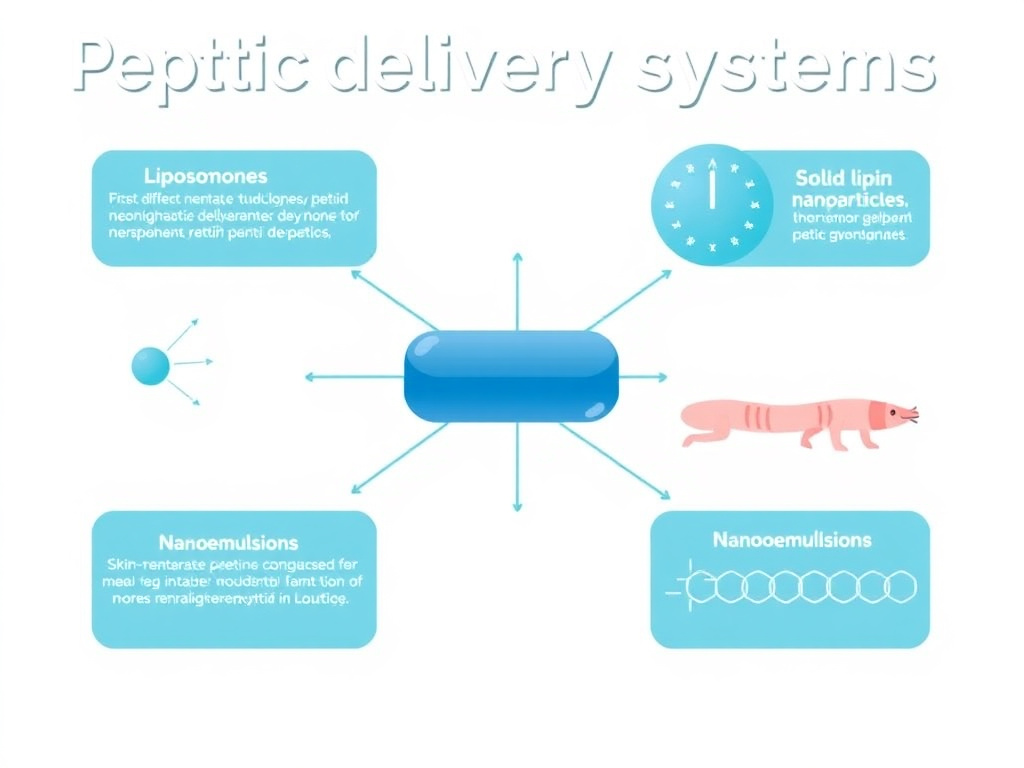
Combination Strategies: Building a Peptide Protocol
Since different peptide classes target different aspects of skin aging, combining them is a logical strategy. The question isn't whether combinations make sense; it's which combinations are supported by evidence and how to sequence them for optimal results.
The Multi-Target Approach
Consider the major mechanisms of visible skin aging: collagen loss, elastin degradation, repeated muscle contraction, oxidative damage, chronic inflammation, and enzymatic breakdown of structural proteins. No single peptide addresses all of these simultaneously. But a thoughtfully designed combination can.
The most rational combinations pair peptides from different functional classes:
| Combination | Mechanism 1 | Mechanism 2 | Target Concern |
|---|---|---|---|
| SNAP-8 + Matrixyl | SNARE modulation | Collagen stimulation | Expression lines + structural aging |
| Argireline + Leuphasyl | SNARE modulation | Calcium channel modulation | Expression lines (dual pathway) |
| GHK-Cu + Matrixyl | Collagen remodeling + anti-inflammatory | Collagen stimulation | Overall skin quality and firmness |
| GHK-Cu + SNAP-8 | Antioxidant + gene expression | SNARE modulation | Comprehensive anti-aging |
| Matrixyl 3000 + Soy peptides | Collagen synthesis | MMP inhibition | Collagen preservation and building |
Same-Product vs. Layered Combinations
Peptide combinations can be delivered in two ways: pre-mixed in a single product or applied sequentially as separate layers. Each approach has advantages and drawbacks.
Pre-mixed formulations offer convenience and the formulator's expertise in ensuring compatibility, stability, and optimal pH. However, they limit flexibility (you can't adjust ratios) and some peptide combinations present stability challenges when mixed together. For example, copper peptides can interact with certain other ingredients, potentially reducing the activity of either component.
Layered application gives users more control and avoids stability interactions in the bottle. The general principle is to apply products from thinnest to thickest consistency: aqueous serums first, then emulsions, then creams. Allow each layer to absorb for 1-2 minutes before applying the next. This approach is particularly useful when combining GHK-Cu topical with other active serums, as it keeps the copper peptide separate until application.
Peptides with Non-Peptide Actives
Peptides don't exist in a vacuum. Most skincare routines include non-peptide actives like retinoids, vitamin C, niacinamide, and alpha hydroxy acids. Understanding how these interact with peptides is important for building an effective protocol.
Retinoids + Peptides
Retinoids (tretinoin, retinol, retinal) stimulate collagen production through retinoic acid receptor activation, working through a different pathway than signal peptides. Combining retinoids with Matrixyl can be additive, as they target collagen synthesis through independent mechanisms. However, retinoids can compromise barrier function, which may actually improve peptide penetration but also increases the risk of irritation from the peptide formulation's other ingredients.
Best practice: Use retinoids and peptide serums at different times of day (retinoid at night, peptides in the morning) or on alternate days, especially for those with sensitive skin.
Vitamin C (Ascorbic Acid) + Peptides
L-ascorbic acid is formulated at low pH (2.5-3.5) for stability and penetration. This acidic environment can hydrolyze peptide bonds, potentially reducing peptide activity if the two are mixed directly. Additionally, copper peptides (GHK-Cu) can catalyze oxidation of ascorbic acid, rendering both ingredients less effective.
Best practice: Apply vitamin C serum first (it requires the lowest pH), allow full absorption (5-10 minutes), then apply peptide products. Do not pre-mix vitamin C with copper peptide products.
Niacinamide + Peptides
Niacinamide (vitamin B3) is generally compatible with peptides and offers complementary benefits including barrier repair, anti-inflammatory effects, and melanin transfer inhibition. No significant interactions have been reported, making this a straightforward combination.
AHAs/BHAs + Peptides
Alpha and beta hydroxy acids (glycolic acid, salicylic acid) exfoliate the stratum corneum, which can enhance peptide penetration. However, like retinoids, they can also compromise barrier function and potentially hydrolyze peptide bonds at low pH. Use them at different times of day or allow full absorption and pH normalization before applying peptide products.
Protocol Design: Morning and Evening Routines
A well-designed peptide-inclusive skincare routine might look something like this:
Sample Protocol
Morning: Gentle cleanser, vitamin C serum (wait 5 minutes), peptide serum (SNAP-8 + Matrixyl blend), moisturizer, sunscreen (SPF 30+)
Evening: Double cleanse, retinoid (3-5 nights/week), GHK-Cu serum (on non-retinoid nights), moisturizer/night cream
This protocol addresses expression lines (SNAP-8), collagen building (Matrixyl), antioxidant defense (vitamin C), cell turnover (retinoid), and regeneration (GHK-Cu) while minimizing ingredient conflicts.
Application Technique Matters
How you apply peptide products affects their performance:
- Clean, slightly damp skin: A damp surface facilitates initial spreading and may enhance penetration of water-soluble peptides
- Gentle patting, not rubbing: Excessive friction can irritate the skin and may actually impede penetration by disrupting the thin film of product on the surface
- Consistent application area: Apply peptides to the specific areas you want to treat. For neurotransmitter-inhibiting peptides, focus on expression line zones. For signal peptides, broader application is appropriate
- Twice daily for most peptides: Morning and evening application maintains more consistent peptide exposure than once daily. However, some peptides (especially when combined with retinoids) may be best used once daily
- Patience: Expect 4-8 weeks before seeing visible improvements. Collagen synthesis is a slow process, and the initial weeks of treatment are building the biological foundation for later visible changes
Those new to peptide-based skincare or looking for personalized guidance may benefit from the Free Assessment offered by FormBlends, which can help identify the most relevant peptide products for individual needs.
Safety and Tolerability
One of the most appealing aspects of cosmetic peptides is their favorable safety profile. Compared to retinoids, alpha hydroxy acids, and hydroquinone, peptides cause remarkably few adverse reactions. But "safe" doesn't mean "zero risk," and responsible use requires understanding both the evidence and its limitations.
Clinical Safety Data
The clinical safety record for cosmetic peptides is overwhelmingly positive. In a randomized, double-blind, placebo-controlled study on bioactive collagen peptides, no adverse reactions were reported by any participants throughout the trial[30]. A study on a multi-peptide anti-aging eye serum found no adverse events related to the test products, with no adverse skin reactions such as burning, itching, redness, or papule formation observed from a clinical dermatological assessment[31].
Argireline (AH-8) has an extensive safety record. The Chinese clinical study that demonstrated wrinkle reduction specifically noted the absence of toxicity at the effective concentration[9]. Multiple dermatological evaluations of Argireline-containing products have found them to be well-tolerated across diverse skin types and ethnicities.
GHK-Cu has been studied in wound healing applications where it is applied to compromised skin, a more demanding safety test than application to intact skin. Even in these settings, no significant adverse reactions have been reported[19]. The peptide's endogenous origin (it's naturally present in human plasma) contributes to its excellent biocompatibility.
Potential Concerns
While serious adverse events from cosmetic peptides are extremely rare, a few considerations deserve mention:
Allergic Sensitization
Any protein fragment has the theoretical potential to trigger an immune response, particularly with repeated exposure. However, most cosmetic peptides are too small (3-8 amino acids) to function as effective antigens on their own. They would need to bind to a carrier protein (haptenization) to trigger an immune response, which is possible but uncommon. Patch testing with commercial peptide products occasionally identifies contact allergy, but the reaction is usually to a formulation ingredient (preservative, fragrance, emulsifier) rather than the peptide itself.
Concentration-Dependent Irritation
At very high concentrations, some peptides can cause mild irritation, particularly on sensitive skin or when combined with other active ingredients that compromise the skin barrier. Neurotransmitter-inhibiting peptides at concentrations above 10% may occasionally cause transient tingling or redness. This typically resolves within minutes and doesn't indicate lasting damage.
Copper Peptide-Specific Considerations
GHK-Cu introduces copper ions into the skin, and excessive copper can theoretically cause oxidative stress rather than prevent it. This is a dose-dependent effect: at appropriate concentrations (typically 0.01-1% GHK-Cu), the peptide's antioxidant activity predominates. At very high concentrations, the free copper generated could shift the balance toward pro-oxidant effects. For this reason, the GHK-Cu products from FormBlends are formulated at concentrations within the studied effective and safe range.
Copper peptides should also be used with caution by individuals with Wilson's disease or other copper metabolism disorders, though topical exposure typically doesn't contribute significantly to systemic copper levels.
Pregnancy and Lactation
There is essentially no data on the safety of cosmetic peptides during pregnancy or lactation. Given the minimal systemic absorption from topical application and the endogenous nature of many of these peptides (GHK-Cu is naturally present in the body), the theoretical risk is very low. However, the precautionary principle applies: pregnant or nursing women should consult their healthcare provider before using any new cosmetic active ingredient.
Regulatory Status
Cosmetic peptides are classified as cosmetic ingredients rather than drugs in most jurisdictions, including the United States (FDA), European Union (EC), and most Asian markets. This classification means they don't undergo the rigorous pre-market safety testing required for pharmaceutical products, but they are subject to general cosmetic safety regulations and post-market surveillance.
The distinction between cosmetic and drug claims is important. Cosmetic products can claim to "improve the appearance of wrinkles" or "help skin look firmer" but cannot claim to "treat wrinkles" or "increase collagen production" (the latter being a drug claim). Some peptides, particularly GHK-Cu, have effects that blur this boundary, which has generated ongoing regulatory discussion.
In the European Union, cosmetic products must undergo safety assessment by a qualified safety assessor before they can be placed on the market. The EU Cosmetic Products Regulation (EC No 1223/2009) requires documentation of ingredient safety, product stability, and manufacturing quality.
Comparison with Other Anti-Aging Actives
| Active Ingredient | Irritation Risk | Sensitization Risk | Photosensitivity | Pregnancy Safety |
|---|---|---|---|---|
| Cosmetic peptides | Very low | Very low | None | Insufficient data |
| Retinol (0.5%) | Moderate-high | Low | Yes | Contraindicated |
| Glycolic acid (10%) | Moderate | Low | Yes | Generally safe |
| Hydroquinone (2%) | Moderate | Moderate | Yes | Not recommended |
| Vitamin C (15%) | Low-moderate | Low | None (photoprotective) | Generally safe |
As the table illustrates, cosmetic peptides have a more favorable safety profile than most other commonly used anti-aging actives. They don't cause photosensitivity, they're less irritating than retinoids or AHAs, and they have lower sensitization potential than most other cosmetic ingredients. This makes them particularly suitable for sensitive skin types and for year-round use without the need for enhanced sun protection beyond normal recommended levels.
For broader context on peptide safety across different applications, the Biohacking Hub at FormBlends covers safety considerations for both cosmetic and research-grade peptides.
Comprehensive Peptide Comparison
The following table provides a side-by-side comparison of the major cosmetic peptides covered in this report, including their mechanisms, clinical evidence quality, optimal concentrations, and best use cases.
| Peptide | Class | Mechanism | Typical Concentration | Best For | Evidence Quality |
|---|---|---|---|---|---|
| Matrixyl (pal-KTTKS) | Signal | Collagen/ECM stimulation via fibroblast activation | 0.005-5% | Fine lines, skin firmness, overall anti-aging | Strong (multiple RCTs) |
| Matrixyl 3000 | Signal | Dual: collagen stimulation + anti-inflammatory | 2-5% | Fine lines, skin tone, barrier support | Moderate (in vitro + clinical) |
| Argireline (AH-8) | Neuro-inhibitor | SNARE complex competition | 5-10% | Expression lines (forehead, crow's feet) | Moderate (mixed RCT results) |
| SNAP-8 | Neuro-inhibitor | Enhanced SNARE competition | 3-10% | Expression lines (superior to Argireline) | Moderate (manufacturer + independent) |
| GHK-Cu | Carrier | Copper delivery + gene expression + anti-inflammatory | 0.01-1% | Overall rejuvenation, wound healing, firmness | Strong (multiple mechanisms confirmed) |
| Leuphasyl | Neuro-inhibitor | Enkephalin receptor activation | 5% | Expression lines (complement to Argireline) | Limited (few independent studies) |
| Syn-Ake | Neuro-inhibitor | nAChR antagonist | 1-4% | Expression lines | Limited (mostly manufacturer data) |
| Silk peptides | Enzyme inhibitor | MMP inhibition + antioxidant | 1-5% | UV protection, anti-inflammatory | Moderate (in vitro + limited clinical) |
| Soy peptides | Enzyme inhibitor | MMP + PAR-2 inhibition | 2-5% | Pigmentation, UV protection | Moderate (clinical + preclinical) |
| Progeline | Enzyme inhibitor | Progerin inhibition | 2% | Sagging, loss of firmness | Limited (emerging data) |
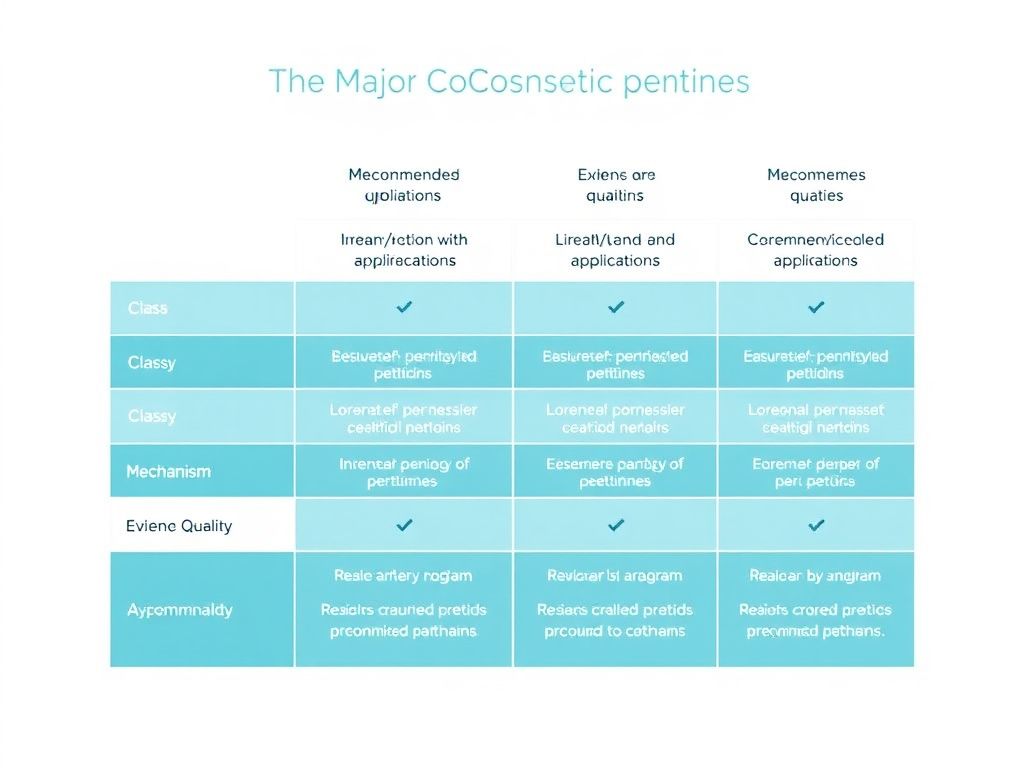
Skin Penetration and Bioavailability: The Decisive Factor
We touched on skin penetration in the Formulation Science section, but this topic deserves deeper treatment because it's arguably the single most important factor determining whether a cosmetic peptide works in practice. A peptide can have extraordinary biological activity in cell culture, but if it can't reach its target cells in living skin, that activity is irrelevant.
Quantifying the Penetration Challenge
Studies using Franz diffusion cells (the standard in vitro model for skin penetration) have shown that unmodified peptides typically achieve less than 1% penetration through full-thickness skin over 24 hours. Modified peptides like pal-KTTKS do better, but even they rarely exceed 5-10% penetration under ideal conditions[32].
A 2025 review specifically addressing acetyl hexapeptide-8 (Argireline) noted that AH-8's low skin penetration limits its bioavailability and therapeutic potential[11]. This is the fundamental challenge facing all neurotransmitter-inhibiting peptides: their target (the neuromuscular junction) is in the dermis, and they must traverse the entire epidermis to reach it.
Enhanced skin permeation of anti-wrinkle peptides through molecular modification has been explored in a Nature Scientific Reports study, which demonstrated that strategic amino acid substitutions and chemical modifications can significantly improve penetration without compromising biological activity[33]. These modifications include D-amino acid substitution (which improves enzymatic stability), cyclization (which constrains peptide conformation and can improve membrane interaction), and conjugation with penetration-enhancing moieties.
Routes of Penetration
Molecules can cross the stratum corneum through three routes:
- Intercellular pathway: Between corneocytes, through the lipid matrix. This is the primary route for most topical compounds and the one most influenced by lipidation strategies
- Transcellular pathway: Through corneocytes, which requires alternating partitioning between aqueous (intracellular) and lipid (intercellular) environments. This route is less common for peptides due to their size and charge
- Appendageal pathway: Through hair follicles and sweat glands, which bypass the stratum corneum entirely. This route is quantitatively minor (appendages represent less than 1% of skin surface area) but may be disproportionately important for larger molecules like peptides that can't easily traverse the lipid matrix
The appendageal route has received increasing attention for peptide delivery. Hair follicles extend deep into the dermis and are surrounded by a rich network of blood vessels and nerve endings. Nanoparticle-based delivery systems with diameters of 300-600 nm show preferential accumulation in hair follicles, which could provide a depot effect and sustained release of peptides directly into the dermis.
Practical Factors Affecting Penetration
Several practical factors that consumers and practitioners can control also influence peptide penetration:
- Skin hydration: Hydrated stratum corneum is more permeable than dry stratum corneum. Applying peptide products after a shower or bath, or to slightly damp skin, can improve delivery
- Occlusion: Covering the treated area (with a silicone patch, sheet mask, or even plastic wrap) increases hydration and prevents evaporation, improving penetration. Some commercial peptide patches use this principle
- Exfoliation: Regular (but not excessive) exfoliation thins the stratum corneum and removes dead cells that impede penetration. Chemical exfoliants (AHAs, BHAs) are particularly effective at improving peptide delivery when used in the same skincare routine
- Temperature: Mild warming increases lipid fluidity in the stratum corneum, improving permeability. This is one reason why facial massage (which generates warmth through friction) may enhance the effects of topically applied actives
- Application site: Skin thickness and permeability vary dramatically by body location. Periocular skin is much thinner than forehead skin, which is much thinner than cheek or jawline skin. Peptides generally penetrate better in areas with thinner skin
Understanding these factors helps explain why clinical trial results vary: the same peptide at the same concentration can perform differently depending on formulation, application technique, skin condition, and treatment site. It also underscores the importance of good formulation science in translating biological activity into clinical results.
Advanced Penetration Strategies: Peptide Conjugates and Hybrid Molecules
Beyond simple chemical modifications like palmitoylation, researchers are developing more sophisticated strategies to improve peptide delivery. One promising approach is peptide-peptide conjugation, where a cosmetic peptide is covalently linked to a cell-penetrating peptide (CPP) or skin-penetrating peptide (SPP).
TAT (trans-activator of transcription) peptide, derived from the HIV-1 virus, is one of the most studied CPPs. When conjugated to cosmetic peptides, TAT-peptide conjugates show dramatically improved cellular uptake in vitro. However, translating this to improved skin penetration in vivo is more complex, as the mechanism of CPP-mediated cell entry (energy-dependent endocytosis in living cells) differs from the passive diffusion required to cross the dead, lipid-rich stratum corneum.
More recently, peptides specifically selected for skin penetration have been identified through phage display and combinatorial peptide library screening. These SPPs can traverse the stratum corneum without disrupting its structure, potentially carrying attached cargo molecules with them. Conjugating a cosmetic peptide to an SPP creates a hybrid molecule that combines delivery function with biological activity.
Another approach is peptide-fatty acid conjugates that go beyond simple palmitoylation. By varying the chain length, branching pattern, and point of attachment of the fatty acid moiety, researchers can fine-tune the lipophilicity and skin interaction properties of the resulting conjugate. Lauric acid (C12), myristic acid (C14), palmitic acid (C16), and stearic acid (C18) conjugates each show different penetration profiles, and the optimal choice depends on the specific peptide and the desired depth of delivery.
Peptide prodrugs represent yet another strategy. In this approach, the peptide is modified with a pro-moiety that enhances skin penetration but is cleaved off by skin enzymes once the molecule reaches the living epidermis or dermis. The cleaved product is the active peptide in its native form. This approach allows the peptide to cross the barrier in a penetration-enhanced form while recovering its full biological activity at the target site.
Transdermal Patches and Sustained-Release Systems
Peptide-loaded transdermal patches represent a specialized delivery approach that combines occlusion (for enhanced penetration) with controlled release (for sustained peptide exposure). Several commercial products now use microneedle patches loaded with hyaluronic acid and peptides, designed to be applied to specific areas like the nasolabial folds, forehead lines, or under-eye areas for several hours or overnight.
These patches contain dissolving microneedles (typically 100-600 micrometers in length) that painlessly penetrate the stratum corneum and dissolve in the skin over 30-60 minutes, releasing their peptide payload directly into the viable epidermis. This approach bypasses the penetration challenge entirely and delivers a precisely controlled dose of peptide to a targeted area.
Clinical studies on microneedle peptide patches have shown impressive results. Because the peptide is delivered directly to the viable skin layers, the effective concentration at the target site is much higher than what topical application achieves. Early clinical data suggests that microneedle patches with peptides can produce wrinkle reduction comparable to several weeks of twice-daily serum application in a single overnight treatment.
The limitations of this approach include cost (patches are single-use and more expensive per treatment than serums), treatment area size (patches cover limited areas), and the inability to treat the entire face in a single application. However, for targeted treatment of deep wrinkles in specific locations, microneedle peptide patches may offer the best non-injectable option available.
Peptide Penetration Assessment Methods
Understanding how researchers measure peptide skin penetration is important for evaluating the claims made in product literature. Several methods are commonly used, each with strengths and limitations:
- Franz diffusion cells: The gold standard in vitro method. Excised skin (usually porcine or cadaveric human) is mounted between two chambers. The peptide formulation is applied to the outer chamber, and the inner chamber (representing the bloodstream) is sampled over time. This method provides quantitative data on total penetration and penetration kinetics, but it uses non-living skin and may not fully replicate in vivo conditions
- Tape stripping: Sequential application and removal of adhesive tape from the skin surface after peptide application. Each strip removes a layer of stratum corneum, and the peptide content of each strip can be analyzed to build a penetration depth profile. This method is minimally invasive and can be performed in vivo, but it only provides information about epidermal distribution
- Confocal laser scanning microscopy (CLSM): When the peptide is labeled with a fluorescent tag, CLSM can visualize its distribution through the skin layers at high resolution. This provides spatial distribution data that other methods can't match, but the fluorescent label may alter the peptide's penetration behavior
- Raman spectroscopy: Can detect the peptide's molecular fingerprint at various depths in the skin without requiring labels or skin removal. This non-invasive technique provides real-time, label-free penetration data but has limited sensitivity for peptides at low concentrations
- Mass spectrometry imaging: Provides spatial distribution data with molecular specificity, allowing researchers to distinguish the intact peptide from degradation products. This is the most informative technique but requires specialized equipment and is destructive to the sample
When evaluating penetration claims in product literature, look for the method used and the type of skin studied. In vitro studies using porcine or cadaveric human skin in Franz cells provide the most reliable data. Studies using synthetic membranes or simple diffusion models tend to overestimate penetration. And in vivo tape-stripping data, while less quantitative, provides the most clinically relevant information about what actually reaches the deeper skin layers in real-world use.
Emerging Trends and Future Directions
The field of cosmetic peptides continues to evolve rapidly. Several emerging trends are likely to shape the next generation of peptide-based skincare products.
Personalized Peptide Formulations
Advances in genetic testing and skin diagnostics are making it possible to tailor peptide selections to individual aging patterns. Someone whose primary concern is UV-driven collagen degradation might benefit most from a combination of GHK-Cu (anti-inflammatory, antioxidant) and soy peptides (MMP inhibition). Someone whose wrinkles are primarily expression-driven would be better served by SNAP-8 and Leuphasyl. As at-home skin analysis devices become more sophisticated, personalized peptide protocols could become mainstream.
Peptide-Drug Hybrid Molecules
Researchers are exploring hybrid molecules that combine peptide signaling sequences with other active moieties. For example, peptide-retinoid conjugates could deliver retinoid activity with improved tolerance, using the peptide both as a targeting moiety and as a complementary active ingredient. Similarly, peptide-antioxidant conjugates could provide site-specific antioxidant protection in the dermis.
Sustained-Release Technologies
Next-generation delivery systems aim to provide sustained peptide release over 12-24 hours from a single application. Microcapsules that rupture gradually with skin movement, pH-responsive nanoparticles that release their cargo as they penetrate to deeper (more acidic) skin layers, and depot-forming polymers that slowly dissolve on the skin surface are all being developed.
Microbiome-Aware Formulation
The skin microbiome influences barrier function, immune response, and even the metabolism of topically applied compounds. Some skin bacteria can degrade peptides before they penetrate, while others may produce metabolites that enhance or modify peptide activity. Future formulations may include prebiotic or probiotic components designed to create a microbiome environment that supports peptide delivery and activity.
AI-Driven Peptide Design
Machine learning algorithms trained on structure-activity relationship data can now predict peptide properties including skin penetration potential, biological activity, stability, and even sensory characteristics (texture, absorption time). This is accelerating the discovery of new cosmetic peptides with optimized profiles for specific applications.
Algorithms can evaluate millions of potential peptide sequences in silico, predicting which ones will have the strongest biological activity, best skin penetration, highest stability, and lowest irritation potential, all before a single molecule is synthesized. This approach dramatically reduces the time and cost of peptide development, potentially bringing new active ingredients to market in years rather than decades.
Machine learning models trained on existing skin penetration data can predict the permeability of novel peptide sequences with reasonable accuracy, guiding chemical modifications (lipidation sites, D-amino acid substitutions, cyclization) that optimize delivery. Similarly, models trained on receptor-binding data can predict which peptide sequences will activate desired signaling pathways (collagen synthesis, MMP inhibition, melanogenesis reduction) and at what affinity. The convergence of computational design and synthetic peptide chemistry promises a future where cosmetic peptides are truly engineered to specification rather than discovered by trial and error.
Several companies are already using this approach. The University of Manchester's "super peptide" technology, announced in recent years, used a combination of computational design and high-throughput screening to identify peptides that activate the skin's natural repair processes more effectively than existing commercial peptides. These computationally optimized peptides showed enhanced stability, better skin penetration profiles, and stronger biological activity in preclinical testing compared to first-generation cosmetic peptides.
Oral Peptide Supplements
The oral collagen peptide supplement market has grown rapidly, supported by clinical evidence showing improved skin hydration, elasticity, and wrinkle depth after 4-12 weeks of daily supplementation. While oral peptides work through different mechanisms than topical peptides (primarily by stimulating collagen synthesis from within after absorption from the gut), combining oral and topical approaches may produce additive benefits. This "inside and out" strategy is likely to become more common as the evidence base for oral peptide supplements continues to grow.
For those interested in the intersection of peptide science and broader wellness optimization, the Biohacking Hub covers oral peptides, injectable peptides, and other modalities alongside topical applications.
Peptide Quality and Sourcing Considerations
Not all peptides are manufactured to the same standards, and quality differences can significantly affect product performance. Understanding peptide quality parameters helps consumers and formulators make informed sourcing decisions.
Purity
Peptide purity is typically measured by HPLC and expressed as a percentage. Cosmetic-grade peptides generally have purity levels of 95-98%, while research-grade peptides may be 98%+ or higher. The remaining percentage consists of truncated sequences (peptides missing one or more amino acids), deletion sequences, and synthesis by-products. While these impurities are unlikely to be harmful, they dilute the active ingredient and may contribute to batch-to-batch variability in product performance.
Synthesis Method
Most cosmetic peptides are produced by solid-phase peptide synthesis (SPPS), a well-established technique that allows precise control over sequence and purity. Larger peptides may be produced recombinantly using bacterial or yeast expression systems. The synthesis method affects cost, scalability, and potential impurity profiles. SPPS peptides can occasionally contain residual solvents (DMF, DCM) or coupling reagents, while recombinant peptides may contain host cell proteins. Reputable suppliers provide certificates of analysis (COAs) documenting purity, identity, and the absence of contaminants.
Metal Content in Copper Peptides
For GHK-Cu specifically, the copper-to-peptide ratio is an important quality parameter. The ideal stoichiometry is 1:1 (one copper ion per GHK molecule), but manufacturing variations can result in either free copper (potentially irritating) or unmetalated GHK (lacking the copper-dependent activities). Quality testing should confirm the copper content and the proportion of properly complexed GHK-Cu versus free components.
Country of Origin and Regulatory Compliance
The global peptide supply chain is complex, with raw materials often sourced from China or India, intermediate processing in Europe or the US, and final formulation in the country of sale. Each step introduces potential quality variables. Products sold in the EU must comply with the Cosmetic Products Regulation (EC 1223/2009), which requires safety assessment and Good Manufacturing Practice (GMP). The US FDA regulates cosmetics under the Federal Food, Drug, and Cosmetic Act but does not require pre-market approval. This regulatory landscape means that quality varies more between brands than between regions, making supplier reputation and third-party testing important differentiators.
The Peptide Market Landscape
The global cosmetic peptides market was valued at approximately $2.5 billion in 2023 and is projected to grow at a compound annual growth rate (CAGR) of 7-9% through 2030. This growth is driven by several factors: increasing consumer awareness of science-backed skincare ingredients, an aging global population, growing demand for non-invasive anti-aging solutions, and continued innovation in peptide design and delivery systems.
The market is divided roughly into three tiers:
- Premium professional products ($100-500+ per ounce): Typically sold through dermatologists, medical spas, and luxury retailers. These products generally contain higher peptide concentrations, more sophisticated delivery systems, and better packaging. They often feature proprietary peptide blends and extensive clinical data
- Mid-range consumer products ($30-100 per ounce): Available at department stores, specialty beauty retailers, and online. Quality varies widely within this tier, from genuinely effective products to marketing-driven formulations with sub-therapeutic peptide levels
- Mass-market products (under $30 per ounce): Sold at drugstores and mass retailers. While some of these products contain effective concentrations of peptides, cost constraints often result in lower peptide levels, simpler delivery systems, and less sophisticated formulations
Price doesn't always correlate with quality or effectiveness. Some mid-range products with well-designed formulations outperform premium products that rely more on branding than formulation science. The most reliable indicator of quality is not price but transparency: brands that disclose peptide concentrations, publish or reference clinical data, and provide certificates of analysis demonstrate greater commitment to product integrity.
Research-grade peptide materials, like those available through FormBlends' SNAP-8, Matrixyl, and GHK-Cu product lines, serve a different market segment: researchers, formulators, and practitioners who need verified purity and consistent quality for their own applications and studies.
Ingredient Interactions: What Works Together and What Doesn't
Beyond the general guidance provided in the Combination Strategies section, specific ingredient interactions deserve detailed attention. Getting these combinations right can mean the difference between a product that works and one that doesn't, or even one that causes irritation.
Copper Peptides and AHAs/BHAs
Alpha and beta hydroxy acids (glycolic acid, lactic acid, salicylic acid) are acidic exfoliants typically formulated at pH 3.0-4.0. At this pH, GHK-Cu's copper binding may be destabilized, potentially releasing free copper ions that could cause irritation or catalyze oxidative reactions. Additionally, the acidic environment may hydrolyze the peptide bond between glycine and histidine, reducing GHK-Cu's biological activity.
The practical recommendation: separate AHA/BHA application from GHK-Cu by at least 30 minutes, or use them at different times of day. If you use an AHA in the evening, apply GHK-Cu in the morning, and vice versa. The exfoliating effects of AHAs can actually enhance GHK-Cu penetration over time by thinning the stratum corneum, but the ingredients shouldn't be in direct contact on the skin.
Peptides and Benzoyl Peroxide
Benzoyl peroxide (BPO) is a powerful oxidizing agent used in acne treatment. It can oxidize methionine-containing peptides (including Argireline and SNAP-8), converting the thioether group of methionine to methionine sulfoxide and inactivating the peptide. Even the residual BPO on skin from a previous application can interfere with subsequently applied peptide products.
If using both BPO and peptides (a common situation for adults dealing with both acne and early signs of aging), apply them to different areas of the face, or use BPO at one time of day and peptides at another. Cleansing thoroughly between applications helps minimize residual BPO on the skin.
Peptides and SPF Products
Sunscreen should be the last step in any morning skincare routine, forming a protective film on the skin surface. Applying peptide serums after sunscreen would reduce both the peptide's skin penetration and the sunscreen's UV protection. The correct order is: cleanser, actives (vitamin C, peptides), moisturizer, then sunscreen.
Chemical sunscreen filters (avobenzone, homosalate, octinoxate) are generally compatible with peptides, though some UV filters can destabilize copper peptides. Mineral sunscreens (zinc oxide, titanium dioxide) are inert and unlikely to interact with any peptide. When in doubt, zinc oxide-based sunscreens are the safest choice for use over peptide products.
Peptides and Hyaluronic Acid
Hyaluronic acid (HA) is one of the most compatible ingredients for pairing with peptides. As a large, hydrophilic polysaccharide, HA doesn't penetrate the stratum corneum in its native form and therefore doesn't compete with or interfere with peptide delivery. Instead, it forms a hydrating film on the skin surface that can actually support peptide penetration by maintaining stratum corneum hydration.
Low-molecular-weight HA fragments (under 50 kDa) do penetrate into the skin to some degree and may provide additional benefits by stimulating keratinocyte and fibroblast responses. These small HA fragments have been shown to promote wound healing and may complement the collagen-stimulating effects of signal peptides. The combination of hyaluronic acid and peptides is among the most universally well-tolerated and effective pairings in modern skincare.
Peptides and Ceramides
Ceramides are sphingolipids that constitute approximately 50% of the stratum corneum lipid matrix. They're essential for barrier function and water retention. Products containing ceramides can complement peptide serums by reinforcing the barrier that peptides help maintain from below. There are no known negative interactions between ceramides and cosmetic peptides, and the combination provides both structural support (peptides rebuilding collagen and elastin) and barrier support (ceramides maintaining the lipid matrix).
This combination is particularly valuable for mature skin, where both collagen production and ceramide levels decline simultaneously. Restoring both components addresses the two most significant structural changes associated with aging: dermal thinning and barrier impairment.
Interaction Summary Table
| Ingredient | Peptide Compatibility | Timing Recommendation | Notes |
|---|---|---|---|
| Vitamin C (L-ascorbic acid) | Moderate - pH concerns | Apply first, wait 5-10 min | Avoid direct mixing with copper peptides |
| Retinoids (retinol, tretinoin) | Good - complementary pathways | Alternate AM/PM or alternate days | Barrier disruption may increase penetration |
| Niacinamide | Excellent | Same routine, any order | Complementary benefits, no interactions |
| Hyaluronic acid | Excellent | Same routine, HA before or after | Enhances hydration, supports penetration |
| AHAs/BHAs | Moderate - pH and stability | Separate by 30 min or different times of day | Exfoliation can enhance long-term penetration |
| Benzoyl peroxide | Poor - oxidizes methionine peptides | Different areas or times of day | Cleanse thoroughly between applications |
| Ceramides | Excellent | After peptide serum | Complements peptide barrier support |
| Mineral sunscreen | Good | Last step in routine | Inert, no interactions |
Age-Specific Peptide Recommendations
While skin aging is highly individual (influenced by genetics, sun exposure history, lifestyle, and skin type), general age-based guidelines can help orient peptide selection. These recommendations assume average skin aging patterns and should be adjusted based on individual assessment.
20s: Prevention and Protection
In the 20s, skin is still producing collagen and elastin efficiently. The primary goals are prevention and protection rather than repair. At this stage, the most valuable interventions are sun protection (the single most effective anti-aging strategy at any age) and antioxidant defense.
Recommended peptides: GHK-Cu at low concentrations (0.01-0.1%) for antioxidant support and to maintain the endogenous GHK-Cu levels that are already beginning to decline. Signal peptides are generally unnecessary at this age unless there's significant UV damage history.
Supporting ingredients: Vitamin C (10-15% L-ascorbic acid), broad-spectrum sunscreen (SPF 30+), hyaluronic acid. Retinoids can be introduced in the late 20s as a preventive measure.
30s: Early Intervention
The 30s mark the beginning of visible aging for most people. Collagen production has declined by roughly 10% from peak levels. Early fine lines may appear, particularly around the eyes and on the forehead. Skin cell turnover slows, leading to a duller complexion.
Recommended peptides: Signal peptides (Matrixyl or Matrixyl 3000) to support collagen production before significant loss accumulates. Neurotransmitter-inhibiting peptides (SNAP-8 at 3-5%) for early expression line management, particularly if you're very expressive or notice early crow's feet or forehead lines.
Supporting ingredients: Retinol (0.25-0.5%), vitamin C, niacinamide (4-5%), hyaluronic acid. This is also a good age to begin incorporating antioxidant-rich botanical ingredients.
40s: Active Repair and Maintenance
By the 40s, collagen loss is becoming visible as reduced firmness, deeper wrinkles, and changes in skin texture. Women may begin perimenopause, with associated hormonal changes accelerating skin aging. The focus shifts to active repair alongside continued protection.
Recommended peptides: Multi-peptide approach. Signal peptides (Matrixyl at 2-5%) for collagen stimulation. Neurotransmitter-inhibiting peptides (SNAP-8 at 5-10%) for expression lines. GHK-Cu topical (0.1-1%) for overall regeneration and anti-inflammatory support. Enzyme-inhibiting peptides (soy or silk-derived) for collagen protection.
Supporting ingredients: Retinol (0.5-1%) or prescription retinoid, vitamin C, ceramides, niacinamide. Consider professional treatments (microneedling, chemical peels, laser) with peptide-enhanced recovery protocols.
50s and Beyond: Intensive Regeneration
In the 50s and beyond, collagen loss accelerates (particularly in postmenopausal women), elastin degradation becomes significant, and the cumulative effects of decades of UV exposure and environmental stress are fully manifest. Skin becomes thinner, drier, and more fragile. Recovery from injury or procedures takes longer.
Recommended peptides: Maximum peptide support across all categories. Higher concentrations of signal peptides (Matrixyl 3000 at 3-5%). Full-strength neurotransmitter-inhibiting peptides (SNAP-8 at 10%) for established expression lines. GHK-Cu (0.5-1%) for comprehensive regeneration. Enzyme-inhibiting peptides for collagen and elastin protection. Consider Progeline (trifluoroacetyl tripeptide-2) for addressing the progerin-mediated cellular aging that becomes more significant at this age.
Supporting ingredients: Prescription retinoid (if tolerated), vitamin C, ceramides, cholesterol, fatty acids (for barrier repair), hyaluronic acid (multiple molecular weights), and oral collagen peptide supplements (2.5-10 g daily).
Additional considerations: Skin becomes more sensitive with age, so introduce new peptide products one at a time with a 2-week observation period. Patch test before full-face application. The barrier is more easily compromised, so avoid combining too many exfoliating or potentially irritating actives simultaneously. Prioritize gentle, hydrating vehicles for peptide delivery.
Men's Skin and Peptide Considerations
Men's skin differs from women's skin in several ways that affect peptide selection and application. On average, male skin is about 25% thicker than female skin, has higher collagen density, produces more sebum, and has larger pore size. These differences have practical implications.
The thicker male dermis contains more collagen and loses it more gradually with age. Men don't experience the menopause-associated collagen crash that affects women. However, men accumulate more UV damage on average (due to lower sunscreen use historically) and tend to start anti-aging interventions later, meaning the damage is often more advanced by the time treatment begins.
For peptide penetration, the thicker stratum corneum in male skin is a mixed picture. The barrier is more resilient but sebum production is higher, which can facilitate penetration of lipophilic peptides like palmitoylated derivatives. The larger pore size and greater hair follicle density in male facial skin may also enhance appendageal delivery.
Daily shaving creates a unique consideration. Razor exfoliation removes the outermost layers of the stratum corneum, effectively performing a mild chemical peel with each shave. This can improve peptide penetration in shaved areas but also creates micro-abrasions that may make the skin temporarily more sensitive. Applying peptide products 15-30 minutes after shaving (once any irritation subsides) takes advantage of the thinned barrier while avoiding direct application to freshly abraded skin.
Recommended peptides for men don't fundamentally differ from those for women, but the emphasis may shift. Signal peptides (Matrixyl) and GHK-Cu are the highest priorities for men who tend to present with deeper structural changes rather than fine lines. Neurotransmitter-inhibiting peptides are less commonly used by men but can be effective for forehead lines and crow's feet, which are often deeper in men due to less consistent use of sun protection throughout life.
Neck, Decolletage, and Hand Treatments
Facial skin gets most of the attention in anti-aging discussions, but the neck, decolletage (upper chest), and hands often age faster than the face because they receive less consistent sun protection and fewer topical treatments. These areas are also where most people first notice obvious signs of aging that can't be hidden by hairstyle or makeup.
Neck skin is thinner than facial skin and has fewer sebaceous glands, making it drier and more prone to crepiness. The platysma muscle (which runs from the jawline to the collarbones) contributes to horizontal "necklace lines" and vertical platysmal bands, both of which can be partially addressed by neurotransmitter-inhibiting peptides. Signal peptides and GHK-Cu are particularly valuable for the neck because they address the thinning and loss of structural support that causes the characteristic "turkey neck" appearance.
Decolletage skin is subject to chronic UV exposure and mechanical stress from sleeping positions, leading to a combination of photodamage, crepiness, and sleep creases. Peptide treatment for this area should emphasize signal peptides for collagen rebuilding and enzyme-inhibiting peptides for collagen protection, combined with rigorous daily sunscreen application.
Hand skin is the thinnest non-facial skin on the body and has minimal subcutaneous fat, making the underlying tendons and veins increasingly visible with age. GHK-Cu is the strongest candidate for hand treatment due to its multiple mechanisms: collagen stimulation addresses skin thinning, anti-inflammatory activity reduces age spots, and wound healing properties support the integrity of this frequently stressed skin. Apply GHK-Cu serum to the backs of the hands morning and evening, followed by a moisturizer and sunscreen during the day.
Eye Area: Special Considerations
The periocular area (around the eyes) is one of the most common treatment targets for cosmetic peptides, and for good reason. The skin here is the thinnest on the face (approximately 0.5 mm, compared to 2 mm on the cheeks), making it one of the first areas to show signs of aging. It's also highly expressive; the orbicularis oculi muscle responsible for smiling, squinting, and blinking creates constant mechanical stress that produces crow's feet and under-eye creases.
This area requires specialized formulation considerations. The thin skin means peptides penetrate more easily, so lower concentrations may be sufficient. But the proximity to the eyes also demands gentle, non-irritating formulations. Fragrance-free, ophthalmologically tested products are essential for the periocular area. Avoid products containing retinoids, high concentrations of vitamin C, or volatile alcohols in this zone.
The ideal peptide combination for the eye area includes a neurotransmitter-inhibiting peptide (SNAP-8 at 3-5%) for crow's feet and expression lines, a signal peptide (Matrixyl at 2-3%) for under-eye crepiness and skin thinning, and GHK-Cu at low concentration (0.05-0.1%) for dark circles (which are partly caused by inflammation and thin skin allowing underlying blood vessels to show through). Dedicated eye creams from reputable brands typically incorporate these peptide categories in appropriate concentrations for the delicate periocular area.
Application technique for the eye area differs from the rest of the face. Use the ring finger (which naturally applies less pressure) and gently pat the product around the orbital bone, working from the outer corner inward underneath the eye and from the inner corner outward above the eye. Avoid pulling or dragging the skin, which can contribute to laxity over time. A small amount of product (about the size of a grain of rice per eye) is usually sufficient; excess product can migrate into the eye and cause irritation or temporary blurred vision.
For a personalized evaluation of which peptides might be most appropriate for your specific skin concerns and age, the Free Assessment tool can help identify a tailored starting point.
Peptide Myths and Misconceptions
The rapid growth of peptide-based skincare has been accompanied by significant misinformation. Separating fact from fiction is essential for making informed decisions about peptide products. Let's address the most common myths and misconceptions head-on.
Myth 1: "All Peptides Do the Same Thing"
This is perhaps the most damaging misconception in the peptide skincare space. The term "peptide" describes a chemical structure (a chain of amino acids), not a biological function. Saying all peptides work the same way is like saying all medications work the same way because they're all molecules. Different peptides have radically different mechanisms: signal peptides stimulate production, neurotransmitter peptides modulate muscle activity, carrier peptides deliver minerals, and enzyme inhibitors prevent degradation. Even within a single category, individual peptides target different receptors, pathways, and cellular processes.
This distinction matters for product selection. If your primary concern is expression lines, a product loaded with signal peptides won't address the root cause. If you need collagen building, neurotransmitter-inhibiting peptides alone won't deliver the structural support you're looking for. Matching the peptide category to your specific concern is essential.
Myth 2: "More Peptides = Better Product"
Some products boast "10-peptide complex" or "15 active peptides" as marketing differentiators. While multi-peptide formulations can be effective when well-designed, simply cramming more peptides into a formula doesn't guarantee better results. Each additional peptide needs to be present at an effective concentration, properly stabilized, compatible with the other ingredients, and delivered to its target in a bioactive form.
A formulation with 15 peptides each at sub-therapeutic concentrations may be less effective than a formulation with 2-3 peptides at proper concentrations. The practical limit for most formulations is 3-5 active peptides, beyond which formulation complexity, stability challenges, and cost constraints make it difficult to maintain effective levels of each ingredient.
Myth 3: "Peptides Can Replace Injectable Treatments"
As discussed in the neurotransmitter-inhibiting peptides section, topical peptides operate through fundamentally different mechanisms and produce fundamentally different magnitudes of effect compared to Botox and dermal fillers. A 30% reduction in wrinkle depth is meaningful and visible, but it's not the same as the 80-100% muscle relaxation achieved by Botox or the volume restoration provided by hyaluronic acid fillers.
Peptides and injectables serve different roles in an anti-aging strategy. Peptides are best for prevention, daily maintenance, and gradual improvement. Injectables are best for significant, immediate correction. Many people use both, and that's a perfectly rational approach.
Myth 4: "Natural Peptides Are Better Than Synthetic Ones"
The "natural vs. synthetic" debate is largely irrelevant for peptides. GHK-Cu occurs naturally in the body, but the GHK-Cu in skincare products is synthesized in a laboratory because extraction from biological sources would be impractical, inconsistent, and potentially contaminated. The synthetic molecule is chemically identical to the natural one. It doesn't matter where the molecule came from; what matters is its purity, concentration, and delivery system.
Similarly, "plant-derived peptides" from silk, soy, or rice are obtained by hydrolyzing larger proteins, a process that is itself a form of manufacturing. These peptides may contain mixtures of sequences rather than a single defined peptide, which can make quality control more challenging. Synthetic peptides have the advantage of defined sequence and purity. Neither source is inherently superior; both require proper formulation and quality control to be effective.
Myth 5: "You Can See Results Overnight"
Biological processes take time. Collagen synthesis, from gene transcription through procollagen production and extracellular assembly into mature fibrils, takes weeks. The collagen produced today won't be fully assembled and cross-linked for 4-8 weeks. Neurotransmitter-inhibiting peptides work faster because muscle relaxation can occur within days, but visible changes in wrinkle appearance still take 2-4 weeks as the skin's mechanical properties gradually adapt to the reduced muscle tension.
Any product claiming visible results in 24-48 hours is likely attributing the moisturizing and plumping effects of the vehicle (glycerin, hyaluronic acid, oils) to the peptide itself. These hydration effects are real but temporary, disappearing when the product is washed off. True peptide-mediated structural changes take consistent use over weeks to months.
Myth 6: "Peptides Build Up in the Skin"
Peptides don't accumulate in the skin like fat-soluble vitamins accumulate in the liver. They're metabolized by tissue peptidases, typically within hours to days of application. What does accumulate are the results of peptide action: new collagen fibers, improved ECM organization, restored glycosaminoglycan content. These structural changes persist even after the peptide is gone, but they require ongoing peptide application to be maintained because the skin continues to age and degrade its structural components.
This is why consistent daily use is essential and why benefits fade within weeks of discontinuation. You're not building a peptide "reserve" in the skin; you're continuously supporting the biological processes that maintain skin quality.
Myth 7: "Oral Collagen and Topical Peptides Are Interchangeable"
Oral collagen supplements and topical peptides work through entirely different mechanisms and aren't substitutes for each other. Oral collagen peptides are digested into di- and tripeptides, absorbed into the bloodstream, and distributed throughout the body. They provide systemic benefits to skin, joints, bones, and connective tissue everywhere. However, they can't target a specific facial area or provide the neurotransmitter-modulating effects of topical peptides like SNAP-8.
Topical peptides deliver concentrated actives to a specific treatment area and can provide effects (like SNARE modulation) that oral peptides cannot. But they don't reach the deeper dermis as effectively as systemically delivered peptides, and they can't improve skin quality from within.
The optimal approach is complementary: oral collagen supplements for systemic skin support, topical signal and carrier peptides for localized structural improvements, and topical neurotransmitter-inhibiting peptides for targeted expression line reduction. Treating these as "either/or" options leaves potential benefits on the table.
Application Protocols for Different Skin Concerns
Selecting and applying cosmetic peptides effectively requires matching the right peptides to specific skin concerns, using appropriate concentrations, and following evidence-based application techniques. Here are protocols tailored to common aging-related skin concerns.
Protocol 1: Expression Lines (Forehead, Crow's Feet, Frown Lines)
Expression Line Protocol
Primary peptide: SNAP-8 at 5-10% concentration
Supporting peptide: Leuphasyl (pentapeptide-18) at 5% - works through a complementary mechanism
Application: Twice daily, focused on areas of dynamic wrinkling. Clean skin, apply thin layer, allow to absorb 2-3 minutes before other products.
Expected timeline: Initial improvements visible at 2-4 weeks. Continued improvement through 8-12 weeks.
Maintenance: Continued daily use required to maintain results.
Protocol 2: Fine Lines and Loss of Firmness
Firmness Protocol
Primary peptide: Matrixyl (palmitoyl pentapeptide-4) at 2-5%
Supporting peptide: GHK-Cu topical at 0.1-1%
Application: Apply to full face and neck, morning and evening. Can be combined with vitamin C serum (morning) and retinoid (evening, on alternate nights).
Expected timeline: Measurable improvement in skin texture at 4 weeks. Visible improvement in firmness at 8-12 weeks.
Maintenance: Continue daily use. Benefits are cumulative but will diminish within 4-8 weeks of discontinuation.
Protocol 3: Post-Procedure Recovery (After Microneedling, Laser, or Chemical Peel)
Recovery Protocol
Primary peptide: GHK-Cu at 0.1-0.5% in a gentle, fragrance-free vehicle
Supporting: Hyaluronic acid serum for hydration
Application: Begin immediately after procedure (or per practitioner's instructions). Apply 2-3 times daily for the first 5-7 days, then transition to twice daily as normal routine.
Rationale: GHK-Cu's wound healing, anti-inflammatory, and collagen-stimulating properties are well-suited to the recovery phase when the skin barrier is compromised and healing responses are activated.
Caution: Avoid neurotransmitter-inhibiting peptides and exfoliating acids during the acute recovery period.
Protocol 4: Hyperpigmentation and Uneven Skin Tone
Brightening Protocol
Primary peptides: Soy peptides (tyrosinase and PAR-2 inhibition) at 2-5%
Supporting: Niacinamide at 4-5%, vitamin C at 10-15%
Application: Apply soy peptide product to affected areas twice daily. Use vitamin C serum in the morning before peptide application. Use niacinamide in the same routine or alternate with vitamin C.
Expected timeline: Pigmentation improvement is typically slow. Expect 8-16 weeks for visible results.
Essential: Daily broad-spectrum sunscreen (SPF 30+) is critical. UV exposure will counteract any depigmenting effects.
Protocol 5: Comprehensive Anti-Aging (40+ Skin)
Comprehensive Protocol
Morning: Vitamin C serum (wait 5 min), SNAP-8 + Matrixyl blend serum, moisturizer with soy peptides, broad-spectrum SPF 30+
Evening: Gentle cleanser (double cleanse if wearing makeup/sunscreen), retinoid 3x/week OR GHK-Cu serum on non-retinoid nights, peptide-rich night cream (Matrixyl 3000 base), eye cream with Argireline or SNAP-8
Weekly: Exfoliation 1-2x with AHA (glycolic 5-10%) to maintain stratum corneum turnover and enhance peptide penetration
Monthly: Professional treatment (microneedling, light peel) with GHK-Cu recovery protocol
Expected results: Cumulative improvements over 3-6 months across multiple skin parameters including wrinkle depth, firmness, hydration, and skin tone evenness.
Peptide Selection by Skin Type
While much of the peptide literature focuses on aging concerns, individual skin type plays a significant role in determining which peptides will be best tolerated and most effective. Skin type affects barrier function, sebum production, sensitivity, and the likelihood of specific concerns like hyperpigmentation or acne, all of which influence peptide selection and formulation preferences.
Oily and Acne-Prone Skin
Oily skin presents unique challenges and opportunities for peptide use. The excess sebum production that characterizes oily skin actually provides a lipophilic pathway that can enhance penetration of palmitoylated peptides like Matrixyl. The downside is that heavy, occlusive peptide formulations can exacerbate acne by trapping sebum and promoting comedogenesis.
For oily and acne-prone skin types, the following considerations apply:
- Vehicle selection: Choose lightweight, water-based serums or gel formulations over rich creams. Look for non-comedogenic bases free of heavy oils, silicones, and waxes that could clog pores
- Preferred peptides: Signal peptides and neurotransmitter-inhibiting peptides are generally well-suited. Matrixyl can help repair acne-related collagen damage, while SNAP-8 addresses expression lines without adding to oiliness
- Cautionary notes on copper peptides: GHK-Cu can be beneficial for acne-prone skin because of its anti-inflammatory and wound healing properties (helpful for post-acne scarring), but the vehicle matters greatly. Avoid copper peptide creams with heavy emollient bases. Oil-free gel or serum formats work best
- Acne treatment interaction: If using benzoyl peroxide or salicylic acid for active acne, separate these from peptide application (different times of day or different areas of the face) to avoid deactivation of methionine-containing peptides
Interestingly, some research suggests that certain peptides may have direct anti-acne effects. Antimicrobial peptides (AMPs) like defensins and cathelicidins can reduce Cutibacterium acnes populations, while anti-inflammatory peptides can suppress the IL-1 and TNF-alpha signaling that drives acne-associated inflammation. While these aren't the primary cosmetic peptides discussed in this report, they represent an emerging area of interest for acne-prone skin.
Dry and Dehydrated Skin
Dry skin has a compromised barrier function, with reduced ceramide and natural moisturizing factor (NMF) levels in the stratum corneum. Paradoxically, this impaired barrier can allow better peptide penetration but also increases the risk of irritation from any topical active.
Recommendations for dry skin:
- Vehicle selection: Rich creams and emollient serums are preferred. Look for formulations that combine peptides with ceramides, cholesterol, and fatty acids to simultaneously deliver actives and repair the barrier
- Priority peptides: GHK-Cu is particularly valuable for dry skin because it supports barrier repair, stimulates glycosaminoglycan production (which improves water retention), and reduces inflammation that can exacerbate dryness. Signal peptides that stimulate hyaluronic acid and GAG production also help address the hydration deficit from within
- Concentration strategy: Start with lower concentrations and increase gradually. Compromised barrier function means more active ingredient reaches the living cells, so lower concentrations may produce equivalent effects to higher concentrations on intact skin. This also reduces the risk of irritation
- Supporting ingredients: Layer peptide products with hyaluronic acid (applied to damp skin), ceramide-rich moisturizers, and occlusive agents (squalane, shea butter) to seal in hydration and support barrier recovery
Sensitive and Reactive Skin
Sensitive skin, whether genetic (as in rosacea-prone skin) or acquired (from overuse of actives, environmental exposure, or medical treatments), requires the most cautious approach to peptide use. The good news is that peptides are among the best-tolerated active ingredients available, making them ideal for sensitive skin types that can't handle retinoids, vitamin C, or chemical exfoliants.
- Introduction protocol: Start with a single peptide at the lowest effective concentration. Apply to a small test area for 3-5 days before extending to the full face. Increase concentration only after 2-4 weeks of successful tolerance
- Best starting peptide: GHK-Cu is often the best first peptide for sensitive skin because of its anti-inflammatory properties. It can actually calm reactive skin while providing anti-aging benefits. Start at 0.01-0.05% and increase as tolerated
- Formulation considerations: Avoid products with fragrance, essential oils, alcohol (denatured or SD alcohol), or known sensitizers. Minimal ingredient lists are preferable. Products marketed for sensitive skin that also contain peptides are the safest starting point
- Peptides to approach cautiously: High concentrations of neurotransmitter-inhibiting peptides (above 5%) may occasionally cause transient tingling in very sensitive skin. This is typically benign but can be alarming for sensitized individuals. Start at 3% and build up
Melanin-Rich Skin (Fitzpatrick Types IV-VI)
Melanin-rich skin has excellent natural UV protection but is more prone to post-inflammatory hyperpigmentation (PIH), where any irritation or inflammation triggers excess melanin production that can persist for months. This makes ingredient selection and formulation tolerance especially important.
- Peptide advantage: The low irritation profile of peptides is a major advantage for melanin-rich skin. Unlike retinoids, AHAs, or hydroquinone, which can trigger PIH in sensitive individuals, peptides rarely cause the inflammatory response that leads to unwanted pigmentation
- Brightening peptides: Enzyme-inhibiting peptides that target tyrosinase (soy peptides, rice bran peptides, nonapeptide-1) can address existing hyperpigmentation without the irritation risk of conventional depigmenting agents. These peptides work more slowly than hydroquinone but don't carry the risk of ochronosis or rebound hyperpigmentation
- Collagen considerations: Melanin-rich skin generally shows signs of aging later than lighter skin (less photoaging due to natural UV protection), but when aging signs do appear, loss of firmness and uneven pigmentation tend to be more prominent than fine lines. Signal peptides and GHK-Cu, which address overall skin quality rather than just wrinkle depth, align well with these aging patterns
Combination and Mature Skin
Many individuals, particularly those over 40, have combination skin with different needs in different areas. The T-zone may be oily while the cheeks and periocular area are dry. This diversity calls for a zone-specific approach to peptide application.
A practical strategy: use lighter peptide serums across the entire face, then layer additional products based on zone-specific needs. Apply richer GHK-Cu cream only to dry areas. Use targeted SNAP-8 application on expression line zones (forehead, crow's feet, frown lines). Apply enzyme-inhibiting peptides specifically to areas of hyperpigmentation. This customized approach maximizes benefits while minimizing the risk of congestion in oilier zones or irritation in more sensitive areas.
Mature skin (60+) presents additional considerations. Thinner epidermis means greater peptide penetration but also greater fragility. Reduced immune function means slightly higher risk of sensitization reactions, though this remains very low with peptides. Slower cellular turnover means results take longer to become visible, requiring patience and consistent application for 12+ weeks before full evaluation.
Peptides in Professional Treatments
While most of this report focuses on at-home topical peptide use, professional aesthetic treatments increasingly incorporate peptides as part of clinical protocols. Understanding these applications provides context for both practitioners and consumers considering professional treatment options.
Microneedling with Peptides
Microneedling (collagen induction therapy) uses fine needles to create controlled micro-injuries in the skin, triggering a wound healing response that stimulates collagen and elastin production. The microchannels created by the needles also provide a direct pathway for topical actives to bypass the stratum corneum, dramatically increasing their delivery to the dermis.
This combination of physical collagen induction and enhanced peptide delivery makes microneedling plus peptides one of the most effective non-injectable anti-aging treatments available. The most commonly used peptides in microneedling protocols are:
- GHK-Cu: Applied during or immediately after microneedling to leverage the open microchannels for maximum delivery. GHK-Cu's wound healing and anti-inflammatory properties support the recovery process while its collagen-stimulating effects amplify the microneedling-induced repair response
- Matrixyl 3000: Applied post-procedure to stimulate collagen production through the open microchannels. The combination of mechanical collagen induction (from the needling) and biochemical collagen stimulation (from the peptide) can produce results that exceed either treatment alone
- Growth factor cocktails: While not strictly peptides, growth factor serums (containing EGF, FGF, PDGF) are commonly applied during microneedling. Some protocols combine growth factors with carrier peptides like GHK-Cu for a comprehensive repair and regeneration approach
Professional microneedling devices (needle depths of 1.0-2.5 mm) create deeper channels than at-home dermarollers (0.25-0.5 mm), allowing peptides to reach the mid to deep dermis where fibroblasts reside. This enhanced delivery can produce more dramatic results than topical application alone, though it requires trained practitioners, proper aseptic technique, and appropriate post-procedure care.
The standard professional protocol involves 3-6 microneedling sessions spaced 4-6 weeks apart, with peptide-enriched serums applied during each session and daily peptide use between sessions. Results accumulate progressively, with maximum improvement typically seen 2-3 months after the final treatment.
Chemical Peels with Peptide Recovery
Chemical peels use controlled acid application to remove damaged outer skin layers, triggering regeneration of fresher, more organized tissue. The recovery period after a peel represents an opportunity for peptide-enhanced healing. As the barrier reforms, peptides can be applied to support collagen synthesis, reduce inflammation, and promote organized tissue reconstruction rather than haphazard repair.
The timing depends on peel depth:
- Superficial peels (glycolic, lactic acid): Peptide application can resume within 24-48 hours as the mild exfoliation heals quickly
- Medium peels (TCA 15-35%): Wait 3-5 days until initial re-epithelialization occurs, then begin gentle peptide application (GHK-Cu in a minimal, fragrance-free vehicle)
- Deep peels (TCA 50%+, phenol): Follow the treating physician's specific post-care protocol. Peptide application typically begins after 7-10 days when the new epidermis has formed
Laser Treatments with Peptide Enhancement
Both ablative (CO2, Er:YAG) and non-ablative (1540 nm erbium glass, 1064 nm Nd:YAG) laser treatments can be enhanced with peptide protocols. The evidence is strongest for GHK-Cu after ablative laser resurfacing, where a clinical study demonstrated accelerated healing and improved cosmetic outcomes compared to standard post-care[20].
Fractional laser treatments are particularly compatible with peptide enhancement because they create microscopic columns of treated tissue (microthermal zones) separated by untreated skin. The untreated areas serve as reservoirs for healing, while the treated columns provide direct access for peptides to reach the deep dermis without any barrier. Applying peptide-rich serums immediately after fractional laser treatment essentially delivers the active ingredients directly to the wound beds where they can have maximum impact.
Mesotherapy and Microinjections
In some clinical settings, peptides are delivered via intradermal microinjections (mesotherapy) rather than topical application. This approach completely bypasses the skin penetration challenge, delivering precise concentrations of peptide directly to the target tissue. GHK-Cu, Matrixyl, and various growth factor cocktails are among the most commonly used mesotherapy ingredients.
Mesotherapy typically involves multiple injection sessions (4-6 treatments) spaced 2-4 weeks apart, with maintenance sessions every 2-3 months. The procedure uses very fine needles (30-32 gauge) and deposits small volumes (0.02-0.05 mL per injection point) into the superficial dermis. Discomfort is generally mild, and downtime is minimal (slight redness and swelling for 24-48 hours).
While mesotherapy provides superior delivery compared to topical application, it requires a clinical setting, trained practitioners, and sterile technique. It's also more expensive per treatment than topical products. However, for individuals seeking maximum peptide benefit in a targeted area (such as periocular lines, neck creases, or decolletage wrinkles), mesotherapy can produce results that topical application cannot match.
LED Light Therapy and Peptides
LED (light-emitting diode) therapy uses specific wavelengths of light to stimulate cellular processes without creating thermal damage. Red light (630-660 nm) stimulates fibroblast activity and collagen production, while near-infrared light (810-850 nm) promotes wound healing and reduces inflammation. Both wavelengths appear to enhance the effects of topical peptides through complementary mechanisms.
The combination of LED therapy with peptide application is attractive because both are gentle, non-invasive, and have minimal side effects. Red LED light activates cytochrome c oxidase in the mitochondria, increasing ATP production and energizing cells to respond more actively to peptide signaling. This enhanced cellular energy may make fibroblasts more responsive to Matrixyl and other signal peptides, potentially improving the clinical outcome beyond what either treatment achieves alone.
At-home LED devices have become increasingly popular and affordable, making this combination accessible for daily home use. Apply peptide serum first, then use the LED device for 10-20 minutes per the manufacturer's instructions. The light passes through the thin peptide film without being significantly absorbed, reaching the target cells beneath.
Radiofrequency and Ultrasound Treatments
Radiofrequency (RF) devices deliver electromagnetic energy to the dermis, heating tissue to 40-45 degrees C and triggering collagen contraction and new collagen synthesis. When combined with peptide application, RF treatments may enhance peptide effects through several mechanisms: the thermal energy increases skin permeability temporarily, the tissue heating improves blood flow and cellular metabolism, and the collagen remodeling triggered by RF creates an environment where signal peptides can direct the formation of new, organized collagen fibers rather than random scar-like tissue.
Microfocused ultrasound (as used in devices like Ultherapy) delivers focused thermal energy to specific depths in the dermis and subdermis, creating discrete thermal coagulation points that trigger a wound healing response. While peptides are not typically applied during ultrasound treatment, post-treatment peptide protocols with GHK-Cu and Matrixyl can support the collagen remodeling process that occurs over the following 3-6 months.
The combination of energy-based devices with peptide-enhanced recovery represents a growing trend in clinical aesthetics. By pairing the controlled tissue injury of the device treatment with the targeted biological support of peptide application, practitioners can potentially achieve results that exceed what either approach delivers independently. As the evidence base for these combined protocols grows, more standardized treatment guidelines are likely to emerge.
Choosing a Practitioner for Peptide-Enhanced Treatments
For those considering professional peptide-enhanced treatments, choosing a qualified practitioner is essential. Board-certified dermatologists and plastic surgeons have the medical training and clinical experience to design safe, effective treatment protocols. Licensed aestheticians can perform many peptide-enhanced treatments (microneedling, LED therapy, chemical peels) under appropriate supervision.
When evaluating a practitioner, consider the following: Do they use evidence-based protocols? Can they explain the rationale for the specific peptides they use and at what concentrations? Do they have before-and-after documentation from their own patients (not just manufacturer stock photos)? Are they transparent about expected results and timelines? Do they conduct a thorough skin assessment before recommending a treatment plan?
Avoid practitioners who promise dramatic overnight results from topical peptides, recommend treatments without a proper consultation, or use products from unverified sources without documented purity and stability testing. Quality practitioners understand both the potential and the limitations of peptide-based treatments and set realistic expectations accordingly.
Frequently Asked Questions
References
- Pickart L, Vasquez-Soltero JM, Margolina A. GHK peptide as a natural modulator of multiple cellular pathways in skin regeneration. Biomed Res Int. 2015;2015:648108. doi:10.1155/2015/648108
- Katayama K, Armendariz-Borunda J, Raghow R, Kang AH, Seyer JM. A pentapeptide from type I procollagen promotes extracellular matrix production. J Biol Chem. 1993;268(14):9941-9944. doi:10.1016/S0021-9258(18)82155-2
- Tsai WC, Hsu CC, Chung CY, Lin MS, Li SL, Pang JH. The pentapeptide KTTKS promoting the expressions of type I collagen and transforming growth factor-beta of tendon cells. J Orthop Res. 2007;25(6):806-812. doi:10.1002/jor.20353
- Robinson LR, Fitzgerald NC, Ponce DG, Lockhart ME. Topical palmitoyl pentapeptide provides improvement in photoaged human facial skin. Int J Cosmet Sci. 2005;27(3):155-160. doi:10.1111/j.1467-2494.2005.00261.x
- Lintner K, Peschard O. Biologically active peptides: from a laboratory bench curiosity to a functional skin care product. Int J Cosmet Sci. 2000;22(3):207-218. doi:10.1046/j.1467-2494.2000.00010.x
- Schagen SK. Topical peptide treatments with effective anti-aging results. Cosmetics. 2017;4(2):16. doi:10.3390/cosmetics4020016
- Fournial A, Mondon P, Peschard O, Andre N, Renimel I, Lintner K. Matrixyl 3000: biomimetic peptide complex for skin regeneration. SOFW Journal. 2008;134:38-43.
- Blanes-Mira C, Clemente J, Jodas G, et al. A synthetic hexapeptide (Argireline) with antiwrinkle activity. Int J Cosmet Sci. 2002;24(5):303-310. doi:10.1046/j.1467-2494.2002.00153.x
- Wang Y, Wang M, Xiao S, Pan P, Li P, Huo J. The anti-wrinkle efficacy of argireline, a synthetic hexapeptide, in Chinese subjects: a randomized, placebo-controlled study. Am J Clin Dermatol. 2013;14(2):147-153. doi:10.1007/s40257-013-0009-9
- Lipotec Active Ingredients. Argireline peptide technical dossier: reduction in the depth of wrinkles by 30% at 30 days. Barcelona, Spain. 2002.
- Vasileva M, Hristova-Avakumova N, Nacheva N, et al. Acetyl hexapeptide-8 in cosmeceuticals - a review of skin permeability and efficacy. Int J Mol Sci. 2025;26(12):5722. doi:10.3390/ijms26125722
- Wisniewski JD, Ellis DL, Lupo MP. Investigating the effects of Argireline in a skin serum containing hyaluronic acids on skin surface wrinkles using the Visia Complexion Analysis camera system. J Drugs Dermatol. 2023;22(11):1138-1143. doi:10.36849/JDD.7600
- Lipotec Active Ingredients. SNAP-8 peptide (acetyl octapeptide-3): technical dossier. Barcelona, Spain. 2005.
- Dragomirescu AO, Socaciu C, Rugina D. Acetyl octapeptide-3 comparative analysis versus acetyl hexapeptide-8 in anti-aging cosmetics. Studia UBB Chemia. 2013;58(3):95-106.
- Pickart L. The human tri-peptide GHK and tissue remodeling. J Biomater Sci Polym Ed. 2008;19(8):969-988. doi:10.1163/156856208784909435
- Pickart L, Vasquez-Soltero JM, Margolina A. The potential of GHK as an anti-aging peptide. Int J Mol Sci. 2022;23(1):228. doi:10.3390/ijms23010228
- Pickart L, Vasquez-Soltero JM, Margolina A. Regenerative and protective actions of the GHK-Cu peptide in the light of the new gene data. Int J Mol Sci. 2018;19(7):1987. doi:10.3390/ijms19071987
- Leyden JJ, Stevens T, Finkey MB, Barkovic S. Skin care benefits of copper peptide containing facial cream. Amer Acad Derm Meeting. 2002. Poster presentation.
- Pickart L. The human tripeptide GHK-Cu in remodeling and regeneration of tissues. J Biomater Sci Polym Ed. 2008;19(8):969-988. doi:10.1163/156856208784909435
- Aust MC, Fernandes D, Kolokythas P, Kaplan HM, Vogt PM. Percutaneous collagen induction therapy with copper tripeptide complex on CO2 laser resurfaced skin. Arch Facial Plast Surg. 2006;8(4):252-259. doi:10.1001/archfaci.8.4.252
- Canapp SO Jr, Farese JP, Schultz GS, et al. The effect of topical tripeptide-copper complex on healing of ischemic open wounds. Vet Surg. 2003;32(6):515-523. doi:10.1053/jvet.2003.50070
- Pickart L, Vasquez-Soltero JM, Margolina A. GHK-Cu may prevent oxidative stress in skin by regulating copper and modifying expression of numerous antioxidant genes. Cosmetics. 2015;2(3):236-247. doi:10.3390/cosmetics2030236
- Pyo HK, Yoo HG, Won CH, et al. The effect of tripeptide-copper complex on human hair growth in vitro. Arch Pharm Res. 2007;30(7):834-839. doi:10.1007/BF02978833
- Padamwar MN, Pawar AP. Silk sericin and its applications: a review. J Sci Ind Res. 2004;63:323-329.
- Moure A, Dominguez H, Parajo JC. Antioxidant properties of ultrafiltration-recovered soy protein fractions from industrial effluents and their hydrolysates. Process Biochem. 2006;41(2):447-456. doi:10.1016/j.procbio.2005.07.014
- Li X, Liu S, Yin G, Ma J, Liu J, Wu Y. Rice bran protein hydrolysate-derived peptides with tyrosinase inhibitory activity. Food Sci Technol. 2020;40:591-597. doi:10.1590/fst.26919
- Kang S, Fisher GJ, Voorhees JJ. Photoaging: pathogenesis, prevention, and treatment. Clin Geriatr Med. 2001;17(4):643-659. doi:10.1016/S0749-0690(05)70091-4
- Gorouhi F, Maibach HI. Role of topical peptides in preventing or treating aged skin. Int J Cosmet Sci. 2009;31(5):327-345. doi:10.1111/j.1468-2494.2009.00499.x
- Hsu T, Mitragotri S. Delivery of siRNA and other macromolecules into skin and cells using a peptide enhancer. Proc Natl Acad Sci USA. 2011;108(38):15816-15821. doi:10.1073/pnas.1016152108
- Kumar S, Zakrewsky M, Chen M, et al. Peptides as skin penetration enhancers: mechanisms of action. J Control Release. 2015;199:168-178. doi:10.1016/j.jconrel.2014.12.006
- Kim DU, Chung HC, Choi J, Sakai Y, Lee BY. The sustained effects of bioactive collagen peptides on skin health: a randomized, double-blind, placebo-controlled clinical study. J Cosmet Dermatol. 2025;24(1):e16628. doi:10.1111/jocd.16628
- Li Y, Zhang M, Wang Y, et al. Clinical evidence of the efficacy and safety of a new multi-peptide anti-aging topical eye serum. J Cosmet Dermatol. 2023;22(12):3404-3413. doi:10.1111/jocd.15849
- Lopes LB, Speretta FFF, Bentley MVLB. Enhancement of skin penetration of vitamin K using novel nanostructured lipid carriers (NLC). Int J Pharm. 2007;330(1-2):1-7. doi:10.1016/j.ijpharm.2006.08.046
- Lim SH, Sun Y, Madanagopal TT, Rosa V, Kang L. Enhanced skin permeation of anti-wrinkle peptides via molecular modification. Sci Rep. 2018;8(1):1596. doi:10.1038/s41598-017-18454-z
- Lupo MP, Cole AL. Cosmeceutical peptides. Dermatol Ther. 2007;20(5):343-349. doi:10.1111/j.1529-8019.2007.00148.x
- Fields K, Falla TJ, Rodan K, Bush L. Bioactive peptides: signaling the future. J Cosmet Dermatol. 2009;8(1):8-13. doi:10.1111/j.1473-2165.2009.00416.x
- Husein el Hadmed H, Castillo RF. Cosmeceuticals: peptides, proteins, and growth factors. J Cosmet Dermatol. 2016;15(4):514-519. doi:10.1111/jocd.12229
- Ferreira MS, Magalhaes MC, Sousa-Lobo JM, Almeida IF. Trending anti-aging peptides. Cosmetics. 2020;7(4):91. doi:10.3390/cosmetics7040091
- Lima TN, Pedriali Moraes CA. Bioactive peptides in cosmetic formulations: review of current in vitro and ex vivo evidence. Peptides. 2025;185:171282. doi:10.1016/j.peptides.2025.171282
- Resende DISP, Ferreira MS, Sousa-Lobo JM, Sousa E, Almeida IF. Insights into bioactive peptides in cosmetics. Cosmetics. 2023;10(4):111. doi:10.3390/cosmetics10040111
Additional References
- Errante F, Ledwoń P, Bhavsar RA, et al. Cosmeceutical peptides in the framework of sustainable wellness economy. Molecules. 2020;25(9):2090. doi:10.3390/molecules25092090
- Pai VV, Bhandari P, Shukla P. Topical peptides as cosmeceuticals. Indian J Dermatol Venereol Leprol. 2017;83(1):9-18. doi:10.4103/0378-6323.186500
- Gazitaeva ZI, Drobintseva AO, Chung Y, Polyakova VO, Kvetnoy IM. Cosmeceutical product consisting of biomimetic peptides: antiaging effects in vivo and in vitro. Clin Cosmet Investig Dermatol. 2017;10:11-16. doi:10.2147/CCID.S97573
- Al Musaimi O, Al Shaer D, de la Torre BG, Albericio F. Peptides in cosmetics: from pharmaceutical breakthroughs to skincare innovations. Cosmetics. 2025;12(3):107. doi:10.3390/cosmetics12030107
- Zhang L, Falla TJ. Cosmeceuticals and peptides. Clin Dermatol. 2009;27(5):485-494. doi:10.1016/j.clindermatol.2009.05.013