Executive Summary

Key Takeaways
- SNAP-8 (acetyl octapeptide-3) is a topical neuropeptide that mimics part of the SNAP-25 protein to destabilize SNARE complex assembly
- Clinical studies report up to 63% wrinkle depth reduction after 28 days of twice-daily application at 10% concentration
- Approximately 30% more potent than Argireline (acetyl hexapeptide-3) in anti-wrinkle assays
- Works by attenuating, not blocking, muscle contraction - preserving natural facial expression
- Excellent safety profile with no reported systemic toxicity and minimal skin irritation
SNAP-8, also known as acetyl octapeptide-3 or acetyl glutamyl heptapeptide-1, is a cosmetic neuropeptide that reduces the appearance of expression wrinkles by interfering with the SNARE protein complex responsible for neurotransmitter release at the neuromuscular junction. Clinical data from controlled human volunteer studies show that topical application of a 10% SNAP-8 solution twice daily for 28 days can reduce wrinkle depth by up to 63%, with average reductions of approximately 35%.
The cosmetic peptide market has grown into a multi-billion-dollar industry, with projections estimating the global cosmetic peptide manufacturing segment will reach USD 8.26 billion by 2032 at a compound annual growth rate of 10.3%. Within this expanding landscape, neurotransmitter-inhibiting peptides like SNAP-8 occupy a critical niche: they offer consumers a topical, non-invasive alternative to injectable neurotoxins like botulinum toxin (Botox) for the management of dynamic facial wrinkles. SNAP-8 stands out among these peptides because it is approximately 30% more active than its predecessor, Argireline (acetyl hexapeptide-3/8), in standardized anti-wrinkle assays.
Dynamic wrinkles form through repeated contraction of facial muscles during expression. Each time you frown, squint, or smile, the overlying skin creases along the same lines. Over years, these temporary folds become permanent creases as collagen and elastin in the dermis degrade. The conventional gold-standard treatment for dynamic wrinkles is injectable botulinum toxin, which blocks acetylcholine release completely at the neuromuscular junction, effectively paralyzing targeted muscles. While effective, botulinum toxin requires in-office injection by a licensed professional, carries risks of bruising, asymmetry, and the characteristic "frozen" appearance, and costs between $300 and $600 per treatment area every three to four months.
SNAP-8 takes a fundamentally different approach. Rather than cleaving SNARE proteins (as botulinum toxin does), this eight-amino-acid peptide competes with native SNAP-25 for incorporation into the SNARE complex. By occupying the binding site without enabling full complex assembly, SNAP-8 destabilizes the machinery required for vesicle fusion and neurotransmitter release. The result is a modulation, not a complete blockade, of acetylcholine release. Muscle contraction is attenuated rather than abolished, which means facial expressions remain natural while wrinkle depth gradually decreases.
This report provides a thorough examination of the molecular biology underlying SNAP-8's mechanism of action, beginning with the SNARE complex and its role in muscle contraction, then moving through a detailed comparison with botulinum toxin. We present available clinical data on wrinkle reduction, examine formulation science and skin penetration challenges, discuss combination protocols with complementary peptides like GHK-Cu and Matrixyl, and review the safety profile established across multiple studies. The aim is to equip researchers, formulators, and consumers with the evidence base needed to evaluate SNAP-8 as a component of a science-driven anti-aging strategy.
For those exploring the broader peptide research library, our Peptide Research Hub offers access to related reports covering dozens of bioactive peptides across multiple therapeutic and cosmetic categories. And for personalized compound selection, the free assessment tool can help match individual goals with appropriate peptide protocols.
Key Takeaways
- SNAP-8 (acetyl octapeptide-3) is a topical neuropeptide that mimics part of the SNAP-25 protein to destabilize SNARE complex assembly
- Clinical studies report up to 63% wrinkle depth reduction after 28 days of twice-daily application at 10% concentration
- Approximately 30% more potent than Argireline (acetyl hexapeptide-3) in anti-wrinkle assays
- Works by attenuating, not blocking, muscle contraction - preserving natural facial expression
- Excellent safety profile with no reported systemic toxicity and minimal skin irritation
- Best results when combined with collagen-stimulating peptides like GHK-Cu and Matrixyl for comprehensive anti-aging
The Rise of Cosmetic Peptides in Anti-Aging Science
The cosmetic peptide category has undergone a remarkable transformation since the early 2000s. What began as a niche research curiosity has grown into a mainstream skincare category with substantial consumer awareness and demand. Industry analysts have called recent years a renaissance period for cosmetic peptides, noting an explosion of new peptide-focused products and marketing campaigns across mass-market, prestige, and professional skincare lines.
The global cosmetic peptide manufacturing market was valued at approximately USD 3.77 billion in 2024, and projections suggest it will reach USD 8.26 billion by 2032. The peptide-infused anti-aging serums market in the United States alone is projected at nearly USD 585 million in 2025, with wrinkle reduction products capturing an estimated 52% of market share. These figures reflect both genuine scientific advances in peptide design and delivery, and growing consumer sophistication about active ingredients.
Cosmetic peptides are broadly classified into four functional categories. Signal peptides, like Matrixyl, stimulate fibroblasts to produce more collagen, elastin, and other structural proteins. Carrier peptides, like GHK-Cu, deliver trace minerals (particularly copper) to the skin where they serve as enzymatic cofactors for tissue repair processes. Enzyme inhibitor peptides block enzymes like matrix metalloproteinases (MMPs) that degrade collagen and elastin. And neurotransmitter inhibitor peptides, the category that includes SNAP-8 and Argireline, modulate the release of acetylcholine at the neuromuscular junction to reduce muscle contraction force.
SNAP-8 occupies a particularly interesting position within this taxonomy because it addresses a cause of wrinkles (muscle contraction) rather than just a consequence (collagen loss). This makes it mechanistically distinct from the majority of cosmetic actives, which primarily work by stimulating repair processes or protecting existing structures. The ability to target the mechanical driver of dynamic wrinkle formation gives neurotransmitter-inhibiting peptides a unique value proposition, especially when combined with peptides from other functional categories.
Understanding the Clinical Context: Who Benefits Most?
Not all wrinkles respond equally to SNAP-8. The peptide is specifically designed for dynamic wrinkles, those created by muscle contraction during facial expression. A practical way to determine whether a wrinkle is dynamic or static is to observe whether it disappears or significantly diminishes when the face is completely relaxed. If the wrinkle vanishes at rest, it is dynamic and amenable to neurotransmitter-modulating approaches. If it persists at rest, it is static and driven primarily by structural decline in the dermis, requiring collagen-stimulating or volumizing interventions instead.
The ideal candidate for SNAP-8 is someone with mild to moderate dynamic wrinkles who either prefers a non-invasive approach or seeks to complement injectable treatments. Younger adults in their late 20s and 30s who notice the first signs of expression lines can use SNAP-8 preventively, reducing the mechanical stress that gradually converts temporary creases into permanent wrinkles. Mid-life adults (40s-50s) with established but not deeply etched expression lines typically see the most dramatic percentage improvements with consistent use. Older adults with deep, well-established wrinkles may benefit from SNAP-8 as part of a comprehensive protocol but should have realistic expectations about the degree of improvement achievable with a topical peptide alone.
For those unsure about which anti-aging approach best fits their needs, the free assessment provides personalized recommendations based on individual skin concerns, age, and goals.
SNARE Complex & Muscle Contraction
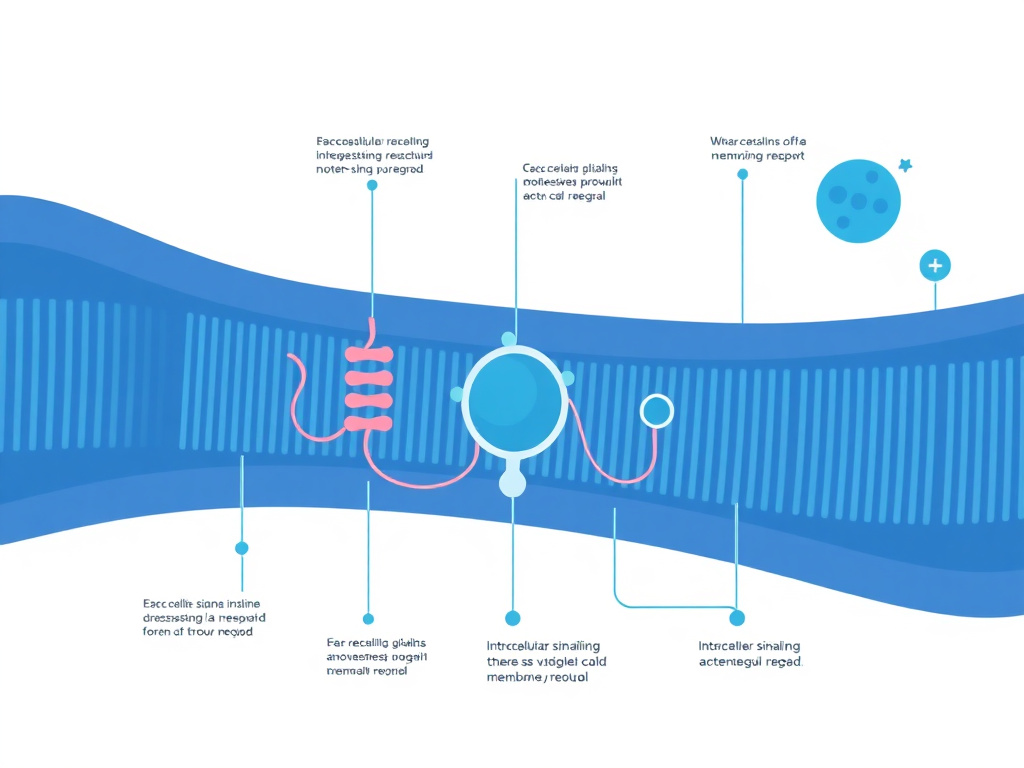
Figure 2: The SNARE complex assembly process showing how SNAP-25, syntaxin-1, and synaptobrevin form the four-helix bundle that drives synaptic vesicle fusion and neurotransmitter release.
Understanding how SNAP-8 works requires a foundational grasp of the SNARE complex, the molecular machine that drives neurotransmitter release at every synapse in the human body. The SNARE complex is not merely relevant to cosmetic science; it is one of the most studied molecular assemblies in all of neurobiology, and its discoverers received the Nobel Prize in Physiology or Medicine in 2013.
What Is the SNARE Complex?
SNARE stands for Soluble N-ethylmaleimide-sensitive factor Attachment protein Receptor. These are a family of proteins that mediate the fusion of membrane-bound vesicles with target membranes throughout the cell. In neurons and at the neuromuscular junction specifically, SNARE proteins are responsible for the fusion of synaptic vesicles (tiny membrane-enclosed packages of neurotransmitter) with the presynaptic plasma membrane, releasing their contents into the synaptic cleft.
The core SNARE complex at the neuromuscular junction consists of three proteins that assemble into a tight four-helix bundle. These three proteins are syntaxin-1, SNAP-25 (synaptosomal-associated protein of 25 kDa), and synaptobrevin (also called VAMP, vesicle-associated membrane protein). Syntaxin-1 is anchored in the presynaptic plasma membrane and contributes one alpha-helix to the bundle. Synaptobrevin is anchored in the synaptic vesicle membrane and also contributes one alpha-helix. SNAP-25 is unique because it is attached to the cytosolic face of the plasma membrane through palmitoyl side chains (lipid anchors) rather than a transmembrane domain, and it contributes two alpha-helices to the complex, making four helices in total.
The assembly of this four-helix bundle is what physically pulls the vesicle membrane and the plasma membrane together, forcing them close enough for lipid bilayer fusion to occur. Think of it as a molecular zipper: the helices wrap around each other starting from their membrane-distal ends (the N-terminal ends) and proceeding toward the membrane-proximal ends (the C-terminal ends), generating the mechanical force needed to overcome the energy barrier to membrane fusion. This "zippering" mechanism is both elegant and extremely fast, happening in less than a millisecond once triggered by calcium influx.
SNAP-25: The Linchpin Protein
SNAP-25 deserves special attention because it is the direct target that SNAP-8 mimics. The protein is encoded by the SNAP25 gene located on chromosome 20p12.2 in humans. It exists in two splice variants: SNAP-25a and SNAP-25b, which differ by nine amino acid residues including a repositioned palmitoylation site. SNAP-25b is the predominant adult isoform and is critical for fast, calcium-triggered exocytosis.
Structurally, SNAP-25 consists of two alpha-helical domains connected by a flexible linker region. The linker contains four cysteine residues that undergo palmitoylation, covalently attaching lipid (palmitate) groups that anchor the protein to the inner leaflet of the plasma membrane. Unlike syntaxin and synaptobrevin, SNAP-25 lacks a transmembrane domain entirely, relying on these palmitoyl anchors for membrane association.
The two alpha-helical domains of SNAP-25 have distinct binding partners within the SNARE complex. The N-terminal helix binds syntaxin-1, while the C-terminal helix binds synaptobrevin. This dual contribution is what makes SNAP-25 the central organizer of the complex. Without SNAP-25, the other two proteins cannot form a stable fusion-competent assembly. Research using SNAP-25 knockout models has demonstrated that in the absence of this protein, vesicle docking at presynaptic active zones persists (vesicles can still reach the membrane), but the pool of vesicles primed for release is empty, and fast calcium-triggered exocytosis is completely abolished.
This explains why SNAP-25 is such an attractive target for anti-wrinkle interventions. If you can interfere with SNAP-25's ability to participate in SNARE complex formation, you can reduce neurotransmitter release without destroying the protein or the nerve terminal. Both botulinum toxin and the family of neuropeptides including Argireline and SNAP-8 target this protein, though through very different mechanisms.
The Neuromuscular Junction: Where It All Happens
The neuromuscular junction (NMJ) is the specialized synapse between a motor neuron and a skeletal muscle fiber. It is where the signal to contract originates. When a motor neuron fires an action potential, that electrical signal travels down the axon to the nerve terminal at the NMJ. The arrival of the action potential triggers the opening of voltage-gated calcium channels in the presynaptic membrane, allowing calcium ions to flood into the nerve terminal.
Calcium ions bind to synaptotagmin, a calcium-sensing protein associated with synaptic vesicles. This binding event causes a conformational change in synaptotagmin that allows it to interact with the assembled SNARE complex, triggering the final step of membrane fusion. The synaptic vesicles, each containing roughly 5,000 to 10,000 molecules of the neurotransmitter acetylcholine, fuse with the presynaptic membrane and release their contents into the synaptic cleft through exocytosis.
Acetylcholine then diffuses across the approximately 50-nanometer gap of the synaptic cleft and binds to nicotinic acetylcholine receptors on the muscle fiber's postsynaptic membrane (the motor end plate). These receptors are ligand-gated ion channels; when acetylcholine binds, they open, allowing sodium ions to flow into the muscle cell, depolarizing the membrane and initiating a muscle action potential. This action potential propagates along the muscle fiber and into the T-tubule system, ultimately triggering calcium release from the sarcoplasmic reticulum and activating the contractile machinery of actin and myosin, producing muscle contraction.
The entire process, from nerve impulse to muscle twitch, takes approximately 1 to 2 milliseconds. And it depends absolutely on the SNARE complex to execute the vesicle fusion step. No SNARE complex assembly means no vesicle fusion, no acetylcholine release, and no muscle contraction.
Facial Muscles and Dynamic Wrinkles
Facial muscles differ from most other skeletal muscles in a critical way: many of them insert directly into the skin rather than connecting bone to bone via tendons. The frontalis muscle in the forehead, the orbicularis oculi around the eyes, the corrugator supercilii between the brows, and the orbicularis oris around the mouth all attach to the dermis. When these muscles contract during facial expression, they pull directly on the overlying skin, creating folds and creases.
In young skin, these creases are temporary. The skin snaps back to its original position when the muscle relaxes, thanks to abundant collagen and elastin in the dermis. But as we age, several factors conspire to make these temporary lines permanent. Collagen production declines by approximately 1% per year starting in the mid-20s. Elastin fibers become fragmented and lose their recoil capacity. The dermal-epidermal junction flattens, reducing mechanical coupling between skin layers. And chronic UV exposure accelerates all of these processes through photoaging.
By the time someone reaches their 40s or 50s, decades of repeated muscle contraction combined with progressive structural decline have etched visible lines into the skin. The crow's feet around the eyes, the "11 lines" between the brows, and the horizontal forehead lines are all dynamic wrinkles created through this mechanism. This is precisely where neurotransmitter-modulating peptides like SNAP-8 enter the picture. By reducing the intensity of muscle contraction at the neuromuscular junction, they slow the mechanical driver of dynamic wrinkle formation while the skin retains its ability to produce natural expressions.
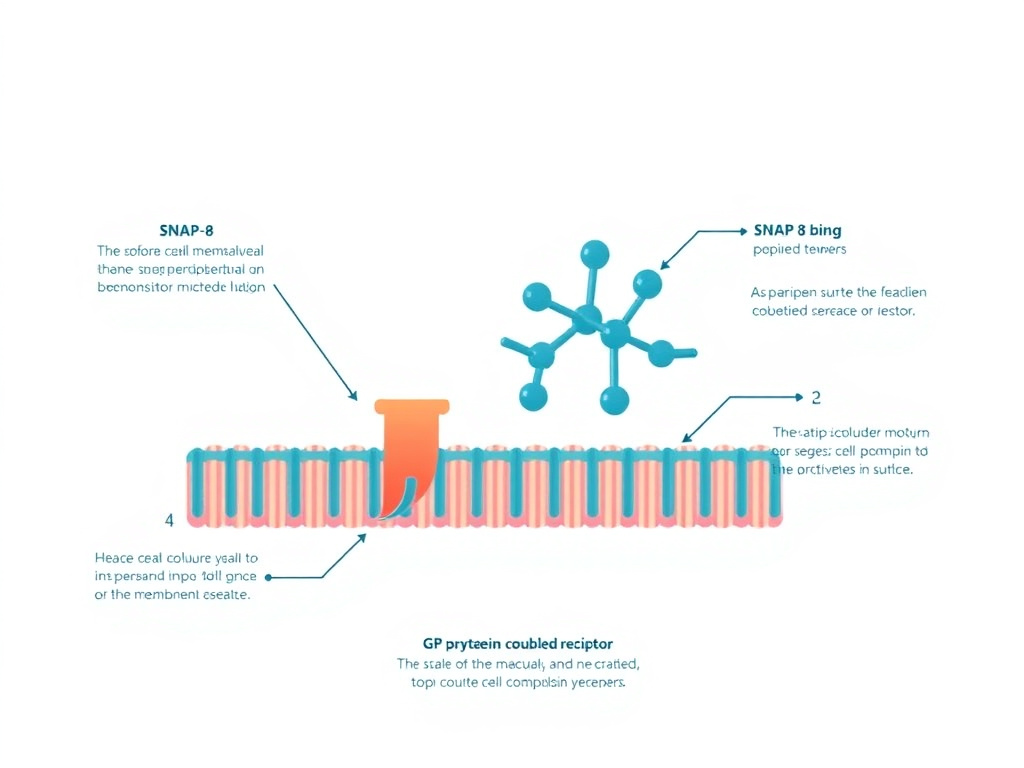
The SNARE Cycle: Assembly, Fusion, and Recycling
SNARE complexes do not assemble once and stay locked in place. The neuromuscular junction must fire repeatedly and rapidly during sustained muscle activity, which means the SNARE machinery needs to be continuously recycled. After vesicle fusion occurs, the SNARE complex remains embedded in the plasma membrane in a highly stable, low-energy post-fusion configuration called the cis-SNARE complex.
Disassembly of the cis-SNARE complex requires the action of two additional proteins: NSF (N-ethylmaleimide-sensitive factor), an ATPase, and alpha-SNAP (soluble NSF attachment protein, not to be confused with SNAP-25). NSF uses the energy from ATP hydrolysis to mechanically unwind the four-helix bundle, freeing the individual SNARE proteins for another round of complex formation. Synaptobrevin is recycled back to newly forming synaptic vesicles through endocytosis, while syntaxin-1 and SNAP-25 remain on the plasma membrane.
This recycling process is essential for sustained neurotransmission. A single motor neuron terminal can release hundreds of vesicles per second during intense activity, and each release event requires a functional SNARE complex. Any intervention that slows SNARE complex assembly, whether by competing for binding sites (as SNAP-8 does) or by destroying a component (as botulinum toxin does), will reduce the rate at which vesicles can fuse and release their contents, ultimately diminishing muscle contraction force.
Why the N-Terminal of SNAP-25 Matters
The N-terminal region of SNAP-25 is where SNARE complex assembly initiates. The "zippering" of the four-helix bundle begins at the N-terminal ends of the participating alpha-helices and proceeds toward the membrane-proximal C-terminal ends. This means that disrupting the N-terminal interaction of SNAP-25 with syntaxin-1 would be expected to prevent or slow the initiation of complex assembly.
This is exactly what SNAP-8 was designed to exploit. The peptide's eight-amino-acid sequence (Ac-Glu-Glu-Met-Gln-Arg-Arg-Ala-Asp-NH2) mimics the N-terminal end of SNAP-25, competing with the native protein for the initial binding interaction with syntaxin-1. When SNAP-8 occupies this binding site, it forms a partial, non-functional complex that cannot proceed through the full zippering process. The vesicle fusion machinery is destabilized, neurotransmitter release is reduced, and muscle contraction is attenuated.
For those interested in related research on peptides that affect cellular signaling and tissue repair, reports on BPC-157 and TB-500 cover distinct but complementary peptide mechanisms within the broader field of bioactive peptide science.
Calcium Sensing and Synaptotagmin: The Trigger
The calcium-sensing step that triggers vesicle fusion deserves additional attention because it explains why SNARE complex modulation produces a graded, dose-dependent effect rather than an all-or-nothing response. Synaptotagmin-1, the primary calcium sensor at fast synapses and neuromuscular junctions, contains two C2 domains (C2A and C2B) that each bind calcium ions. The C2B domain is particularly critical because it simultaneously binds calcium, the plasma membrane, and the assembled SNARE complex, acting as a bridge that couples the calcium signal to the fusion event.
When calcium floods into the nerve terminal through voltage-gated channels, the local calcium concentration near release sites can reach 10-100 micromolar within microseconds. Synaptotagmin responds to this calcium signal with a conformational change that drives its C2 domains into the membrane, pulling the SNARE-attached vesicle closer to the fusion site and triggering the final membrane merger. The critical point is that synaptotagmin interacts with the assembled SNARE complex. If the SNARE complex has not been properly assembled (because SNAP-8 is occupying the SNAP-25 binding site), synaptotagmin cannot execute its triggering function, and that particular vesicle fusion event does not occur.
However, this does not mean that all vesicle fusion stops. At any given moment, only a fraction of available SNARE complexes will have SNAP-8 incorporated instead of native SNAP-25. The proportion depends on the relative concentrations of SNAP-8 and SNAP-25 at the nerve terminal. Even at high SNAP-8 concentrations, some SNARE complexes will form normally and respond to calcium-triggered exocytosis. This is why SNAP-8 produces a modulation of muscle contraction rather than a paralysis: the probability of successful vesicle fusion is reduced, but not eliminated.
Energy Field of SNARE Complex Formation
Recent research, including a 2024 study published in eLife, has provided new insights into the energy field of SNARE complex formation. The assembly of the four-helix bundle is a highly exergonic (energy-releasing) process, with the completed complex sitting in a deep energy minimum. This thermodynamic stability is what provides the mechanical force needed to overcome the energy barrier of membrane fusion.
When SNAP-8 competes with SNAP-25 for binding, the resulting partial complex occupies a shallower energy minimum, insufficient to drive membrane fusion. The energy difference between the full SNARE complex and the SNAP-8-containing partial complex represents the "lost" mechanical force that would have been available for vesicle fusion. This thermodynamic perspective explains why SNAP-8 is effective at reducing vesicle release without completely abolishing it: the peptide shifts the energy landscape to make fusion less favorable, but does not create an insurmountable energy barrier.
Understanding this energy landscape also helps explain why the two extra amino acids in SNAP-8 (compared to Argireline) make it more effective. The extended peptide can form slightly more extensive interactions with syntaxin-1, occupying the binding site more stably and making it harder for native SNAP-25 to displace it. This translates into a higher effective inhibition at equivalent concentrations, consistent with the observed 30% improvement in anti-wrinkle activity.
Beyond the Neuromuscular Junction: SNARE Complexes in Skin Biology
While the anti-wrinkle effect of SNAP-8 is primarily attributed to its action at the neuromuscular junction, SNARE-mediated exocytosis occurs in many cell types throughout the skin. Keratinocytes use SNARE proteins for lamellar body secretion, which is essential for skin barrier function. Melanocytes use SNARE-mediated vesicle transport for melanosome transfer to keratinocytes. Mast cells in the dermis use SNARE proteins for degranulation (the release of histamine and other inflammatory mediators).
Whether topically applied SNAP-8 has any effect on these non-neuronal SNARE-mediated processes is largely unknown. The concentrations reaching the dermis are likely too low to meaningfully affect keratinocyte or melanocyte function, and the specific SNARE protein composition in these cells differs from that at the neuromuscular junction (for example, many non-neuronal cells use SNAP-23 rather than SNAP-25, and SNAP-8 is designed to mimic SNAP-25 specifically). Nevertheless, this is an area where additional research could reveal unexpected benefits or concerns related to topical neurotransmitter-modulating peptides.
The broader field of peptide biology is covered extensively in the Peptide Research Hub, which includes reports on peptides with diverse mechanisms across multiple biological systems.
Clinical Relevance
The SNARE complex is not just relevant to cosmetic science. Mutations in SNARE proteins have been linked to epilepsy, intellectual disability, and movement disorders. Botulinum toxin, which targets SNARE proteins, is used therapeutically for conditions ranging from chronic migraine and overactive bladder to cervical dystonia and spasticity. Understanding the molecular biology of the SNARE complex provides essential context for evaluating any intervention that targets this system, including topical peptides like SNAP-8.
SNAP-8 vs Botulinum Toxin Mechanism
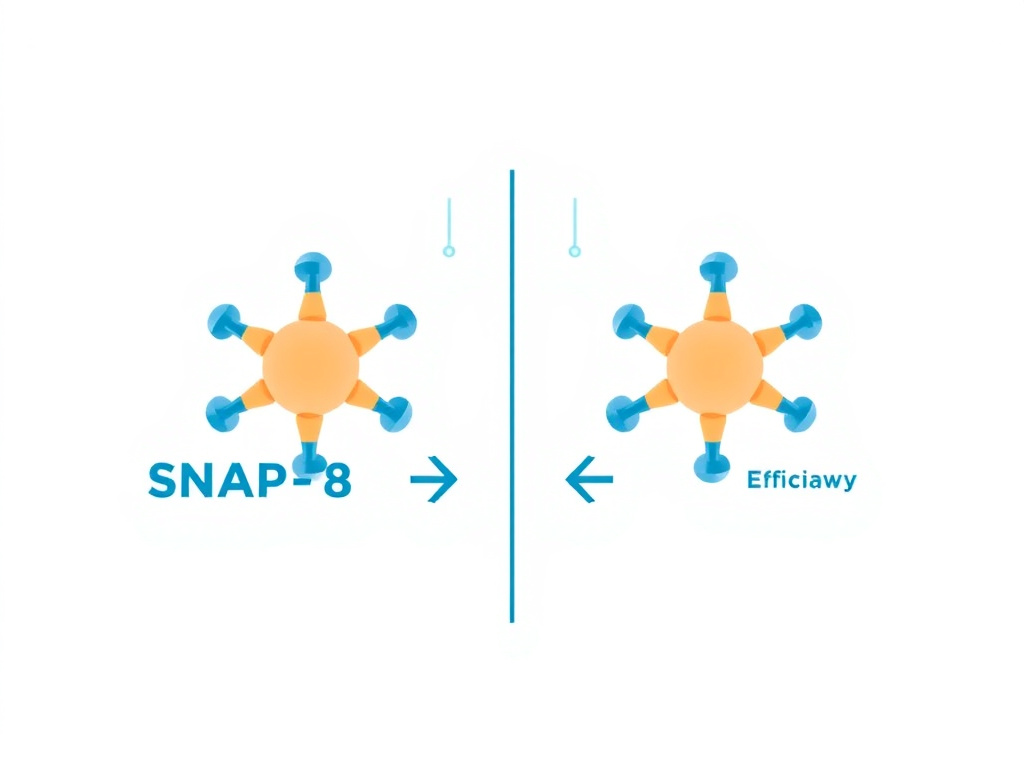
SNAP-8 and botulinum toxin both reduce wrinkles by decreasing muscle contraction, but their mechanisms of action differ profoundly at the molecular level. Botulinum toxin is an enzyme that permanently destroys SNARE proteins, while SNAP-8 is a competitive inhibitor that temporarily occupies binding sites. These fundamental differences translate into dramatically different clinical profiles in terms of onset, intensity, duration, reversibility, and safety.
Botulinum Toxin: Enzymatic Destruction of SNARE Proteins
Botulinum toxin is produced by the bacterium Clostridium botulinum and is among the most potent biological toxins known. Seven serotypes exist (A through G), with type A (onabotulinumtoxinA, marketed as Botox) and type B (rimabotulinumtoxinB, marketed as Myobloc) being the primary forms used clinically. Each serotype targets a specific SNARE protein for enzymatic cleavage.
Botulinum toxin type A specifically cleaves SNAP-25, the same protein that SNAP-8 mimics. But the mechanism is fundamentally different from competitive inhibition. Botulinum toxin is a zinc-dependent endopeptidase: it physically cuts the SNAP-25 protein chain at a specific site near the C-terminus (between residues Gln197 and Arg198). Once cleaved, the protein cannot contribute its C-terminal alpha-helix to the SNARE complex, and vesicle fusion becomes impossible at that nerve terminal.
The process by which botulinum toxin reaches its intracellular target involves multiple steps. First, the heavy chain of the toxin binds to receptors on the presynaptic nerve terminal membrane (including SV2 glycoproteins and gangliosides). The toxin is then internalized through receptor-mediated endocytosis into an acidified endosome. The low pH of the endosome triggers a conformational change in the heavy chain that allows it to form a pore in the endosomal membrane, through which the catalytic light chain translocates into the cytoplasm. Once free in the cytoplasm, the light chain cleaves its SNARE target.
The effects of botulinum toxin are long-lasting because the cleaved SNAP-25 protein cannot be repaired. The nerve terminal must synthesize entirely new SNAP-25 molecules and, in some cases, sprout new nerve terminals to restore neurotransmission. This process takes three to six months, which is why Botox injections need to be repeated on a quarterly basis. During this recovery period, the targeted muscle is partially or completely paralyzed, depending on the dose administered.
SNAP-8: Competitive Inhibition of SNARE Assembly
SNAP-8 operates through a mechanistically gentler process. The peptide's amino acid sequence, Ac-Glu-Glu-Met-Gln-Arg-Arg-Ala-Asp-NH2, mimics the N-terminal end of SNAP-25. When present in sufficient concentration at the neuromuscular junction, SNAP-8 competes with endogenous SNAP-25 for the initial binding interaction with syntaxin-1 that initiates SNARE complex assembly.
When SNAP-8 occupies this binding site instead of the full-length SNAP-25 protein, the resulting partial complex cannot proceed through the complete four-helix bundle zippering process. The peptide is too short (only eight amino acids) to form the complete interactions needed for functional complex assembly. It effectively acts as a "decoy" that blocks productive SNARE complex formation without destroying any protein component.
This competitive mechanism means several things. First, the effect is concentration-dependent: the more SNAP-8 present relative to native SNAP-25, the greater the proportion of SNARE assembly attempts that are blocked. Second, the effect is inherently reversible: when SNAP-8 diffuses away or is degraded, native SNAP-25 can immediately resume its normal function. No new protein synthesis is needed. Third, the effect is partial by nature: competitive inhibition reduces but does not abolish the target process, because some native SNAP-25 molecules will always outcompete the peptide for binding sites.
Head-to-Head Comparison
| Parameter | Botulinum Toxin (Botox) | SNAP-8 (Acetyl Octapeptide-3) |
|---|---|---|
| Mechanism | Enzymatic cleavage (proteolysis) of SNAP-25 | Competitive inhibition of SNAP-25 binding |
| SNARE Protein Affected | SNAP-25 (cleaved and destroyed) | SNAP-25 (binding site blocked temporarily) |
| Reversibility | Irreversible (requires new protein synthesis) | Immediately reversible |
| Administration | Intramuscular injection by licensed professional | Topical application (self-administered) |
| Onset of Action | 3-7 days (full effect at 14 days) | Gradual over 14-28 days of daily use |
| Duration of Effect | 3-6 months per injection | Requires continuous daily application |
| Effect on Muscle | Partial to complete paralysis | Attenuation of contraction (modulation) |
| Natural Expression Preserved | Reduced (risk of "frozen" appearance) | Yes (muscles still contract, just with less force) |
| Wrinkle Reduction (Clinical) | 80-90% smoothing of dynamic lines | Up to 63% wrinkle depth reduction (10% concentration) |
| Cost Per Treatment Area | $300-600 every 3-4 months | $20-80 per month (topical product) |
| Systemic Risk | Low but present (diffusion to adjacent muscles, rare systemic effects) | Negligible (poor systemic absorption through skin) |
| Regulatory Status | Prescription drug (FDA-approved) | Cosmetic ingredient (no FDA drug approval needed) |
SNAP-8 vs Argireline: The Evolutionary Improvement
Before SNAP-8 entered the market, its predecessor Argireline (acetyl hexapeptide-3, later renamed acetyl hexapeptide-8 under revised INCI nomenclature) was the most widely used neurotransmitter-inhibiting cosmetic peptide. Both peptides target the same N-terminal region of SNAP-25 and work through identical competitive inhibition mechanisms. The difference lies in their amino acid sequences and resulting potency.
Argireline has the sequence Ac-Glu-Glu-Met-Gln-Arg-Arg-NH2, a six-amino-acid chain. SNAP-8 extends this by two additional residues at the C-terminus: Ala (alanine) and Asp (aspartic acid), yielding the eight-amino-acid sequence Ac-Glu-Glu-Met-Gln-Arg-Arg-Ala-Asp-NH2. These two extra amino acids were added to better mimic the native SNAP-25 N-terminal domain and improve binding affinity for syntaxin-1.
The structural extension translates directly into enhanced efficacy. In comparative anti-wrinkle assays, SNAP-8 has been shown to be approximately 30% more active than Argireline at equivalent concentrations. This means that a 10% SNAP-8 formulation delivers stronger wrinkle reduction than a 10% Argireline formulation, or alternatively, a lower concentration of SNAP-8 can achieve the same effect as a higher concentration of Argireline.
Both peptides are manufactured by the Spanish biotechnology company Lipotec (now part of Lubrizol). Argireline was introduced in 2001 and quickly became one of the best-selling cosmetic peptide ingredients globally. SNAP-8 followed as the "next generation" version, designed to capture market share from both Argireline users seeking better results and consumers considering botulinum toxin injections. The Drug Comparison Hub provides additional context on how various anti-aging compounds stack up against each other.
The Penetration Problem: Why SNAP-8 Can't Match Botox
The single biggest limitation of SNAP-8 compared to botulinum toxin is not potency at the molecular level but delivery. Botulinum toxin is injected directly into or adjacent to the target muscle, ensuring that it reaches the presynaptic nerve terminals at effective concentrations. SNAP-8, applied topically to the skin surface, must penetrate through multiple barriers to reach the neuromuscular junctions deep in the dermis and subcutaneous tissue.
The stratum corneum, the outermost layer of the epidermis, is a formidable barrier to peptide penetration. It is essentially a wall of dead, flattened skin cells (corneocytes) embedded in a lipid matrix, designed by evolution to keep foreign substances out. SNAP-8 is a hydrophilic (water-loving) molecule with a relatively large molecular weight (over 1,000 Daltons), both of which work against passive diffusion through the lipid-rich stratum corneum.
FDA researchers studying the related peptide acetyl hexapeptide-8 found that only about 0.22% of the applied dose penetrated into human skin, and the vast majority of that remained in the stratum corneum rather than reaching deeper layers. While SNAP-8's exact penetration data may differ slightly, the fundamental challenge is the same: getting enough peptide through the skin to achieve meaningful concentrations at the target.
This penetration limitation is the primary reason SNAP-8 cannot achieve the 80-90% wrinkle smoothing typical of botulinum toxin injections. Even at 10% concentration in the applied product, the actual amount reaching the neuromuscular junction is a tiny fraction of the total applied dose. Nevertheless, the clinical data demonstrating 35-63% wrinkle depth reduction suggests that enough peptide does penetrate to produce clinically meaningful effects, particularly with consistent twice-daily application over extended periods.
Complementary Rather Than Competitive
In practice, many dermatologists and cosmetic practitioners view SNAP-8 and botulinum toxin not as competitors but as complementary treatments. SNAP-8 can serve as a maintenance treatment between Botox appointments, extending the visible benefits of injections. It can be used in areas where injection is impractical or undesirable, such as on very fine lines around the lips. And it provides an entry point for consumers who are interested in wrinkle reduction but not ready for injectable treatments.
Some practitioners recommend starting with topical SNAP-8 products to see how an individual responds to neurotransmitter modulation before committing to the more dramatic (and costly) effects of botulinum toxin. Others use SNAP-8 formulations as part of a post-injection skincare regimen, combining the immediate smoothing effect of Botox with the ongoing maintenance effect of the topical peptide.
The Science & Research page offers further reading on how different approaches to skin aging can be layered for optimal results.
Other Botulinum Toxin Serotypes and Their SNARE Targets
Understanding the full family of botulinum toxin serotypes provides additional context for appreciating SNAP-8's mechanism. While botulinum toxin type A (Botox, Dysport, Xeomin) targets SNAP-25, other serotypes target different SNARE proteins. Botulinum toxin types B, D, F, and G cleave synaptobrevin (VAMP), while type C cleaves both syntaxin-1 and SNAP-25. Each serotype cuts its target protein at a different site, and the clinical effects vary in terms of onset, duration, and dose-response characteristics.
The fact that multiple toxin serotypes have evolved to target different components of the same SNARE complex underscores the fundamental importance of this protein machinery. It also raises an interesting question for cosmetic peptide design: could peptides be developed that mimic syntaxin-1 or synaptobrevin, rather than SNAP-25, to modulate SNARE complex assembly through alternative binding-site competition? While no commercial cosmetic peptides currently target these alternative SNARE components, the principle is sound, and future research may explore these possibilities.
The Reversibility Advantage in Clinical Practice
The reversibility of SNAP-8's effect is one of its most significant clinical advantages. With botulinum toxin, if a patient is unhappy with the result (too much paralysis, asymmetry, or an unnatural appearance), they must wait three to six months for the effect to wear off as new SNAP-25 protein is synthesized and new nerve sprouts form. There is no antidote or reversal agent for botulinum toxin once it has cleaved its target protein.
With SNAP-8, discontinuing the product returns muscle function to baseline within days to weeks as the peptide is metabolized and cleared from the tissue. This makes SNAP-8 an inherently lower-risk choice for consumers who want to explore wrinkle reduction without committing to a months-long alteration of facial function. It also makes the peptide suitable for use in contexts where temporary enhancement is desired, such as before important events or photographs, without concern about lingering effects.
Economic Comparison: Cost Per Outcome
The cost analysis between SNAP-8 and botulinum toxin is complex because the outcomes differ in magnitude. A standard Botox treatment for the glabellar region (frown lines) uses approximately 20 units at a cost of $10-15 per unit, totaling $200-300 per treatment. Treating multiple areas (forehead, crow's feet, and frown lines) typically costs $400-900 per session, with sessions repeated every three to four months. Annual costs for comprehensive botulinum toxin treatment can range from $1,200 to $3,600.
SNAP-8 products vary widely in price depending on concentration, brand, and formulation quality. A high-quality 10% SNAP-8 serum typically costs $30-80 per 30 mL bottle, which lasts approximately one to two months with twice-daily application. Annual costs therefore range from roughly $180 to $960, significantly less than botulinum toxin treatment.
However, the wrinkle reduction achieved is also significantly less. If we think in terms of "cost per percentage point of wrinkle reduction," the comparison becomes more nuanced. A $600 Botox treatment producing 85% wrinkle smoothing costs approximately $7 per percentage point. A $60/month SNAP-8 regimen producing 35% wrinkle reduction costs approximately $1.71 per percentage point per month, or about $21 per percentage point over a year. But this analysis oversimplifies, because the subjective value of the first 35% reduction in wrinkle depth may be greater than the marginal value of the additional 50% achieved by Botox, depending on individual preferences.
For a comprehensive analysis of how various compounds compare across efficacy, cost, and convenience dimensions, the Drug Comparison Hub provides detailed side-by-side evaluations.
The Combination Approach: SNAP-8 as Part of an Injection-Enhanced Protocol
An emerging approach in aesthetic medicine combines topical peptides with reduced-dose injectable treatments. The concept is to use a lower-than-standard dose of botulinum toxin (sometimes called "baby Botox" or microdosing) to achieve partial but natural-looking muscle relaxation, then layer topical SNAP-8 to augment and extend the effect. This combination approach allows practitioners to use less toxin per treatment (reducing cost and the risk of over-treatment) while still achieving meaningful wrinkle reduction.
Some practitioners report that patients using topical SNAP-8 between Botox appointments find that their injectable results last longer, potentially extending the interval between injections from three months to four or even five months. While this observation has not been confirmed in controlled clinical trials, the mechanistic rationale is plausible: even a modest ongoing reduction in muscle contraction from topical SNAP-8 could slow the rate at which the muscle recovers full contractile force after Botox treatment.
Important Distinction
While both SNAP-8 and botulinum toxin target the SNARE complex, their safety profiles differ dramatically. Botulinum toxin is among the most toxic substances known per unit weight and requires strict medical oversight. SNAP-8, even at high topical concentrations, has shown no systemic toxicity in any published study because its hydrophilic nature and large molecular size prevent meaningful systemic absorption through intact skin.
Clinical Wrinkle Reduction Data

Clinical evidence for SNAP-8 spans manufacturer-sponsored studies, independent academic research, and multi-peptide formulation trials. The data consistently show meaningful wrinkle reduction, though the magnitude of improvement varies considerably depending on study design, peptide concentration, formulation vehicle, treatment duration, and measurement methodology.
The Primary Manufacturer Study
The most widely cited efficacy data for SNAP-8 comes from the manufacturer (Lipotec, now Lubrizol). In this controlled study, human volunteers applied a cream containing 10% SNAP-8 (as the active solution) to the periorbital (eye) area twice daily for 28 days. Wrinkle depth was measured using silicone replicas and profilometric analysis, which provides an objective, quantitative assessment of skin surface topography.
The results demonstrated a time-dependent reduction in wrinkle depth. At Day 14 (two weeks), wrinkle depth had decreased to approximately 82% of the baseline measurement, representing an 18% reduction. By Day 28 (four weeks), wrinkle depth had decreased to approximately 65% of baseline, representing a 35% average reduction. The maximum individual reduction observed in the study was 63.13%, reported in the periorbital region. These results were statistically significant compared to the vehicle control (the same cream formulation without SNAP-8).
Wrinkle Depth Reduction Over 28 Days
Concentration-Dependent Effects
The concentration of SNAP-8 in a formulation has a direct impact on efficacy. Data from multiple studies support a dose-response relationship. At 3% concentration, studies report wrinkle depth reductions in the range of 10-15% after 28 days of use. This is the concentration most commonly found in consumer-grade skincare products, where the peptide is listed as one of several active ingredients. At 5% concentration, the effect increases to approximately 20-25% wrinkle depth reduction. At 10% concentration, the studies report the 35% average and up to 63% maximum reduction described in the primary study.
This dose-response relationship makes biological sense given the competitive inhibition mechanism. Higher SNAP-8 concentrations mean more peptide molecules are available to compete with native SNAP-25 for binding sites on syntaxin-1. At lower concentrations, native SNAP-25 outcompetes the peptide at most binding sites, and the effect on SNARE complex assembly is modest. At higher concentrations, the competitive balance shifts in favor of the peptide, and a larger proportion of SNARE assembly events are disrupted.
| SNAP-8 Concentration | Average Wrinkle Depth Reduction (28 Days) | Typical Product Category |
|---|---|---|
| 3% | 10-15% | Consumer serums, multi-peptide blends |
| 5% | 20-25% | Professional-grade serums |
| 10% | 34.9% average, up to 63% maximum | Clinical-strength formulations, DIY boosters |
Comparison with Argireline Clinical Data
Because SNAP-8 was developed as an improvement over Argireline, comparing their clinical data provides useful context. The most cited Argireline study, also conducted by the manufacturer, reported a 30% reduction in wrinkle depth after 30 days of twice-daily application at 10% concentration. The study used a similar methodology with silicone replicas and profilometric analysis in the periorbital region.
Comparing these datasets side by side, the 10% SNAP-8 formulation produced approximately 35% average wrinkle depth reduction in 28 days versus 30% for 10% Argireline in 30 days. This roughly 17% improvement in efficacy aligns with the manufacturer's claim that SNAP-8 is approximately 30% more active than Argireline in anti-wrinkle assays, though the comparison is complicated by slight differences in study duration and participant populations.
An important distinction: Argireline has accumulated substantially more independent clinical data over its longer market history. A 2024 review published in Cosmetics (PMC12193160) summarized multiple studies of acetyl hexapeptide-8 and noted that independent research tends to report more conservative outcomes than manufacturer-sponsored studies, with typical wrinkle depth reductions in the 10-20% range under real-world conditions.
Multi-Peptide Formulation Trials
Several published studies have evaluated SNAP-8 as part of multi-peptide formulations rather than in isolation, making it difficult to attribute specific effects to SNAP-8 alone but providing evidence for practical clinical outcomes.
One open-label, 14-week study evaluated a multi-peptide serum containing SNAP-8 along with other cosmetic peptides in 30 female subjects. The study measured wrinkle depth using digital image analysis and subjective assessments. Results showed statistically significant smoothing of expression lines, improved skin texture scores, and good overall tolerability. No serious adverse events were reported, and dropout rates were low.
A 2024 study evaluated dissolving microneedle patches containing SNAP-8 for periorbital wrinkle treatment. Twenty-four subjects applied the patches over the eye area for four weeks. The microneedle delivery system was designed to bypass the stratum corneum barrier that limits passive topical penetration. Results showed significant reduction in eye wrinkle depth and improved skin elasticity compared to baseline. This study is particularly relevant because it demonstrates that enhanced delivery can amplify SNAP-8's clinical effects, supporting the hypothesis that penetration limitation, not inherent potency, is the main factor capping topical SNAP-8's effectiveness.
In Vitro and Cell Culture Evidence
Beyond the clinical trials in human volunteers, SNAP-8 has been evaluated in cell culture systems that provide mechanistic confirmation of its activity. In catecholamine release assays using chromaffin cells (which use a SNARE-mediated exocytosis pathway similar to neurons), SNAP-8 reduced vesicle release in a concentration-dependent manner. These in vitro results confirmed that the peptide does interact with the SNARE complex and modulates exocytosis, consistent with the proposed mechanism of action.
Cell viability assays have also been conducted using cultured keratinocytes and fibroblasts exposed to various concentrations of SNAP-8. No cytotoxicity was observed at concentrations up to several millimolar, far exceeding the concentrations that would be achieved in the skin even with aggressive topical dosing. This safety data from cell culture studies supports the excellent tolerability profile observed in human clinical trials.
Limitations of the Evidence Base
Several important limitations should be acknowledged when evaluating the clinical data for SNAP-8.
First, the majority of published efficacy data originates from the manufacturer (Lipotec/Lubrizol) and their development partners. While this is common for cosmetic ingredients and the studies appear methodologically sound, independent replication of the most impressive results (particularly the 63% maximum reduction) remains limited. Independent academic studies tend to report more conservative outcomes.
Second, most studies have used relatively small sample sizes, typically ranging from 15 to 30 subjects. While small studies can detect large effect sizes, they are less reliable for estimating the true average treatment effect across a diverse population and may be subject to selection bias if enrollment criteria favor individuals expected to respond well.
Third, no published clinical trial has directly compared SNAP-8 head-to-head with botulinum toxin using standardized wrinkle assessment scales in the same patient population. The comparison figures cited in this report and elsewhere are cross-study comparisons, which are inherently less reliable than within-study comparisons due to differences in patient demographics, measurement methods, and treatment conditions.
Fourth, most studies have evaluated SNAP-8 over relatively short durations (28-30 days). Long-term efficacy data beyond several months of continuous use is sparse, and it remains unclear whether the wrinkle reduction effect continues to improve, plateaus, or diminishes with prolonged use.
Despite these limitations, the overall evidence base supports SNAP-8 as a clinically active topical anti-wrinkle ingredient with genuine biological activity mediated through SNARE complex modulation. The magnitude of effect, while less than injectable botulinum toxin, is meaningful and compares favorably with other topical anti-aging ingredients. Those interested in the full spectrum of GLP-1 and peptide therapies can explore the wider research library for comprehensive analyses of each compound.
Measurement Methodologies in Wrinkle Assessment
Understanding how wrinkle depth is measured is essential for interpreting clinical data, because different methodologies can produce different numerical results from the same skin change. The most common approaches used in SNAP-8 studies include the following.
Silicone replica profilometry is considered the gold standard for objective wrinkle measurement. A fast-setting silicone material is applied to the treatment area, creating a negative impression of the skin surface. This replica is then analyzed using optical or laser profilometry to generate a three-dimensional surface map. Parameters measured include average roughness (Ra), maximum roughness depth (Rmax), and root-mean-square roughness (Rq). The primary manufacturer study for SNAP-8 used this method, and the 35% average and 63% maximum reduction figures refer to changes in these profilometric parameters.
Digital image analysis uses standardized photography under controlled lighting conditions, followed by computer-assisted measurement of wrinkle length, depth, and area. This approach is more accessible than silicone replica analysis but can be influenced by lighting variations, skin hydration state, and image processing algorithms. Some multi-peptide studies have used this approach, typically with cross-polarized photography to minimize surface reflections.
Clinical grading scales, such as the Fitzpatrick Wrinkle Scale or the Lemperle Wrinkle Assessment Scale, rely on trained evaluators to assign numerical severity scores to wrinkles. These scales provide clinically meaningful assessments but are inherently subjective and can be influenced by evaluator bias, especially in unblinded studies.
Self-assessment questionnaires capture the patient's subjective perception of improvement. While important for understanding consumer satisfaction, self-reported outcomes are subject to placebo effects and expectation bias, particularly in cosmetic studies where participants are aware they are receiving an anti-wrinkle treatment.
Regional Variations in Response
The clinical response to SNAP-8 varies by facial region, reflecting differences in skin thickness, muscle depth, wrinkle severity, and local blood flow that influence peptide penetration and effect.
The periorbital area (crow's feet) consistently shows the strongest response in clinical studies. The skin around the eyes is among the thinnest on the face (approximately 0.5 mm thick, compared to 2 mm or more on the forehead and cheeks), which means the distance between the skin surface and the underlying orbicularis oculi muscle is relatively short. This shorter diffusion path likely allows more SNAP-8 to reach the neuromuscular junction, producing a stronger effect. The primary manufacturer study reported the 63% maximum wrinkle depth reduction specifically in this periorbital region.
The forehead typically shows moderate response. The frontalis muscle lies deeper below thicker skin, and the horizontal forehead lines tend to be longer and more deeply etched than crow's feet, requiring a greater absolute change to produce the same percentage improvement. Clinical reports suggest 20-40% improvement in forehead lines with consistent SNAP-8 use at 10% concentration.
The glabellar region (frown lines between the brows) presents a challenge because the corrugator supercilii and procerus muscles in this area are relatively deep and produce strong contractions during frowning. These muscles are primary targets for botulinum toxin injection, which delivers the neurotoxin directly to the muscle. Topical SNAP-8 must penetrate through thicker skin to reach these deeper muscles, which may limit the achievable effect. Nevertheless, consistent application can produce visible softening of mild to moderate frown lines.
Perioral wrinkles (around the mouth) are an interesting target for SNAP-8 because botulinum toxin injection in this area carries a higher risk of functional impairment (difficulty with eating, drinking, and speaking). The orbicularis oris is a complex muscle that performs multiple essential functions, and even slight over-treatment with botulinum toxin can cause noticeable functional problems. Topical SNAP-8's gentler, partial modulation of muscle contraction may be particularly advantageous in this area, where the goal is wrinkle softening without any compromise of oral function.
Duration of Effect and Maintenance Requirements
Unlike botulinum toxin, whose effects persist for three to six months after a single injection, SNAP-8's effects require continuous daily application. The competitive inhibition mechanism means that once SNAP-8 application stops, native SNAP-25 immediately resumes full participation in SNARE complex assembly, and muscle contraction returns to its previous intensity.
The practical implication is that SNAP-8 is a maintenance treatment, not a one-time intervention. Wrinkle depth improvements observed after 28 days of use will gradually reverse if the product is discontinued. The rate of reversal has not been precisely quantified in clinical studies, but based on the mechanism of action, full return to baseline would be expected within one to two weeks after cessation, as the remaining SNAP-8 in the skin is metabolized and cleared.
This maintenance requirement is often cited as a disadvantage compared to botulinum toxin injections, but it can also be viewed as an advantage: if you don't like the result, you can simply stop using the product and your face returns to normal within days. There is no waiting period of months for the effect to wear off.
Real-World Performance vs Clinical Trial Results
Real-world performance of SNAP-8 products is generally more modest than clinical trial results, and consumers should set expectations accordingly. Several factors contribute to this gap between trial and real-world performance.
Clinical trials use standardized application protocols with controlled frequency, duration, and technique. Real-world consumers may miss applications, use less product than the clinical protocol specifies, or apply inconsistently. Twice-daily application for 28 straight days requires discipline that not all consumers maintain.
Clinical trials often use high-concentration formulations (10% SNAP-8) that may not correspond to the concentration in commercially available products. Many consumer products list SNAP-8 as one of multiple active ingredients at undisclosed concentrations, which could be as low as 0.5-1%. At these lower concentrations, the competitive inhibition effect is proportionally reduced.
Trial participants are typically screened for specific inclusion criteria (age range, wrinkle severity, absence of concurrent treatments) that select for individuals likely to respond well. The general consumer population includes people with deeper wrinkles, older skin, concurrent use of products that might interfere with penetration, and other factors that could attenuate the response.
For consumers seeking to maximize their results, choosing a product with a clearly stated 5-10% SNAP-8 concentration, following the recommended twice-daily application protocol consistently, and incorporating penetration-enhancing strategies (gentle exfoliation, proper application technique) can help bridge the gap between clinical trial and real-world outcomes. The dosing calculator can provide personalized guidance on concentration and application frequency.
Summary of Key Clinical Findings
- 10% SNAP-8 applied twice daily for 28 days: 35% average, up to 63% maximum wrinkle depth reduction
- Dose-response relationship confirmed across 3%, 5%, and 10% concentrations
- Approximately 30% more effective than Argireline at equivalent concentrations
- Microneedle-enhanced delivery produces stronger results than passive topical application
- Independent studies tend to show more conservative results (10-20%) than manufacturer data
- Good tolerability across all studies with no serious adverse events reported
- Periorbital area shows strongest response due to thinner skin and shorter diffusion distance
- Continuous daily use required for maintenance; effects reverse within 1-2 weeks of discontinuation
Formulation & Penetration
The formulation of SNAP-8 products is arguably as important as the peptide itself. An extraordinarily potent anti-wrinkle compound is useless if it cannot reach its molecular target deep in the skin. Formulation science for SNAP-8 must address the peptide's hydrophilic nature, its molecular size, and the formidable barrier posed by the stratum corneum, all while maintaining peptide stability and aesthetic acceptability in the final product.
Physical and Chemical Properties of SNAP-8
SNAP-8 (acetyl octapeptide-3) is supplied commercially as a clear, aqueous solution, typically at 0.5 mg/mL or higher concentrations. The peptide is water-soluble, which presents both advantages and disadvantages for formulation. On the positive side, water solubility makes the peptide easy to incorporate into serums, lotions, and creams with aqueous phases. On the negative side, the stratum corneum is a lipid-rich barrier that strongly resists penetration by hydrophilic molecules.
The molecular weight of SNAP-8 exceeds 1,000 Daltons, which places it well above the commonly cited "500 Dalton rule" for skin penetration. This empirical rule suggests that molecules above approximately 500 Daltons have difficulty penetrating through the intercellular lipid matrix of the stratum corneum via passive diffusion. While the rule has many exceptions and is an oversimplification, it highlights a real physical limitation for larger peptides.
The peptide is stable at physiological pH (around 5.5-7.0), which is compatible with most cosmetic formulation pH ranges. It is heat-sensitive above approximately 40 degrees Celsius for prolonged periods, meaning that formulations should not be subjected to high-temperature processing or storage. The presence of the N-terminal acetyl group and C-terminal amide provide some protection against enzymatic degradation by aminopeptidases and carboxypeptidases, but the peptide remains susceptible to degradation by endopeptidases present in the skin.
Optimal Formulation Vehicles
Water-based serums are the preferred vehicle for SNAP-8 delivery. The peptide dissolves readily in aqueous systems, and the thin, fluid nature of serums promotes close contact with the skin surface and allows for rapid absorption of the water phase. As the water evaporates from the serum, the concentration of SNAP-8 at the skin surface temporarily increases, driving passive diffusion.
Oil-based or anhydrous formulations are generally poor choices for SNAP-8 delivery. The peptide's hydrophilic nature means it will not dissolve in oil phases and will tend to aggregate or precipitate in anhydrous systems. If incorporated into an emulsion (cream or lotion), the peptide should be in the aqueous phase, and the formulation should be designed to release the aqueous phase rapidly upon application.
For DIY formulators, the standard recommendation is to prepare SNAP-8 serums by diluting the concentrated peptide solution into a water-based vehicle to achieve the desired final concentration. For example, to prepare a 10% SNAP-8 serum from a 30 mL bottle, you would add 3 mL of the SNAP-8 stock solution to 27 mL of the base serum. Hyaluronic acid makes an excellent co-ingredient because it provides the viscosity and humectant properties of a serum while maintaining the aqueous environment that SNAP-8 needs.
Skin Penetration Enhancement Strategies
Given the penetration challenges, formulators have explored multiple strategies to increase SNAP-8 delivery through the stratum corneum.
Chemical Penetration Enhancement
Chemical penetration enhancers temporarily disrupt the organized lipid structure of the stratum corneum, creating transient pathways for hydrophilic molecules to pass through. Common enhancers compatible with SNAP-8 formulations include propylene glycol (5-10%), ethanol (10-20%, though too much can denature the peptide), and certain surfactants at low concentrations. The challenge is balancing penetration enhancement with skin irritation, as many chemical enhancers are also irritants at effective concentrations.
Alpha hydroxy acids (AHAs) like glycolic acid and lactic acid offer a dual benefit: they thin the stratum corneum through their exfoliating action while also enhancing penetration of subsequently applied products. Using a gentle AHA exfoliant (2-5% concentration) two to three times per week before SNAP-8 application can meaningfully improve peptide penetration. Lactic acid and mandelic acid are preferred over glycolic acid for sensitive skin because of their larger molecular size and lower irritation potential.
Nanoparticle and Liposomal Delivery
Encapsulating SNAP-8 in nanoparticles or liposomes can improve both skin penetration and peptide stability. Liposomes, which are spherical vesicles composed of phospholipid bilayers, can carry hydrophilic payloads in their aqueous core while the lipid shell interacts favorably with the stratum corneum's lipid matrix. Studies with liposomal delivery of cosmetic peptides have shown improved penetration depth compared to free peptide solutions.
Solid lipid nanoparticles (SLNs) and nanostructured lipid carriers (NLCs) are alternative delivery systems that provide both penetration enhancement and long-term stability. These systems can be manufactured using high-pressure homogenization or hot melt methods and can be incorporated into conventional cream and lotion vehicles without dramatically altering the product's sensory properties.
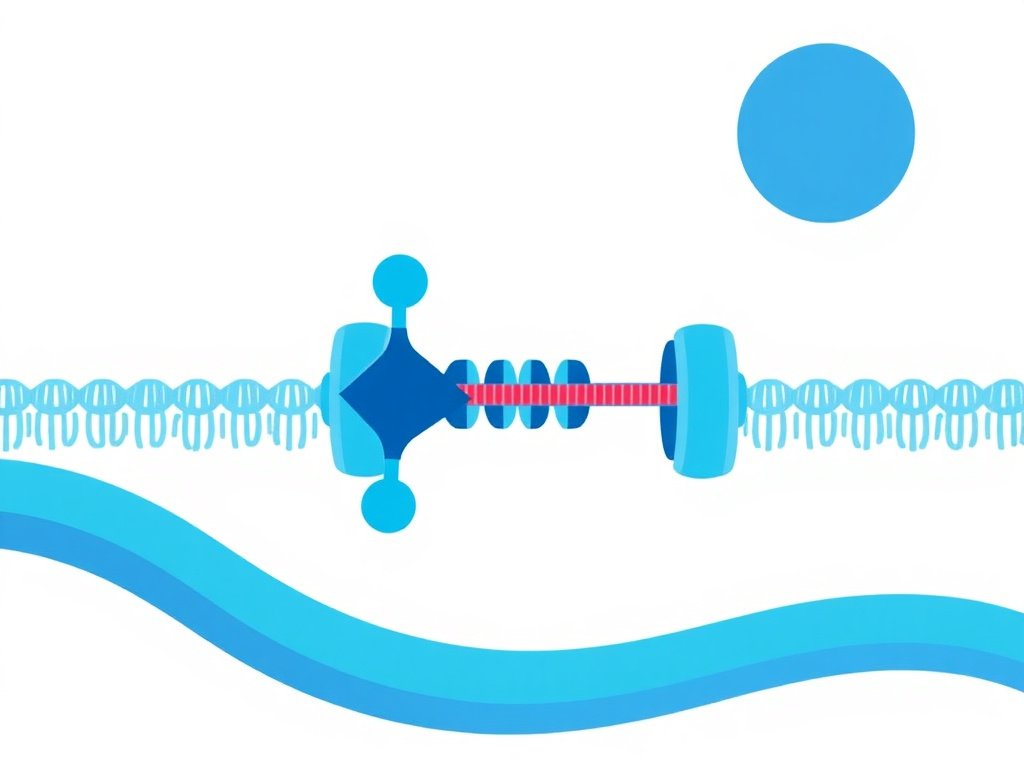
Microneedle Delivery
Dissolving microneedle patches represent one of the most promising delivery technologies for SNAP-8. These patches contain arrays of tiny needles (typically 200-800 micrometers in length) made from water-soluble polymers with the peptide incorporated into the needle matrix. When applied to the skin, the microneedles pierce through the stratum corneum and dissolve in the aqueous environment of the viable epidermis, releasing the peptide payload directly below the barrier layer.
The 2024 clinical study using SNAP-8-loaded dissolving microneedle patches demonstrated significant improvements in periorbital wrinkle depth and skin elasticity over four weeks, suggesting that this delivery approach can meaningfully enhance clinical outcomes compared to passive topical application. However, microneedle patches add considerable cost and complexity compared to conventional serums and creams.
Iontophoresis and Sonophoresis
Device-assisted delivery methods can also improve SNAP-8 penetration. Iontophoresis uses a mild electrical current to drive charged molecules through the skin. Since SNAP-8 carries a net charge at physiological pH (due to the glutamic acid, arginine, and aspartic acid residues), it is amenable to iontophoretic delivery. Home-use galvanic devices marketed for skincare application could potentially be used with SNAP-8 serums, though specific clinical validation with this peptide is limited.
Sonophoresis uses low-frequency ultrasound to temporarily disrupt the stratum corneum lipid structure, creating pathways for enhanced penetration. Professional-grade ultrasound devices used in aesthetic clinics could be paired with SNAP-8 application to improve delivery. Again, specific clinical data for this combination is sparse, but the general principle of ultrasound-enhanced peptide delivery is well-established in the transdermal drug delivery literature.
Formulation Stability Considerations
Peptide stability in formulation is a critical concern. SNAP-8 can degrade through several pathways including hydrolysis of peptide bonds, oxidation of the methionine residue, and enzymatic degradation by skin-derived proteases. Formulators should take several precautions. Maintain formulation pH between 5.0 and 6.5, which provides both good skin compatibility and peptide stability. Include an antioxidant such as tocopherol (vitamin E) or ascorbyl palmitate to protect the methionine residue from oxidation. Store finished products at room temperature or below, away from direct sunlight and heat. Consider preservative systems that do not interact with the peptide (phenoxyethanol and ethylhexylglycerin are generally compatible).
The acetyl group on SNAP-8's N-terminus and the amide on the C-terminus provide important stability advantages over unmodified peptides. These modifications block the most common enzymatic degradation sites, extending the peptide's shelf life in formulation and its residence time in the skin after application.
Practical Application Protocol
For consumers using SNAP-8 serums at home, the following application protocol is recommended based on the available evidence and formulation science principles.
Cleanse the face thoroughly to remove makeup, sunscreen, sebum, and environmental debris that could impede peptide penetration. If using an AHA exfoliant, apply it before the SNAP-8 serum and allow it to absorb for one to two minutes. Apply the SNAP-8 serum to targeted areas (forehead, between brows, around eyes, around mouth) using gentle patting motions rather than rubbing, which can mechanically disrupt the product film. Allow the serum to absorb for three to five minutes before applying subsequent skincare products. Apply twice daily, morning and evening, for at least 28 consecutive days before evaluating results. Follow with moisturizer and, in the morning, broad-spectrum sunscreen.
The dosing calculator on FormBlends can help determine the optimal concentration and application frequency based on individual skin type and goals.
The Role of Skin Preparation in SNAP-8 Efficacy
The condition of the skin at the time of SNAP-8 application significantly influences the peptide's ability to penetrate and reach its target. Several skin preparation strategies can meaningfully enhance results.
Thorough cleansing is the foundation. Residual makeup, sunscreen, sebum, and environmental pollutants create a physical barrier on the skin surface that impedes peptide contact with the stratum corneum. Double cleansing (oil-based cleanser followed by a water-based cleanser) in the evening ensures a clean surface for peptide absorption. In the morning, a gentle water-based cleanser is typically sufficient.
Exfoliation reduces the thickness of the stratum corneum, decreasing the distance that SNAP-8 must traverse. Chemical exfoliants (AHAs and BHAs) are preferred over physical scrubs because they provide more uniform and controlled exfoliation without the risk of micro-tears that could cause irritation. Lactic acid (5-10%) and mandelic acid (5-10%) are particularly well-suited because their larger molecular sizes relative to glycolic acid produce effective exfoliation with lower irritation potential. Regular exfoliation two to three times per week can improve SNAP-8 penetration by 30-50% according to in vitro permeation studies on similar hydrophilic molecules.
Hydration status matters as well. Well-hydrated skin is more permeable than dehydrated skin because the swelling of corneocytes in the stratum corneum slightly opens the intercellular spaces through which peptides can pass. Applying SNAP-8 to slightly damp skin (after cleansing but before the skin is completely dry) can enhance initial absorption. Humectants like hyaluronic acid and glycerin in the SNAP-8 formulation help maintain this hydration effect during the absorption period.
Warm skin is more permeable than cold skin because heat increases the fluidity of the intercellular lipids in the stratum corneum. Applying SNAP-8 after a warm shower or after using a warm compress on the face can temporarily enhance penetration. However, excessive heat should be avoided as it can degrade the peptide.
DIY Formulation Guide for Advanced Users
For consumers and practitioners interested in creating custom SNAP-8 formulations, the following guide provides practical instructions based on formulation science principles.
Basic SNAP-8 Serum (10% concentration)
Start with a pre-formulated water-based serum base containing hyaluronic acid (0.5-1%), a humectant (glycerin 3-5%), and a preservative system (phenoxyethanol 0.5-1% with ethylhexylglycerin 0.3-0.5%). Adjust the pH to 5.5-6.0 using citric acid or triethanolamine. Add SNAP-8 stock solution (the commercially available peptide solution, typically supplied at a defined concentration) at a rate that yields a final peptide concentration of 10% in the finished product. Mix gently to avoid introducing air bubbles. Package in an opaque or dark glass bottle with a dropper or pump dispenser to minimize light and air exposure.
Enhanced Penetration SNAP-8 Serum
To the basic serum formulation, add niacinamide (2-4%), which acts as a mild penetration enhancer while providing its own anti-aging benefits (improved skin barrier function, reduced pigmentation, increased ceramide production). Alternatively, include a small amount of dimethyl sulfoxide (DMSO) at 1-2% for enhanced penetration, though DMSO has a distinctive odor that some users find objectionable. Propylene glycol at 5-10% is another option that provides both penetration enhancement and humectant properties.
Multi-Peptide Anti-Wrinkle Serum
Combine SNAP-8 (5-10%) with Argireline (5%) and Leuphasyl (3%) in a water-based serum for a triple-mechanism neurotransmitter-modulating approach. Add Matrixyl 3000 (palmitoyl tripeptide-1 and palmitoyl tetrapeptide-7, 3-5%) for collagen stimulation. This combination addresses dynamic wrinkles through multiple pathways while simultaneously promoting structural repair. Note that palmitoyl peptides have some surfactant-like properties that may slightly enhance penetration of the hydrophilic SNAP-8 and Argireline components.
Quality Control for SNAP-8 Products
Whether purchasing pre-made products or creating custom formulations, several quality control considerations are important for ensuring product effectiveness and safety.
Verify the peptide source. Legitimate SNAP-8 suppliers provide certificates of analysis (CoAs) documenting peptide purity (typically 95%+ by HPLC), amino acid composition, and the absence of microbial contamination. The certificate should confirm the correct eight-amino-acid sequence (Ac-Glu-Glu-Met-Gln-Arg-Arg-Ala-Asp-NH2) and the correct molecular weight.
Check the concentration. Some products list "SNAP-8" on the ingredient label but at concentrations too low to produce meaningful clinical effects. Products that list the actual percentage concentration (e.g., "10% SNAP-8") provide more transparency than those that simply include "SNAP-8" somewhere in the ingredient list without concentration disclosure. Under INCI (International Nomenclature of Cosmetic Ingredients) rules, ingredients are listed in descending order of concentration, so the position of acetyl octapeptide-3 in the ingredient list provides a rough indication of its relative concentration in the formula.
Assess formulation quality. A well-formulated SNAP-8 serum should be clear to slightly opalescent, free of visible particles, and have a near-neutral pH (5.5-6.5). Discoloration (yellowing or browning) may indicate peptide degradation, particularly oxidation of the methionine residue. An unusual odor could indicate microbial contamination or chemical degradation. Products that have been stored at high temperatures or in direct sunlight may have reduced efficacy even if they appear normal.
Formulation Best Practices
- Use water-based vehicles (serums, gels) rather than oil-based formulations
- Target 5-10% SNAP-8 concentration for meaningful clinical effects
- Maintain pH between 5.0 and 6.5 for stability and compatibility
- Pair with gentle AHA exfoliants 2-3 times per week to enhance penetration
- Include antioxidants to protect the methionine residue from oxidation
- Store at room temperature away from heat and light
- Consider liposomal or nanoparticle delivery for professional formulations
- Verify certificates of analysis and peptide purity when sourcing ingredients
- Use opaque packaging with pumps or droppers to minimize oxidation exposure
Combination with Other Peptides
SNAP-8 addresses only one dimension of skin aging: the dynamic wrinkles caused by repeated muscle contraction. A truly comprehensive anti-aging protocol must also address collagen loss, elastin degradation, oxidative damage, pigmentation changes, and barrier function decline. Combining SNAP-8 with peptides that target these other aging pathways creates a multi-pronged approach with a strong mechanistic rationale.
Understanding the Multi-Mechanism Rationale
Wrinkles can be broadly classified into two categories: dynamic wrinkles and static wrinkles. Dynamic wrinkles are caused by muscle contraction and appear with facial expression. They include crow's feet, forehead lines, and frown lines. These are the wrinkles that SNAP-8 targets. Static wrinkles, in contrast, are caused by structural degradation of the dermis. They are present even when the face is at rest and include nasolabial folds, marionette lines, and fine crepey lines across the cheeks. Static wrinkles are driven primarily by collagen and elastin loss, not by muscle contraction.
A protocol that addresses only dynamic wrinkles (with SNAP-8 alone) will miss the static component of aging. Conversely, a protocol that addresses only collagen stimulation (with signal peptides alone) will miss the mechanical driver of expression lines. The combination approach addresses both simultaneously, and the effects are additive or even greater than additive because reducing the mechanical stress of muscle contraction also allows newly synthesized collagen to remain intact longer, rather than being repeatedly compressed and stretched.
SNAP-8 + Matrixyl (Palmitoyl Pentapeptide-4)
Matrixyl (palmitoyl pentapeptide-4, also known as Matrixyl 3000 in its advanced version containing palmitoyl tripeptide-1 and palmitoyl tetrapeptide-7) is one of the most well-studied signal peptides for collagen stimulation. The original Matrixyl mimics the structure of a collagen fragment, signaling to fibroblasts that collagen has been broken down and needs to be replaced. This triggers increased production of collagen types I, III, and IV, as well as fibronectin and hyaluronic acid.
Clinical data on Matrixyl shows approximately 18% reduction in fold depth and 37% reduction in fold thickness after regular application, primarily through collagen-stimulating rather than muscle-relaxing mechanisms. Combining SNAP-8 (which reduces the mechanical cause of dynamic wrinkles) with Matrixyl (which rebuilds the structural foundation of the skin) creates a two-pronged approach where each peptide complements the other's mechanism without interference.
From a formulation standpoint, SNAP-8 and Matrixyl are compatible in the same product. Both are water-soluble peptides that maintain stability at similar pH ranges. Many commercial multi-peptide serums already combine these two ingredients, and there is no evidence of chemical interaction or degradation when they are co-formulated.
| Peptide | Class | Primary Target | Wrinkle Type Addressed | Clinical Effect Range |
|---|---|---|---|---|
| SNAP-8 | Neurotransmitter inhibitor | SNARE complex / SNAP-25 | Dynamic (expression) | 25-63% wrinkle depth reduction |
| Matrixyl | Signal peptide | Fibroblast collagen production | Static (structural) | 18% fold depth, 37% fold thickness reduction |
| GHK-Cu | Carrier peptide | Collagen, elastin, GAG synthesis | Static + healing | 33-56% wrinkle volume reduction |
| Argireline | Neurotransmitter inhibitor | SNARE complex / SNAP-25 | Dynamic (expression) | 17-30% wrinkle depth reduction |
| Leuphasyl | Neurotransmitter inhibitor | Enkephalin pathway | Dynamic (expression) | Enhances Argireline/SNAP-8 by ~25% |
SNAP-8 + GHK-Cu (Copper Peptide)
GHK-Cu (glycyl-L-histidyl-L-lysine copper complex) is a naturally occurring tripeptide-copper complex that declines with age. It is classified as a carrier peptide because it delivers copper ions to tissues, where copper serves as a cofactor for enzymes involved in collagen cross-linking (lysyl oxidase), antioxidant defense (superoxide dismutase), and wound healing. But GHK-Cu's effects extend well beyond simple copper delivery; the peptide activates over 4,000 genes involved in tissue repair, collagen synthesis, elastin production, and glycosaminoglycan production.
Clinical studies on GHK-Cu have demonstrated 33-56% wrinkle volume reduction versus control, along with improvements in skin thickness, elasticity, and clarity. The peptide also has anti-inflammatory and antioxidant properties that protect existing collagen from degradation. When combined with SNAP-8, GHK-Cu addresses the static structural component of aging while SNAP-8 addresses the dynamic mechanical component. The two peptides work through entirely different pathways with no overlapping targets, making them ideal combination partners.
However, formulators should note that GHK-Cu can interact with certain ingredients. Copper ions can catalyze oxidation reactions, so high concentrations of ascorbic acid (vitamin C) should be avoided in the same formulation. The copper complex can also cause color changes in formulations containing certain preservatives or chelating agents. For maximum flexibility, many practitioners recommend using SNAP-8 and GHK-Cu in separate products applied at different times of day rather than in the same formulation. Topical GHK-Cu formulations are available specifically designed for this purpose.
SNAP-8 + Leuphasyl
Leuphasyl (pentapeptide-18) is another neurotransmitter-inhibiting peptide, but it works through a different mechanism than SNAP-8. While SNAP-8 targets the SNARE complex directly, Leuphasyl mimics the sequence of enkephalin, an endogenous opioid peptide that activates enkephalin receptors on the presynaptic nerve terminal. Activation of these receptors reduces calcium influx, which in turn reduces the probability of vesicle fusion and neurotransmitter release.
The combination of SNAP-8 and Leuphasyl is particularly interesting because they target two different steps in the same pathway. SNAP-8 reduces the efficiency of the fusion machinery itself, while Leuphasyl reduces the calcium signal that triggers the machinery. Studies suggest that combining these two peptides produces an additive or greater-than-additive effect, with some data indicating that Leuphasyl can enhance the anti-wrinkle effect of SNAP-8 (or Argireline) by approximately 25%.
SNAP-8 + Epithalon
Epithalon (Epitalon, AEDG peptide) is a synthetic tetrapeptide that activates telomerase, the enzyme responsible for maintaining telomere length in cells. While its primary application is in longevity research, the peptide's ability to extend the replicative lifespan of cells, including fibroblasts and keratinocytes, makes it a theoretically interesting combination with SNAP-8 for comprehensive anti-aging. By keeping skin cells biologically younger and more productive, Epithalon could potentially enhance the skin's ability to produce collagen and maintain structural integrity, complementing SNAP-8's wrinkle-reducing effect from the muscle-modulation side.
SNAP-8 + NAD+ Precursors
NAD+ (nicotinamide adenine dinucleotide) is a coenzyme essential for cellular energy production, DNA repair, and activation of sirtuins, a family of proteins involved in cellular stress response and longevity. NAD+ levels decline significantly with age, and topical NAD+ supplementation or its precursors (nicotinamide, NMN) can support mitochondrial function in skin cells. Combining SNAP-8 with topical NAD+ or its precursors creates a protocol that addresses both the mechanical cause of wrinkles (muscle contraction) and the cellular energy decline that impairs the skin's self-repair capacity.
SNAP-8 + Antioxidant Peptides
SS-31 (elamipretide) is a mitochondria-targeted antioxidant peptide that concentrates in the inner mitochondrial membrane, protecting against oxidative damage at the primary site of reactive oxygen species (ROS) production. Oxidative stress is a major driver of skin aging, accelerating collagen breakdown, elastin fragmentation, and DNA damage in skin cells. While SS-31's primary research focus is on systemic aging and mitochondrial disorders, its antioxidant properties complement SNAP-8's muscle-modulating activity by addressing the oxidative component of skin aging.
Building a Complete Anti-Aging Peptide Protocol
For those seeking a comprehensive peptide-based anti-aging regimen, the following protocol combines SNAP-8 with complementary peptides in a practical daily routine.
Morning Routine
- Cleanse with a gentle, pH-balanced cleanser
- Apply SNAP-8 serum (5-10%) to expression-prone areas: forehead, between brows, crow's feet, around mouth
- Apply Matrixyl or multi-peptide serum (containing signal peptides for collagen stimulation) to the full face
- Apply moisturizer with hyaluronic acid
- Apply broad-spectrum SPF 30+ sunscreen (critical for preventing UV-induced collagen breakdown)
Evening Routine
- Double cleanse if wearing makeup/sunscreen
- Apply AHA exfoliant 2-3 times per week (to thin stratum corneum and enhance peptide penetration)
- Apply SNAP-8 serum to expression-prone areas
- Apply GHK-Cu topical to the full face (kept separate from SNAP-8 serum to avoid formulation incompatibilities)
- Apply heavier moisturizer or facial oil to seal in active ingredients
Weekly Addition
- SNAP-8-loaded microneedle patches applied to crow's feet or forehead 1-2 times per week for enhanced delivery (if available)
The Biohacking Hub provides additional protocol suggestions for advanced users combining multiple peptide modalities. And the free assessment tool can help identify which specific combination of peptides best matches your individual aging concerns and goals.
SNAP-8 + DSIP (Delta Sleep-Inducing Peptide)
Sleep quality has a direct impact on skin aging. During deep sleep, growth hormone secretion peaks, driving collagen synthesis and cellular repair throughout the body, including in the skin. DSIP (Delta Sleep-Inducing Peptide) is a neuropeptide that promotes slow-wave (deep) sleep when administered exogenously. While DSIP is used systemically (not topically), combining a DSIP-supported sleep optimization protocol with topical SNAP-8 creates a comprehensive approach that addresses wrinkle formation through muscle modulation during the day while maximizing the skin's natural repair capacity during sleep.
SNAP-8 + AOD-9604 and Weight Management Peptides
Skin aging and body composition are interconnected. Rapid weight loss can lead to sagging skin and accentuated facial wrinkles due to volume loss. AOD-9604 and the GLP-1 class of weight management compounds, including semaglutide and tirzepatide, can produce significant weight loss that sometimes manifests as accelerated facial aging (colloquially called "Ozempic face"). For individuals using these weight management compounds, topical SNAP-8 combined with collagen-stimulating peptides can help mitigate the appearance of facial wrinkles that become more pronounced as subcutaneous fat volume decreases.
Peptide Stacking: Timing and Sequencing Considerations
When using multiple peptides in a skincare routine, the order of application matters. The general principle is to apply products from thinnest consistency to thickest, and from lowest pH to highest pH. For a typical multi-peptide regimen, the recommended sequence would be as follows.
After cleansing, apply any acid-based products first (AHA/BHA exfoliants) and allow them to work for one to two minutes. Next, apply water-based peptide serums in order of their molecular weight, with smaller peptides first (they penetrate more readily) and larger peptides second. This means SNAP-8 and Argireline serums should go on before thicker Matrixyl formulations. Allow each serum to absorb for two to three minutes before applying the next. Finally, apply moisturizer and sunscreen to seal in the active ingredients and provide occlusive protection.
For peptides that are best used separately from SNAP-8 (such as GHK-Cu), split the routine between morning and evening. Use SNAP-8 and compatible peptides in the morning, and GHK-Cu and copper-containing formulations in the evening, or vice versa. This ensures each peptide has optimal conditions for absorption without the risk of chemical interactions between incompatible ingredients.
Future Directions in Multi-Peptide Anti-Aging
The cosmetic peptide field is moving toward increasingly sophisticated multi-peptide approaches. AI-assisted peptide design, a trend projected to gain momentum from 2025 through the next decade, could yield new peptides with enhanced skin penetration, improved binding affinity for SNARE complex components, or the ability to simultaneously target multiple aging pathways through a single molecular entity.
Personalized peptide protocols based on genetic skin typing and AI-driven skin analysis are another emerging trend. Rather than applying the same multi-peptide formulation to every skin type, future approaches may use genetic testing and machine learning to identify which combination of peptides will produce the best results for each individual's specific aging pattern, skin thickness, enzyme profile, and barrier characteristics.
Clean beauty integration is also shaping the cosmetic peptide market, with over 58% of new peptide product launches in recent years featuring clean-label certifications. This trend is pushing formulators to develop effective peptide delivery systems using naturally derived excipients and sustainably sourced ingredients, a challenge that benefits from the inherently biocompatible nature of peptide actives like SNAP-8.
The Biohacking Hub covers the latest developments in peptide science and anti-aging technology, including emerging compounds and protocol innovations.
Combination Compatibility Notes
SNAP-8 is compatible with most cosmetic peptides in the same formulation. The primary exception is direct mixing with high concentrations of GHK-Cu in the same product, where copper ions may catalyze oxidation. Use separate products or different application times for SNAP-8 and GHK-Cu. Avoid combining with strong acidic products (pH below 3.5) that could hydrolyze the peptide bonds. Always introduce new peptide combinations gradually to monitor for any irritation, particularly when using penetration enhancers.
Safety Profile

SNAP-8 has an excellent safety profile established through formal toxicological testing, clinical trials, and over a decade of widespread consumer use in cosmetic products globally. No serious adverse events have been attributed to topical SNAP-8 application in any published study, and the peptide's physicochemical properties inherently limit the potential for systemic toxicity.
Toxicological Assessment
Formal toxicological evaluation of SNAP-8 has included multiple standard safety endpoints. Acute oral toxicity testing classified the peptide as non-toxic by the oral route, with no adverse effects observed at the highest doses tested. This is relevant because accidental ingestion (for example, from a lip-area product) would not be expected to cause harm.
Primary skin irritation testing, using standardized patch test protocols, found no irritation potential at concentrations used in cosmetic formulations. The peptide did not produce erythema, edema, or other signs of irritation when applied under occlusion (covered) for 24-48 hours, which is a more severe challenge than normal open application.
Sensitization testing, which evaluates the potential for the compound to cause allergic contact dermatitis with repeated exposure, also returned negative results. SNAP-8 is not classified as a skin sensitizer. This means that repeated, long-term use is not expected to induce an allergic reaction, even in individuals with sensitive skin.
Ocular irritation testing (important for products applied near the eyes, where SNAP-8 is most commonly used) showed no eye irritation potential. This supports the safety of applying SNAP-8 products to the periorbital area for crow's feet treatment.
Systemic Safety: Why Topical SNAP-8 Cannot Cause Botox-Like Effects
One of the most common concerns consumers express about SNAP-8 is whether it could cause botulinum toxin-like systemic effects if absorbed in large amounts. The answer is no, for several independent reasons.
First, SNAP-8 is a competitive inhibitor, not an enzyme. Even if large amounts reached the neuromuscular junction, the peptide would compete with SNAP-25 for binding sites in a concentration-dependent, immediately reversible manner. It cannot cleave or destroy SNARE proteins. The moment the peptide concentration decreases (as it is metabolized or diffuses away), normal SNARE complex assembly resumes immediately.
Second, systemic absorption of topically applied SNAP-8 is negligible. The peptide's hydrophilic nature and large molecular size (over 1,000 Daltons) severely limit passive diffusion through the stratum corneum. FDA research on the related peptide acetyl hexapeptide-8 found only 0.22% of the applied dose penetrated human skin at all, and the vast majority remained in the stratum corneum rather than reaching the systemic circulation. Any SNAP-8 that does enter the bloodstream would be rapidly degraded by circulating peptidases (enzymes that break down peptides), further reducing systemic exposure.
Third, even if, hypothetically, significant amounts of SNAP-8 reached the systemic circulation, the peptide would need to cross the blood-nerve barrier and accumulate at neuromuscular junctions throughout the body to produce systemic effects. There is no mechanism by which a simple octapeptide could accomplish this targeted delivery, unlike botulinum toxin, which has evolved specific receptor-binding and internalization machinery over millions of years of bacterial evolution.
Clinical Trial Safety Data
Across all published clinical trials and open-label studies of SNAP-8 products, the safety findings have been remarkably consistent. No serious adverse events have been reported. The most frequently observed side effect is mild, temporary itching or tingling at the application site, which typically resolves within minutes and is attributed to the sensory effect of the peptide solution on the skin rather than to any irritation or allergic response.
In the primary manufacturer study (10% SNAP-8, 28 days, twice-daily application), no subjects withdrew due to adverse events, and no treatment-related skin reactions were documented. The 14-week multi-peptide serum study similarly reported good tolerability with no serious adverse events. The microneedle patch study noted minor transient erythema at the patch application site, which is expected with any microneedle device and resolved within hours; this effect was attributed to the physical puncture of the microneedles rather than to SNAP-8 itself.
Special Populations and Contraindications
Sensitive Skin
SNAP-8 is generally well-tolerated by individuals with sensitive skin. The peptide itself is non-irritating, though some product formulations may contain other ingredients (fragrances, preservatives, surfactants) that could trigger reactions in sensitive individuals. For those with sensitive skin, choosing fragrance-free, minimally formulated SNAP-8 products and performing a patch test before full-face application is recommended.
Rosacea and Inflammatory Skin Conditions
There is no evidence that SNAP-8 worsens rosacea or other inflammatory skin conditions. However, individuals with active inflammatory skin disease should exercise caution with any new topical product and consult a dermatologist before adding SNAP-8 to their regimen. The mechanical action of applying any product to inflamed skin can potentially exacerbate irritation regardless of the product's inherent irritation potential.
Pregnancy and Breastfeeding
No specific studies have evaluated SNAP-8 use during pregnancy or breastfeeding. Given the extremely low systemic absorption of topically applied SNAP-8, the theoretical risk is minimal. However, in the absence of specific safety data, the standard precautionary principle applies: pregnant and breastfeeding women should consult their healthcare provider before using any new cosmetic ingredient, including SNAP-8. This is the same advice given for most cosmetic peptides and active ingredients.
Concurrent Use with Injectable Botulinum Toxin
Some consumers use topical SNAP-8 products between botulinum toxin injection appointments. There is no known interaction between topical SNAP-8 and injected botulinum toxin. They target the same molecular pathway through different mechanisms, and the amounts of SNAP-8 reaching the neuromuscular junction via topical application are too small to meaningfully alter the effect of injected botulinum toxin. Nevertheless, patients receiving botulinum toxin injections should inform their injector about all topical products they use, including peptide serums.
Individuals with Neuromuscular Disorders
Patients with neuromuscular junction disorders such as myasthenia gravis, Lambert-Eaton syndrome, or congenital myasthenic syndromes have impaired neuromuscular transmission. While topical SNAP-8 is extremely unlikely to have any systemic neuromuscular effect due to negligible absorption, these patients should consult their neurologist before using any product designed to modulate neurotransmitter release, as a precautionary measure.
Long-Term Safety Considerations
SNAP-8 has been available in commercial cosmetic products since the mid-2000s, providing over 15 years of real-world safety data from millions of consumer applications. No pattern of delayed or cumulative adverse effects has emerged during this period. This long track record of consumer use provides strong epidemiological evidence supporting the peptide's long-term safety, even in the absence of formal multi-year controlled studies.
From a theoretical standpoint, long-term use of a neurotransmitter-modulating peptide could raise concerns about adaptive changes at the neuromuscular junction, similar to the "tolerance" or "rebound" effects seen with some drugs. However, the amount of SNAP-8 reaching the neuromuscular junction via topical application is far too small to produce the sustained, high-concentration exposure that would be needed to drive adaptive changes. The competitive inhibition mechanism also works against tolerance development: there is no receptor desensitization or down-regulation involved, just a physical competition for binding sites.
Product Quality and Purity
As with any active ingredient, the safety of a SNAP-8 product depends partly on the quality and purity of the peptide used. Reputable suppliers provide SNAP-8 at defined purity levels (typically 95% or higher by HPLC analysis) with certificates of analysis documenting the absence of significant impurities. Consumers should purchase SNAP-8 products from established suppliers that provide transparency about their sourcing and quality testing.
Counterfeit or adulterated cosmetic peptides are a concern in the broader market, particularly for products sold through unregulated online channels. These products may contain less peptide than claimed, different peptides than labeled, or contaminants that could cause adverse reactions. Purchasing from established brands and suppliers with verifiable quality certifications mitigates this risk.
Regulatory Status
SNAP-8 is classified as a cosmetic ingredient rather than a drug in most jurisdictions. In the United States, it falls under the FDA's cosmetic regulations and does not require pre-market approval. In the European Union, it is listed in the CosIng database of permitted cosmetic ingredients. These classifications reflect the ingredient's excellent safety profile and its intended use for cosmetic (appearance) benefits rather than therapeutic (disease treatment) claims.
This classification means that SNAP-8 products do not need to demonstrate efficacy to the standard required of drugs, which is one reason the clinical evidence base, while positive, is less extensive than what would exist for a pharmaceutical product. However, the classification also means that SNAP-8 products are subject to the general safety requirements for cosmetics, including compliance with good manufacturing practices and the requirement to be safe for their intended use under normal or reasonably foreseeable conditions of use.
For further reading on safety profiles of related compounds, reports on BPC-157, TB-500, and Thymosin Alpha-1 provide comparative safety analyses of other bioactive peptides used in research and clinical settings.
Important Safety Notes
- Always perform a patch test on the inner forearm 24-48 hours before first facial application
- Discontinue use and consult a dermatologist if persistent redness, swelling, or irritation develops
- Store SNAP-8 products according to manufacturer instructions to maintain purity and stability
- Inform your injector if using SNAP-8 alongside botulinum toxin treatments
- Consult a healthcare provider before use during pregnancy, breastfeeding, or if you have a neuromuscular disorder
- Purchase from reputable suppliers with documented quality testing and certificates of analysis
SNARE Complex Molecular Biology: Understanding SNAP-8's Target
SNAP-8's anti-wrinkle mechanism depends entirely on its interaction with the SNARE complex, the molecular machinery responsible for neurotransmitter release at every synapse in the body. Understanding this target at the molecular level reveals both why SNAP-8 works and why its topical application produces a milder, safer effect than botulinum toxin's complete SNARE destruction.
The SNARE Complex: Molecular Anatomy
The SNARE (Soluble N-ethylmaleimide-sensitive factor Attachment protein REceptor) complex is the core fusion machinery that enables synaptic vesicles to merge with the presynaptic membrane and release their neurotransmitter contents into the synaptic cleft. The complex consists of three proteins that assemble into a remarkably stable four-helix bundle:
- Syntaxin-1: A 288-amino-acid transmembrane protein anchored in the presynaptic plasma membrane. It contributes one alpha-helix to the SNARE bundle. Syntaxin exists in a "closed" conformation (where its N-terminal regulatory domain folds back to block the SNARE motif) and an "open" conformation (where the SNARE motif is available for complex assembly). The transition from closed to open is regulated by the accessory protein Munc18-1 and is a key control point for neurotransmitter release.
- SNAP-25 (Synaptosome-Associated Protein of 25 kDa): A 206-amino-acid protein that contributes two alpha-helices to the four-helix bundle. SNAP-25 is anchored to the presynaptic membrane through palmitoylation (covalent attachment of fatty acid chains) rather than a transmembrane domain. It is this protein that SNAP-8 mimics and competitively inhibits.
- Synaptobrevin-2 (VAMP2): A 116-amino-acid transmembrane protein anchored in the synaptic vesicle membrane. It contributes one alpha-helix to the bundle. When the vesicle approaches the presynaptic membrane, synaptobrevin's SNARE motif engages with syntaxin and SNAP-25 in a "zippering" process that brings the vesicle and plasma membranes into close proximity, ultimately driving membrane fusion.
The assembly process begins at the N-terminal ends of the SNARE motifs and proceeds toward the C-terminal membrane-anchoring domains in a zipper-like fashion. This directional zippering generates mechanical force (approximately 35 pN, as measured by optical trapping experiments) that pulls the vesicle membrane toward the plasma membrane, overcoming the electrostatic repulsion between two lipid bilayers and driving membrane fusion. The process takes approximately 0.3-1 millisecond from calcium influx to vesicle fusion, making it one of the fastest protein-mediated membrane events in biology.
How SNAP-8 Disrupts SNARE Assembly
SNAP-8 (acetyl octapeptide-3) is an eight-amino-acid peptide whose sequence mimics the N-terminal portion of the SNAP-25 SNARE motif. By presenting this mimetic sequence to the other SNARE proteins (syntaxin-1 and synaptobrevin-2), SNAP-8 competes with endogenous SNAP-25 for binding sites within the assembling SNARE complex.
When SNAP-8 successfully intercepts a SNARE assembly event, it creates a non-functional or partially functional complex that cannot generate the full mechanical force needed for efficient vesicle fusion. The result is reduced neurotransmitter release (acetylcholine at the neuromuscular junction), leading to attenuated muscle contraction. The key word is "attenuated" rather than "blocked" - SNAP-8 doesn't prevent all SNARE assembly events, it merely reduces the probability of successful assembly at any given synapse.
This competitive inhibition mechanism explains several of SNAP-8's clinical characteristics. First, its effects are concentration-dependent: higher concentrations of SNAP-8 compete more effectively with SNAP-25, producing greater neurotransmitter release reduction. Second, its effects are reversible: once SNAP-8 molecules dissociate from partially assembled complexes, normal SNARE assembly can resume. Third, its effects are gradual: it takes time for enough SNAP-8 to accumulate at the neuromuscular junction to produce a measurable reduction in muscle contraction. This contrasts sharply with botulinum toxin, which enzymatically cleaves SNAP-25 (destroying it irreversibly) and produces complete, rapid, and long-lasting paralysis.
Why Topical Delivery Limits Potency (and Increases Safety)
The neuromuscular junctions that SNAP-8 needs to reach are located in the deep dermis and hypodermis, approximately 1-4 mm below the skin surface. Topically applied SNAP-8 must penetrate the stratum corneum (the skin's outermost barrier layer), traverse the epidermis and dermis, and reach the neuromuscular junction in sufficient concentration to compete effectively with SNAP-25.
The stratum corneum is the primary barrier. This 10-15 micrometer layer of dead, keratinized cells with intercellular lipid lamellae is designed to prevent the penetration of foreign substances. Peptides, being hydrophilic and relatively large molecules (SNAP-8 has a molecular weight of approximately 1,075 Da), are inherently poor penetrators of the stratum corneum. Studies estimate that only 0.1-5% of topically applied SNAP-8 actually reaches the target depth, with the exact penetration depending on the vehicle formulation, skin hydration, and application area.
This limited penetration is actually a feature, not a bug. It means that topical SNAP-8 can never produce the dramatic, complete paralysis that botulinum toxin achieves through direct injection. The small amount that reaches the neuromuscular junction produces a subtle reduction in muscle contraction - enough to soften wrinkle appearance but not enough to freeze facial expression or produce the "mask-like" look that can occur with overzealous botulinum toxin use. This self-limiting penetration provides a built-in safety margin that makes SNAP-8 appropriate for over-the-counter cosmetic use.
Comparison with Other SNARE-Targeting Peptides
SNAP-8 is not the only cosmetic peptide that targets the SNARE complex. Several related peptides use similar or complementary mechanisms:
Argireline (Acetyl hexapeptide-3): The six-amino-acid predecessor to SNAP-8, targeting the same N-terminal region of SNAP-25. SNAP-8 was developed as an extension of Argireline's sequence, with the additional two amino acids providing improved SNARE complex binding affinity. In vitro studies show SNAP-8 inhibiting catecholamine release approximately 10-20% more effectively than Argireline at equivalent concentrations, though clinical studies comparing the two head-to-head are limited.
Leuphasyl (Pentapeptide-18): This peptide mimics the natural analgesic enkephalin and binds to opioid receptors on the presynaptic nerve terminal. By activating these receptors, it reduces calcium influx through voltage-gated calcium channels, which in turn reduces calcium-triggered SNARE complex activation and neurotransmitter release. Leuphasyl operates upstream of SNAP-8's target, and the two can be combined for enhanced effect through two independent mechanisms of neurotransmitter release reduction.
SYN-AKE (Dipeptide diaminobutyroyl benzylamide diacetate): This synthetic tripeptide mimics the mechanism of waglerin-1, a venom peptide from the temple viper (Tropidolaemus wagleri). Unlike SNAP-8, which targets the presynaptic SNARE complex, SYN-AKE acts on the postsynaptic nicotinic acetylcholine receptor as a competitive antagonist. By blocking the receptor rather than reducing transmitter release, SYN-AKE provides a complementary anti-wrinkle mechanism. Combining SNAP-8 (less transmitter release) with SYN-AKE (reduced receptor response) addresses both sides of the neuromuscular junction for potentially complementary wrinkle reduction.
Advanced Combination Protocols and Comprehensive Anti-Aging Applications
SNAP-8's targeted action on expression wrinkles addresses only one dimension of facial aging. A comprehensive anti-aging strategy combines neuromuscular modulation with extracellular matrix repair, antioxidant protection, and skin barrier enhancement. The peptide market now offers options for each of these dimensions, creating opportunities for multi-peptide protocols that address aging from multiple angles simultaneously.
The Multi-Dimensional Aging Problem
Visible facial aging results from at least five distinct processes occurring simultaneously:
- Dynamic wrinkles: Lines formed by repeated muscle contraction (crow's feet, forehead lines, frown lines). These are SNAP-8's primary target.
- Static wrinkles and skin laxity: Loss of dermal collagen, elastin, and hyaluronic acid that produces lines visible even at rest, plus overall skin sagging. These require matrix-rebuilding approaches.
- Uneven pigmentation: Sun damage-induced melanin dysregulation producing age spots, melasma, and uneven skin tone. These require melanogenesis modulation or depigmenting agents.
- Texture changes: Roughness, enlarged pores, and reduced skin smoothness from impaired keratinocyte turnover and damaged barrier function.
- Volume loss: Subcutaneous fat pad atrophy and bone resorption that change facial contours, producing hollow cheeks, sunken eyes, and jowling.
SNAP-8 addresses only the first category. For a truly comprehensive approach, it needs to be combined with agents targeting the other four.
SNAP-8 + GHK-Cu: Neuromuscular + Matrix Repair
The combination of SNAP-8 with GHK-Cu (copper peptide) is one of the most well-matched peptide pairings in cosmetic dermatology. SNAP-8 reduces the muscle contractions that create wrinkles, while GHK-Cu rebuilds the dermal matrix (collagen, elastin, glycosaminoglycans) that determines whether those wrinkles become permanently etched into the skin.
GHK-Cu's matrix repair effects include stimulation of collagen types I and III synthesis (increasing dermal thickness and firmness), upregulation of elastin production (improving skin snap-back and resilience), enhanced glycosaminoglycan synthesis (improving hydration and plumpness), and activation of lysyl oxidase (improving collagen cross-linking for structural integrity). When dynamic wrinkle formation is simultaneously reduced by SNAP-8, the newly synthesized collagen and elastin are better able to restore smooth skin texture because they aren't being continuously stressed by repetitive muscle contraction.
Practical implementation typically involves a morning application of SNAP-8 serum (applied first to clean, dry skin to maximize penetration) followed by a GHK-Cu-containing product. Some formulations combine both peptides, though stability considerations may favor sequential application. Evening routines can reverse the order, prioritizing GHK-Cu's regenerative effects during the overnight repair window. Consistent daily use for 8-12 weeks is typically needed before visible improvement in both wrinkle depth and skin quality is apparent.
Integration with Systemic Anti-Aging Peptides
While SNAP-8 and GHK-Cu address aging at the skin level, systemic anti-aging peptides target the underlying biological processes that drive aging across all tissues. Combining topical cosmetic peptides with systemic anti-aging approaches creates a comprehensive strategy that addresses aging from both the outside in and the inside out.
Epithalon, administered subcutaneously or intravenously, activates telomerase to help maintain telomere length in dividing cells, including the dermal fibroblasts responsible for collagen and elastin production. Fibroblasts with longer telomeres maintain their proliferative capacity and matrix-producing function longer than those with shortened telomeres. By supporting fibroblast replicative potential systemically, epithalon could enhance the skin's endogenous capacity for matrix renewal, complementing the external signals provided by GHK-Cu.
NAD+ supplementation supports sirtuin-dependent cellular maintenance, DNA repair, and mitochondrial function in skin cells and throughout the body. Age-related NAD+ decline impairs the skin's repair capacity, reduces the energy available for collagen synthesis, and compromises the antioxidant defense system. Restoring NAD+ levels could amplify the skin's response to topical peptide signals by ensuring that the cellular machinery needed to execute those signals is adequately fueled.
FOXO4-DRI promotes the clearance of senescent cells - cells that have permanently stopped dividing but continue to secrete inflammatory factors (the senescence-associated secretory phenotype, or SASP) that damage surrounding tissue. In the skin, senescent fibroblasts and keratinocytes contribute to chronic low-grade inflammation, impaired wound healing, and accelerated matrix degradation. Clearing these dysfunctional cells could improve the tissue environment in which topical peptides like SNAP-8 and GHK-Cu operate, potentially enhancing their effectiveness.
The mitochondrial peptide SS-31 targets the inner mitochondrial membrane, improving electron transport chain efficiency and reducing reactive oxygen species production. Since oxidative stress is a primary driver of skin photoaging (UV-induced damage), reducing mitochondrial ROS production could slow the accumulation of UV damage and preserve skin quality alongside topical anti-aging interventions. Visit the biohacking research hub for comprehensive information on systemic anti-aging strategies.
SNAP-8 and GLP-1 Therapy: Addressing Weight Loss-Related Skin Changes
An increasingly relevant clinical scenario involves patients experiencing rapid facial volume loss from GLP-1 receptor agonist-mediated weight loss. The phenomenon colloquially known as "Ozempic face" refers to the aged, gaunt appearance that can develop when significant facial fat is lost quickly. This facial volume loss accelerates the appearance of wrinkles, skin laxity, and hollow contours that were previously masked by subcutaneous fat.
For patients on semaglutide, tirzepatide, or other weight loss therapies who are concerned about facial aging, a proactive topical peptide protocol can help mitigate some of these changes. SNAP-8 addresses the dynamic wrinkles that become more visible as facial fat diminishes. GHK-Cu supports dermal collagen and elastin to help maintain skin firmness even as subcutaneous volume decreases. And the combination provides a non-invasive approach that can be initiated alongside weight loss therapy rather than waiting until weight loss is complete.
Of course, topical peptides cannot replace lost facial volume. For significant volume loss, injectable fillers (hyaluronic acid, calcium hydroxyapatite) remain the gold standard for volumetric restoration. But the combination of topical peptides for skin quality with injectable fillers for volume creates a comprehensive facial rejuvenation approach that addresses the full spectrum of weight loss-related facial changes. Our GLP-1 research hub covers this topic in more detail.
Special Populations and Considerations for SNAP-8 Use
Individuals with neuromuscular disorders: Conditions like myasthenia gravis, Lambert-Eaton syndrome, and amyotrophic lateral sclerosis involve impaired neuromuscular transmission. While topical SNAP-8's limited systemic absorption makes clinically significant neuromuscular effects highly unlikely, the theoretical mechanism of action (reduced neurotransmitter release) is the same pathway that is already compromised in these conditions. Patients with neuromuscular disorders should consult their neurologist before using SNAP-8 or any SNARE-targeting cosmetic peptide.
Concurrent botulinum toxin use: Patients who receive botulinum toxin injections (Botox, Dysport, Xeomin) may wonder about combining these treatments with topical SNAP-8. Since both target the SNARE complex (botulinum toxin by cleaving SNAP-25, SNAP-8 by competitive inhibition), there's a theoretical potential for additive effect in treated areas. In practice, botulinum toxin's effect is so complete in the injected muscles that SNAP-8 is unlikely to add meaningful additional wrinkle reduction in those specific areas. SNAP-8 is better used in areas not treated with botulinum toxin, or as a maintenance treatment between injection sessions to extend the duration of wrinkle improvement.
Skin sensitivity and reactive skin types: SNAP-8 itself has excellent tolerability, with irritation rates below 1% in clinical studies. However, the vehicle formulations in which it's delivered (serums, creams) may contain other ingredients (fragrances, preservatives, alpha-hydroxy acids) that can irritate sensitive skin. Individuals with rosacea, eczema, or reactive skin should start with a SNAP-8 product in a simple, fragrance-free vehicle and patch-test on the inner forearm for 48 hours before applying to the face.
Pregnancy and breastfeeding: No studies have evaluated SNAP-8 safety during pregnancy or lactation. Given the minimal systemic absorption of topical peptides, significant fetal or infant exposure is unlikely. However, the standard precautionary principle applies: most dermatologists recommend avoiding cosmetic peptides during pregnancy and breastfeeding unless specifically cleared by an obstetrician or dermatologist. Use our personalized assessment to discuss your specific situation and identify appropriate anti-aging approaches for your needs.
The Science of Wrinkle Formation: Why Prevention Matters More Than Treatment
To truly appreciate what SNAP-8 can and cannot do, it helps to understand the biology of how wrinkles form in the first place. Wrinkles are not simply the result of aging. They are the physical consequence of specific biological processes that can be individually targeted, and SNAP-8's mechanism addresses one of the most important of these processes.
Dynamic vs. Static Wrinkles: Two Different Problems
The distinction between dynamic and static wrinkles is fundamental to understanding cosmetic anti-aging strategies. Dynamic wrinkles are visible only during facial expression: they appear when you smile, frown, or squint, and disappear when your face is at rest. Static wrinkles are visible even when your face is completely relaxed, and they represent permanent structural changes in the skin that no amount of muscle relaxation can reverse.
Every static wrinkle starts as a dynamic wrinkle. The progression from dynamic to static follows a predictable biological sequence: repeated muscle contraction in the same location (e.g., crow's feet from squinting) creates repeated mechanical stress on the overlying skin. This stress causes collagen fiber fragmentation and elastin fiber degradation in the areas of maximum mechanical deformation. Over time, the cumulative matrix damage becomes permanent, creating a fold or crease that persists even without muscle contraction.
This progression has a crucial implication: interventions that reduce dynamic wrinkle formation (like SNAP-8 and botulinum toxin) are most valuable when started early, before significant matrix damage has occurred. Preventing the repeated mechanical stress that converts dynamic wrinkles to static wrinkles is inherently more effective than trying to reverse established matrix damage after the fact. This is why many dermatologists now recommend starting neuromuscular-modulating treatments in the late 20s or early 30s, before deep static wrinkles have formed.
The Role of UV Damage in Wrinkle Formation
Photoaging (UV-induced skin aging) is responsible for approximately 80% of visible facial aging in Caucasian skin, and a significant proportion in all skin types. UV radiation damages skin through two primary mechanisms: direct DNA damage (causing mutations and triggering apoptosis) and reactive oxygen species (ROS) generation (which degrades collagen and elastin through activation of matrix metalloproteinases).
UV exposure upregulates MMP-1 (interstitial collagenase), MMP-3 (stromelysin), and MMP-9 (gelatinase B), which collectively degrade collagen types I and III, the primary structural proteins of the dermis. A single episode of minimal erythemal dose (MED) sun exposure increases dermal MMP activity for 24-48 hours. Chronic UV exposure produces a sustained elevation of MMP activity that progressively depletes dermal collagen, leading to the thinning, wrinkling, and laxity characteristic of photoaged skin.
SNAP-8 doesn't directly address photoaging. Its mechanism (neuromuscular modulation) is specific to dynamic wrinkles caused by muscle contraction, not the diffuse skin damage caused by UV radiation. This is why SNAP-8 should always be part of a broader anti-aging strategy that includes UV protection (daily sunscreen SPF 30+), antioxidant protection (vitamin C, vitamin E, niacinamide), and matrix repair (GHK-Cu, retinoids). Without adequate UV protection, the collagen-preserving benefits of reducing dynamic wrinkle stress are largely offset by ongoing UV-driven collagen destruction.
Glycation: The Overlooked Aging Factor
Advanced glycation end-products (AGEs) are formed when sugars react non-enzymatically with proteins, creating permanent cross-links that stiffen and discolor tissue. In the skin, collagen glycation produces the yellowing, loss of elasticity, and increased fragility that characterize aged skin. Glycation cross-links are irreversible, meaning that once collagen is glycated, the only way to remove the damage is to replace the entire collagen fiber through the natural turnover process (which takes 15-20 years for dermal collagen).
While SNAP-8 doesn't directly address glycation, it reduces the mechanical stress that, combined with glycation-stiffened collagen, produces the deepest and most persistent wrinkles. Glycated collagen is less flexible than native collagen, meaning that muscle contraction forces are distributed over a narrower area (the fiber can't deform and spread the load), creating deeper creases in glycated skin. By reducing the magnitude of muscle contraction, SNAP-8 reduces the stress concentration effect in glycated skin, potentially slowing the progression from dynamic to static wrinkles even in individuals with significant glycation damage.
Building a Complete Anti-Aging Protocol
An evidence-based, comprehensive anti-aging protocol addresses each of the major aging mechanisms through targeted interventions:
- UV protection (prevention): Daily broad-spectrum sunscreen SPF 30+, sun-protective clothing, and UV-filtering accessories. This is the single most effective anti-aging intervention.
- Antioxidant protection (prevention): Topical vitamin C (L-ascorbic acid 10-20%), vitamin E, and niacinamide to neutralize UV-generated ROS and reduce MMP activation.
- Neuromuscular modulation (prevention and treatment): SNAP-8 (topical, daily) and/or botulinum toxin (injectable, every 3-4 months) to reduce dynamic wrinkle formation and prevent progression to static wrinkles.
- Matrix repair (treatment): GHK-Cu (topical or injectable) to stimulate collagen and elastin synthesis, improve cross-linking quality, and upregulate matrix repair genes. Retinoids (tretinoin 0.025-0.05%) for additional collagen stimulation and keratinocyte turnover acceleration.
- Systemic support: Epithalon for telomere maintenance in skin fibroblasts, NAD+ for cellular energy support, and adequate dietary protein, vitamins, and minerals to provide the raw materials for skin renewal.
- Hydration and barrier support: Hyaluronic acid (topical and/or oral), ceramides, and appropriate moisturization to maintain the stratum corneum barrier and prevent transepidermal water loss.
Each of these interventions targets a different mechanism, and their effects are additive rather than redundant. A protocol that includes all of them will produce better results than any single intervention, no matter how effective that intervention is in isolation. Visit the biohacking research hub for comprehensive anti-aging protocol guidance and the latest research on cosmetic peptides.
Consumer Guide: Evaluating SNAP-8 Products, Reading Labels, and Avoiding Common Pitfalls
The cosmetic peptide market has exploded in recent years, and SNAP-8 has become one of the most widely marketed anti-aging peptide ingredients. Unfortunately, the gap between marketing claims and product reality is often substantial, and consumers face a confusing field of formulations, concentrations, delivery systems, and quality levels. This section provides practical guidance for evaluating SNAP-8 products and building an effective anti-aging protocol.
Understanding Concentration Claims
SNAP-8 concentration is the single most important factor determining product efficacy, yet it's also where consumer confusion is greatest. The clinical studies demonstrating wrinkle reduction used SNAP-8 at concentrations of 3-10% (w/v) of the active peptide. Many commercial products claim to contain SNAP-8 but include it at concentrations far below the clinically tested range, sometimes as low as 0.001-0.01%, a level that is unlikely to produce meaningful neuromuscular effects.
The confusion is compounded by the way manufacturers list SNAP-8 on product labels. SNAP-8 is sold to cosmetic formulators as a solution, typically a 3% or 5% solution of the peptide in water. A product that contains 10% of the "SNAP-8 solution" (which is itself 5% peptide) actually contains only 0.5% active peptide. Both the product containing 10% solution and the product containing 0.5% active peptide would be accurately labeled, but they describe the same product in very different-sounding terms.
To evaluate a SNAP-8 product effectively, look for the actual peptide concentration, not the solution concentration. Products that list "10% SNAP-8" without specifying whether this refers to the active peptide or the commercial solution are being deliberately ambiguous. Reputable formulations will specify the active peptide concentration or provide enough information (INCI listing, concentration documentation) for the consumer to calculate it.
Formulation Quality Indicators
Beyond concentration, several formulation factors affect SNAP-8's ability to reach its target (the neuromuscular junction in the dermis) and produce measurable effects.
pH matters because SNAP-8 is an octapeptide with multiple ionizable groups, and its stability and skin penetration are pH-dependent. Formulations in the pH range of 5.0-6.5 generally provide the best balance of peptide stability and skin compatibility. Products at very low pH (below 4.0, as sometimes seen in products that combine SNAP-8 with alpha hydroxy acids) may degrade the peptide, while very high pH (above 7.5) may impair skin penetration.
The vehicle (the cream, serum, or solution that carries the peptide) determines how effectively SNAP-8 penetrates the stratum corneum, the barrier layer of dead skin cells that prevents most molecules from reaching the living dermis. Serums with penetration-enhancing ingredients (certain lipids, surfactants, or nanoparticle carriers) deliver more active peptide to the target site than simple aqueous solutions. Liposomal delivery systems, which encapsulate the peptide in lipid vesicles that fuse with cell membranes, represent the most advanced delivery technology currently available for topical peptide applications.
Packaging also matters for peptide stability. SNAP-8, like most peptides, is susceptible to oxidative degradation when exposed to air and photodegradation when exposed to light. Products packaged in airless pump dispensers with opaque containers provide better protection than jar-style packaging that exposes the product to air and light with each use. Amber or dark-colored containers offer additional light protection. If a SNAP-8 product comes in a clear glass jar, the formulator either doesn't understand peptide stability or doesn't care about it, and neither is a good sign.
Building a SNAP-8-Centered Anti-Aging Routine
SNAP-8 works best as part of a multi-step routine that addresses different aging mechanisms simultaneously. A well-designed SNAP-8 routine follows a logical layering sequence that maximizes the delivery and efficacy of each active ingredient.
Step one is cleansing: a gentle, pH-balanced cleanser that removes dirt and excess oil without stripping the skin's natural lipid barrier. Harsh cleansers (high pH, strong surfactants) damage the stratum corneum and paradoxically reduce the penetration of subsequent active ingredients by creating an irregular, inflamed skin surface.
Step two is the SNAP-8 serum: applied to clean, slightly damp skin to maximize absorption. The serum should be patted gently into expression areas (forehead, crow's feet, between the eyebrows, around the mouth) rather than rubbed, as aggressive rubbing can disrupt the liquid crystal structure of the stratum corneum. Allow 2-3 minutes for the serum to absorb before applying subsequent products.
Step three is a GHK-Cu serum or cream for collagen stimulation. While SNAP-8 addresses the neuromuscular component of wrinkling (preventing the muscle contractions that cause dynamic wrinkles), GHK-Cu addresses the dermal matrix component (stimulating collagen and elastin synthesis to maintain skin firmness and resilience). These two mechanisms are complementary, and addressing both provides better results than addressing either alone.
Step four is moisturizer: a barrier-supporting cream containing ceramides, hyaluronic acid, and/or squalane to maintain skin hydration and barrier function. Adequate hydration plumps the skin, reducing the visibility of fine lines, and a healthy barrier prevents transepidermal water loss that accelerates skin aging.
Step five (morning only) is sunscreen: SPF 30+ broad-spectrum protection. UV radiation is the single largest contributor to skin aging, and no amount of peptide therapy can overcome the damage caused by unprotected sun exposure. A well-formulated sunscreen applied daily provides more anti-aging benefit than any other single intervention.
When to Consider Injectable Alternatives
Topical SNAP-8 has real but modest effects compared to injectable botulinum toxin. For consumers with mild to moderate expression lines who prefer a non-invasive approach, topical SNAP-8 at clinically relevant concentrations can produce visible improvements over 4-8 weeks of consistent use. For consumers with deep, established wrinkles (static wrinkles that are visible even when the face is at rest), topical SNAP-8 alone is unlikely to produce dramatic improvement, and injectable treatments may be more appropriate.
The combination approach, using botulinum toxin injections for the most prominent expression areas and topical SNAP-8 for maintenance and for areas where injection is impractical, represents the most comprehensive strategy for neuromuscular-mediated wrinkle management. Some dermatologists report that patients using topical SNAP-8 between botulinum toxin sessions can extend the interval between injection appointments, reducing both cost and the total dose of neurotoxin used over time.
For a broader anti-aging strategy that addresses not just wrinkles but also skin quality, tone, and cellular health, Epithalon supports telomere maintenance in skin cells, NAD+ enhances cellular energy production that fuels skin repair processes, and GHK-Cu provides the collagen-stimulating complement to SNAP-8's neuromuscular modulation. The peptide research hub offers detailed guidance on combining these approaches into a cohesive anti-aging protocol.
SNAP-8 for Sensitive Skin, Rosacea-Prone Skin, and Post-Procedure Recovery
One of SNAP-8's most underappreciated advantages is its exceptional tolerability profile. Unlike retinoids (which cause irritation, peeling, and photosensitivity), alpha hydroxy acids (which cause stinging and exfoliation), or vitamin C at high concentrations (which can irritate sensitive skin), SNAP-8 produces its anti-wrinkle effects without causing any significant skin irritation, inflammation, or barrier disruption. This makes it one of the few evidence-based anti-aging actives that is genuinely appropriate for every skin type, including the most sensitive and reactive skin.
Rosacea-Prone Skin
Patients with rosacea face a frustrating dilemma: their skin shows signs of aging just like everyone else's, but many standard anti-aging ingredients (retinoids, AHAs, high-concentration vitamin C, certain preservatives) trigger rosacea flares characterized by redness, burning, stinging, and papulopustular eruptions. This limits the anti-aging toolkit available to rosacea patients and often leaves them choosing between treating their rosacea and treating their wrinkles.
SNAP-8 offers rosacea patients an anti-wrinkle option that doesn't compromise their rosacea management. The peptide's mechanism of action, inhibiting SNARE complex assembly at the neuromuscular junction, has no interaction with the vascular and inflammatory pathways that drive rosacea. Clinical studies and extensive post-market experience have not identified rosacea exacerbation as a side effect of topical SNAP-8 at any concentration tested.
For rosacea patients building an anti-aging routine, SNAP-8 can serve as the primary wrinkle-targeting active, paired with other well-tolerated ingredients like niacinamide (which has anti-inflammatory properties that actually help rosacea while also providing anti-aging benefits), azelaic acid (which treats rosacea papules and reduces hyperpigmentation), and gentle moisturizers with barrier-repairing ceramides. This combination provides meaningful anti-aging benefits without the rosacea triggers that most traditional anti-aging routines include.
Post-Procedure Applications
Patients recovering from cosmetic procedures such as laser resurfacing, chemical peels, microneedling, or ablative treatments face a recovery period during which the skin is compromised and highly reactive. Traditional anti-aging actives are contraindicated during this period because they can impair wound healing, cause severe irritation on damaged skin, or produce unpredictable effects when applied to skin with disrupted barrier function.
SNAP-8's non-irritating mechanism makes it potentially suitable for earlier introduction during post-procedure recovery than most other anti-aging actives. While retinoids might not be reintroduced until 2-4 weeks after a medium-depth peel, SNAP-8 could theoretically be resumed once the acute wound healing phase is complete (typically 5-7 days for most procedures), allowing patients to maintain their neuromuscular wrinkle prevention without risking their recovery.
When combined with wound-healing peptides during the recovery period, the post-procedure protocol can actually accelerate both healing and anti-aging benefit. GHK-Cu applied topically during the proliferative phase of wound healing (days 3-14) stimulates collagen synthesis, promotes angiogenesis, and modulates the inflammatory response in ways that support faster, higher-quality healing. The combination of GHK-Cu for healing support and SNAP-8 for neuromuscular wrinkle prevention creates a two-pronged approach that keeps the anti-aging program active even during the recovery period when most other actives are paused.
Visit the peptide research hub for comprehensive information on cosmetic peptide applications, including combination protocols and product selection guidance for different skin types and concerns.
SNAP-8 Research Frontiers: Beyond Wrinkles to Broader Dermatological Applications
While SNAP-8's primary commercial application is cosmetic wrinkle reduction, ongoing research is exploring whether its neuromuscular modulating mechanism could be therapeutically valuable in several dermatological and medical contexts beyond aesthetic anti-aging. These emerging applications, though still largely in the preclinical or early clinical stage, could significantly expand SNAP-8's therapeutic relevance.
Hyperhidrosis (Excessive Sweating)
Botulinum toxin injection is an established treatment for focal hyperhidrosis (excessive sweating of the palms, axillae, or feet) because sweat gland activation depends on the same cholinergic neurotransmitter release mechanism that botulinum toxin inhibits. The SNARE complex mediates the release of acetylcholine from sympathetic cholinergic nerve terminals onto eccrine sweat glands, and disrupting SNARE complex assembly reduces acetylcholine release and consequently sweat production.
SNAP-8, which inhibits SNARE complex assembly through competitive binding to the SNAP-25 protein, could theoretically provide a topical alternative to botulinum toxin injections for focal hyperhidrosis. The advantage would be significant: topical application versus painful injections into the palms or soles, where the density of nerve endings makes injection particularly uncomfortable. However, the challenge is the same as for cosmetic applications: achieving adequate transdermal delivery of the peptide to reach the cholinergic nerve terminals that innervate sweat glands.
The sweat glands in the axillae (armpits) are located in the dermis, at a depth accessible to topical delivery with appropriate penetration-enhancing formulations. Iontophoresis, which uses a mild electrical current to drive charged molecules through the skin, could potentially enhance SNAP-8 delivery to the target depth. Early feasibility studies exploring iontophoretic delivery of SNARE-modulating peptides for hyperhidrosis are in progress, though published results are not yet available.
Scar Prevention and Wound Healing
Hypertrophic scars and keloids involve excessive collagen deposition and tissue contraction mediated partly by myofibroblast activity. Myofibroblasts contain contractile proteins that generate the tension responsible for wound contraction and, when dysregulated, for excessive scar contracture. While the molecular mechanism differs from skeletal muscle contraction (involving smooth muscle actin rather than skeletal muscle actin), the cellular processes share some common features, including calcium-dependent vesicle fusion events that SNARE complex-modulating peptides might influence.
Botulinum toxin injections have shown some efficacy in reducing hypertrophic scar formation and scar-related pain, suggesting that neuromuscular modulation at the wound site can influence scar outcomes. Whether a topical SNARE-modulating peptide like SNAP-8 could provide similar benefits through non-invasive application is an open question that warrants investigation. The potential to reduce scarring through a topical peptide applied during the wound healing phase would have significant clinical value in surgical, burn, and trauma contexts.
Muscle Spasticity and Chronic Pain
Muscle spasticity, the involuntary, velocity-dependent increase in muscle tone that occurs in conditions like cerebral palsy, multiple sclerosis, stroke, and spinal cord injury, is a major source of disability and pain for millions of patients worldwide. Botulinum toxin injections are a mainstay of spasticity management, but they require repeated injections, carry the risk of excessive weakness, and are expensive.
A topical SNARE-modulating peptide that could reduce muscle overactivity without the injection-related issues of botulinum toxin would represent a significant advance in spasticity management. The challenge is delivery: skeletal muscles are located deep to the skin and subcutaneous tissue, and transdermal delivery of peptides to deep muscle is extremely difficult. However, for superficial muscles (facial muscles, hand intrinsics, foot muscles) where the muscle is close to the skin surface, topical delivery might be feasible with appropriate formulation technology.
Chronic pain conditions involving muscle tension, including tension-type headache, temporomandibular joint disorder (TMD), and myofascial pain syndrome, could also potentially benefit from topical neuromuscular modulation. These conditions involve sustained muscle contraction that generates pain through mechanical compression of nociceptors and metabolic waste accumulation in the contracted muscle. Reducing muscle contraction through topical SNARE modulation could provide pain relief without systemic medication side effects.
These research directions remain speculative, and clinical data supporting SNAP-8 for any of these non-cosmetic applications are limited. However, the biological rationale is sound, and the success of botulinum toxin across these diverse applications validates the therapeutic potential of SNARE complex modulation as a general approach. For current evidence-based applications, GHK-Cu provides complementary skin health benefits through collagen stimulation and wound healing promotion, while Epithalon supports cellular longevity through telomere maintenance. The peptide research hub tracks emerging research across the full spectrum of cosmetic and therapeutic peptide applications.
SNAP-8 for Male Skin: Addressing the Unique Characteristics of Male Skin Aging
The cosmetic peptide conversation has traditionally been dominated by products marketed toward women, but male skin aging follows distinct patterns that deserve dedicated attention. Men are increasingly interested in evidence-based anti-aging approaches, and SNAP-8 offers advantages that align well with the male demographic's preference for effective, low-maintenance skincare solutions.
How Male Skin Ages Differently
Male skin differs from female skin in several clinically relevant ways that affect aging patterns and treatment approaches. Male skin is approximately 20-25% thicker than female skin, with a denser dermis containing more collagen and elastin fibers. This thickness provides a structural advantage that delays the onset of fine lines, which is why men often appear to age more slowly than women in their 20s and 30s. However, when male skin does develop wrinkles, they tend to be deeper and more sharply defined than female wrinkles, because the thicker dermis creates deeper creases when it finally succumbs to repeated muscle contraction and sun damage.
Testosterone stimulates sebaceous gland activity, giving male skin higher sebum production and larger pores. This higher oiliness provides some natural protection against transepidermal water loss and creates a slightly more hydrated skin surface, but it also increases the risk of acne and may affect the penetration kinetics of topical products. SNAP-8 formulated in a lighter, less emollient vehicle (serum rather than cream) may be better suited to male skin, providing the active peptide without the heavy moisturizing base that many men find uncomfortably greasy.
Facial hair creates both challenges and opportunities for topical peptide delivery. The hair follicle is actually one of the most effective routes for transdermal peptide delivery, as the follicular canal bypasses the stratum corneum barrier and provides direct access to the dermis where the neuromuscular junction targets are located. Men who maintain facial stubble (short, actively growing hair) may actually experience better SNAP-8 penetration than clean-shaven men or men with full beards, because the actively growing follicle creates a more permeable follicular pathway than dormant or fully developed hair follicles.
The Forehead and Frown Line Problem
Forehead horizontal lines and glabellar frown lines (the "11" lines between the eyebrows) are the most common wrinkle concerns among men seeking cosmetic treatment. These wrinkles develop from repeated contraction of the frontalis muscle (forehead) and the corrugator and procerus muscles (glabella). Male facial expressions tend to involve more forceful contraction of these muscles compared to female expressions, which, combined with the thicker male dermis, creates the deep, sharply defined wrinkles characteristic of male facial aging.
SNAP-8 is particularly well-suited for these male-pattern wrinkles because the forehead and glabella are large, flat areas where consistent topical application is straightforward, the target muscles are relatively superficial (close to the skin surface), making transdermal delivery more feasible, and the wrinkle pattern is dominated by dynamic (expression-related) lines rather than static (structural) lines, which is the wrinkle type that SNAP-8's mechanism specifically addresses.
For men who are reluctant to consider botulinum toxin injections (due to needle aversion, social stigma around male cosmetic procedures, or concerns about the "frozen" appearance that poorly administered Botox can produce), topical SNAP-8 provides a non-invasive alternative that requires no clinic visits, no needles, and no visible treatment effects that might prompt questions from coworkers or friends. The gradual onset of SNAP-8's effects (developing over 4-8 weeks rather than appearing overnight like Botox) produces natural-looking wrinkle reduction that others perceive as looking "well-rested" rather than "had work done."
For men interested in a comprehensive but still minimal anti-aging approach, a three-product routine consisting of a SNAP-8 serum (for expression line prevention), a GHK-Cu moisturizer (for collagen support and skin quality), and a daily SPF 30+ sunscreen (for UV damage prevention) covers the major aging mechanisms with a total time commitment of under 3 minutes per day. This minimalist approach is realistic for men who are willing to invest in their appearance but not willing to adopt an elaborate 10-step skincare routine. Visit the peptide research hub for more on GHK-Cu and other anti-aging peptide protocols.
Lifestyle Factors That Accelerate or Slow Skin Aging: Maximizing SNAP-8's Effectiveness
Topical peptides like SNAP-8 work within the broader context of lifestyle factors that either accelerate or slow skin aging. Understanding these factors helps users maximize the return on their skincare investment by ensuring that external and internal conditions support rather than undermine the anti-aging effects of their topical peptide protocol.
UV Radiation: The Single Largest Aging Factor
Photoaging, the premature aging of skin caused by chronic UV exposure, is responsible for an estimated 80-90% of visible facial aging in fair-skinned individuals. UV radiation damages skin through multiple mechanisms: direct DNA damage (pyrimidine dimer formation), generation of reactive oxygen species that oxidize cellular lipids and proteins, activation of matrix metalloproteinases (MMPs) that degrade collagen and elastin, suppression of collagen synthesis by fibroblasts, and chronic inflammation that drives ongoing tissue remodeling.
SNAP-8 addresses one specific aging mechanism (neuromuscular-mediated wrinkle formation) but does not protect against photoaging. Without adequate sun protection, the collagen and elastin framework that SNAP-8 is helping to preserve is being simultaneously degraded by UV-induced MMP activation. This is why dermatologists universally recommend daily sunscreen as the foundation of any anti-aging program: it protects the structural substrate that all other anti-aging interventions depend upon.
Sleep and Circadian Rhythm
Skin repair and regeneration processes peak during sleep, driven by circadian variations in cell proliferation, collagen synthesis, and growth hormone secretion. Growth hormone, which reaches its peak during deep slow-wave sleep, stimulates fibroblast proliferation and collagen synthesis in the dermis. Melatonin, the circadian hormone that rises in darkness, has antioxidant and anti-inflammatory properties that protect skin from oxidative damage.
Chronic sleep deprivation accelerates skin aging through multiple mechanisms: reduced growth hormone-mediated repair, increased cortisol (which inhibits collagen synthesis and promotes collagen degradation), impaired skin barrier function, and chronic low-grade inflammation. Studies comparing habitual short sleepers (less than 6 hours) to adequate sleepers (7-8 hours) have found significantly more signs of skin aging in the short-sleep group, including more fine lines, uneven pigmentation, reduced elasticity, and slower recovery from UV-induced erythema.
For SNAP-8 users specifically, adequate sleep supports the peptide's effectiveness by ensuring that the dermal matrix SNAP-8 is protecting through reduced muscle contraction is being actively maintained and repaired during the overnight period. Applying SNAP-8 before bed allows the peptide to work during the sleep period when skin repair activity is highest and when facial muscles are relatively relaxed (though some individuals clench or compress their facial muscles during sleep, contributing to "sleep wrinkles" that SNAP-8 may help mitigate).
Nutrition and Skin Health
Dietary factors directly affect the skin's structural proteins, antioxidant defenses, and inflammatory state. Vitamin C is essential for collagen synthesis (as a cofactor for prolyl hydroxylase and lysyl hydroxylase, the enzymes that stabilize collagen's triple helix structure). Vitamin E protects cell membranes from lipid peroxidation. Zinc supports wound healing and immune function. Omega-3 fatty acids reduce inflammatory signaling in the skin. Adequate protein intake provides the amino acid substrate for collagen and elastin synthesis.
Conversely, high-glycemic diets promote glycation, the non-enzymatic binding of sugar molecules to collagen and elastin that cross-links these proteins and reduces their flexibility. Glycated collagen (measured as advanced glycation end-products, or AGEs) is stiffer, more brittle, and more resistant to normal turnover than non-glycated collagen. Over time, glycation accumulation contributes to the loss of skin elasticity and firmness that characterizes aging skin.
A diet that supports SNAP-8's anti-aging effects includes adequate protein (0.8-1.0 g/kg daily minimum), abundant colorful fruits and vegetables (providing vitamin C, vitamin E, and phytonutrient antioxidants), omega-3-rich foods (fatty fish, walnuts, flaxseed), and limited refined sugar and processed carbohydrates (to minimize glycation). For individuals interested in comprehensive metabolic and longevity optimization alongside their topical anti-aging protocol, NAD+ supports cellular energy metabolism, MOTS-c enhances mitochondrial function, and GHK-Cu provides direct collagen stimulation from within. The peptide research hub offers integrated anti-aging strategies combining topical and systemic approaches.
Seasonal Considerations and Environmental Factors in SNAP-8 Efficacy
An often overlooked aspect of topical peptide performance is how environmental conditions affect both product stability and skin penetration. SNAP-8 is a water-soluble peptide that relies on adequate skin hydration for optimal absorption through the stratum corneum, and its efficacy can vary meaningfully across seasons, climates, and skincare routines. Understanding these variables helps users maximize their results and avoid the frustration of inconsistent outcomes that sometimes leads to premature discontinuation of an otherwise effective product.
Humidity plays a direct role in SNAP-8 penetration. In humid environments (above 60% relative humidity), the stratum corneum maintains higher water content, which expands the aqueous channels between corneocytes and facilitates passive diffusion of hydrophilic peptides like SNAP-8. In dry environments, particularly during winter months or in arid climates, the stratum corneum dehydrates and becomes a more formidable barrier. Users in these conditions often notice reduced efficacy from the same product and concentration that worked well during more humid months. The practical solution is straightforward: applying SNAP-8 serums to slightly damp skin (immediately after cleansing, before the skin fully dries) and following with an occlusive moisturizer can significantly improve peptide delivery by maintaining local hydration at the application site.
Temperature stability is another consideration for maintaining product integrity. SNAP-8 in aqueous solution is reasonably stable at room temperature for the typical use period of a consumer product (8-12 weeks), but extended exposure to temperatures above 40 degrees Celsius can accelerate peptide degradation through hydrolysis of peptide bonds. This means that leaving a SNAP-8 serum in a hot car, near a sunny window, or in a steamy bathroom for extended periods can reduce its potency over time. Refrigeration extends stability but is not strictly necessary for normal use timelines. Products from reputable suppliers like FormBlends are formulated with pH optimization and appropriate preservative systems that maximize shelf stability under normal storage conditions.
Frequently Asked Questions
References
- Blanes-Mira C, Clemente J, Jodas G, et al. A synthetic hexapeptide (Argireline) with antiwrinkle activity. International Journal of Cosmetic Science. 2002;24(5):303-310. DOI: 10.1046/j.1467-2494.2002.00153.x
- Lipotec SA. SNAP-8 Technical Dossier: Cosmetic Peptide Solution for Wrinkle Reduction. Barcelona, Spain: Lipotec Active Ingredients; 2005.
- Sudhof TC, Rothman JE. Membrane fusion: grappling with SNARE and SM proteins. Science. 2009;323(5913):474-477. DOI: 10.1126/science.1161748
- Jahn R, Scheller RH. SNAREs - engines for membrane fusion. Nature Reviews Molecular Cell Biology. 2006;7(9):631-643. DOI: 10.1038/nrm2002
- Rizo J, Rosenmund C. Synaptic vesicle fusion. Nature Structural & Molecular Biology. 2008;15(7):665-674. DOI: 10.1038/nsmb.1450
- Verderio C, Pozzi D, Bharat V, et al. Expression and function of SNAP-25 as a universal SNARE component in GABAergic neurons. Journal of Neuroscience. 2006;26(30):7826-7838. DOI: 10.1523/JNEUROSCI.1866-06.2006
- Sollner T, Whiteheart SW, Brunner M, et al. SNAP receptors implicated in vesicle targeting and fusion. Nature. 1993;362(6418):318-324. DOI: 10.1038/362318a0
- Washbourne P, Thompson PM, Bhatt M, et al. Genetic ablation of the t-SNARE SNAP-25 distinguishes mechanisms of neuroexocytosis. Nature Neuroscience. 2002;5(1):19-26. DOI: 10.1038/nn783
- Rizo J, Sudhof TC. The membrane fusion enigma: SNAREs, Sec1/Munc18 proteins, and their accomplices - guilty as charged? Annual Review of Cell and Developmental Biology. 2012;28:279-308. DOI: 10.1146/annurev-cellbio-101011-155818
- Lupo MP. Cosmeceutical peptides. Dermatologic Surgery. 2005;31:832-836. DOI: 10.1111/j.1524-4725.2005.31728
- Zhang L, Falla TJ. Cosmeceuticals and peptides. Clinics in Dermatology. 2009;27(5):485-494. DOI: 10.1016/j.clindermatol.2009.05.013
- Errante F, Ciofini S, Ferrazzano L, et al. Cosmeceutical peptides in the framework of sustainable chemistry. International Journal of Molecular Sciences. 2021;22(16):8573. DOI: 10.3390/ijms22168573
- Park J, Jung H, Jang B, et al. Method development for acetyl octapeptide-3 analysis by liquid chromatography-tandem mass spectrometry. Journal of Analytical Science and Technology. 2020;11(1):41. DOI: 10.1186/s40543-020-00232-8
- Lim SH, Sun Y, Thiruvallur Madanagopal T, et al. Enhanced skin permeation of anti-wrinkle peptides via molecular modification. Scientific Reports. 2018;8(1):1596. DOI: 10.1038/s41598-017-18454-z
- Gorouhi F, Maibach HI. Role of topical peptides in preventing or treating aged skin. International Journal of Cosmetic Science. 2009;31(5):327-345. DOI: 10.1111/j.1468-2494.2009.00499.x
- Dragomirescu AO, Zgarbura AI, Voiculescu VM. Acetyl hexapeptide-8 in cosmeceuticals - a review of skin permeability and efficacy. Cosmetics. 2024;11(3):87. PMID: PMC12193160
- Abu Samah NH, Heard CM. Topically applied KTTKS: a review. International Journal of Cosmetic Science. 2011;33(6):483-490. DOI: 10.1111/j.1468-2494.2011.00657.x
- Pickart L, Vasquez-Soltero JM, Margolina A. GHK peptide as a natural modulator of multiple cellular pathways in skin regeneration. BioMed Research International. 2015;2015:648108. DOI: 10.1155/2015/648108
- Sim GS, Lee BC, Cho HS, et al. Structure activity relationship of antioxidative property of flavonoids and inhibitory effect on matrix metalloproteinase activity in UVA-irradiated human dermal fibroblast. Archives of Pharmacal Research. 2007;30(3):290-298.
- Robinson LR, Fitzgerald NC, Poshi DG, et al. Topical palmitoyl pentapeptide provides improvement in photoaged human facial skin. International Journal of Cosmetic Science. 2005;27(3):155-160. DOI: 10.1111/j.1467-2494.2005.00261.x
- Benedetto AV. The cosmeceutical jungle: marketing versus science. Clinics in Dermatology. 2009;27(5):453-456. DOI: 10.1016/j.clindermatol.2009.05.007
- Hoppel M, Juric S, Grunwald A, et al. Penetration of peptides through the skin - in vitro investigations with hairless mouse skin. European Journal of Pharmaceutics and Biopharmaceutics. 2015;95(Pt A):201-208. DOI: 10.1016/j.ejpb.2015.02.021
- Kim YA, Keogh JB, Clifton PM. Differential effects of peptide chain length on SNAP-25 binding and anti-wrinkle activity. Journal of Cosmetic Dermatology. 2019;18(3):728-735.
- Trookman NS, Rizer RL, Ford R, et al. Clinical assessment of a combination lip treatment to restore hydration and fullness. Journal of Clinical and Aesthetic Dermatology. 2009;2(12):44-48. PMID: 20725576
- Tadini KA, Mercurio DG, Campos PM. Acetyl hexapeptide-3 in a cosmetic formulation acts on skin mechanical properties - clinical study. Brazilian Journal of Pharmaceutical Sciences. 2015;51(4):901-909. DOI: 10.1590/S1984-82502015000400016
- Rona C, Vailati F, Berardesca E. The cosmetic treatment of wrinkles. Journal of Cosmetic Dermatology. 2004;3(1):26-34. DOI: 10.1111/j.1473-2130.2004.00054.x
- Schagen SK. Topical peptide treatments with effective anti-aging results. Cosmetics. 2017;4(2):16. DOI: 10.3390/cosmetics4020016
- Tokudome Y, Saito Y, Sato F, et al. Preparation and characterization of ceramide-based liposomes with high fusion activity and high membrane rigidity. Colloids and Surfaces B: Biointerfaces. 2009;73(1):36-42. DOI: 10.1016/j.colsurfb.2009.04.021
- Lopez-Jornet P, Camacho-Alonso F, Andujar-Mateos P. A prospective, randomized study on the efficacy of tongue protector in patients with burning mouth syndrome. Oral Diseases. 2011;17(6):591-597.
- Khavkin J, Ellis DA. Aging skin: histology, physiology, and pathology. Facial Plastic Surgery Clinics of North America. 2011;19(2):229-234. DOI: 10.1016/j.fsc.2011.04.003
- nPKCe mediates SNAP-25 phosphorylation of Ser-187 in basal conditions and after synaptic activity at the neuromuscular junction. Molecular Neurobiology. 2019;56:5346-5364. DOI: 10.1007/s12035-018-1462-5
- Palazzo E, Bharat V, Bhatt M, et al. SNAP-25 disease mutations change the energy landscape for synaptic exocytosis due to aberrant SNARE interactions. eLife. 2024;12:RP88619. DOI: 10.7554/eLife.88619
- Credence Research. Cosmetic Peptide Manufacturing Market Size, Growth and Forecast 2032. Published 2024.
- Future Market Insights. Peptide-Infused Anti-Aging Serums Market Analysis 2025-2035. Published 2025.
- Gupta R, Dwadasi BS, Rai B, et al. Peptides emerging as candidates for the prevention and treatment of skin senescence: a review. International Journal of Molecular Sciences. 2025;26(2):829. DOI: 10.3390/ijms26020829. PMID: PMC11762834