The short answer
Half a medium Hass avocado has about 120 calories, 6 g of fiber, and 1.5 g of protein. Eaten with a protein source (eggs, Greek yogurt, smoked salmon) on whole-grain bread or in a smoothie, it makes a satiating 350 to 450 calorie breakfast that fits a weight-loss plan. The risk is portion creep, since a whole avocado runs 240 calories.
Table of contents
- The 30-second answer
- What's actually in an avocado
- Why avocado breakfasts beat low-fat breakfasts on satiety
- The portion problem nobody talks about
- Avocado breakfast vs other common breakfasts (table)
- 8 avocado breakfast recipes ranked by protein-per-calorie
- How avocado fits a GLP-1 plan
- Mistakes that turn an avocado breakfast into a weight-gain meal
- FAQ
- Footer disclaimers
What's actually in an avocado
A medium Hass avocado (the bumpy black-skinned kind, about 200 g with the pit and skin removed) gives you the following per fruit:
Check your GLP-1 eligibility
Use our free BMI Calculator to see if you may qualify for provider-reviewed GLP-1 therapy.
Try the BMI Calculator →| Macro | Amount | % daily value |
|---|---|---|
| Calories | 240 | 12% |
| Total fat | 22 g | 28% |
| Saturated fat | 3 g | 15% |
| Monounsaturated fat | 15 g | n/a |
| Carbohydrate | 13 g | 5% |
| Dietary fiber | 10 g | 36% |
| Total sugars | 1 g | 0% |
| Protein | 3 g | 6% |
| Potassium | 690 mg | 15% |
| Folate | 122 mcg | 30% |
| Vitamin K | 28 mcg | 23% |
The standout numbers are fiber (10 g, more than a cup of cooked oatmeal) and monounsaturated fat (15 g, the same heart-friendly fat that makes olive oil a Mediterranean-diet staple). Potassium is also higher per gram than a banana, which matters more than most people realize on a calorie-restricted plan, where electrolytes are easy to under-eat.
What avocados don't have: meaningful protein. 3 g per fruit is roughly the same as one slice of whole-grain bread. So an avocado-only breakfast (avocado on toast with nothing else) caps out around 5 to 6 g of protein, which is well below the 20 to 30 g most satiety research suggests for a satisfying breakfast.
Why avocado breakfasts beat low-fat breakfasts on satiety
The classic 1990s "low-fat breakfast" advice (a bagel, fruit, juice, maybe yogurt) hits 300 to 400 calories with almost no fat and a moderate sugar load. That kind of breakfast spikes blood glucose, drops it within 90 minutes, and triggers hunger by 10 a.m. Anyone who has tried to lose weight on a bagel-and-orange-juice routine has felt this.
Adding avocado changes the math in three ways:
- Slower glucose response. Fat and fiber blunt the post-meal blood sugar curve. A 2013 Nutrition Journal paper (Wien et al.) measured satiety and glucose response after a meal with vs without half an avocado and found 23% higher reported fullness three hours later, plus a flatter glucose curve.
- Real fiber, not added fiber. The 6 g of fiber in half an avocado is intrinsic, not the inulin or polydextrose powder added to fiber-fortified bars. Intrinsic fiber slows gastric emptying more reliably.
- Fat-soluble vitamin absorption. Beta-carotene, lutein, and vitamin K from any vegetables eaten alongside avocado are absorbed three to five times more efficiently because of the fat content. Eating spinach, tomato, or peppers with your avocado makes those foods nutritionally more useful.
The 2024 update to the satiety index work (Holt et al., original 1995) puts avocado-and-egg breakfasts in the upper third for fullness per calorie, behind plain Greek yogurt and hard-boiled eggs but ahead of cereal, toast, or pastries.
Translation: an avocado breakfast keeps most people full until lunch. A bagel breakfast doesn't.
The portion problem nobody talks about
Here's the part of "is avocado healthy for weight loss" that gets glossed over: a whole avocado is 240 calories. Two whole avocados (a level a lot of social-media recipes use) is 480 calories before you add bread, eggs, or anything else. That's a full meal's worth of calories from the topping alone.
The clinical fix is half a Hass avocado per breakfast as the default, with a third of an avocado for smaller eaters and three-quarters for taller frames. A kitchen scale is the reliable way to measure. By volume, half a medium Hass is about 1/3 cup of mashed flesh.
A 2024 NHANES analysis of self-reported avocado servings found that people consistently under-estimate how much they eat, on average reporting 60% of what they actually consume. The fix is the same as for any other calorie-dense food: portion before plating, not after.
The other portion landmine is variety. A California Hass at 200 g is the standard. A Florida avocado (smooth-skinned, larger) can run 300 to 400 g but has fewer calories per gram because of its lower fat content. A Reed avocado is bigger still. If you eat "half an avocado" of a Reed, you're eating closer to a full Hass by mass.
Avocado breakfast vs other common breakfasts (head-to-head)
| Breakfast | Calories | Protein | Fiber | Fat | Sat fat | Sugar | Best for |
|---|---|---|---|---|---|---|---|
| Avocado toast (1/2 avocado, 1 slice whole-grain) | 240 | 6 g | 9 g | 13 g | 2 g | 1 g | Plant-forward eaters |
| Avocado toast + 2 eggs | 380 | 18 g | 9 g | 23 g | 5 g | 1 g | Satiety leader |
| Greek yogurt + berries + granola | 290 | 18 g | 5 g | 6 g | 1 g | 18 g | Fastest prep |
| 2-egg omelet + 1 slice toast | 320 | 17 g | 3 g | 17 g | 5 g | 2 g | Lowest cost |
| Oatmeal (1 cup cooked) + banana | 270 | 7 g | 6 g | 4 g | 1 g | 17 g | Heart-healthy carb |
| Bagel + cream cheese | 380 | 11 g | 2 g | 12 g | 7 g | 7 g | Lowest satiety |
| Smoothie (banana, peanut butter, milk) | 350 | 13 g | 5 g | 12 g | 3 g | 28 g | Easy to over-pour |
| Avocado + smoked salmon + 1 egg on toast | 410 | 25 g | 9 g | 22 g | 5 g | 1 g | Highest protein:cal |
If your goal is to stay full until lunch on the fewest reasonable calories, avocado-plus-eggs and avocado-plus-smoked-salmon are at the top of the table. The avocado-only toast is fine but underperforms on protein. The bagel and the sweet smoothie underperform on every metric except convenience.
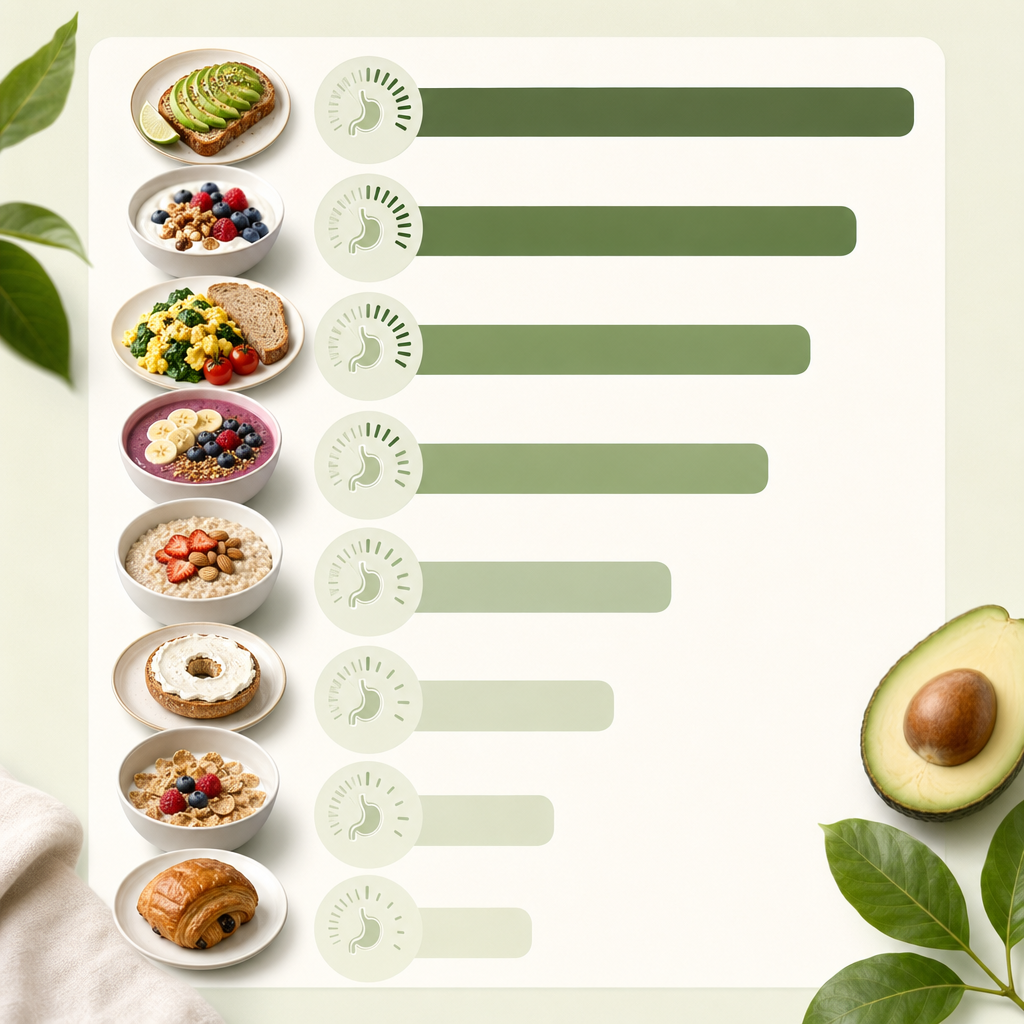
8 avocado breakfast recipes ranked by protein-per-calorie
Each recipe is sized for one adult, with calorie and protein totals listed. They're ordered roughly from highest protein-per-calorie to lowest, since that's the metric that drives satiety and weight-loss adherence.
1. Avocado, smoked salmon, and dill on rye toast. 1 slice rye, 1/2 mashed avocado, 50 g smoked salmon, fresh dill, lemon zest, black pepper. About 320 calories, 22 g protein. The salmon is the protein engine.
2. Avocado-egg breakfast bowl. 2 soft-boiled eggs, 1/2 mashed avocado, 1/2 cup cherry tomatoes, 1/2 cup baby spinach, salt, olive oil. About 360 calories, 18 g protein. No bread, which keeps carbs low if you care about that.
3. Avocado toast, two ways. 1 slice whole-grain sourdough, 1/2 mashed avocado, 2 poached eggs, red pepper flakes, flaky salt. About 380 calories, 18 g protein. The classic. The eggs are doing the heavy lifting.
4. Greek yogurt avocado smoothie. 3/4 cup plain Greek yogurt 2%, 1/4 avocado, 1/2 cup spinach, 1/2 cup frozen berries, 1/2 cup unsweetened almond milk, 1 tsp honey. About 280 calories, 18 g protein. Sounds odd. Tastes like a thick smoothie. The fiber-and-protein combo is hard to beat.
5. Cottage cheese avocado bowl. 1/2 cup low-fat cottage cheese, 1/4 mashed avocado, 1/4 cup cucumber, 1 tbsp sunflower seeds, lemon and olive oil. About 230 calories, 16 g protein. Quick, low-effort, surprisingly satisfying.
6. Avocado breakfast burrito. 1 small whole-wheat tortilla, 2 scrambled eggs, 1/4 avocado sliced, 2 tbsp salsa, 2 tbsp shredded cheese. About 380 calories, 19 g protein. Travels well. Wraps in foil for car commutes.
7. Avocado on whole-grain toast with hemp seeds. 1 slice toast, 1/2 mashed avocado, 1 tbsp hemp seeds, lemon, salt. About 280 calories, 9 g protein. Plant-only option. The hemp seeds add protein and a nutty crunch.
8. Mashed avocado on rice cakes. 2 brown rice cakes, 1/2 mashed avocado, salt, hot sauce. About 200 calories, 4 g protein. Lowest calorie of the list, also lowest protein. Pair with a hard-boiled egg on the side and you're back at 270 calories with 10 g of protein.
For three of these recipes you'll see that adding a whole egg, a couple of slices of smoked salmon, or a half-cup of cottage cheese is what turns "fine" into "actually keeps you full." Avocado alone won't do that.
How avocado fits a GLP-1 plan
If you're on compounded semaglutide or tirzepatide, breakfast is often the meal you most need to get right. Appetite suppression is strongest in the morning, and many patients report struggling to finish the food they intended to eat. Skipping breakfast on a GLP-1 is technically fine in terms of calories, but it tends to push under-eating into the afternoon, which can mean loss of lean mass over time.
Avocado breakfasts work well for GLP-1 patients for three reasons:
- High calorie density in a small volume. Half an avocado on a slice of toast hits 240 calories in a portion you can actually finish when your appetite is suppressed. Compare to a 240-calorie bowl of oatmeal, which is roughly 1.5 cups of food.
- Fat tolerance during titration. Mono-unsaturated fat is generally better tolerated than saturated fat or fried foods on tirzepatide and semaglutide. The 2023 Diabetes Care gastric emptying data (Davies et al.) found that meals with mono-unsaturated fat from olive oil and avocado caused less prolongation of gastric emptying than equivalent saturated-fat meals. (For more on GLP-1 reflux risk, see our piece on why Zepbound may cause acid reflux.)
- Fiber matters more on GLP-1s. Constipation rates run 10 to 20% on tirzepatide. The 6 g of fiber in half an avocado is one of the easiest single-food ways to bump daily fiber to the 25 to 30 g range that keeps GI motility working.
The catch: if your appetite is so suppressed that you can finish only a few bites, prioritize the egg or salmon (protein) over the avocado (fat). Protein preservation is more important than fat or fiber when total intake is low.
Mistakes that turn an avocado breakfast into a weight-gain meal
A few patterns reliably blow up the calorie math:
- Eating the whole avocado without measuring. The "I'll just have half" estimate is almost always closer to two-thirds. Pre-portion or weigh.
- Multiple slices of toast. One slice of bread is 80 to 110 calories. Two is 220, three is 330. The bread, not the avocado, is often the calorie creep.
- Adding bacon and cheese on top. A "loaded" avocado toast can clear 600 calories. Fine occasionally. Daily, it's a problem.
- Pairing with sugary drinks. Orange juice, sweetened lattes, or fruit smoothies on the side can add 200 to 400 calories that don't add satiety.
- Drizzling oil on the avocado. Avocado is already 22 g of fat. Adding olive oil drizzle adds another 10 to 14 g and 90 to 130 calories per tablespoon. Skip it unless you genuinely need the flavor lift.
- Using sourdough loaves with 200+ calorie slices. A boutique-bakery sourdough slice can run 220 calories on its own. Read the label or weigh the bread.
FAQ
Is avocado toast actually healthy for weight loss?
Yes, with a real caveat. Half a Hass avocado on one slice of whole-grain toast is around 240 calories, 6 g protein, 9 g fiber, and fits most weight-loss plans. The same dish made with one whole avocado on two slices of bakery sourdough can clear 600 calories, which doesn't.
How much avocado should I eat for breakfast if I'm trying to lose weight?
Half a medium Hass avocado is the default portion. That's about 120 calories, 6 g of fiber, and 1.5 g of protein. Pair it with a protein source (eggs, Greek yogurt, salmon) to reach 350 to 450 calories total for the meal.
Does avocado make you gain weight?
Avocado does not directly cause weight gain. Eating two whole avocados a day on top of your maintenance calories causes weight gain, just as eating any 400 to 500 extra daily calories would. The fruit is calorie-dense, so portion size is the variable that matters.
Is avocado better for breakfast than oatmeal for weight loss?
For satiety per calorie, an avocado-and-eggs breakfast beats plain oatmeal. For lowest cost and lowest fat, oatmeal wins. The honest answer is that they're both good options, and rotation between them is more sustainable than picking one.
Can I eat avocado every day on a diet?
Yes. Daily intake of half to a whole avocado is well-supported by published data and doesn't appear to cause weight gain in studies that controlled for total calories. The Hass Avocado Board's funded research is a real thing, but the independent studies (the 2013 Wien paper, the 2014 Pieterse cohort) reach similar conclusions on satiety.
Does avocado have too much fat to eat for weight loss?
A medium Hass avocado has 22 g of fat, mostly mono-unsaturated. The fat isn't the problem; the calories are. If you fit avocado into your daily calorie target, the fat content is actively beneficial for blood lipids, satiety, and absorption of fat-soluble vitamins.
Is avocado good for a GLP-1 medication like compounded semaglutide?
Generally yes. Mono-unsaturated fat is well-tolerated, the fiber helps with constipation (a common side effect), and the calorie density helps GLP-1 patients hit their daily calorie target when appetite is suppressed. Most patients report avocado is one of the foods they continue to enjoy through titration.
What's the best protein to pair with avocado for breakfast?
Eggs are the classic pairing and the cheapest. Smoked salmon brings the highest protein-per-calorie. Greek yogurt and cottage cheese both work in non-toast formats. Hemp seeds, sunflower seeds, or a sprinkle of nuts are decent plant-only options but won't hit the 20 g protein mark on their own.
Does avocado in a smoothie work for weight loss?
A quarter to a third of an avocado in a smoothie adds creaminess and satiety without much flavor change. The trap is the rest of the smoothie. Banana, honey, juice, and nut butter add up fast. A 16-oz smoothie can run 500 to 700 calories if you're not careful.
How many calories are in a whole avocado?
A medium Hass avocado (200 g with skin and pit removed) has about 240 calories. A larger California Hass can hit 300 calories. A small Hass might be 180. A Florida or Reed avocado has fewer calories per gram but a much larger total weight, so a "whole" Reed can clear 400 calories.
Is the avocado pit or skin worth eating?
No. The pit and skin contain compounds that cause GI upset and have no proven health benefit. Stick to the flesh.
Does avocado raise cholesterol?
The evidence runs the other way. Multiple controlled trials (the 2015 Wang paper in JAMA and the 2022 PREDIMED-Plus update) found that daily avocado intake lowered LDL cholesterol by 4 to 8 mg/dL on average compared with isocaloric carbohydrate replacement. Avocado's mono-unsaturated fat profile is similar to olive oil's, which has decades of cardiovascular evidence behind it.
Author / review note
Reviewed by the FormBlends Medical Team. References include Wien et al., Nutrition Journal, 2013 (avocado satiety and glucose response); Wang et al., Journal of the American Heart Association, 2015 (avocado and LDL cholesterol); Holt et al., European Journal of Clinical Nutrition, 1995 (satiety index, original); the U.S. Dietary Guidelines for Americans, 2020-2025; and the USDA FoodData Central nutrient database for Hass avocado.
Footer disclaimers
Platform Disclaimer. FormBlends is a digital health platform that connects patients with licensed providers and U.S.-based pharmacies. We do not manufacture, prescribe, or dispense medication directly. All clinical decisions are made by independent licensed providers.
Compounded Medication Notice. Compounded semaglutide and tirzepatide are not FDA-approved. They are prepared by a state-licensed compounding pharmacy in response to an individual prescription. Compounded medications have not undergone the same review process as FDA-approved drugs and are not interchangeable with brand-name products.
Results Disclaimer. Individual results vary. Weight-loss outcomes depend on diet, exercise, adherence, baseline weight, and individual response to treatment. Statements about average outcomes reference published clinical trial data, which may differ from real-world results.
Trademark Notice. Brand names referenced in this article are the property of their respective owners. FormBlends is not affiliated with, endorsed by, or sponsored by any brand-name manufacturer.
Related guides
- When to Eat Blueberries for Weight Loss: Timing, Portions, and the Real Math
- The Best Time to Eat Grapefruit for Weight Loss: What the Research Actually Says
- Is Dried Mango Good for Weight Loss? Calories, Sugar, and Portions
- Do Mounjaro Drops Work for Weight Loss? The Honest Answer About a Product That Doesn't Officially Exist
- Does Prozenith Work for Weight Loss? A Clinical Review
- Can You Eat Watermelon at Night for Weight Loss? An Honest Look at the Evidence
See your options in about 2 minutes
Take the free quiz and see what fits you. Quick, private, and no commitment to continue.
See my options →