Key Takeaway
The 2026 protocol for cognitive enhancement peptides. Updated dosing, stacking strategies, and cycling schedules for Semax, Selank, and Dihexa under physician supervision.
The cognitive enhancement peptides protocol for 2026 incorporates new research on peptide stacking, improved cycling windows, and refined dosing based on clinical outcomes from the past year. The updated approach pairs Semax for neurotrophic stimulation with Selank for anxiolytic support, cycles Dihexa strategically for synaptogenesis, and uses timed administration to align with your brain's natural rhythms. At FormBlends, our physicians have implemented these updates across our cognitive improvement programs.
This protocol represents the most evidence-informed approach we have used for cognitive peptide therapy. Here is what has changed and how it applies to you.
The Science Behind the 2026 Updates
Several developments from 2025 research have shaped this year's protocol:
Chronobiology-matched dosing. New data shows that BDNF expression in the brain follows a circadian rhythm, peaking in the late morning. Aligning Semax administration with this natural peak amplifies its neurotrophic effects. This simple timing change has improved patient-reported outcomes in our clinical observations.
Improved stacking ratios. Earlier protocols often used Semax and Selank at a 1:1 ratio. Updated clinical experience suggests that a higher proportion of Semax relative to Selank produces better cognitive results for most patients, while those with significant anxiety benefit from a more balanced ratio. The 2026 protocol individualizes this ratio based on your primary concern.
Dihexa micro-cycling. Rather than continuous Dihexa use over weeks, the 2026 protocol uses short, intense micro-cycles (5 days on, 9 days off) to promote synaptogenesis while minimizing potential for receptor downregulation. Early data suggests this approach may be more effective than continuous dosing.
Neuroinflammation screening. We now incorporate markers of neuroinflammation (such as high-sensitivity CRP and homocysteine) into the initial assessment. Patients with improved neuroinflammation often benefit from adding anti-inflammatory peptides like BPC-157 to their cognitive protocol, as chronic brain inflammation can blunt the effects of nootropic peptides.
How It Works
Tier 1: Foundation (Weeks 1-6)
The foundation tier establishes baseline cognitive support and allows your physician to gauge your response.
View data table
| Category | Evidence and Efficacy Score | Detail |
|---|---|---|
| Cold Exposure | 72 | Metabolic activation |
| Red Light | 65 | Mitochondrial support |
| CGM Tracking | 82 | Glucose optimization |
| Peptide Stacks | 70 | Targeted protocols |
| Nootropics | 55 | Cognitive enhancement |

- Semax nasal spray: Administered in the late morning to align with peak BDNF expression windows. Used daily for 5 days, followed by 2 days off each week.
- Selank nasal spray: Administered in the early afternoon for anxiolytic support. The ratio to Semax is customized based on your anxiety levels and cognitive priorities.
- Lifestyle integration: We recommend pairing the protocol with regular exercise (particularly aerobic activity, which independently boosts BDNF), adequate sleep, and a diet rich in omega-3 fatty acids.
Tier 2: Intensification (Weeks 7-10)
Based on your response in Tier 1, your physician may introduce additional peptides or adjust dosing.
- Dihexa micro-cycles: For patients whose goals include memory enhancement and long-term neuroprotection, Dihexa is introduced in 5-day micro-cycles with 9-day breaks.
- PE-22-28 (optional): This neurotrophic peptide may be added for patients who want additional support for mental endurance and sustained focus during long work sessions.
- Continued Semax/Selank: Adjusted based on Tier 1 observations. Some patients increase frequency. others maintain the same schedule.
Tier 3: Maintenance (Ongoing)
- Cycling schedule: After the initial 10-week protocol, patients transition to a maintenance cycle. A common pattern is 4 weeks on, 2 weeks off, repeated.
- Monitoring: Periodic check-ins (monthly or quarterly) to assess ongoing cognitive function and make adjustments. We use patient-reported outcome measures and, when appropriate, cognitive assessment tools.
- Stack refinement: Over time, your physician may simplify or expand your stack based on what produces the best results for you specifically.
Getting Started
- Schedule your consultation. Book a telehealth appointment with a FormBlends physician. Bring any notes about your cognitive concerns, work demands, and goals.
- Initial assessment. We review your health history, current medications, and may recommend baseline labs including inflammatory markers, thyroid function, and metabolic panels.
- Protocol delivery. Your customized peptide protocol is prepared by a licensed compounding pharmacy and shipped to you with detailed instructions. Starting at $199/mo
- Week 2 check-in. Early follow-up lets us fine-tune dosing before you get deep into the protocol.
Expected Benefits and Timeline
- Week 1: Many patients notice improved mental clarity and alertness within the first few days of Semax. Selank users often report feeling calmer and more focused, with less mental chatter.
- Weeks 2-4: Working memory and focus duration improve. Tasks that required deliberate concentration begin to feel more natural. Mood and motivation often improve as well, driven by dopamine and serotonin modulation.
- Weeks 5-8: BDNF-mediated neuroplasticity becomes apparent. Learning new information feels easier, and recall speed improves. Patients in cognitively demanding roles often report a noticeable edge.
- Weeks 8-10 (with Dihexa): Deeper structural improvements in synaptic connectivity. Long-term memory encoding and retrieval continue to strengthen.
- Maintenance phase: Sustained cognitive performance with periodic cycles. Many patients report that their cognitive "floor" (baseline performance) has been raised compared to pre-protocol levels.
Safety Considerations
- Well-established safety. Semax and Selank have decades of clinical use in Russia with documented safety profiles. Side effects are rare and typically mild (nasal irritation, mild headache).
- Dihexa caution. As a newer peptide, Dihexa is used at conservative doses and only under close supervision. Patients on Dihexa have more frequent check-ins.
- Drug interactions. Cognitive peptides may interact with psychiatric medications, particularly MAO inhibitors, SSRIs, and stimulants. Full medication disclosure is required.
- Contraindications. Active seizure disorders, unstable psychiatric conditions, and brain tumors require neurologist clearance before starting cognitive peptides.
- Quality matters. All peptides are sourced from licensed, inspected compounding pharmacies.
Frequently Asked Questions
Can I use caffeine alongside cognitive peptides?
Yes, moderate caffeine intake is fine for most patients. Some find they naturally need less caffeine as the peptides take effect. Your physician can advise on timing to avoid overstimulation.
From the FormBlends catalog
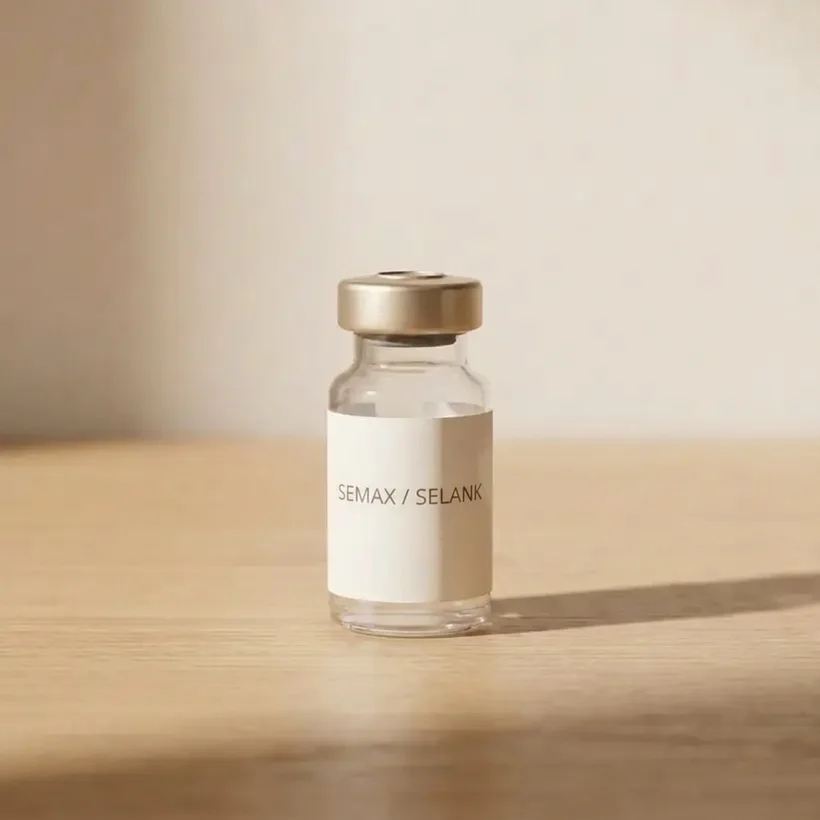
Semax / Selank Blend
Focus and calm support in one cognitive peptide blend · From $229/mo · compounded by a licensed 503A pharmacy, dispensed only after provider review.
View Semax / Selank Blend →Will I lose the benefits when I stop cycling?
Some benefits, particularly those driven by structural changes (new synaptic connections, improved BDNF baseline), appear to persist during off-cycles. But the acute effects on focus and clarity may diminish during breaks, which is why ongoing cycling is recommended for sustained peak performance.
Is this protocol suitable for older adults concerned about cognitive decline?
Yes. In fact, neuroprotection is one of the strongest applications for cognitive peptides. Older adults often respond very well to the protocol, and the benefits may be particularly meaningful for preserving independence and mental sharpness. healthy aging peptide protocols
How does this compare to prescription cognitive medications like donepezil?
Prescription medications like donepezil work by inhibiting the breakdown of acetylcholine. Cognitive peptides take a fundamentally different approach by promoting neuroplasticity and neurotrophic factor production. They aren't direct replacements for prescribed medications, but they can be complementary. Always discuss with your physician before making changes to prescribed medications.
Upgrade Your Cognitive Protocol
The 2026 protocol represents the advanced of physician-supervised cognitive enhancement. If you're ready to perform at your mental best, schedule your consultation with FormBlends and start with a protocol designed for your brain.
Ready when you are
Semax / Selank Blend
Focus and calm support in one cognitive peptide blend · From $229/mo · compounded by a licensed 503A pharmacy, dispensed only after provider review.
View Semax / Selank Blend →