Key Takeaway
Step-by-step guide to starting your first longevity peptide stack. From initial labs to first injection, learn exactly how to begin peptide therapy for anti-aging.
Quick Answer: Starting a longevity peptide stack requires three things: baseline bloodwork, a physician who understands peptide therapy, and a clear understanding of your goals. Begin with a foundation stack of CJC-1295 and ipamorelin, layer in repair peptides as needed, and build from there based on your lab results.
The Science: Why Starting Right Matters
The biggest mistake people make with peptide therapy isn't starting wrong. It's starting without context. A peptide stack without baseline data is like adjusting the thermostat without knowing the current temperature. You might move things in the right direction, but you have no way to measure whether you did, and you risk overcorrecting.
Peptides work by signaling specific physiological pathways. CJC-1295 and ipamorelin stimulate growth hormone release from your pituitary gland. BPC-157 upregulates growth factors involved in tissue repair. TB-500 supports cellular migration and anti-inflammatory processes. Each of these peptides has a measurable downstream effect, but only if you're measuring.
The reason lab work comes first is straightforward. If your IGF-1 is already in the 75th percentile for your age, you may not need GH secretagogues at all. If your hsCRP is improved, repair and anti-inflammatory peptides should take priority. If your fasting insulin is high, MOTS-c or metabolic interventions matter more than growth hormone. Your labs write the prescription. The peptides just fill it.
Who Is a Good Candidate?
Longevity peptide stacks are most appropriate for adults over 30 who are experiencing early signs of age-related decline: reduced recovery from exercise, declining sleep quality, subtle changes in body composition (increased visceral fat, decreased lean mass), persistent low-grade inflammation, or a general sense of diminished resilience.
You don't need to be sick to benefit. In fact, the strongest case for peptide therapy is in people who are otherwise healthy but want to slow or partially reverse the biological processes that will eventually compromise their healthspan. Think of it as maintenance for a machine that hasn't broken down yet but is starting to show wear.
Peptides aren't appropriate for patients with active malignancy, uncontrolled diabetes, or who are pregnant or breastfeeding. Patients with a history of hormone-sensitive cancers should have a detailed risk-benefit discussion with their physician before considering GH secretagogues.
How To Start: Step by Step
Step 1[1]: Get Your Baseline Labs
Before touching a peptide, you need data. Here is the minimum panel:
View data table
| Category | Evidence and Efficacy Score | Detail |
|---|---|---|
| Cold Exposure | 72 | Metabolic activation |
| Red Light | 65 | Mitochondrial support |
| CGM Tracking | 82 | Glucose optimization |
| Peptide Stacks | 70 | Targeted protocols |
| Nootropics | 55 | Cognitive enhancement |
- IGF-1: Your baseline for growth hormone activity. This determines whether GH secretagogues are indicated and how aggressively to dose them.
- Fasting insulin and glucose: Metabolic health baseline. GH secretagogues can transiently impair insulin sensitivity, so you need to know where you start.
- HbA1c: Three-month average blood sugar. important context for fasting glucose.
- Complete metabolic panel (CMP): Liver and kidney function markers. Ensures your body can process peptides safely.
- hsCRP: High-sensitivity C-reactive protein. Your systemic inflammation marker.
- Hormone panel: Total and free testosterone (both sexes), estradiol, DHEA-S, cortisol (AM), TSH, free T3, free T4.
- CBC with differential: White blood cell distribution gives insight into immune function.
- Lipid panel: Including ApoB if possible. Cardiovascular risk context.
Optional but recommended: a biological age test (GrimAge or DunedinPACE) and a DEXA scan for body composition. These give you objective benchmarks to measure progress against.
Step 2: Find a Qualified Physician
Not every doctor understands peptide therapy. You need a provider who meets three criteria:
- They're licensed to prescribe medications in your state
- They have specific training or experience with peptide protocols
- They work with a licensed compounding pharmacy for peptide sourcing
Telehealth has made this significantly more accessible. You no longer need a local provider who happens to specialize in peptides. You need the right provider, and geography is less of a barrier than it used to be.
Step 3: Start with the Foundation Stack
Your first peptide stack should be simple. Complexity can come later. The most common and well-studied starting combination is:
- CJC-1295 (no DAC) + Ipamorelin: 100-200 mcg of each, subcutaneously, before bed on an empty stomach (90+ minutes after eating). Five days on, two days off.
This is the foundation because the data is strongest here, the side effect profile is well-characterized, and the effects (improved sleep, recovery, body composition) are noticeable within weeks. Starting here also gives your physician a clean signal: any changes in how you feel or what your labs show can be attributed to these two peptides.
Step 4: Learn Proper Injection Technique
Subcutaneous injection is straightforward, but doing it correctly matters for both safety and peptide effectiveness.
- Reconstitution: Add bacteriostatic water to the lyophilized peptide vial. The amount determines concentration. Your pharmacy or physician will specify the volume. Swirl gently. never shake.
- Storage: Reconstituted peptides must be refrigerated (36-46 degrees F). Most are stable for 3-4 weeks after reconstitution. Never freeze reconstituted peptides.
- Injection: Use insulin syringes (29-31 gauge, 0.5 or 1 mL). Pinch a fold of skin at the abdomen (avoiding the navel by 2 inches), insert the needle at a 45-degree angle, inject slowly, release the pinch, and withdraw.
- Rotation: Alternate injection sites. Use different spots on the abdomen, thighs, or upper arms. This prevents lipodystrophy and injection site reactions.
- Disposal: Use a sharps container. Don't recap needles.
Step 5: Track Everything
From day one, keep a simple log. It doesn't need to be elaborate. Track:
- Sleep quality (subjective 1-10 and wearable data if available)
- Energy level throughout the day
- Recovery from exercise
- Any side effects (water retention, joint stiffness, injection site reactions)
- Weight and waist circumference (weekly)
This data becomes invaluable when your physician reviews your protocol at the 6-week mark.
Step 6: Retest and Adjust at Week 6-8
Repeat IGF-1, fasting insulin, fasting glucose, and hsCRP. Compare to baselines. Your physician will use this data to determine whether to maintain the current dose, adjust up or down, or layer in additional peptides.
Step 7: Layer In Additional Peptides (If Indicated)
Once the foundation stack is dialed in and your labs confirm a favorable response, your physician may add:
- BPC-157 (300-500 mcg/day): For systemic repair, gut health, and anti-inflammatory support
- TB-500 (750 mcg, 2x/week): For deeper tissue repair and recovery
- MOTS-c (10 mg, 3x/week): For metabolic improvement, especially if fasting insulin is improved
Add one new peptide at a time with at least 2-3 weeks between additions. This isolates the effect of each addition and makes it easier to identify the source of any side effects.
What to Monitor
- Weeks 1-2: Sleep changes (usually the first noticeable effect), injection site tolerance, any water retention or joint stiffness
- Weeks 3-4: Recovery improvements, energy changes, body composition shifts beginning
- Week 6-8: Lab retest. This is the most important checkpoint. Data here determines the next 6 weeks of your protocol.
- Month 3: Full lab panel repeat. Biological age retest if baseline was obtained. DEXA if baseline was obtained.
- Ongoing: Labs every 12 weeks. Subjective tracking daily. Physician check-in monthly at minimum.
Safety Considerations
- Start low. It's always better to underdose initially and titrate up than to start at the maximum and deal with side effects. You can always increase. reducing after side effects appear means you have already stressed the system.
- One variable at a time. Don't start peptides while simultaneously changing your diet, supplement stack, and exercise program. Too many variables make it impossible to attribute effects.
- Don't buy from unregulated sources. Research-grade peptides from online vendors aren't manufactured under pharmaceutical standards. You don't know the purity, potency, or sterility. This is a non-negotiable point.
- Report everything to your physician. Mild side effects are expected and manageable. But your doctor needs to know about them to adjust your protocol appropriately.
- Respect the off-cycle. Breaks are built into the protocol for biological reasons. Skipping them to "get results faster" will backfire through receptor desensitization and potential side effects.
Frequently Asked Questions
Do I need to be in good shape to start peptide therapy?
No. Peptide therapy isn't reserved for elite athletes or biohacking enthusiasts who already have their health dialed in. Many patients start while they're still working on foundational habits like nutrition, sleep, and exercise. But peptides work best as an amplifier of good habits, not as a replacement for them. The better your baseline lifestyle, the more you'll get from the protocol.
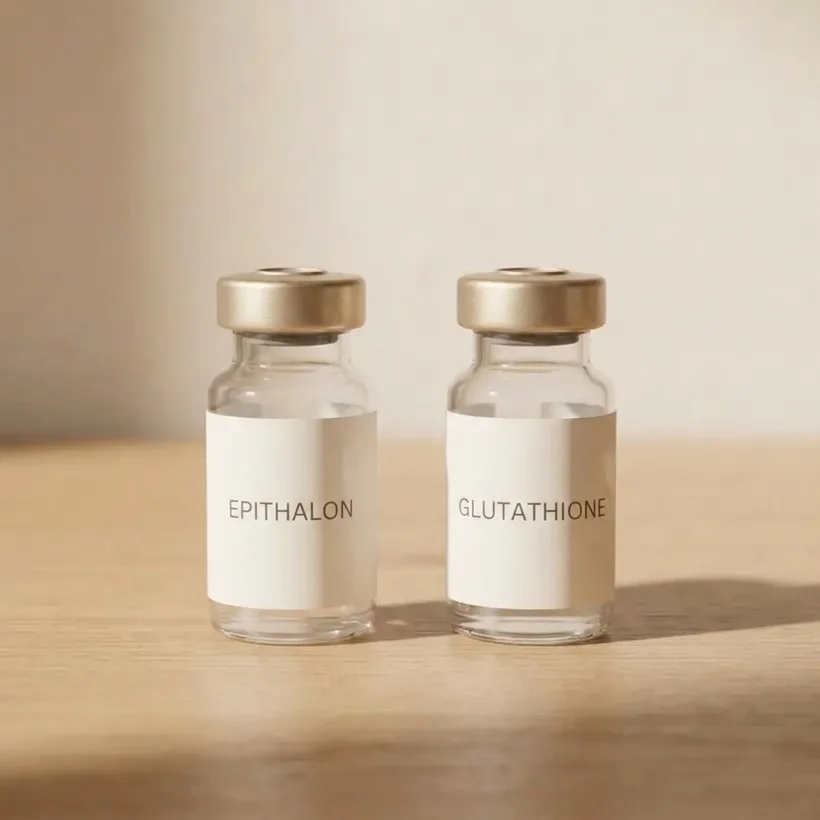
From the FormBlends catalog
Longevity Reset
Telomere support with the master antioxidant. · Bundle from $270 · provider-reviewed peptide bundle.
View Longevity Reset →How quickly will I feel something?
Most patients notice improved sleep quality within 7-14 days of starting CJC-1295/ipamorelin. Deeper, more restorative sleep with more vivid dreams is the most commonly reported early effect. Recovery from exercise typically improves by weeks 3-4. Visible body composition changes usually require 8-12 weeks.
Can I start with just one peptide instead of a stack?
Absolutely. In fact, some physicians prefer starting with a single peptide (usually ipamorelin alone) for the first 2-4 weeks before adding CJC-1295. This approach is more conservative and makes it easier to identify your response to each individual peptide. Stacking is the eventual goal, but there's no requirement to start with multiple peptides simultaneously.
What if my insurance doesn't cover peptide therapy?
Most insurance plans don't cover peptide therapy for longevity purposes, as it's generally considered elective. The cost is out of pocket. A foundation stack typically costs $200-400 per month for the peptides themselves, plus lab work and physician consultation fees. Some patients use HSA or FSA funds where eligible.
Is peptide therapy the same as hormone replacement therapy?
No. Peptides stimulate your body's own production and signaling pathways. Hormone replacement therapy (HRT) provides exogenous hormones directly. GH secretagogues, for example, prompt your pituitary to release growth hormone naturally, preserving the pulsatile pattern and feedback loops. HRT bypasses those mechanisms. The two approaches can be complementary but they're mechanistically distinct.
Medical References
- Wilding JPH, Batterham RL, Calanna S, et al. Once-Weekly Semaglutide in Adults with Overweight or Obesity. N Engl J Med. 2021;384(11):989-1002. [PubMed | ClinicalTrials.gov | DOI]
- Davies M, Færch L, Jeppesen OK, et al. Semaglutide 2.4 mg once a week in adults with overweight or obesity, and type 2 diabetes (STEP 2). Lancet. 2021;397(10278):971-984. [PubMed | ClinicalTrials.gov | DOI]
- Wadden TA, Bailey TS, Billings LK, et al. Effect of Subcutaneous Semaglutide vs Placebo as an Adjunct to Intensive Behavioral Therapy on Body Weight in Adults With Overweight or Obesity (STEP 3). JAMA. 2021;325(14):1403-1413. [PubMed | ClinicalTrials.gov | DOI]
- Rubino D, Abrahamsson N, Davies M, et al. Effect of Continued Weekly Subcutaneous Semaglutide vs Placebo on Weight Loss Maintenance in Adults With Overweight or Obesity (STEP 4). JAMA. 2021;325(14):1414-1425. [PubMed | ClinicalTrials.gov | DOI]
- Garvey WT, Batterham RL, Bhatt DL, et al. Two-year effects of semaglutide in adults with overweight or obesity (STEP 5). Nat Med. 2022;28(10):2083-2091. [PubMed | ClinicalTrials.gov | DOI]
Take the First Step
Starting peptide therapy doesn't need to be complicated. It needs to be methodical. Get your labs, find the right physician, start simple, track your data, and build from there. At FormBlends, we handle the clinical complexity so you can focus on results.
Start your consultation at FormBlends.com and let our physicians design your first longevity peptide stack.
See your options in about 2 minutes
Take the free quiz and see what fits you. Quick, private, and no commitment to continue.
See my options →