Key Takeaway
Complete guide to peptide stacks for longevity. Learn which peptide combinations target aging pathways, how to build a protocol, and what the research actually shows.
Quick Answer: Peptide stacking for longevity combines two or more peptides that target distinct aging pathways, such as growth hormone secretion, cellular repair, and inflammation. When structured under physician supervision, these stacks can address multiple hallmarks of aging simultaneously. Evidence ranges from strong clinical data to early-phase research depending on the specific peptide.
The Science Behind Peptide Stacks for Longevity
Aging isn't a single process. It's the cumulative result of at least twelve recognized hallmarks: genomic instability, telomere attrition, epigenetic alterations, loss of proteostasis, deregulated nutrient sensing, mitochondrial dysfunction, cellular senescence, stem cell exhaustion, altered intercellular communication, disabled macroautophagy, chronic inflammation, and dysbiosis. No single molecule addresses all of them. That's where stacking becomes relevant.
Peptides are short chains of amino acids, typically between 2 and 50 residues, that act as signaling molecules in the body. Unlike large-molecule biologics, many peptides can be administered subcutaneously and have relatively predictable pharmacokinetics. Their specificity makes them useful tools for targeting discrete physiological systems.
Growth Hormone Secretagogues
Growth hormone (GH) output declines roughly 14% per decade after age 30. Growth hormone secretagogue peptides like CJC-1295 (a GHRH analog) and ipamorelin (a ghrelin receptor agonist) stimulate pulsatile GH release from the pituitary. Research published in the Journal of Clinical Endocrinology & Metabolism has demonstrated that CJC-1295 can increase mean GH concentrations by 2- to 10-fold for up to six days after a single dose. Ipamorelin offers a cleaner release profile with minimal impact on cortisol or prolactin, making it a preferred pairing agent.
Repair and Recovery Peptides
BPC-157, a 15-amino-acid fragment derived from human gastric juice, has shown cytoprotective and angiogenic properties in over 100 preclinical studies. It upregulates growth factor expression (VEGF, FGF, EGF) and appears to accelerate tendon, ligament, and mucosal healing. While human clinical trial data remains limited, its safety profile in animal models is notable for the absence of significant adverse effects.
Thymosin Beta-4 (TB-500) promotes tissue repair through actin sequestration and anti-inflammatory signaling. Studies in cardiac tissue models suggest it can reduce fibrosis and support endothelial cell migration. Stacking BPC-157 with TB-500 targets both systemic inflammation and localized tissue repair.
Immune and Thymic Peptides
Thymalin and thymulin are thymic peptides that support immune reconstitution calculator. The thymus involutes significantly by middle age, reducing naive T-cell output. A landmark 2019 clinical trial (the TRIIM trial) demonstrated that a regimen including recombinant human growth hormone, DHEA, and metformin reversed approximately 2.5 years of epigenetic age as measured by the Horvath clock. While that trial did not use thymic peptides specifically, it underscored the connection between thymic regeneration and biological age reversal.
NAD+ Pathway Support
Although not peptides in the traditional sense, molecules like MOTS-c (a mitochondrial-derived peptide) and humanin interact with metabolic and stress-response pathways. MOTS-c activates AMPK and has been shown to improve insulin sensitivity and exercise capacity in mouse models. Humanin protects against oxidative stress and apoptosis. These mitochondrial-derived peptides represent a newer category that directly targets the metabolic dysfunction hallmark of aging.
Why Stacking Works
The rationale for stacking is combined effect across pathways. A GH secretagogue addresses somatopause. A repair peptide addresses tissue degradation. An immune peptide addresses immunosenescence. A mitochondrial peptide addresses metabolic decline. By combining agents with non-overlapping mechanisms, you create a protocol that mirrors the multi-system nature of aging itself.
Protocol: Building a Longevity Peptide Stack
Tier 1: Foundation Stack
This is the most well-studied combination and serves as a starting point for most patients.
View data table
| Category | Evidence and Efficacy Score | Detail |
|---|---|---|
| Cold Exposure | 72 | Metabolic activation |
| Red Light | 65 | Mitochondrial support |
| CGM Tracking | 82 | Glucose optimization |
| Peptide Stacks | 70 | Targeted protocols |
| Nootropics | 55 | Cognitive enhancement |
- CJC-1295 (no DAC): 100-300 mcg subcutaneously, administered before bed, 5 days on / 2 days off
- Ipamorelin: 100-300 mcg subcutaneously, co-administered with CJC-1295
Duration: 8-12 week cycles with 4-week breaks to prevent receptor desensitization and maintain pituitary sensitivity.
Tier 2: Repair and Recovery Layer
- BPC-157: 250-500 mcg subcutaneously, once or twice daily
- TB-500: 750 mcg subcutaneously, twice weekly during loading (4 weeks), then once weekly for maintenance
These can run concurrently with GH secretagogues. BPC-157 is commonly cycled 4 weeks on / 2 weeks off.
Tier 3: Advanced Additions
- Epithalon: 5-10 mg subcutaneously daily for 10-20 day cycles, 2-3 times per year. Epithalon is a synthetic tetrapeptide that activates telomerase. Preclinical data from the Khavinson group suggests it may extend telomere length, though human data is preliminary.
- Thymulin or Thymalin: Dosed under direct physician guidance for immune reconstitution cycles.
- MOTS-c: Emerging dosing protocols typically range from 5-10 mg subcutaneously, 3-5 times per week. Data is early-stage.
Timing and Administration
GH secretagogues are best administered on an empty stomach, at least 90 minutes after eating, to avoid blunting from improved blood glucose and insulin. Bedtime dosing aligns with natural GH pulsatility. Repair peptides (BPC-157, TB-500) can be taken at any time and aren't meal-dependent. Keep peptides refrigerated after reconstitution and use bacteriostatic water for mixing.
What to Monitor
Peptide therapy isn't a set-and-forget intervention. Regular monitoring ensures safety and allows for protocol adjustments.
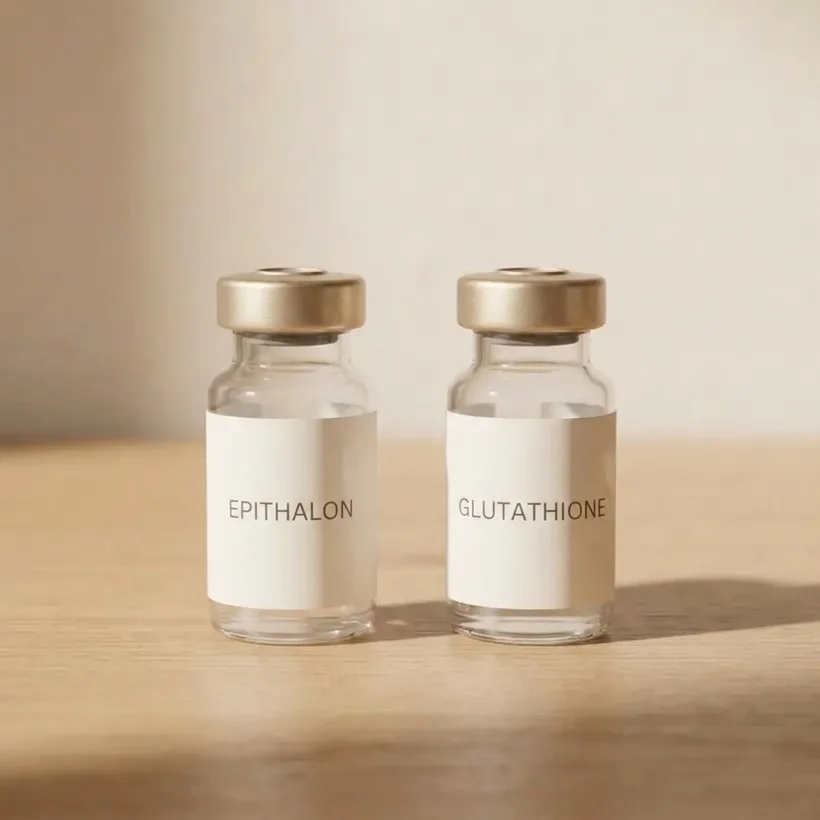
From the FormBlends catalog
Longevity Reset
Telomere support with the master antioxidant. · Bundle from $270 · provider-reviewed peptide bundle.
View Longevity Reset →- IGF-1 levels: The primary proxy for GH activity. Target the upper quartile of the age-adjusted reference range. Levels consistently above range may increase certain risks and warrant dose reduction.
- Fasting insulin and glucose: GH secretagogues can transiently impair insulin sensitivity. Monitor fasting glucose, HbA1c, and fasting insulin every 8-12 weeks.
- thorough metabolic panel: Liver and kidney function should be assessed at baseline and periodically throughout the protocol.
- Inflammatory markers: hsCRP, IL-6, and TNF-alpha provide insight into systemic inflammation. These should trend downward with an effective repair stack.
- Hormone panel: Testosterone, estradiol, DHEA-S, cortisol, and thyroid function (TSH, free T3, free T4). GH therapy can interact with thyroid and adrenal axes.
- Body composition: DEXA scans every 6-12 months to track lean mass, fat mass, and visceral adipose tissue.
- Biological age testing: Epigenetic clocks (Horvath, GrimAge, DunedinPACE) can provide a more nuanced measure of aging velocity than chronological age alone.
Safety Considerations
Peptides are generally well-tolerated, but they aren't without risk. Here is what you need to know.
- Source quality matters enormously. Compounding pharmacies regulated under state boards and the FDA provide pharmaceutical-grade peptides. Research-grade or gray-market peptides may contain impurities, incorrect concentrations, or degradation products. Always source through a licensed provider.
- GH secretagogues and cancer risk: improved IGF-1 has been associated with increased risk of certain cancers (prostate, breast, colorectal) in epidemiological studies. Patients with a personal or strong family history of these cancers should discuss risk-benefit with their physician before starting GH-stimulating peptides.
- Injection site reactions: Mild redness, swelling, or itching at the injection site is common and usually resolves within 30 minutes. Rotate injection sites to minimize lipodystrophy.
- Water retention: GH secretagogues can cause transient fluid retention, joint stiffness, or carpal tunnel symptoms, especially at higher doses. These typically resolve with dose reduction.
- Drug interactions: Peptides can interact with diabetes medications, corticosteroids, and other hormonal therapies. Full medication disclosure to your prescribing physician is important.
- Contraindications: Active malignancy, uncontrolled diabetes, pregnancy, and breastfeeding are absolute contraindications for most peptide protocols.
Frequently Asked Questions
How long before I notice results from a longevity peptide stack?
Most patients report improvements in sleep quality and recovery within 2-4 weeks of starting a GH secretagogue stack. Changes in body composition, skin quality, and energy levels typically become apparent by weeks 8-12. Measurable shifts in biological age markers require 6-12 months of consistent use combined with lifestyle improvement.
Can I take peptides alongside GLP-1 medications like semaglutide?
Yes, in many cases. GLP-1 receptor agonists and GH secretagogues work through different mechanisms. Some clinicians find them complementary: GLP-1s address metabolic health and appetite regulation while GH peptides preserve lean mass during weight loss. But both can affect insulin dynamics, so concurrent use requires careful monitoring by a physician who understands both categories.
Are peptide stacks legal?
Peptides prescribed by a licensed physician and dispensed by a compounding pharmacy are legal in the United States. the regulatory space has shifted in recent years, with the FDA adding some peptides (including certain forms of BPC-157) to its list of bulk substances under review. Work with a provider who stays current on regulatory changes.
Do I need to cycle peptide stacks?
Yes. Cycling prevents receptor desensitization, maintains the pituitary's natural signaling capacity, and allows you to assess how your body responds during off periods. Standard cycling protocols vary by peptide but generally follow a pattern of 8-12 weeks on and 4 weeks off for GH secretagogues, with shorter cycles for repair peptides.
What is the difference between peptide therapy and HGH injections?
Exogenous HGH delivers a flat, supraphysiological dose of growth hormone that bypasses the pituitary entirely. GH secretagogue peptides stimulate your own pituitary to release GH in a pulsatile, physiological pattern. The latter approach preserves feedback loops, carries lower risk of side effects, and doesn't suppress endogenous production the way exogenous HGH can.
Medical References
- Goldstein AL, Hannappel E, Sosne G, Kleinman HK. Thymosin beta4: a multi-functional regenerative peptide. Basic properties and clinical applications. Expert Opin Biol Ther. 2012;12(1):37-51. [PubMed | DOI]
Start Your Longevity Peptide Protocol
Peptide stacking for longevity requires precision: the right peptides, the right doses, the right monitoring, and the right medical oversight. At FormBlends, our physician-supervised telehealth platform connects you with clinicians who specialize in peptide therapy and can build a protocol tailored to your biology, your goals, and your health history.
Schedule your consultation at FormBlends.com to get started with a personalized longevity peptide stack.
See your options in about 2 minutes
Take the free quiz and see what fits you. Quick, private, and no commitment to continue.
See my options →