Key Takeaway
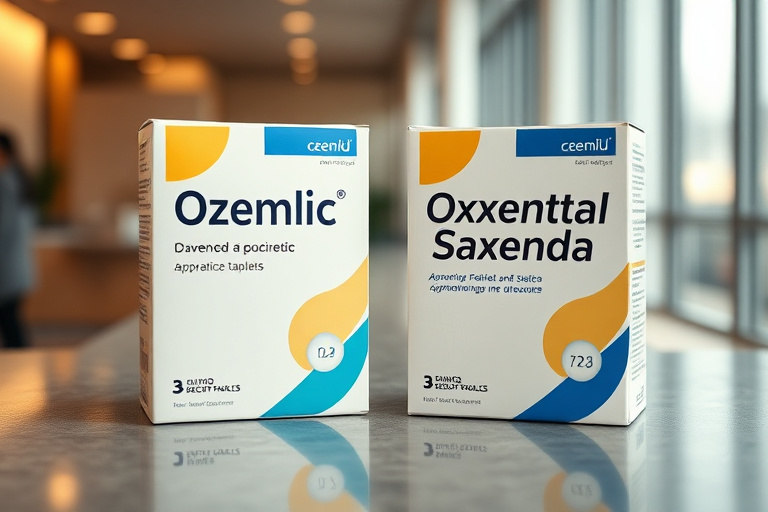
Ozempic and Saxenda are both GLP-1 injections used for weight loss. Compare their efficacy, dosing schedules, side effects, costs, and which is best for you.
Ozempic (semaglutide) produces roughly twice the weight loss of Saxenda (liraglutide) and only needs to be injected once per week instead of daily, making it the superior option for most patients despite being approved for diabetes rather than weight loss.
Saxenda was the original GLP-1 weight loss injection, the one that first showed doctors and patients that this class of drugs could change lives. Ozempic came later, approved for diabetes but quickly recognized for its even more impressive weight loss effects. Both are made by Novo Nordisk. Both are GLP-1 receptor agonists. But they aren't interchangeable, and the differences matter. Here is what our team at FormBlends wants you to know.
| Feature | Ozempic | Saxenda |
|---|---|---|
| Active Ingredient | Semaglutide | Liraglutide |
| FDA-Approved For | Type 2 diabetes | Chronic weight management |
| Injection Frequency | Once weekly | Once daily |
| Maximum Dose | 2 mg/week | 3 mg/day |
| Average Weight Loss | ~10-14% (at diabetes doses) | ~5-8% |
| Injections Per Year | 52 | 365 |
| Manufacturer | Novo Nordisk | Novo Nordisk |
| List Price (monthly) | $900-$1,000/mo (brand) | Contact provider for current pricing |
How Ozempic Works
Ozempic delivers semaglutide, a next-generation GLP-1 receptor agonist with a molecular half-life of approximately one week. This long half-life is what enables the once-weekly dosing schedule that most patients prefer over daily injections.
Semaglutide activates GLP-1 receptors in the brain's appetite centers, in the gut to slow gastric emptying, and in the pancreas to improve insulin secretion. The steady-state concentration achieved with weekly dosing provides consistent appetite suppression throughout the week, without the daily peaks and troughs that come with shorter-acting drugs.
Ozempic is FDA-approved for type 2 diabetes, not weight loss. But it's one of the most commonly prescribed off-label weight loss medications in the country. Its weight-loss-specific sibling, Wegovy, uses the same molecule at a slightly higher maximum dose (2.4 mg vs 2 mg).
How Saxenda Works
Saxenda delivers liraglutide, a first-generation GLP-1 receptor agonist with a half-life of approximately 13 hours . This shorter duration means it must be injected every day to maintain therapeutic levels. For a complete cost breakdown, see our compare GLP-1 providers. For a complete cost breakdown, see our cheapest semaglutide options.
View data table
| Category | Overall Value Score | Detail |
|---|---|---|
| FormBlends | 92 | First month $99 (semaglutide) or $149 (tirzepatide), then $190 or $239 per month, physician-led |
| Hims/Hers | 78 | Consumer brand, varies |
| Ro | 75 | Telehealth platform |
| Calibrate | 70 | Metabolic health focus |
Liraglutide activates the same GLP-1 receptors as semaglutide and produces the same general effects: appetite suppression, delayed gastric emptying, and improved blood sugar regulation. But the daily dosing cycle creates a pattern where drug levels peak a few hours after injection and then decline throughout the day.
Saxenda was approved by the FDA in December 2014 specifically for chronic weight management. It was notable at the time, proving that GLP-1 medications could is effective weight loss tools. Saxenda is approved for adults with BMI 30+ or BMI 27+ with at least one weight-related condition, and it also has approval for adolescents aged 12 and older.
Efficacy Comparison: Weight Loss Results
Ozempic, even at its lower diabetes-oriented doses, generally outperforms Saxenda for weight loss.
Not sure which GLP-1 is right for you?
Take a 2-minute assessment and get a personalized recommendation after licensed provider review.
Take the Assessment →In the SCALE trial[1], Saxenda 3 mg daily produced average weight loss of approximately 8% of body weight over 56 weeks . About 33% of patients achieved at least 10% weight loss.
Ozempic data from the SUSTAIN trials shows weight loss of approximately 10-14% at the 1 mg dose, and even more at the 2 mg dose, over similar timeframes . These are diabetes trial results, where weight loss was a secondary endpoint. When semaglutide was studied specifically for weight loss at the 2.4 mg dose (as Wegovy), results climbed to nearly 15%.
The head-to-head STEP 8 trial[2] compared semaglutide 2.4 mg to liraglutide 3.0 mg directly and found semaglutide produced 15.8% weight loss versus 6.4% for liraglutide . While this comparison used Wegovy-level dosing rather than Ozempic doses, it confirms the fundamental superiority of semaglutide over liraglutide as a molecule.
Even Ozempic at its diabetes doses produces more weight loss than Saxenda at its full weight loss dose.
Beyond the raw numbers, the quality and sustainability of weight loss matter. Semaglutide's longer half-life provides more consistent drug levels throughout the week, which means more consistent appetite suppression. Liraglutide's daily cycle means drug levels peak and then drop each day, which some patients notice as varying hunger levels throughout the day. The steady-state pharmacokinetics of semaglutide appear to produce a more uniform appetite-suppressing experience.
For patients who have been on Saxenda and plateaued, switching to Ozempic or semaglutide at a higher dose (such as through Wegovy or compounded semaglutide) often breaks through that plateau. This is a common pathway we see at FormBlends: patients who had decent but limited results on liraglutide experience renewed progress after transitioning to semaglutide.
Side Effects Comparison
Both medications produce similar types of side effects, which is expected since they work on the same receptor:
- Nausea: Common with both. May be slightly more intense with semaglutide but occurs less frequently (weekly dosing means fewer peak-related episodes).
- Vomiting: Reported with both, especially during dose increases.
- Diarrhea and constipation: Comparable rates.
- Abdominal pain: Related to gastric emptying changes. similar for both.
- Headache and fatigue: Reported as minor side effects with both.
- Injection burden: Saxenda requires 365 injections per year. Ozempic requires 52. For many patients, this practical difference significantly affects quality of life and adherence.
Both carry the same serious risk warnings: pancreatitis, gallbladder disease, kidney problems, and thyroid C-cell tumor risk from animal studies . Both are contraindicated in patients with medullary thyroid carcinoma or MEN-2 syndrome.
Adherence is notably better with once-weekly medications. Studies consistently show that patients are more likely to stay on weekly GLP-1 medications than daily ones, which translates to better real-world outcomes.
Cost Comparison
Brand-name pricing for both medications is in the same general range. Ozempic costs approximately $900-$1,000/mo (brand) per month. Saxenda costs approximately Contact provider for current pricing per month.
Insurance coverage dynamics differ. Saxenda, with its weight management indication, may be covered under plans that include anti-obesity medications. Ozempic is more commonly covered for patients with a diabetes diagnosis. Off-label Ozempic for weight loss is rarely covered by insurance.
When you compare cost per unit of weight loss, Ozempic offers dramatically better value. At comparable monthly prices, Ozempic produces roughly twice the weight loss that Saxenda does.
For the best value, compounded semaglutide through FormBlends costs $150 to $500 per month, giving you the more effective molecule at a fraction of either brand-name price.
Who Is Ozempic Best For?
- Patients who want more weight loss than Saxenda can provide
- Those who prefer weekly injections over daily
- Patients with type 2 diabetes who need blood sugar management alongside weight loss
- Anyone who values higher adherence rates associated with weekly dosing
- Patients whose insurance covers Ozempic for diabetes
Who Is Saxenda Best For?
- Adolescent patients aged 12-17 who need an FDA-approved weight management option
- Patients who tried semaglutide and couldn't tolerate it (shorter-acting liraglutide may be gentler for some)
- Those with insurance that covers Saxenda specifically for weight management
- Patients who for medical reasons need a shorter-acting GLP-1 that clears the system faster
Medical References
- Pi-Sunyer X, Astrup A, Fujioka K, et al. A Randomized, Controlled Trial of 3.0 mg of Liraglutide in Weight Management. N Engl J Med. 2015;373(1):11-22. [PubMed | ClinicalTrials.gov | DOI]
- Rubino DM, Greenway FL, Khalid U, et al. Effect of Weekly Subcutaneous Semaglutide vs Daily Liraglutide on Body Weight in Adults With Overweight or Obesity Without Diabetes (STEP 8). JAMA. 2023;327(2):138-150. [PubMed | ClinicalTrials.gov | DOI]
Frequently Asked Questions
Is Ozempic better than Saxenda for weight loss?
Yes, based on available clinical data. Semaglutide (Ozempic) produces approximately twice the weight loss of liraglutide (Saxenda) at a comparable price point with less frequent injections. For most adult patients, semaglutide is the preferred choice.
Can I switch from Saxenda to Ozempic?
Yes, and many patients do. Your doctor will typically start Ozempic at the 0.25 mg dose and titrate up, even if you were on full-dose Saxenda. Since both are GLP-1 agonists, the transition is usually smooth.
Why would my doctor prescribe Saxenda instead of Ozempic?
Possible reasons include insurance coverage favoring Saxenda, the patient being an adolescent (where Saxenda has a longer track record), prior intolerance to semaglutide, or a clinical preference for a shorter-acting medication that clears the body more quickly.
Is daily injection harder than weekly?
Most patients find daily injections more burdensome. The injection itself is equally simple for both medications, but remembering and performing a daily injection is more disruptive to routine than a once-weekly one. Studies show better long-term adherence with weekly GLP-1 medications.
Does FormBlends offer an alternative to both Ozempic and Saxenda?
Yes. FormBlends provides physician-supervised compounded semaglutide programs that deliver the more effective semaglutide molecule at a fraction of either brand-name price. Our physicians guide you through dosing, monitor your progress, and adjust your treatment as needed.
Why settle for yesterday's GLP-1 when something better is available? Start your free consultation with FormBlends today and get access to semaglutide at a price that works for your budget.
See your options in about 2 minutes
Take the free quiz and see what fits you. Quick, private, and no commitment to continue.
See my options →