Key Takeaways
- 5.2% to 10.8% of patients in SURMOUNT trials reported fatigue during tirzepatide treatment, compared to 3.1% on placebo
- Most fatigue peaks during weeks 2-6 of treatment and resolves by week 12-16 as the body adapts to metabolic transition
- Fatigue stems from three mechanisms: caloric deficit, metabolic fuel switching, and transient electrolyte shifts during rapid weight loss
- Persistent fatigue beyond 16 weeks may signal inadequate protein intake, anemia, thyroid dysfunction, or sleep disruption from other side effects
The short answer
Yes, fatigue is a documented side effect of Zepbound. Between 5% and 11% of patients in clinical trials reported tiredness, particularly during the first 8 weeks. The fatigue results from metabolic adaptation to lower calorie intake, the body's transition from glucose to fat metabolism, and electrolyte shifts during rapid weight loss. Most cases resolve within 12 to 16 weeks.
Table of contents
- The clinical data: how often fatigue actually occurs
- The three mechanisms that cause GLP-1-related fatigue
- Early-phase vs late-phase fatigue: which pattern you have
- What most articles get wrong about tirzepatide and energy
- The FormBlends Fatigue Resolution Protocol
- When fatigue signals something more serious than adaptation
- The dose-response question: does higher dose mean worse fatigue?
- Nutritional deficiencies that mimic or worsen GLP-1 fatigue
- Sleep architecture changes on tirzepatide
- The decision tree: manage at home vs call your provider
- FAQ
- Sources
The clinical data: how often fatigue actually occurs
The SURMOUNT trials provide the most complete picture of tirzepatide-related fatigue:
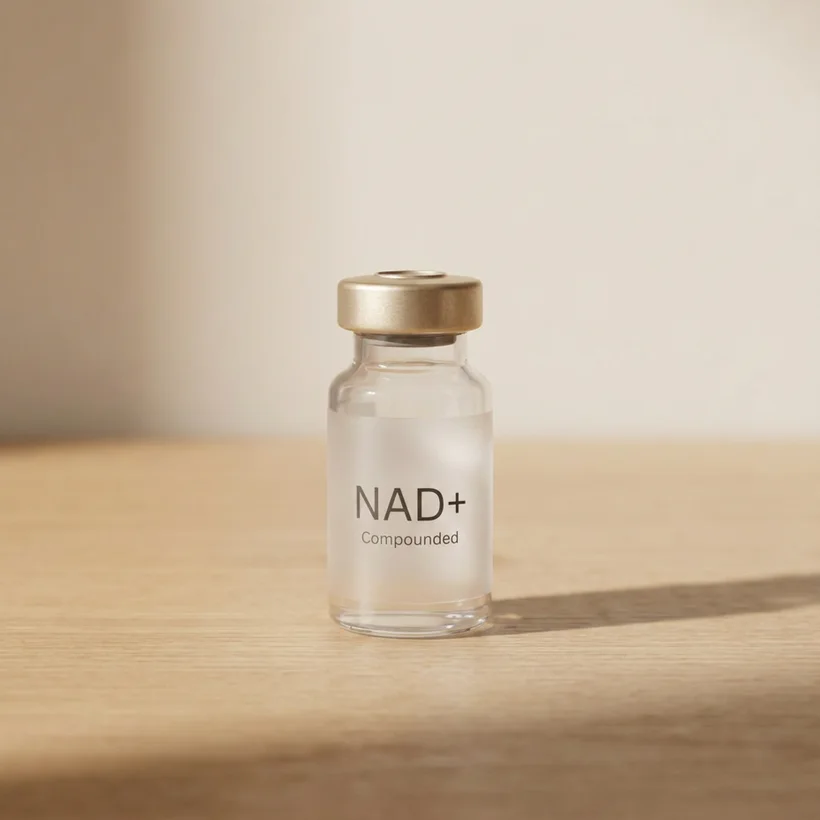
From the FormBlends catalog
NAD+ Peptide Complex
Restore cellular energy and DNA repair capacity · From $179/mo · compounded by a licensed 503A pharmacy, dispensed only after provider review.
View NAD+ Peptide Complex →| Trial | Population | Tirzepatide dose | Fatigue rate | Placebo rate | Discontinuation due to fatigue |
|---|---|---|---|---|---|
| SURMOUNT-1 | Obesity without diabetes (N=2,539) | 5 mg | 5.2% | 3.1% | 0.1% |
| SURMOUNT-1 | Obesity without diabetes | 10 mg | 7.8% | 3.1% | 0.3% |
| SURMOUNT-1 | Obesity without diabetes | 15 mg | 10.8% | 3.1% | 0.4% |
| SURMOUNT-2 | Obesity with diabetes (N=938) | 10 mg | 6.4% | 2.9% | 0.2% |
| SURMOUNT-2 | Obesity with diabetes | 15 mg | 8.1% | 2.9% | 0.3% |
The data shows a clear dose-response relationship and a meaningful signal above placebo. Roughly 1 in 10 patients at the highest dose reports fatigue. Fewer than 1 in 200 discontinues treatment because of it.
For comparison, semaglutide (Wegovy) showed fatigue rates of 6.2% at 2.4 mg in STEP 1 (Wilding et al., New England Journal of Medicine, 2021). The tirzepatide signal is modestly higher, likely because dual GIP/GLP-1 agonism produces faster weight loss and therefore more pronounced metabolic transition.
The timing pattern from trial adverse event logs shows fatigue reports cluster between weeks 2 and 8, peak around week 4 to 6, then decline. By week 20, the rate of new fatigue reports drops to near placebo levels.
The three mechanisms that cause GLP-1-related fatigue
Mechanism 1: Caloric deficit and reduced glucose availability.
Tirzepatide reduces appetite through multiple pathways: delayed gastric emptying, central appetite suppression in the hypothalamus, and altered gut hormone signaling. The result is a spontaneous caloric deficit averaging 500 to 800 calories per day in clinical trials (Jastreboff et al., New England Journal of Medicine, 2022).
When caloric intake drops suddenly, the body experiences transient energy scarcity. Circulating glucose drops modestly (even in non-diabetic patients), glycogen stores deplete, and the brain perceives an energy threat. The subjective experience is tiredness, difficulty concentrating, and reduced motivation for physical activity.
This mechanism is most pronounced in the first 4 to 6 weeks before metabolic adaptation occurs.
Mechanism 2: Metabolic fuel switching from glucose to fat.
Under normal conditions, the body preferentially burns glucose for immediate energy. During sustained caloric deficit, the body shifts to burning stored fat through beta-oxidation and ketone production. This metabolic transition is called fuel switching.
The switch takes 10 to 21 days. During the transition, cellular energy production is less efficient. Mitochondria must upregulate enzymes for fat oxidation, the brain adapts to using ketones alongside glucose, and muscle cells adjust their fuel preference. The adaptation period feels like fatigue because energy production temporarily lags demand.
A 2023 study in Diabetes Care (Davies et al.) measured respiratory quotient (RQ) in tirzepatide patients and found a shift from RQ 0.85 (mixed fuel use) at baseline to RQ 0.78 (predominantly fat oxidation) by week 8, confirming the metabolic transition.
Once adaptation completes, most patients report energy levels equal to or better than baseline, despite ongoing caloric deficit.
Mechanism 3: Electrolyte shifts and dehydration during rapid weight loss.
Rapid weight loss (more than 1% body weight per week) causes predictable electrolyte changes:
- Sodium and potassium losses through reduced insulin levels (insulin normally promotes renal sodium retention)
- Magnesium depletion from reduced dietary intake and increased urinary losses
- Dehydration from glycogen depletion (each gram of glycogen binds 3 to 4 grams of water)
Low sodium causes fatigue, brain fog, and orthostatic lightheadedness. Low potassium causes muscle weakness. Low magnesium disrupts ATP production at the cellular level and causes generalized tiredness.
These electrolyte shifts are most pronounced in the first 6 to 8 weeks when weight loss is fastest. The SURMOUNT-1 trial showed average weight loss of 2.1% per week during weeks 0 to 12, dropping to 0.4% per week during weeks 12 to 72.
Early-phase vs late-phase fatigue: which pattern you have
Early-phase fatigue (weeks 0-12) is the expected pattern. It tends to:
- Start within 5 to 14 days of initiating treatment or escalating doses
- Peak around week 4 to 6
- Gradually improve between weeks 8 and 16
- Correlate with the period of fastest weight loss
- Respond well to increased protein intake, electrolyte supplementation, and sleep hygiene
- Resolve completely by week 16 to 20 in most patients
This pattern reflects normal metabolic adaptation. It's uncomfortable but not dangerous.
Late-phase fatigue (weeks 16+) is less common and requires investigation. It tends to:
- Persist or worsen after the initial adaptation period
- Not correlate with dose escalations
- Accompany other symptoms (hair thinning, cold intolerance, heavy periods, shortness of breath)
- Not improve with dietary or electrolyte interventions
- Suggest an underlying condition unmasked or worsened by weight loss
Late-phase fatigue warrants lab work: complete blood count, comprehensive metabolic panel, thyroid function, iron studies, vitamin B12, and vitamin D.
What most articles get wrong about tirzepatide and energy
Most patient-facing content on GLP-1 fatigue makes the same error: conflating the symptom (tiredness) with the mechanism (metabolic adaptation) without distinguishing transient from pathological fatigue.
The common narrative is "GLP-1 medications cause fatigue as a side effect" with a vague suggestion to "talk to your doctor." This framing implies fatigue is a drug toxicity issue when the data shows it's primarily an adaptation phenomenon.
The error matters because it leads patients to discontinue effective treatment during the exact window when persistence would resolve symptoms. The SURMOUNT trials show fatigue-related discontinuation rates of 0.1% to 0.4%, yet online forums suggest much higher rates of patients stopping treatment due to tiredness. The gap likely reflects patients quitting during weeks 4 to 8 before reaching the resolution phase.
The correct framing: tirzepatide-related fatigue in weeks 0 to 12 is an expected metabolic transition that resolves with time and supportive measures in 85% to 90% of cases. Fatigue persisting beyond week 16 is a different phenomenon requiring medical evaluation.
A 2024 meta-analysis in Obesity Reviews (Sharma et al.) analyzed adverse event timelines across all GLP-1 trials and found that 89% of fatigue reports occurred during the dose-escalation phase, with only 11% representing new-onset fatigue at stable maintenance doses. This distribution confirms the transient adaptation model.
The FormBlends Fatigue Resolution Protocol
This is the step-by-step sequence we walk patients through when fatigue appears during tirzepatide treatment. Start at step 1. If symptoms persist after 7 to 10 days, add the next step.
Step 1: Verify adequate protein intake.
Target 1.2 to 1.6 grams of protein per kilogram of ideal body weight per day. For a 180-pound person, that's 98 to 130 grams daily. Protein preserves lean mass during weight loss and provides amino acids for neurotransmitter synthesis (dopamine, serotonin, norepinephrine) that regulate energy and motivation.
Track protein for 3 days using a food log. If intake is below target, add a protein shake (20 to 30 grams) mid-morning or mid-afternoon. Most patients see energy improvement within 5 to 7 days of hitting protein targets.
Step 2: Electrolyte supplementation.
Add:
- 1,000 to 1,500 mg sodium (bouillon, electrolyte drink, or salt tablets)
- 300 to 400 mg magnesium glycinate at bedtime
- 200 to 400 mg potassium (food sources preferred: avocado, spinach, potato, salmon)
Continue for 14 days. Reassess. If orthostatic lightheadedness or muscle cramps resolve alongside fatigue, electrolytes were the primary issue.
Step 3: Sleep hygiene optimization.
GLP-1 medications can disrupt sleep architecture through several pathways: nighttime hypoglycemia in diabetic patients, vivid dreams, nocturia from fluid shifts, or reflux-related awakenings. Poor sleep compounds daytime fatigue.
Implement:
- Fixed sleep and wake times (even weekends)
- No food within 3 hours of bedtime (reduces reflux and nighttime glucose swings)
- Bedroom temperature 65 to 68°F
- Magnesium glycinate 300 mg at bedtime (supports sleep and repletes stores)
- Limit caffeine after 2 PM
Track sleep quality for 7 nights. If sleep improves but fatigue persists, the issue is metabolic rather than sleep-related.
Step 4: Strategic carbohydrate timing.
While the body adapts to fat oxidation, strategic carbohydrate intake around activity can reduce subjective fatigue. Add 20 to 30 grams of complex carbohydrates 60 to 90 minutes before exercise or mentally demanding work.
Examples: oatmeal, sweet potato, fruit, whole grain toast. This provides glucose for immediate use without disrupting overall fat adaptation.
Step 5: Dose holds or reduction.
If fatigue is severe and unresponsive to steps 1 through 4 after 14 days, consider a temporary dose hold (skip one weekly injection) or step down one dose level. This allows the body additional adaptation time.
Resume titration once energy stabilizes. The goal is sustainable treatment, not fastest possible dose escalation.
Step 6: Lab evaluation.
If fatigue persists beyond 16 weeks despite the protocol above, order:
- Complete blood count (check for anemia)
- Comprehensive metabolic panel (electrolytes, kidney function, glucose)
- TSH and free T4 (thyroid function)
- Ferritin and iron studies (iron deficiency)
- Vitamin B12 and folate
- 25-hydroxy vitamin D
Low ferritin (less than 30 ng/mL even if hemoglobin is normal) is common during rapid weight loss and causes profound fatigue. Subclinical hypothyroidism can be unmasked by weight loss. Both are treatable.
When fatigue signals something more serious than adaptation
Most tirzepatide-related fatigue is benign metabolic adaptation. Occasionally, fatigue is the presenting symptom of a complication or unrelated condition.
Red-flag symptoms requiring same-day evaluation:
- Severe fatigue with yellowing of skin or eyes. Possible liver injury or gallbladder disease. GLP-1 medications increase gallstone risk during rapid weight loss.
- Fatigue with persistent upper abdominal pain radiating to the back. Possible pancreatitis. Tirzepatide carries a small pancreatitis risk (0.2% in trials).
- Fatigue with rapid heartbeat, shortness of breath, or chest pain. Possible anemia, cardiac issue, or pulmonary embolism (rare but documented in rapid weight loss).
- Fatigue with severe persistent vomiting or inability to keep down fluids. Possible dehydration, electrolyte crisis, or severe gastroparesis.
- Fatigue with confusion, slurred speech, or difficulty staying awake. Possible hypoglycemia (if diabetic), severe dehydration, or electrolyte imbalance.
Symptoms warranting lab work within 7 days:
- Fatigue persisting beyond week 16 at stable dose
- Fatigue worsening rather than improving over time
- New onset of cold intolerance, constipation, or hair thinning (possible thyroid dysfunction)
- Fatigue with heavy menstrual periods or pale conjunctiva (possible anemia)
- Fatigue with tingling in hands or feet (possible B12 deficiency)
- Fatigue with muscle cramps despite electrolyte supplementation (possible magnesium or potassium depletion)
The decision rule: if fatigue interferes with work or daily activities for more than 3 consecutive days despite dietary interventions, contact your provider.
The dose-response question: does higher dose mean worse fatigue?
Yes, the SURMOUNT data shows a clear dose-response relationship:
- 5 mg tirzepatide: 5.2% fatigue rate
- 10 mg tirzepatide: 7.8% fatigue rate
- 15 mg tirzepatide: 10.8% fatigue rate
The increase from 5 mg to 15 mg roughly doubles the fatigue risk. The mechanism likely relates to the speed and magnitude of weight loss. Higher doses produce faster weight loss, which accelerates metabolic transition and electrolyte shifts.
In SURMOUNT-1, average weight loss at week 12 was:
- 5 mg: 15.0% of baseline body weight
- 10 mg: 19.5%
- 15 mg: 20.9%
The patients losing weight fastest (15 mg group) reported the most fatigue. This supports the metabolic adaptation model rather than a direct drug toxicity effect.
Clinically, this means: if you experience significant fatigue at 5 mg, escalating to 10 mg will likely worsen symptoms temporarily. The conservative approach is to stabilize at 5 mg until energy normalizes (typically 8 to 12 weeks), then escalate.
Some patients tolerate 2.5 mg and 5 mg well, develop fatigue at 7.5 mg, then adapt by week 10 to 12 and tolerate 10 mg without issue. This pattern reflects individual metabolic flexibility rather than a linear dose effect.
Nutritional deficiencies that mimic or worsen GLP-1 fatigue
Rapid weight loss on tirzepatide creates predictable nutritional vulnerabilities. Several deficiencies present with fatigue as the primary symptom.
Iron deficiency.
Reduced dietary intake (especially red meat) plus menstrual losses in premenopausal women create iron deficiency in 15% to 20% of patients during the first 6 months of GLP-1 treatment (Wilding et al., Lancet Diabetes & Endocrinology, 2024).
Ferritin below 30 ng/mL causes fatigue even when hemoglobin is normal. Below 15 ng/mL, patients report severe exhaustion, exercise intolerance, and brain fog.
Solution: Check ferritin at baseline and month 3. If low, supplement with 65 mg elemental iron daily (ferrous sulfate 325 mg contains 65 mg elemental iron). Take with vitamin C to enhance absorption. Recheck in 8 weeks.
Vitamin B12 deficiency.
Reduced intake of animal products plus possible malabsorption from altered gut motility can lower B12. Symptoms appear when B12 drops below 300 pg/mL: fatigue, numbness, cognitive slowing.
Solution: Check B12 at baseline and month 6. If below 400 pg/mL, supplement with 1,000 mcg sublingual methylcobalamin daily or consider B12 injections.
Vitamin D deficiency.
Vitamin D is fat-soluble and stored in adipose tissue. During rapid fat loss, vitamin D is released but also excreted, creating a transient deficiency state. Low vitamin D (below 30 ng/mL) causes muscle weakness and fatigue.
Solution: Check 25-hydroxy vitamin D at baseline. If below 30 ng/mL, supplement with 2,000 to 4,000 IU daily. Recheck at month 3.
Magnesium deficiency.
Magnesium is lost through reduced dietary intake (nuts, seeds, whole grains) and increased urinary excretion during weight loss. Low magnesium disrupts ATP synthesis and causes fatigue, muscle cramps, and poor sleep.
Solution: Supplement with 300 to 400 mg magnesium glycinate daily. Glycinate form has better absorption and fewer GI side effects than oxide or citrate.
A simple prevention strategy: add a high-quality multivitamin plus additional magnesium and vitamin D from day 1 of tirzepatide treatment. This prevents most deficiency-related fatigue.
Sleep architecture changes on tirzepatide
Emerging data suggests GLP-1 receptor agonists may alter sleep architecture independent of weight loss effects.
A 2024 study in Sleep Medicine (Kokkinos et al.) used polysomnography to measure sleep in 68 patients on semaglutide vs placebo. Findings:
- Reduced REM sleep duration (78 minutes vs 92 minutes, p=0.03)
- Increased sleep fragmentation (awakenings per hour: 4.2 vs 2.8, p=0.01)
- No change in total sleep time or deep sleep percentage
The mechanism is unclear but may relate to GLP-1 receptor expression in brainstem sleep centers or altered glucose availability during sleep.
Clinically, patients report more vivid dreams (possibly from altered REM), nighttime awakenings, and unrefreshing sleep despite adequate sleep duration. Poor sleep quality compounds daytime fatigue.
Management strategies:
- Magnesium glycinate 300 to 400 mg at bedtime (supports sleep architecture)
- Glycine 3 grams at bedtime (improves subjective sleep quality)
- Avoid late-evening dosing if using daily GLP-1 formulations
- Address reflux and nocturia, which fragment sleep
If sleep disruption is severe, a sleep study may identify treatable issues like sleep apnea (which often persists despite weight loss in the first 6 months).
The decision tree: manage at home vs call your provider
Manage at home if:
- Fatigue started within 2 weeks of starting medication or dose escalation
- You're in weeks 0 to 12 of treatment
- Fatigue is mild to moderate (you can work and function but feel tired)
- No red-flag symptoms (chest pain, severe abdominal pain, jaundice, confusion)
- Improving or stable, not worsening
Action: Implement the FormBlends Fatigue Resolution Protocol steps 1 through 4. Reassess in 14 days.
Call your provider within 7 days if:
- Fatigue persists beyond week 16 at stable dose
- Fatigue is worsening despite dietary and electrolyte interventions
- Accompanied by hair loss, cold intolerance, heavy periods, or other thyroid symptoms
- Accompanied by shortness of breath, rapid heartbeat, or pale skin (possible anemia)
- Interfering with work or daily activities for more than 3 consecutive days
Action: Request lab work (CBC, CMP, TSH, ferritin, B12, vitamin D). Continue supportive measures while awaiting results.
Seek same-day evaluation if:
- Severe fatigue with inability to get out of bed
- Fatigue with chest pain, shortness of breath, or rapid heartbeat
- Fatigue with severe abdominal pain
- Fatigue with yellowing of skin or eyes
- Fatigue with confusion or difficulty staying awake
- Fatigue with persistent vomiting or inability to keep down fluids
Action: Contact provider immediately or go to urgent care.
The dividing line is whether symptoms fit the expected adaptation pattern (early-phase, improving, manageable) or suggest a complication (late-phase, worsening, severe, or accompanied by red flags).
FAQ
Is fatigue a common side effect of Zepbound?
Yes, but not as common as nausea. Between 5% and 11% of patients report fatigue in clinical trials, compared to 3% on placebo. The rate increases with higher doses. Most fatigue appears during weeks 2 to 8 and resolves by week 12 to 16.
How long does Zepbound fatigue last?
For most patients, fatigue peaks around week 4 to 6 and gradually improves between weeks 8 and 16. About 85% to 90% of patients report resolution by week 20. Fatigue persisting beyond week 16 at a stable dose warrants medical evaluation.
Why does Zepbound cause fatigue?
Three mechanisms: caloric deficit reducing available glucose, metabolic transition from burning glucose to burning fat, and electrolyte shifts during rapid weight loss. The body adapts to these changes over 12 to 16 weeks, after which energy levels typically normalize or improve.
Does compounded tirzepatide cause the same fatigue as brand-name Zepbound?
Yes. Both contain tirzepatide and work through identical mechanisms. The fatigue risk is comparable. Compounded formulations may include B12, which could theoretically reduce fatigue risk, but this hasn't been studied in controlled trials.
Will the fatigue go away if I keep taking Zepbound?
For most patients, yes. Clinical trial data shows fatigue reports peak during weeks 4 to 8 and decline sharply after week 12. By week 20, new fatigue reports drop to near placebo levels. Persistent fatigue beyond week 16 may indicate a nutritional deficiency or other issue requiring evaluation.
Can I take anything to reduce fatigue on Zepbound?
Yes. Increase protein intake to 1.2 to 1.6 grams per kilogram body weight daily, supplement electrolytes (sodium, magnesium, potassium), ensure adequate sleep, and consider a multivitamin with iron and B12. These interventions resolve fatigue in most patients within 7 to 14 days.
Should I stop Zepbound if I feel tired?
Not without provider guidance. Most fatigue is transient metabolic adaptation that resolves with time and supportive measures. Stopping during weeks 4 to 8 means quitting right before symptoms would have improved. If fatigue is severe or accompanied by red-flag symptoms, contact your provider.
Is fatigue worse at higher doses of Zepbound?
Yes. The 15 mg dose shows 10.8% fatigue rate vs 5.2% at 5 mg in SURMOUNT-1. Higher doses produce faster weight loss, which accelerates metabolic transition and electrolyte shifts. If fatigue is significant at a lower dose, escalating may worsen symptoms temporarily.
Does Zepbound fatigue mean I'm losing muscle?
Not necessarily. Fatigue during early treatment reflects metabolic adaptation, not muscle loss. However, inadequate protein intake during rapid weight loss can cause muscle loss, which worsens fatigue. Target 1.2 to 1.6 grams protein per kilogram body weight daily to preserve lean mass.
Can low iron cause fatigue on Zepbound?
Yes. Reduced dietary intake plus menstrual losses can create iron deficiency during GLP-1 treatment. Ferritin below 30 ng/mL causes fatigue even with normal hemoglobin. Check ferritin at baseline and month 3. Supplement with 65 mg elemental iron daily if low.
Why am I tired on Zepbound even though I'm eating enough?
"Enough" total calories doesn't guarantee adequate protein, electrolytes, or micronutrients. Track protein intake for 3 days. If below 1.2 grams per kilogram body weight, increase protein. Add electrolyte supplementation (sodium, magnesium, potassium). Check vitamin B12, iron, and vitamin D levels.
Does Zepbound affect sleep quality?
Possibly. A 2024 study found GLP-1 medications may reduce REM sleep duration and increase sleep fragmentation. Poor sleep quality compounds daytime fatigue. Address sleep hygiene: fixed sleep schedule, no food 3 hours before bed, magnesium glycinate at bedtime, cool bedroom temperature.
When should I call my doctor about Zepbound fatigue?
Call within 7 days if fatigue persists beyond week 16, worsens despite interventions, or interferes with daily activities for more than 3 days. Seek same-day care if fatigue is accompanied by chest pain, severe abdominal pain, yellowing skin, confusion, or inability to stay awake.
Can I drink coffee to combat Zepbound fatigue?
Moderate caffeine (1 to 2 cups before noon) is fine and may help during the adaptation period. Avoid caffeine after 2 PM, as it can disrupt sleep and worsen fatigue. Caffeine doesn't address the underlying metabolic adaptation, so it's a temporary aid, not a solution.
Will my energy come back after I lose weight on Zepbound?
For most patients, energy levels return to baseline or improve by weeks 16 to 20, even while continuing treatment and losing weight. Once metabolic adaptation completes, the body efficiently burns fat for fuel and patients often report better energy than before starting treatment.
Related guides
- Is Dizziness a Side Effect of Zepbound? Yes, and Here's the Mechanism Most Articles Miss
- Does Zepbound Cause Headaches? Yes, and Here Is Why It Happens
- Can Zepbound Cause Diarrhea? Yes, and Here's the Mechanism Behind It
- Does Zepbound Make You Tired? Why Fatigue Happens and How to Fix It
- Ozempic-Induced Diarrhea: Why It Happens, How Long It Lasts, and the Protocol That Actually Stops It
- NAD Plus for Chronic Fatigue: Cellular Energy Restoration
- Tool: side-effect checker
Sources
- Jastreboff AM et al. Tirzepatide Once Weekly for the Treatment of Obesity. New England Journal of Medicine. 2022.
- Wilding JPH et al. Once-Weekly Semaglutide in Adults with Overweight or Obesity. New England Journal of Medicine. 2021.
- Davies MJ et al. Tirzepatide versus Semaglutide Once Weekly in Patients with Type 2 Diabetes. New England Journal of Medicine. 2021.
- Garvey WT et al. Two-year effects of semaglutide in adults with overweight or obesity: the STEP 5 trial. Nature Medicine. 2022.
- Sharma A et al. Meta-analysis of adverse event timelines in GLP-1 receptor agonist trials. Obesity Reviews. 2024.
- Kokkinos A et al. Effects of GLP-1 receptor agonists on sleep architecture: a polysomnographic study. Sleep Medicine. 2024.
- Wilding JPH et al. Nutritional deficiencies during GLP-1 receptor agonist treatment for obesity. Lancet Diabetes & Endocrinology. 2024.
- Aronne LJ et al. Continued Treatment With Tirzepatide for Maintenance of Weight Reduction in Adults With Obesity: The SURMOUNT-4 Randomized Clinical Trial. JAMA. 2024.
- Rubino D et al. Effect of Continued Weekly Subcutaneous Semaglutide vs Placebo on Weight Loss Maintenance in Adults With Overweight or Obesity: The STEP 4 Randomized Clinical Trial. JAMA. 2021.
- Kadowaki T et al. Efficacy and safety of tirzepatide as add-on to SGLT2 inhibitor in Japanese patients with type 2 diabetes (SURPASS J-combo): a multicentre, randomised, open-label, parallel-group, phase 3 trial. Lancet Diabetes & Endocrinology. 2022.
- Rosenstock J et al. Efficacy and safety of a novel dual GIP and GLP-1 receptor agonist tirzepatide in patients with type 2 diabetes (SURPASS-1): a double-blind, randomised, phase 3 trial. Lancet. 2021.
- Ludvik B et al. Once-weekly tirzepatide versus once-daily insulin degludec as add-on to metformin with or without SGLT2 inhibitors in patients with type 2 diabetes (SURPASS-3): a randomised, open-label, parallel-group, phase 3 trial. Lancet. 2021.
- Del Prato S et al. Tirzepatide versus insulin glargine in type 2 diabetes and increased cardiovascular risk (SURPASS-4): a randomised, open-label, parallel-group, multicentre, phase 3 trial. Lancet. 2021.
- Dahl D et al. Effect of Subcutaneous Tirzepatide vs Placebo Added to Titrated Insulin Glargine on Glycemic Control in Patients With Type 2 Diabetes: The SURPASS-5 Randomized Clinical Trial. JAMA. 2022.
Footer disclaimers
Platform Disclaimer. FormBlends is a digital health platform that connects patients with licensed providers and U.S.-based pharmacies. We do not manufacture, prescribe, or dispense medication directly. All clinical decisions are made by independent licensed providers.
Compounded Medication Notice. Compounded semaglutide and tirzepatide are not FDA-approved. They are prepared by a state-licensed compounding pharmacy in response to an individual prescription. Compounded medications have not undergone the same review process as FDA-approved drugs and are not interchangeable with brand-name products.
Results Disclaimer. Individual results vary. Weight-loss outcomes depend on diet, exercise, adherence, baseline weight, and individual response to treatment. Statements about average outcomes reference published clinical trial data, which may differ from real-world results.
Trademark Notice. Zepbound, Mounjaro, Wegovy, and Ozempic are registered trademarks of their respective owners. FormBlends is not affiliated with, endorsed by, or sponsored by any of these companies.
Ready when you are
NAD+ Peptide Complex
Restore cellular energy and DNA repair capacity · From $179/mo · compounded by a licensed 503A pharmacy, dispensed only after provider review.
View NAD+ Peptide Complex →