Key Takeaways
- Reddit horror stories about Ozempic are real, often distressing, and shape public perception more than population-level data does
- The most concerning cases share recurring patterns: rapid dose escalation, pre-existing GI conditions that were not screened, unverified sourcing, and limited follow-up
- Extreme cases are not representative; selection bias pushes them to the top of feeds while quietly successful experiences stay below the surface
- The clinical literature confirms serious adverse events are possible (pancreatitis, gallstones, ileus, severe gastroparesis) but at rates that are uncommon, not rare to the point of impossibility
- This article does not link to or quote specific posts; it describes recurring patterns from community-level reading
Direct answer
The Ozempic horror stories on Reddit, taken seriously and read carefully, share several common threads: aggressive titration past tolerance, pre-existing gastroparesis or motility disorders that were not flagged before starting, unverified sourcing of compounded products from non-credible vendors, severe dehydration during early dose escalation, and limited prescriber follow-up. The extreme cases are not representative of the typical patient experience, but they do point to specific safety gaps that better screening, slower titration, and stronger care infrastructure would address.
Table of contents
- Why horror stories travel further than ordinary experiences
- The categories of the most concerning Reddit reports
- What the most distressing cases tend to have in common
- Pre-existing conditions that show up repeatedly
- The sourcing problem: when the medication itself is suspect
- The follow-up gap
- What clinical literature says about the worst-case events
- The base rate problem and how to think about it
- The contrary view: are horror stories a warning the field needs?
- If you've read something scary on Reddit, what next
- FAQ
- Sources
Why horror stories travel further than ordinary experiences
The most upvoted threads on r/Ozempic tend to be dramatic. A poster describing hospitalization, severe weight gain after stopping, or a dramatic reaction will draw far more comments than a poster describing six steady months at 0.5 mg with manageable side effects. The asymmetry has nothing to do with truth and everything to do with attention.
Get provider-reviewed GLP-1 therapy
Side effects are manageable with the right support. A licensed provider can adjust your dose when you need it.
Start Free Assessment →Three reasons:
- Engagement amplification. Reddit's ranking algorithm rewards comments and upvotes. Dramatic content generates both.
- Negativity bias. Humans pay more attention to threats than to successes. A bad outcome feels like critical information; a good outcome feels like ambient noise.
- Story shape. A horror story has a clear narrative arc (started, got worse, hospitalized, now warning others). A successful experience often does not have a similar arc, just a long slow trajectory of small changes.
The result: the most-read posts on r/Ozempic are systematically more alarming than the median experience. If you read the top 50 threads on the subreddit, you will form a more negative impression of the medication than the actual outcome distribution supports.
This is not unique to Ozempic. The pattern repeats for nearly every medication subreddit. r/birthcontrol, r/Accutane, r/Adderall, r/SSRIs all show the same effect.
The categories of the most concerning Reddit reports
Sorting the worst-case posts by clinical category produces a manageable list:
| Category | Typical presentation in posts | Clinical context |
|---|---|---|
| Severe persistent gastroparesis | Months of persistent vomiting, inability to tolerate solids, weight loss beyond expected | Documented in FDA labeling updates and AGA clinical guidance; uncommon but real |
| Pancreatitis | Severe epigastric pain radiating to back, vomiting, ER admission | Black-box concern in labeling; trial rates similar to placebo but case reports continue |
| Ileus | Abdominal distension, inability to pass stool or gas, ER admission | Labeling updated in 2023; uncommon but serious |
| Severe gallbladder disease | Right upper quadrant pain after meals, eventual cholecystectomy | STEP 1 showed 1.6% gallstones vs 0.7% placebo; rapid weight loss is the bigger driver |
| Acute kidney injury | Hospitalization from severe vomiting and dehydration during titration | Labeled; usually associated with severe early-titration symptoms |
| Severe allergic reaction | Rash, swelling, anaphylaxis | Rare; possible with any injection |
| Severe mental health change | New suicidal ideation, severe depression, marked personality change | Under active pharmacovigilance; FDA review found no clear causal link as of 2024 |
| Family or partner deaths | Posts describing the loss of someone who had started GLP-1 | Causality is difficult to establish from posts; pharmacovigilance continues |
| Severe regain and metabolic distress after stopping | Rapid regain plus what posters describe as worsened baseline metabolism | STEP 1 extension showed regain; "worsened baseline" claims are not supported by data |
Every category in this table is medically possible. The question is how often, in whom, and what could prevent it.
What the most distressing cases tend to have in common
Reading horror stories carefully, looking for the surrounding context rather than the dramatic event, four patterns recur:
Pattern 1: Faster dose escalation than the patient tolerated. Many distressing cases describe titration that pushed past meaningful nausea, vomiting, or pain. The labeled titration is a guideline; many prescribers adjust based on tolerance. Patients who escalated despite worsening symptoms tend to dominate the worst-case threads.
Pattern 2: Pre-existing GI or motility conditions. Multiple distressing cases mention prior gastroparesis, severe GERD, gastroparesis from another medication, or a history of bowel surgery that was not factored into the prescribing decision. GLP-1 medications can amplify existing motility problems.
Pattern 3: Off-label or unverified sourcing. A subset of the worst cases describe products obtained through informal channels: peptide vendors, gray-market suppliers, international purchasing without prescriber oversight. The product may not be what it claims to be in concentration, purity, or identity.
Pattern 4: Limited clinical follow-up. Many distressing cases describe minimal contact with a prescriber after starting. The most concerning cases often went weeks or months without check-ins. By the time the patient sought help, the situation had become serious.
These patterns suggest preventable contributors. They do not absolve the medication of risk. They do suggest that better-structured care reduces the rate of catastrophe.
Pre-existing conditions that show up repeatedly
The conditions that appear frequently in horror-story contexts:
- Pre-existing gastroparesis from diabetes or other causes
- History of severe GERD or peptic ulcer disease
- Prior bariatric surgery (especially gastric sleeve, gastric bypass)
- History of pancreatitis of any cause
- Gallbladder disease or prior cholecystectomy with biliary issues
- Severe constipation or chronic intestinal motility disorders
- Eating disorder history
- Active substance use disorder particularly involving alcohol
- Severe untreated mental health conditions including active suicidal ideation
- Thyroid concerns particularly family history of medullary thyroid carcinoma or MEN 2
Most of these are listed in the prescribing information as contraindications or warnings. The Reddit horror story pattern is often that the patient was not asked about them, or did not realize they applied, or had a provider who did not adjust the plan accordingly.
None of these conditions automatically disqualify someone from GLP-1 therapy. They do require slower starts, closer monitoring, and in some cases alternative approaches.
The sourcing problem: when the medication itself is suspect
Several of the most disturbing Reddit cases involve products obtained without a clear chain of custody:
- Peptide vendors selling "semaglutide for research use only" without prescription requirements
- International pharmacy sources without verification
- Compounded products from facilities without 503A licensing or with documented quality issues
- Telehealth platforms with cursory clinical evaluation
The risk in these channels is real. The FDA has issued multiple warning letters since 2023 about adulterated or mislabeled GLP-1 products. The product may contain a different active ingredient, the wrong concentration, contaminants, or in extreme cases nothing at all.
Reddit horror stories that involve gray-market sourcing should be read accordingly. The harm is from a quality control failure, not necessarily from semaglutide as a class. Distinguishing the two matters.
For patients seeking compounded GLP-1 medications, the safer path is through a licensed telehealth provider that uses U.S. state-licensed 503A pharmacies with documented compounding practices.
The follow-up gap
One of the most underdiscussed contributors to bad outcomes is the spacing of clinical contact.
For appropriately structured GLP-1 care, weekly to biweekly check-ins during titration are typical. Symptoms get caught early. Dose changes are adjusted to tolerance. Hydration and nutrition are reinforced.
For poorly structured care, the patient might not have a check-in for a month or more. Symptoms accumulate. Dehydration progresses. Side effects that would prompt a dose hold instead escalate.
The horror stories that describe weeks of worsening symptoms before anyone intervened are often horror stories of inadequate care infrastructure as much as medication risk. A patient who can text their clinician with a problem and get a response within hours rarely ends up in the ER.
What clinical literature says about the worst-case events
The FDA Adverse Event Reporting System contains tens of thousands of semaglutide reports. The most common serious events:
- Pancreatitis
- Gallbladder disease
- Gastroparesis
- Acute kidney injury
- Anaphylaxis
- Hospitalization for severe nausea or dehydration
FAERS reports are not causality-confirmed. They are signals. A 2023 large retrospective study (Sodhi et al., JAMA) found increased risk of pancreatitis, gastroparesis, and bowel obstruction in non-diabetic patients using GLP-1 medications for weight loss vs bupropion-naltrexone (another weight-loss medication), but absolute rates remained low.
Trial data continues to be the most reliable source for incidence estimates. STEP 1, STEP 4, and SURMOUNT-1 all showed serious adverse events in 9 to 12 percent of patients, with rates only modestly higher than placebo for most categories.
Translation: serious events happen, the rate is meaningfully greater than zero, and most patients on appropriately structured care do not experience them.
The base rate problem and how to think about it
Roughly 6 million Americans were on semaglutide in some form in 2024. If one in five thousand patients develops a serious complication, that's 1,200 cases. Each of those cases can become a Reddit thread, a news story, a TikTok. The community-level perception that "horror stories are everywhere" is consistent with that math even though the per-patient risk is low.
The base rate framing:
- If the rate of serious complication is 1 in 5,000, you are statistically very unlikely to experience one
- If you do, you are part of a large enough cohort that you'll find peers online
- The visibility of the cohort does not change the underlying rate
This does not mean horror stories should be ignored. It means they should be read with the right denominator in mind.
The contrary view: are horror stories a warning the field needs?
A reasonable counterposition: even if horror stories overstate the population risk, they may be the only mechanism by which real harm becomes visible. Pharmaceutical trials systematically underrepresent the most distressing experiences. FDA pharmacovigilance is slow. Patients who suffered serious adverse events often have no other forum to be heard.
The horror-story space on Reddit has, on multiple occasions, surfaced patterns that later showed up in formal pharmacovigilance:
- Severe gastroparesis was being discussed on r/Ozempic for months before the FDA labeling update
- Sulfur burps were named by the community before any clinical attention
- Body composition concerns and lean mass loss were patient-driven topics before formal study
The community is, in part, a sensor network. Dismissing horror stories as selection bias misses the real signal embedded in the noise.
The reasonable position: take individual horror stories seriously as data points, look for patterns across cases, and use community signals to direct attention rather than to make treatment decisions for yourself.
If you've read something scary on Reddit, what next
A practical sequence:
- Read the post carefully. What is the actual sequence of events? What dose? What sourcing? What pre-existing conditions? What was the follow-up?
- Look for the comments. The community often pushes back on extreme claims with context the original post lacked. Replies frequently surface critical caveats.
- Check against your own situation. Are the risk factors the same? Do you have the same medical history? Is your sourcing comparable?
- Talk to your prescriber. Bring up any specific concerns. A good prescriber will engage with them, not dismiss them.
- Verify with primary sources. The prescribing information is freely available. The major trials are searchable. The Endocrine Society and Obesity Society guidance is published.
- Don't make unilateral changes. Stopping a medication abruptly based on a Reddit thread can produce its own problems. Decisions about dose, pause, or discontinuation belong in the clinical relationship.
Ozempic horror-story evidence scorecard
Ozempic horror stories on Reddit should not be dismissed, but they should be sorted. The most useful patterns are aggressive dose escalation, dehydration, constipation that was ignored too long, gallbladder-type pain, severe vomiting, and people continuing treatment despite symptoms that should have triggered a call. The page should help readers identify the red-flag pattern early, not scare them away from medical care that may be appropriate.
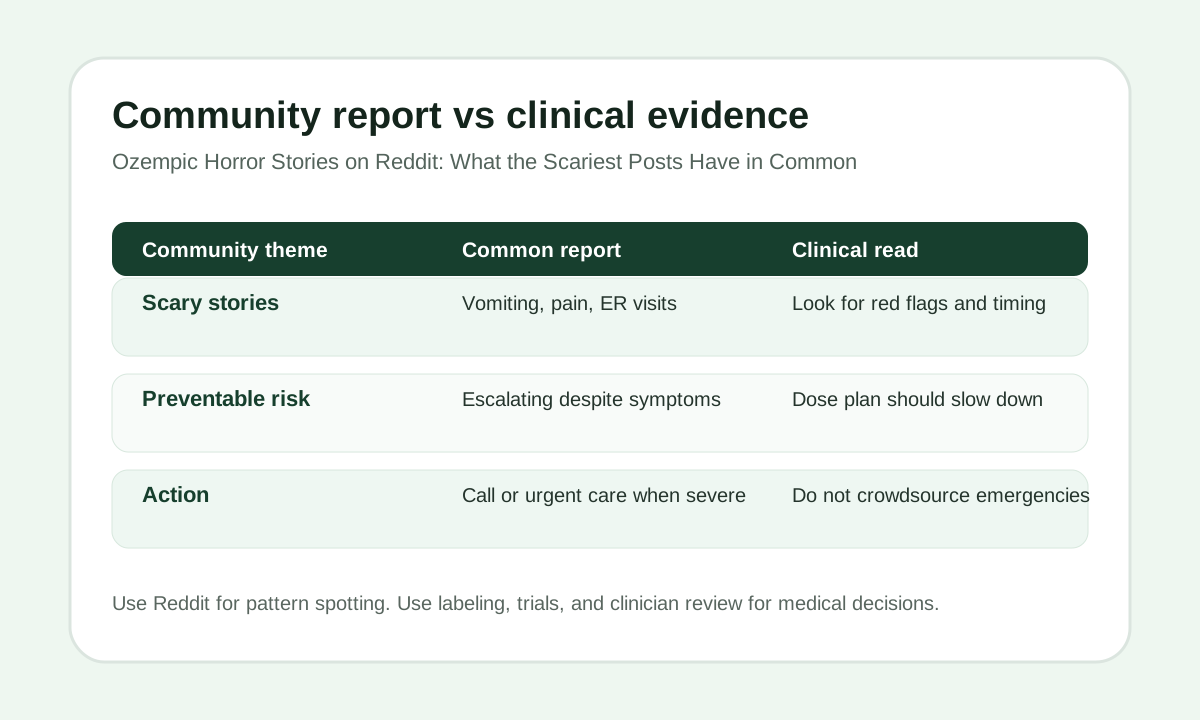
| Community theme | Common report | Clinical read |
|---|---|---|
| Scary stories | Vomiting, pain, ER visits | Look for red flags and timing |
| Preventable risk | Escalating despite symptoms | Dose plan should slow down |
| Action | Call or urgent care when severe | Do not crowdsource emergencies |
Where to go next on FormBlends
Use this Reddit summary as a starting point, then compare it with clinical and practical pages before making a health decision.
FAQ
What are the worst Ozempic horror stories on Reddit?
The most-discussed serious cases involve severe gastroparesis, pancreatitis, ileus, severe gallbladder attacks, acute kidney injury from dehydration, severe persistent vomiting, and rare cases of suicidal ideation. These get amplified by engagement but represent a small fraction of patient experience.
Are Reddit Ozempic horror stories representative?
No. Selection bias drives severe cases to the top of feeds.
What do Ozempic horror stories typically have in common?
Rapid dose escalation, pre-existing GI conditions, unverified sourcing, and limited clinical follow-up.
Is gastroparesis from Ozempic permanent?
In most cases it resolves over weeks to months after stopping. A small subset persists and requires ongoing management.
Can a single dose of Ozempic cause serious problems?
It is uncommon. The starter dose is low specifically to minimize this risk.
Did anyone die from Ozempic according to Reddit?
Reports exist; causality is difficult to assess from posts. Pharmacovigilance continues. Direct trial-attributable deaths were rare and not significantly different from placebo.
What should you do if you read an Ozempic horror story that scares you?
Read carefully for context, look at the comments for pushback, check against your own situation, talk to your prescriber, and verify with primary sources.
How often do hospitalizations happen on Ozempic?
Trial data put serious adverse event rates around 9 to 12 percent in semaglutide patients, only modestly higher than placebo. Most are not hospitalizations.
Can a Reddit horror story help me avoid a bad outcome?
Yes, sometimes. The recurring patterns (fast titration, missed screening, unverified sourcing) are actionable. Use them to inform your own care choices.
Is it safer to avoid Ozempic because of the horror stories?
That decision belongs in a clinical conversation. If you meet clinical criteria, the absolute risk of serious harm is low. If you don't meet criteria, the question doesn't really apply.
Are horror stories more common with compounded vs brand products?
The pattern data suggest that some of the most concerning cases involve poorly sourced products. Reputable 503A compounding pharmacies operating through licensed telehealth providers have not, to date, shown a systematically higher rate of serious adverse events than brand products, though comparative data are limited.
What's the worst Ozempic outcome described on Reddit?
The community has surfaced multiple severe cases including hospitalization, persistent symptoms, and rare reports of family member deaths. The horror stories vary in detail and confirmability. Each warrants careful reading rather than reflexive belief or dismissal.
Sources
- Wilding JPH et al. Once-Weekly Semaglutide in Adults with Overweight or Obesity. New England Journal of Medicine. 2021.
- Sodhi M et al. Risk of Gastrointestinal Adverse Events Associated With GLP-1 Receptor Agonists for Weight Loss. JAMA. 2023.
- FDA. Wegovy Prescribing Information. Updated 2024.
- FDA. Ozempic Prescribing Information. Updated 2024.
- FDA. Labeling Update on Ileus in GLP-1 Receptor Agonists. 2023.
- FDA. Warning Letters to Compounding Facilities for Semaglutide. 2023 through 2025.
- American Gastroenterological Association. Clinical Practice Update on Gastroparesis with GLP-1 Use. 2023.
- Rubino D et al. Effect of Continued Weekly Subcutaneous Semaglutide vs Placebo on Weight Loss Maintenance. JAMA. 2021.
- Endocrine Society. Pharmacological Management of Obesity Clinical Practice Guideline. Updated 2024.
- European Medicines Agency. Review of GLP-1 Receptor Agonists and Suicidal Ideation. 2024.
- FAERS Public Dashboard. Semaglutide Adverse Event Reports Through 2025.
- Singh G et al. Acute Pancreatitis Risk With GLP-1 Receptor Agonists: A Population-Based Cohort. JAMA Internal Medicine. 2024.
- American Society for Metabolic and Bariatric Surgery. Position Statement on GLP-1 Therapy in Pre- and Post-Surgical Patients. 2024.
Footer disclaimers
Platform Disclaimer. FormBlends is a telehealth company connecting patients with independent licensed clinicians and U.S. state-licensed pharmacies. Article content is informational and not a substitute for individual medical evaluation.
Compounded Medication Notice. Compounded semaglutide and tirzepatide are not FDA-approved. They are prepared by 503A compounding pharmacies in response to individual prescriptions and are not interchangeable with brand-name FDA-approved products. Quality varies between pharmacies; the patient and prescriber should verify the source.
Results Disclaimer. Adverse-event reports summarized here are user-submitted experiences and not verified clinical cases. Population-level rates are described in the cited literature. Individual experiences cannot be predicted from anecdotes.
Trademark Notice. Ozempic and Wegovy are registered trademarks of Novo Nordisk A/S. Mounjaro and Zepbound are registered trademarks of Eli Lilly and Company. Reddit subreddits are independent communities; FormBlends is not affiliated with, endorsed by, or sponsored by Reddit, Inc., Novo Nordisk, or Eli Lilly.
See your options in about 2 minutes
Take the free quiz and see what fits you. Quick, private, and no commitment to continue.
See my options →