Key Takeaways
- Ozempic is dosed once weekly by subcutaneous injection.
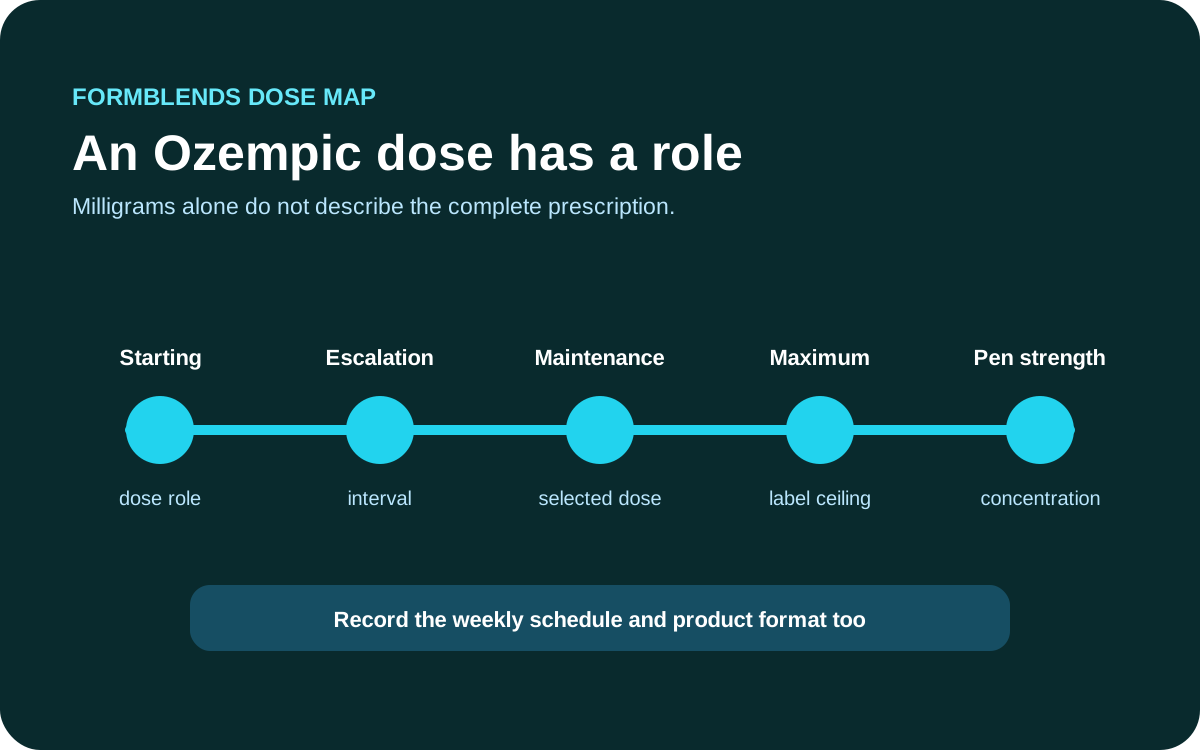
- Patients start at 0.25 mg weekly for 4 weeks, increase to 0.5 mg weekly, and may step up every 4 weeks to 1 mg, then 2 mg if needed.
- The 0.25 mg starting dose is for tolerance only and is not therapeutic for diabetes or weight management.
- Ozempic (semaglutide) is approved by the FDA for type 2 diabetes.
- The standard escalation schedule per the Novo Nordisk prescribing information (rev.
The short answer
Ozempic is dosed once weekly by subcutaneous injection. Patients start at 0.25 mg weekly for 4 weeks, increase to 0.5 mg weekly, and may step up every 4 weeks to 1 mg, then 2 mg if needed. The 0.25 mg starting dose is for tolerance only and is not therapeutic for diabetes or weight management.
To get the units for your own vial, use the semaglutide dosage calculator. Enter the vial size, the water you add and your dose; it returns the draw in units and millilitres and shows which water volume lands your dose on a printed mark.
Table of contents
- The 30-second answer
- The full Ozempic dosing schedule
- Why the 0.25 mg starting dose is not "treatment"
- How to inject Ozempic correctly each week
- What each Ozempic pen actually delivers per click
- Missed-dose rules (the part most patients get wrong)
- Switching between doses, pens, and strengths
- Maximum dose: when 2 mg is the right call
- Dosing during illness, surgery, or pregnancy
- Compounded semaglutide dosing vs Ozempic dosing
- FAQ
- Footer disclaimers
The full Ozempic dosing schedule
Ozempic (semaglutide) is approved by the FDA for type 2 diabetes. The standard escalation schedule per the Novo Nordisk prescribing information (rev. 2024) is:
Check your GLP-1 eligibility
Use our free BMI Calculator to see if you may qualify for provider-reviewed GLP-1 therapy.
Try the BMI Calculator →| Week | Dose | Pen used | Purpose |
|---|---|---|---|
| 1 to 4 | 0.25 mg weekly | 0.25/0.5 mg starter pen | GI tolerance only, not therapeutic |
| 5 to 8 | 0.5 mg weekly | 0.25/0.5 mg starter pen | First therapeutic dose |
| 9 to 12 | 1 mg weekly (optional step-up) | 1 mg pen | Standard maintenance for many patients |
| 13+ | 2 mg weekly (optional step-up) | 2 mg pen | Maximum approved dose |
Each step lasts at least 4 weeks. You can stay at any therapeutic dose (0.5, 1, or 2 mg) indefinitely if it controls blood sugar or supports your treatment goal. There's no requirement to escalate to the maximum dose.
The 4-week minimum at each step exists because semaglutide reaches steady-state blood concentration after about 4 to 5 half-lives. Semaglutide's half-life is approximately 7 days, so steady state takes 4 to 5 weeks. Escalating before steady state means you don't yet know how the current dose feels.
Some providers extend each step to 6 or 8 weeks for patients with significant nausea or other side effects. Slower titration trades off speed of glucose or weight response against tolerability.
Why the 0.25 mg starting dose is not "treatment"
This is the single most misunderstood part of Ozempic dosing. The 0.25 mg starter dose is not a therapeutic dose for type 2 diabetes. The Novo Nordisk label states this directly: 0.25 mg is for tolerance, not glycemic control.
What this means:
- Patients who start Ozempic and see no change in blood sugar in the first month are not "non-responders." They're at a sub-therapeutic dose by design.
- The 4-week tolerance period exists because GLP-1 receptor agonists slow gastric emptying, and the GI tract needs time to adapt. Starting at 0.5 mg without the 0.25 mg run-in causes severe nausea in roughly 25 to 35% of patients.
- The 0.5 mg dose is the first dose that actually treats diabetes. Most A1C reduction shows up after 8 to 12 weeks at 0.5 mg or higher.
For weight loss specifically, Ozempic is prescribed off-label. Wegovy (also semaglutide) is the FDA-approved weight-loss formulation and uses a different titration schedule that goes up to 2.4 mg weekly. Patients prescribed Ozempic off-label for weight loss usually follow the diabetes titration schedule.
How to inject Ozempic correctly each week
The Ozempic pen is a multi-dose, pre-filled disposable pen. Each pen contains roughly 4 weekly doses of the dose strength on the label.
Steps for a weekly injection:
- Wash hands. Inspect the pen window: the medication should be clear and colorless. If it's cloudy or particulate, don't use it.
- Attach a new NovoFine or NovoTwist needle. Pull off the outer and inner caps.
- Perform the flow check on the first injection from a new pen: turn the dose selector to the flow-check symbol (a small drop), hold the pen with the needle pointing up, press the button until a drop appears at the needle tip. Repeat up to 6 times if needed. (Skip this step on subsequent injections from the same pen.)
- Turn the dose selector to your prescribed dose. The dose selector clicks for each step.
- Choose an injection site: abdomen (avoid 2 inches around the navel), thigh, or upper arm. Rotate sites weekly.
- Wipe with alcohol, let air-dry.
- Pinch a fold of skin and insert the needle at 90 degrees. Press and hold the dose button until the dose counter returns to 0. Keep the needle in the skin for at least 6 seconds after the counter reaches 0 (this ensures the full dose is delivered).
- Remove the needle, dispose in a sharps container.
- Return the pen (without needle) to the refrigerator if it's a new pen, or to room temperature storage if it's already in use.
The 6-second hold is the most commonly skipped step. Skipping it can result in a partial dose, which in turn can look like reduced efficacy.
What each Ozempic pen actually delivers per click
Many patients want to know what one click on the dose selector represents, especially when troubleshooting a partial-dose situation. The four pens are calibrated differently:
| Pen | Concentration | Total volume | Doses per pen | Click resolution |
|---|---|---|---|---|
| 0.25/0.5 mg starter | 1.34 mg/mL | ~1.5 mL | 4 doses of 0.25 mg, then 4 doses of 0.5 mg | Selector shows specific doses (0.25 or 0.5), not individual clicks |
| 1 mg pen | 1.34 mg/mL | ~3 mL | 4 doses of 1 mg | Selector locks at 1 mg |
| 2 mg pen | 2.68 mg/mL | ~3 mL | 4 doses of 2 mg | Selector locks at 2 mg |
Unlike some insulin pens, the Ozempic pens don't allow free dose dialing. Each pen is pre-set for its dose strength. You cannot draw 0.75 mg from the 0.5 mg pen, and you cannot draw 1.5 mg from the 1 mg pen. Stepping up requires a new pen at the higher strength.
This is also why "I felt like I got less than usual" is rarely a real partial dose: as long as the dose counter returned to 0 and you held the needle in for 6 seconds, you got the full dose for that pen.
For details on click counts on the high-dose 8 mg compounded pens, see our clicks in 8 mg Ozempic pen guide.
Missed-dose rules (the part most patients get wrong)
The Novo Nordisk prescribing information has specific rules for missed doses:
Less than 5 days late: take the dose as soon as you remember, then continue your regular weekly schedule.
More than 5 days late: skip the missed dose entirely. Take your next dose on the regularly scheduled day.
The 5-day rule exists because semaglutide's half-life is approximately 7 days. Taking a delayed dose closer than 2 days from your next scheduled dose can produce a stacking effect, raising blood concentration beyond the steady-state target.
Common mistakes:
- Doubling up the dose to "make up for" a missed week. Don't. The next dose at the normal schedule is sufficient.
- Treating "Friday is my dose day" as immutable when life makes that impossible. You're allowed to shift your dose day permanently. Pick a new day, take your next dose on that day, and continue weekly from there.
- Ignoring the 5-day rule because it feels arbitrary. The rule comes from the drug's pharmacokinetics, not from convenience.
If you've missed multiple consecutive weekly doses (3 or more in a row), discuss with your provider before resuming. Some providers prefer to restart at a lower step to avoid GI side effects from a sudden re-introduction at the previous dose.
Switching between doses, pens, and strengths
Stepping up (0.25 to 0.5, 0.5 to 1, 1 to 2): Use the new pen on your next regularly scheduled dose day. There's no overlap or wash-out period. The previous pen is discarded if any liquid remains.
Stepping down: If you experience side effects severe enough to require a step-down, your provider may direct you to drop one level (e.g., 1 mg back to 0.5 mg). Use the next regularly scheduled dose day. Plan to stay at the lower dose at least 4 weeks before considering a re-escalation.
Switching from Ozempic to Wegovy or vice versa: Both are semaglutide, but the doses don't map one-to-one. Wegovy goes up to 2.4 mg weekly. Switching usually means restarting the titration ladder for the new product, not picking up where you left off.
Switching from compounded semaglutide to Ozempic: Patients on compounded semaglutide typically dose at the same milligram amounts as Ozempic. The pharmacology is similar (when both are pure semaglutide). Restarting at 0.25 mg is conservative; some clinicians let patients continue at their current compounded dose if the dose matches an Ozempic step (0.25, 0.5, 1, or 2 mg) and tolerance is established.
For patients moving the other direction (Ozempic to compounded), see our why is my compounded semaglutide red guide.
Maximum dose: when 2 mg is the right call
Ozempic 2 mg is the highest FDA-approved dose for type 2 diabetes. The SUSTAIN FORTE trial (Frias et al., Lancet Diabetes & Endocrinology, 2021) compared 2 mg against 1 mg in patients with inadequate glucose control on 1 mg.
Key findings:
- 2 mg reduced A1C by 0.23 percentage points more than 1 mg (1.94% vs 1.71% reduction over 40 weeks)
- Weight loss was 0.7 kg greater on 2 mg (6.9 kg vs 6.2 kg)
- GI side effects (nausea, vomiting, diarrhea) were modestly higher on 2 mg (34% vs 30%)
For patients whose glucose is well-controlled on 1 mg, the 2 mg step is unnecessary. Escalation to 2 mg makes sense when:
- A1C remains above target after 12 weeks at 1 mg
- The patient tolerates 1 mg well (no significant nausea or GI issues)
- The patient's treatment plan calls for additional weight reduction
The 2 mg dose is not a "weight loss dose." Patients seeking weight loss as the primary goal are typically better served by Wegovy at 2.4 mg, which is the FDA-approved indication for weight management.
Dosing during illness, surgery, or pregnancy
Acute illness with vomiting or dehydration: If you're vomiting and unable to keep fluids down, contact your provider. Some clinicians pause Ozempic during acute GI illness because GLP-1 medications worsen dehydration risk by reducing fluid intake. Resumption usually happens after 48 to 72 hours of normal eating and hydration.
Scheduled surgery requiring anesthesia: The American Society of Anesthesiologists (ASA) issued guidance in 2023 recommending that GLP-1 medications be held before elective surgery requiring general anesthesia. The recommendation is based on aspiration risk from delayed gastric emptying. Standard practice is to hold the weekly dose for at least 1 week before surgery (some anesthesiologists prefer 2 weeks). Confirm the protocol with your surgeon and anesthesiologist.
Pregnancy: Ozempic is not recommended during pregnancy. The label states semaglutide should be discontinued at least 2 months before a planned pregnancy because of the long half-life. If you become pregnant unexpectedly while on Ozempic, contact your provider promptly.
Breastfeeding: There is limited human data on semaglutide in breast milk. Most clinical guidelines recommend against using Ozempic while breastfeeding. Animal studies show transfer to milk.
Children under 18: Ozempic is not approved for patients under 18. Wegovy is approved for adolescents 12+ for chronic weight management.
Compounded semaglutide dosing vs Ozempic dosing
Compounded semaglutide is dosed in milligrams, the same as Ozempic. The dose ladder most compounding pharmacies use mirrors the Ozempic schedule:
| Week | Dose | Notes |
|---|---|---|
| 1 to 4 | 0.25 mg weekly | Tolerance step |
| 5 to 8 | 0.5 mg weekly | First therapeutic dose |
| 9 to 12 | 1 mg weekly | Optional step-up |
| 13+ | 1.7 to 2.4 mg weekly | Provider-directed escalation |
Differences:
- Compounded semaglutide is drawn from a vial with a U-100 insulin syringe rather than delivered by a pre-filled pen.
- The dose is measured in units on the syringe, which depend on the vial's concentration. A 2.5 mg/mL vial means 0.25 mg = 10 units. A 5 mg/mL vial means 0.25 mg = 5 units.
- Some compounding pharmacies dose to 1.7 mg or 2.4 mg as final maintenance doses, mirroring Wegovy rather than Ozempic.
Compounded semaglutide is not FDA-approved and is not interchangeable with Ozempic. The active ingredient is the same chemical entity in pharmacies that source from FDA-registered API suppliers, but the finished product is not the same drug as Ozempic. For background, see our why compounded semaglutide red and units 2.5 mg tirzepatide guides.
FAQ
What is the standard Ozempic dosing schedule?
0.25 mg weekly for 4 weeks, then 0.5 mg weekly for at least 4 weeks. Optional step-ups every 4 weeks to 1 mg, then 2 mg, based on glycemic response and tolerance. Most patients reach their target dose by week 12 to 16.
Why does Ozempic start at 0.25 mg?
The 0.25 mg dose is for GI tolerance, not for treating diabetes. It gives the digestive system time to adapt to slowed gastric emptying before stepping up to the first therapeutic dose (0.5 mg). Starting higher causes severe nausea in 25 to 35% of patients.
How long do you stay on each Ozempic dose?
At least 4 weeks per step, per the Novo Nordisk label. Some providers extend to 6 or 8 weeks for patients with side effects. After reaching a therapeutic dose (0.5 mg or higher), you can stay on that dose indefinitely if it works.
Can I take Ozempic every other week?
No. Ozempic is dosed weekly. Stretching the interval reduces the steady-state blood concentration and gives less consistent glucose control. If cost is the issue, talk with your provider about alternative options rather than self-rationing.
What if I miss a dose?
If less than 5 days late, take it as soon as you remember and continue your regular weekly schedule. If more than 5 days late, skip it and take your next dose at the regularly scheduled time. Don't double up.
Can I change my Ozempic injection day?
Yes. The dose day isn't fixed in the prescription. Pick a new day at least 2 days after your last injection, take that week's dose, and continue weekly from the new day.
What is the maximum dose of Ozempic?
2 mg weekly is the maximum FDA-approved dose for type 2 diabetes. There is no higher approved dose. Patients needing more aggressive weight management are typically transitioned to Wegovy.
Is Ozempic 2 mg better than 1 mg for weight loss?
Modestly. The SUSTAIN FORTE trial showed an additional 0.7 kg of weight loss on 2 mg vs 1 mg over 40 weeks. The improvement is real but small. Most weight loss happens at 1 mg or lower.
How many doses are in an Ozempic pen?
Each pen contains 4 weekly doses at the labeled strength. The 0.25/0.5 mg starter pen contains 4 doses of 0.25 mg followed by 4 doses of 0.5 mg from the same pen.
Do I need to refrigerate Ozempic?
Unopened pens: refrigerate at 36 to 46°F. In-use pens: can stay at room temperature (up to 86°F) for up to 56 days. Don't freeze. Don't expose to direct sunlight.
Can I drink alcohol on Ozempic?
Moderate alcohol is not contraindicated. Alcohol can worsen GI side effects and can increase the risk of low blood sugar in patients also taking insulin or sulfonylureas. Ozempic alone rarely causes hypoglycemia.
Should I split my Ozempic dose into two smaller injections?
No. Ozempic is dosed once weekly. Splitting doesn't give you a smoother profile because the half-life is already 7 days. Splitting also doesn't reduce side effects in any predictable way.
What if I gain weight back after stopping Ozempic?
Most patients regain a portion of the weight lost on Ozempic within 12 months of stopping (per the STEP 4 trial extension data). The weight isn't gained because of Ozempic; it's because the underlying physiology that drove weight gain in the first place returns when treatment stops. Long-term treatment is often required for sustained results.
Can I use compounded semaglutide instead of Ozempic at the same dose?
The active ingredient is the same chemical entity, and dose ladders are similar. Compounded semaglutide is not FDA-approved and is not interchangeable with Ozempic. A licensed clinician should make the decision and direct the dose.
Author / review note
References include the Ozempic prescribing information (Novo Nordisk, rev. 2024), Frias et al., Lancet Diabetes & Endocrinology, 2021 (SUSTAIN FORTE), the STEP 4 trial extension (Rubino et al., JAMA, 2021), and the American Society of Anesthesiologists guidance on GLP-1 medications and elective surgery (2023).
Sources
- The Ozempic prescribing information (Novo Nordisk, rev. 2024).
- Frias et al., Lancet Diabetes & Endocrinology, 2021 (SUSTAIN FORTE).
- The STEP 4 trial extension (Rubino et al., JAMA, 2021).
- The American Society of Anesthesiologists guidance on GLP-1 medications and elective surgery (2023).
Footer disclaimers (all 4 verbatim)
Platform Disclaimer. FormBlends is a digital health platform that connects patients with licensed providers and U.S.-based pharmacies. We do not manufacture, prescribe, or dispense medication directly. All clinical decisions are made by independent licensed providers.
Compounded Medication Notice. Compounded semaglutide and tirzepatide are not FDA-approved. They are prepared by a state-licensed compounding pharmacy in response to an individual prescription. Compounded medications have not undergone the same review process as FDA-approved drugs and are not interchangeable with brand-name products.
Results Disclaimer. Individual results vary. Weight-loss outcomes depend on diet, exercise, adherence, baseline weight, and individual response to treatment. Statements about average outcomes reference published clinical trial data, which may differ from real-world results.
Trademark Notice. Ozempic, Wegovy, Rybelsus, NovoFine, and NovoTwist are registered trademarks of Novo Nordisk A/S. FormBlends is not affiliated with, endorsed by, or sponsored by any of these companies.
See your options in about 2 minutes
Take the free quiz and see what fits you. Quick, private, and no commitment to continue.
See my options →