All GLP-1 medications from licensed 503A compounding pharmacies Browse Products
Post Glp 1 Maintenance Diet
You've reached your goal weight on GLP-1 medication. Now what? Figuring out your diet after stopping GLP-1 is one of the most important steps in your...
See your GLP-1 options in about 2 minutes. Free and private.See my options →
You've reached your goal weight on GLP-1 medication. Now what? Figuring out your diet after stopping GLP-1 is one of the most important steps in your entire progress.
You've reached your goal weight on GLP-1 medication. Now what? Figuring out your diet after stopping GLP-1 is one of the most important steps in your entire progress. Without a solid plan, Available evidence indicates that many people regain a significant portion of their lost weight within the first year off medication.
Key Takeaways:
- Discover why weight regain happens after stopping glp-1
- Recalibrating Your Calorie Needs
- Protein: Your Most Important Macronutrient
- Building Sustainable Habits Without Medication
- Understand what to do if weight starts creeping back
But this doesn't have to be your story. With the right approach to calories, protein, and habits, you can maintain your results long-term. This guide walks you through exactly how to transition off GLP-1 medication while keeping the weight off.
Why Weight Regain Happens After Stopping GLP-1
Let's be honest about what's going on in your body. GLP-1 medications work by mimicking a hormone that controls appetite and blood sugar. When you stop taking the medication, that artificial hormone support goes away.
Your appetite will come back. For most people, it returns gradually over 2-4 weeks. Some people feel it within days. This is normal. It doesn't mean something is wrong with you.
A 2023 study in the journal Diabetes, Obesity and Metabolism found that participants who stopped semaglutide regained about two-thirds of their lost weight within one year. But here's the important detail: the study participants didn't receive structured dietary guidance during the transition.
People who had a maintenance plan in place did significantly better. The difference wasn't genetics or willpower. It was preparation.
Your metabolism also adjusts during weight loss. A person who lost 50 pounds needs fewer calories than they did at their higher weight. This is called metabolic adaptation. Your body has become more efficient, which means the calorie intake that created your deficit is now closer to your maintenance level.
Understanding these biological realities isn't meant to scare you. It's meant to help you prepare. Knowledge is your best tool here.
Recalibrating Your Calorie Needs
"Compounding pharmacies serve a critical role in healthcare, but patients need to understand the difference between a properly regulated 503B facility and an unregulated operation. Ask about PCAB accreditation and third-party testing.") Dr. Scott Brunner, PharmD, Alliance for Pharmacy Compounding
GLP-1 Weight Loss Results by Medication. Based on published STEP and SURMOUNT trial data.
View data table
Bar chart showing glp-1 weight loss results by medication: Tirzepatide (22), Semaglutide (15), Liraglutide (8), Retatrutide (24)
Category
Mean Body Weight Loss (%)
Detail
Tirzepatide
22
~22% body weight at 72 wks
Semaglutide
15
~15% body weight at 68 wks
Liraglutide
8
~8% body weight at 56 wks
Retatrutide
24
~24% in Phase 2 trial
The number of calories you ate while on GLP-1 medication is almost certainly too low for maintenance. Most people on treatment eat 1,000-1,500 calories per day because the medication suppresses their appetite. That's a weight loss amount, not a maintenance amount.
Your first step is to figure out your new maintenance calories. A rough formula is your current body weight multiplied by 12-14, depending on your activity level. So if you weigh 165 pounds and exercise moderately, your maintenance calories are roughly 1,980-2,310 per day.
Free Download: 7-Day High-Protein GLP-1 Meal Plan
This plan works for active treatment and maintenance phases. It includes calorie adjustment guides for transitioning off medication. Get yours free (we'll email it to you instantly.
[Download Your Free Meal Plan]
Don't jump straight to your maintenance calories. Increase gradually over 2-4 weeks. Add 100-200 calories per week. This gives your body time to adjust and helps you avoid the rebound binge that many people experience when their appetite returns.
Here's a sample transition schedule:
Week 1 off medication: Add 200 calories to your current daily intake
Week 2: Add another 150 calories
Week 3: Add another 150 calories
Week 4: Evaluate. Are you maintaining weight? Adjust up or down by 100 calories
Patient Perspective:"The meal plan was a big deal. Before, I'd skip meals because I wasn't hungry and then wonder why I felt terrible. Learning to eat small, protein-rich meals even without appetite made the whole experience smoother.") Karen W., 48, FormBlends patient (name changed for privacy)
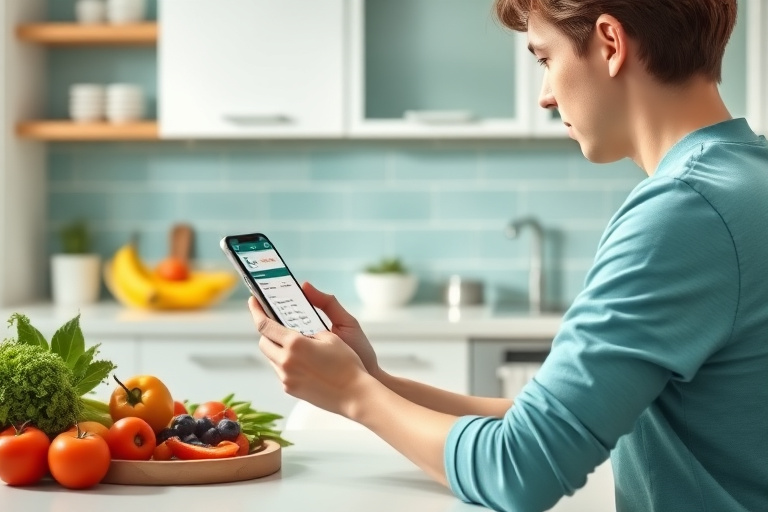
Track everything during this transition period. The makes it simple to log meals and see your trends over time. This isn't the time to wing it.
Protein: Your Most Important Macronutrient
If there's one thing you carry forward from GLP-1 treatment, make it your protein habit. Protein is the single most important macronutrient for maintaining weight loss. Here's why.
Check your GLP-1 eligibility
Use our free BMI Calculator to see if you may qualify for provider-reviewed GLP-1 therapy.
Protein has the highest thermic effect of food. Your body burns more calories digesting protein than carbs or fat. About 20-30% of protein calories are used just in digestion. Compare that to 5-10% for carbs.
Protein also keeps you full longer. When your GLP-1 medication was handling appetite suppression, you might not have noticed this. Now that you're off medication, protein becomes your natural appetite management tool.
Aim for 0.7-1.0 grams of protein per pound of body weight per day. For a 165-pound person, that's 115-165 grams daily. Spread it across 3-4 meals and 1-2 snacks.
Good protein sources include:
Chicken breast (31g per 4 oz)
Greek yogurt (15-20g per cup)
Eggs (6g each)
Lean ground turkey (22g per 4 oz)
Protein powder (25-30g per scoop)
Cottage cheese (14g per half cup)
If you built a during treatment, keep it going. Those habits are now protecting your results.
Building Sustainable Habits Without Medication
The medications gave you a window. You had reduced appetite and cravings, which made it easier to build new habits. Now it's time to rely on those habits.
Meal structure matters. Keep eating at regular times. Don't skip meals thinking it will help you stay lean. Skipping meals leads to overeating later, especially once your natural appetite returns.
Keep weighing yourself. Weekly weigh-ins catch small gains before they become big ones. Available evidence indicates that people who weigh themselves regularly are more successful at maintaining weight loss. Don't obsess over daily fluctuations, but do track the trend.
Stay active. Exercise becomes even more important after stopping GLP-1 medication. Resistance training preserves muscle mass, which keeps your metabolism higher. Aim for at least 3 strength training sessions per week.
Have a "red line" weight. Pick a number that's 5-7 pounds above your goal weight. If you hit it, take immediate action. Tighten up your diet, increase exercise, or talk to your about whether a short course of medication might help you reset.
Don't demonize the medication. Some people benefit from staying on a lower maintenance dose long-term. This is a legitimate medical approach. Talk to your provider about whether this makes sense for you.
What to Do If Weight Starts Creeping Back
First, don't panic. Small fluctuations of 2-3 pounds are normal and often related to water retention, hormonal cycles, or sodium intake. Look at the trend over 2-4 weeks before making changes.
If you're seeing a consistent upward trend, start with these steps:
Log your food for a week. You may be eating more than you think. Calorie creep is real.
Check your protein. If it's dropped below 0.7g per pound, bring it back up.
Review your activity. Have you been skipping workouts? Life gets busy, but movement matters.
Evaluate your sleep. Poor sleep drives cravings and hunger hormones. Aim for 7-8 hours.
If you've tried all of these and weight is still climbing, reach out to your provider. Going back on GLP-1 medication at a maintenance dose isn't failure. It's smart medicine. Many chronic conditions require ongoing treatment, and obesity is no different.
The can help you share your tracking data with your provider so they can make informed recommendations.
Frequently Asked Questions
How quickly will my appetite return after stopping GLP-1 medication?
Most people notice their appetite returning within 1-4 weeks after stopping treatment. The timeline varies by individual and by which medication you were taking. Longer-acting formulations may take longer to fully clear your system.
How many calories should I eat after stopping semaglutide or tirzepatide?
Start by calculating your maintenance calories (body weight x 12-14, depending on activity level). Don't jump to that number immediately. Increase gradually by 100-200 calories per week over the first month off medication to avoid rebound overeating.
Can I go back on GLP-1 medication if I start regaining weight?
Yes. Many providers prescribe GLP-1 medications at lower maintenance doses for long-term weight management. This is a medically sound approach. Talk to your provider about whether intermittent or maintenance dosing is right for you.
What's the most important thing I can do to prevent weight regain?
Maintain high protein intake (0.7-1.0g per pound of body weight), continue strength training at least 3 times per week, and monitor your weight weekly. Having a structured plan is the biggest predictor of long-term success.
Should I continue tracking my food after stopping GLP-1 medication?
Yes, at least for the first 3-6 months. Tracking helps you recalibrate your portion sizes and catch calorie creep early. After that, many people can maintain their weight with less frequent tracking as long as they stay aware of their habits.
Start your treatment Today
Every transformation starts with a single step. Talk to a licensed FormBlends provider about whether this approach is right for you, consultations are free and confidential.
Medical References
Davies M, Færch L, Jeppesen OK, et al. Semaglutide 2.4 mg once a week in adults with overweight or obesity, and type 2 diabetes (STEP 2). Lancet. 2021;397(10278):971-984. [PubMed | ClinicalTrials.gov | DOI]
Wadden TA, Bailey TS, Billings LK, et al. Effect of Subcutaneous Semaglutide vs Placebo as an Adjunct to Intensive Behavioral Therapy on Body Weight in Adults With Overweight or Obesity (STEP 3). JAMA. 2021;325(14):1403-1413. [PubMed | ClinicalTrials.gov | DOI]
Garvey WT, Batterham RL, Bhatt DL, et al. Two-year effects of semaglutide in adults with overweight or obesity (STEP 5). Nat Med. 2022;28(10):2083-2091. [PubMed | ClinicalTrials.gov | DOI]
Wilding JPH, Batterham RL, Calanna S, et al. Once-Weekly Semaglutide in Adults with Overweight or Obesity. N Engl J Med. 2021;384(11):989-1002. [PubMed | ClinicalTrials.gov | DOI]
Sources &. References
Wilding JPH, Batterham RL, Calanna S, et al. Once-Weekly Semaglutide in Adults with Overweight or Obesity. N Engl J Med. 2021;384(11):989-1002. Doi:10.1056/NEJMoa2032183
Davies M, Færch L, Jeppesen OK, et al. Semaglutide 2.4 mg once a week in adults with overweight or obesity, and type 2 diabetes (STEP 2 (Davies et al., Lancet, 2021)). Lancet. 2021;397(10278):971-984. Doi:10.1016/S0140-6736(21)00213-0
Wadden TA, Bailey TS, Billings LK, et al. Effect of Subcutaneous Semaglutide vs Placebo as an Adjunct to Intensive Behavioral Therapy on Body Weight in Adults With Overweight or Obesity (STEP 3 (Wadden et al., JAMA, 2021)). JAMA. 2021;325(14):1403-1413. Doi:10.1001/jama.2021.1831
Garvey WT, Batterham RL, Bhatt DL, et al. Two-Year Effects of Semaglutide in Adults with Overweight or Obesity (STEP 5 (Garvey et al., Nat Med, 2022)). Nat Med. 2022;28:2083-2091. Doi:10.1038/s41591-022-02026-4
Lincoff AM, Brown-Frandsen K, Colhoun HM, et al. Semaglutide and Cardiovascular Outcomes in Obesity without Diabetes. N Engl J Med. 2023;389(24):2221-2232. Doi:10.1056/NEJMoa2307563
Wilding JPH, et al. STEP 1[4] (Wilding et al., NEJM, 2021) Supplementary Appendix. Body composition analysis via DXA. N Engl J Med. 2021;384(11). Doi:10.1056/NEJMoa2032183
Stierman B, Afful J, Carroll MD, et al. National Health and Nutrition Examination Survey 2017-March 2020 Prepandemic Data Files. NCHS Data Brief. No. 492. CDC/NCHS. 2023.
Sumithran P, Prendergast LA, Delbridge E, et al. Long-Term Persistence of Hormonal Adaptations to Weight Loss. N Engl J Med. 2011;365(17):1597-1604. Doi:10.1056/NEJMoa1105816
Nothing in this article should be construed as medical advice. The information provided is educational only. Always consult with your healthcare provider before beginning, modifying, or discontinuing any medication or treatment. FormBlends connects patients with licensed providers for individualized care.
Last updated: 2026-03-24
See your options in about 2 minutes
Take the free quiz and see what fits you. Quick, private, and no commitment to continue.
Check the current prescribing information, regulatory status, and trial source before treating an investigational or newly approved medication as interchangeable with an established therapy.
Check before ordering
Regulatory status, labels, trial records, and sponsor updates can change quickly for obesity-drug pipeline pages. This snapshot is designed to make verification easier, not to replace checking the official source before making a medical or purchase decision. Page updated: 2026-04-01.
Continue with decision-grade research
Compare the options behind this question
These pages separate verified facts, commercial terms, and unresolved claims so you can check the evidence before choosing a provider.
Use this page to decide if a provider review is the right next step
Related treatment context
Post Glp 1 Maintenance Diet research is most useful when it helps you compare eligibility, expected results, side effects, cost, and the supervision needed before treatment.
Medical Disclaimer: This content is for informational purposes only and does not constitute medical advice. Always consult a qualified healthcare provider before starting, stopping, or changing any medication or treatment. FormBlends articles are source-checked against medical and regulatory references, but they are not a substitute for a personal medical consultation.
Written by FormBlends Editorial Research
Prepared by FormBlends Editorial Research.
Ready to get started?
Provider-reviewed GLP-1 and peptide therapy, delivered to your door.