Key Takeaway
Your body composition on GLP-1 medication tells a very different story than your bathroom scale. This body composition GLP-1 resource covers the important information you need to make informed decisions. You might step on the scale and see the same number for two weeks straight.
Your body composition on GLP-1 medication tells a very different story than your bathroom scale. This body composition GLP-1 resource covers the important information you need to make informed decisions. You might step on the scale and see the same number for two weeks straight. Meanwhile, you have lost an inch off your waist and your clothes fit better. What is going on?
Key Takeaways: - Understand what body composition actually means - Learn how to measure body composition at home - Discover why the scale stalls and what to do about it - Body Composition Goals by Phase
The scale measures total body weight. It doesn't distinguish between fat, muscle, water, food in your gut, or inflammation. When you're on a GLP-1 medication and exercising, all of these change simultaneously. Let us break down what really matters.
What Body Composition Actually Means
Body composition refers to the ratio of fat mass to lean mass in your body. Lean mass includes muscle, bone, organs, and water. Fat mass is exactly what it sounds like.
Two people can weigh the same amount and look completely different. A 180-pound person with 20% body fat looks and feels dramatically different from a 180-pound person at 35% body fat. They have the same scale weight but entirely different body compositions.
On GLP-1 medications, your body composition can shift in several ways: - You lose fat (great) - You lose water from reduced inflammation and lower carb intake (temporary scale drop) - You may lose some muscle if you aren't training and eating enough protein (not great) - You may gain muscle if you start resistance training (awesome, but the scale might not move)
This is why body composition on GLP-1 is the metric that matters. A 5-pound fat loss paired with a 3-pound muscle gain shows as only 2 pounds on the scale. But your body looks and functions dramatically better.
Learn more about for additional measurement strategies.
How to Measure Body Composition at Home
You don't need expensive equipment to track meaningful changes. Here are practical methods ranked by accuracy and accessibility.
View data table
| Category | Impact on Treatment Outcomes (%) | Detail |
|---|---|---|
| Protein Intake | 90 | Preserves muscle mass |
| Exercise | 85 | Enhances weight loss |
| Sleep Quality | 78 | Supports metabolism |
| Hydration | 72 | Reduces side effects |
| Stress Mgmt | 65 | Cortisol reduction |

"What makes tirzepatide particularly interesting is the dual GIP/GLP-1 mechanism. We're seeing that GIP receptor activation appears to amplify the metabolic effects in ways we didn't fully anticipate from the preclinical data.") Dr. Ania Jastreboff, MD, PhD, Yale School of Medicine, lead author of SURMOUNT-1[1]
Free Download: 12-Week Strength Program Includes body composition tracking templates and measurement guides. Know exactly what to measure, when, and how. Get yours free (we'll email it to you instantly. [Download Your Free Program]
Tape measurements (most practical): - Measure waist at the navel, hips at widest point, chest, upper arms, and thighs - Take measurements every two weeks, same time of day, same conditions - Your waist measurement is the most important health indicator - Shrinking waist + stable arms = you're losing fat and keeping muscle
Progress photos (surprisingly useful): - Take photos monthly in the same lighting, angle, and clothing - Front, side, and back views - Your brain adjusts to gradual changes. Photos show them clearly.
How clothes fit: - Belt notches, how pants fit in the waist, how shirts fit in the shoulders - Simple but effective for long-term trends
Patient Perspective: "I started resistance training three times a week when I began semaglutide, specifically to protect muscle mass. After 6 months, my body fat dropped from 38% to 27%, but I actually gained 2 pounds of lean mass. The strength training made a huge difference.") Tom H., 50, FormBlends patient (name changed for privacy)
Body composition scales: - Better than a regular scale but not highly accurate - Useful for tracking trends over time, not absolute numbers - Hydration levels significantly affect readings
DEXA scan (gold standard): - Available at many clinics for $50-150 - Measures fat, muscle, and bone density precisely - Get one at baseline and every 3 months
Use the to log all your measurements in one place and spot trends over time.
Why the Scale Stalls and What to Do About It
Scale plateaus on GLP-1 medication are extremely common and almost never mean you have stopped making progress. Here is why they happen:
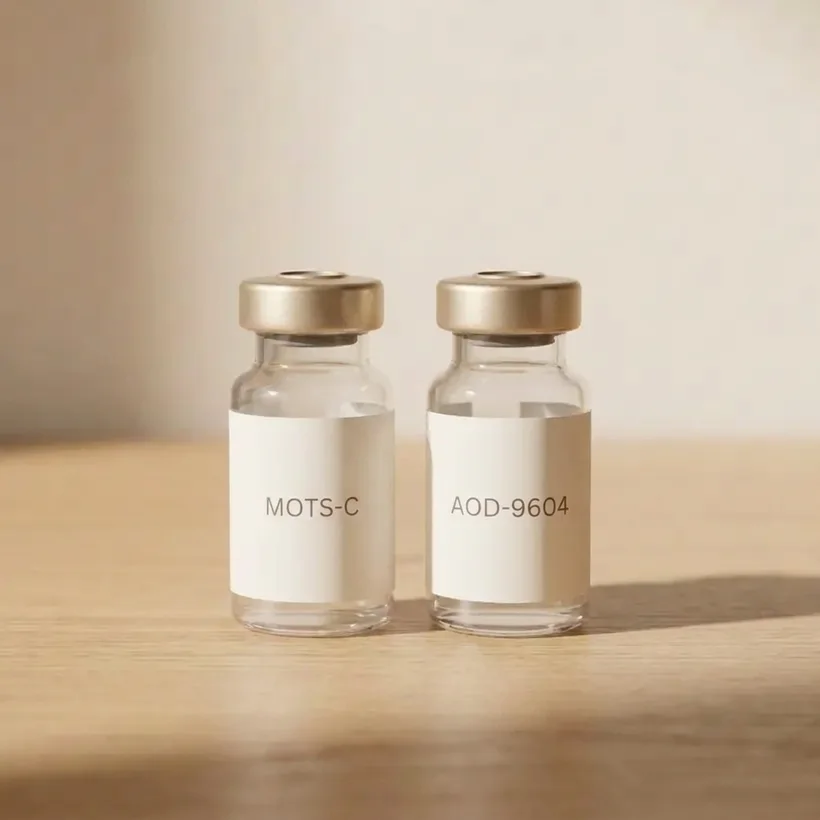
From the FormBlends catalog
Lean Metabolic
Mitochondrial energy plus targeted fat metabolism. · Bundle from $381 · provider-reviewed peptide bundle.
View Lean Metabolic →Water retention cycles. Your body retains and releases water in unpredictable patterns. Stress, sodium intake, sleep quality, menstrual cycle, and even weather can cause 2-5 pounds of water fluctuation.
Muscle adaptation. If you started strength training, your muscles retain more water and glycogen. This is a sign of healthy adaptation, not a problem.
Digestive timing. GLP-1 medications slow gastric emptying. Food sits in your system longer. Your morning weight depends partly on when you last ate and how quickly your body processed it.
Fat loss is still happening. You can lose fat and gain water simultaneously. The scale stays flat, but your waist shrinks. This is the most common plateau scenario.
What to do during a plateau: - Keep doing what you're doing for at least 2-3 weeks before changing anything - Check your measurements. If your waist is still shrinking, you're still losing fat. - Review your protein intake. Are you hitting your targets? - Check your sleep quality. Poor sleep stalls fat loss. - Talk to your if the plateau lasts more than 4-6 weeks
Don't chase the scale by cutting calories further or adding excessive cardio. That path leads to muscle loss and metabolic slowdown.
Body Composition Goals by Phase
Knowing what to expect at each phase helps you stay motivated and make smart decisions.
Months 1-3: Rapid changes - Scale weight drops most quickly during this phase - Much of the early loss is water and reduced food volume - Start strength training now to protect muscle from the beginning - Measurements should show waist reduction within 4-6 weeks
Months 3-6: Body recomposition - Scale weight loss may slow significantly - This is when body composition changes shine - You may notice muscle definition even as the scale barely moves - Clothes fit dramatically better - Energy levels typically improve
Months 6-12: Fine tuning - Scale changes become very gradual - Body composition continues improving if you're training - Strength should be increasing steadily - Focus on performance metrics, not scale weight
Beyond 12 months: Maintenance - Your new body composition becomes your baseline - Continue strength training to maintain muscle - Scale weight may stabilize well above your "dream number" and that's okay - Health markers matter more than any number on a scale
Read our to manage any symptoms that interfere with your exercise and nutrition plan.
Frequently Asked Questions
How much of my weight loss on GLP-1 is fat versus muscle?
Without resistance training and adequate protein, studies suggest 25-40% of weight lost may be lean mass. With a proper training and nutrition plan, you can reduce lean mass loss to 10-15% of total weight lost.
Should I weigh myself daily on GLP-1?
Daily weighing is fine if you track the weekly average rather than day-to-day changes. Daily fluctuations of 2-5 pounds are completely normal and don't reflect fat changes. If daily weighing causes stress, switch to weekly weigh-ins.
What is a healthy body fat percentage to aim for?
For women, 20-30% body fat is generally considered healthy. For men, 15-25%. These ranges support hormonal health, immune function, and energy levels. Extremely low body fat isn't healthier and can cause problems.
Can I gain muscle while losing fat on GLP-1?
Yes, especially if you're new to strength training. This is called body recomposition. The scale might not move much, but your body shape changes significantly. Prioritize protein intake and consistent resistance training to maximize this effect.
Start your weight loss Today
Every transformation starts with a single step. Talk to a licensed FormBlends provider about whether this approach is right for you, consultations are free and confidential.
Medical References
- Jastreboff AM, Aronne LJ, Ahmad NN, et al. Tirzepatide Once Weekly for the Treatment of Obesity. N Engl J Med. 2022;387(3):205-216. [PubMed | ClinicalTrials.gov | DOI]
- Wilding JPH, Batterham RL, Calanna S, et al. Once-Weekly Semaglutide in Adults with Overweight or Obesity. N Engl J Med. 2021;384(11):989-1002. [PubMed | ClinicalTrials.gov | DOI]
- Davies M, Færch L, Jeppesen OK, et al. Semaglutide 2.4 mg once a week in adults with overweight or obesity, and type 2 diabetes (STEP 2). Lancet. 2021;397(10278):971-984. [PubMed | ClinicalTrials.gov | DOI]
- Wadden TA, Bailey TS, Billings LK, et al. Effect of Subcutaneous Semaglutide vs Placebo as an Adjunct to Intensive Behavioral Therapy on Body Weight in Adults With Overweight or Obesity (STEP 3). JAMA. 2021;325(14):1403-1413. [PubMed | ClinicalTrials.gov | DOI]
- Garvey WT, Batterham RL, Bhatt DL, et al. Two-year effects of semaglutide in adults with overweight or obesity (STEP 5). Nat Med. 2022;28(10):2083-2091. [PubMed | ClinicalTrials.gov | DOI]
Sources &. References
- Wilding JPH, et al. STEP 1[2] (Wilding et al., NEJM, 2021) Supplementary Appendix. Body composition analysis via DXA. N Engl J Med. 2021;384(11). Doi:10.1056/NEJMoa2032183
- Stierman B, Afful J, Carroll MD, et al. National Health and Nutrition Examination Survey 2017-March 2020 Prepandemic Data Files. NCHS Data Brief. No. 492. CDC/NCHS. 2023.
- Sumithran P, Prendergast LA, Delbridge E, et al. Long-Term Persistence of Hormonal Adaptations to Weight Loss. N Engl J Med. 2011;365(17):1597-1604. Doi:10.1056/NEJMoa1105816
- Wilding JPH, Batterham RL, Calanna S, et al. Once-Weekly Semaglutide in Adults with Overweight or Obesity. N Engl J Med. 2021;384(11):989-1002. Doi:10.1056/NEJMoa2032183
- Davies M, Færch L, Jeppesen OK, et al. Semaglutide 2.4 mg once a week in adults with overweight or obesity, and type 2 diabetes (STEP 2 (Davies et al., Lancet, 2021)). Lancet. 2021;397(10278):971-984. Doi:10.1016/S0140-6736(21)00213-0
- Wadden TA, Bailey TS, Billings LK, et al. Effect of Subcutaneous Semaglutide vs Placebo as an Adjunct to Intensive Behavioral Therapy on Body Weight in Adults With Overweight or Obesity (STEP 3 (Wadden et al., JAMA, 2021)). JAMA. 2021;325(14):1403-1413. Doi:10.1001/jama.2021.1831
- Garvey WT, Batterham RL, Bhatt DL, et al. Two-Year Effects of Semaglutide in Adults with Overweight or Obesity (STEP 5 (Garvey et al., Nat Med, 2022)). Nat Med. 2022;28:2083-2091. Doi:10.1038/s41591-022-02026-4
- Lincoff AM, Brown-Frandsen K, Colhoun HM, et al. Semaglutide and Cardiovascular Outcomes in Obesity without Diabetes. N Engl J Med. 2023;389(24):2221-2232. Doi:10.1056/NEJMoa2307563
This article is for educational purposes only and doesn't constitute medical advice. Always consult with a licensed healthcare provider before starting, changing, or stopping any medication or supplement. FormBlends connects you with licensed providers who can evaluate your individual health needs.
Last updated: 2026-03-24
See your options in about 2 minutes
Take the free quiz and see what fits you. Quick, private, and no commitment to continue.
See my options →