Key Takeaway
Knowing how to measure body composition on GLP-1 medication is more important than simply tracking your weight. This measure body composition GLP-1 resource covers the important information you need to make informed decisions.
Knowing how to measure body composition on GLP-1 medication is more important than simply tracking your weight. This measure body composition GLP-1 resource covers the important information you need to make informed decisions. When you lose weight with compounded semaglutide or tirzepatide, you want to lose fat and preserve muscle. The scale can't tell you the difference. In this guide, we break down the most accessible methods for tracking body composition, explain why it matters during GLP-1 treatment, and help you choose the right approach for your situation.
Key Takeaways: - Discover why body composition matters more than scale weight - At-Home Body Composition Methods - Professional Body Composition Testing - Learn how to use body composition data with your provider
Why Body Composition Matters More Than Scale Weight
Scale weight is a blunt instrument. It tells you the total mass of everything in your body: fat, muscle, bone, water, and the food in your digestive system. When that number goes down, it doesn't tell you what you lost.
This distinction matters enormously during GLP-1 treatment. Clinical studies have shown that GLP-1 medications can cause both fat loss and some degree of lean mass loss. One study on semaglutide found that roughly 40% of total weight lost was lean mass. This is why combining GLP-1 treatment with resistance training and adequate protein intake is so important.
If you're only tracking scale weight, you have no way of knowing whether you're losing mostly fat (ideal), mostly muscle (concerning), or a balanced mix. Body composition tracking fills this gap.
Preserving muscle mass during weight loss matters for several reasons. Muscle is metabolically active tissue that helps you burn calories at rest. Losing too much muscle can slow your metabolism and make weight regain more likely after stopping medication. Muscle mass also affects your strength, mobility, and overall quality of life.
Your provider can use body composition data to adjust your treatment plan. If you're losing too much lean mass, they may recommend increasing protein intake, adding resistance training, or adjusting your medication dose.
"What makes tirzepatide particularly interesting is the dual GIP/GLP-1 mechanism. We're seeing that GIP receptor activation appears to amplify the metabolic effects in ways we didn't fully anticipate from the preclinical data.") Dr. Ania Jastreboff, MD, PhD, Yale School of Medicine, lead author of SURMOUNT-1[1]
For nutrition strategies that support muscle preservation, read .
At-Home Body Composition Methods
You don't need expensive equipment to track body composition changes. These at-home methods provide useful estimates that you can repeat consistently.
View data table
| Category | Impact on Treatment Outcomes (%) | Detail |
|---|---|---|
| Protein Intake | 90 | Preserves muscle mass |
| Exercise | 85 | Enhances weight loss |
| Sleep Quality | 78 | Supports metabolism |
| Hydration | 72 | Reduces side effects |
| Stress Mgmt | 65 | Cortisol reduction |

Body measurements with a tape measure. This is the simplest approach and one of the most practical. Measure your waist, hips, chest, upper arm, and thigh every 2 weeks. As you lose fat, your waist measurement decreases. If your arm and thigh measurements hold steady or decrease less, it suggests you're preserving muscle. The ratio of waist-to-hip measurement is also a useful health indicator.
Bioelectrical impedance scales (BIA). Many consumer bathroom scales now estimate body fat percentage by sending a small electrical current through your body. These aren't highly accurate in absolute terms, but they can be useful for tracking trends over time if you use the same scale under the same conditions. Always measure in the morning, after using the bathroom, and before eating or drinking. Hydration status significantly affects BIA readings.
Visual assessment and progress photos. While not quantitative, photos taken consistently under the same conditions show body composition changes visually. Muscle definition becomes more visible as body fat decreases. Compare photos from the same angle, lighting, and clothing every 2-4 weeks.
Clothing fit. Track how specific clothing items fit over time. If your waistband is looser but your sleeves feel the same, you're likely losing fat while maintaining arm muscle mass. This is informal but surprisingly informative.
The lets you log measurements and track trends over time, making it easy to spot body composition changes.
Free Download: GLP-1 Progress Report Template Includes body composition tracking sheets with fields for measurements, BIA readings, and notes for your provider. Get yours free (we'll email it to you instantly. [Download Now]
Professional Body Composition Testing
For more accurate body composition data, consider professional testing methods. These are typically available at medical clinics, fitness facilities, or university research labs.
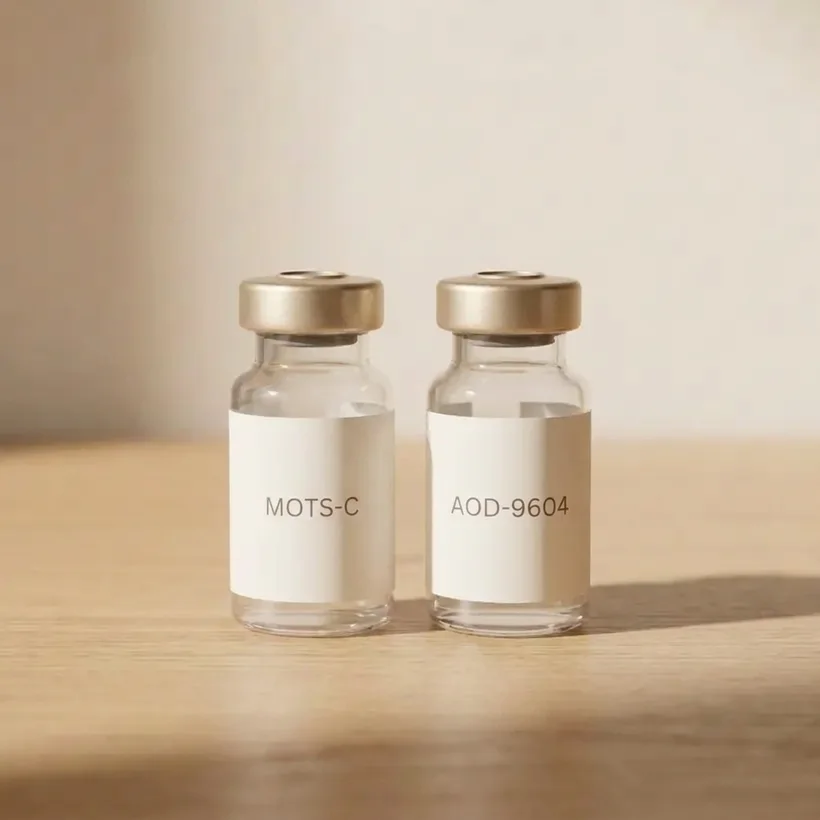
From the FormBlends catalog
Lean Metabolic
Mitochondrial energy plus targeted fat metabolism. · Bundle from $381 · provider-reviewed peptide bundle.
View Lean Metabolic →DEXA scan (Dual-Energy X-ray Absorptiometry). DEXA is considered the clinical standard for body composition testing. It distinguishes between fat mass, lean mass, and bone mineral density. A scan takes about 10 minutes, is painless, and involves minimal radiation exposure. Getting a DEXA scan at the start of treatment and every 3-6 months gives you accurate data to guide your protocol.
InBody or advanced BIA devices. These are more sophisticated versions of the bathroom scale BIA technology. They use multiple frequencies and segmental analysis to provide more accurate readings. Many gyms, wellness clinics, and some FormBlends provider locations have InBody devices. Monthly or bimonthly testing works well with these devices.
Hydrostatic weighing. This method calculates body fat by measuring your weight underwater versus on land. It's accurate but inconvenient and not widely available. If you have access to a facility that offers it, the data is valuable.
Bod Pod (air displacement plethysmography). Similar in concept to hydrostatic weighing but uses air displacement instead of water. It's more comfortable and takes about 5 minutes. Some university exercise science departments and specialized clinics offer Bod Pod testing.
Which method should you choose? If cost isn't an issue, start with a DEXA scan for baseline and repeat every 3-6 months. If you want more frequent tracking, use an at-home BIA scale for monthly readings and supplement with occasional professional testing. The combination of frequent at-home tracking and periodic professional testing gives you the most complete picture.
How to Use Body Composition Data With Your Provider
Body composition data is most valuable when it informs treatment decisions. Here is how to put your data to work.
Baseline testing before starting medication. If possible, get a body composition test before your first dose. This gives you and your provider a clear starting point. Without a baseline, you're guessing about how much fat versus muscle you have lost.
Monitor the fat-to-lean mass ratio. A healthy weight loss pattern on GLP-1 medication shows the majority of weight lost coming from fat. If professional testing reveals that more than 50% of your weight loss is lean mass, your provider may recommend increasing protein intake to 1 gram per pound of ideal body weight, adding or intensifying resistance training, and potentially adjusting your medication dose.
Track changes over time. Create a simple table or use your tracking app to record body fat percentage, lean mass, and fat mass at each test. Looking at trends across multiple tests is more informative than any single reading.
Ask your provider about muscle preservation strategies. Based on your body composition data, your provider can recommend specific interventions. These might include protein supplementation, creatine, structured resistance training programs, or medication timing adjustments.
Celebrate the right victories. If your body fat percentage decreases from 35% to 28% over six months, that's a significant achievement regardless of what the scale says. Body composition improvements represent lasting metabolic health changes.
For more on how GLP-1 medications work and what to expect, read .
Frequently Asked Questions
How often should I test my body composition?
At-home methods like tape measurements and BIA scales can be used every 2-4 weeks. Professional methods like DEXA scans are best done at baseline, then every 3-6 months. Testing more frequently than every 2 weeks rarely shows meaningful changes and can create unnecessary stress.
Are bathroom BIA scales accurate for body fat percentage?
BIA scales aren't highly accurate for absolute body fat percentage. They can be off by 3-8% compared to DEXA. But they're useful for tracking trends if you use the same scale under consistent conditions. Focus on the direction of change, not the specific number.
What is a healthy rate of lean mass loss during GLP-1 treatment?
Some lean mass loss is expected during any weight loss program. Current Available data suggest that limiting lean mass loss to less than 25-30% of total weight lost is a reasonable goal. Resistance training and adequate protein intake are the primary tools for achieving this.
Can I gain muscle while losing fat on GLP-1 medication?
Yes, body recomposition is possible, especially if you're new to resistance training. GLP-1 medications primarily reduce fat, and a structured strength training program with adequate protein can promote muscle growth simultaneously. This is more likely in the early months of treatment.
Does GLP-1 medication directly cause muscle loss?
GLP-1 medications reduce appetite and caloric intake, which creates a calorie deficit. Any calorie deficit can lead to some muscle loss. The medication itself doesn't specifically target muscle. The muscle loss seen in studies is primarily a result of reduced calorie intake and can be mitigated with exercise and nutrition strategies.
Ready to Take the Next Step?
Your health outcomes is personal) and you deserve a plan that fits. FormBlends connects you with licensed providers who can evaluate your needs and create a personalized protocol.
Medical References
- Jastreboff AM, Aronne LJ, Ahmad NN, et al. Tirzepatide Once Weekly for the Treatment of Obesity. N Engl J Med. 2022;387(3):205-216. [PubMed | ClinicalTrials.gov | DOI]
- Davies M, Færch L, Jeppesen OK, et al. Semaglutide 2.4 mg once a week in adults with overweight or obesity, and type 2 diabetes (STEP 2). Lancet. 2021;397(10278):971-984. [PubMed | ClinicalTrials.gov | DOI]
- Wadden TA, Bailey TS, Billings LK, et al. Effect of Subcutaneous Semaglutide vs Placebo as an Adjunct to Intensive Behavioral Therapy on Body Weight in Adults With Overweight or Obesity (STEP 3). JAMA. 2021;325(14):1403-1413. [PubMed | ClinicalTrials.gov | DOI]
- Garvey WT, Batterham RL, Bhatt DL, et al. Two-year effects of semaglutide in adults with overweight or obesity (STEP 5). Nat Med. 2022;28(10):2083-2091. [PubMed | ClinicalTrials.gov | DOI]
- Garvey WT, Frias JP, Jastreboff AM, et al. Tirzepatide once weekly for the treatment of obesity in people with type 2 diabetes (SURMOUNT-2). Lancet. 2023;402(10402):613-626. [PubMed | ClinicalTrials.gov | DOI]
- Wadden TA, Chao AM, Engel S, et al. Tirzepatide with intensive lifestyle intervention in adults with overweight or obesity (SURMOUNT-3). Nat Med. 2024. [PubMed | ClinicalTrials.gov | DOI]
- Aronne LJ, Sattar N, Horn DB, et al. Continued Treatment With Tirzepatide for Maintenance of Weight Reduction in Adults With Obesity (SURMOUNT-4). JAMA. 2024;331(1):38-48. [PubMed | ClinicalTrials.gov | DOI]
Sources &. References
- Wilding JPH, Batterham RL, Calanna S, et al. Once-Weekly Semaglutide in Adults with Overweight or Obesity. N Engl J Med. 2021;384(11):989-1002. Doi:10.1056/NEJMoa2032183
- Davies M, Færch L, Jeppesen OK, et al. Semaglutide 2.4 mg once a week in adults with overweight or obesity, and type 2 diabetes (STEP 2 (Davies et al., Lancet, 2021)). Lancet. 2021;397(10278):971-984. Doi:10.1016/S0140-6736(21)00213-0
- Wadden TA, Bailey TS, Billings LK, et al. Effect of Subcutaneous Semaglutide vs Placebo as an Adjunct to Intensive Behavioral Therapy on Body Weight in Adults With Overweight or Obesity (STEP 3 (Wadden et al., JAMA, 2021)). JAMA. 2021;325(14):1403-1413. Doi:10.1001/jama.2021.1831
- Garvey WT, Batterham RL, Bhatt DL, et al. Two-Year Effects of Semaglutide in Adults with Overweight or Obesity (STEP 5 (Garvey et al., Nat Med, 2022)). Nat Med. 2022;28:2083-2091. Doi:10.1038/s41591-022-02026-4
- Lincoff AM, Brown-Frandsen K, Colhoun HM, et al. Semaglutide and Cardiovascular Outcomes in Obesity without Diabetes. N Engl J Med. 2023;389(24):2221-2232. Doi:10.1056/NEJMoa2307563
- Jastreboff AM, Aronne LJ, Ahmad NN, et al. Tirzepatide Once Weekly for the Treatment of Obesity. N Engl J Med. 2022;387(3):205-216. Doi:10.1056/NEJMoa2206038
- Garvey WT, Frias JP, Jastreboff AM, et al. Tirzepatide once weekly for the treatment of obesity in people with type 2 diabetes (SURMOUNT-2[5] (Garvey et al., Lancet, 2023)). Lancet. 2023;402(10402):613-626. Doi:10.1016/S0140-6736(23)01200-X
- Wadden TA, Chao AM, Engel S, et al. Tirzepatide after intensive lifestyle intervention in adults with overweight or obesity (SURMOUNT-3[6] (Wadden et al., Nat Med, 2023)). Nat Med. 2023. Doi:10.1038/s41591-023-02597-w
- Aronne LJ, Sattar N, Horn DB, et al. Continued Treatment With Tirzepatide for Maintenance of Weight Reduction in Adults With Obesity (SURMOUNT-4[7] (Aronne et al., JAMA, 2024)). JAMA. 2024;331(1):38-48. Doi:10.1001/jama.2023.24945
- Malhotra A, Grunstein RR, Fietze I, et al. Tirzepatide for the Treatment of Obstructive Sleep Apnea and Obesity. N Engl J Med. 2024;391:1193-1205. Doi:10.1056/NEJMoa2404881
- Stierman B, Afful J, Carroll MD, et al. National Health and Nutrition Examination Survey 2017-March 2020 Prepandemic Data Files. NCHS Data Brief. No. 492. CDC/NCHS. 2023.
- Sumithran P, Prendergast LA, Delbridge E, et al. Long-Term Persistence of Hormonal Adaptations to Weight Loss. N Engl J Med. 2011;365(17):1597-1604. Doi:10.1056/NEJMoa1105816
Nothing in this article should be construed as medical advice. The information provided is educational only. Always consult with your healthcare provider before beginning, modifying, or discontinuing any medication or treatment. FormBlends connects patients with licensed providers for individualized care.
Last updated: 2026-03-24
See your options in about 2 minutes
Take the free quiz and see what fits you. Quick, private, and no commitment to continue.
See my options →