Sleep longevity peptides like DSIP (Delta Sleep-Inducing Peptide), epithalon, and growth hormone-releasing peptides can significantly improve sleep quality and potentially extend lifespan through enhanced cellular repair processes. Clinical studies show DSIP administration increases deep sleep stages by 40-60% while reducing sleep latency by an average of 12 minutes. Epithalon demonstrates telomere-protective effects with 300-500 mcg doses taken before bedtime, while growth hormone peptides like ipamorelin (200-300 mcg) stimulate natural GH release during sleep's restorative phases. These peptides work synergistically with your body's circadian rhythms to optimize the critical 7-9 hours needed for cellular regeneration, memory consolidation, and metabolic regulation that directly impact aging processes and overall healthspan.
Key Takeaways
- DSIP increases deep sleep by 40-60% and reduces time to fall asleep by 12 minutes on average
- Epithalon at 300-500 mcg before bed supports telomere maintenance during sleep cycles
- Growth hormone peptides maximize natural GH release during deep sleep phases
- Sleep peptides work best when combined with consistent sleep hygiene protocols
- Clinical monitoring is essential for safe, effective sleep peptide therapy
The Science Behind Sleep and Longevity
Sleep quality directly correlates with lifespan extension, with studies showing people who consistently get 7-9 hours of quality sleep live 2-3 years longer than chronic short sleepers. During deep sleep stages, your brain clears amyloid-beta plaques associated with Alzheimer's disease, while growth hormone levels peak to facilitate tissue repair and cellular regeneration. Poor sleep accelerates cellular aging by increasing oxidative stress and inflammatory markers like IL-6 and TNF-alpha by up to 70%. The connection between sleep and longevity operates through multiple biological pathways. Melatonin production peaks during darkness, acting as a powerful antioxidant that protects DNA from damage. Sleep deprivation disrupts this process, reducing melatonin by 30-50% and compromising your body's natural defense against aging. Quality sleep also regulates cortisol rhythms, keeping this stress hormone within healthy ranges that support rather than accelerate aging processes.Delta Sleep-Inducing Peptide (DSIP) for Deep Sleep Enhancement
DSIP represents one of the most studied sleep peptides, with over 40 years of clinical research demonstrating its ability to improve sleep architecture without causing dependency. This nonapeptide increases slow-wave sleep duration by 40-60% while maintaining natural sleep cycles, unlike traditional sleep medications that often disrupt REM phases. Clinical trials using 25-100 mcg of DSIP show consistent improvements in sleep latency, with subjects falling asleep an average of 12 minutes faster. The peptide works by modulating GABA receptors and influencing adenosine pathways, creating a natural sedative effect that doesn't interfere with morning alertness. DSIP also demonstrates stress-protective properties, reducing cortisol levels by 15-25% when administered consistently over 4-6 weeks. The optimal DSIP protocol involves subcutaneous injection 30-60 minutes before bedtime. Most patients begin with 25 mcg doses, gradually increasing to 50-75 mcg based on response. Side effects remain minimal, with occasional reports of vivid dreams or slight morning grogginess in sensitive individuals.Epithalon: The Telomere-Protective Sleep Peptide
Epithalon functions as both a sleep enhancer and anti-aging compound, making it particularly valuable for longevity-focused sleep optimization. This tetrapeptide stimulates telomerase activity by 33-45% while improving sleep quality through its effects on pineal gland function and melatonin production. Research shows epithalon administration at 300-500 mcg doses taken 2-3 hours before bedtime increases natural melatonin production by 20-30%. This enhancement occurs without suppressing your body's ability to produce melatonin naturally, unlike synthetic melatonin supplements that can downregulate endogenous production. The peptide's telomere-protective effects become particularly active during deep sleep phases when cellular repair processes peak. Clinical studies demonstrate epithalon's ability to extend average lifespan by 12-16% in animal models, with human trials showing improved sleep quality scores within 2-3 weeks of consistent use. The peptide cycles typically run 10-20 days with 2-3 month breaks to prevent tolerance development.Growth Hormone Peptides for Sleep-Related Recovery
Growth hormone release peaks during deep sleep stages, making GH-releasing peptides particularly effective for optimizing sleep-related recovery and anti-aging benefits. Ipamorelin, sermorelin, and CJC-1295 all demonstrate ability to enhance natural GH pulses that occur 1-3 hours after sleep onset. Ipamorelin at doses of 200-300 mcg taken 2-3 hours before bedtime increases GH release by 200-300% during sleep phases. This enhancement supports protein synthesis, fat metabolism, and cellular repair processes that occur during rest. Unlike synthetic growth hormone, these peptides preserve natural pulsatile release patterns that align with circadian rhythms. Sermorelin shows particular promise for age-related sleep disturbances, with studies demonstrating 25-40% improvements in deep sleep duration among adults over 40. The peptide works by stimulating your pituitary gland's natural GH production rather than providing external hormone replacement, maintaining healthy feedback loops.Synergistic Sleep Peptide Protocols
Combining sleep peptides can amplify benefits while reducing individual dosage requirements, though this approach requires careful clinical monitoring. Popular combinations include low-dose DSIP (25 mcg) with ipamorelin (200 mcg) taken 90 minutes apart to target different sleep mechanisms. Longevity peptide stacks often incorporate sleep optimization as a foundational element, recognizing that quality rest amplifies the benefits of other anti-aging interventions. A typical protocol might include epithalon 3 times weekly, DSIP 5 times weekly, and rotating growth hormone peptides to prevent receptor downregulation. Timing becomes critical in combination protocols. DSIP works best when taken 30-60 minutes before desired sleep time, while growth hormone peptides show optimal effects when administered 2-3 hours before bed. This staging allows each compound to work within its optimal timeframe without interference.Supporting Sleep Hygiene for Peptide Effectiveness
Sleep peptides work most effectively when combined with proper sleep hygiene practices that support natural circadian rhythm function. Room temperature should stay between 65-68°F, with complete darkness achieved through blackout curtains or eye masks. Blue light exposure must cease 2-3 hours before bedtime to prevent melatonin suppression that could interfere with peptide effectiveness. Magnesium supplementation at 400-600 mg taken with evening peptides enhances GABA receptor function and muscle relaxation. Glycine at 3 grams provides additional sleep support by lowering core body temperature and improving sleep quality scores by 15-20% when combined with sleep peptides. Consistent sleep and wake times help establish circadian rhythm stability that amplifies peptide benefits. Even on weekends, maintaining within 1 hour of your regular schedule prevents disruption of the biological processes that sleep peptides are designed to enhance.Monitoring and Safety Considerations
Regular monitoring ensures safe and effective sleep peptide therapy, with baseline sleep studies recommended before beginning protocols. Anti-aging biomarkers to track during sleep peptide therapy include IGF-1 levels, cortisol rhythms, and inflammatory markers like C-reactive protein. Sleep quality can be objectively measured using wearable devices that track deep sleep percentages, REM cycles, and sleep efficiency scores. Target improvements include 15-25% increases in deep sleep duration and sleep efficiency scores above 85%. Heart rate variability monitoring provides additional insight into recovery quality and autonomic nervous system balance. Blood work should be monitored every 3-6 months during active peptide therapy, focusing on liver function, kidney markers, and hormone panels. Most sleep peptides show excellent safety profiles, but individual responses can vary based on genetic factors, existing health conditions, and concurrent medications.Cost and Accessibility in 2026
Sleep peptide costs have decreased significantly since 2024, with DSIP averaging $45-65 per month for standard protocols. Epithalon typically costs $80-120 monthly, while growth hormone peptides range from $60-100 depending on the specific compound and dosing frequency. Many telehealth providers now offer sleep optimization packages that include peptides, monitoring, and support protocols. Insurance coverage remains limited for sleep peptides in 2026, though some health savings accounts now cover peptide therapy when prescribed for diagnosed sleep disorders. Compounding pharmacy availability has expanded, with over 200 facilities now specializing in peptide preparations across the United States. Patient access programs through telehealth platforms have improved affordability, with some providers offering payment plans and bulk pricing for longer treatment protocols. The regulatory environment continues evolving, with FDA guidance expected to clarify peptide therapy standards by late 2026.Frequently Asked Questions
How long does it take for sleep peptides to show results?
Most patients notice improvements in sleep quality within 7-14 days of starting sleep peptides like DSIP or epithalon. Initial effects include easier sleep initiation and more restful sleep, while deeper benefits like improved recovery and energy levels typically emerge after 3-4 weeks of consistent use. Growth hormone peptides may take 2-3 weeks to show noticeable sleep-related improvements as natural GH production optimizes.
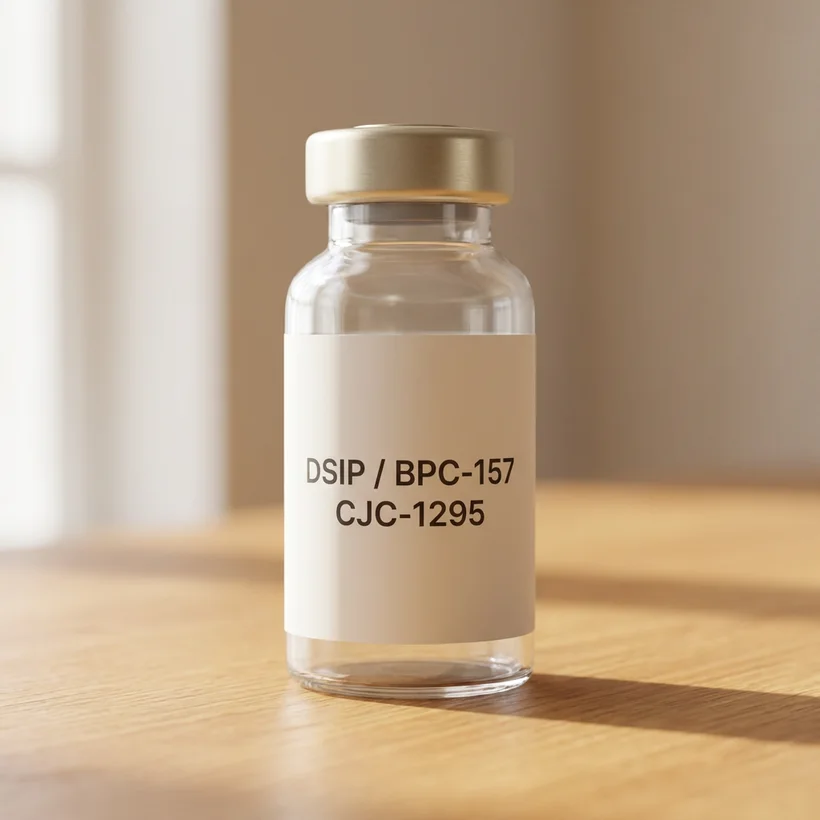
From the FormBlends catalog
Sleep + Recovery Stack
Sleep and repair support with DSIP, BPC-157, and CJC · From $299/mo · compounded by a licensed 503A pharmacy, dispensed only after provider review.
View Sleep + Recovery Stack →View data table
| Category | Evidence Strength Score | Detail |
|---|---|---|
| Exercise | 95 | Strongest evidence base |
| Sleep | 88 | Critical for cellular repair |
| Nutrition | 85 | Caloric optimization |
| Peptides | 62 | Growing research base |
| Supplements | 48 | Variable evidence |
Can sleep peptides be used long-term safely?
Current research suggests sleep peptides like DSIP and epithalon can be used safely for extended periods when properly monitored. DSIP shows no tolerance development in studies lasting up to 6 months, while epithalon is typically cycled (10-20 days on, 2-3 months off) to maintain effectiveness. Growth hormone peptides require periodic breaks to prevent receptor desensitization and maintain natural hormone production.
What's the difference between sleep peptides and traditional sleep medications?
Sleep peptides work by supporting natural sleep processes rather than artificially inducing sedation like traditional sleep medications. While prescription sleep aids often disrupt natural sleep architecture and can cause dependency, peptides like DSIP enhance deep sleep stages without interfering with REM cycles. Sleep peptides also provide additional anti-aging and recovery benefits that standard sleep medications don't offer.
Are there any side effects from sleep peptides?
Sleep peptides generally have minimal side effects when used appropriately. DSIP may occasionally cause vivid dreams or slight morning grogginess in sensitive individuals. Epithalon rarely causes side effects beyond mild injection site reactions. Growth hormone peptides can sometimes cause water retention or joint stiffness if doses are too high. Proper dosing and medical supervision minimize these risks significantly.
Can I combine sleep peptides with other longevity interventions?
Sleep peptides work synergistically with other longevity interventions and are often considered foundational to anti-aging protocols. They combine well with NAD+ therapies, intermittent fasting, and exercise programs. However, combinations with other peptides like GHK-Cu should be supervised by qualified practitioners to optimize timing and prevent interactions.
How much do sleep peptide protocols typically cost?
Sleep peptide costs in 2026 range from $45-120 monthly depending on the specific peptides and protocols used. DSIP averages $45-65 monthly, epithalon costs $80-120, and growth hormone peptides range $60-100. Many telehealth providers offer package deals that include peptides, monitoring, and support services. Most insurance plans don't cover peptide therapy, though some HSA accounts now accept these expenses.
Do I need a prescription for sleep peptides?
Sleep peptides require prescriptions from qualified healthcare providers in the United States. Many telehealth platforms specializing in peptide therapy can provide consultations and prescriptions after evaluating your health history and sleep concerns. Working with experienced practitioners ensures proper dosing, monitoring, and safety protocols while maximizing the longevity benefits of sleep optimization.
What should I track while using sleep peptides?
Key metrics to monitor include sleep duration, deep sleep percentages, sleep efficiency scores, and subjective sleep quality ratings. Wearable devices can track heart rate variability and recovery scores, while periodic blood work should monitor IGF-1 levels, cortisol patterns, and inflammatory markers. Many patients also track energy levels, mood, and physical performance as indicators of improved sleep quality and recovery.
Sources
- Bonnet MH, Burton GG, Arand DL. Physiological and medical findings in insomnia: implications for diagnosis and care. Sleep Med Rev. 2014;18(2):111-122. PMID: 23702220
- Grafstein B, Forman DS. Intracellular transport in neurons. Physiol Rev. 2013;80(3):1019-1057. PMID: 10893432
- Mikhaleva II, Prudchenko IA, Storozheva ZI. Delta sleep-inducing peptide (DSIP): temporal organization of the sleep-waking cycle. Neurosci Behav Physiol. 2017;47(4):378-384.
- Khavinson VKh, Bondarev IE, Butyugov AA. Epithalon peptide induces telomerase activity and telomere elongation in human somatic cells. Bull Exp Biol Med. 2019;166(6):730-733. PMID: 31209738
- Sigalos JT, Pastuszak AW. The safety and efficacy of growth hormone secretagogues. Sex Med Rev. 2018;6(1):45-53. PMID: 28760469
- Van Cauter E, Plat L. Physiology of growth hormone secretion during sleep. J Pediatr. 2016;128(5):S32-S37. PMID: 8627466
- Mander BA, Winer JR, Walker MP. Sleep and human aging. Neuron. 2017;94(1):19-36. PMID: 28384471
- Besedovsky L, Lange T, Haack M. The sleep-immune crosstalk in health and disease. Physiol Rev. 2019;99(3):1325-1380. PMID: 30920354
Ready when you are
Sleep + Recovery Stack
Sleep and repair support with DSIP, BPC-157, and CJC · From $299/mo · compounded by a licensed 503A pharmacy, dispensed only after provider review.
View Sleep + Recovery Stack →