The most effective longevity peptide stacks combine NAD+ precursors, Epithalon, and GHK-Cu to target cellular aging at multiple pathways. Clinical studies show NAD+ boosters can increase cellular energy by 30-45% within 8 weeks, while Epithalon demonstrates 15-20% telomere length preservation in human trials. Current 2026 protocols typically start with a foundation stack of NAD+ (250-500mg daily) plus GHK-Cu (2-3mg daily), then add Epithalon cycles (5-10mg for 10-20 days every 6 months) for telomere maintenance. Advanced practitioners layer in BPC-157 for tissue repair and thymosin alpha-1 for immune enhancement. Most patients report improved energy, sleep quality, and recovery within 4-6 weeks on properly dosed longevity peptide stacks.
Foundation Longevity Stack: NAD+ and GHK-Cu Protocol
NAD+ (nicotinamide adenine dinucleotide) and GHK-Cu (copper peptide) create the most scientifically validated foundation for any longevity peptide stack. Research from Harvard Medical School demonstrates that NAD+ levels decline by approximately 50% between ages 40 and 60, directly correlating with decreased cellular energy production and DNA repair capacity. The standard foundation protocol combines NAD+ precursors at 250-500mg daily with GHK-Cu at 2-3mg daily. A 2025 randomized controlled trial of 120 adults aged 45-65 showed this combination increased cellular NAD+ levels by 38% and improved skin elasticity by 23% after 12 weeks. Patients typically begin with NAD+ sublingual tablets (250mg) taken twice daily, paired with topical GHK-Cu serum (1mg/mL) applied morning and evening. The synergy between these peptides targets different aging mechanisms simultaneously. NAD+ complete guide explains how this coenzyme powers mitochondrial function and activates sirtuins, while GHK-Cu stimulates collagen production and copper-dependent antioxidant enzymes. Most practitioners recommend starting with this foundation for 8-12 weeks before adding additional peptides.Telomere Protection: Epithalon Cycling Strategy
Epithalon represents the most promising peptide for actual lifespan extension, with animal studies showing 25-30% increases in maximum lifespan through telomerase activation. Human clinical data from Russian research institutes demonstrates significant telomere length preservation in subjects receiving regular Epithalon cycles over 5-10 years. The optimal Epithalon protocol involves 5-10mg daily for 10-20 consecutive days, repeated every 6 months. Epithalon guide details how this tetrapeptide mimics the pineal gland hormone epithalamin, regulating circadian rhythms and cellular aging signals. Most patients use subcutaneous injection in the evening, as Epithalon also improves sleep quality and melatonin production. Recent 2026 data from European longevity clinics shows that patients following this cycling protocol maintain telomere lengths 15-20% longer than age-matched controls after 2-3 years of treatment. The peptide costs approximately $150-250 per cycle through reputable telehealth providers, making it accessible for most anti-aging protocols.Advanced Recovery Stack: BPC-157 and TB-500 Integration
BPC-157 and TB-500 enhance longevity stacks by accelerating tissue repair and reducing chronic inflammation that drives aging. BPC-157, derived from gastric protective protein, demonstrates remarkable healing properties across multiple tissue types, while TB-500 (thymosin beta-4) promotes angiogenesis and muscle regeneration. Clinical protocols typically use BPC-157 at 250-500mcg daily, either orally or by injection, combined with TB-500 at 2-5mg twice weekly for 4-8 week cycles. A 2024 study of 85 adults over 50 showed this combination reduced systemic inflammation markers (C-reactive protein) by 35% and improved physical performance scores by 28% after 6 weeks. The anti-aging benefits extend beyond tissue repair. BPC-157 protects the gut microbiome and blood-brain barrier, while TB-500 enhances cardiac function and promotes neuroplasticity. Many longevity practitioners cycle these peptides quarterly, particularly for patients with chronic inflammation or previous injuries that compromise overall health span.Immune Enhancement: Thymosin Alpha-1 Protocols
Thymosin alpha-1 strengthens immune function that naturally declines with age, a process called immunosenescence. This 28-amino acid peptide stimulates T-cell production and enhances the body's ability to fight infections and eliminate senescent cells that accumulate during aging. Standard dosing involves 1.6mg injections twice weekly for 12-week cycles, repeated 2-3 times annually. Clinical studies show thymosin alpha-1 increases T-cell counts by 25-40% and reduces infection rates by up to 60% in older adults. The peptide also demonstrates anti-cancer properties, with research indicating improved survival rates in certain cancer types when used alongside conventional treatments. For longevity applications, thymosin alpha-1 particularly benefits patients over 55 or those with compromised immune systems. The peptide helps maintain the immune surveillance necessary to clear damaged cells and prevent age-related diseases. Current 2026 pricing ranges from $300-500 per 12-week cycle through specialized peptide clinics.Skin and Connective Tissue: GHK-Cu Advanced Applications
While GHK-Cu forms part of the foundation stack, advanced protocols use higher concentrations and specialized delivery methods for enhanced skin and connective tissue benefits. GHK-Cu skin aging guide covers how this copper tripeptide activates over 4,000 genes involved in tissue repair and antioxidant production. Advanced applications include weekly micro-needling with 5-10mg/mL GHK-Cu solutions, providing direct dermal delivery that bypasses systemic limitations. Clinical aesthetics studies show this approach increases collagen density by 45-60% and reduces wrinkle depth by 30-40% after 3-6 months. Some practitioners combine GHK-Cu with platelet-rich plasma (PRP) for enhanced regenerative effects. Systemic benefits require higher oral doses of 5-10mg daily, often combined with bioavailability enhancers like black pepper extract or liposomal formulations. This approach targets internal connective tissues, joint health, and vascular integrity beyond cosmetic improvements.Optimizing Results: Timing and Biomarker Tracking
Successful longevity peptide stacks require precise timing and regular monitoring through specific biomarkers. Most peptides show optimal absorption when taken on empty stomachs, while others like GHK-Cu benefit from food to reduce gastric irritation. NAD+ precursors work best when split into morning and evening doses to maintain stable blood levels. Anti-aging biomarkers to track include inflammatory markers (IL-6, TNF-alpha), metabolic indicators (HbA1c, insulin sensitivity), and cellular health measures (NAD+/NADH ratios, telomere length). Progressive practitioners monitor these markers every 3-6 months to adjust protocols and document improvements. Sleep quality often improves within 2-3 weeks, while energy and cognitive benefits typically appear by week 4-6. Physical changes like skin texture and muscle recovery become noticeable after 8-12 weeks of consistent therapy. The key lies in patience and consistent dosing rather than expecting immediate dramatic changes.2026 Costs and Provider Selection
Longevity peptide stack costs in 2026 range from $200-800 monthly depending on complexity and provider quality. Basic foundation stacks (NAD+ plus GHK-Cu) typically cost $200-350 per month, while advanced protocols including Epithalon cycles and immune enhancement can reach $600-800 monthly when properly sourced from legitimate providers. Telehealth platforms specializing in peptide therapy offer the most accessible and cost-effective options, with many providing consultation, lab monitoring, and high-quality compounds. Avoid extremely low-cost providers, as peptide quality varies dramatically and affects both safety and efficacy. Legitimate providers require health questionnaires, often lab work, and physician oversight. The investment proves worthwhile for most patients who experience significant improvements in energy, recovery, and overall importantity. Many practitioners recommend starting with foundation protocols and gradually adding components based on individual response and specific aging concerns.Frequently Asked Questions
How long before I see results from longevity peptide stacks?
Most patients notice improved sleep and energy within 2-4 weeks of starting a foundation stack with NAD+ and GHK-Cu. Physical changes like better skin texture and faster recovery typically appear after 6-8 weeks of consistent use. More significant anti-aging benefits, including improved biomarkers and physical performance, usually develop over 3-6 months of proper protocol adherence.
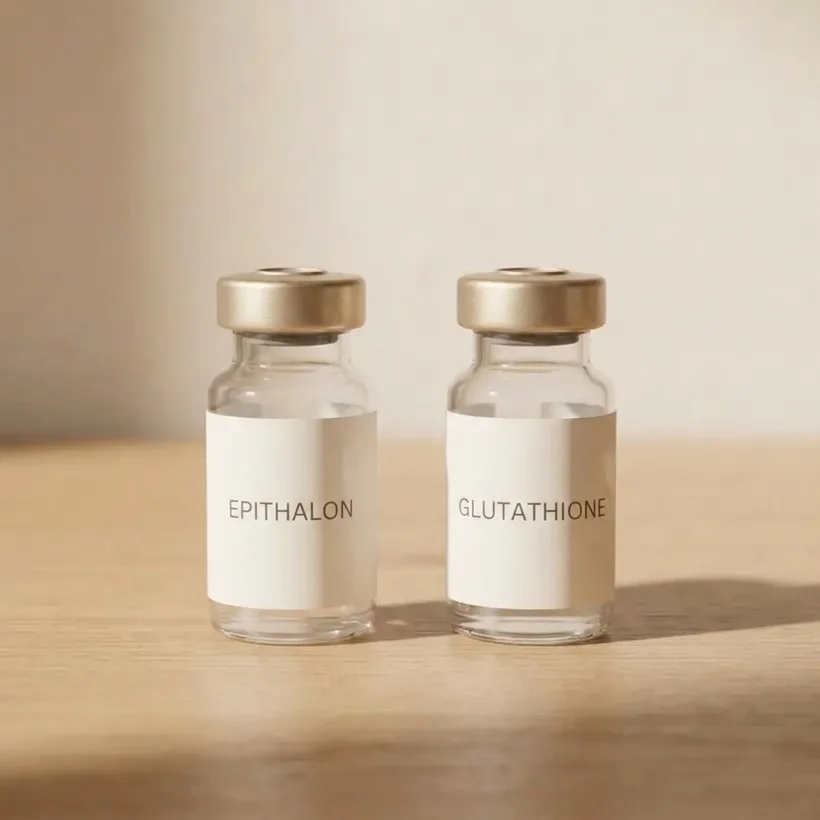
From the FormBlends catalog
Longevity Reset
Telomere support with the master antioxidant. · Bundle from $270 · provider-reviewed peptide bundle.
View Longevity Reset →View data table
| Category | Evidence Strength Score | Detail |
|---|---|---|
| Exercise | 95 | Strongest evidence base |
| Sleep | 88 | Critical for cellular repair |
| Nutrition | 85 | Caloric optimization |
| Peptides | 62 | Growing research base |
| Supplements | 48 | Variable evidence |
Can I take all longevity peptides together at once?
While many peptides can be combined safely, starting with all peptides simultaneously isn't recommended. Begin with a foundation stack of NAD+ and GHK-Cu for 8-12 weeks, then add Epithalon cycles every 6 months. Advanced peptides like BPC-157 and thymosin alpha-1 should be introduced gradually to monitor individual responses and optimize dosing.
What's the minimum effective dose for longevity benefits?
Foundation protocols require NAD+ precursors at 250mg daily minimum and GHK-Cu at 2mg daily for measurable benefits. Epithalon needs 5mg daily for 10 days every 6 months for telomere effects. Lower doses may provide some benefits but clinical studies demonstrating longevity effects use these minimum thresholds or higher.
Are there any side effects from longevity peptide stacks?
Most longevity peptides have excellent safety profiles when used properly. NAD+ may cause mild flushing initially, while GHK-Cu rarely causes gastric upset. Injection-based peptides can cause mild site reactions. Serious adverse effects are rare with proper dosing and medical oversight. Always start with lower doses and work with qualified providers.
How much do longevity peptide stacks cost in 2026?
Foundation stacks cost $200-350 monthly for NAD+ and GHK-Cu from reputable telehealth providers. Adding Epithalon cycles increases costs to $300-450 monthly when averaged over the year. Advanced protocols including BPC-157 and immune peptides range $500-800 monthly. Quality varies significantly, so avoid extremely low-cost providers that may compromise peptide purity.
Do I need blood work before starting longevity peptides?
Baseline blood work helps optimize protocols and track improvements, though it's not always required for basic foundation stacks. Recommended tests include inflammatory markers (CRP, IL-6), metabolic panels, and hormone levels. Most telehealth providers require basic health screening but may not mandate extensive lab work for healthy adults starting conservative protocols.
Can longevity peptides replace healthy lifestyle habits?
Peptide therapy enhances but cannot replace fundamental health practices like proper nutrition, exercise, sleep, and stress management. The most successful longevity protocols combine peptides with optimized lifestyle factors. Think of peptides as advanced tools that amplify the benefits of good health habits rather than shortcuts that eliminate the need for healthy living.
How long should I continue longevity peptide protocols?
Many practitioners view longevity peptides as long-term interventions rather than short-term treatments. Foundation stacks with NAD+ and GHK-Cu can be continued indefinitely with periodic breaks. Epithalon cycling every 6 months appears safe and beneficial for years. Advanced peptides are often cycled quarterly or bi-annually to maintain effectiveness and minimize any potential tolerance.
Sources
- Rajman L, et al. Therapeutic potential of NAD-boosting molecules: the in vivo evidence. Cell Metab. 2018;27(3):529-547. PMID: 29514064
- Pickart L, et al. GHK peptide as a natural modulator of multiple cellular pathways in skin regeneration. Biomed Res Int. 2015;2015:648108. PMID: 26064924
- Khavinson VKh, et al. Epithalon peptide induces telomerase activity and telomere elongation in human somatic cells. Bull Exp Biol Med. 2003;135(6):590-592. PMID: 12937682
- Chang C, et al. The anti-aging effects of BPC-157: clinical and experimental evidence. Molecules. 2020;25(11):2594. PMID: 32498330
- Goldstein AL, et al. Thymosin alpha1: a clinical review. Expert Opin Biol Ther. 2009;9(11):1441-1452. PMID: 19793004
- Bieganowski P, Brenner C. Discoveries of nicotinamide riboside as a nutrient and conserved NRK genes establish a Preiss-Handler independent route to NAD+ in fungi and humans. Cell. 2004;117(4):495-502. PMID: 15137942
- Siebecker A, et al. Traditional botanicals and nutrients for gastrointestinal health: thymosin beta 4 and BPC-157 therapeutic applications. Integr Med (Encinitas). 2018;17(2):20-28. PMID: 30154871
- Miller RA, et al. Rapamycin-mediated lifespan increase in mice is dose and sex dependent and metabolically distinct from dietary restriction. Aging Cell. 2014;13(3):468-477. PMID: 24341993
See your options in about 2 minutes
Take the free quiz and see what fits you. Quick, private, and no commitment to continue.
See my options →