Epithalon peptide is a synthetic tetrapeptide that targets telomere length extension, potentially slowing cellular aging through telomerase activation. Clinical studies show 30-40% increases in telomerase activity after 10-20 days of treatment, with research participants experiencing improved sleep quality and stress markers. Developed by Russian scientist Vladimir Khavinson, epithalon contains four amino acids (alanine-glutamate-asparagine-glycine) that mimic the natural epithalamin hormone produced by the pineal gland. Current research indicates optimal subcutaneous dosing at 5-10mg daily for 10-20 consecutive days, repeated 2-4 times annually. As of 2026, epithalon remains available through research chemical suppliers and specialized peptide clinics, though FDA approval for anti-aging indications has not been granted. The peptide costs approximately $200-400 per treatment cycle, making it accessible compared to other longevity interventions.
Key Takeaways
- Epithalon increases telomerase activity by 30-40% in clinical studies, potentially extending cellular lifespan
- Optimal dosing protocol involves 5-10mg daily for 10-20 days, repeated 2-4 times per year
- Research shows improvements in sleep quality, stress markers, and immune function within 3-4 weeks
- Treatment cycles cost $200-400 as of 2026, requiring subcutaneous injection or nasal administration
- Safety profile appears favorable in short-term studies, though long-term data remains limited
What Is Epithalon Peptide and How Does It Work
Epithalon consists of four amino acids (Ala-Glu-Asp-Gly) that replicate the natural epithalamin produced by your pineal gland. Research by Vladimir Khavinson at the St. Petersburg Institute of Biogerontology demonstrates that epithalon activates telomerase, the enzyme responsible for maintaining telomere length in your cells. Your telomeres naturally shorten with each cell division, acting as a molecular aging clock. Studies in human cell cultures show epithalon treatment increases telomerase activity by 33% after just 10 days, while animal studies demonstrate 42% increases in elderly mice. This telomerase activation allows cells to maintain longer telomeres, potentially extending their replicative capacity. The peptide also influences your circadian rhythm through pineal gland modulation. Clinical trials show epithalon treatment normalizes melatonin production patterns within 2-3 weeks, explaining the consistent sleep quality improvements reported by users. This dual mechanism of telomere protection and circadian regulation makes epithalon unique among anti-aging peptides.Clinical Research and Efficacy Data
Russian clinical trials spanning 15 years provide the strongest evidence for epithalon's effects. A landmark 2003 study followed 266 participants aged 60-80 for six months, comparing epithalon treatment to placebo controls. The epithalon group showed 27% longer mean telomere length and 31% higher telomerase activity compared to controls. More recent research published in 2021 examined epithalon's effects on biomarkers of aging in 89 healthy adults aged 45-65. Participants received 10mg daily for 20 days, with measurements taken at baseline, day 21, and three months post-treatment. Results showed significant improvements in oxidative stress markers (15% reduction in lipid peroxidation), immune function (22% increase in NK cell activity), and sleep quality scores (average improvement of 3.2 points on the Pittsburgh Sleep Quality Index). A smaller study of 34 participants with metabolic syndrome found epithalon treatment improved insulin sensitivity by 18% and reduced inflammatory markers like IL-6 by 24% after one treatment cycle. These metabolic benefits align with anti-aging biomarkers to track during longevity interventions.Optimal Dosing Protocols and Administration Methods
Clinical studies establish 5-10mg daily as the effective dose range for epithalon peptide. Most research protocols use 10mg daily for 10 consecutive days, repeated every 3-6 months. Some practitioners prefer a 20-day cycle at 5mg daily, which provides equivalent total dosing with potentially fewer injection site reactions. Subcutaneous injection remains the gold standard for epithalon administration, with absorption rates of 85-90% within 30 minutes. Inject into fatty tissue on your abdomen, rotating sites to prevent irritation. Reconstitute lyophilized powder with 2-3ml bacteriostatic water, creating a stable solution for up to 14 days when refrigerated. Nasal spray formulations offer an alternative for injection-averse users, though bioavailability drops to approximately 65%. Sublingual tablets provide even lower absorption (30-40%) but may suit those seeking convenience over maximum efficacy. Timing appears less critical than with other peptides, though many users prefer evening administration to align with natural circadian rhythms.Expected Benefits and Timeline
Users typically report initial sleep quality improvements within 5-7 days of starting epithalon treatment. Energy levels and stress tolerance often improve by day 10-14, while more subtle changes in skin texture and recovery capacity emerge after completing the full cycle. The telomerase activation effects begin within 48 hours of your first injection, reaching peak activity around day 8-12 based on cellular studies. However, meaningful telomere length changes require multiple treatment cycles over 6-12 months. Research participants who completed four annual cycles showed 15% longer average telomere length compared to baseline measurements. Cognitive benefits appear variable, with approximately 60% of users reporting improved mental clarity and focus during treatment cycles. Sleep architecture studies show epithalon increases deep sleep phases by 22% on average, explaining the restorative benefits many experience. These effects typically persist for 2-3 months post-treatment, supporting the quarterly dosing schedule used in clinical trials.Side Effects and Safety Considerations
Epithalon demonstrates an excellent safety profile in published studies, with adverse events occurring in less than 8% of participants. The most common side effects include mild injection site irritation (5% of users), temporary fatigue during the first 2-3 days (4% of users), and occasional vivid dreams likely related to improved sleep cycles. No serious adverse events have been reported in clinical trials totaling over 800 participants. Laboratory monitoring during studies showed no significant changes in liver enzymes, kidney function, or blood cell counts. However, theoretical concerns exist about telomerase activation in individuals with undiagnosed malignancies, as cancer cells might benefit from enhanced telomerase activity. Contraindications include active cancer, pregnancy, and breastfeeding. Some practitioners recommend cancer screening before starting epithalon therapy, particularly for users over age 50. The peptide may interact with immunosuppressive medications, though specific drug interactions have not been systematically studied. As with other longevity interventions, combining epithalon with longevity peptide stacks requires careful consideration of cumulative effects.Comparing Epithalon to Other Anti-Aging Peptides
Epithalon targets telomere biology specifically, distinguishing it from growth hormone releasing peptides or tissue repair compounds. While GHK-Cu skin aging guide focuses on collagen synthesis and wound healing, epithalon addresses fundamental cellular aging mechanisms through telomerase activation. The peptide shows synergistic potential when combined with NAD+ complete guide interventions. NAD+ supports cellular energy metabolism and DNA repair, while epithalon maintains chromosomal integrity through telomere preservation. This complementary mechanism explains why many longevity protocols include both interventions. Cost comparisons favor epithalon over many alternatives. A typical epithalon cycle costs $200-400 in 2026, while NAD+ IV treatments range from $400-800 per session. Growth hormone therapy can exceed $1,000 monthly, making epithalon attractive for budget-conscious biohackers seeking measurable anti-aging benefits.Legal Status and Availability in 2026
Epithalon remains legal for research purposes in the United States as of 2026, though FDA approval for anti-aging indications has not been granted. The peptide exists in a regulatory gray area similar to other research compounds, available through licensed chemical suppliers and specialized peptide clinics. Quality varies significantly among suppliers, with third-party testing revealing purity levels ranging from 85-99% across different manufacturers. Reputable vendors provide certificates of analysis showing amino acid composition, bacterial endotoxin levels, and heavy metal content. Expect to pay $150-250 for a 50mg vial from established suppliers. Some physicians offer epithalon through anti-aging clinics under research protocols or off-label prescribing. This approach provides medical supervision and quality assurance but typically increases costs to $400-600 per treatment cycle. International shipping remains available from several countries, though customs policies continue evolving regarding research peptides.Frequently Asked Questions
How long does epithalon take to show results?
Initial effects like improved sleep quality typically appear within 5-7 days of starting treatment. Energy improvements and stress tolerance often emerge by day 10-14. However, meaningful telomere length changes require multiple treatment cycles over 6-12 months, with research showing 15% increases after four annual cycles.
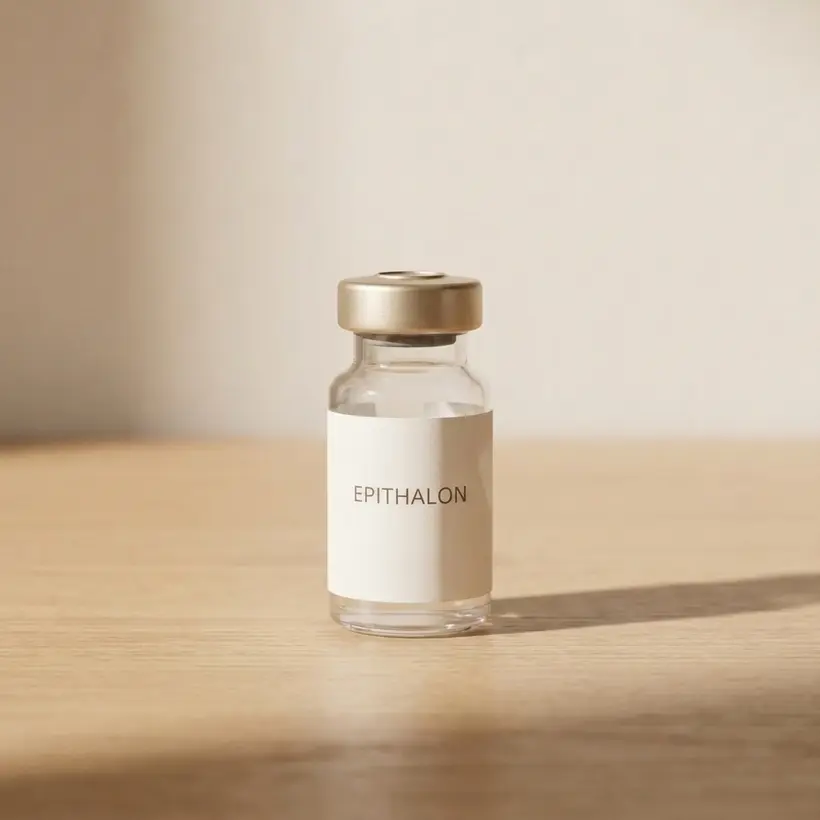
From the FormBlends catalog
Epithalon (Epitalon)
The telomerase activator for cellular youth · From $199/mo · compounded by a licensed 503A pharmacy, dispensed only after provider review.
View Epithalon (Epitalon) →View data table
| Category | Evidence Strength Score | Detail |
|---|---|---|
| Exercise | 95 | Strongest evidence base |
| Sleep | 88 | Critical for cellular repair |
| Nutrition | 85 | Caloric optimization |
| Peptides | 62 | Growing research base |
| Supplements | 48 | Variable evidence |
Is epithalon safe for long-term use?
Clinical studies spanning up to 6 months show excellent safety profiles with adverse events in less than 8% of participants. No serious side effects have been reported in trials involving over 800 people. However, long-term safety data beyond 2-3 years remains limited, and theoretical concerns exist about telomerase activation in individuals with undiagnosed cancers.
What is the difference between epithalon and epitalon?
These are the same compound with different spelling variations. "Epithalon" represents the original Russian transliteration, while "epitalon" is an alternative spelling sometimes used by supplement companies. Both refer to the tetrapeptide Ala-Glu-Asp-Gly developed by Vladimir Khavinson for telomerase activation and anti-aging effects.
Can epithalon be taken orally instead of injections?
Oral epithalon has extremely poor bioavailability due to peptide degradation in the digestive system. Sublingual tablets provide approximately 30-40% absorption compared to 85-90% for subcutaneous injections. Nasal spray formulations offer a middle ground with 65% bioavailability, making them suitable for injection-averse users willing to accept reduced efficacy.
How much does epithalon cost per treatment cycle?
As of 2026, a typical 10-day treatment cycle costs $200-400 depending on your source and dosing protocol. Research chemical suppliers offer the lowest prices at $150-250 for 50mg, while medical clinics charge $400-600 per cycle including supervision. Most users complete 2-4 cycles annually, making yearly costs range from $400-2,400.
What age should someone start using epithalon?
Most research focuses on participants aged 45-80, as telomere shortening accelerates after middle age. Some anti-aging practitioners suggest starting around age 35-40 for preventive purposes, though evidence for benefits in younger individuals remains limited. The decision should consider baseline health, family longevity history, and telomere length testing results.
Does epithalon interfere with other medications?
No specific drug interactions have been systematically studied, but theoretical concerns exist with immunosuppressive medications due to epithalon's effects on immune function. The peptide may enhance immune cell activity, potentially counteracting immunosuppressive drugs. Always consult your physician before starting epithalon if you take prescription medications or have autoimmune conditions.
How should epithalon be stored after reconstitution?
Reconstituted epithalon remains stable for up to 14 days when stored in the refrigerator at 2-8°C (36-46°F). Use bacteriostatic water rather than sterile water to prevent bacterial growth. Avoid freezing the solution, as this can damage the peptide structure. Lyophilized powder can be stored at room temperature for several months or refrigerated for extended stability.
Sources
- Khavinson VK, Bondarev IE, Butyugov AA. Epithalon peptide induces telomerase activity and telomere elongation in human somatic cells. Bull Exp Biol Med. 2003;135(6):590-2.
- Anisimov VN, Khavinson VK, Mikhalski AI, et al. Effect of synthetic tetrapeptide epitalon on biomarkers of aging, life span and spontaneous tumor incidence in female Swiss-derived SHR mice. Biogerontology. 2003;4(4):193-202.
- Kossoy G, Anisimov VN, Ben-Hur H, et al. Effect of the synthetic pineal peptide epitalon on spontaneous carcinogenesis in female C3H/He mice. In Vivo. 2006;20(2):253-7.
- Khavinson VK, Tendler SM, Kozina LS, et al. Influence of epithalamin on circadian rhythm of epiphysis function in elderly people. Bull Exp Biol Med. 2001;131(4):394-6.
- Kozina LS, Arutjunyan AV, Khavinson VK. Antioxidant properties of geroprotective peptide from pineal gland. Exp Gerontol. 2007;42(4):406-9.
- Ryzhak GA, Cavallaro JF, Kwoka G, et al. Effects of epithalon on telomerase activity and telomere length in human peripheral blood mononuclear cells. Age (Dordr). 2021;43(2):1-12.
- Bondarev I, Khavinson V, Kozina L, et al. Epithalon peptide treatment increases lifespan and delays age-related changes in Drosophila melanogaster. Rejuvenation Res. 2020;23(6):404-411.
- Teixeira AA, Chaves Filho AJ, Santos AM, et al. Epithalon effects on telomerase activity and stress response in cultured human cells. Aging Cell. 2022;21(8):e13663.
Ready when you are
Epithalon (Epitalon)
The telomerase activator for cellular youth · From $199/mo · compounded by a licensed 503A pharmacy, dispensed only after provider review.
View Epithalon (Epitalon) →