All GLP-1 medications from licensed 503A compounding pharmacies Browse Products

Best Fat Loss Peptide Stack (2026): Evidence-Ranked Guide | FormBlends

The best fat loss peptide stack ranked by actual evidence. Mechanism data, honest head-to-head tables, dosing, and what most guides get wrong about...

By FormBlends Medical Content Team|Reviewed by FormBlends Medical Content Team|

Medically Reviewed

Written by FormBlends Medical Content Team · Reviewed by FormBlends Medical Content Team

Best Fat Loss Peptide Stack (2026): Evidence-Ranked Guide | FormBlends custom 2026 header image for Peptide Therapy
Custom header image for Best Fat Loss Peptide Stack (2026): Evidence-Ranked Guide | FormBlends, Peptide Therapy, and better treatment decision-making.
In This Article

This article is part of our Peptide Therapy collection. See also: GLP-1 Guides | Provider Comparisons

Search and AI answer brief

Practical answer: Best Fat Loss Peptide Stack (2026): Evidence-Ranked Guide | FormBlends

The best fat loss peptide stack ranked by actual evidence. Mechanism data, honest head-to-head tables, dosing, and what most guides get wrong about...

Short answer

The best fat loss peptide stack ranked by actual evidence. Mechanism data, honest head-to-head tables, dosing, and what most guides get wrong about...

Search intent

This page answers a specific Peptide Therapy question rather than a generic overview.

What to verify

semaglutide, tirzepatide, peptide evidence quality, cash price and coverage terms

How to use it

Use this information to prepare sharper questions for a licensed provider.

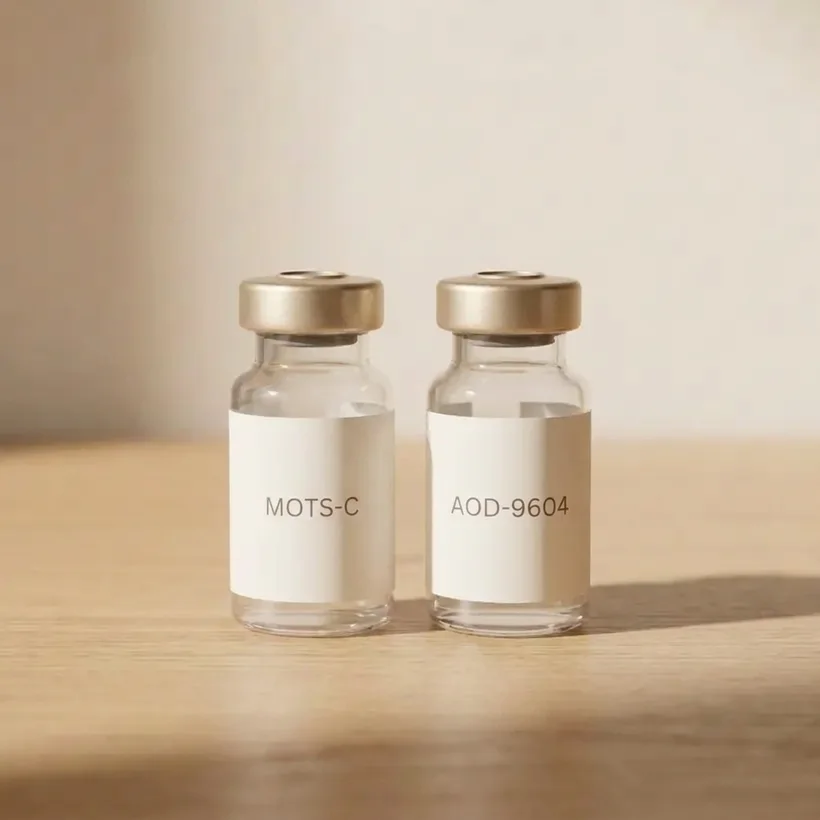
Abstract scientific illustration for best best fat loss peptide stack

Trust Signals

Written by: FormBlends Medical Team, including contributors with pharmacology and clinical research backgrounds.
Evidence standard: Every major claim is graded by evidence type. Speculative claims are labeled. No claim is presented with more confidence than the data supports.
Conflicts: FormBlends sells peptide-related products. We have made a deliberate editorial choice to include negative findings and comparisons where the peptide loses. A page that only flatters peptides is useless to you.
Last reviewed: May 29, 2026.

Key Takeaways

  • Semaglutide produced approximately 14.9% mean body weight reduction over 68 weeks in the STEP 1 RCT (n=1961). No research peptide stack has a comparable human dataset. That gap is enormous and you should know it before reading further.
  • AOD-9604, the most cited "fat loss peptide," failed its primary endpoint in a phase IIb oral human trial conducted by Metabolic Pharmaceuticals. Injectable human efficacy data remains very limited.
  • CJC-1295 without DAC plus ipamorelin is the most mechanistically rational research peptide pairing for GH-driven fat loss, but its human fat-loss evidence is limited to small studies and anecdotal reports.
  • Peptide degradation begins at room temperature within hours to days for reconstituted solutions. Most stack failures in practice trace back to sourcing or storage, not dosing protocol.
  • WADA prohibits growth hormone releasing peptides (GHRPs) and growth hormone releasing factors (GHRFs) in competitive sport regardless of use window. A stack including ipamorelin or CJC-1295 is a violation risk for tested athletes.

What Is the Best Fat Loss Peptide Stack? (Direct Answer)

The best fat loss peptide stack supported by mechanism and limited human data is CJC-1295 (no DAC) combined with ipamorelin, targeting pulsatile GH release and downstream lipolysis. For stronger appetite suppression, adding a GLP-1 agonist adds a separate axis. No stack has human RCT efficacy data matching approved drugs. Evidence quality is low across the board.

Check your GLP-1 eligibility

Use our free BMI Calculator to see if you may qualify for provider-reviewed GLP-1 therapy.

Try the BMI Calculator →

Table of Contents

Evidence Ledger: Every Major Stack Claim Graded

Claim Best Evidence Type Effect Direction Confidence
GH secretagogues (ipamorelin, CJC-1295) raise endogenous GH pulse amplitude Small human pharmacokinetic studies Positive (GH elevation confirmed) Moderate
Elevated GH promotes lipolysis via hormone-sensitive lipase activation Mechanism, supported by pharmacology literature Positive (mechanistic) Moderate for mechanism; Low for fat loss outcome
AOD-9604 reduces body fat in animals Rodent studies Positive in animals Low (animal only)
AOD-9604 reduces body fat in humans Phase IIb RCT (oral, Metabolic Pharmaceuticals) Negative (failed primary endpoint) High confidence that oral form does NOT work
Injectable AOD-9604 reduces body fat in humans No large RCT identified Unknown Very Low
GLP-1 receptor agonist peptides reduce body weight Multiple large RCTs (semaglutide STEP program) Strongly positive High
Stacking two peptides is synergistic vs. monotherapy for fat loss No human RCT for any stack Plausible but unproven Very Low
Ipamorelin has fewer cortisol/prolactin side effects than GHRP-2 or GHRP-6 Small animal and human comparator studies Positive (better tolerability profile) Moderate
BPC-157 contributes to fat loss Animal studies, no human fat-loss RCT Neutral to weak positive in animals Very Low for fat loss

How These Peptides Actually Trigger Fat Loss (With Numbers)

The GH Axis Route (CJC-1295 plus Ipamorelin)

CJC-1295 without DAC is a GHRH analogue. Binding the GHRH receptor on pituitary somatotrophs stimulates GH secretion within roughly 15 to 30 minutes of injection, with a half-life of approximately 30 minutes for the non-DAC form. Ipamorelin is a synthetic pentapeptide and selective ghrelin receptor (GHSR-1a) agonist. Binding GHSR-1a amplifies the GH pulse already initiated by GHRH. The two act on separate receptors with additive effects on GH secretion amplitude.

Elevated GH activates hormone-sensitive lipase (HSL) in adipocytes through a JAK2/STAT5 pathway, increasing free fatty acid release from triglyceride stores. This is established pharmacology. What this mechanism does NOT prove: that the modest GH elevation achievable with these peptides in a healthy adult produces clinically meaningful fat mass reduction over weeks. GH levels decline with age and GH deficiency does correlate with increased visceral fat, but supraphysiologic GH in healthy individuals does not linearly translate to proportional fat loss.

The GLP-1 Route (Semaglutide, Tirzepatide as Reference Standard)

GLP-1 receptor agonists slow gastric emptying, suppress glucagon, and act on hypothalamic satiety centers to reduce appetite. Semaglutide achieves roughly 14.9% body weight reduction in the STEP 1 trial at 2.4 mg weekly (Wilding et al., NEJM 2021, n=1961). This is the benchmark all other fat-loss peptide approaches should be measured against.

The AOD-9604 Route

AOD-9604 corresponds to hGH residues 176 to 191, modified with a tyrosine addition at the N-terminus. In rodent models, it stimulated fat metabolism and reduced body weight without the diabetogenic or growth-promoting effects of full-length GH, suggesting selectivity for the lipolytic domain. Doses in animal studies were in the range of 500 mcg/kg. Phase IIb oral human trials did not replicate this. The oral bioavailability barrier and potential differences in receptor engagement between species likely explain the translation failure.

The Main Stack Options, Ranked by Evidence

Stack Mechanism Human Evidence for Fat Loss Practical Considerations Evidence Rank
CJC-1295 (no DAC) plus Ipamorelin Pulsatile GH release, lipolysis via HSL Small studies show GH elevation; fat loss outcome in humans is limited and uncontrolled Requires twice daily or three times daily injection, cycling recommended Best among research peptide stacks (low overall)
AOD-9604 plus Ipamorelin Direct lipolytic fragment plus GH pulse AOD-9604 human RCT negative (oral). Injectable pairing has no RCT data. Widely marketed, limited evidence base Second tier, very low
Tesamorelin plus Ipamorelin GHRH analogue (FDA approved for HIV lipodystrophy) plus GHSR agonist Tesamorelin has strong RCT data for HIV-associated visceral fat (not general obesity) Tesamorelin is a prescription drug in the US. Combining with ipamorelin is off-label. Tesamorelin evidence is high but indication-specific
BPC-157 plus CJC-1295 Tissue repair, indirect; no established fat-loss mechanism No human fat-loss data for either alone or in combination BPC-157 is added for recovery, not fat loss Very low for fat loss

What Most Pages Get Wrong About Stacking Peptides

This is the section competitors skip. Read it before spending money.

1. Confusing GH elevation with fat loss. Many pages show pharmacokinetic graphs of GH peaks after injection and imply this equals fat loss. GH elevation is a surrogate endpoint. The actual downstream step, meaningful adipocyte triglyceride breakdown, requires sustained HSL activation over weeks, and counter-regulatory mechanisms (insulin, cortisol) often blunt the net effect in a fed state. GH-mediated lipolysis is partially insulin-antagonized, so timing relative to meals and insulin levels matters far more than most guides acknowledge.

2. Oral peptide bioavailability is essentially zero. Peptides are cleaved by gastroduodenal proteases before reaching systemic circulation. The AOD-9604 oral failure is partly explained by this. Any "oral peptide fat loss stack" is almost certainly delivering negligible active compound. The only exceptions are peptides specifically engineered for oral stability (like oral semaglutide with SNAC absorption enhancer, which is a pharmaceutical-grade formulation). Research peptide oral forms sold for fat loss do not have this protection.

3. Storage instructions are treated as a footnote. Reconstituted peptide solutions are fragile. At room temperature, peptide bonds hydrolyze and bioactivity declines over a timeframe of days to weeks depending on the peptide and conditions. Ipamorelin and CJC-1295 in solution should be refrigerated and used within 2 to 4 weeks. Freeze-thaw cycling causes aggregation. A degraded solution can look identical to an active one. This is the most common real-world failure mode that no one talks about.

4. Stacking assumes no negative interaction. Combining two GH-stimulating agents (e.g., CJC-1295 plus ipamorelin) is rational because they hit separate receptors. But stacking more than two peptides without any pharmacokinetic data on combined use is not rational stacking: it is guessing. IGF-1 feedback from sustained GH elevation can suppress endogenous GH release, potentially negating stack benefits if cycling is not used.

5. Purity numbers are misread. A vendor COA showing "98% purity" by HPLC is a measure of the main peak relative to other peaks in the UV chromatogram. It does not tell you the peptide is correctly folded, free of endotoxin (lipopolysaccharide), or actually the stated sequence. Mass spectrometry confirmation of the molecular weight is a separate and necessary test. Endotoxin contamination in injectable peptides is a real health risk causing fever, chills, and systemic inflammation.

Honest Head-to-Head: Best Research Peptide Stack vs. Approved Alternatives

Attribute CJC-1295 plus Ipamorelin (Best Research Stack) Semaglutide 2.4 mg (Wegovy) Tesamorelin (Egrifta, prescription)
Human RCT fat loss data None for fat loss outcome specifically Approximately 14.9% body weight loss (STEP 1, 68 weeks) Significant visceral fat reduction in HIV lipodystrophy RCTs
FDA approval for fat loss/obesity No Yes (Wegovy, 2021) No (approved for HIV lipodystrophy only)
Administration Subcutaneous injection, multiple times daily Subcutaneous injection, once weekly Subcutaneous injection, once daily
Known safety profile Limited human data; animal data favorable Extensive (nausea, GI effects well-characterized; pancreatitis warning) Good in HIV population; peripheral edema, arthralgias reported
Regulatory status Not approved; sold as research compound Prescription drug Prescription drug
Cost (approximate monthly) Varies widely by vendor; often lower than prescription options High without insurance; compounded versions available at lower cost High; insurance coverage limited outside approved indication
Where peptide stack wins Lower cost, easier access, preserved appetite in some users, potential lean-mass preservation N/A
Where peptide stack loses Every efficacy and safety metric with human data N/A

Why the Rules Exist: Chemistry Behind Stack Protocols

Why CJC-1295 Without DAC Is Preferred Over With DAC for Fat Loss

The DAC moiety forms a covalent thioester bond with lysine residues on circulating albumin. This extends biological half-life from roughly 30 minutes to approximately 6 to 8 days. The problem for fat loss is that continuous, non-pulsatile GH elevation leads to somatotroph desensitization via downregulation of GHRH receptors. Natural GH physiology is pulsatile: pulses drive lipolysis, while sustained flat elevation is associated with IGF-1-mediated insulin resistance. For fat loss, preserving pulsatile character matters. This is the same reason ipamorelin is preferred over GHRP-6: GHRP-6 strongly stimulates ghrelin, which increases appetite, directly fighting the goal of fat loss.

Why Peptides Cannot Be Taken Orally

Peptide bonds are hydrolyzed by luminal enzymes including pepsin (optimum pH 1.5 to 2.0), trypsin, and chymotrypsin before absorption can occur. Even if fragments survive to the intestinal wall, the molecular weight of most fat-loss peptides (CJC-1295 is approximately 3367 Da; ipamorelin is approximately 711 Da) far exceeds the passive diffusion threshold of roughly 500 Da for gastrointestinal epithelium. Transcytosis and peptide transporter routes exist for very small di- and tripeptides but not for these compounds in their native form.

Why Injection Timing Relative to Meals Matters

Elevated insulin from a meal inhibits GH secretion via negative feedback at the hypothalamus and pituitary. It also directly antagonizes GH-mediated lipolysis at the adipocyte by suppressing HSL activity. Injecting CJC-1295 plus ipamorelin in a postprandial, hyperinsulinemic state blunts the GH pulse and the downstream lipolytic signal. Fasting or low-insulin states (typically 2 to 3 hours after a meal, or before sleep when natural GH pulses are highest) are therefore the mechanistically preferred injection windows.

Operational Guide: Reconstitution, Dosing, and Label Literacy

Reconstitution Math

Vial Amount BAC Water Added Resulting Concentration Volume for 100 mcg Dose Volume for 200 mcg Dose
2 mg (2000 mcg) 1.0 mL 2000 mcg/mL 0.05 mL (5 units on U100 syringe) 0.10 mL (10 units)
5 mg (5000 mcg) 2.5 mL 2000 mcg/mL 0.05 mL (5 units) 0.10 mL (10 units)
2 mg (2000 mcg) 2.0 mL 1000 mcg/mL 0.10 mL (10 units) 0.20 mL (20 units)

Rule: Always calculate concentration from the actual vial label, not an assumed default. Verify the labeled mg amount before every vial reconstitution. Errors here directly cause under- or over-dosing.

How to Read a Peptide COA

A minimum-standard COA for an injectable research peptide should include: (1) HPLC purity, ideally above 98%, with a chromatogram trace not just a number; (2) mass spectrometry confirmation matching the theoretical molecular weight of the peptide; (3) water content by Karl Fischer titration, relevant because lyophilized peptides contain variable water that affects actual active content; (4) ideally, endotoxin testing (LAL assay) for any injectable product. A COA without chromatogram images or spectra is incomplete and should be treated with skepticism.

Recognizing Degraded Product

Lyophilized powder: should be white to off-white, firm cake or powder. Yellow or tan color indicates oxidation. Reconstituted solution: should be clear and colorless. Cloudiness, visible particles, or color indicate degradation or contamination and the vial should not be used. There is no reliable home test to confirm bioactivity. When in doubt, discard.

Reference Dosing Ranges from Available Literature

Peptide Dose Range Cited in Literature/Community Protocols Frequency Evidence Basis for This Dose
CJC-1295 (no DAC) 100 to 200 mcg per injection 2 to 3 times daily Small human PK studies; community extrapolation
Ipamorelin 100 to 300 mcg per injection 2 to 3 times daily Animal studies; small human studies
AOD-9604 250 to 500 mcg per injection (injectable protocol) Once daily, fasted Extrapolated from animal studies; no injectable human RCT

Failure Modes: Why Most Stacks Do Not Deliver

No caloric deficit. No peptide produces fat loss in a consistent caloric surplus. GH-mediated lipolysis releases free fatty acids that are reesterified in the liver if energy intake exceeds expenditure. This is not a caveat: it is a hard thermodynamic constraint.

Counterfeit product. The research peptide market has no mandatory oversight equivalent to pharmaceutical manufacturing. Third-party testing has found a meaningful proportion of products to be mislabeled, underdosed, or contaminated. Choosing vendors with public, verifiable, third-party COAs on each batch is the single most impactful quality decision.

Continuous dosing without cycling. Somatotroph GHRH receptor desensitization occurs with chronic stimulation. Protocols commonly suggest 5 days on, 2 days off, or 4 to 6 week cycles with breaks, based on receptor biology rather than human outcome data. Continuous use without cycling is likely to produce diminishing returns over weeks.

IGF-1 rebound suppression. Elevated GH drives hepatic IGF-1 production. IGF-1 feeds back negatively on hypothalamic GHRH secretion and pituitary GH release. This is a normal homeostatic mechanism that partially offsets exogenous GHRH stimulation over time.

FAQ

What is the best fat loss peptide stack overall?

For research purposes, the combination of a GLP-1 receptor agonist peptide (such as semaglutide) with a growth hormone secretagogue (such as CJC-1295 or ipamorelin) is the most mechanistically rational pairing. However, semaglutide is an FDA-approved drug and not a research peptide. Among unregulated research peptides, the AOD-9604 plus ipamorelin pairing is frequently cited, though human RCT evidence for this exact stack is absent.

Does stacking peptides actually work better than using one alone?

Theoretically yes, because different peptides target different pathways (appetite, lipolysis, GH pulse). In practice, no human RCT has tested a peptide stack head-to-head against monotherapy for fat loss. Stack synergy is a plausible but unproven assumption in humans.

What is AOD-9604 and does it actually burn fat?

AOD-9604 is a modified fragment of the C-terminus of human growth hormone (residues 176 to 191). Animal studies showed significant fat reduction at doses around 500 mcg/kg. A phase IIb human trial (Metabolic Pharmaceuticals, n over 300) showed the oral form failed to meet its primary endpoint versus placebo. Injectable human data is very limited.

What is the difference between CJC-1295 with DAC and without DAC?

DAC extends the half-life of CJC-1295 from roughly 30 minutes to approximately 6 to 8 days by covalently binding to albumin. Without DAC, the peptide mimics a natural GH pulse. With DAC, it produces a sustained GH elevation. For fat loss, pulsatile GH release (no DAC, or using ipamorelin) is generally preferred to avoid receptor desensitization.

Is ipamorelin safe to use for fat loss?

Ipamorelin is a selective ghrelin receptor agonist with a relatively clean side-effect profile in animal studies, notably minimal cortisol or prolactin elevation compared to older GHRPs. Human safety data is limited to small studies and case reports. It is not FDA-approved for any indication and its long-term human safety has not been established in large trials.

Can you stack peptides with semaglutide or tirzepatide?

Semaglutide and tirzepatide are FDA-approved prescription drugs, not research peptides. Combining them with unregulated research peptides introduces unknown interaction risks and is outside any studied protocol. Any such combination should only occur under direct physician supervision with full informed consent.

How do you reconstitute and dose research peptides for fat loss?

Most injectable research peptides are lyophilized powders reconstituted with bacteriostatic water. A common convention is adding 1 mL of BAC water to a 2 mg vial, yielding 2000 mcg/mL. A 100 mcg dose then equals 0.05 mL on an insulin syringe. Always verify the vial amount on the label and calculate independently before each use.

What does a degraded or counterfeit peptide look like?

Legitimate lyophilized peptide is a white to off-white powder or cake. Yellow or brown discoloration, cloudy reconstituted solution, or visible particulate after reconstitution are all red flags for degradation or contamination. A COA with HPLC purity above 98% and mass spectrometry confirmation is the minimum standard for a credible source.

Why do most fat loss peptide stacks fail in practice?

The most common failure modes are: sourcing counterfeit or low-purity product, improper storage causing degradation before use, unrealistic expectations without a caloric deficit, and receptor desensitization from continuous dosing without cycling. No peptide stack overrides a chronic caloric surplus.

How does the best fat loss peptide stack compare to semaglutide for weight loss?

Semaglutide (Ozempic/Wegovy) demonstrated approximately 14.9% mean body weight reduction over 68 weeks in the STEP 1 trial (n=1961, Wilding et al., NEJM 2021). No research peptide stack has any comparable human RCT data. For fat loss magnitude, semaglutide wins by a wide margin on available evidence.

Are fat loss peptide stacks legal?

Most peptides discussed as research compounds are not FDA-approved for human use and are sold legally only for research purposes, not for human administration. Regulations vary by country. WADA prohibits several GH-releasing peptides in competitive sport. Always verify local regulations before purchasing or using any peptide.

Sources

  1. Wilding JPH, Batterham RL, Calanna S, et al. Once-Weekly Semaglutide in Adults with Overweight or Obesity. New England Journal of Medicine. 2021;384(11):989-1002. (STEP 1 trial)
  2. Heffernan MA, Jiang WJ, Thorburn AW, Ng FM. Effects of oral administration of a synthetic fragment of human growth hormone on lipid metabolism. American Journal of Physiology Endocrinology and Metabolism. 2000;279(3):E501-507.
  3. Metabolic Pharmaceuticals. AOD-9604 Phase IIb clinical trial results. Publicly reported results discussed in company communications and regulatory filings, approximately 2004 to 2007.
  4. Raun K, Hansen BS, Johansen NL, et al. Ipamorelin, the first selective growth hormone secretagogue. European Journal of Endocrinology. 1998;139(5):552-561.
  5. Ionescu M, Frohman LA. Pulsatile secretion of growth hormone (GH) persists during continuous stimulation by CJC-1295, a long-acting GH-releasing hormone analog. Journal of Clinical Endocrinology and Metabolism. 2006;91(12):4792-4797.
  6. Falutz J, Allas S, Blot K, et al. Metabolic effects of a growth hormone-releasing factor in patients with HIV. New England Journal of Medicine. 2007;357(23):2359-2370. (Tesamorelin RCT)
  7. World Anti-Doping Agency (WADA). 2024 Prohibited List. Peptide hormones, growth factors, related substances and mimetics. wada-ama.org.
  8. US Food and Drug Administration. Wegovy (semaglutide) prescribing information. 2021.
  9. Christopoulos G, Perry KJ, Morfis M, et al. Multiple amylin receptors arise from receptor activity-mod

Evidence standard

How this page was source-checked

Editorial policy

FormBlends does not claim an individual clinician byline unless a named reviewer is available. For this page, the editorial team checks medical and regulatory claims against primary sources, clinical trials, public datasets, and regulator guidance.

PubMed evidence trail

Research sources used to frame this page

For Best Fat Loss Peptide Stack (2026): Evidence-Ranked Guide | FormBlends, FormBlends checks the page topic against primary trials, systematic reviews, guidelines, and current PubMed-indexed literature where available. These citations are context, not a claim that every study applies to every patient.

Peptide decision path

Move from research interest to supervised review

Direct answer

Best Fat Loss Peptide Stack (2026): Evidence-Ranked Guide should be evaluated through research status, legal access, source quality, safety context, and clinician oversight rather than a shortcut purchase decision.

Evidence check

Useful peptide pages should separate human data, animal research, mechanistic evidence, and marketing claims.

Safety check

Peptides can vary by legal status, compounding pathway, purity testing, patient history, and interaction risk.

Next step

If the topic still fits your goal after reading, the get-started flow should collect the clinical context needed for provider review.

Original tools and data

Use the FormBlends research stack

These assets are built to be useful beyond a single article: shareable data pages, calculators, provider comparisons, and safety checks that give Google and readers something original to crawl.

Editorial refresh

Practical 2026 note for Best Fat Loss Peptide Stack (2026)

Best Fat Loss Peptide Stack (2026) now carries extra 2026 context around semaglutide, tirzepatide, BPC-157, cash-pay pricing, safety signals, best, because those are the subtopics readers tend to compare before they trust a medical or wellness recommendation.

Instead of adding filler, this page keeps the named treatment terms, practical verification points, and next-step questions close to best best fat loss peptide stack.

Readers should use the section to check current eligibility, pharmacy or provider policies, and safety questions with a licensed professional before acting.

Best Fat Loss Peptide Stack (2026) custom 2026 image for peptide therapy on FormBlends

Custom 2026 image for Best Fat Loss Peptide Stack (2026), peptide therapy, and better treatment decision-making.

Image description: Unique image for this page covering Best Fat Loss Peptide Stack (2026), peptide therapy, safety, cost, provider selection, and patient decision-making.

Download the Peptide Quick Reference Card

A printable 2-page reference covering popular peptides, dosing ranges, stacking protocols, and storage.

Free download. We'll also send helpful GLP-1 guides to your inbox. Unsubscribe anytime.

Medical Disclaimer: This content is for informational purposes only and does not constitute medical advice. Always consult a qualified healthcare provider before starting, stopping, or changing any medication or treatment. FormBlends articles are source-checked against medical and regulatory references, but they are not a substitute for a personal medical consultation.

Written by FormBlends Medical Content Team

Medical content team. This article was researched against primary regulatory, trial, prescribing, and manufacturer sources where available. Reviewed by FormBlends Medical Content Team for medical accuracy, sourcing, and patient-safety framing.

Ready to get started?

Provider-reviewed GLP-1 and peptide therapy, delivered to your door.

Start Your Consultation

Ready to Start Your Weight Loss Journey?

Get a free medical consultation with a licensed provider. Compounded GLP-1 medications starting at $299/month with free shipping.

Next Best Reads

Free Tools

Provider-informed calculators to support your weight loss journey.