All GLP-1 medications from licensed 503A compounding pharmacies Browse Products

Best Peptide Stack for Fat Loss: Evidence-Ranked Guide | FormBlends

The best peptide stack for fat loss, ranked by evidence strength. Mechanisms, doses, real limitations, and honest head-to-head vs approved alternatives.

By the|Reviewed by FormBlends Medical Content Team|

Medically Reviewed

Written by the · Reviewed by FormBlends Medical Content Team

Best Peptide Stack for Fat Loss: Evidence-Ranked Guide | FormBlends custom 2026 header image for Peptide Therapy
Custom header image for Best Peptide Stack for Fat Loss: Evidence-Ranked Guide | FormBlends, Peptide Therapy, and better treatment decision-making.
In This Article

This article is part of our Peptide Therapy collection. See also: GLP-1 Guides | Provider Comparisons

Search and AI answer brief

Practical answer: Best Peptide Stack for Fat Loss: Evidence-Ranked Guide | FormBlends

The best peptide stack for fat loss, ranked by evidence strength. Mechanisms, doses, real limitations, and honest head-to-head vs approved alternatives.

Short answer

The best peptide stack for fat loss, ranked by evidence strength. Mechanisms, doses, real limitations, and honest head-to-head vs approved alternatives.

Search intent

This page answers a specific Peptide Therapy question rather than a generic overview.

What to verify

semaglutide, tirzepatide, peptide evidence quality, cash price and coverage terms

How to use it

Use this information to prepare sharper questions for a licensed provider.

Abstract scientific illustration for best best peptide stack for fat loss

Trust Signals

Written by the FormBlends Medical Team. Every claim is labeled with its evidence tier. Speculative mechanisms are marked as such. No products are sold on this page. Updated 2026-05-29.

Key Takeaways

  • The only peptides with robust human RCT fat-loss data are FDA-approved GLP-1 receptor agonists, semaglutide produced roughly 14.9% body weight reduction in the STEP 1 trial (n=1961, 68 weeks).
  • Tesamorelin, an FDA-approved GHRH analogue, reduced visceral adipose tissue by roughly 15 to 18% in HIV-lipodystrophy trials. That approval does not extend to healthy adults seeking general fat loss.
  • The CJC-1295 plus ipamorelin combination is mechanistically rational but has no published human RCT demonstrating fat loss as a primary endpoint.
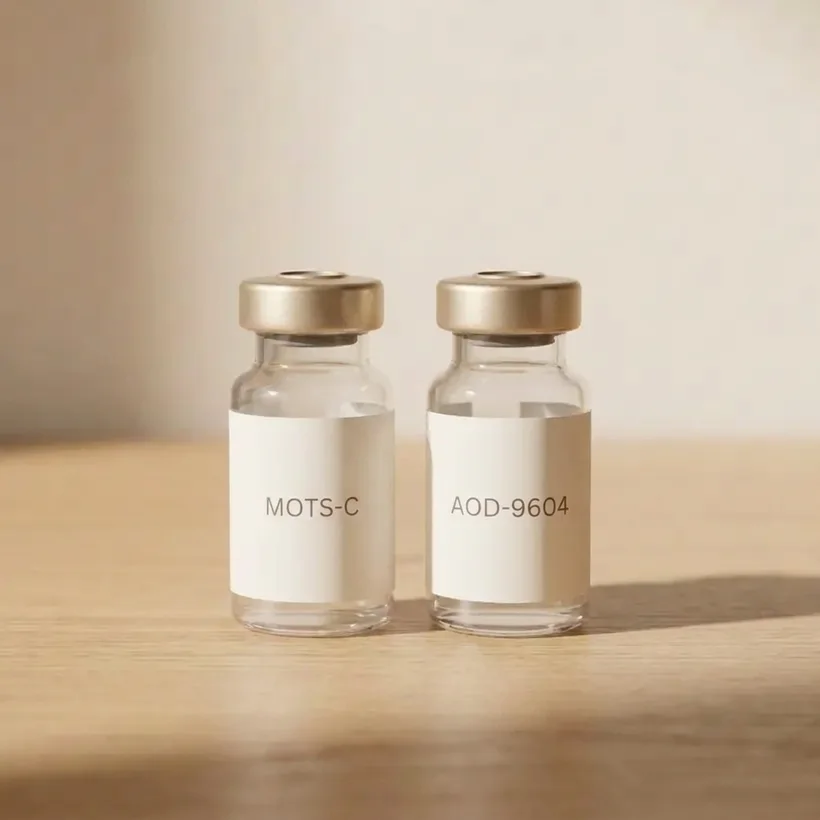
  • AOD-9604 failed a Phase IIb human RCT for weight loss; its developer discontinued the obesity indication. Animal data did not translate.
  • Purity and endotoxin contamination are the largest real-world risks of research-grade peptides, not the peptide mechanism itself.

What Is the Best Peptide Stack for Fat Loss?

If evidence strength is the criterion, the best peptide stack for fat loss is an FDA-approved GLP-1 agonist used under physician supervision, not a research compound combination. Among research-compound stacks, a GHRH analogue paired with a selective GHRP (such as CJC-1295 with ipamorelin) has the most mechanistic rationale, but human fat-loss trial data for that exact stack does not exist. Honest answer: the gap between marketing and evidence is large.

Check your GLP-1 eligibility

Use our free BMI Calculator to see if you may qualify for provider-reviewed GLP-1 therapy.

Try the BMI Calculator →

Table of Contents

Evidence Ledger: Each Major Peptide Rated

Each row reflects the best available evidence specifically for fat loss or body composition as a measured endpoint. Evidence for other indications (wound healing, GH deficiency treatment) is not counted here.

Peptide Best Evidence Type Effect on Fat Mass Confidence (Fat Loss) Key Caveat
Semaglutide (GLP-1 RA) Human RCT, n=1961, 68 weeks (STEP 1) Approx. 14.9% body weight reduction High FDA-approved; not a research compound. Nausea, GI side effects common.
Tirzepatide (GLP-1/GIP dual RA) Human RCT, SURMOUNT-1 trial Up to approx. 20.9% body weight reduction at highest dose High FDA-approved for obesity. Dual agonist; different side-effect profile than semaglutide alone.
Tesamorelin Human RCT in HIV lipodystrophy Approx. 15 to 18% VAT reduction in approved population Moderate (specific population) Off-label for healthy adults. Visceral fat only, not total body fat.
CJC-1295 (with DAC) Small human pharmacokinetic studies; no fat-loss RCT GH and IGF-1 elevation documented; fat loss not a primary endpoint Low Half-life extended to approx. 6 to 8 days with DAC. Fat loss extrapolated from GH physiology, not direct trial data.
Ipamorelin Animal studies, small human GH-pulse studies GH secretion increase; no human fat-loss RCT Low Selective GHRP with low cortisol and prolactin elevation. Fat loss is inferred, not demonstrated.
AOD-9604 (hGH fragment 177-191) Phase IIb human RCT (Metabolic Pharmaceuticals) No significant difference vs placebo for weight loss in humans Low (failed endpoint) Animal lipolysis data did not translate. Program discontinued for obesity.
BPC-157 Animal studies, no human RCT for fat loss No established fat loss mechanism or data Very Low Included in stacks for recovery rationale, not adiposity reduction.
MOTS-c Animal studies; early human metabolic data Improved insulin sensitivity and reduced adiposity in mice Very Low Mitochondrial-derived peptide. Human fat-loss data is preliminary and limited.

How Fat-Loss Peptides Work: Mechanisms with Numbers

GLP-1 Receptor Agonists

Glucagon-like peptide-1 (GLP-1) is a 30-amino acid incretin hormone released from intestinal L-cells. It slows gastric emptying, suppresses glucagon, and acts on hypothalamic GLP-1 receptors to reduce appetite. Semaglutide, a GLP-1 analogue with a fatty acid chain enabling albumin binding, has a half-life of approximately 1 week, enabling once-weekly dosing. The STEP 1 trial (Wilding et al., 2021, New England Journal of Medicine) demonstrated that 2.4 mg weekly subcutaneous semaglutide reduced mean body weight by 14.9% versus 2.4% for placebo over 68 weeks. That difference is large by any clinical standard.

What this mechanism does NOT prove: that GLP-1 agonists are "peptide stacks" in the research-compound sense, or that the fat loss is maintained after discontinuation without behavioral change.

GHRH Analogues and GHRPs

Growth hormone-releasing hormone (GHRH) binds pituitary GHRH receptors, triggering GH pulsatile release. CJC-1295 is a synthetic GHRH analogue. The version with Drug Affinity Complex (DAC) covalently binds to circulating albumin, extending its half-life to roughly 6 to 8 days per a 2006 pharmacokinetic study by Jetté et al. published in Growth Hormone and IGF Research. GH itself promotes lipolysis via hormone-sensitive lipase activation and suppression of lipoprotein lipase, particularly in visceral adipose tissue. In GH-deficient adults, GH replacement reduces fat mass meaningfully. In GH-sufficient healthy adults, the incremental fat-loss effect of further GH elevation is substantially smaller.

Ipamorelin is a pentapeptide GHRP that binds the ghrelin receptor (GHSR-1a) with relative selectivity, producing GH pulses with less cortisol and prolactin elevation than earlier GHRPs like GHRP-6. That selectivity is a real pharmacological advantage but does not translate into proven fat loss in a human RCT.

GHRH and GHRP Synergy

Combining a GHRH analogue with a GHRP creates supra-additive GH release, because GHRH and ghrelin receptor agonists act on different intracellular pathways (cAMP versus phospholipase C) that converge at the somatotroph. This synergy is well documented in pituitary physiology and is the mechanistic rationale for CJC-1295 plus ipamorelin stacking. The caveat: documented GH elevation is not the same as documented fat loss, particularly in a caloric surplus or maintenance state.

The Main Stacks, Ranked by Evidence

Stack 1: Semaglutide or Tirzepatide (Approved, Prescribed)

These are peptides. They are also the only peptides with large-scale human RCT data for fat loss. If fat loss is the primary goal, these belong at the top of any evidence-ranked list. They require a prescription, physician oversight, and come from regulated pharmacies.

Stack 2: Tesamorelin (Approved, Narrow Indication)

For visceral adipose tissue specifically in the approved HIV-lipodystrophy population, tesamorelin has genuine human evidence. Off-label, its use is not supported by the same data strength.

Stack 3: CJC-1295 with DAC plus Ipamorelin (Research Compound)

This is the most pharmacologically coherent research-compound stack for GH-driven lipolysis. Typical community-reported protocols involve 100 to 300 mcg ipamorelin combined with 1 to 2 mg CJC-1295 with DAC, dosed 1 to 2 times per week. There is no published human fat-loss RCT for this combination. Effect in GH-sufficient adults seeking fat loss is likely modest and highly dependent on caloric deficit and training status.

Stack 4: Sermorelin plus Ipamorelin (Research Compound)

Sermorelin is a truncated GHRH analogue (residues 1 to 29 of endogenous GHRH). It has a shorter half-life than CJC-1295, requiring more frequent dosing, but is used in compounded formulations. Evidence tier is the same as the CJC-1295 stack: mechanistically rationale, human fat-loss RCT absent.

Stack 5: AOD-9604 (Research Compound, Failed Endpoint)

Despite heavy promotion, AOD-9604 failed its primary weight-loss endpoint in a Phase IIb human study. It should not appear in evidence-based rankings. Animal data was not predictive.

Honest calibration: Stacks 3 and 4 may produce modest fat mass changes as a secondary effect of elevated GH in the context of a caloric deficit and resistance training. They are not a substitute for the caloric deficit itself, and their effect size in healthy GH-sufficient adults has not been quantified in a controlled trial.

What Most Pages Get Wrong About Peptide Stacks

This is the section competitors omit.

Animal-to-human translation failure is common. AOD-9604 is the clearest example. Rodents have fundamentally different GH pulsatility and adipose tissue responses. Positive animal lipolysis data generated commercial excitement. The human RCT was negative. This pattern repeats across many peptide candidates.

GH elevation is not the same as fat loss. CJC-1295 studies documented elevated GH and IGF-1 levels. Most peptide blog posts stop there and assert fat loss follows. GH-driven lipolysis is real physiology, but its magnitude in GH-sufficient adults with modest pharmacological GH elevation, in the absence of a verified caloric deficit, is not established by trial data.

The purity problem is larger than the mechanism problem. A 2018 analysis published in the Journal of the American Medical Association found that among compounded peptides, impurities and mislabeling are common outside of regulated pharmacies. Research-grade peptides sold through non-pharmacy online vendors are not manufactured under FDA cGMP. Endotoxin contamination from gram-negative bacterial cell walls (lipopolysaccharide) in injectable products causes fever, inflammation, and in severe cases septic shock. A peptide with a solid mechanism but 5 EU per mL of endotoxin is not safe.

Stack synergy is marketing language without dosing data. Saying two peptides synergize is not the same as knowing the optimal dose ratio, timing, or whether the combination changes the safety profile. No published study has optimized a CJC-1295 plus ipamorelin fat-loss protocol in humans.

Why the Storage and Stability Rules Exist

Lyophilized (freeze-dried) peptides are kinetically stable at low temperatures because removing water eliminates the primary hydrolysis reaction. Peptide bonds are hydrolyzed by water in a reaction that is accelerated by heat and by extremes of pH. A lyophilized vial stored at 2 to 8 degrees Celsius is protected because both available water and thermal energy are minimized.

Once reconstituted with bacteriostatic water (water containing 0.9% benzyl alcohol as a preservative), two degradation pathways become active. First, hydrolysis of peptide bonds, particularly at asparagine-glycine sequences, proceeds over days to weeks at refrigerator temperature. Second, oxidation of methionine and tryptophan residues occurs when the solution is exposed to light or oxygen. This is why reconstituted peptide solutions should be kept in the dark and used within approximately 28 days.

Why bacteriostatic water and not sterile water: plain sterile water for injection is not preserved. A multi-dose vial reconstituted with plain sterile water supports bacterial growth within hours at room temperature, and even at refrigerator temperature, microbial proliferation is not fully arrested. Benzyl alcohol at 0.9% provides bacteriostatic (growth-inhibiting) activity. Note: benzyl alcohol is contraindicated in neonates due to gasping syndrome, but this is not a relevant population for fat-loss peptide protocols.

Repeated freeze-thaw cycles of reconstituted peptide solutions accelerate denaturation and aggregation. The mechanical stress of ice crystal formation disrupts peptide tertiary structure. If you cannot use a vial within 28 days, the correct approach is to aliquot and freeze the reconstituted solution once and avoid further freeze-thaw cycles, though this is not ideal and is generally not necessary if vials are sized appropriately.

Honest Head-to-Head: Peptide Stacks vs Approved Alternatives

Criterion CJC-1295 plus Ipamorelin (Research Stack) Semaglutide 2.4 mg/week (Approved) Orlistat 120 mg TID (Approved Small Molecule)
Human fat-loss RCT data None as primary endpoint Yes, n=1961, 68 weeks (STEP 1) Yes, multiple trials; approx. 3 kg additional vs placebo at 1 year
Mean fat/weight reduction (trial data) Not quantified Approx. 14.9% body weight Approx. 2.9 to 3.4 kg vs placebo (smaller effect)
Regulatory status Research compound, not FDA-approved for this use FDA-approved (Wegovy) FDA-approved (Xenical, Alli)
Route Subcutaneous injection Subcutaneous injection Oral
Primary side effects Injection site reactions, water retention, potential glucose dysregulation; unknown long-term Nausea (common), vomiting, pancreatitis risk, possible thyroid C-cell effects (rodent data) Fecal fat leakage, GI urgency, fat-soluble vitamin malabsorption
Purity assurance Depends on vendor; no cGMP requirement for research compounds cGMP manufacturing, pharmacovigilance program cGMP manufacturing
Where research stack wins Potentially lower cost in some markets; may support lean mass alongside fat loss via GH mechanism; no GI side effects typical of GLP-1 agonists N/A N/A
Where research stack loses No proven human fat-loss data, no purity guarantee, no pharmacovigilance, unknown long-term safety N/A N/A

Label and COA Literacy: How to Judge a Product Yourself

If you are evaluating a research peptide product, here is what to look for and why each item matters.

HPLC Purity. High-performance liquid chromatography separates peptide from impurities by retention time. A purity reading above 98% by HPLC is a reasonable standard. Below 95% means a meaningful fraction of the injected material is something other than the labeled peptide. Always ask which column and gradient were used; a poorly chosen method can show artificially high purity.

Mass Spectrometry (MS) Confirmation. HPLC purity tells you how much of the main peak is present. MS tells you whether that main peak is actually the correct peptide. Request a mass spectrum that matches the expected molecular weight of the peptide to within 1 to 2 daltons. For example, ipamorelin has a molecular weight of approximately 711.9 g/mol. If the COA shows a different mass, the peptide is wrong.

Endotoxin Testing. The USP standard for injectable products is less than 5 EU per kg body weight per hour. For a 100 mcg peptide injection, the practical standard many compounding pharmacies apply is below 1 EU per mL. Endotoxin testing is done by limulus amebocyte lysate (LAL) assay or the newer recombinant Factor C method. A COA without endotoxin testing for an injectable product is incomplete.

Sterility Testing. USP 71 sterility test requires 14-day incubation with positive and negative controls. This is rarely performed by research vendors. At a minimum, bacteriostatic water should be used for reconstitution of any multi-dose product.

Third-Party vs In-House COA. A COA produced by the same company selling the product has an obvious conflict of interest. Request COAs from independent accredited labs. The lab name and accreditation number should appear on the document.

What degradation looks like. A compromised lyophilized peptide vial may show visible particulate matter, discoloration (yellowing or browning suggests oxidation), or clumping. A degraded reconstituted solution may appear cloudy or have visible precipitate. These are signals to discard the product. You cannot confirm potency by appearance alone, but visible degradation is a hard stop.

Dosing Reference Table (Research Compound Context)

Important: The doses below are drawn from published pharmacokinetic literature and community clinical reports where available. They are not prescriptions or recommendations. Research peptides are not FDA-approved for fat loss. Consult a licensed physician before any injectable peptide use.
Peptide Reported Dose Range Frequency (Community Reports) Route Evidence Basis for Dose
CJC-1295 with DAC 1 to 2 mg Once or twice weekly Subcutaneous Jetté et al. 2006 pharmacokinetic study; half-life approx. 6 to 8 days
Ipamorelin 100 to 300 mcg Once or twice daily Subcutaneous Animal and small human GH-pulse studies; half-life approximately 2 hours
Sermorelin 200 to 500 mcg Daily or 5 days on, 2 off Subcutaneous Historical GHRH research; compounding pharmacy protocols
Tesamorelin (approved use) 2 mg Daily Subcutaneous FDA-approved prescribing information (Egrifta)
Semaglutide (approved use) 0.25 mg titrated to 2.4 mg Weekly Subcutaneous STEP 1 trial; FDA-approved prescribing information (Wegovy)

FAQ

What is the best peptide stack for fat loss? The strongest evidence currently supports GLP-1 receptor agonist peptides (semaglutide, tirzepatide) for fat loss in humans. Among research-compound stacks, combinations involving CJC-1295 with ipamorelin or tesamorelin are most studied, though their effect sizes are smaller and human fat-loss RCT data is limited compared to approved GLP-1 agents.
What does a peptide stack mean? A peptide stack is a combination of two or more peptides used together, typically to hit multiple pathways simultaneously, such as pairing a growth hormone secretagogue with a GLP-1 agonist to combine lipolysis stimulation with appetite suppression.
Do peptides actually burn fat or just preserve muscle? It depends on the peptide class. GLP-1 agonists drive fat mass loss via caloric deficit. Growth hormone secretagogues like tesamorelin reduce visceral adipose tissue directly in studied populations, but their effect on subcutaneous fat in healthy adults is modest. No peptide has been shown to selectively burn fat without other interventions in a healthy, non-deficient person.
Is CJC-1295 with ipamorelin a good fat loss stack? CJC-1295 combined with ipamorelin is frequently cited in fitness communities. CJC-1295 extends GHRH activity and ipamorelin selectively stimulates GH release with minimal cortisol and prolactin rise. There is mechanistic rationale for this combination, but human RCT data on fat loss specifically for this exact pairing is lacking. Effects are likely modest without caloric deficit.
What is AOD-9604 and does it work for fat loss? AOD-9604 is a fragment of the C-terminus of human growth hormone (residues 177 to 191) designed to retain lipolytic activity without IGF-1 elevation. Early animal studies showed fat reduction. However, a Phase IIb human RCT by Metabolic Pharmaceuticals found no significant difference versus placebo for weight loss, and the program was discontinued.
How does semaglutide compare to research peptide stacks for fat loss? Semaglutide (Wegovy) produced mean body weight reduction of approximately 14.9% over 68 weeks in the STEP 1 trial (n=1961). No research peptide stack has demonstrated comparable human trial data. Semaglutide is FDA-approved, has pharmacokinetic data, and comes from regulated manufacturing. Research peptides lack all three.
What are the real risks of using unregulated peptide stacks? The primary risks include bacterial endotoxin contamination from poorly manufactured products, incorrect purity or peptide identity, injection site reactions, and unknown long-term safety profiles. Research-grade peptides are not manufactured under FDA cGMP standards unless compounded by a licensed pharmacy.
How should peptides for fat loss be stored and reconstituted? Lyophilized peptides should be stored at 2 to 8 degrees Celsius before reconstitution and kept away from light. Reconstitution uses bacteriostatic water, not plain sterile water, to prevent microbial growth in multi-use vials. Once reconstituted, most peptides should be used within 28 days and kept refrigerated. Repeated freeze-thaw cycles degrade peptide bonds.
Can you stack GHRPs with GLP-1 agonists? There is no established human data on combining GHRPs such as ipamorelin with GLP-1 agonists. The mechanistic logic is that they target different pathways, appetite suppression versus GH-driven lipolysis, but drug interactions, additive side effects like nausea and glucose dysregulation, and dosing have not been studied in combination.
What does tesamorelin actually do and who is it approved for? Tesamorelin is an FDA-approved synthetic analogue of GHRH approved specifically to reduce excess abdominal fat (lipodystrophy) in HIV-positive adults on antiretroviral therapy. In those trials it reduced visceral adipose tissue by roughly 15 to 18%. Its use for general fat loss in healthy adults is off-label and not supported by the same level of evidence.
How do you read a peptide COA to verify quality? Look for HPLC purity above 98%, mass spectrometry confirmation of the correct molecular weight, endotoxin testing below 1 EU per kg body weight per hour (USP standard), and sterility testing if the product is injectable. A COA from the same facility that manufactured the peptide is not independent verification. Request third-party lab COAs.
Is BPC-157 useful in a fat loss stack? BPC-157 has no established fat loss mechanism or human trial data for adiposity reduction. It is included in some stacks for its purported injury recovery and gut healing properties, but adding it to a fat loss stack specifically has no evidence basis. Its inclusion is speculative.

Sources

  1. Wilding JPH, et al. "Once-Weekly Semaglutide in Adults with Overweight or Obesity." New England Journal of Medicine. 2021;384(11):989-1002. (STEP 1 trial)
  2. Jastreboff AM, et al. "Tirzepatide Once Weekly for the Treatment of Obesity." New England Journal of Medicine. 2022;387(3):205-216. (SURMOUNT-1 trial)
  3. Falutz J, et al. "Metabolic Effects of a Growth Hormone-Releasing Factor in Patients with HIV." New England Journal of Medicine. 2007;357(23):2359-2370. (Tesamorelin in HIV lipodystrophy)
  4. Jetté L, et al. "Human growth hormone-releasing factor (hGRF)1-29-albumin bioconjugates activate the GRF receptor on the anterior pituitary in rats." Journal of Endocrinology. 2005;184(1):105-116.
  5. Alba M, et al. "Once-monthly administration of CJC-1295, a long-acting growth hormone-releasing hormone (GHRH) analog, normalizes growth in the GHRH knockout mouse." American Journal of Physiology Endocrinology and Metabolism. 2006;291(6):E1290-E1294.
  6. Raun K, et al. "Ipamorelin, the first selective growth hormone secretagogue." European Journal of Endocrinology. 1998;139(5):552-561.
  7. Metabolic Pharmaceuticals. AOD-9604

Evidence standard

How this page was source-checked

Editorial policy

FormBlends does not claim an individual clinician byline unless a named reviewer is available. For this page, the editorial team checks medical and regulatory claims against primary sources, clinical trials, public datasets, and regulator guidance.

PubMed evidence trail

Research sources used to frame this page

For Best Peptide Stack for Fat Loss: Evidence-Ranked Guide | FormBlends, FormBlends checks the page topic against primary trials, systematic reviews, guidelines, and current PubMed-indexed literature where available. These citations are context, not a claim that every study applies to every patient.

Comparison decision path

Use this comparison to narrow the provider review question

Direct answer

Best Peptide Stack for Fat Loss: Evidence-Ranked Guide should help you decide which option deserves a clinical review, not force a one-size answer.

Evidence check

A strong comparison should connect mechanism, evidence strength, safety, access, and cost instead of only naming a winner.

Safety check

The right choice can change based on history, medication interactions, side effects, budget, and availability.

Next step

After comparing, use the get-started flow to route your goals and health history into the right prescription review path.

Original tools and data

Use the FormBlends research stack

These assets are built to be useful beyond a single article: shareable data pages, calculators, provider comparisons, and safety checks that give Google and readers something original to crawl.

Editorial refresh

Practical 2026 note for Best Peptide Stack for Fat Loss

Best Peptide Stack for Fat Loss now carries extra 2026 context around semaglutide, tirzepatide, BPC-157, cash-pay pricing, safety signals, best, because those are the subtopics readers tend to compare before they trust a medical or wellness recommendation.

Instead of adding filler, this page keeps the named treatment terms, practical verification points, and next-step questions close to best best peptide stack for fat loss.

Readers should use the section to check current eligibility, pharmacy or provider policies, and safety questions with a licensed professional before acting.

Best Peptide Stack for Fat Loss custom 2026 image for peptide therapy on FormBlends

Custom 2026 image for Best Peptide Stack for Fat Loss, peptide therapy, and better treatment decision-making.

Image description: Unique image for this page covering Best Peptide Stack for Fat Loss, peptide therapy, safety, cost, provider selection, and patient decision-making.

Download the Peptide Quick Reference Card

A printable 2-page reference covering popular peptides, dosing ranges, stacking protocols, and storage.

Free download. We'll also send helpful GLP-1 guides to your inbox. Unsubscribe anytime.

Medical Disclaimer: This content is for informational purposes only and does not constitute medical advice. Always consult a qualified healthcare provider before starting, stopping, or changing any medication or treatment. FormBlends articles are source-checked against medical and regulatory references, but they are not a substitute for a personal medical consultation.

Written by the

Medical content team. This article was researched against primary regulatory, trial, prescribing, and manufacturer sources where available. Reviewed by FormBlends Medical Content Team for medical accuracy, sourcing, and patient-safety framing.

Ready to get started?

Provider-reviewed GLP-1 and peptide therapy, delivered to your door.

Start Your Consultation

Ready to Start Your Weight Loss Journey?

Get a free medical consultation with a licensed provider. Compounded GLP-1 medications starting at $299/month with free shipping.

Next Best Reads

Free Tools

Provider-informed calculators to support your weight loss journey.