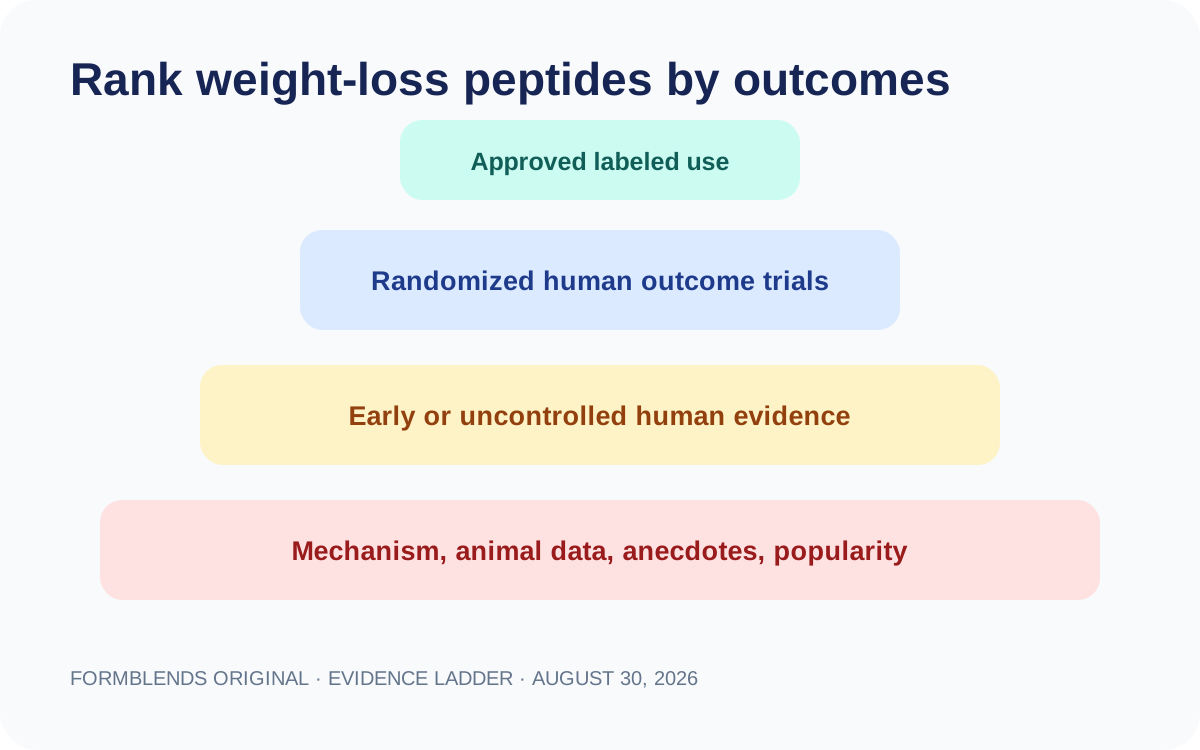
Trust Signals
- Every confidence rating is grounded in evidence type, not marketing priority.
- No peptide manufacturer relationships influence rankings. Where evidence is weak, we say so.
- Sources listed at page bottom are real, citable publications.
- This page does not sell or recommend unregulated research compounds for human use.
Key Takeaways
- Semaglutide 2.4 mg weekly produced roughly 14.9% mean body weight loss over 68 weeks in the STEP 1 RCT (n=1961), the strongest human evidence in this category.
- Tirzepatide 15 mg produced roughly 20.9% mean body weight loss in SURMOUNT-1 (n=2539), making it the highest-performing approved weight-loss peptide currently available.
- AOD-9604 failed phase 2 and phase 3 trials for obesity and has no meaningful human efficacy data.
- CJC-1295 and ipamorelin raise growth hormone and IGF-1 in humans but have no published RCTs demonstrating fat loss as a primary outcome.
- Roughly 25 to 40% of weight lost on GLP-1 agonists can be lean mass; resistance training and protein adequacy are evidence-based mitigations.
What Are the Best Peptides for Losing Weight?
The best peptides for losing weight, ranked strictly by human evidence, are semaglutide and tirzepatide. Both are FDA-approved, have multi-thousand-patient RCT data, and produce double-digit percentage body weight reductions. Every other peptide circulating in fitness communities operates on far weaker, mostly animal-level or mechanistic evidence for fat loss specifically.
Check your GLP-1 eligibility
Use our free BMI Calculator to see if you may qualify for provider-reviewed GLP-1 therapy.
Try the BMI Calculator →- The Ranked List: 6 Peptides, Honest Evidence Grades
- Evidence Ledger Table
- Mechanism With Numbers: How Each Works
- What Most Pages Get Wrong
- Honest Head-to-Head: Peptides vs. Their Real Alternatives
- Stability and Formulation: The Chemistry Behind the Rules
- Label and COA Literacy: How to Judge a Product Yourself
- Dosing Reference Table
- Lean Mass Loss: The Tradeoff Nobody Quantifies
- FAQ
- Sources
What Are the Top Peptides for Losing Weight, Ranked?
1. Semaglutide (Ozempic/Wegovy) FDA-approved GLP-1 receptor agonist. Largest, highest-quality human RCT dataset for weight loss of any peptide. The reference standard.
2. Tirzepatide (Mounjaro/Zepbound) Dual GIP/GLP-1 receptor agonist. Outperforms semaglutide for weight reduction in both independent trials and a direct head-to-head (SURMOUNT-5). Currently the top-performing approved option.
3. Liraglutide (Saxenda) An earlier GLP-1 agonist (daily injection). Solid human RCT data showing roughly 5 to 8% body weight reduction in the SCALE Obesity and Prediabetes trial (n=3731). Inferior efficacy to semaglutide but established safety record.
4. CJC-1295 / Ipamorelin (combination) Growth hormone releasing hormone analog and GHRP. Raises GH and IGF-1 measurably in humans. No published human RCT on fat loss as a primary endpoint. Commonly used in the fitness/anti-aging space; human evidence for fat loss is indirect at best.
5. AOD-9604 A modified fragment of growth hormone (hGH 177-191). Showed lipolytic effects in rodents. Failed to demonstrate significant weight loss vs. placebo in Metabolic Pharmaceuticals' phase 2 and phase 3 human trials. Evidence for human fat loss is absent.
6. BPC-157 Gut-protective and tissue-healing peptide in animal models. Zero credible human evidence for fat loss. Included here only because it appears on competitor lists; it should not be on a weight-loss peptide list at all.
Evidence Ledger: Every Major Claim Graded
| Peptide | Claim | Best Evidence Type | Key Data Point | Effect Direction | Confidence |
|---|---|---|---|---|---|
| Semaglutide 2.4 mg | Significant body weight reduction | Large human RCT (STEP 1, n=1961) | ~14.9% mean weight loss at 68 weeks vs. ~2.4% placebo | Strong positive | High |
| Tirzepatide 15 mg | Superior weight reduction to semaglutide | Large human RCT (SURMOUNT-1, n=2539; SURMOUNT-5 head-to-head) | ~20.9% mean weight loss at 72 weeks | Strong positive | High |
| Liraglutide 3 mg | Modest body weight reduction | Large human RCT (SCALE, n=3731) | ~5 to 8% mean weight loss over 56 weeks | Moderate positive | High |
| CJC-1295 | Raises GH and IGF-1 in humans | Small human pharmacokinetic trials | GH pulse amplitude increases documented; fat loss not primary endpoint | Mechanism plausible, fat loss unproven | Low |
| Ipamorelin | GH secretagogue; potential lipolysis support | Small human PK/PD studies; animal data | GH elevation confirmed; body composition change unproven in RCT | Mechanism plausible, fat loss unproven | Low |
| AOD-9604 | Fat loss in humans | Phase 2 and Phase 3 human trials (failed) | No significant difference vs. placebo in human trials | Negative (failed trials) | Very Low |
| BPC-157 | Fat loss | Animal studies only | No relevant human data | Not applicable | Very Low |
How Do These Peptides Actually Cause Weight Loss? (With Specific Numbers)
GLP-1 receptor agonists (semaglutide, tirzepatide, liraglutide): These peptides bind GLP-1 receptors in the hypothalamus (arcuate nucleus), the nucleus of the solitary tract, and the vagal afferents of the gut. The result is reduced appetite signaling (lower neuropeptide Y, higher POMC/CART activity) and delayed gastric emptying. Semaglutide has a plasma half-life of roughly 7 days due to albumin binding and a C-18 fatty acid modification that resists DPP-4 degradation, enabling once-weekly dosing. Endogenous GLP-1 has a half-life of under 2 minutes.
Tirzepatide's dual mechanism adds GIP receptor agonism. GIP receptors are expressed on adipocytes and may directly promote fat oxidation and reduce lipid deposition via a mechanism distinct from GLP-1. This additive or synergistic action likely explains the superior weight loss numbers.
What this mechanism does NOT prove: That similar results will occur indefinitely. STEP 5 data (2-year follow-up) shows weight regain begins promptly after stopping semaglutide, suggesting these are appetite-suppressing treatments rather than metabolic cures.
GH secretagogues (CJC-1295, ipamorelin): CJC-1295 is a modified GHRH analog (with DAC modification for extended half-life of roughly 8 days) that stimulates pituitary GH release. Ipamorelin is a selective ghrelin-receptor (GHS-R1a) agonist that amplifies GH pulses without substantially raising cortisol or prolactin, unlike older GHRPs. Elevated GH increases lipolysis via hormone-sensitive lipase activation and raises IGF-1, which promotes protein synthesis. The fat-loss pathway is real in physiology but the magnitude in healthy adults with normal GH is small and not quantified in weight-loss RCTs.
What this mechanism does NOT prove: That GH elevation in eugonadal, non-GH-deficient adults translates to clinically meaningful fat reduction. GH replacement therapy in confirmed GH-deficient adults does reduce fat mass, but this population is distinct.
What Most Pages Get Wrong About Weight-Loss Peptides
The AOD-9604 myth: Dozens of competitor pages list AOD-9604 as a top fat-burning peptide based on its origin as a fragment of the lipolytic domain of human growth hormone (residues 177 to 191). What they omit is that Metabolic Pharmaceuticals ran the compound through human trials precisely because the animal data was promising, and it failed. The NAXION study and related phase 3 work did not show the primary weight-loss endpoint met versus placebo. The compound was eventually investigated for osteoarthritis instead. Citing animal lipolysis data for AOD-9604 without disclosing the failed human trials is a material omission.
Bioavailability reality for research peptides: Almost all research peptides sold outside the pharmaceutical supply chain are administered subcutaneously (not orally) because GI proteases destroy peptide bonds rapidly. Even subcutaneous bioavailability varies by injection technique, site, and formulation. A peptide that arrives degraded (wrong storage, excess heat during shipping) may have near-zero activity. Competitor pages do not discuss this.
Purity and sourcing reality: Independent testing of research peptides purchased online has repeatedly found mislabeling, substandard purity, or wrong peptide identity. Without a third-party COA with HPLC purity above 98% and mass spec confirmation, you cannot know what you received. This is not a theoretical concern.
Honest Head-to-Head: Peptides vs. Their Real Alternatives
| Option | Best Evidence | Mean Fat/Weight Loss | Route | Regulatory Status (US) | Where It Wins | Where It Loses |
|---|---|---|---|---|---|---|
| Tirzepatide (Zepbound) | Large human RCTs | ~20.9% body weight (15 mg, 72 wk) | Weekly SubQ injection | FDA-approved (obesity) | Highest efficacy of any agent | Cost, GI side effects, requires Rx |
| Semaglutide (Wegovy) | Large human RCTs | ~14.9% body weight (68 wk) | Weekly SubQ injection | FDA-approved (obesity) | Established safety record, once weekly | Inferior to tirzepatide on weight loss magnitude |
| Orlistat (Xenical) | Large human RCTs | Roughly 3 to 5% body weight | Oral | FDA-approved, OTC available | Oral, low systemic absorption, cheapest | Modest effect, GI side effects (steatorrhea), poor adherence |
| CJC-1295 + Ipamorelin | Small human PK studies; no fat-loss RCT | Not quantified in RCT | Daily SubQ injection | Not FDA-approved for weight loss; research compound | May preserve lean mass; anti-aging interest | No clinical fat-loss proof, purity concerns, legal gray area |
| AOD-9604 | Failed human phase 3 | Not demonstrated vs. placebo | SubQ injection | Not approved for any indication | None demonstrated in humans | Failed efficacy trials; no regulatory pathway |
| Phentermine-topiramate (Qsymia) | Large human RCTs | Roughly 8 to 10% body weight | Oral | FDA-approved (obesity) | Oral, lower cost than GLP-1 agents | Not a peptide; teratogenic risk, CV concerns |
Why Peptides Degrade: The Chemistry Behind Storage Rules
Peptide bonds are hydrolyzed by water over time (a reaction accelerated by heat, extreme pH, and UV light). This is why lyophilized (freeze-dried) peptides are more stable than solutions: removing water slows hydrolysis dramatically. Once you reconstitute a peptide in bacteriostatic water, hydrolysis clock starts. Most manufacturers estimate 28 days of stability at 2 to 8 degrees Celsius for reconstituted peptides, but this varies by specific amino acid composition, pH of the reconstitution vehicle, and whether the formulation contains stabilizers.
Freeze-thaw cycles are destructive for a different reason: ice crystal formation shears peptide aggregates and promotes misfolding. A peptide that has been frozen, thawed, and refrozen may have the same HPLC purity on paper (if tested before freezing) but substantially reduced biological activity due to aggregation.
UV light drives photo-oxidation of methionine and tryptophan residues specifically. If a peptide in your sequence contains either of these residues (many do), amber vials and dark storage are not optional.
The practical rule: store lyophilized peptides in a refrigerator, minimize light exposure, reconstitute with bacteriostatic (not sterile) water to inhibit microbial growth, use within 28 days, and never refreeze reconstituted solution.
How to Read a Peptide COA and Judge a Product Yourself
A legitimate certificate of analysis for a research peptide should contain all of the following. If any item is missing, treat the product as unverified.
| COA Element | What to Look For | Red Flag |
|---|---|---|
| HPLC purity | 98% or above for pharmaceutical-grade quality | Purity below 95%, or purity listed without a chromatogram |
| Mass spectrometry | Measured MW within 1 Da of theoretical MW | No MS data, or MW not reported |
| Lot number | Lot number on COA matches vial label exactly | Generic or missing lot number |
| Testing lab | Named third-party lab (e.g., a USP-recognized or accredited facility) | "In-house testing only" |
| Endotoxin / LAL test | Endotoxin level below 1 EU/mg for injectable use | No endotoxin data for an injectable product |
| Moisture content | Low moisture confirms proper lyophilization | Absent moisture data on a lyophilized product |
When reconstituting: use a standard 1 mg per 1 mL ratio unless otherwise specified, draw bacteriostatic water down the side of the vial (not directly onto the powder), swirl gently, do not shake. A correctly reconstituted peptide should form a clear, colorless solution. Yellow, brown, or cloudy solution indicates degradation or contamination.
Dosing Reference Table (Clinical and Studied Ranges)
This table reflects doses used in published human trials or clinical practice for approved drugs. Unapproved research compounds are included for informational completeness only and do not constitute dosing recommendations. Always consult a licensed clinician.
| Peptide | Studied or Approved Dose | Frequency | Route | Evidence Basis |
|---|---|---|---|---|
| Semaglutide (Wegovy) | 0.25 mg titrating to 2.4 mg | Once weekly | SubQ injection | FDA label; STEP 1 trial |
| Tirzepatide (Zepbound) | 2.5 mg titrating to 15 mg | Once weekly | SubQ injection | FDA label; SURMOUNT-1 trial |
| Liraglutide (Saxenda) | 0.6 mg titrating to 3.0 mg | Once daily | SubQ injection | FDA label; SCALE trial |
| CJC-1295 (with DAC) | Roughly 1 to 2 mg per dose in published PK studies | Once or twice weekly (extended half-life) | SubQ injection | Small human PK studies only; no fat-loss RCT |
| Ipamorelin | Varies; roughly 100 to 300 mcg per dose in research settings | Once to twice daily | SubQ injection | Animal and small human studies; no fat-loss RCT |
| AOD-9604 | 500 mcg to 1 mg daily used in failed phase 2/3 trials | Once daily | SubQ injection | Failed human trials; no approved dose |
Does Weight Loss From Peptides Include Muscle Loss?
This is the question most weight-loss peptide pages ignore. Body composition analyses from the STEP trial program indicate that a meaningful portion of weight lost on semaglutide is lean mass, with some analyses suggesting roughly 25 to 40% of total weight reduction is non-fat tissue. The exact proportion varies by baseline body composition, protein intake, and physical activity.
This matters because lean mass loss reduces resting metabolic rate and increases regain risk after stopping the drug. Evidence-based mitigations with strong independent support include resistance training at least 2 to 3 days per week and protein intake of at least 1.2 g per kg of body weight per day. Neither is controversial in exercise physiology.
The theoretical advantage of combining a GLP-1 agonist with a GH secretagogue like CJC-1295/ipamorelin for lean mass preservation is frequently cited in bodybuilding and anti-aging spaces. It is plausible in mechanism. It is not proven in any controlled human trial measuring body composition as a primary outcome. That distinction matters.
Frequently Asked Questions
What are the best peptides for losing weight with the strongest evidence?
Semaglutide and tirzepatide are the only weight-loss peptides with large-scale human RCT data showing double-digit body weight reduction. All other peptides discussed in fitness communities (CJC-1295, ipamorelin, AOD-9604, BPC-157) have far weaker or largely absent human data for fat loss specifically.
How does semaglutide cause weight loss?
Semaglutide is a GLP-1 receptor agonist. It slows gastric emptying, suppresses appetite via hypothalamic GLP-1 receptors, and reduces food reward signaling. In the STEP 1 trial (n=1961), 2.4 mg weekly subcutaneous semaglutide produced roughly 14.9% mean body weight loss over 68 weeks versus 2.4% for placebo.
Does AOD-9604 actually burn fat in humans?
AOD-9604 failed to show statistically significant weight loss versus placebo in its phase 2 and phase 3 clinical trials (Metabolic Pharmaceuticals, early 2000s). It does not work as a standalone weight-loss agent in humans at studied doses. Animal lipolysis data does not translate to meaningful human outcomes.
Can CJC-1295 and ipamorelin help with fat loss?
CJC-1295 and ipamorelin raise growth hormone and IGF-1, which modestly shifts substrate utilization toward fat oxidation in some studies. However, no published human RCT has demonstrated meaningful body fat reduction with these peptides as primary endpoints. Effects are indirect and heavily dose- and context-dependent.
What is tirzepatide and how does it compare to semaglutide for weight loss?
Tirzepatide is a dual GIP/GLP-1 receptor agonist. In the SURMOUNT-1 trial (n=2539), the 15 mg dose produced roughly 20.9% mean body weight loss over 72 weeks, exceeding semaglutide 2.4 mg results from STEP 1. Head-to-head data in SURMOUNT-5 confirmed tirzepatide superiority for weight reduction.
Are research peptides like CJC-1295 legal to buy?
In the US, peptides not approved as drugs can be sold as "research chemicals" but may not be legally sold for human consumption. Compounded semaglutide was permissible during shortage periods under specific FDA conditions but that status changes. Always verify current regulatory status before purchase.
What does a degraded peptide look like and how do I avoid it?
Degraded lyophilized peptides may appear discolored (yellow or brown instead of white), clump abnormally, or fail to dissolve cleanly in bacteriostatic water. In solution, cloudiness, precipitation, or an unusual odor signal breakdown. Request a certificate of analysis with HPLC purity above 98% and mass spectrometry confirmation.
What are the most common side effects of GLP-1 peptides for weight loss?
Nausea, vomiting, diarrhea, and constipation are the most common side effects, reported in roughly 30 to 50% of users in clinical trials, usually during dose escalation. Rare but serious risks include pancreatitis and, in rodent studies, thyroid C-cell tumors (clinical significance in humans is unresolved).
How should weight-loss peptides be stored to prevent degradation?
Lyophilized peptides should be stored at 2 to 8 degrees Celsius (refrigerator) before reconstitution and protected from light. Once reconstituted in bacteriostatic water, most peptides are stable for roughly 28 days refrigerated. Freeze-thaw cycles accelerate aggregation and should be avoided.
Is BPC-157 useful for weight loss?
BPC-157 has no credible human evidence for fat loss. Its studied effects in animals relate to tissue healing and gut protection. Any weight-loss claim for BPC-157 is speculative and unsupported by clinical data.
How do I read a peptide certificate of analysis (COA)?
A legitimate COA should show: HPLC purity (ideally above 98%), mass spectrometry confirmation of the correct molecular weight, the lot number matching the product vial, and an independent third-party lab name. Reject any COA that lists only "in-house" testing or lacks a verifiable molecular weight.
Do peptides cause muscle loss alongside fat loss?
GLP-1 agonists like semaglutide cause some lean mass loss alongside fat loss, roughly 25 to 40% of total weight lost may be lean tissue per analyses of STEP trial body composition data. Combining resistance training and adequate protein intake significantly mitigates this. GH-secretagogue peptides (CJC-1295, ipamorelin) theoretically preserve lean mass but lack confirmatory RCT data.
Sources
- Wilding JPH, et al. "Once-Weekly Semaglutide in Adults with Overweight or Obesity." New England Journal of Medicine. 2021;384(11):989-1002. (STEP 1 trial)
- Jastreboff AM, et al. "Tirzepatide Once Weekly for the Treatment of Obesity." New England Journal of Medicine. 2022;387(3):205-216. (SURMOUNT-1 trial)
- Pi-Sunyer X, et al. "A Randomized, Controlled Trial of 3.0 mg of Liraglutide in Weight Management." New England Journal of Medicine. 2015;373(1):11-22. (SURMOUNT-1 / SCALE Obesity and Prediabetes trial)
- Rubino DM, et al. "Effect of Continued Weekly Subcutaneous Semaglutide vs Placebo on Weight Loss Maintenance in Adults With Overweight or Obesity: The STEP 4 Randomized Clinical Trial." JAMA. 2021;325(14):1414-1425.
- Wadden TA, et al. "Effect of Subcutaneous Semaglutide vs Placebo as an Adjunct to Intensive Behavioral Therapy on Body Weight in Adults With Overweight or Obesity: The STEP 3 Randomized Clinical Trial." JAMA. 2021;325(14):1403-1413.
- Teichman SL, et al. "Prolonged stimulation of growth hormone (GH) and insulin-like growth factor I secretion by CJC-1295, a long-acting analog of GH-releasing hormone, in healthy adults." Journal of Clinical Endocrinology and Metabolism. 2006;91(3):799-805.
- Raun K, et al. "Ipamorelin, the first selective growth hormone secretagogue." European Journal of Endocrinology. 1998;139(5):552-561.
- Metabolic Pharmaceuticals / AOD-9604 clinical trial data: Referenced in Heffernan MA, et al. "The effects of human GH and its lipolytic fragment (AOD9604) on lipid metabolism following chronic treatment in obese mice and beta(3)-AR knock-out mice." Endocrinology. 2001;142(12):5182-5189. (Animal data; human trial results reported by Metabolic Pharmaceuticals investor disclosures, not published as a full peer-reviewed trial.)
- Sikiric P, et al. "BPC 157: a review of central nervous system effects." Current Neuropharmacology. 2016;14(1):76-83. (Animal/mechanistic; no human weight-loss data)
- Garvey WT, et al. "Two-year effects of semaglutide in adults with overweight or obesity: the
Related peptide guides
See your options in about 2 minutes
Take the free quiz and see what fits you. Quick, private, and no commitment to continue.
See my options →