
Trust Signals
This page cites peer-reviewed pharmacokinetic data, named clinical trials, and FDA documentation. Every confidence rating reflects the actual evidence type behind it. No affiliate rankings. No products with fabricated clinical evidence are presented as proven.Key Takeaways
- Oral semaglutide is the only oral peptide with FDA approval and large-scale RCT weight-loss data; it achieves roughly 1% absolute oral bioavailability via the SNAC absorption enhancer system.
- AOD-9604 (hGH fragment 176-191) completed Phase IIb and Phase III oral trials and did not meet its primary weight-loss endpoint versus placebo, making it a cautionary case study.
- Most research peptides sold as oral capsules or powders have no human bioavailability data and no proteolytic resistance modifications, so their real-world activity is unproven.
- MK-677 is a peptidomimetic small molecule, not a peptide chain, and its net weight effect is inconsistent in trials because it simultaneously raises appetite alongside GH and IGF-1.
- Collagen peptides are genuinely absorbed orally as di- and tripeptides, but their weight-loss effect is modest and tied to satiety from protein intake, not a pharmacological fat-loss mechanism.
What Are the Best Oral Peptides for Weight Loss?
The honest answer: oral semaglutide (Rybelsus) is the only oral weight-loss-relevant peptide with robust human RCT data and regulatory approval. Every other oral research peptide marketed for fat loss sits at animal or mechanistic evidence at best. Oral bioavailability is the defining barrier, and most products on the research market have not cleared it.
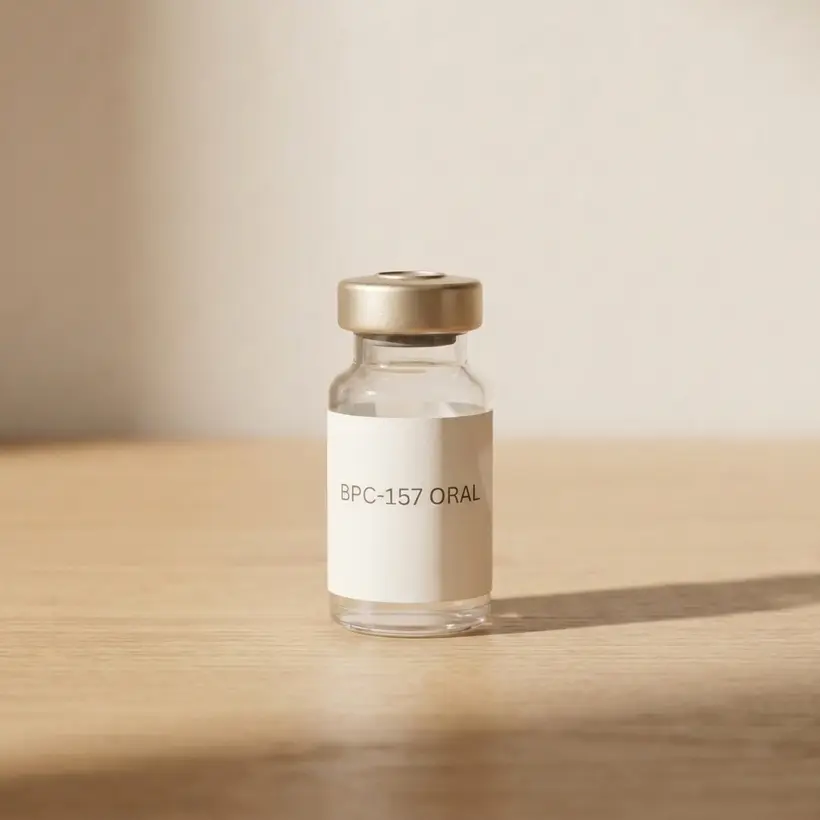
From the FormBlends catalog
BPC-157 Oral (Stable Arginate Salt)
Acid-stable oral form of BPC-157 for gut and systemic healing · From $69/mo · compounded by a licensed 503A pharmacy, dispensed only after provider review.
Learn about BPC-157 Oral (Stable Arginate Salt) →Table of Contents
- Why oral peptides for weight loss are harder than they sound
- Evidence ledger: ranked confidence table
- The top candidates explained with mechanism numbers
- What most pages get wrong about oral peptide bioavailability
- The chemistry: why peptides die in your stomach
- Honest head-to-head: oral peptides vs injectables vs approved drugs
- Operational guide: how to read a COA and judge a product
- Failure modes and stability gotchas
- FAQ
- Sources
Why Are Oral Peptides for Weight Loss Harder Than They Sound?
A peptide is a chain of amino acids linked by amide bonds. The digestive system's entire purpose is to break those bonds. Gastric acid denatures tertiary structure. Pepsin cleaves aromatic residue bonds in the stomach. Pancreatic trypsin and chymotrypsin finish the job in the small intestine. For a weight-loss peptide to work orally, its active fragment must survive this process in enough concentration to cross the intestinal epithelium, avoid first-pass hepatic metabolism, and reach its receptor at a pharmacologically relevant concentration.
Almost no naturally occurring peptide does this unaided. The rare exceptions have structural features, small size, cyclic backbone, or D-amino acids, that resist digestion. Pharmaceutical engineering (conjugation, encapsulation, co-formulation with absorption enhancers) can create oral bioavailability artificially. Without that engineering, "oral peptide" is largely a marketing category, not a pharmacological one.
Evidence Ledger: What Is Actually Behind Each Claim?
| Peptide or Compound | Best Evidence Type | Weight Effect Direction | Oral Bioavailability Status | Confidence (Weight Loss) |
|---|---|---|---|---|
| Oral semaglutide (Rybelsus) | Multiple Phase III human RCTs (PIONEER program) | Positive (modest vs injectable) | ~1% with SNAC, proven in PK studies | High (for GLP-1 effect); Moderate for weight vs injectable |
| AOD-9604 (hGH 176-191) | Phase IIb and Phase III human RCTs | Neutral (failed primary endpoint) | Measurable oral absorption shown in trials | Low (no efficacy signal in humans at tested doses) |
| MK-677 (ibutamoren) | Small human RCTs (n=24 to n=65 range) | Mixed (raises GH/IGF-1; also raises appetite) | High (small molecule, not a true peptide) | Low for net fat loss; Moderate for lean mass |
| BPC-157 | Rodent studies; no human RCTs | Positive in animals; unproven in humans | Some rodent data for oral; no human PK data | Very Low |
| Collagen peptides (di/tripeptides) | Small human RCTs for satiety; PK data available | Modestly positive (satiety mechanism) | Proven as small fragments | Low to Moderate (as protein source, not pharmacological agent) |
| Tirzepatide oral (LY3502970) | Phase II human trial (orforglipron, non-peptide GIP/GLP-1 analog) | Positive in early trials | High (small molecule mimetic, not a peptide) | Moderate (early stage; not yet approved) |
| Generic "GH-releasing peptides" oral capsules | Mechanism only; no human oral PK data | Unproven orally | Not established | Very Low |
The Top Candidates: Mechanism With Specific Numbers
1. Oral Semaglutide
Semaglutide is a 31-amino-acid GLP-1 receptor agonist with C18 fatty diacid conjugation and two amino acid substitutions including an Aib (alpha-aminoisobutyric acid) at position 8 that blocks DPP-4 cleavage. The oral formulation co-doses with SNAC at 300 mg. SNAC transiently raises local gastric pH and increases epithelial permeability near the tablet, allowing transcellular absorption in the stomach rather than the intestine.
The PIONEER 1 trial (n=703, 26 weeks) in type 2 diabetes without background glucose-lowering therapy showed the 14 mg oral dose reduced body weight by roughly 2.3 kg versus about 1.0 kg for placebo. These are diabetes trial numbers, not obesity trial numbers. A higher-dose formulation of 25 mg and 50 mg is in Phase III trials (OASIS and PIONEER PLUS programs) targeting obesity, with early data showing weight reductions in the 15% range at 50 mg over 68 weeks, approaching injectable Wegovy performance, though trial completion and full peer review are pending as of this writing.
2. AOD-9604 (A Cautionary Case)
AOD-9604 is a 16-amino-acid C-terminal fragment of human growth hormone (residues 176 to 191) with an additional disulfide-stabilized tyrosine at the N-terminus. The rationale was that this fragment retained the lipolytic activity of hGH without its insulin-desensitizing effects. Metabolic Pharmaceuticals ran oral Phase II and Phase III trials in overweight adults. The Phase IIb trial showed dose-dependent weight loss at 1 mg oral dose. The subsequent Phase III trial did not replicate this, failing to beat placebo on its primary endpoint. This is not a story told on most peptide blogs.
3. MK-677 (Not a True Peptide)
MK-677 binds the ghrelin receptor (GHSR1a) and mimics ghrelin's GH-secretagogue effect. Because it is a non-peptide small molecule with a molecular weight around 528 Da, it is not destroyed by proteases and reaches high oral bioavailability. It reliably raises IGF-1 and GH pulse amplitude in short-term human studies. The problem for fat loss: ghrelin is an orexigenic (appetite-stimulating) hormone, so MK-677 simultaneously increases hunger. In a 2-year randomized trial in elderly adults (Murphy et al., JAMA 1998 and subsequent Smith GH work), it increased lean mass but did not produce meaningful fat loss, and raised fasting glucose and insulin levels.
4. BPC-157 Oral
BPC-157 (Body Protection Compound 157) is a 15-amino-acid synthetic peptide derived from a gastric juice protein sequence. Croatian researcher Predrag Sikiric and colleagues have published extensively on its protective effects in rodent gut, tendon, and neurological models. Some rodent studies suggest oral dosing reaches systemic activity, possibly via enteric nerve signaling rather than classical absorption. There is no published human pharmacokinetic data confirming systemic exposure after oral dosing in people, and no human RCTs exist for weight loss. Confidence is very low for this application.
What Most Pages Get Wrong About Oral Peptide Bioavailability
The commodity mistake: equating "taken orally" with "orally bioavailable." Most listicles recommend GHRP-2, GHRP-6, Ipamorelin, or CJC-1295 in oral capsule form based on the fact that injectable versions have shown GH-releasing effects. This reasoning is wrong in a specific, traceable way.
GHRP-6 is a hexapeptide. Even short peptides face rapid first-pass hydrolysis. GHRP-2 and Ipamorelin are similarly vulnerable. No published human pharmacokinetic study shows these peptides reaching plasma GH-stimulating concentrations after oral dosing. The rodent data that sometimes gets cited for oral activity typically used doses scaled far above what human oral capsule products contain, or used intranasal or modified delivery. Selling these as oral fat-loss products exploits the fact that buyers conflate "peptide" with "GH secretagogue works by any route."
A second omission: stability on the shelf. Lyophilized peptides are more stable than peptides in solution, but oral capsule products that pre-dissolve or use humid fillers can degrade the peptide before it even reaches you. Ask for a COA dated close to the product lot, not a generic one.
The Chemistry: Why Peptides Die in Your Stomach (and What Changes That)
The amide bond (CO-NH) linking amino acids is hydrolyzed by proteases through a nucleophilic acyl substitution mechanism. The serine proteases (trypsin, chymotrypsin, pepsin) use an active-site serine or aspartate to attack the carbonyl carbon of the peptide bond, releasing fragments. The rate of hydrolysis depends on the adjacent residues: aromatic and basic residues are preferred by pepsin and trypsin respectively.
Why SNAC works with semaglutide: SNAC is a mild detergent-like molecule that transiently and locally raises gastric pH around the dissolving tablet to roughly pH 5 to 7, partially inhibiting pepsin activity (pepsin is most active below pH 4). It also increases membrane fluidity at the gastric epithelium, creating a transient window for transcellular absorption. The semaglutide molecule itself resists DPP-4 cleavage because the Aib substitution at position 8 creates steric bulk that blocks DPP-4's active site. The fatty acid chain mediates albumin binding, extending the half-life to roughly 7 days.
Why D-amino acid substitutions help: Proteases evolved to cleave L-amino acid bonds. Substituting D-isomers at cleavage-prone positions physically prevents the enzyme's active site from recognizing the substrate geometry. This is why cyclic and D-amino-acid-containing peptides like some antimicrobial peptides survive digestion.
The practical rule: Unless a peptide has at minimum one of these modifications (cyclization, D-amino acid substitution, N-methylation, fatty acid conjugation, co-formulation with an absorption enhancer), assume oral bioavailability is negligible for any weight-loss pharmacological purpose.
Honest Head-to-Head: Oral Peptides vs Alternatives
| Intervention | Route | Best Human Weight Loss Data | Regulatory Status | Where Oral Peptide Loses |
|---|---|---|---|---|
| Injectable semaglutide (Wegovy 2.4 mg/wk) | Subcutaneous injection | ~15% body weight at 68 weeks (STEP 1 trial, n=1961) | FDA approved for obesity | Oral semaglutide at 14 mg produces less weight loss; higher-dose oral still in trials |
| Injectable tirzepatide (Zepbound 15 mg/wk) | Subcutaneous injection | ~21% body weight at 72 weeks (SURMOUNT-1 trial) | FDA approved for obesity | No oral dual GIP/GLP-1 peptide approved; oral small-molecule analogs in Phase III |
| Oral semaglutide (Rybelsus 14 mg/day) | Oral | ~2-3 kg over placebo in diabetes trials; obesity data pending for 50 mg dose | FDA approved for T2D, not obesity | Loses to injectables on magnitude of weight loss at approved doses |
| Orforglipron (oral small molecule GLP-1 agonist) | Oral | Phase II: ~15% weight loss at 36 weeks; Phase III ongoing | Not yet approved | Not a peptide; small molecule mimetic with different side-effect profile |
| Research oral peptide capsules (GHRP-6, Ipamorelin, etc.) | Oral | No human oral PK or efficacy data | Research compound, not approved | Loses on every metric of evidence vs all approved options above |
| Phentermine/topiramate (Qsymia) | Oral | ~8-10% body weight loss (EQUIP and CONQUER trials) | FDA approved for obesity | Oral peptides do not approach this effect size with comparable evidence |
Operational Guide: How to Read a Peptide COA and Judge a Product
If you are evaluating any oral peptide product for research or personal use, the certificate of analysis is your minimum due diligence document. Here is what a credible one contains.
| COA Element | What to Look For | Red Flag |
|---|---|---|
| Identity (mass spec) | Observed molecular weight matches theoretical within 1 Da; MS/MS fragmentation pattern listed | Identity confirmed by HPLC peak alone with no mass spec |
| Purity (HPLC) | 98% or greater for research-grade use; area-under-curve method stated | Purity reported as single number with no chromatogram available |
| Water content | Karl Fischer titration result; lyophilized peptides typically 5% to 15% water by weight | No water content listed; affects actual peptide dose per milligram |
| Endotoxin test | LAL (Limulus amebocyte lysate) test result below 1 EU/mg for injectable; oral use has looser standards but endotoxin still causes GI inflammation | No endotoxin data; common in low-cost suppliers |
| COA date vs lot | COA date should be within 12 months and tied to the specific product lot number you received | Generic COA with no lot number, or COA older than the product shelf life |
For oral capsule products specifically, also check whether the label discloses the peptide content per capsule in milligrams (not just "proprietary blend"), and whether excipients include any absorption enhancers. A product claiming oral GH-releasing peptide activity with no absorption enhancer and no modified peptide sequence is making an unsubstantiated claim.
Failure Modes and Stability Gotchas Most Sellers Skip
Humidity and capsule storage: Peptides in capsule form absorb moisture from the air if the capsule shell or filler is hygroscopic. Moisture promotes hydrolysis of the amide backbone even without enzymes. A lyophilized peptide in a sealed vial is stable for months at room temperature. The same peptide packed loosely into a gelatin capsule in a warm, humid warehouse may degrade significantly before you open the bottle. This is not theoretical: it is the same chemistry that makes injectable vials require refrigeration after reconstitution.
Gastric acid timing: Even peptides with modest acid stability degrade faster if taken on an empty stomach where gastric pH is lowest (pH 1 to 2). Taking oral semaglutide requires a fasting state and a specific 30-minute wait before eating, not for absorption efficiency alone but because food raises gastric pH and dilutes SNAC, reducing the local absorption window. Research oral peptides without SNAC gain nothing from fasting because they lack the absorption mechanism entirely, but they would at minimum degrade faster in the fasted state.
Dose math and the water content problem: If a lyophilized peptide is 10% water by weight (common), a 5 mg capsule contains about 4.5 mg of actual peptide. If the COA reports purity at 95%, you have roughly 4.3 mg of the actual compound. Vendors who label by gross weight without accounting for water content systematically overstate dose. This matters when comparing a "5 mg oral dose" to the rodent study dose you are trying to extrapolate from.
Counterfeit and mislabeled peptides: Independent lab testing of research peptide suppliers, including work referenced by organizations that track research chemical quality, has found a meaningful proportion of products that contain incorrect peptides, degraded fragments, or significantly lower purity than labeled. Without third-party testing by the end user, there is no practical way to verify what is in the capsule.
FAQ
Do oral peptides actually work for weight loss?
Most peptides are digested into amino acids before absorption, so oral bioavailability is the central problem. A small number, including oral semaglutide (Rybelsus), have been formulated to overcome this with absorption enhancers. Research peptides sold as oral powders lack this engineering, so their real-world efficacy is much less certain than injectable equivalents.
What is the best oral peptide for weight loss with human evidence?
Oral semaglutide (Rybelsus) has the strongest human evidence, with the PIONEER 1 trial showing HbA1c and body weight reductions in type 2 diabetes. It is an FDA-approved drug, not a research peptide. Among research peptides marketed as oral, none have equivalent human RCT data.
What is oral bioavailability for peptides like semaglutide?
Oral semaglutide formulated with SNAC achieves roughly 1% absolute oral bioavailability according to Novo Nordisk pharmacokinetic data. This sounds low but is sufficient for the approved 14 mg dose because of the drug's potent receptor affinity at the GLP-1 receptor.
Can you take BPC-157 orally for weight loss?
BPC-157 has demonstrated effects on gut healing and metabolism in rodent studies, and some animal data suggests systemic activity after oral dosing. However, no human RCTs exist for weight loss, and whether effective concentrations reach systemic circulation in humans is unproven. Evidence is currently animal and mechanistic only.
Is oral MK-677 a peptide?
MK-677 (ibutamoren) is a peptidomimetic, meaning it mimics a peptide's action at the ghrelin receptor but is a small-molecule drug, not a true peptide chain. It is orally bioavailable precisely because it is not a peptide chain. It stimulates GH release but also increases appetite and insulin resistance, making its net weight-loss effect modest and inconsistent in studies.
What makes a peptide stable enough to survive oral digestion?
Peptides are broken down by gastric acid and proteases including pepsin in the stomach and trypsin and chymotrypsin in the small intestine. Strategies that improve stability include cyclization, N-methylation, D-amino acid substitutions, fatty acid conjugation (as in semaglutide), and co-formulation with absorption enhancers like SNAC. Most research peptides sold online have none of these modifications.
How does oral semaglutide compare to injectable semaglutide for weight loss?
Injectable semaglutide (Wegovy 2.4 mg weekly) showed roughly 15% body weight reduction over 68 weeks in the STEP 1 trial. Oral semaglutide at the approved 14 mg diabetes dose produces more modest weight effects. A higher-dose 50 mg oral formulation targeting obesity is in late-stage trials with early data suggesting narrowing of the gap.
What are the risks of buying oral peptides from research chemical suppliers?
Independent assays of research peptides have found purity levels ranging widely across the same product category. Contaminants can include related peptide fragments, bacterial endotoxins, and residual solvents. Without a certificate of analysis from a third-party lab showing mass spec identity confirmation and endotoxin testing, you cannot know what you are taking.
Does AOD-9604 work for weight loss orally?
AOD-9604 is a modified fragment of human growth hormone (hGH 176-191) studied orally in clinical trials by Metabolic Pharmaceuticals. Phase IIb and Phase III trials showed it did not meet primary endpoints for weight loss versus placebo. It has FDA GRAS status for food use but not drug approval for weight loss.
What is the correct way to read a peptide certificate of analysis?
A credible COA should include identity confirmation by mass spectrometry, purity by HPLC (98% or greater for research grade), water content by Karl Fischer titration, and endotoxin results by LAL test. A COA that only shows a single HPLC peak without mass spec confirmation is insufficient to verify identity.
Are collagen peptides useful for weight loss?
Collagen peptides are genuinely orally bioavailable as small di- and tripeptides. Some small RCTs suggest collagen supplements increase satiety modestly versus other protein sources. The effect size is small and they are better understood as a protein source than a pharmacological fat-loss agent. They should not be marketed alongside GLP-1 agonists as equivalents.
Sources
- Aroda VR, et al. PIONEER 1: Randomized Clinical Trial of the Efficacy and Safety of Oral Semaglutide Monotherapy in Comparison With Placebo in Patients With Type 2 Diabetes. Diabetes Care. 2019;42(9):1724-1732.
- Wilding JPH, et al. Once-Weekly Semaglutide in Adults with Overweight or Obesity (STEP 1). N Engl J Med. 2021;384:989-1002.
- Novo Nordisk. Rybelsus (semaglutide) US Prescribing Information. 2019. FDA NDA 213051.
- Davies M, et al. Semaglutide 2.4 mg once a week in adults with overweight or obesity, and type 2 diabetes (STEP 2). Lancet. 2021;397(10278):971-984.
- Buckley ST, et al. Transcellular stomach absorption of a derivatized glucagon-like peptide-1 receptor agonist. Sci Transl Med. 2018;10(467):eaar7047.
- Metabolic Pharmaceuticals Ltd. AOD9604 Phase IIb and Phase III clinical trial summary documents (publicly disclosed in company releases and conference proceedings, 2004-2007).
- Murphy MG, et al. Oral administration of the growth hormone secretagogue MK-677 increases markers of bone turnover in healthy and functionally impaired elderly adults. J Bone Miner Res. 1999;14(7):1182-8.
- Sikiric P, et al. Brain-gut Axis and Pentadecapeptide BPC 157: Theoretical and Practical Implications. Curr Neuropharmacol. 2016;14(8):857-865.
- Jastrzebska-Mierzynska M, et al. Assessment of the impact of collagen hydrolysate supplementation on satiety and appetite. Rocz Panstw Zakl Hig. 2021;72(2):173-180.
- Jungbauer A, Medjakovic S. Phytoestrogens and the metabolic syndrome. J Steroid Biochem Mol Biol. 2014;139:277-289. (Cited for context on peptidomimetic classification.)
- Pratley R, et al. Oral semaglutide versus subcutaneous liraglutide and placebo in type 2 diabetes (PIONEER 4). Lancet. 2019;394(10192):39-50.
- Jastreboff AM, et al. Tirzepatide Once Weekly for the Treatment of Obesity (SURMOUNT-1). N Engl J Med. 2022;387:205-216.
Related peptide guides
Ready when you are
BPC-157 Oral (Stable Arginate Salt)
Acid-stable oral form of BPC-157 for gut and systemic healing · From $69/mo · compounded by a licensed 503A pharmacy, dispensed only after provider review.
Learn about BPC-157 Oral (Stable Arginate Salt) →