
Trust Signals
Key Takeaways
What Are the Best TB-500 Capsules, in Plain Terms?
The best TB-500 capsules are those with independently verified purity of at least 98% by HPLC, a stated and accurate dose per capsule, a batch-matched COA from a third-party lab, and transparent sourcing. That matters more than brand reputation. The honest caveat: oral capsules of a 43-amino-acid peptide face a steep bioavailability problem that no capsule brand has solved, because that is a biochemistry limit, not a manufacturing limit.
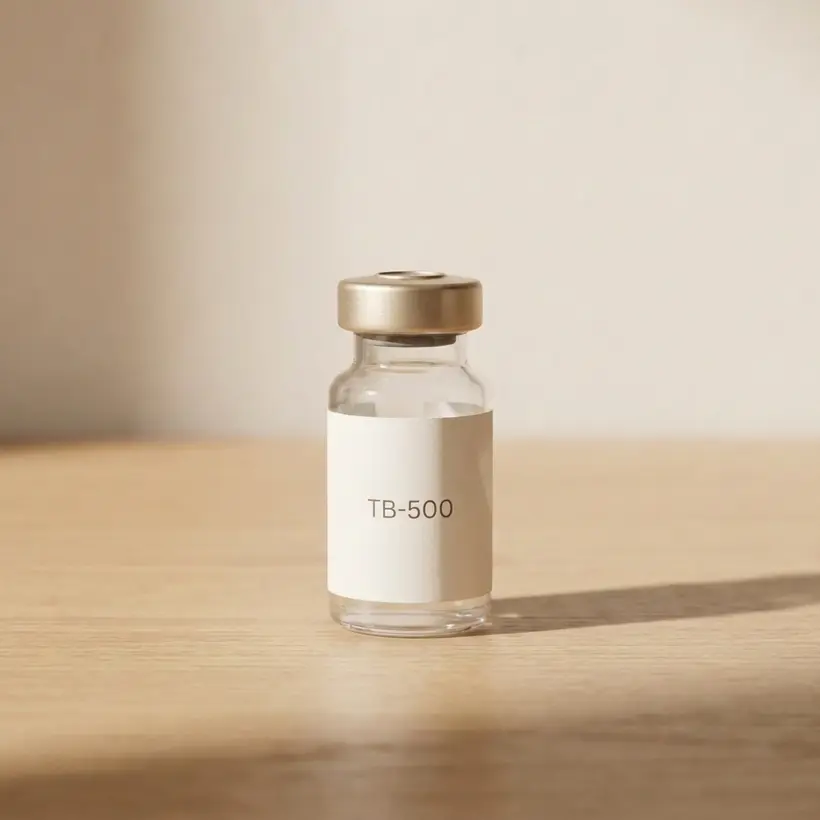
From the FormBlends catalog
TB-500 (Thymosin Beta-4)
Universal repair peptide for tissue regeneration · From $49/mo · compounded by a licensed 503A pharmacy, dispensed only after provider review.
Learn about TB-500 (Thymosin Beta-4) →Table of Contents
- What are the best TB-500 capsules, in plain terms?
- What is TB-500 and what does it do mechanistically?
- Evidence ledger: what the research actually supports
- Do TB-500 capsules actually work orally? The bioavailability problem
- What most pages get wrong about TB-500 capsules
- How to read a COA for TB-500 capsules
- Storage and stability: the chemistry behind the rules
- TB-500 vs. the real alternatives: honest head-to-head
- Dosing reference table
- Legal status and WADA
- FAQ
- Sources
What Is TB-500 and What Does It Do Mechanistically?
TB-500 is not identical to thymosin beta-4 (Tbeta4). It is a synthetic peptide fragment corresponding primarily to the LKKTETQ actin-binding motif within the full 43-amino-acid sequence of Tbeta4. Thymosin beta-4 was originally isolated from calf thymus and characterized as an actin-sequestering protein. The full protein is 43 amino acids; TB-500 as typically sold in research contexts refers to the full synthetic replicate of that sequence.
Mechanistically, the evidence points to three pathways. First, TB-500 promotes G-actin sequestration and cytoskeletal remodeling, which facilitates cell migration. Second, in animal wound models, Tbeta4 and its analogues have shown upregulation of matrix metalloproteinases and promotion of angiogenesis. Third, in cardiac ischemia models in rodents, Tbeta4 demonstrated cardioprotective effects linked to activation of integrin-linked kinase (ILK). These are mechanistically specific and supported by peer-reviewed animal data. What these mechanisms do NOT prove is that an orally administered capsule delivers enough intact peptide systemically to replicate these effects in humans.
Evidence Ledger: What the Research Actually Supports
| Claim | Best Evidence Type | Direction | Confidence |
|---|---|---|---|
| TB-500 promotes cell migration and wound closure in vitro | In-vitro cell studies | Positive | Moderate (in vitro only) |
| Tbeta4 accelerates wound healing in rodent models | Animal RCT | Positive | Moderate (animal) |
| Tbeta4 shows cardioprotection in murine ischemia models | Animal studies, mechanistic | Positive | Low (animal, no human translation) |
| TB-500 human RCT efficacy for wound healing or recovery | No published human RCT found | Unknown | Very Low |
| Oral capsule TB-500 reaches meaningful plasma levels | No published human PK study | Unlikely (mechanism) | Very Low |
| Thymosin beta-4 ophthalmic drops benefit dry eye (human) | Small human trials | Positive signal | Moderate (different route, different form) |
| WADA detection methods for Tbeta4 analogues exist | Anti-doping research, WADA list | Confirmed | High |
Do TB-500 Capsules Actually Work Orally? The Bioavailability Problem
This is the section most vendors skip. TB-500 is a 43-amino-acid peptide with a molecular weight of approximately 4963 Da. When you swallow a capsule, the peptide encounters gastric acid (pH roughly 1.5 to 3.5) and proteolytic enzymes including pepsin, trypsin, and chymotrypsin in the small intestine. Large peptides above roughly 1000 Da face extremely poor transcellular absorption across intestinal epithelium, and are largely degraded to amino acid fragments before reaching the portal circulation intact.
Compare this to small peptides: BPC-157 at 1419 Da is meaningfully smaller, and even BPC-157 oral bioavailability in humans has not been confirmed by published pharmacokinetic studies. TB-500 at roughly 3.5x the molecular weight of BPC-157 faces a steeper barrier. No published study has measured plasma TB-500 levels following oral capsule administration in humans or animals. Vendors who imply equivalence between oral and injectable formats are making a claim that the current literature does not support. The delivery advantage of capsules is convenience and comfort, not bioavailability.
What Most Pages Get Wrong About TB-500 Capsules
Nearly every listicle ranking the best TB-500 capsules makes one or more of the following errors.
Treating animal data as human proof. Rodent wound-healing models have produced positive Tbeta4 results, but rodent skin healing physiology differs from human. The step from "works in mice" to "works orally in people" requires pharmacokinetic and clinical data that do not yet exist for TB-500.
Ignoring the fragment vs. full peptide distinction. Some products labeled TB-500 may contain the LKKTETQ heptapeptide fragment rather than the full 43-amino-acid sequence. These are structurally different, have different molecular weights, and have been studied under different conditions. A COA that only reports purity without confirming molecular weight (approximately 4963 Da for full-sequence TB-500) cannot distinguish between these.
Citing dose numbers without route context. Animal study doses are expressed per kilogram body weight and administered by injection. Reproducing those dose numbers in a capsule product ignores both the route difference and the species scaling problem.
Omitting WADA status. Most buyer's guides do not mention that thymosin beta-4 and its analogues have appeared on the WADA Prohibited List, which is directly relevant to any athlete considering these products.
How to Read a COA for TB-500 Capsules
A certificate of analysis is the primary quality document for any research peptide. Here is what to look for and why each element matters.
| COA Element | Minimum Standard | Why It Matters |
|---|---|---|
| Purity by HPLC or LC-MS | 98% or above | Confirms peptide content relative to impurities; HPLC shows the chromatographic purity profile |
| Molecular weight confirmation | Approximately 4963 Da for full-sequence TB-500 | Distinguishes full TB-500 from the shorter LKKTETQ fragment (807 Da) |
| Endotoxin testing | LAL assay result listed | Lipopolysaccharide contamination is a risk in bacterially-derived or poorly-handled peptides |
| Residual solvents | Below USP Class 2 limits | Acetonitrile and TFA are used in HPLC purification and can persist in the final product |
| Issuing lab | Independent third-party, named lab | Vendor self-testing has obvious conflict of interest; the lab name should be searchable |
| Batch number match | Must match product label | A COA from a different batch is not evidence of the product you receive |
If a vendor cannot produce a COA meeting these criteria, that is disqualifying regardless of other marketing claims. Many products sold as the best TB-500 capsules have never been tested by a facility that could confirm molecular identity.
Storage and Stability: The Chemistry Behind the Rules
The standard advice is "store cold and keep dry." Here is what is actually happening chemically.
Hydrolysis. Peptide bonds (amide linkages) are susceptible to acid and base-catalyzed hydrolysis. Moisture is the enabling reagent. Lyophilized peptide powder in a capsule is relatively stable in a dry state, but once humidity enters the bottle (every time you open it), water molecules begin breaking amide bonds. This degradation accelerates with temperature. Storing at room temperature in a humid bathroom is a practical formula for accelerated degradation.
Oxidation. Methionine and cysteine residues are the most oxidation-sensitive amino acids. TB-500's sequence does not contain cysteine, but oxidative degradation of other residues is still a degradation pathway at ambient conditions. UV light catalyzes oxidation, which is why amber glass or opaque packaging is used.
What degradation looks like. You cannot reliably assess capsule contents for degradation by visual inspection. The powder does not change color meaningfully. This is a genuine problem: a degraded batch looks identical to a good batch inside an opaque capsule. This is one more argument for batch-matched COAs with a purchase date close to the COA date.
TB-500 vs. the Real Alternatives: Honest Head-to-Head
| Compound | Mechanism | Evidence Level | Oral Bioavailability | TB-500 Wins | TB-500 Loses |
|---|---|---|---|---|---|
| Injectable TB-500 | Same actin/ILK pathway | Animal, some anecdotal human | Not applicable | Capsule convenience | Bioavailability almost certainly lower |
| BPC-157 capsules | Nitric oxide, growth factor upregulation | Animal dominant, no human RCT | Unconfirmed, plausibly higher than TB-500 due to smaller size (1419 Da) | Slightly better oral stability argument | Different mechanism, not a true substitute |
| Topical Tbeta4 (ophthalmic) | Direct tissue contact, no systemic absorption needed | Small human trials for dry eye | Not applicable (topical) | Only format with human trial data | Different application entirely |
| Platelet-rich plasma (PRP) | Multiple growth factors including endogenous Tbeta4 release | Human trials in multiple indications | Not applicable (injected) | PRP has more human clinical data | Invasive, costly, not oral |
The honest conclusion: no oral peptide capsule format currently has robust human bioavailability or efficacy data. TB-500 capsules should be evaluated against that baseline, not against injectable pharmacokinetics.
Dosing Reference Table
| Context | Dose Range Referenced | Route | Source Type |
|---|---|---|---|
| Murine wound-healing studies | Varies; typically milligrams per kilogram range | Subcutaneous or IP injection | Animal research literature |
| Research community protocols (human) | 2 mg to 7.66 mg total per administration | Subcutaneous or intramuscular | Anecdotal/community; no RCT basis |
| Oral capsule products (typical commercial) | 500 mcg to 2 mg per capsule | Oral | Vendor labeling; no validated human PK |
Is TB-500 Legal to Buy and What Is the WADA Status?
In the United States, TB-500 is not scheduled as a controlled substance under the Controlled Substances Act. It is not FDA-approved for human use. Selling TB-500 capsules labeled for human consumption would constitute marketing an unapproved drug under FDA regulations. The practical enforcement pattern has focused on larger commercial operations rather than individual buyers, but the legal risk for resellers and formulators is real.
WADA has included thymosin beta-4 and analogues on its Prohibited List under the category of peptide hormones and related substances. Detection methods using immunoassay and LC-MS/MS approaches have been reported in anti-doping research literature. The route of administration, including oral capsules, does not exempt an athlete from this prohibition. Any competitor subject to WADA-compliant testing should treat TB-500 in any form as a prohibited substance.
FAQ
Do TB-500 capsules actually work orally?
Oral bioavailability of intact TB-500 (a 43-amino-acid peptide) is expected to be very low based on established peptide pharmacokinetics. Gastric proteases degrade large peptides before systemic absorption. No published human pharmacokinetic study has confirmed meaningful plasma levels from oral TB-500 capsules. The evidence for oral efficacy is currently very low.
What is TB-500 and what does it do mechanistically?
TB-500 is a synthetic analogue of the actin-sequestering domain of thymosin beta-4 (Tbeta4), specifically the LKKTETQ sequence region. It promotes actin polymerization, upregulates cell migration factors, and has shown anti-inflammatory and wound-healing effects in animal and in-vitro studies. Human RCT data are limited to none for the TB-500 fragment specifically.
What dose of TB-500 is used in research?
Animal studies have used doses roughly in the milligrams per kilogram range administered by injection. Human dosing protocols circulated in the research community typically reference 2 mg to 7.66 mg total dose administered subcutaneously or intramuscularly, not orally. No established oral human dosing protocol exists.
How do I read a COA for TB-500 capsules?
Look for HPLC or LC-MS purity of at least 98%, confirmed molecular weight matching TB-500 (approximately 4963 Da), endotoxin testing (LAL assay), and residual solvent panels. Confirm the COA is from an independent third-party lab, not the vendor's internal lab. A batch number on the COA should match the product label.
How should TB-500 capsules be stored?
Lyophilized or encapsulated TB-500 powder should be stored below 25 degrees Celsius, away from humidity and UV light. Peptide bonds are susceptible to hydrolysis in the presence of moisture and heat. Refrigeration extends shelf life. Once a capsule bottle is opened, humidity exposure accelerates degradation.
Is TB-500 legal to buy?
In the United States, TB-500 is not FDA-approved for human use and is classified as a research chemical. It is not a scheduled controlled substance federally, but selling it labeled for human consumption violates FDA regulations. WADA prohibits thymosin beta-4 and its analogues under the Prohibited List.
What are the known side effects of TB-500?
Human safety data are very limited. Animal studies have not identified major toxicity signals at research doses. Anecdotal human reports include temporary fatigue and headache. Because TB-500 influences actin dynamics and angiogenesis pathways, theoretical concerns about promoting existing tumors exist, though this has not been confirmed in human data.
How does TB-500 compare to BPC-157 capsules?
BPC-157 is a 15-amino-acid peptide, significantly smaller than TB-500's 43 amino acids, which makes oral stability slightly more plausible for BPC-157 though still unconfirmed in humans. Both lack human RCT data for oral administration. They act on overlapping wound-healing pathways but through different receptor mechanisms.
Can TB-500 capsules be detected in drug testing?
WADA added thymosin beta-4 analogues to its Prohibited List. Detection methods for TB-500 have been developed in anti-doping research, including immunoassay and LC-MS/MS approaches. Athletes subject to WADA-compliant testing should treat TB-500 as a prohibited substance regardless of the delivery route.
What should I look for when choosing the best TB-500 capsules?
Prioritize vendors that provide independent third-party COAs with HPLC purity above 98%, confirmed molecular weight, endotoxin results, and batch-matched documentation. Avoid products with proprietary blends that obscure the actual TB-500 dose per capsule. Transparent dosing and verifiable sourcing are the minimum standard.
Is oral TB-500 as effective as injectable TB-500?
Based on peptide pharmacokinetics, injectable (subcutaneous or intramuscular) TB-500 is expected to deliver substantially higher systemic bioavailability than oral capsules. No head-to-head pharmacokinetic comparison in humans has been published. Oral capsules are a more convenient format but almost certainly deliver less intact peptide systemically.
Are there any human clinical trials on TB-500?
As of 2026, published human RCTs specifically on TB-500 (the synthetic fragment) are not available. Thymosin beta-4 itself has been studied in small human trials for dry eye syndrome and wound healing, but those results do not directly translate to TB-500 fragment efficacy or oral capsule formulations.
Sources
- Goldstein AL, Hannappel E, Sosne G, Kleinman HK. Thymosin beta4: a multi-functional regenerative peptide. Basic properties and clinical applications. Expert Opin Biol Ther. 2012;12(1):37-51.
- Sosne G, Szliter EA, Barrett R, et al. Thymosin beta 4 promotes corneal wound healing and modulates inflammatory mediators in vivo. Exp Eye Res. 2002;74(2):293-299.
- Smart N, Risebro CA, Melville AA, et al. Thymosin beta4 induces adult epicardial progenitor mobilization and neovascularization. Nature. 2007;445(7124):177-182.
- Bock-Marquette I, Saxena A, White MD, Dimaio JM, Srivastava D. Thymosin beta4 activates integrin-linked kinase and promotes cardiac cell migration, survival and cardiac repair. Nature. 2004;432(7016):466-472.
- WADA Prohibited List 2024. World Anti-Doping Agency. https://www.wada-ama.org/en/prohibited-list.
- Loffet A. Peptides as drugs: is there a market? J Pept Sci. 2002;8(1):1-7. (General peptide oral bioavailability context.)
- Hamman JH, Enslin GM, Kotze AF. Oral delivery of peptide drugs: barriers and developments. BioDrugs. 2005;19(3):165-177.
- Sosne G, Qiu P, Goldstein AL, Wheater M. Biological activities of thymosin beta4 defined by active sites in short peptide sequences. FASEB J. 2010;24(7):2144-2151.
- United States Pharmacopeia. General Chapter 1057, Peptide Mapping. USP-NF.
- Banfi G, Lombardi G, Colombini A, Lippi G. Thymosin beta4: a candidate biomarker and drug in sport medicine. Curr Drug Targets. 2013;14(8):952-956.
Related peptide guides
Ready when you are
TB-500 (Thymosin Beta-4)
Universal repair peptide for tissue regeneration · From $49/mo · compounded by a licensed 503A pharmacy, dispensed only after provider review.
Learn about TB-500 (Thymosin Beta-4) →