Key Takeaway
If you've researched growth hormone peptides, you've probably noticed that CJC-1295 and Ipamorelin are frequently prescribed together. This isn't random. The CJC-1295 Ipamorelin combination is one of the most widely used GH peptide protocols in clinical practice) and for good reason.
If you've researched growth hormone peptides, you've probably noticed that CJC-1295 and Ipamorelin are frequently prescribed together. This isn't random. The CJC-1295 Ipamorelin combination is one of the most widely used GH peptide protocols in clinical practice) and for good reason.
Key Takeaways: - Discover why combine cjc-1295 and ipamorelin - Understand what results can you expect - Typical Dosing Protocols - Monitoring and Safety
This guide explains why these two peptides work better together, what results you can expect, and how providers typically structure this protocol.
Why Combine CJC-1295 and Ipamorelin?
The simple answer: they work through different mechanisms that complement each other.
Is a GHRH analog. It mimics growth hormone-releasing hormone, which tells the pituitary gland to make and release growth hormone. Think of it as extending the "open window" during which your pituitary can release GH.
Is a ghrelin receptor agonist. It binds to the growth hormone secretagogue receptor and triggers a burst of GH release. Think of it as amplifying the intensity of each GH pulse.
When you combine them, you get a wider release window AND a stronger pulse within that window. The result may be a more reliable overall GH response than either peptide produces alone.
"The key to successful GLP-1 therapy is setting realistic expectations and supporting patients through the titration phase. The side effects are manageable for most people, but they need to know what to expect.", Dr. Caroline Apovian, MD, Harvard Medical School
Research supports this combined approach. Studies have shown that combining a GHRH analog with a GH secretagogue produces GH levels higher than the sum of what each produces individually. This isn't just additive (it's combined.
Another advantage of this combination: Ipamorelin's clean side effect profile. Unlike older secretagogues like GHRP-6, Ipamorelin doesn't significantly raise cortisol, prolactin, or hunger. When paired with CJC-1295, you get powerful GH stimulation without the hormonal side effects that can complicate other protocols.
What Results Can You Expect?
The CJC-1295/Ipamorelin combination is prescribed for a range of health improvement goals. Here's what clinical experience suggests.
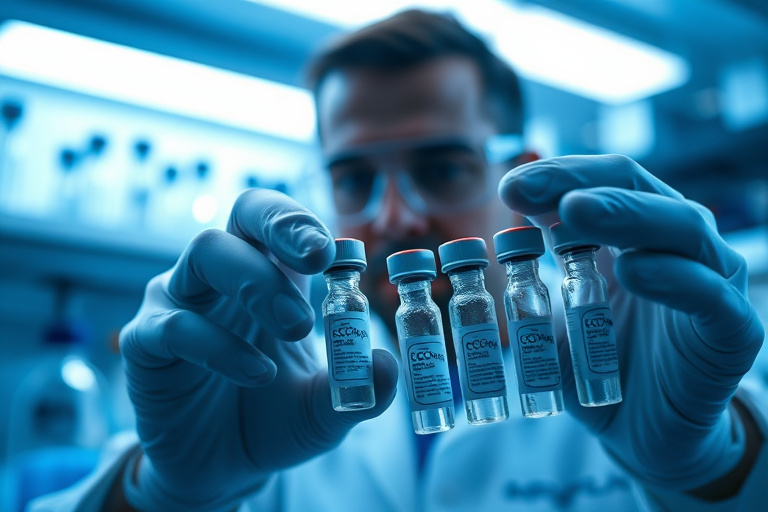
Sleep improvements are often the first benefit patients notice. Many people report deeper sleep within the first week. Since the largest natural GH pulse occurs during deep sleep, taking this combination before bed may enhance this natural process. Better sleep touches everything) mood, recovery, cognitive function, and energy.
Body composition changes tend to develop over 8 to 12 weeks. Patients may notice gradual improvements in lean mass retention and fat metabolism. These aren't dramatic overnight transformations. Think of it as a slow shift in how your body partitions nutrients and stores energy.
Recovery and performance. Active adults and athletes often report faster recovery between training sessions. Reduced muscle soreness, better joint comfort, and improved workout quality are commonly reported. If you're following a structured training program, tracking your recovery with the can help you see these improvements objectively.
Skin, hair, and connective tissue. Growth hormone supports collagen synthesis. Over weeks to months, some patients notice improved skin elasticity, healthier hair growth, and better nail quality.
Cognitive clarity. Improved mental sharpness and focus are frequently mentioned, though these are subjective and harder to measure. They may be partly driven by better sleep quality.
Results vary based on your age, baseline GH levels, lifestyle, and adherence to the protocol. Your provider will use blood work (particularly IGF-1 levels) to objectively track your response.
Free Download: Peptide Protocol Planner (12-Week) Track your CJC-1295/Ipamorelin combo protocol with our detailed planner. Includes dual-peptide dosing logs, timing schedules, and result tracking. Get yours free (we'll email it to you instantly.
[Download CTA Button]
Typical Dosing Protocols
Only a licensed provider can determine the right doses for you. Here's what the general clinical environment looks like for this combination.
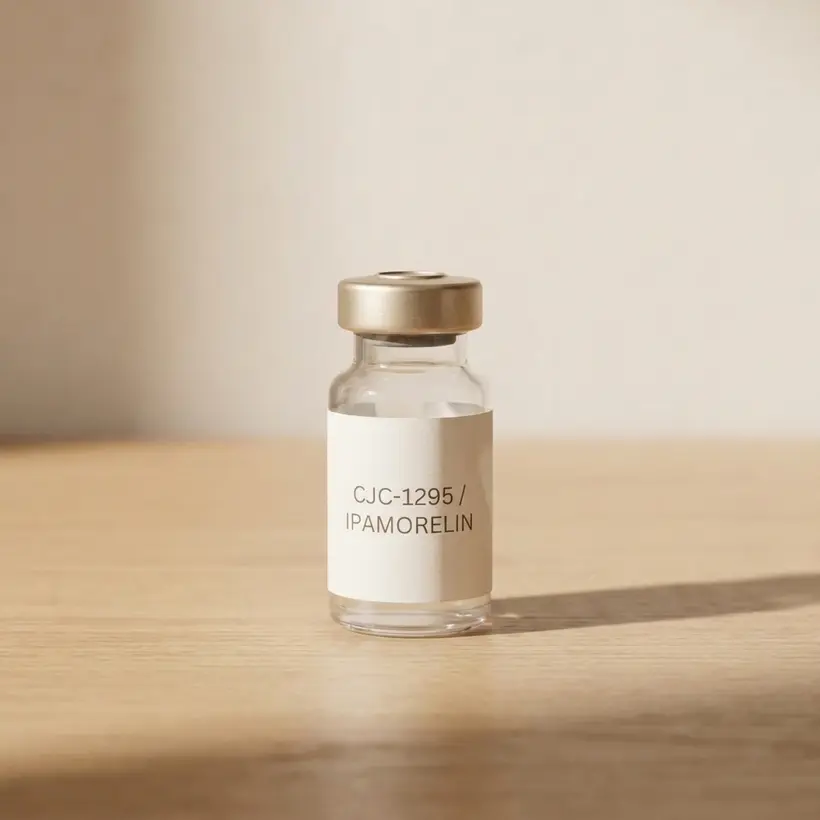
From the FormBlends catalog
CJC-1295 / Ipamorelin Blend
The gold standard growth hormone secretagogue stack · From $69/mo · compounded by a licensed 503A pharmacy, dispensed only after provider review.
Learn about CJC-1295 / Ipamorelin Blend →Common approach with CJC-1295 without DAC (Mod GRF 1-29): - CJC-1295: 100-300 mcg per injection - Ipamorelin: 200-300 mcg per injection - Frequency: 1-3 times daily - Timing: Before bed is most popular. some protocols add a morning dose - Duration: 8-12 weeks, followed by a break
Common approach with CJC-1295 with DAC: - CJC-1295 with DAC: 1,000-2,000 mcg, once or twice per week - Ipamorelin: 200-300 mcg daily, before bed - Duration: 8-12 weeks
Many providers prescribe these as a combined preparation) a single vial containing both peptides pre-mixed. This simplifies the process to one injection instead of two.
Timing considerations. Taking the combination on an empty stomach (at least 2 hours after eating) may improve absorption. Insulin can blunt GH release, so avoiding food close to injection time is generally recommended.
Reconstitution calculator. If you receive separate vials, each needs to be reconstituted with bacteriostatic water. Our makes this straightforward, even if you've never worked with peptides before.
Monitoring and Safety
The CJC-1295/Ipamorelin combination has a favorable safety profile, but proper monitoring ensures you're getting the results you want safely.
Baseline blood work should include IGF-1, fasting glucose, insulin, a complete metabolic panel, and a full hormone panel. This gives your provider a clear starting point.
Follow-up labs are typically drawn 4 to 6 weeks into the protocol. Your provider will look at IGF-1 levels to confirm the peptides are working and ensure levels stay within a safe range. Excessively high IGF-1 levels aren't the goal (improvement within the normal range is.
Common side effects are generally mild. They may include injection site redness or irritation, mild headache (especially in the first few days), temporary flushing or warmth, and mild water retention. Most of these resolve within the first week as your body adjusts.
When to contact your provider: Persistent headaches, significant swelling, numbness or tingling in the hands, or any joint pain should be reported. These could indicate that GH levels are climbing too high and a dose adjustment is needed.
The includes symptom tracking features that make it easy to log how you're feeling day to day. This data helps your provider make better decisions about your protocol at follow-up visits. Learn more about the importance of .
Frequently Asked Questions
How long until I see results from CJC-1295/Ipamorelin?
Sleep improvements often appear within the first week. Energy and recovery improvements typically become noticeable around weeks 3 to 4. Body composition changes usually take 8 to 12 weeks of consistent use.
Can I take CJC-1295/Ipamorelin with other medications?
Many patients use this combination alongside other treatments. If you're on , thyroid medications, or testosterone therapy, your provider can assess potential interactions and adjust accordingly.
Is the pre-mixed combination as effective as separate injections?
Pre-mixed formulations are designed to deliver the same doses as separate injections. Most providers consider them equally effective, with the added convenience of a single injection. The stability of combined preparations from a quality compounding pharmacy is well-established.
Do I need to cycle CJC-1295/Ipamorelin?
Most providers recommend cycling) typically 8 to 12 weeks on, followed by 4 weeks off. This helps prevent receptor desensitization and maintains your body's sensitivity to the peptides. Your provider may adjust cycling based on your blood work and response.
What's the difference between CJC-1295 with DAC and without DAC for this combination?
CJC-1295 with DAC has a much longer half-life (6-8 days vs 30 minutes). This means fewer injections per week but a more sustained GH elevation. CJC-1295 without DAC produces a sharper, more natural GH pulse. Many providers prefer the non-DAC version for combination therapy because it better mimics natural GH release patterns.
Let's Make This Happen
The research is clear. The options are available. The only question is whether it's right for you. A FormBlends provider can help you decide (no pressure, no commitment.
Sources &. References
- Ionescu M, Frohman LA. Pulsatile secretion of growth hormone (GH) persists during continuous stimulation by CJC-1295, a long-acting GH-releasing hormone analog. J Clin Endocrinol Metab. 2006;91(12):4792-4797. Doi:10.1210/jc.2006-1702
The information in this article is intended for educational use only and shouldn't be considered medical advice. Consult a qualified healthcare provider before making any changes to your medication or supplement regimen. FormBlends helps with connections with licensed providers for personalized medical guidance.
Last updated: 2026-03-24
Ready when you are
CJC-1295 / Ipamorelin Blend
The gold standard growth hormone secretagogue stack · From $69/mo · compounded by a licensed 503A pharmacy, dispensed only after provider review.
Learn about CJC-1295 / Ipamorelin Blend →