Key Takeaway
Complete CJC-1295/Ipamorelin cycling protocol. On-cycle and off-cycle timing, why cycling matters, and physician-guided cycling strategies.
Quick Answer: CJC-1295/Ipamorelin cycling protocol typically follows a pattern of 3 to 6 months on therapy followed by 1 to 3 months off. Cycling helps maintain pituitary sensitivity to GHRH stimulation, prevents receptor desensitization, and allows your physician to assess your body's baseline function. Some practitioners keep patients on continuous low-dose therapy without cycling. The best approach depends on your IGF-1 levels, goals, and physician guidance .
Why Cycling Matters
Unlike exogenous GH (which can suppress pituitary function), CJC-1295/Ipamorelin works through your own pituitary gland. But there are still reasons to consider cycling:
- Receptor sensitivity: Prolonged, continuous GHRH receptor stimulation may lead to some degree of receptor downregulation, reducing effectiveness over time
- Pituitary rest: Periodic breaks allow the pituitary to reset its baseline GH production patterns
- Cost management: Cycling reduces long-term therapy cost while maintaining most benefits
- Safety monitoring: Off-cycle periods allow physicians to check baseline IGF-1 levels and assess metabolic markers without the influence of exogenous stimulation
- Assess retained benefit: Many benefits (improved body composition, sleep patterns) persist during off-cycle periods, helping you understand which improvements are lasting
Common Cycling Protocols
| Protocol | On Cycle | Off Cycle | Best For |
|---|---|---|---|
| Standard cycle | 3 months | 1 month | General wellness, body composition |
| Extended cycle | 6 months | 2-3 months | Anti-aging, significant fat loss goals |
| 5-on/2-off weekly | 5 days/week | 2 days/week | Ongoing maintenance |
| Continuous low-dose | Ongoing | None (dose reduced) | Older patients, significant GH deficiency |
What Happens During Off-Cycle
When you stop CJC-1295/Ipamorelin:
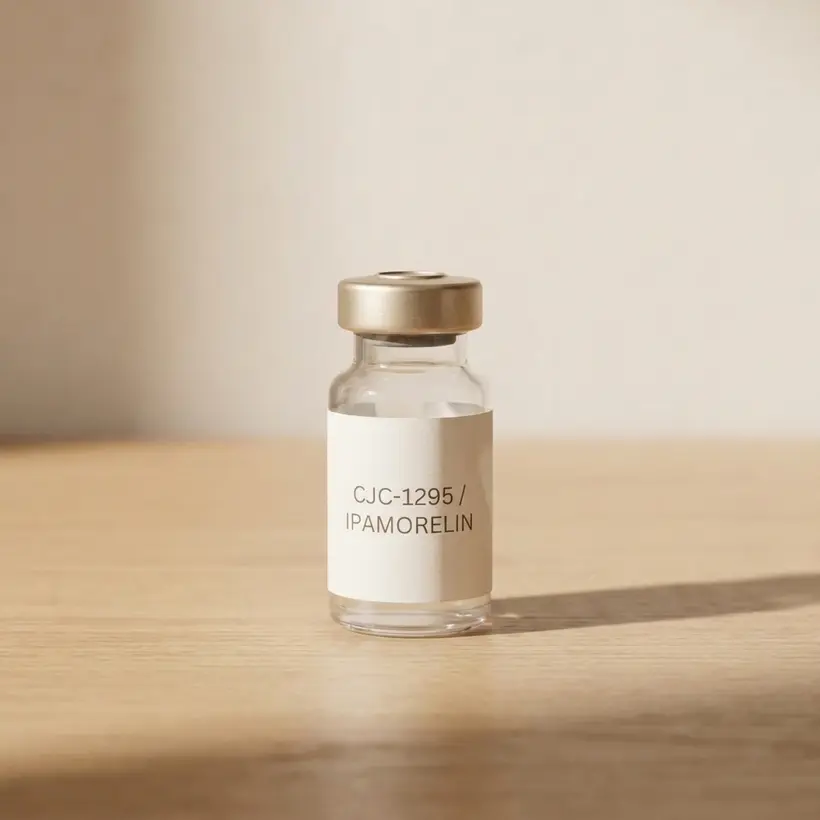
From the FormBlends catalog
CJC-1295 / Ipamorelin Blend
The gold standard growth hormone secretagogue stack · From $69/mo · compounded by a licensed 503A pharmacy, dispensed only after provider review.
Learn about CJC-1295 / Ipamorelin Blend →
- Week 1-2: GH levels return to baseline. CJC-1295 (with DAC modification) has a half-life of 6-8 days, so it clears gradually
- Week 2-4: Sleep quality may decrease slightly but usually remains improved compared to pre-therapy baseline
- Month 1-2: Body composition changes are largely maintained if diet and exercise continue
- Month 2-3: Gradual return toward pre-therapy GH levels, though many patients retain improvements in sleep and energy
CJC-1295/Ipamorelin doesn't cause the severe "crash" seen with exogenous GH cessation because your pituitary gland has been functioning throughout therapy rather than being suppressed.
How to Structure Your Cycle
Starting a Cycle
- Begin with baseline labs: IGF-1, fasting glucose, HbA1c, thorough metabolic panel
- Start at lower dose and titrate up over 1 to 2 weeks
- Inject before bed on an empty stomach for optimal GH pulse
During Your Cycle
- Maintain consistent injection timing (same time each night)
- Recheck IGF-1 at 4 to 6 weeks to confirm response
- Monitor for side effects: water retention, joint stiffness, tingling in hands
- Adjust dose based on IGF-1 levels and symptom response
Ending a Cycle
- No taper needed. You can stop injections without a gradual reduction
- Schedule end-of-cycle labs 2 to 4 weeks after last injection
- Continue diet and exercise habits to maintain body composition gains
- Note which benefits persist and which diminish, as this informs future cycles
Frequently Asked Questions
Do I have to cycle CJC-1295/Ipamorelin?
Not necessarily. Some physicians keep patients on continuous therapy, especially older patients with significant GH decline. But most practitioners recommend periodic breaks for receptor sensitivity and safety monitoring. Follow your prescribing physician's guidance.
Will I lose my results when I stop?
Body composition changes (fat loss, muscle gains) are largely maintained during off-cycle periods if you continue healthy diet and exercise habits. Sleep quality improvements often persist partially. Energy benefits tend to gradually diminish.
Can I cycle CJC-1295/Ipamorelin with other peptides?
Yes. Some patients alternate between CJC-1295/Ipamorelin cycles and other peptide protocols (such as BPC-157 or Thymosin Alpha-1) to address different health goals throughout the year.
How do I know when to start my next cycle?
Most patients restart when they notice benefits diminishing, typically 1 to 3 months after stopping. Your physician may also use IGF-1 levels returning to baseline as a trigger to begin a new cycle.
Get a Personalized Cycling Protocol
At FormBlends, our physicians design cycling protocols based on your labs, goals, and response to therapy.
Disclaimer: This article is for informational purposes only and doesn't constitute medical advice. CJC-1295/Ipamorelin isn't FDA-approved for any medical condition. Always consult with a licensed healthcare provider. Individual results may vary.
Ready when you are
CJC-1295 / Ipamorelin Blend
The gold standard growth hormone secretagogue stack · From $69/mo · compounded by a licensed 503A pharmacy, dispensed only after provider review.
Learn about CJC-1295 / Ipamorelin Blend →