Key Takeaway
Complete CJC-1295/Ipamorelin safety profile. Side effects, contraindications, drug interactions, monitoring requirements, and long-term safety data.
Quick Answer: CJC-1295/Ipamorelin safety profile is favorable compared to exogenous growth hormone. Because it stimulates your own pituitary gland rather than injecting GH directly, natural feedback mechanisms prevent excessive GH levels. Common side effects are mild and transient: water retention, tingling in extremities, and injection site reactions. Serious adverse events are rare in published literature. But it does require physician monitoring and is contraindicated in certain conditions including active cancer .
Common Side Effects
| Side Effect | Frequency | Severity | Management |
|---|---|---|---|
| Water retention | Common (20-30%) | Mild | Usually resolves in 2-4 weeks. reduce sodium intake |
| Tingling/numbness in hands | Common (15-25%) | Mild | Dose reduction if persistent. typically transient |
| Injection site redness | Common (10-20%) | Mild | Rotate injection sites. ice before injection |
| Headache | Occasional (5-15%) | Mild | Usually resolves within first 1-2 weeks |
| Flushing/warmth | Occasional (5-10%) | Mild | Temporary post-injection. resolves in 15-30 minutes |
| Joint stiffness | Occasional (5-10%) | Mild-Moderate | Dose reduction. indicates possible excessive GH |
| Increased hunger | Occasional (5-10%) | Mild | Expected GH effect. manageable with diet awareness |
| Vivid dreams | Common (20-30%) | Mild | Result of enhanced deep sleep. not harmful |
Safety Advantages Over Exogenous GH
CJC-1295/Ipamorelin has several built-in safety advantages compared to direct GH injections:

- Pituitary feedback: Your body's somatostatin feedback loop remains active, preventing runaway GH elevation. Exogenous GH bypasses this mechanism
- Pulsatile release: GH is released in natural pulses rather than sustained elevation, which is more physiological and lower risk
- No pituitary suppression: Unlike exogenous GH, which can suppress your pituitary gland's GH production, CJC-1295/Ipamorelin keeps the pituitary active
- Ceiling effect (Ipamorelin): Higher doses of Ipamorelin plateau in GH release rather than producing proportionally higher levels, providing a natural safety cap
- Selective action (Ipamorelin): Doesn't significantly improve cortisol, prolactin, or ACTH, unlike older GH secretagogues
Contraindications
CJC-1295/Ipamorelin should NOT be used in the following situations:
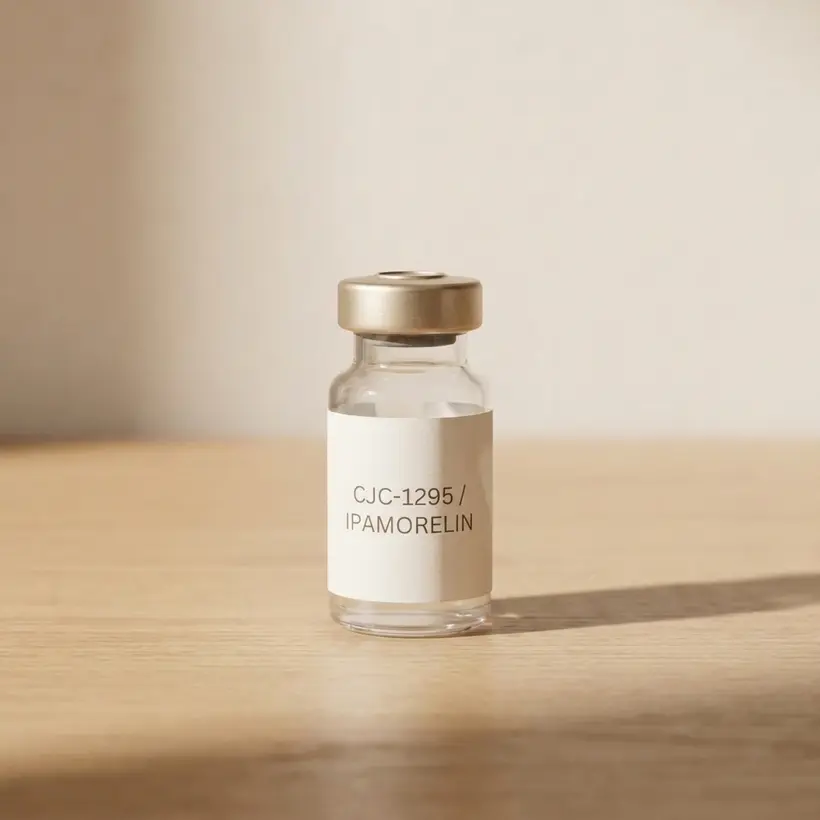
From the FormBlends catalog
CJC-1295 / Ipamorelin Blend
The gold standard growth hormone secretagogue stack · From $69/mo · compounded by a licensed 503A pharmacy, dispensed only after provider review.
Learn about CJC-1295 / Ipamorelin Blend →- Active cancer: GH and IGF-1 can promote cell proliferation. Any active malignancy is an absolute contraindication
- History of certain cancers: Discuss any cancer history with your physician. Some cancers (particularly those with IGF-1 receptor expression) may warrant caution even after remission
- Diabetic retinopathy: GH can worsen proliferative retinopathy
- Pregnancy/breastfeeding: Safety not established
- Uncontrolled diabetes: GH can temporarily worsen blood sugar control. Diabetes should be well-managed before starting therapy
- Active pituitary tumors: Stimulating a gland with an active tumor is contraindicated
Monitoring Requirements
Safe use of CJC-1295/Ipamorelin requires ongoing physician monitoring:
- Baseline labs: IGF-1, fasting glucose, HbA1c, thorough metabolic panel, CBC
- 4-6 week follow-up: IGF-1 to confirm dose response. Target: upper-normal range for age, not supraphysiological
- Quarterly monitoring: IGF-1, fasting glucose, HbA1c. Adjust dose to maintain IGF-1 within target range
- Annual: thorough labs plus assessment of continued need for therapy
IGF-1 levels above the upper limit of normal warrant dose reduction. The goal is to restore levels to the upper-normal range, not to achieve supraphysiological levels.
Drug Interactions
- Insulin and oral hypoglycemics: GH can temporarily reduce insulin sensitivity. Diabetic patients may need medication adjustment
- Corticosteroids: Chronic corticosteroid use can blunt GH response. Discuss with your physician
- Thyroid medications: GH can increase T4 to T3 conversion. Thyroid levels may need monitoring and adjustment
- Other GH-releasing compounds: Stacking multiple GH secretagogues increases the risk of excessive GH levels
Frequently Asked Questions
Can CJC-1295/Ipamorelin cause cancer?
There's no evidence that CJC-1295/Ipamorelin causes cancer. But because GH and IGF-1 promote cell growth, they could theoretically accelerate existing cancers. This is why active cancer screening and a clean cancer history are important before starting therapy.
Is long-term use safe?
Long-term controlled trial data specifically for CJC-1295/Ipamorelin is limited. But long-term GH replacement therapy (which produces similar GH/IGF-1 levels) has been studied for decades and is considered safe when properly monitored. Regular lab work and physician follow-up are important.
What happens if I take too much?
Symptoms of excessive GH include significant water retention, joint pain, carpal tunnel syndrome, and improved blood sugar. If you experience these, contact your physician immediately for dose adjustment. The pituitary feedback mechanism provides some protection against extreme elevation.
Safe, Monitored Peptide Therapy
At FormBlends, patient safety is our priority. We provide thorough screening, proper monitoring, and ongoing physician oversight throughout your therapy.
Disclaimer: This article is for informational purposes only and doesn't constitute medical advice. CJC-1295/Ipamorelin isn't FDA-approved for any medical condition. Always consult with a licensed healthcare provider. Individual results may vary.
Ready when you are
CJC-1295 / Ipamorelin Blend
The gold standard growth hormone secretagogue stack · From $69/mo · compounded by a licensed 503A pharmacy, dispensed only after provider review.
Learn about CJC-1295 / Ipamorelin Blend →