
Trust Signals
Evidence standard: All claims are graded by study type. Speculative claims are labeled as such.
Last reviewed: May 29, 2026.
Conflicts of interest: FormBlends sells compounded peptide protocols. We disclose this and apply the same skeptical standard to our own products as to competitors.
Key Takeaways
- Sermorelin is a 29-amino-acid GHRH analog that raises IGF-1 but has no direct effect on testosterone or LH/FSH.
- Enclomiphene is the trans-isomer of clomiphene; it blocks hypothalamic and pituitary estrogen receptors, raising LH, FSH, and consequently serum testosterone.
- In a Phase III trial by Wiehle et al. (2013), enclomiphene 12.5 mg and 25 mg daily raised morning testosterone into the normal range (above 300 ng/dL) in a majority of hypogonadal men while preserving sperm counts.
- Sermorelin's body-composition evidence comes largely from small, industry-funded studies; no large RCT has confirmed fat-loss or lean-mass gains as primary endpoints in otherwise healthy adults.
- Neither compound is FDA-approved for use in adult male hypogonadism or body composition; both are available through compounding pharmacies under physician supervision.
Direct Answer: Sermorelin vs Enclomiphene
Table of Contents
- What are sermorelin and enclomiphene?
- How does each one actually work, with specific numbers?
- Evidence ledger: What does the research actually show?
- What most comparison pages get wrong
- Honest head-to-head table
- The chemistry behind the dosing rules
- Label and COA literacy: how to judge a product yourself
- Side effects and safety signals
- Who should use which, and when?
- FAQ
- Sources
What Are Sermorelin and Enclomiphene?
Sermorelin is a synthetic analog of growth hormone-releasing hormone (GHRH), comprising the first 29 amino acids of the native 44-amino-acid GHRH peptide. The full 29-amino-acid sequence retains full biological activity at the GHRH receptor (GHRHR) on pituitary somatotrophs. It was originally approved by the FDA as Geref (sermorelin acetate) for diagnostic use and for treatment of growth hormone deficiency in children. That brand was voluntarily withdrawn from the US market in 2008, but the compound remains available through licensed compounding pharmacies.
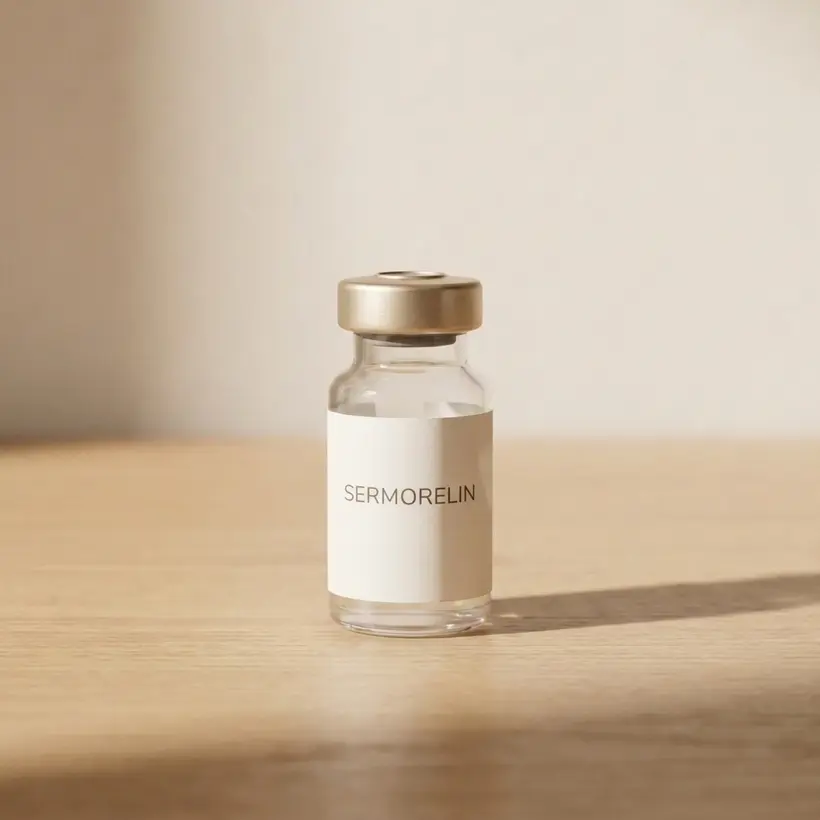
From the FormBlends catalog
Sermorelin
Bioidentical GHRH analog for natural growth hormone pulsatility · From $175/mo · compounded by a licensed 503A pharmacy, dispensed only after provider review.
View Sermorelin →Enclomiphene is the trans-isomer (E-isomer) of clomiphene citrate. Clomiphene citrate, sold as Clomid, contains roughly 38% enclomiphene and 62% zuclomiphene (the cis-isomer). The two isomers have opposing pharmacological profiles: enclomiphene is a pure estrogen receptor antagonist centrally, while zuclomiphene has partial agonist activity that can suppress the HPG axis. Isolating enclomiphene removes the mixed-signal problem. Enclomiphene has been studied under the trade name Androxal in multiple Phase II and Phase III trials but has not received FDA approval for male hypogonadism.
How Does Each One Actually Work, With Specific Numbers?
Sermorelin Mechanism
Sermorelin binds GHRHR on anterior pituitary somatotrophs, activating adenylyl cyclase via Gs-protein coupling. This raises intracellular cAMP, triggering protein kinase A pathways that stimulate both the synthesis and pulsatile release of growth hormone (GH). Released GH then acts on the liver (primarily) to stimulate IGF-1 synthesis. IGF-1, not GH itself, mediates most of the anabolic and metabolic effects attributed to this axis.
Sermorelin's plasma half-life is very short, measured in minutes (roughly 10 to 20 minutes), which is why it is administered by subcutaneous injection in the evening to align with the natural nocturnal GH pulse. The short half-life also means it does not chronically suppress pituitary feedback loops the way exogenous GH does. Unlike exogenous recombinant human GH, sermorelin preserves the physiological pulsatility of GH release and retains negative feedback regulation through somatostatin.
Enclomiphene Mechanism
Enclomiphene competitively antagonizes estrogen receptors (primarily ER-alpha) in the hypothalamus and pituitary. Under normal conditions, circulating estradiol (aromatized from testosterone) feeds back to suppress GnRH pulsatility and LH/FSH secretion. By blocking this feedback signal, enclomiphene disinhibits GnRH release, which raises LH and FSH, which in turn stimulate Leydig cell testosterone synthesis and Sertoli cell-supported spermatogenesis.
In the Wiehle et al. 2013 Phase III trial, 12.5 mg and 25 mg daily doses of enclomiphene increased mean morning testosterone from a hypogonadal baseline (below 250 ng/dL) to above 400 ng/dL in a substantial proportion of subjects over 3 months while maintaining or increasing sperm concentrations. This contrasts with exogenous testosterone replacement, where sperm concentrations typically fall sharply due to LH/FSH suppression.
Enclomiphene's oral bioavailability is high compared to sermorelin (which has essentially zero oral bioavailability as a peptide). Its half-life is measured in days, allowing once-daily oral dosing. Zuclomiphene, the other isomer in clomiphene citrate, accumulates because of its much longer half-life (weeks), which is the source of many side effects and the motivation for using isolated enclomiphene.
Evidence Ledger: What Does the Research Actually Show?
| Claim | Compound | Best Evidence Type | Effect Direction | Confidence |
|---|---|---|---|---|
| Raises serum IGF-1 | Sermorelin | Small RCTs, pharmacodynamic studies | Positive (dose-dependent) | Moderate |
| Improves body composition (fat loss, lean mass) | Sermorelin | Small, mostly industry-funded trials; no large independent RCT | Weakly positive, effect size unclear | Low |
| Improves sleep quality | Sermorelin | Mechanism plausible (GH released during slow-wave sleep); no high-quality RCT | Directionally positive, unconfirmed | Very Low |
| Raises serum testosterone in hypogonadal men | Enclomiphene | Phase II and Phase III RCTs (Wiehle et al. 2013; Kim et al. 2013) | Positive (clinically meaningful) | High (for this endpoint) |
| Preserves spermatogenesis vs. TRT | Enclomiphene | Phase III RCT with active comparator (topical testosterone) | Positive (maintained or increased sperm) | High (for this endpoint) |
| Raises LH and FSH | Enclomiphene | Multiple Phase II/III RCTs | Positive (consistent) | High |
| Long-term cardiovascular or cancer safety | Both | No long-term RCTs; case reports; theoretical concerns only | Unknown | Very Low |
| Sermorelin raises testosterone | Sermorelin | Mechanism argument only; no clinical trial data | No established effect | Very Low |
What Most Comparison Pages Get Wrong
1. Treating them as alternatives for the same goal. Sermorelin and enclomiphene are not competing options for "hormonal optimization." They act on completely different axes. A man with secondary hypogonadism (low testosterone, low or normal LH) is a candidate for enclomiphene, not sermorelin. A man with low IGF-1, poor recovery, or diagnosed growth hormone deficiency is a candidate for sermorelin or a GHRH-based protocol. Recommending one as a substitute for the other reflects a misunderstanding of basic endocrinology.
2. Conflating clomiphene with enclomiphene. Most pages cite clomiphene citrate studies to support enclomiphene claims. Clomiphene citrate contains zuclomiphene, which accumulates and has partial estrogen agonist activity. The adverse effect and efficacy profiles are meaningfully different. Evidence from clomiphene citrate trials supports enclomiphene directionally but cannot be used interchangeably.
3. Ignoring oral bioavailability for sermorelin. Sermorelin is a peptide of 29 amino acids. Like virtually all peptides of this size, it is degraded in the gastrointestinal tract by proteases and is not absorbed intact. Subcutaneous injection is the required route. Any product claiming to deliver sermorelin orally has no plausible pharmacological basis. This applies equally to claims about sublingual or transdermal sermorelin, for which there is no published bioavailability data.
4. Presenting compounded enclomiphene as equivalent to a pharmaceutical-grade approved drug. Enclomiphene is not FDA-approved. Compounded versions vary by pharmacy. Without independent isomer purity testing, a product labeled enclomiphene could contain residual zuclomiphene that partly undermines the intended clean mechanism.
Honest Head-to-Head Table
| Parameter | Sermorelin | Enclomiphene |
|---|---|---|
| Primary axis | Growth hormone / IGF-1 | HPG axis (LH, FSH, testosterone) |
| Route of administration | Subcutaneous injection (required) | Oral (daily capsule/tablet) |
| Raises testosterone | No established effect | Yes, clinically meaningful in hypogonadal men |
| Preserves fertility | No evidence | Yes, Phase III data support maintained spermatogenesis |
| Raises IGF-1 | Yes, consistent with mechanism | Minimal to no direct effect |
| Suppresses HPG axis | No | No (stimulates it) |
| FDA approval status | Withdrawn (pediatric GHD only, Geref) | Never approved for this indication |
| Quality of evidence for primary claim | Low to Moderate (small studies, no large RCT in adults) | High for testosterone and LH endpoints (Phase III RCTs) |
| Where sermorelin wins | GH-axis support, recovery, sleep quality (mechanism-plausible) | N/A |
| Where enclomiphene wins | N/A | Testosterone restoration, fertility, oral convenience, stronger evidence base |
| Where both lose vs. alternatives | Exogenous rHGH produces a larger, faster IGF-1 rise than sermorelin | Exogenous TRT produces a larger testosterone increase, faster, with fewer GI side effects; enclomiphene loses on speed and peak T |
The Chemistry Behind the Dosing Rules
Why sermorelin must be injected and kept cold. Sermorelin is a 29-amino-acid linear peptide. In aqueous solution, it is susceptible to two degradation pathways: hydrolysis of peptide bonds (accelerated at extremes of pH and temperature) and oxidation of methionine residues. At room temperature, peptide solutions degrade meaningfully over days to weeks; the rate accelerates with exposure to light and air. Reconstituted sermorelin should be stored at 2 to 8 degrees Celsius, used within a manufacturer- or pharmacy-specified window (typically 30 days), and protected from repeated freeze-thaw cycles that promote aggregation. A degraded vial may appear clear and unchanged, so the only reliable check is a COA with a use-by date and proper cold-chain documentation from the pharmacy.
Why enclomiphene isomer purity matters. Clomiphene's two isomers differ only in the geometric arrangement around a central double bond (E vs. Z configuration). The Z-isomer (zuclomiphene) has a dramatically longer half-life than the E-isomer (enclomiphene) and partial estrogenic agonist activity at peripheral receptors. If a compounded enclomiphene product contains significant zuclomiphene contamination, the intended clean antagonist signal is diluted and potentially reversed at some receptor populations. HPLC with chiral or isomer-specific separation is required on the COA to confirm isomer purity; a standard purity test that does not distinguish isomers is insufficient.
Why sermorelin timing follows circadian rhythm. GH secretion is highest during the first hours of slow-wave sleep, driven by a natural GHRH pulse that coincides with sleep onset. Administering sermorelin 30 to 60 minutes before bed aligns the exogenous GHRH signal with the natural pulse, amplifying rather than replacing the endogenous release. Administering it in the morning does not cause harm, but it misses the dominant physiological secretory window and is pharmacodynamically suboptimal.
Label and COA Literacy: How to Judge a Product Yourself
For compounded sermorelin (injectable):
- Identity: HPLC or mass spectrometry confirming the correct 29-amino-acid sequence.
- Purity: At or above 98% by HPLC; ask specifically about related peptide impurities.
- Endotoxin: Must be tested and reported below USP limits for injectables (the general USP limit is 0.5 EU per kg body weight per hour; a compounding pharmacy should specify the tested level per vial).
- Sterility: Sterility testing is required for any injectable product from a 503B outsourcing facility; 503A pharmacies operating under different rules should still document this.
- Concentration label: Typically 2 mg/mL to 9 mg/mL; confirm the potency matches the label by asking if the pharmacy has third-party potency verification.
- Beyond-use date and storage conditions should be printed on the vial, not just the outer box.
For compounded enclomiphene (oral capsule):
- Isomer purity: This is the critical test. Ask specifically whether the COA distinguishes enclomiphene (E-isomer) from zuclomiphene (Z-isomer). A standard purity test by non-chiral HPLC does not confirm this.
- Potency: Typical doses studied in clinical trials range from 12.5 mg to 25 mg per day; verify the capsule fill weight matches label.
- Dissolution testing is not universally required for compounded capsules but is meaningful for oral bioavailability; ask if available.
Side Effects and Safety Signals
Sermorelin: The most consistently reported adverse effects in clinical use are injection-site reactions (erythema, pain, induration). Transient headache, flushing, and dizziness occur in a minority of users. Because sermorelin raises IGF-1, the theoretical concern shared with all GH-axis stimulants applies: chronically elevated IGF-1 has been associated epidemiologically with increased cancer risk in some observational data, though causality is unproven and short-term use at physiological doses is not the same as pharmacological IGF-1 elevation. Sermorelin is contraindicated in active malignancy.
Enclomiphene: Phase III trial data (Wiehle et al.) reported headache and nausea at low rates. Visual disturbances, a known concern with clomiphene citrate, are theoretically possible with enclomiphene but were not prominent in short-term trials. Estradiol levels should be monitored; if estrogen rises disproportionately (due to aromatization of increased testosterone), an aromatase inhibitor may be needed. Long-term safety beyond 6 to 12 months has not been well characterized in published trials.
Who Should Use Which, and When?
Enclomiphene is the more appropriate choice if: The primary concern is low testosterone with a secondary or central cause (normal or low LH/FSH with low T), fertility preservation is a priority, the patient prefers oral dosing, or there is clinical or lab evidence of HPG axis hypofunction.
Sermorelin is the more appropriate choice if: The primary concern is growth hormone deficiency or suboptimal IGF-1, recovery and sleep quality are the main complaints, or testosterone is normal but body composition and energy are the focus. It is not a testosterone treatment.
Combination protocols: Because the two compounds act on entirely separate axes, some clinicians use both simultaneously. A man with both secondary hypogonadism and low IGF-1 could theoretically benefit from both. No RCT has tested this combination. Any such protocol requires physician oversight with baseline and follow-up labs for testosterone, LH, FSH, IGF-1, estradiol, and complete metabolic panel.
FAQ
What is the core difference between sermorelin and enclomiphene?
Sermorelin stimulates growth hormone release from the pituitary via GHRH receptor activation and does not raise testosterone. Enclomiphene blocks estrogen receptors in the hypothalamus and pituitary, raising LH and FSH, which in turn increases testicular testosterone production. They act on entirely different axes.
Can sermorelin and enclomiphene be used together?
They act on separate hormonal axes and are not pharmacologically antagonistic, so some clinicians prescribe both concurrently. However, no published RCT has evaluated the combination. Any co-use should be supervised by a physician with baseline and follow-up labs for IGF-1, testosterone, LH, and FSH.
Does sermorelin raise testosterone?
Not directly. Sermorelin raises growth hormone and IGF-1. There is a weak mechanistic argument that improved GH status may modestly support testicular function, but no clinical trial demonstrates a meaningful testosterone increase from sermorelin alone.
Is enclomiphene FDA-approved?
No. As of 2026, enclomiphene (the trans-isomer of clomiphene) has not received FDA approval for hypogonadism. Clomiphene citrate (a 38:62 mix of enclomiphene and zuclomiphene) is approved only for female infertility. Enclomiphene is available through compounding pharmacies under a physician's prescription.
Is sermorelin FDA-approved?
Sermorelin acetate was FDA-approved as Geref for pediatric growth hormone deficiency but that brand was withdrawn from the US market. It remains available through compounding pharmacies as a research compound and compounded medication under physician supervision.
How long does it take to see results from enclomiphene?
In published trials, statistically significant increases in serum testosterone were observed within 4 to 6 weeks of daily oral dosing. Sustained effects require continued administration; testosterone levels return toward baseline after discontinuation.
How long does it take to see results from sermorelin?
IGF-1 levels typically rise within 4 to 8 weeks of nightly subcutaneous dosing. Subjective changes in sleep quality and body composition, when reported, usually emerge over 3 to 6 months. Evidence for body composition benefit from sermorelin alone is limited to small studies.
What are the main side effects of enclomiphene?
In clinical trials, reported side effects included headache, nausea, and visual disturbances at low rates. Because enclomiphene retains some estrogenic activity at peripheral tissues, gynecomastia is theoretically possible but was not prominent in short-term trials. Long-term safety data are limited.
What are the main side effects of sermorelin?
The most common side effects are injection-site reactions (redness, swelling, pain). Other reported effects include transient flushing, headache, and dizziness. Because it raises IGF-1, theoretical concerns about growth factor-driven cell proliferation exist, consistent with any GH-axis stimulant.
Which is better for preserving fertility, sermorelin or enclomiphene?
Enclomiphene is clearly superior for fertility preservation. By raising LH and FSH, it stimulates both testosterone production and spermatogenesis. Sermorelin has no established effect on sperm production. Men wishing to maintain fertility who also need testosterone support are typically better served by enclomiphene or similar SERM-based protocols.
Does enclomiphene suppress the HPG axis like TRT does?
No. Enclomiphene works by blocking hypothalamic and pituitary estrogen receptors, which increases endogenous LH and FSH rather than suppressing them. This is the key advantage over exogenous testosterone replacement, which suppresses LH and FSH and reduces testicular size and sperm output.
How do I read a COA for compounded sermorelin or enclomiphene?
A legitimate COA should show: identity confirmation (HPLC or mass spectrometry), purity at or above 98% for peptides or 99% for small molecules, endotoxin testing for injectable sermorelin (below 0.5 EU/kg body weight per USP guidelines), sterility testing, and potency expressed in mg per mL matching the label claim. For enclomiphene specifically, confirm isomer-specific testing is included.
Sources
- Wiehle RD, Fontenot GK, Wike J, Hsu K, Nydell J, Fontenot R. "Enclomiphene citrate stimulates testosterone production while preventing oligospermia: a randomized Phase II clinical trial comparing topical testosterone." Fertility and Sterility. 2013;100(1):119-127.
- Kim ED, Crosnoe L, Bar-Chama N, Khera M, Lipshultz LI. "The treatment of hypogonadism in men of reproductive age." Fertility and Sterility. 2013;99(3):718-724.
- Thorner MO, Rogol AD, Blizzard RM, et al. "Acceleration of growth rate in growth hormone-deficient children treated with human growth hormone-releasing hormone." Pediatric Research. 1988;24(2):145-151.
- Walker RF. "Sermorelin: a better approach to management of adult-onset growth hormone insufficiency?" Clinical Interventions in Aging. 2006;1(4):307-308.
- FDA. "Geref (sermorelin acetate for injection) prescribing information." Serono Laboratories. (Historical NDA documentation, withdrawn 2008.)
- Bhattacharya RK, Bhattacharya S. "Selective estrogen receptor modulators and male infertility." Asian Journal of Andrology. 2021;23(4):426-430.
- United States Pharmacopeia. USP General Chapter 85: Bacterial Endotoxins Test. USP-NF. Current edition.
- Molitch ME, Clemmons DR, Malozowski S, Merriam GR, Vance ML. "Evaluation and treatment of adult growth hormone deficiency: an Endocrine Society clinical practice guideline." Journal of Clinical Endocrinology and Metabolism. 2011;96(6):1587-1609.
- Bhasin S, Brito JP, Cunningham GR, et al. "Testosterone therapy in men with hypogonadism: an Endocrine Society clinical practice guideline." Journal of Clinical Endocrinology and Metabolism. 2018;103(5):1715-1744.
Footer Disclaimers
Related peptide guides
Ready when you are
Sermorelin
Bioidentical GHRH analog for natural growth hormone pulsatility · From $175/mo · compounded by a licensed 503A pharmacy, dispensed only after provider review.
View Sermorelin →