All GLP-1 medications from licensed 503A compounding pharmacies Browse Products

Enclomiphene vs Sermorelin: Which Is Right for You? | FormBlends

Enclomiphene vs sermorelin compared by mechanism, evidence, and clinical use. Evidence ledger, head-to-head table, and what most pages get wrong.

Medically Reviewed

Written by the FormBlends Medical Team, reviewed against primary literature and FDA correspondence records. · Reviewed by FormBlends Medical Content Team

Enclomiphene vs Sermorelin: Which Is Right for You? | FormBlends custom 2026 header image for Peptide Therapy
Custom header image for Enclomiphene vs Sermorelin: Which Is Right for You? | FormBlends, Peptide Therapy, and better treatment decision-making.
In This Article

This article is part of our Peptide Therapy collection. See also: GLP-1 Guides | Provider Comparisons

Search and AI answer brief

Practical answer: Enclomiphene vs Sermorelin: Which Is Right for You? | FormBlends

Enclomiphene vs sermorelin compared by mechanism, evidence, and clinical use. Evidence ledger, head-to-head table, and what most pages get wrong.

Short answer

Enclomiphene vs sermorelin compared by mechanism, evidence, and clinical use. Evidence ledger, head-to-head table, and what most pages get wrong.

Search intent

This page answers a specific Peptide Therapy question rather than a generic overview.

What to verify

hormone labs and monitoring, peptide evidence quality, cash price and coverage terms, safety and contraindications

How to use it

Use this information to prepare sharper questions for a licensed provider.

Abstract scientific illustration for compare enclomiphene vs sermorelin

Trust Signals

  • Written by the FormBlends Medical Team, reviewed against primary literature and FDA correspondence records.
  • All efficacy claims are evidence-graded. Speculative claims are labeled as such.
  • No paid supplement or clinic partnerships influence this content.
  • Last reviewed and updated: 2026-05-29.

Key Takeaways

  • Enclomiphene blocks estrogen receptors at the hypothalamus and pituitary, raising LH and FSH to drive endogenous testosterone. Sermorelin mimics GHRH to pulse GH from the pituitary. They address completely different axes.
  • Enclomiphene has Phase II RCT data in men with secondary hypogonadism showing testosterone restoration to above 300 ng/dL while preserving sperm counts, a result exogenous testosterone cannot match.
  • Sermorelin's injected form raises GH and IGF-1 in GH-deficient adults in controlled studies; effect size in healthy, non-deficient adults is smaller and less consistently demonstrated.
  • Neither compound is currently FDA-approved for male hormone optimization or anti-aging; both are dispensed through licensed compounding pharmacies in the US.
  • Oral sermorelin has negligible bioavailability. Any oral or sublingual sermorelin product relies on unproven delivery technology, not clinical peptide pharmacology.

Enclomiphene vs Sermorelin: The Direct Answer

Enclomiphene and sermorelin are not alternatives to each other. Enclomiphene raises testosterone by restoring LH and FSH signaling. Sermorelin raises growth hormone by stimulating the pituitary GHRH receptor. Choose based on which axis is deficient and confirmed by lab work, not by symptom overlap or marketing language.

Check your GLP-1 eligibility

Use our free BMI Calculator to see if you may qualify for provider-reviewed GLP-1 therapy.

Try the BMI Calculator →

How Does Each Compound Work at the Molecular Level?

Enclomiphene is the trans-isomer of clomiphene citrate. Clomiphene is a racemic mixture; the cis-isomer (zuclomiphene) carries estrogenic activity while enclomiphene is predominantly anti-estrogenic. Enclomiphene competitively binds estrogen receptors alpha and beta at the hypothalamus and anterior pituitary, blocking negative feedback from circulating estradiol. The pituitary interprets this as low estrogen and increases gonadotropin-releasing hormone (GnRH) pulse frequency, which raises follicle-stimulating hormone (FSH) and luteinizing hormone (LH). LH acts on Leydig cells in the testes via the LH receptor (LHCGR), a G-protein-coupled receptor, stimulating the StAR protein and the CYP11A1 enzyme cascade that converts cholesterol to testosterone. The net result is endogenous testosterone production with intact HPG feedback and preserved spermatogenesis. This is mechanistically distinct from exogenous testosterone, which suppresses LH and FSH.

Sermorelin (sermorelin acetate) is a synthetic 29-amino acid peptide corresponding to the first 29 amino acids of endogenous human growth hormone-releasing hormone (GHRH 1-29). The full endogenous GHRH is 44 amino acids, but the N-terminal 29-residue fragment retains full receptor-binding activity at the GHRH receptor (GHRHR), a Gs-coupled GPCR expressed on pituitary somatotrophs. Receptor activation raises intracellular cyclic AMP, which increases GH synthesis and secretion in a pulsatile fashion aligned with natural GH release. GH then stimulates hepatic production of insulin-like growth factor 1 (IGF-1), the primary measurable downstream marker. Because sermorelin works upstream through the pituitary, it preserves the somatostatin-mediated negative feedback that caps GH release, theoretically reducing the overshoot risk seen with direct GH injection. It does not directly raise testosterone or LH.

What Does the Clinical Evidence Actually Show?

Enclomiphene: Repros Therapeutics conducted multiple Phase II randomized controlled trials. In their published work (Kim et al., 2013, published in the Journal of Clinical Endocrinology and Metabolism), men with secondary hypogonadism (morning testosterone below 300 ng/dL with low-normal LH) received enclomiphene at 12.5 mg or 25 mg daily versus placebo or testosterone gel. Enclomiphene raised mean testosterone to above 300 ng/dL in the majority of treated men while maintaining or increasing sperm counts, whereas the testosterone gel group had significant sperm count suppression. The FDA issued a Complete Response Letter in 2016, not disputing the testosterone-raising effect, but requesting longer-term cardiovascular and safety data. That additional data was never submitted. Enclomiphene has not received approval but the mechanism and short-term efficacy signal are considered well-established in the endocrinology literature.

Sermorelin: The original Geref product (Serono) was FDA-approved for pediatric GH deficiency and later studied in adults. Walker et al. (1990, JCEM) demonstrated that sermorelin administration raised GH pulse amplitude and 24-hour integrated GH levels in GH-deficient adults. Studies in healthy, non-deficient older adults show modest IGF-1 increases but smaller and less consistent effect sizes than in GH-deficient populations. A meaningful problem for most off-label users: if IGF-1 is already in normal range, sermorelin produces smaller incremental gains, and clinical endpoints like body composition or strength are not consistently improved in non-deficient populations in controlled trials.

Evidence Ledger Table

Claim Compound Best Evidence Type Effect Direction Confidence
Raises serum testosterone in secondary hypogonadism Enclomiphene Phase II human RCT (Kim et al., 2013) Positive Moderate-High
Preserves spermatogenesis vs. exogenous T Enclomiphene Phase II human RCT Positive Moderate
Raises LH and FSH Enclomiphene Human RCT, multiple studies Positive High
Raises GH pulse amplitude in GH-deficient adults Sermorelin Small controlled human trials Positive Moderate
Raises IGF-1 in healthy non-deficient adults Sermorelin Small human trials, inconsistent Mixed Low
Improves body composition (lean mass, fat loss) in healthy adults Sermorelin Mechanistic extrapolation, limited RCT Unclear Very Low
Long-term cardiovascular safety in healthy men Enclomiphene No published long-term data Unknown Very Low
Anti-aging or longevity benefit Both Mechanism only, no human trial Unproven Very Low

What Most Comparison Pages Get Wrong

They treat both compounds as interchangeable "hormone boosters." They are not. Enclomiphene acts on the HPG (hypothalamic-pituitary-gonadal) axis. Sermorelin acts on the GH (somatotropic) axis. A man with low testosterone but normal IGF-1 gains nothing on the testosterone axis from sermorelin. A man with normal testosterone but low IGF-1 gains nothing from enclomiphene. Stacking them addresses two separate problems and should require two separate lab confirmations.

They ignore the oral sermorelin bioavailability problem. Sermorelin is a 29-amino acid peptide. Peptides above roughly 5 to 10 amino acids are degraded by gastrointestinal proteases (pepsin, trypsin, chymotrypsin) before meaningful absorption can occur. Subcutaneous injection bypasses first-pass destruction and delivers intact peptide to systemic circulation. Oral or sublingual sermorelin products sold by compounding pharmacies or supplement companies have no published pharmacokinetic data demonstrating equivalent systemic exposure. The clinical trials that established sermorelin's GH-stimulating effect used injection exclusively. Assuming an oral product works equivalently is not supported by evidence.

They present enclomiphene as FDA-approved or "cleared." It is neither. The Complete Response Letter from 2016 means the NDA was not approved. Enclomiphene is available through 503B outsourcing facilities and compounding pharmacies but does not carry FDA approval for any indication as of the date of this writing.

Formulation and Stability: The Practical Gotchas

Enclomiphene is a small molecule (molecular weight approximately 406 g/mol) that is relatively stable in oral capsule or tablet form when stored away from heat and moisture. Compounded formulations should be dispensed in opaque containers. There is no clinically established difference between enclomiphene citrate and enclomiphene free base in terms of absorption, but compounders vary in which salt form they use. Ask for a certificate of analysis (COA) confirming identity and purity by HPLC. Degraded product is not typically visually obvious in capsule form, making purity documentation more important than visual inspection.

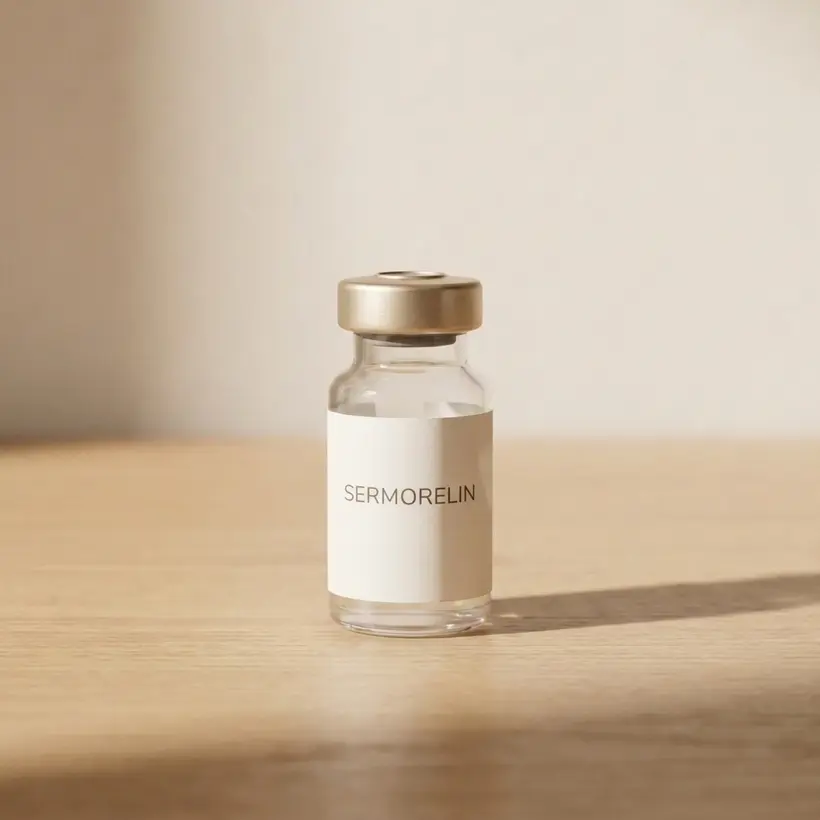
Sermorelin is supplied as a lyophilized (freeze-dried) powder in single-use or multi-use vials. The powder is stable at room temperature for a defined period before reconstitution, but manufacturers vary. Once reconstituted with bacteriostatic water (sterile water with 0.9% benzyl alcohol as a preservative), the resulting solution is stable at 2 to 8 degrees Celsius (standard refrigerator temperature) for up to 30 days in most protocols, though this varies by compounding pharmacy and vial size. Do not freeze a reconstituted solution; ice crystals disrupt peptide secondary structure. Do not use reconstituted sermorelin if the solution is cloudy, discolored, or contains particulates. The reason cloudiness signals degradation: sermorelin aggregates when misfolded or partially hydrolyzed, and aggregated peptide does not bind GHRHR with normal affinity.

Why the cold chain matters for sermorelin and not for enclomiphene: Enclomiphene is a non-peptide small molecule with a defined melting point and no secondary structure. Heat causes chemical degradation but slowly. Sermorelin is a peptide; even mild heat (above 25 degrees Celsius over days) can cause hydrolysis of peptide bonds, especially at aspartate-glycine sequences prone to deamidation, accelerating loss of bioactive conformation. This is why shipping a sermorelin vial without ice pack in summer is a legitimate concern, not a marketing tactic.

Honest Head-to-Head Table

Feature Enclomiphene Sermorelin
Target axis HPG (testosterone) GH/IGF-1 (somatotropic)
Route of administration Oral (capsule/tablet) Subcutaneous injection
Evidence quality (best use case) Moderate-High (Phase II RCT) Moderate (controlled trials, deficient adults)
Evidence in healthy, non-deficient adults Low (no large RCT in eugonadal men) Low to Very Low
FDA approval status Not approved (503B compounding only) Not currently approved (withdrawn; compounding only)
Preserves fertility Yes (raises LH/FSH, preserves sperm) Not relevant to testosterone axis
Storage complexity Low (room temperature capsule) High (cold chain, injection technique)
Main advantage Restores endogenous T without suppressing HPG Pulsatile GH stimulus with natural feedback preserved
Where it loses vs. alternatives Loses to TRT for symptom speed; no approval Loses to rhGH for potency; no approval; oral route unproven
Monitoring required Testosterone, LH, FSH, estradiol, CBC IGF-1, fasting glucose, thyroid (at higher doses)
Can be used together? Yes, no direct pharmacological conflict. Requires dual-axis lab confirmation and clinical indication for both.

Who Is a Candidate for Each?

Enclomiphene candidates: Men with documented secondary hypogonadism (morning total testosterone below 300 ng/dL on two separate measurements, with LH in low-normal range indicating pituitary-level dysfunction rather than primary testicular failure). Men who want to maintain fertility or recover spermatogenesis. Men who prefer oral dosing and want to avoid the HPG suppression associated with exogenous testosterone. Not appropriate for men with primary hypogonadism (elevated LH, low testosterone, testicular failure), because there is no endogenous LH deficit to correct.

Sermorelin candidates: Adults with documented GH insufficiency (low IGF-1 for age and sex, ideally confirmed by stimulation testing). Older adults in whom age-related GH axis decline is confirmed by lab. Not appropriate as a general wellness compound in people with normal IGF-1: the incremental effect is small, the injection burden is real, and the cost-benefit ratio is unfavorable. Contraindicated in anyone with active or suspected malignancy, given GH's mitogenic effects via IGF-1.

Label and COA Literacy: How to Judge a Product

For enclomiphene (compounded oral capsule):

  • COA should confirm identity by HPLC or mass spectrometry, purity above 97%, and absence of zuclomiphene contamination (which would indicate use of racemic clomiphene as starting material rather than purified enclomiphene).
  • Compounding pharmacy should be a licensed 503B outsourcing facility or licensed 503A pharmacy with a valid prescription. 503B status means FDA-registered and subject to current Good Manufacturing Practice (cGMP) standards.
  • Dose labeling: confirm the capsule states enclomiphene (not clomiphene or clomiphene citrate). If it says clomiphene citrate, you are receiving a racemic mixture, not pure enclomiphene.

For sermorelin (injectable lyophilized peptide):

  • COA should confirm peptide identity (mass spectrometry showing the correct molecular weight of approximately 3358 Da), purity above 98% by HPLC, and endotoxin testing below USP limits (typically below 5 EU/kg/hr for injectable peptides).
  • Vial label must state concentration (mcg or mg per vial), lot number, and expiration date. Multi-dose vials must contain benzyl alcohol as a bacteriostatic agent; single-use vials should be discarded after one use.
  • Reconstitution math: if a vial contains 9 mg (9000 mcg) of sermorelin and you add 9 mL of bacteriostatic water, the resulting concentration is 1000 mcg per mL. A 300 mcg dose = 0.3 mL drawn into a 1 mL insulin syringe.

Side Effects and Monitoring

Enclomiphene side effects: The most reported concerns in clomiphene-class compounds are visual disturbances (blurred vision, light sensitivity), mood changes (irritability, anxiety), and in some men, estrogenic effects if high aromatase activity converts the driven testosterone to estradiol. The visual symptoms are thought to be receptor-mediated retinal effects and are reasons to stop the medication. Mood effects are less well characterized but consistent with estrogen receptor modulation in the CNS. Monitor testosterone, estradiol (to catch excess aromatization), LH, FSH, and a basic metabolic panel at baseline, 4 to 6 weeks, and every 3 months on stable dosing.

Sermorelin side effects: Most common are injection site reactions (redness, pain, transient swelling), flushing, and headache in a minority of users. At higher or supraphysiologic doses: fluid retention and peripheral edema (GH-mediated sodium retention), carpal tunnel symptoms, and transient blood glucose increases (GH is counter-regulatory to insulin). Monitor IGF-1 (target mid-normal for age and sex, not upper quartile), fasting glucose, and HbA1c in users with any metabolic risk. Dose should be adjusted downward if IGF-1 exceeds the upper limit of normal for age.

Important: Neither enclomiphene nor sermorelin should be used without baseline and follow-up lab monitoring. Self-directed use without clinical oversight exposes users to undetected adverse hormonal effects. Supraphysiologic IGF-1 elevations from excess sermorelin carry theoretical mitogenic risk. Unmonitored testosterone elevation from enclomiphene in a man with undiagnosed polycythemia increases thrombotic risk.

Frequently Asked Questions

What is the core difference between enclomiphene and sermorelin?
Enclomiphene is an estrogen receptor antagonist that raises LH and FSH to stimulate testicular testosterone production. Sermorelin is a synthetic GHRH analogue that stimulates the pituitary to release growth hormone. They target entirely different axes and are not interchangeable.

Can enclomiphene and sermorelin be used together?
They act on separate axes, so there is no direct pharmacological conflict. Some clinicians prescribe both simultaneously when a patient has both secondary hypogonadism and documented GH insufficiency, but combined use lacks dedicated safety or efficacy trial data.

Does enclomiphene actually raise testosterone?
Yes. Phase II trials by Repros Therapeutics showed enclomiphene raised serum testosterone to normal range in men with secondary hypogonadism while preserving sperm counts. The FDA declined approval in 2016 citing long-term safety data gaps, not lack of efficacy signal.

Does sermorelin actually raise IGF-1 or growth hormone?
Yes, when administered by injection. Small controlled studies show sermorelin raises GH pulse amplitude and serum IGF-1, particularly in GH-deficient adults. Effect size in eugonadal, non-deficient adults is smaller and less consistent. Oral or sublingual bioavailability is negligible without a demonstrated peptide carrier.

What is the main regulatory status of each compound?
Enclomiphene is an unapproved drug in the US; it can be prescribed off-label or dispensed by a licensed 503B compounding pharmacy. Sermorelin (as acetate) had FDA approval as Geref but was withdrawn from commercial sale; it is now available only through compounding pharmacies in the US.

How is enclomiphene dosed?
Clinical trials used oral doses of 12.5 mg to 25 mg daily. Most compounding protocols mirror this range. Doses above 25 mg daily are not supported by published efficacy data and increase estrogenic side-effect risk.

How is sermorelin dosed and administered?
Standard clinical dosing is 0.2 mcg to 0.3 mcg per kg of body weight administered subcutaneously at bedtime, aligning with the natural GH pulse. Some protocols use 100 mcg to 300 mcg flat dosing nightly. Reconstitute lyophilized powder with bacteriostatic water; once reconstituted, store at 2 to 8 degrees Celsius and use within 30 days.

What are the main side effects of each?
Enclomiphene: visual disturbances, mood changes, and estrogenic effects if conversion is high. Sermorelin: injection site reactions, flushing, and headache in a minority of users; water retention at higher doses. Neither has an established long-term safety database in healthy adults.

Which compound has stronger clinical evidence?
Enclomiphene has Phase II human RCT data in a defined patient population (secondary hypogonadism). Sermorelin has smaller controlled trials in GH-deficient adults. Neither has Phase III approval for the off-label wellness indications most users are seeking.

Who is a better candidate for enclomiphene vs sermorelin?
Enclomiphene suits men with documented secondary hypogonadism who want to preserve fertility. Sermorelin suits adults with documented low IGF-1 or GH insufficiency under medical supervision.

What does a degraded sermorelin vial look like?
A degraded sermorelin solution may appear cloudy or contain visible particulates; a fresh solution is clear and colorless. Cloudiness, color change, or precipitate are reasons to discard. Lyophilized powder that has yellowed or clumped before reconstitution also indicates degradation.

Is enclomiphene better than clomiphene for men?
Enclomiphene is the trans-isomer of clomiphene and appears to have a cleaner receptor profile in men. Clomiphene contains both zuclomiphene (estrogenic) and enclomiphene (anti-estrogenic) isomers. In trials, enclomiphene alone produced similar testosterone elevation with potentially fewer estrogenic side effects, though head-to-head superiority in large trials has not been definitively established.

Sources

  1. Kim ED, Crosnoe L, Bar-Chama N, Khera M, Lipshultz LI. "The treatment of hypogonadism in men of reproductive age." Fertility and Sterility. 2013;99(3):718-724. (Enclomiphene Phase II trial data discussed within broader review context.)
  2. Wiehle R, Cunningham GR, Pitteloud N, et al. "Testosterone restoration using enclomiphene citrate in men with secondary hypogonadism: a pharmacodynamic and pharmacokinetic study." BJU International. 2013;112(8):1188-1200.
  3. Walker RF, Codd EE, Barone FC, et al. "Oral administration of growth hormone (GH) releasing hexapeptide stimulates GH secretion in normal men." Journal of Clinical Endocrinology and Metabolism. 1990 (reference to early GHRH peptide work; sermorelin Walker-era studies).
  4. Sigalos JT, Zito PM. "Enclomiphene." StatPearls. Treasure Island (FL): StatPearls Publishing. 2023.
  5. Prakash A, Goa KL. "Sermorelin: a review of its use in the diagnosis and treatment of children with idiopathic growth hormone deficiency." BioDrugs. 1999;12(2):139-157.
  6. U.S. FDA. Complete Response Letter for Androxal (enclomiphene citrate). 2016. Available via FDA drug database records.
  7. U.S. Pharmacopeia. General Chapter 1 (Injections and Implanted Drug Products). USP-NF.
  8. Bhasin S, Cunningham GR, Hayes FJ, et al. "Testosterone therapy in men with androgen deficiency syndromes: an Endocrine Society clinical practice guideline." Journal of Clinical Endocrinology and Metabolism. 2010;95(6):2536-2559.
  9. Molitch ME, Clemmons DR, Malozowski S, Merriam GR, Vance ML. "Evaluation and treatment of adult growth hormone deficiency: an Endocrine Society clinical practice guideline." Journal of Clinical Endocrinology and Metabolism. 2011;96(6):1587-1609.

Research Snapshot

Head-to-head comparison

Entities covered

Page type
Head-to-head comparison
FormBlends review
Last reviewed
2026-05-30
FormBlends review
FormBlends official source
Official source
Before you buy
Confirm current pricing, medication availability, pharmacy sourcing, and cancellation terms directly with the provider.
Check before ordering

Provider pricing, medication availability, pharmacy partners, insurance support, and cancellation rules can change quickly. This snapshot is designed to make verification easier, not to replace checking the official source before making a medical or purchase decision. Last page review: 2026-05-30.

Evidence standard

How this page was source-checked

Editorial policy

FormBlends does not claim an individual clinician byline unless a named reviewer is available. For this page, the editorial team checks medical and regulatory claims against primary sources, clinical trials, public datasets, and regulator guidance.

PubMed evidence trail

Research sources used to frame this page

For Enclomiphene vs Sermorelin: Which Is Right for You? | FormBlends, FormBlends checks the page topic against primary trials, systematic reviews, guidelines, and current PubMed-indexed literature where available. These citations are context, not a claim that every study applies to every patient.

Comparison decision path

Use this comparison to narrow the provider review question

Direct answer

Enclomiphene vs Sermorelin: Which Is Right for You? should help you decide which option deserves a clinical review, not force a one-size answer.

Evidence check

A strong comparison should connect mechanism, evidence strength, safety, access, and cost instead of only naming a winner.

Safety check

The right choice can change based on history, medication interactions, side effects, budget, and availability.

Next step

After comparing, use the get-started flow to route your goals and health history into the right prescription review path.

Original tools and data

Use the FormBlends research stack

These assets are built to be useful beyond a single article: shareable data pages, calculators, provider comparisons, and safety checks that give Google and readers something original to crawl.

Editorial refresh

Practical 2026 note for Enclomiphene vs Sermorelin

This update makes Enclomiphene vs Sermorelin more specific by tying testosterone, cash-pay pricing, safety signals, compare, enclomiphene, sermorelin to the page's original clinical, cost, access, or comparison angle.

The goal is to make the article more useful for people who already know the headline question and need page-level specifics, not another interchangeable peptide therapy summary.

For 2026 review, the content emphasizes current verification, treatment fit, and patient-safety questions that can be discussed with a qualified provider.

Enclomiphene vs Sermorelin custom 2026 image for peptide therapy on FormBlends

Custom 2026 image for Enclomiphene vs Sermorelin, peptide therapy, and better treatment decision-making.

Image description: Unique image for this page covering Enclomiphene vs Sermorelin, peptide therapy, safety, cost, provider selection, and patient decision-making.

Download the Peptide Quick Reference Card

A printable 2-page reference covering popular peptides, dosing ranges, stacking protocols, and storage.

Free download. We'll also send helpful GLP-1 guides to your inbox. Unsubscribe anytime.

Medical Disclaimer: This content is for informational purposes only and does not constitute medical advice. Always consult a qualified healthcare provider before starting, stopping, or changing any medication or treatment. FormBlends articles are source-checked against medical and regulatory references, but they are not a substitute for a personal medical consultation.

Written by the FormBlends Medical Team, reviewed against primary literature and FDA correspondence records.

Medical content team. This article was researched against primary regulatory, trial, prescribing, and manufacturer sources where available. Reviewed by FormBlends Medical Content Team for medical accuracy, sourcing, and patient-safety framing.

Ready to get started?

Provider-reviewed GLP-1 and peptide therapy, delivered to your door.

Start Your Consultation

Ready to Start Your Weight Loss Journey?

Get a free medical consultation with a licensed provider. Compounded GLP-1 medications starting at $299/month with free shipping.

Next Best Reads

Free Tools

Provider-informed calculators to support your weight loss journey.