Key Takeaway
GHK-Cu with GLP-1 medications. Best protocol guide for combining ghk-cu with semaglutide or tirzepatide.
Quick Answer: Combining GHK-Cu with GLP-1 medications like semaglutide or tirzepatide is a topic of growing interest as more patients use multi-compound protocols. GHK-Cu is a tissue remodeling peptide used for collagen stimulation, skin rejuvenation. GLP-1 receptor agonists are FDA-approved for weight loss and type 2 diabetes. These compounds work through independent mechanisms, which means they can potentially be used together under physician supervision without pharmacological conflict.
Who prescribes compounded semaglutide and tirzepatide here?
Verify the actual producing and dispensing entities, current state licenses, formulation and applicable compounding conditions. Section 503A pharmacies and registered section 503B outsourcing facilities are different pathways. Registration does not mean FDA approval or establish eligibility to compound GLP-1 drugs from bulk substances. Compounded preparations are not FDA-approved. Primary regulatory source
How do GHK-Cu and GLP-1 medications differ?
| Factor | GHK-Cu | GLP-1 (Semaglutide/Tirzepatide) |
|---|---|---|
| Category | Tissue remodeling peptide | GLP-1 receptor agonist |
| Primary role | Collagen stimulation, skin rejuvenation | Weight loss, appetite suppression, blood sugar control |
| Mechanism | Copper-mediated collagen/elastin stimulation | GLP-1 receptor activation in brain and gut |
| Administration | Topical or SC injection | SC injection (weekly for semaglutide/tirzepatide) |
What are the possible benefits of taking GHK-Cu with a GLP-1?
- Complementary mechanisms: GHK-Cu addresses skin anti-aging, wound remodeling, hair growth while GLP-1 drives weight loss and metabolic improvement
- Multi-pathway approach: Addressing health from both collagen stimulation and metabolic improvement angles
- No known pharmacological conflict: GHK-Cu and GLP-1 agonists work through independent receptor systems
Can you take GHK-Cu and tirzepatide together? Key points first
- Always combine compounds under physician supervision
- Start GLP-1 medication first and stabilize before adding GHK-Cu
- Monitor for any unexpected interactions or side effects
- Adjust dosing based on individual response and tolerance
Frequently Asked Questions
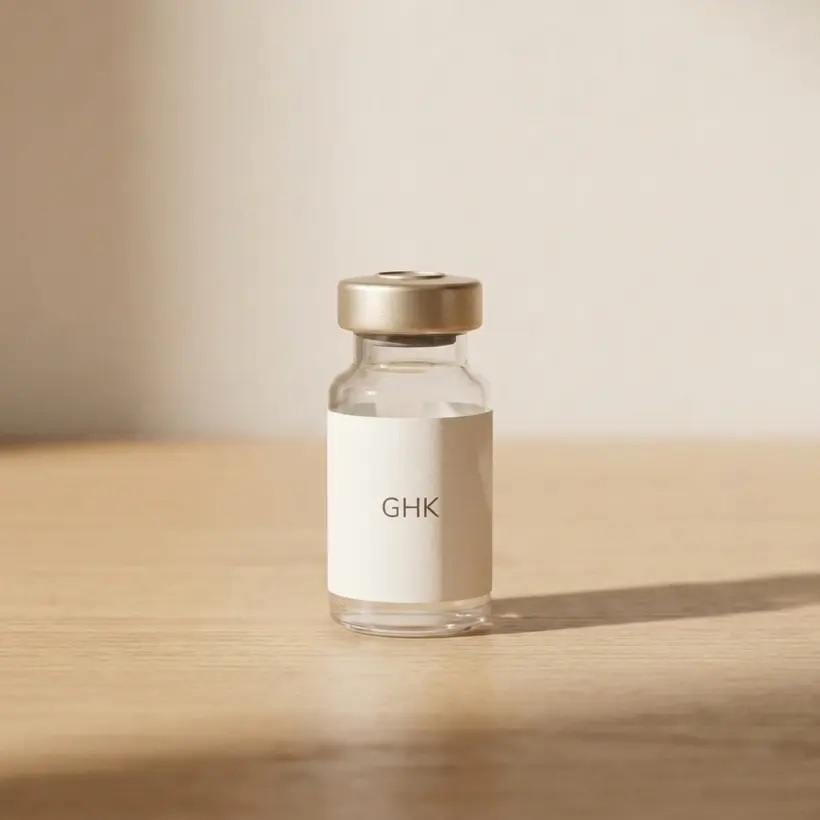
From the FormBlends catalog
GHK (Glycyl-L-Histidyl-L-Lysine)
Master wound-healing tripeptide that resets gene expression to a younger state · From $29/mo · prescription review required; compounded medications are not FDA-approved.
Learn about GHK (Glycyl-L-Histidyl-L-Lysine) →Is GHK-Cu safe to combine with semaglutide or tirzepatide?
There are no known direct pharmacological interactions between GHK-Cu and GLP-1 agonists. But any combination should be supervised by a physician who can monitor your response and adjust dosing as needed.
Should you start GHK-Cu and a GLP-1 on the same day?
No. We recommend starting one compound first (typically the GLP-1 medication), stabilizing on that dose, and then adding the second compound. This allows you to identify which compound causes any side effects and adjust accordingly.
How do physicians build GHK-Cu and GLP-1 protocols?
At FormBlends, our physicians design integrated protocols combining GLP-1 medications with complementary peptides for improved results.
Disclaimer: This article is for informational purposes only and doesn't constitute medical advice. Always consult with a licensed healthcare provider. Individual results may vary.
Sources
- Pickart L, Margolina A. Regenerative and protective actions of the GHK-Cu peptide in the light of the new gene data. International Journal of Molecular Sciences. 2018;19(7):1987.
- National Library of Medicine, GHK-Cu copper tripeptide in skin.
Ready when you are
GHK (Glycyl-L-Histidyl-L-Lysine)
Master wound-healing tripeptide that resets gene expression to a younger state · From $29/mo · prescription review required; compounded medications are not FDA-approved.
Learn about GHK (Glycyl-L-Histidyl-L-Lysine) →