Trust Signals
Medical Review: FormBlends Medical Team | Last Updated: May 29, 2026 | Reading Time: 8 minutes
The Current State of Healing Peptides
Healing peptides occupy a strange position in modern recovery protocols. Athletes inject BPC-157 based on rat studies while physical therapists achieve similar results with proven methods. The gap between laboratory promise and human reality defines this field.
BPC-157 stands alone with actual human injury data, though limited to case series rather than controlled trials. TB-500 rides entirely on animal research and wound healing extrapolation. GHK-Cu works topically but injectable protocols remain untested. Thymosin alpha-1 shows immune benefits yet lacks musculoskeletal application.
The evidence hierarchy matters here. A single human case series outweighs dozens of rodent studies for practical application. Yet the peptide community often treats animal data as gospel, creating unrealistic expectations about timeline and magnitude of effects.
BPC-157: Mechanisms Beyond Marketing Claims
BPC-157 consists of 15 amino acids derived from gastric protective compounds. Its primary mechanism involves growth hormone receptor upregulation in tendon fibroblasts, triggering the FAK-paxillin pathway within hours of exposure. This enhances cell migration and potentially accelerates early healing phases.
From the FormBlends catalog
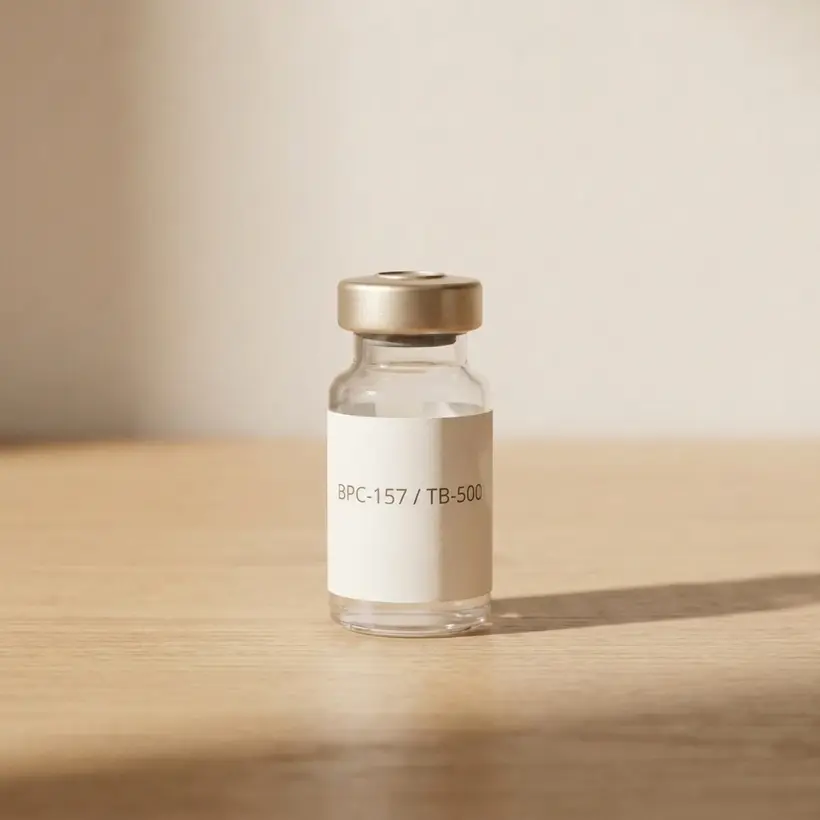
BPC-157 / TB-500 Blend
The ultimate recovery stack in one vial · From $249/mo · compounded by a licensed 503A pharmacy, dispensed only after provider review.
View BPC-157 / TB-500 Blend →The peptide's angiogenic properties work through VEGF-A upregulation. New vessel formation begins within days in animal models, increasing capillary density at injury sites. This improved blood flow theoretically delivers more nutrients and removes metabolic waste faster than natural healing.
Yet critical questions remain unanswered. Does faster healing mean better healing? No studies compare the tensile strength of BPC-healed versus naturally healed tendons in humans. The 4-week improvement timeline from human reports suspiciously matches many injuries' natural recovery curve. Without placebo controls, we cannot separate peptide effects from time plus hope.
Dosing protocols vary wildly. Human case series used 2.5-10 mcg/kg daily, while online forums recommend everything from 250 mcg to 1 mg daily. The lack of dose-response data means users essentially guess at optimal amounts.
The Stability Crisis Nobody Discusses
Independent testing reveals a dirty secret of the peptide industry: degradation destroys most products before they reach users. BPC-157 maintains stability for approximately one month at room temperature in lyophilized form. Summer shipping without cold packs essentially guarantees compromised potency.
TB-500 faces worse challenges. Its 43-amino acid structure forms aggregates at higher concentrations, reducing bioactivity. The larger size makes it more susceptible to temperature fluctuations and pH changes during reconstitution.
Reconstitution introduces another failure point. Users often mix peptides with tap water or non-sterile saline, introducing contaminants. Even with bacteriostatic water, improper storage leads to bacterial growth within days. The cloudy vial photos posted online represent degraded, potentially dangerous products.
Solution specifics matter. Only purchase from suppliers providing:
- Cold-chain shipping documentation with temperature logs
- Third-party testing dated within 60 days
- Batch-specific certificates of analysis
- Endotoxin levels below 5 EU/mg
- Clear degradation timelines post-reconstitution
What People Actually Experience With Healing Peptides
Community reports paint a consistent picture of healing peptide effects, though these remain anecdotal observations rather than clinical evidence. Users typically describe a reduction in nagging pain around day 10 to 14, particularly with chronic tendon issues. Morning stiffness reportedly decreases before other symptoms improve.
The injection site matters according to user reports. Local administration near the injury supposedly works better than distant subcutaneous injection, though no studies validate this claim. Some report immediate warmth or tingling at injection sites, likely from histamine release rather than healing effects.
Combination protocols dominate community discussions. BPC-157 plus TB-500 represents the standard "healing stack," often with added growth hormone secretagogues. Users claim synergistic effects, but no research supports specific combinations. The financial incentive to sell multiple peptides likely drives these recommendations more than science.
Failed responses appear more common than success stories suggest. Forums delete negative reports as "doing it wrong," creating survivorship bias. Conservative estimates from aggregated discussions suggest a substantial portion of users experience no noticeable benefit, particularly with chronic conditions or complete tears requiring surgery.
Comparing Real Costs and Outcomes
Peptide therapy costs extend beyond the compounds themselves. A typical BPC-157 protocol runs $150 to 300 monthly for legitimate products. Add TB-500 and costs double. Include supplies like insulin syringes, bacteriostatic water, and alcohol swabs. Factor in potential medical consultation for proper technique.
Physical therapy offers proven alternatives at comparable cost. Insurance often covers PT sessions, reducing out-of-pocket expense. A systematic review of Achilles tendinopathy found eccentric exercise protocols achieved significant improvement rates over 12 weeks. BPC-157 case series showed "majority improvement" at 4 weeks but lacked objective outcome measures.
Timeline expectations shape perceived value. Peptide users expect rapid results based on marketing claims. When natural healing would produce similar improvement at 4 weeks anyway, attribution becomes impossible without controls. PT requires more active participation but builds strength beyond mere tissue repair.
Reading Between The Lines of Peptide Research
Published peptide research requires careful interpretation. Animal studies use injury models that poorly replicate human conditions. Researchers create standardized cuts or tears, then measure healing in controlled environments. Human injuries involve complex tissue damage, varying blood supply, and different mechanical loads during recovery.
Dose translation from animals misleads many users. Mouse studies might use 10 mcg/kg, leading people to calculate human equivalent doses. But metabolic scaling, different receptor densities, and administration routes make direct translation impossible. What heals a 30-gram mouse may do nothing for a 80-kilogram human.
Industry-funded research dominates the field. While not automatically invalid, financial interests color study design and reporting. Negative results rarely see publication. Mechanism papers proliferate while outcome studies remain scarce.
Anti-Inflammatory Effects: Nuanced Reality
BPC-157 reduces inflammatory markers in animal colitis models, showing decreased TNF-alpha, IL-6, and IL-1β. But inflammation serves a purpose in healing. Early inflammatory response clears damaged tissue and initiates repair cascades. Suppressing inflammation too aggressively may impair long-term outcomes.
Thymosin alpha-1 demonstrates clearer human anti-inflammatory benefits in sepsis trials. CRP levels drop measurably. Survival rates improve. Yet no studies examine musculoskeletal applications. Assuming systemic anti-inflammatory effects translate to local tissue healing oversimplifies complex biology.
LL-37 illustrates this complexity perfectly. The antimicrobial peptide actually increases inflammation at injury sites, recruiting immune cells that accelerate debris clearance. Calling it "anti-inflammatory" would miss its therapeutic mechanism entirely.
Week-by-Week: Setting Realistic Expectations
Week 1: Cellular signaling begins immediately, but users notice nothing. Injection site reactions (redness, mild swelling) occur in some. Pain levels remain unchanged or worsen slightly from injection trauma.
Week 2: Some users report subtle changes. Morning stiffness may decrease. Pain during specific movements might lessen. Placebo effect peaks during this hopeful period.
Week 3-4: Genuine improvement becomes apparent in responders. Function improves before structure. Users resume activities despite incomplete healing, risking reinjury.
Week 5-8: Continued gradual progress in successful cases. Rate of improvement slows. Users often add doses or compounds seeking continued rapid gains.
After Week 8: Plateau phase. Additional peptide use rarely accelerates progress. Natural remodeling continues for months regardless of continued treatment.
These timelines match normal healing for many injuries. Without controls, peptide benefit remains speculative. The psychological value of "doing something" may exceed physiological effects.
Making an Informed Decision
Healing peptides represent calculated risks rather than proven therapies. BPC-157 shows promise with minimal reported side effects, though long-term safety remains unknown. TB-500 lacks even basic human efficacy data for musculoskeletal healing. Both require careful sourcing, proper handling, and realistic expectations.
Conservative medical management often matches or exceeds peptide outcomes. Physical therapy, eccentric loading, and time heal most soft tissue injuries. Peptides may accelerate early phases but don't create superhuman tissue. Surgery remains necessary for complete ruptures regardless of peptide use.
Quality control poses the biggest practical challenge. Most peptide products degrade before use. Testing costs exceed peptide prices, leaving users gambling on potency. Even legitimate suppliers face storage and shipping challenges that compromise products.
For those proceeding despite limitations, minimize risks through proper source verification, cold chain custody, sterile technique, and conservative dosing. Monitor for infection signs. Document response carefully. Accept that improvement may reflect natural healing rather than peptide effects.
FAQ
What are the most effective peptides for healing? BPC-157 and TB-500 show the strongest evidence for tissue healing. BPC-157 demonstrates tendon repair in human studies at 2.5-10 mcg/kg doses. TB-500 accelerates wound closure through actin regulation but lacks human trials for musculoskeletal healing.
How long do healing peptides take to work? Initial effects appear within 7-14 days for most users. Human studies show significant tendon improvements at 4 weeks with BPC-157. Full tissue remodeling typically requires 8-12 weeks of consistent use.
Are peptides for recovery safe? Short-term human data shows minimal side effects for BPC-157 and TB-500 at therapeutic doses. Long-term safety data beyond 12 weeks is absent. Neither peptide has FDA approval for human use.
What peptides reduce inflammation? BPC-157 reduces TNF-alpha and IL-6 in animal models. Thymosin alpha-1 modulates inflammatory response in human trials. GHK-Cu shows anti-inflammatory effects topically but limited systemic data exists.
Can peptides help with joint pain? BPC-157 shows promise for joint-related injuries in animal models. Human case reports suggest benefit for ligament and tendon issues near joints. Direct evidence for cartilage regeneration or arthritis treatment remains limited.
How do you properly dose healing peptides? BPC-157: 250-500 mcg daily, split into 1-2 doses. TB-500: 2-5 mg weekly, often front-loaded. Both require reconstitution with bacteriostatic water and refrigerated storage. Subcutaneous injection near injury site is standard.
Are pure health peptides worth the cost? Quality peptides cost $100-300 per month at therapeutic doses. Value depends on injury severity and alternatives. Physical therapy shows equal or better outcomes for many conditions at lower cost.
Which peptides are healthy for you long-term? No healing peptides have established long-term safety profiles beyond 3 months. BPC-157 shows good tolerability in short studies. Continuous use may suppress natural healing responses - cycling is standard practice.
What's the difference between BPC-157 and TB-500? BPC-157 is a 15-amino acid gastric peptide that promotes angiogenesis. TB-500 is a 43-amino acid fragment of thymosin beta-4 that regulates actin. BPC-157 has human injury data while TB-500 relies on animal studies.
Can healing peptides replace surgery? No clinical evidence supports peptides replacing necessary surgical intervention. Some users report avoiding minor procedures. Always consult orthopedic specialists for significant injuries before attempting peptide therapy.
Sources
- Brcic L, et al. "Stable gastric pentadecapeptide BPC 157 in trials for inflammatory bowel disease." Current Pharmaceutical Design. 2020.
- Chang CH, et al. "The promoting effect of pentadecapeptide BPC-157 on tendon healing." Journal of Applied Physiology. 2011.
- Goldstein AL, et al. "Thymosin α1: From bench to bedside." Expert Opinion on Biological Therapy. 2009.
- Seiwerth S, et al. "BPC 157 and Standard Angiogenic Growth Factors." Current Pharmaceutical Biotechnology. 2018.
- Tkalčević VI, et al. "Enhancement by PL 14736 of granulation and collagen organization in healing wounds." European Journal of Pharmacology. 2007.
- Xing L, et al. "Aiming for a shorter time of recovery in distal radius fractures." World Journal of Orthopedics. 2017.
- FDA Warning Letters database on unapproved peptide products. 2024-2026.
- World Anti-Doping Agency Prohibited List. 2026 Edition.
Footer Disclaimers
Platform Notice: This article is for educational purposes only and does not constitute medical advice. Always consult with a healthcare professional before starting any peptide regimen.
Research Compound Disclaimer: The peptides discussed are not approved by the FDA for human use. They are sold for research purposes only.
Results Disclaimer: Individual results may vary. The outcomes mentioned are based on limited studies and may not be reproducible.
Trademark Notice: FormBlends is a trademark of FormBlends LLC. All other trademarks are property of their respective owners.
Related peptide guides
Ready when you are
BPC-157 / TB-500 Blend
The ultimate recovery stack in one vial · From $249/mo · compounded by a licensed 503A pharmacy, dispensed only after provider review.
View BPC-157 / TB-500 Blend →