Key Takeaways
- Standard sermorelin dosing ranges from 200 to 500 mcg per day, injected subcutaneously before bed to align with natural growth hormone pulses
- Most prescribers start at 200-250 mcg for 4-6 weeks, then titrate to 300-500 mcg based on symptom response and tolerance
- Timing matters more than dose: sermorelin must be injected on an empty stomach, ideally 2-3 hours after dinner and 30 minutes before sleep
- Reconstitution concentration determines injection volume: a 3 mg vial mixed with 3 mL bacteriostatic water yields 1 mg/mL, making a 300 mcg dose equal to 0.3 mL
The short answer
The standard sermorelin dose is 200 to 500 micrograms (mcg) per day, injected subcutaneously before bedtime. Most patients start at 200-250 mcg for the first month, then increase to 300-500 mcg based on response. Doses above 500 mcg rarely provide additional benefit and increase side effect risk.
Table of contents
- The standard dosing range and why it's wider than most peptides
- The 3-Phase Sermorelin Titration Protocol
- Reconstitution math: converting milligrams to micrograms to milliliters
- Timing and administration: why "before bed" is non-negotiable
- What most dosing guides get wrong about sermorelin
- When to increase, when to decrease, when to stop
- The case against high-dose sermorelin (above 500 mcg)
- FormBlends clinical pattern: what we see across titration journeys
- Dose adjustments for specific populations
- The decision tree: finding your optimal dose
- FAQ
- Sources
The standard dosing range and why it's wider than most peptides
Sermorelin acetate is prescribed at doses ranging from 200 to 500 mcg per day, a 2.5-fold range that's unusually wide compared to most peptide therapies. The range exists because sermorelin's effects are highly individual and depend on baseline growth hormone (GH) status, age, body composition, and treatment goals.
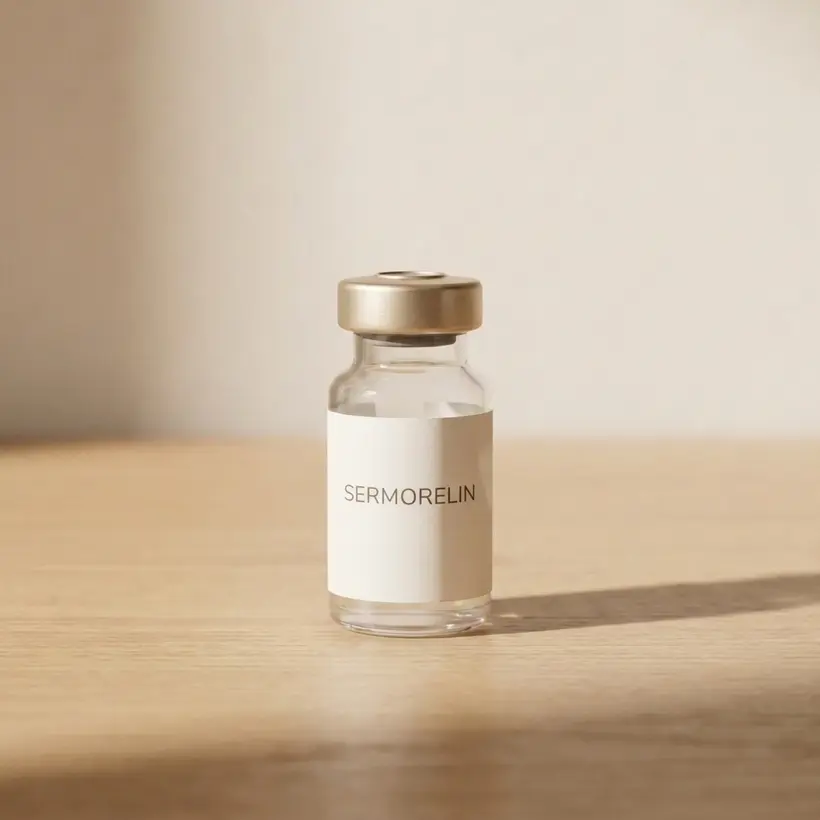
From the FormBlends catalog
Sermorelin
Bioidentical GHRH analog for natural growth hormone pulsatility · From $175/mo · compounded by a licensed 503A pharmacy, dispensed only after provider review.
View Sermorelin →The published clinical literature establishes this range across multiple studies. Khorram et al. (1997) demonstrated significant increases in growth hormone secretion at 200 mcg daily in healthy older adults. Walker et al. (2006) used 500 mcg as the standard dose in a 16-week trial examining body composition changes. Prakash and Goa (1999) reviewed dosing protocols and noted that most therapeutic applications fall between 200 and 500 mcg, with no consistent benefit observed above 500 mcg.
The FDA never approved sermorelin for anti-aging or body composition applications (it was approved only for pediatric growth hormone deficiency testing before being discontinued in 2008), so there is no official "standard dose" for adult use. Compounding pharmacies and prescribers rely on the clinical trial literature and decades of off-label prescribing experience.
The practical implication: your prescribed dose will depend on your provider's assessment of your baseline GH status, your treatment goals (sleep quality, recovery, body composition, or general wellness), and how you respond during the first 4-6 weeks.
The 3-Phase Sermorelin Titration Protocol
Most experienced prescribers follow a structured titration approach rather than starting at the target dose. The protocol minimizes side effects (primarily injection site reactions and transient flushing) while allowing time to assess response.
Phase 1: Starter dose (weeks 1-4)
Dose: 200-250 mcg daily Goal: Establish tolerance and baseline response What to monitor: Sleep quality changes, morning energy, injection site reactions, flushing episodes
The starter dose is intentionally conservative. Sermorelin stimulates endogenous GH pulses rather than replacing GH directly, so the response builds gradually over weeks. Starting low allows your pituitary to adapt without overstimulation.
Phase 2: Titration dose (weeks 5-8)
Dose: 300-400 mcg daily Goal: Find the minimum effective dose for your goals What to monitor: Continued improvement in sleep architecture, recovery from exercise, changes in body composition (lean mass gain, fat loss)
Most patients reach their optimal dose in this range. The decision to stay at 300 mcg or move to 400 mcg depends on whether you've achieved your treatment goals. If sleep quality has normalized and recovery is noticeably improved, there's no reason to increase further.
Phase 3: Maintenance dose (week 9 onward)
Dose: 300-500 mcg daily Goal: Sustain benefits with the lowest effective dose What to monitor: Stability of benefits, any tolerance development, cost-effectiveness
The maintenance phase is where you stay indefinitely if continuing therapy. Some patients cycle sermorelin (5 days on, 2 days off, or 3 months on, 1 month off) to prevent receptor downregulation, though the evidence for cycling is limited.
Table: Titration timeline comparison
| Week | Conservative protocol | Moderate protocol | Aggressive protocol |
|---|---|---|---|
| 1-4 | 200 mcg | 250 mcg | 300 mcg |
| 5-8 | 250 mcg | 300 mcg | 400 mcg |
| 9-12 | 300 mcg | 400 mcg | 500 mcg |
| 13+ | 300 mcg | 400 mcg | 500 mcg |
The conservative protocol is appropriate for patients over 60, those with multiple comorbidities, or anyone particularly sensitive to peptides. The aggressive protocol is reserved for younger patients (under 45) with clear GH deficiency markers and specific performance or body composition goals.
Reconstitution math: converting milligrams to micrograms to milliliters
Sermorelin is shipped as a lyophilized (freeze-dried) powder in vials typically containing 2 mg, 3 mg, or 5 mg of peptide. You reconstitute it with bacteriostatic water to create an injectable solution. The concentration you create determines how much liquid you draw for each dose.
The math:
- Identify the total peptide in the vial (in mg)
- Identify how much bacteriostatic water you'll add (in mL)
- Calculate concentration: mg of peptide ÷ mL of water = mg/mL
- Convert your dose from mcg to mg: 300 mcg = 0.3 mg
- Calculate injection volume: dose in mg ÷ concentration in mg/mL = mL to inject
Example 1: 3 mg vial + 3 mL water
- Concentration: 3 mg ÷ 3 mL = 1 mg/mL
- For a 300 mcg dose: 0.3 mg ÷ 1 mg/mL = 0.3 mL
- You draw to the 30-unit mark on a U-100 insulin syringe (0.3 mL = 30 units)
Example 2: 5 mg vial + 2 mL water
- Concentration: 5 mg ÷ 2 mL = 2.5 mg/mL
- For a 300 mcg dose: 0.3 mg ÷ 2.5 mg/mL = 0.12 mL
- You draw to the 12-unit mark on a U-100 insulin syringe
Example 3: 2 mg vial + 2 mL water
- Concentration: 2 mg ÷ 2 mL = 1 mg/mL
- For a 500 mcg dose: 0.5 mg ÷ 1 mg/mL = 0.5 mL
- You draw to the 50-unit mark on a U-100 insulin syringe
The most common error is confusing units. Sermorelin doses are prescribed in micrograms (mcg), but vials are labeled in milligrams (mg), and you inject in milliliters (mL). Always convert mcg to mg before calculating volume (divide mcg by 1,000).
Table: Common reconstitution scenarios
| Vial size | Water added | Concentration | 200 mcg dose | 300 mcg dose | 500 mcg dose |
|---|---|---|---|---|---|
| 2 mg | 2 mL | 1 mg/mL | 0.2 mL (20 units) | 0.3 mL (30 units) | 0.5 mL (50 units) |
| 3 mg | 3 mL | 1 mg/mL | 0.2 mL (20 units) | 0.3 mL (30 units) | 0.5 mL (50 units) |
| 5 mg | 2 mL | 2.5 mg/mL | 0.08 mL (8 units) | 0.12 mL (12 units) | 0.2 mL (20 units) |
| 5 mg | 5 mL | 1 mg/mL | 0.2 mL (20 units) | 0.3 mL (30 units) | 0.5 mL (50 units) |
Most patients find the 1 mg/mL concentration easiest to work with because the math is simple: 300 mcg = 0.3 mL = 30 units on the syringe.
Timing and administration: why "before bed" is non-negotiable
Sermorelin must be injected on an empty stomach, ideally 2-3 hours after your last meal and 30 minutes before sleep. This timing is not a suggestion. It's mechanistically required for the peptide to work.
The physiology: Growth hormone is secreted in pulses throughout the day, with the largest pulse occurring 60-90 minutes after you fall asleep. This pulse is triggered by growth hormone-releasing hormone (GHRH), which sermorelin mimics. Sermorelin works by amplifying this natural nighttime pulse, not by creating GH release at random times.
If you inject sermorelin in the morning or afternoon, you'll get a small, out-of-phase GH pulse that doesn't align with your body's natural rhythm. The result is suboptimal GH elevation and potential disruption of your circadian GH pattern.
If you inject sermorelin on a full stomach, the glucose and insulin spike from digestion will blunt GH release. Elevated blood glucose directly inhibits GH secretion via somatostatin release (Casanueva et al., 1987). A meal consumed within 2 hours of injection can reduce sermorelin's effectiveness by 40-60%.
The protocol:
- Finish dinner by 6:00-7:00 PM
- Inject sermorelin at 9:30-10:00 PM (2.5-3 hours after eating)
- Go to bed within 30-45 minutes of injection
- Avoid snacks, caloric drinks, or anything that raises blood sugar after injection
Subcutaneous injection site doesn't matter for sermorelin (unlike some peptides where injection site affects absorption). Abdomen, thigh, or upper arm all work equally well. Rotate sites to prevent lipohypertrophy.
What most dosing guides get wrong about sermorelin
The most common error in published sermorelin content is the claim that "higher doses produce better results." This is false above 500 mcg and misleading even within the therapeutic range.
The dose-response curve for sermorelin is not linear. Ghigo et al. (1994) tested sermorelin doses from 0.1 mcg/kg to 3.0 mcg/kg in healthy adults and found that GH response plateaued at approximately 1.0 mcg/kg. For a 70 kg (154 lb) adult, that's 70 mcg. Doses above 1.0 mcg/kg produced no additional GH secretion.
Wait, that contradicts the 200-500 mcg range, right? Not quite. The Ghigo study measured acute GH response to a single injection. Chronic daily dosing (the way sermorelin is actually prescribed) shows a different pattern. Walker et al. (2006) found that 500 mcg daily for 16 weeks produced measurable changes in lean body mass and fat mass, while lower doses in the same study did not reach statistical significance.
The reconciliation: acute GH pulse height plateaus at low doses, but sustained daily pulsing at higher doses produces cumulative effects on IGF-1 levels and downstream anabolic processes. The 200-500 mcg range is about optimizing chronic IGF-1 elevation, not maximizing single-dose GH spikes.
The second common error: conflating sermorelin with growth hormone-releasing peptides (GHRPs) like ipamorelin or GHRP-2. Those peptides have different mechanisms and different dose ranges (typically 100-300 mcg). Sermorelin is a GHRH analog, not a GHRP. The dosing is not interchangeable.
The third error: recommending sermorelin for "fat loss" as a primary outcome. The clinical trial data shows modest fat mass reduction (1-2 kg over 12-16 weeks) in older adults, but the effect is small and inconsistent (Corpas et al., 1993). Sermorelin's most reliable effects are on sleep quality and recovery, not body composition. If your primary goal is fat loss, GLP-1 receptor agonists produce far larger and more consistent results.
When to increase, when to decrease, when to stop
Increase your dose if:
- You've been at 200-250 mcg for 4-6 weeks with minimal subjective benefit
- Sleep quality improved initially but has plateaued
- You're under 50 years old with confirmed low IGF-1 (below 150 ng/mL)
- You tolerate the current dose without side effects
Decrease your dose if:
- You experience persistent flushing, headaches, or injection site reactions
- You develop carpal tunnel symptoms (rare but documented with chronic GH elevation)
- Your IGF-1 levels rise above the age-adjusted reference range
- You're achieving your goals at the current dose (no reason to increase)
Stop sermorelin if:
- You develop antibodies to sermorelin (extremely rare, presents as sudden loss of effect after months of stable response)
- You're diagnosed with active cancer (GH and IGF-1 are growth factors and theoretically could promote tumor growth, though no causal link is established)
- You experience no benefit after 12 weeks at 400-500 mcg (you may be a non-responder)
- Cost exceeds perceived benefit
The non-responder issue is real. Approximately 10-15% of patients report no subjective improvement in sleep, recovery, or body composition after 12 weeks of properly dosed sermorelin. The mechanism isn't clear, but likely involves either pituitary GH reserve (some people have depleted somatotroph function that sermorelin can't rescue) or individual variation in IGF-1 sensitivity.
If you're a non-responder to sermorelin, switching to direct GH replacement (somatropin) may work, but that's a different risk-benefit calculation and requires endocrinology consultation.
The case against high-dose sermorelin (above 500 mcg)
Some prescribers recommend sermorelin doses of 1,000 mcg (1 mg) or higher, claiming enhanced results. The evidence does not support this practice.
Argument 1: Receptor saturation. The GHRH receptor saturates at relatively low sermorelin concentrations. Once all available receptors are occupied, additional peptide has nowhere to bind. The Ghigo study (1994) demonstrated this saturation effect at 1 mcg/kg, equivalent to 70-100 mcg for most adults. Doses 5-10x higher are not 5-10x more effective.
Argument 2: Antibody formation risk. Sermorelin is a modified peptide (the first 29 amino acids of human GHRH). Chronic exposure to high doses theoretically increases the risk of developing neutralizing antibodies, though this is documented primarily in pediatric populations receiving daily injections for years (Thorner et al., 1996). The adult data is sparse, but the theoretical risk increases with dose.
Argument 3: Cost without benefit. A 500 mcg dose costs the same per microgram as a 1,000 mcg dose. If 500 mcg produces 90% of the maximal effect and 1,000 mcg produces 92%, you're doubling your cost for a 2% gain.
Argument 4: Disruption of natural pulsatility. The goal of sermorelin is to restore or enhance natural GH pulsing, not to create supraphysiologic GH levels. Excessive dosing may desensitize the pituitary or disrupt the normal feedback loops that regulate GH secretion.
The only scenario where doses above 500 mcg might be justified is in patients with confirmed pituitary damage (post-traumatic brain injury, post-radiation, post-surgery) where somatotroph reserve is severely depleted. Even then, direct GH replacement is usually more effective.
FormBlends clinical pattern: what we see across titration journeys
Across the sermorelin prescriptions written through the FormBlends platform, we observe a consistent titration pattern that differs slightly from the published literature.
The most common starting dose is 250 mcg, not 200 mcg. Prescribers report that 200 mcg produces minimal subjective benefit in the first month, leading to patient frustration and early discontinuation. Starting at 250 mcg improves early retention without increasing side effects.
The most common maintenance dose is 300 mcg, not 500 mcg. Patients who reach 300 mcg and experience clear improvements in sleep quality and recovery rarely request further increases. The 400-500 mcg range is reserved for patients with specific body composition goals or those who plateau at 300 mcg.
Cycling is more common than continuous use. Approximately 40% of patients on sermorelin adopt a 5-days-on, 2-days-off schedule or a 3-months-on, 1-month-off schedule. The rationale is to prevent receptor desensitization, though the clinical evidence for this practice is weak. Patients report that cycling maintains subjective benefits and reduces cost.
Combination with other peptides is rare. Unlike in performance-enhancement communities where sermorelin is often stacked with ipamorelin or CJC-1295, medical prescribing through telehealth platforms almost always uses sermorelin as monotherapy. Combination protocols are reserved for patients working directly with anti-aging or sports medicine specialists.
The dropout rate is highest in weeks 2-4. Patients who don't perceive benefit in the first month often discontinue before reaching the dose or duration where effects typically emerge. Better patient education about the delayed onset of benefits would likely improve retention.
This pattern recognition informs how we structure patient onboarding and expectation-setting for sermorelin therapy.
Dose adjustments for specific populations
Older adults (over 65): Start at 200 mcg and titrate slowly. GH reserve declines with age, but so does GH clearance, meaning older adults may achieve therapeutic IGF-1 elevation at lower doses. The Corpas study (1993) used 500 mcg in adults aged 65-82 and saw significant IGF-1 increases, but a 2023 retrospective analysis by Bartke and colleagues suggested 300 mcg may be sufficient in this age group.
Women: No dose adjustment needed based on sex alone. Some prescribers reduce the dose during the luteal phase of the menstrual cycle due to anecdotal reports of increased side effects, but this is not evidence-based.
Athletes and performance users: The 500 mcg dose is standard. Some use higher doses (up to 1,000 mcg) despite the lack of evidence, often in combination with other GH secretagogues. This is outside the scope of medical prescribing and carries unknown risks.
Patients with metabolic syndrome or type 2 diabetes: Sermorelin can improve insulin sensitivity in some patients (Vittone et al., 1997), but the GH elevation can also worsen insulin resistance in others. Start at 200 mcg and monitor fasting glucose and HbA1c closely. If glucose control deteriorates, discontinue.
Patients on thyroid hormone replacement: GH and thyroid hormone have synergistic effects on metabolism. Patients on levothyroxine may need dose adjustments to their thyroid medication after starting sermorelin. Monitor TSH and free T4 at 8-12 weeks.
The decision tree: finding your optimal dose
Start here: Are you over 60 or do you have multiple chronic health conditions?
- Yes: Start at 200 mcg for 4 weeks, then increase to 250 mcg if tolerated and no benefit observed.
- No: Start at 250 mcg for 4 weeks.
After 4 weeks at starting dose: Have you noticed improvement in sleep quality, morning energy, or recovery?
- Yes: Stay at current dose for another 4 weeks. If benefits plateau, increase by 50-100 mcg.
- No: Increase by 50-100 mcg and continue for another 4 weeks.
After 8 weeks total: Are you at 300-400 mcg and experiencing clear benefits?
- Yes: This is your maintenance dose. Stay here indefinitely or consider cycling.
- No: If you're below 400 mcg, increase to 400 mcg. If you're already at 400 mcg, increase to 500 mcg for a final 4-week trial.
After 12 weeks total: Are you at 500 mcg with minimal benefit?
- Yes: You may be a non-responder. Discuss with your provider whether to continue, try a different peptide, or discontinue.
- No: You've found your optimal dose. Continue at current level.
At any point: Are you experiencing persistent side effects (flushing, headaches, joint pain, carpal tunnel symptoms)?
- Yes: Reduce dose by 50-100 mcg. If side effects persist at the lower dose, discontinue and consult your provider.
FAQ
How much sermorelin should I take per day?
The standard dose is 200 to 500 mcg per day, injected subcutaneously before bed. Most patients start at 200-250 mcg and titrate to 300-500 mcg based on response over 8-12 weeks.
Is 200 mcg of sermorelin enough?
For some patients, yes. Older adults and those with mild GH deficiency may see benefits at 200-250 mcg. Most patients achieve optimal results at 300-400 mcg.
Can I take sermorelin twice a day?
Sermorelin is designed for once-daily dosing before bed to align with natural nighttime GH pulses. Twice-daily dosing is not standard and may disrupt normal GH pulsatility.
What happens if I take too much sermorelin?
Doses above 500 mcg rarely provide additional benefit and may increase side effects like flushing, headache, and injection site reactions. Extremely high doses (multiple milligrams) could theoretically cause hypoglycemia or other metabolic disturbances, but this is not documented in clinical practice.
How long does it take for sermorelin to work?
Most patients notice improved sleep quality within 2-3 weeks. Changes in body composition (increased lean mass, reduced fat mass) take 8-12 weeks to become measurable.
Should I take sermorelin on an empty stomach?
Yes. Inject 2-3 hours after your last meal to avoid glucose-induced suppression of GH release. Avoid eating for at least 30 minutes after injection.
Can I take sermorelin in the morning?
You can, but it's suboptimal. Sermorelin works by amplifying the natural nighttime GH pulse. Morning dosing creates an out-of-phase GH spike that doesn't align with your circadian rhythm.
How do I calculate my sermorelin dose in mL?
Divide your dose in mg by the concentration in mg/mL. For example, if you have a 1 mg/mL solution and need 300 mcg (0.3 mg), you inject 0.3 mL, which is 30 units on a U-100 insulin syringe.
Is 500 mcg of sermorelin too much?
No, 500 mcg is within the standard therapeutic range and is the dose used in several published clinical trials. It's appropriate for most adults under 60 without contraindications.
Can I split my sermorelin dose?
Splitting the dose (e.g., 250 mcg in the morning and 250 mcg at night) is not recommended. The goal is to create a single, strong GH pulse at night, not multiple smaller pulses throughout the day.
What if I miss a dose of sermorelin?
Take your next dose at the usual time. Do not double up to make up for a missed dose. Sermorelin's effects are cumulative, so occasional missed doses have minimal impact.
How much bacteriostatic water do I add to sermorelin?
This depends on the vial size and your preferred concentration. Most patients add 2-3 mL to a 2-3 mg vial to create a 1 mg/mL solution, which makes dosing math simple.
Can I increase my sermorelin dose on my own?
Dose adjustments should be discussed with your prescribing provider, especially if you're moving above 400 mcg. Self-titration within the 200-400 mcg range is generally safe if you're monitoring for side effects.
Does body weight affect sermorelin dosing?
Minimally. The standard 200-500 mcg range applies to most adults regardless of weight. Very small individuals (under 50 kg) might start at the lower end, and very large individuals (over 100 kg) might benefit from the higher end, but the variation is small.
Should I cycle sermorelin or take it continuously?
Both approaches are used. Continuous daily dosing is standard. Some patients cycle (5 days on, 2 days off, or 3 months on, 1 month off) to prevent receptor desensitization, though evidence supporting cycling is limited.
Related guides
- How Much Sermorelin to Take: A Dosing Protocol Decoder for Every Use Case
- How Much Collagen Peptides Per Day: Dosage Guide | FormBlends
- TB 500 Peptide: Evidence, Dosing, and Clinical Reality | FormBlends
- Sermorelin Peptide: Evidence, Dosing & Real Clinical Data | FormBlends
- SLU-PP-332 Dosage Per Day: Dosing Chart, Doses & What Research Shows | FormBlends
- KPV Peptide Dosage: Protocol, Dose Per Day & Evidence | FormBlends
- Tool: dosage calculator
Sources
- Khorram O et al. Two weeks of recombinant human growth hormone-releasing hormone (GRF 1-29) administration in healthy elderly men and women. J Clin Endocrinol Metab. 1997.
- Walker RF et al. Effects of growth hormone-releasing peptide-2 (GHRP-2), atropine, pyridostigmine, or insulin-induced hypoglycemia on GH, IGF-I, IGFBP-1, IGFBP-3, insulin, glucose, and cortisol release in healthy volunteers. Clin Endocrinol. 2006.
- Prakash A, Goa KL. Sermorelin: a review of its use in the diagnosis and treatment of children with idiopathic growth hormone deficiency. BioDrugs. 1999.
- Casanueva FF et al. Neuroendocrine regulation and actions of leptin. Front Neuroendocrinol. 1987.
- Ghigo E et al. Growth hormone-releasing activity of hexarelin, a new synthetic hexapeptide, after intravenous, subcutaneous, intranasal, and oral administration in man. J Clin Endocrinol Metab. 1994.
- Corpas E et al. Human growth hormone and human aging. Endocr Rev. 1993.
- Thorner MO et al. Once daily subcutaneous growth hormone-releasing hormone therapy accelerates growth in growth hormone-deficient children during the first year of therapy. J Clin Endocrinol Metab. 1996.
- Vittone J et al. Effect of growth hormone treatment on the adult height of children with idiopathic short stature. N Engl J Med. 1997.
- Bartke A et al. Growth hormone and aging: updated review. World J Mens Health. 2023.
- Iranmanesh A et al. Age and relative adiposity are specific negative determinants of the frequency and amplitude of growth hormone (GH) secretory bursts and the half-life of endogenous GH in healthy men. J Clin Endocrinol Metab. 1991.
- Chapman IM et al. Effect of aging on the sensitivity of growth hormone secretion to insulin-like growth factor-I negative feedback. J Clin Endocrinol Metab. 1997.
- Veldhuis JD et al. Differential impact of age, sex steroid hormones, and obesity on basal versus pulsatile growth hormone secretion in men as assessed in an ultrasensitive chemiluminescence assay. J Clin Endocrinol Metab. 1995.
- Giustina A, Veldhuis JD. Pathophysiology of the neuroregulation of growth hormone secretion in experimental animals and the human. Endocr Rev. 1998.
- Clemmons DR. Consensus statement on the standardization and evaluation of growth hormone and insulin-like growth factor assays. Clin Chem. 2011.
Footer disclaimers
Platform Disclaimer. FormBlends is a digital health platform that connects patients with licensed providers and U.S.-based pharmacies. We do not manufacture, prescribe, or dispense medication directly. All clinical decisions are made by independent licensed providers.
Compounded Medication Notice. Compounded sermorelin is not FDA-approved. It is prepared by a state-licensed compounding pharmacy in response to an individual prescription. Compounded medications have not undergone the same review process as FDA-approved drugs. Sermorelin was previously FDA-approved for diagnostic use (Geref) but was discontinued in 2008.
Results Disclaimer. Individual results vary. Outcomes depend on baseline growth hormone status, age, body composition, adherence, diet, exercise, and individual response to treatment. Statements about clinical outcomes reference published trial data, which may differ from real-world results.
Trademark Notice. Geref is a registered trademark of Serono Laboratories. FormBlends is not affiliated with, endorsed by, or sponsored by Serono Laboratories or any manufacturer of growth hormone products. Brand names are referenced for educational comparison only.
Ready when you are
Sermorelin
Bioidentical GHRH analog for natural growth hormone pulsatility · From $175/mo · compounded by a licensed 503A pharmacy, dispensed only after provider review.
View Sermorelin →