Key Takeaway
Explore the research-backed benefits of ipamorelin, a selective growth hormone-releasing peptide. Learn what the science says about body composition, recovery, sleep, and anti-aging.
Quick Answer: Ipamorelin is a selective growth hormone-releasing peptide (GHRP) that stimulates the pituitary gland to release growth hormone without significantly raising cortisol or prolactin. Research suggests benefits for body composition, sleep quality, bone density, and recovery.
What Is Ipamorelin?
Ipamorelin is a pentapeptide (five amino acids) that belongs to the growth hormone-releasing peptide (GHRP) family. It was first characterized in the late 1990s by researchers who were searching for a more selective alternative to earlier GHRPs like GHRP-6 and GHRP-2.
What makes ipamorelin stand out among growth hormone secretagogues is its selectivity. It binds to the ghrelin receptor (GHS-R1a) on pituitary somatotroph cells, triggering the release of stored growth hormone (GH) in a pulsatile pattern that mimics the body's natural rhythm . Unlike older GHRPs, ipamorelin doesn't cause meaningful increases in cortisol, ACTH, or prolactin at standard dosing, which gives it a much cleaner side-effect profile.
Ipamorelin isn't FDA-approved for any medical condition. The research base includes both animal studies and a smaller number of human studies, primarily focused on post-surgical recovery and GH stimulation testing. Much of the broader interest in ipamorelin for wellness and performance applications is supported by its mechanism of action and anecdotal clinical experience rather than large-scale randomized controlled trials.
Potential Benefits of Ipamorelin
1. Growth Hormone Improvement
The primary and most well-documented effect of ipamorelin is its ability to stimulate the release of growth hormone from the pituitary gland. In human studies, ipamorelin produced dose-dependent increases in GH levels comparable to those seen with GHRP-6, but without the unwanted hormonal side effects.
View data table
| Category | Clinical Interest Score | Detail |
|---|---|---|
| BPC-157 | 88 | Tissue repair and gut healing |
| TB-500 | 82 | Injury recovery |
| Sermorelin | 78 | Growth hormone support |
| Ipamorelin | 75 | Anti-aging and recovery |
| GHK-Cu | 70 | Skin and tissue repair |

This is significant because growth hormone plays a central role in tissue repair, metabolism, and cellular regeneration. Natural GH production declines roughly 14% per decade after age 30, contributing to many of the changes people associate with aging . By stimulating the body's own GH production rather than introducing exogenous GH, ipamorelin works with the body's feedback mechanisms rather than overriding them.
2. Body Composition Improvements
Growth hormone is a powerful regulator of body composition. It promotes lipolysis (fat breakdown) while supporting lean muscle maintenance. Because ipamorelin improves GH levels, it may support favorable shifts in body composition over time.
Animal studies have demonstrated that ipamorelin administration leads to increases in body weight gain through lean tissue accretion rather than fat accumulation . In a swine model, ipamorelin improved feed efficiency and lean body mass in a pattern consistent with GH-mediated effects.
While direct human body composition trials with ipamorelin alone are limited, the well-established relationship between GH levels and body composition supports this application.
3. Improved Sleep Quality
Growth hormone release naturally peaks during deep sleep, and the relationship between GH and sleep quality is bidirectional. Research shows that GH secretagogues can enhance slow-wave sleep (the most restorative phase), which in turn supports additional natural GH release.
Many clinicians and patients report that ipamorelin, particularly when dosed before bedtime, improves subjective sleep quality and next-day recovery. While controlled sleep studies specific to ipamorelin are limited, the physiological rationale is sound given its role in amplifying the natural nocturnal GH pulse.
4. Bone Density Support
Growth hormone matters in bone metabolism. It stimulates the production of insulin-like growth factor 1 (IGF-1) in the liver, which in turn promotes osteoblast activity and bone mineralization.
In animal studies, ipamorelin has demonstrated positive effects on bone mineral content. Research in a rat model showed that ipamorelin administration led to increased bone mineral content and bone formation markers compared to controls . These findings are particularly relevant for aging populations at risk for osteopenia and osteoporosis.
5. Recovery and Tissue Repair
One of the most practical applications of ipamorelin relates to recovery from exercise, injury, or surgery. Growth hormone is important for collagen synthesis, muscle repair, and connective tissue maintenance.
A human clinical trial examined ipamorelin's effects in patients recovering from abdominal surgery. The study found that ipamorelin accelerated the return of normal bowel function compared to placebo, suggesting practical recovery benefits in a clinical setting.
For athletes and active individuals, the GH-mediated recovery benefits may translate to faster healing between training sessions and improved resilience of connective tissues. See our full guide on Ipamorelin for muscle recovery.
6. Joint and Connective Tissue Health
GH and IGF-1 are both involved in the maintenance and repair of cartilage, tendons, and ligaments. By supporting healthy GH levels, ipamorelin may help maintain joint function and support the repair of damaged connective tissue.
This benefit is of particular interest to individuals dealing with wear-and-tear joint issues or those whose training places significant stress on connective structures. Explore this topic further in our Ipamorelin for joint pain guide.
7. Skin Health and Collagen Production
Collagen is the most abundant protein in the body and is important for skin elasticity, hydration, and structural integrity. GH stimulates collagen synthesis, and declining GH levels are associated with the thinning and reduced elasticity of aging skin.
By restoring more youthful GH pulsatility, ipamorelin may support skin health from the inside out. For a detailed look, visit our Ipamorelin for skin health guide.
8. Gut Health
Growth hormone and IGF-1 play roles in maintaining the integrity of the intestinal lining and supporting gut mucosal health. The post-surgical trial mentioned above, which showed ipamorelin improving bowel function recovery, points to a potential gastrointestinal benefit.
Some clinicians use ipamorelin as part of gut health protocols, particularly in combination with other peptides. Learn more in our Ipamorelin for gut health guide.
Ipamorelin vs. Other Growth Hormone Secretagogues
Knowing how ipamorelin compares to other GH-releasing peptides can help clarify its unique advantages:
From the FormBlends catalog
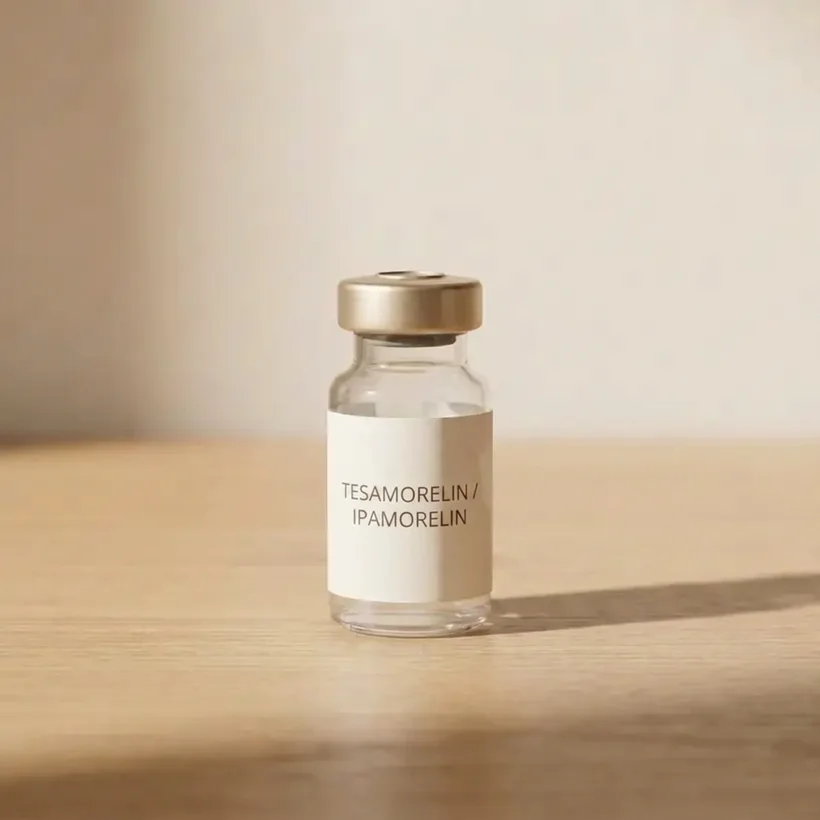
Tesamorelin / Ipamorelin Blend
Growth-hormone pathway support in one blend · From $299/mo · compounded by a licensed 503A pharmacy, dispensed only after provider review.
View Tesamorelin / Ipamorelin Blend →- Ipamorelin vs. GHRP-6: GHRP-6 is a potent GH releaser but significantly increases appetite (through ghrelin-like activity) and can improve cortisol and prolactin. Ipamorelin achieves comparable GH release without these side effects.
- Ipamorelin vs. GHRP-2: GHRP-2 falls between GHRP-6 and ipamorelin for selectivity. It causes less appetite stimulation than GHRP-6 but more hormonal cross-reactivity than ipamorelin.
- Ipamorelin vs. CJC-1295: CJC-1295 is a growth hormone-releasing hormone (GHRH) analog that works on a different receptor. The two are often combined because they act through complementary pathways, potentially producing a combined GH release.
- Ipamorelin vs. exogenous HGH: Exogenous human growth hormone bypasses the pituitary entirely, delivering supraphysiological GH levels with a higher risk of side effects. Ipamorelin works with the body's own feedback loops, making it a gentler approach.
Safety and Side Effects
Ipamorelin is widely regarded as one of the best-tolerated growth hormone secretagogues available. Its selectivity means it avoids many of the side effects associated with less targeted GH-releasing peptides.
Reported side effects are generally mild and may include:
- Mild headache
- Transient flushing or warmth after injection
- Injection site irritation
- Water retention (usually mild and temporary)
- Tingling or numbness in extremities
Because ipamorelin doesn't significantly raise cortisol, prolactin, or appetite hormones, it avoids many of the issues seen with GHRP-6 and other older secretagogues. But long-term safety data in humans remains limited, and we recommend using ipamorelin only under physician supervision.
For thorough safety information, read our Ipamorelin side effects guide.
How FormBlends Can Help
At FormBlends, we believe that peptide therapy should be guided by science and supervised by physicians. Our telehealth platform connects you with licensed medical providers who can evaluate whether ipamorelin is appropriate for your health goals.
When you work with us, you receive:
- A personalized consultation with a licensed physician
- Pharmaceutical-grade peptides from licensed pharmacies
- Ongoing medical supervision and dosage guidance
- Clear, science-backed information to support your decisions
We don't believe in one-size-fits-all protocols. Your physician will consider your medical history, current health status, and wellness goals before recommending any peptide therapy.
Frequently Asked Questions
What are the main benefits of ipamorelin?
Based on available research and clinical experience, ipamorelin's primary benefits include increased growth hormone release, improved body composition, better sleep quality, enhanced recovery, bone density support, and joint health. It achieves these through selective stimulation of the pituitary gland without raising cortisol or prolactin.
How long does it take to see results from ipamorelin?
Individual responses vary. Some people report improved sleep quality within the first week or two. Body composition changes and recovery benefits typically become noticeable over 4 to 12 weeks of consistent use. Your physician can help set realistic expectations based on your goals. For real-world timelines, see our Ipamorelin before and after guide.
Is ipamorelin safe?
Ipamorelin has shown a favorable safety profile in both animal and human studies, and is considered one of the most selective and well-tolerated GHRPs available. But it isn't FDA-approved, and long-term human safety data remains limited. We recommend physician supervision for anyone considering ipamorelin therapy.
Can ipamorelin be combined with other peptides?
Yes. Ipamorelin is frequently combined with CJC-1295 (with or without DAC) to enhance growth hormone release through complementary mechanisms. Some protocols also pair it with peptides like BPC-157 or TB-500 for targeted recovery support. All combination protocols should be managed by a qualified physician.
Is ipamorelin FDA-approved?
No. Ipamorelin isn't FDA-approved for the treatment, cure, or prevention of any disease. It's available through compounding pharmacies under physician supervision for individual patient use.
Ready to Learn More?
If you're interested in exploring whether ipamorelin may support your health goals, FormBlends can connect you with a licensed physician for a personalized consultation. Our team is here to help you make informed decisions backed by science and guided by medical expertise.
Disclaimer: This article is for informational purposes only and doesn't constitute medical advice. Ipamorelin isn't FDA-approved for any medical condition. The information presented here is based on available preclinical and clinical research and shouldn't be used as a substitute for professional medical guidance. Always consult with a licensed healthcare provider before beginning any peptide therapy. Individual results may vary. FormBlends doesn't claim that ipamorelin cures, treats, or prevents any disease.
Ready when you are
Tesamorelin / Ipamorelin Blend
Growth-hormone pathway support in one blend · From $299/mo · compounded by a licensed 503A pharmacy, dispensed only after provider review.
View Tesamorelin / Ipamorelin Blend →