Key Takeaway
Ipamorelin is one of the most popular growth hormone peptides available through licensed providers today. It's known for its clean growth hormone release with fewer side effects than many alternatives.
Ipamorelin is one of the most popular growth hormone peptides available through licensed providers today. It's known for its clean growth hormone release with fewer side effects than many alternatives. If you're exploring peptide therapy to support recovery, body composition, or overall vitality, Ipamorelin is worth understanding.
Key Takeaways: - Learn how ipamorelin works in your body - Benefits of Ipamorelin Therapy - Ipamorelin Dosing Protocols - Side Effects and Safety Considerations
This guide covers how Ipamorelin works, what benefits the research supports, and what a typical protocol looks like when prescribed by a licensed provider.
How Ipamorelin Works in Your Body
Ipamorelin is a growth hormone secretagogue. That means it triggers your pituitary gland to release growth hormone. It does this by mimicking ghrelin, the hunger hormone, and binding to ghrelin receptors in the pituitary.
What makes Ipamorelin stand out from other secretagogues is its selectivity. It stimulates growth hormone release without significantly raising cortisol or prolactin levels. This is a big deal. Other peptides in this class, like GHRP-6, can spike cortisol and increase appetite dramatically. Ipamorelin tends to avoid both of those issues.
Research published in Endocrinology showed that Ipamorelin produces a dose-dependent increase in growth hormone that mirrors the body's natural pulsatile release pattern. This means you get GH pulses that look more like what your body produces on its own, rather than a constant flood.
"Compounding pharmacies serve a critical role in healthcare, but patients need to understand the difference between a properly regulated 503B facility and an unregulated operation. Ask about PCAB accreditation and third-party testing.") Dr. Scott Brunner, PharmD, Alliance for Pharmacy Compounding
The half-life of Ipamorelin is approximately 2 hours. This means it needs to be administered more frequently than long-acting peptides. Most protocols call for 1 to 3 injections per day, typically subcutaneous.
Because of its favorable side effect profile, Ipamorelin is often recommended as a starting point for people new to growth hormone peptide therapy. Your can help determine if it's the right fit for you.
Benefits of Ipamorelin Therapy
Clinical research and provider observations point to several potential benefits of Ipamorelin when used as part of a medically supervised protocol.
Improved body composition. Growth hormone supports fat metabolism and lean muscle preservation. Preliminary data suggest that consistent GH elevation can reduce body fat percentage over time, especially when combined with resistance training and a .
Enhanced recovery. Athletes and active adults often report faster recovery between workouts. Growth hormone accelerates tissue repair at the cellular level. This can mean less soreness, fewer days off, and better training consistency.
Better sleep. Ipamorelin administered before bed may enhance deep sleep phases. Growth hormone is naturally released during slow-wave sleep, and supporting this process can improve overall sleep quality. Many users report this as the first benefit they notice.
Stronger joints and connective tissue. GH stimulates collagen synthesis, which supports joint health, tendon strength, and skin elasticity. This benefit is particularly relevant for people over 40 or those dealing with wear-and-tear issues.
Free Download: Peptide Protocol Planner (12-Week) Map out your Ipamorelin protocol with our 12-week planner. Track doses, injection sites, and progress in one place. Get yours free (we'll email it to you instantly.
[Download CTA Button]
Ipamorelin Dosing Protocols
Your provider will personalize your dosing based on your health history, goals, and lab results. Here are the general ranges discussed in clinical literature.
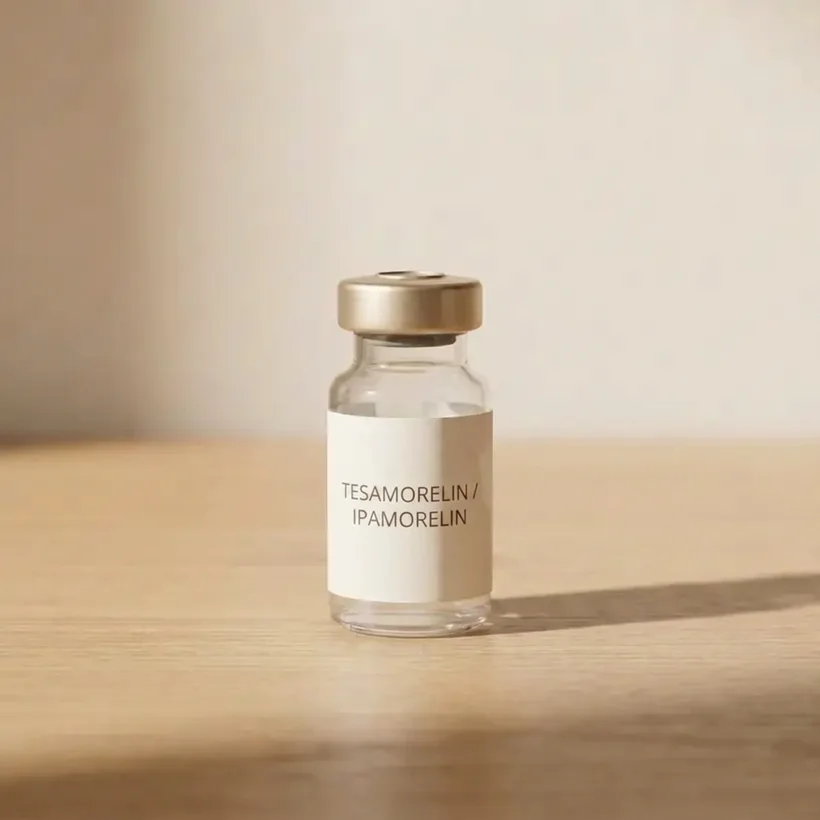
From the FormBlends catalog
Tesamorelin / Ipamorelin Blend
Growth-hormone pathway support in one blend · From $299/mo · compounded by a licensed 503A pharmacy, dispensed only after provider review.
View Tesamorelin / Ipamorelin Blend →Standard dosing is typically 200 to 300 mcg per injection, administered subcutaneously. Most protocols involve 1 to 3 injections per day.
Common timing strategies include:
- Before bed: This is the most popular timing. Administering Ipamorelin 30 to 60 minutes before sleep supports the natural nocturnal GH pulse. Take it on an empty stomach for best absorption.
- Morning fasted: A morning dose can support daytime energy and recovery. Take it before eating.
- Post-workout: Some protocols include a post-workout dose to capitalize on the exercise-induced GH response.
Cycle length typically runs 8 to 16 weeks, followed by a 4 to 8 week break. This cycling helps maintain your body's sensitivity to the peptide.
Ipamorelin is frequently combined with CJC-1295 without DAC (Mod GRF 1-29) for enhanced results. The two peptides work through different mechanisms and together produce a stronger GH pulse than either one alone.
Track your doses and monitor your progress with the , which includes injection logging and medication level tracking.
Side Effects and Safety Considerations
Ipamorelin is considered one of the better-tolerated growth hormone peptides. But like all medications, it can cause side effects.
Common side effects include mild headache, flushing or warmth at the injection site, and occasional dizziness. These typically resolve within the first week or two of use.
Less common side effects may include water retention, tingling in hands or feet (a sign of GH elevation), and transient hunger after injection. These effects are generally mild compared to other GH secretagogues.
What to watch for. If you experience persistent joint pain, significant water retention, or numbness in your extremities, contact your provider. These may indicate that your dosing needs adjustment.
Lab monitoring is important. Your provider will likely check IGF-1 levels, fasting glucose, and potentially HbA1c before and during your protocol. Growth hormone can affect insulin sensitivity, so monitoring is important, especially if you have diabetes or prediabetes.
Ipamorelin isn't appropriate for everyone. People with active cancer, certain pituitary conditions, or those who are pregnant or nursing shouldn't use growth hormone peptides. Your provider will screen for contraindications during your consultation.
For more context on how peptides fit into a broader wellness approach, read our .
Frequently Asked Questions
How quickly does Ipamorelin start working?
Most people notice improved sleep quality within the first 1 to 2 weeks. Energy and recovery improvements often follow by weeks 3 to 4. Visible body composition changes typically appear between weeks 8 and 12.
Is Ipamorelin better than HGH injections?
Ipamorelin stimulates your body's own GH production rather than introducing exogenous hormone. This may result in a more natural release pattern with fewer side effects. But HGH injections produce more predictable GH levels. Your provider can help you weigh the options.
Can women use Ipamorelin?
Yes. Ipamorelin is prescribed to both men and women. Dosing may be adjusted, but the benefits for sleep, recovery, body composition, and skin health apply regardless of gender.
Do I need to refrigerate Ipamorelin?
Yes. Reconstituted Ipamorelin should be stored in the refrigerator and used within the timeframe recommended by your pharmacy. Unreconstituted peptide powder can be stored at room temperature. Check your pharmacy's specific instructions.
Can I take Ipamorelin with GLP-1 medications?
Some providers prescribe Ipamorelin alongside GLP-1 medications like compounded semaglutide. The two serve different purposes. Discuss potential interactions with your before combining protocols.
Start your treatment Today
Every transformation starts with a single step. Talk to a licensed FormBlends provider about whether this approach is right for you) consultations are free and confidential.
Sources &. References
- Ionescu M, Frohman LA. Pulsatile secretion of growth hormone (GH) persists during continuous stimulation by CJC-1295, a long-acting GH-releasing hormone analog. J Clin Endocrinol Metab. 2006;91(12):4792-4797. Doi:10.1210/jc.2006-1702
This article is for educational purposes only and doesn't constitute medical advice. Always consult with a licensed healthcare provider before starting, changing, or stopping any medication or supplement. FormBlends connects you with licensed providers who can evaluate your individual health needs.
Last updated: 2026-03-24
Ready when you are
Tesamorelin / Ipamorelin Blend
Growth-hormone pathway support in one blend · From $299/mo · compounded by a licensed 503A pharmacy, dispensed only after provider review.
View Tesamorelin / Ipamorelin Blend →